جدیدترین مطالب

The Makkah Pact; Reasons for its Formation and Challenges Ahead

SCFR Online – Opinion: The Makkah Pact, signed between Saudi Arabia, Pakistan, and Turkey under the motto “an attack on one is an attack on all,” is viewed by some analysts less as a full-fledged military coalition and more as an attempt to reduce security dependence on an external power and to establish a regional security mechanism.

Implications of the US-Saudi Nuclear Agreement

SCFR Online – Opinion: The new US-Saudi nuclear agreement, despite legal and political ambiguities, could alter previous non-proliferation standards in West Asia and intensify nuclear competition, ushering it into a new phase.

An Analysis of Recent Turkey-Israeli Regime Tensions

SCFR Online – Opinion: Recent developments in Syria indicate an intensification of strategic rivalry between Turkey and the Israeli regime, but mutual considerations and the role of the United States have limited the likelihood of direct war.

Increasing criticism of the extensive Zionist lobby network

SCFR Online – Opinion: An examination of the mechanisms of the Israeli regime’s influence in the United States depicts a complex picture of shared interests, strategic dependencies, and the limitations of this relationship.

Realities of the Tripartite Makkah Pact

SCFR Online – Interview: The signing of the Makkah agreement between Saudi Arabia, Pakistan, and Turkey has raised questions about the future of the region’s security structure and the position of these countries in West Asian equations. Can this agreement become a genuine collective defense mechanism, or does it have more of a political and deterrent function than creating new military capacity?

Loading

Politics

Behind-the-Scenes Decision-Makers in American Foreign Policy

Behind-the-Scenes Decision-Makers in American Foreign Policy

Strategic Council Online – Politics and power in the United States, due to their decentralized and distributive political structure, are influenced by the presence and activity of two groups of “formal” and “informal” actors. Formal actors are influential in the “decision-making” and executive stages, and informal actors are influential in the critical “decision-making” stage. Simply put, the United States is a place for showoff and display of various informal actors who are always trying to play an effective role in the political, economic, security, etc. arenas of the United States by considering their own interests. For example, when it is said that the president in the United States is the representative of oil and arms cartels, etc., it is not an exaggeration and refers to a phenomenon that has a long and lasting history in this country.
Hamid Khoshayand – International Affairs Analyst

Saudi Efforts to Reduce Tensions in the Region & the Need for Qatar’s Vigilance

Saudi Efforts to Reduce Tensions in the Region & the Need for Qatar’s Vigilance

Strategic Council Online – An expert on Saudi Arabia said that reducing tensions is the concurrent desire of the three countries of Turkey, Qatar and Saudi Arabia, said: The Saudi concern over the return of the United States to the Iran Nuclear Agreement (also known as the Joint Comprehensive Plan of Action) and boosting Iran’s economic strength have prompted Riyadh to minimize tensions with the Arab and Sunni fronts before Trump leaves the White House and Biden takes over in order to confront Iran with a new lineup. But the important point in this regard is the vigilance of Qatar. In other words, Doha should be careful not to be caught by the Saudi conspiracy against Iran, which was beside Qatar during the difficult years of sanctions.

Stark differences in the OPEC Plus meeting

Stark differences in the OPEC Plus meeting

Strategic Council Online-Interview: A regional affairs analyst says one of the main reasons behind proximity among the majority of OPEC member states to increase the production of oil in the recent OPEN Plus meeting was to maintain the shares of these countries in global markets so that they could address the demands of the market in the near future.

Prospects for Europe-US Relations and Poland’s Exit from EU

Prospects for Europe-US Relations and Poland’s Exit from EU

Strategic Council Online – A faculty member of the Research Institute for Strategic Studies said that with the return of the Democrats and the internationalist approach in the United States, US-European relations will be restored to a large extent and the possibility for the weakening of the EU will stop. He added: Trump was in favour of disintegration in Europe, but in the aftermath of the coming to power of the new US administration, it seems very unlikely that Poland will take the issue of leaving the EU seriously.

France Making Attempts to Regain Colonial Role in Lebanon

France Making Attempts to Regain Colonial Role in Lebanon

Strategic Council Online – A former ambassador and Middle East affairs analyst says the roadmap drawn by France is a clear interference in Lebanon’s internal affairs, adding that what France is proposing is completely contrary to the goals of changing the structure or the Lebanese-Lebanese talks. Mr. Macron has entered the Lebanese arena with the false hope that he can take effective measure in the interest of France.

Inefficiency of Minsk Group and Unclear Prospects of Karabakh Peace Deal

Inefficiency of Minsk Group and Unclear Prospects of Karabakh Peace Deal

Strategic Council Online – An expert on international affairs said: The most important challenge of the Karabakh crisis is that, despite the recent peace agreement, its future status is still ambiguous and unclear, and this could be the source and the beginning of a renewed conflict between Azerbaijan and Armenia.

Widespread Human Rights Violation with US Sanctions against Iran

Widespread Human Rights Violation with US Sanctions against Iran

Strategic Council Online – An international law professor said that the dimensions of the US anti-human rights actions in imposing illegal sanctions should be further explained to the people of the world, adding: The Americans have ignored international law of development and international humanitarian law by imposing successive illegal sanctions.

Zionist Regime’s Political Crisis & Netanyahu’s Future

Zionist Regime’s Political Crisis & Netanyahu’s Future

Strategic Council Online – An expert on the Middle East affairs said: The main reasons for the six-month protest demonstrations against Israeli Prime Minister Benjamin Netanyahu are economic problems, issues caused by the outbreak of the coronavirus and the inefficiency of his government in resolving public problems.

Russia-EU Relations; Overshadowed by Reciprocal Sanctions

Russia-EU Relations; Overshadowed by Reciprocal Sanctions

Strategic Council Online –An expert on international affairs referred to the reciprocal sanctions between Russia and the European Union and said: In addition to the Crimea issue, espionage and anti-espionage activities have prevented Europe from approaching Russia, although Russia was trying to improve its relations with Europe but was not successful and still the relations are faced with serious challenges.

Turkey on the verge of involvement in the Yemen case

Turkey on the verge of involvement in the Yemen case

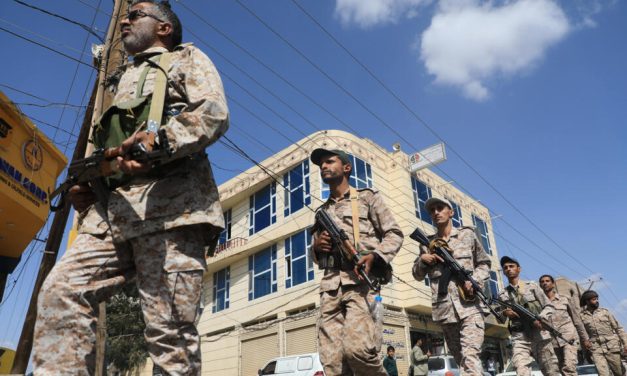
Strategic Council Online—Editorial: Turkey is one of the main regional players which has been pursuing an aggressive foreign policy during the past several years—a country which once prioritized in its foreign policy the zero-tension approach with its neighbors but has now turned down that policy by entering into various levels of political, security, military and field operational engagements in the West Asia, the Caucasus and North Africa regions. In fact, you can find very few hot spots in the region in which Turkey has not been actively involved.
Hamid Khoshayand-International issues analyst

أحدث الوظائف

The Makkah Pact; Reasons for its Formation and Challenges Ahead

SCFR Online – Opinion: The Makkah Pact, signed between Saudi Arabia, Pakistan, and Turkey under the motto “an attack on one is an attack on all,” is viewed by some analysts less as a full-fledged military coalition and more as an attempt to reduce security dependence on an external power and to establish a regional security mechanism.

Implications of the US-Saudi Nuclear Agreement

SCFR Online – Opinion: The new US-Saudi nuclear agreement, despite legal and political ambiguities, could alter previous non-proliferation standards in West Asia and intensify nuclear competition, ushering it into a new phase.

An Analysis of Recent Turkey-Israeli Regime Tensions

SCFR Online – Opinion: Recent developments in Syria indicate an intensification of strategic rivalry between Turkey and the Israeli regime, but mutual considerations and the role of the United States have limited the likelihood of direct war.

Increasing criticism of the extensive Zionist lobby network

SCFR Online – Opinion: An examination of the mechanisms of the Israeli regime’s influence in the United States depicts a complex picture of shared interests, strategic dependencies, and the limitations of this relationship.

Realities of the Tripartite Makkah Pact

SCFR Online – Interview: The signing of the Makkah agreement between Saudi Arabia, Pakistan, and Turkey has raised questions about the future of the region’s security structure and the position of these countries in West Asian equations. Can this agreement become a genuine collective defense mechanism, or does it have more of a political and deterrent function than creating new military capacity?

Loading

Politics

Behind-the-Scenes Decision-Makers in American Foreign Policy

Behind-the-Scenes Decision-Makers in American Foreign Policy

Strategic Council Online – Politics and power in the United States, due to their decentralized and distributive political structure, are influenced by the presence and activity of two groups of “formal” and “informal” actors. Formal actors are influential in the “decision-making” and executive stages, and informal actors are influential in the critical “decision-making” stage. Simply put, the United States is a place for showoff and display of various informal actors who are always trying to play an effective role in the political, economic, security, etc. arenas of the United States by considering their own interests. For example, when it is said that the president in the United States is the representative of oil and arms cartels, etc., it is not an exaggeration and refers to a phenomenon that has a long and lasting history in this country.
Hamid Khoshayand – International Affairs Analyst

Saudi Efforts to Reduce Tensions in the Region & the Need for Qatar’s Vigilance

Saudi Efforts to Reduce Tensions in the Region & the Need for Qatar’s Vigilance

Strategic Council Online – An expert on Saudi Arabia said that reducing tensions is the concurrent desire of the three countries of Turkey, Qatar and Saudi Arabia, said: The Saudi concern over the return of the United States to the Iran Nuclear Agreement (also known as the Joint Comprehensive Plan of Action) and boosting Iran’s economic strength have prompted Riyadh to minimize tensions with the Arab and Sunni fronts before Trump leaves the White House and Biden takes over in order to confront Iran with a new lineup. But the important point in this regard is the vigilance of Qatar. In other words, Doha should be careful not to be caught by the Saudi conspiracy against Iran, which was beside Qatar during the difficult years of sanctions.

Stark differences in the OPEC Plus meeting

Stark differences in the OPEC Plus meeting

Strategic Council Online-Interview: A regional affairs analyst says one of the main reasons behind proximity among the majority of OPEC member states to increase the production of oil in the recent OPEN Plus meeting was to maintain the shares of these countries in global markets so that they could address the demands of the market in the near future.

Prospects for Europe-US Relations and Poland’s Exit from EU

Prospects for Europe-US Relations and Poland’s Exit from EU

Strategic Council Online – A faculty member of the Research Institute for Strategic Studies said that with the return of the Democrats and the internationalist approach in the United States, US-European relations will be restored to a large extent and the possibility for the weakening of the EU will stop. He added: Trump was in favour of disintegration in Europe, but in the aftermath of the coming to power of the new US administration, it seems very unlikely that Poland will take the issue of leaving the EU seriously.

France Making Attempts to Regain Colonial Role in Lebanon

France Making Attempts to Regain Colonial Role in Lebanon

Strategic Council Online – A former ambassador and Middle East affairs analyst says the roadmap drawn by France is a clear interference in Lebanon’s internal affairs, adding that what France is proposing is completely contrary to the goals of changing the structure or the Lebanese-Lebanese talks. Mr. Macron has entered the Lebanese arena with the false hope that he can take effective measure in the interest of France.

Inefficiency of Minsk Group and Unclear Prospects of Karabakh Peace Deal

Inefficiency of Minsk Group and Unclear Prospects of Karabakh Peace Deal

Strategic Council Online – An expert on international affairs said: The most important challenge of the Karabakh crisis is that, despite the recent peace agreement, its future status is still ambiguous and unclear, and this could be the source and the beginning of a renewed conflict between Azerbaijan and Armenia.

Widespread Human Rights Violation with US Sanctions against Iran

Widespread Human Rights Violation with US Sanctions against Iran

Strategic Council Online – An international law professor said that the dimensions of the US anti-human rights actions in imposing illegal sanctions should be further explained to the people of the world, adding: The Americans have ignored international law of development and international humanitarian law by imposing successive illegal sanctions.

Zionist Regime’s Political Crisis & Netanyahu’s Future

Zionist Regime’s Political Crisis & Netanyahu’s Future

Strategic Council Online – An expert on the Middle East affairs said: The main reasons for the six-month protest demonstrations against Israeli Prime Minister Benjamin Netanyahu are economic problems, issues caused by the outbreak of the coronavirus and the inefficiency of his government in resolving public problems.

Russia-EU Relations; Overshadowed by Reciprocal Sanctions

Russia-EU Relations; Overshadowed by Reciprocal Sanctions

Strategic Council Online –An expert on international affairs referred to the reciprocal sanctions between Russia and the European Union and said: In addition to the Crimea issue, espionage and anti-espionage activities have prevented Europe from approaching Russia, although Russia was trying to improve its relations with Europe but was not successful and still the relations are faced with serious challenges.

Turkey on the verge of involvement in the Yemen case

Turkey on the verge of involvement in the Yemen case

Strategic Council Online—Editorial: Turkey is one of the main regional players which has been pursuing an aggressive foreign policy during the past several years—a country which once prioritized in its foreign policy the zero-tension approach with its neighbors but has now turned down that policy by entering into various levels of political, security, military and field operational engagements in the West Asia, the Caucasus and North Africa regions. In fact, you can find very few hot spots in the region in which Turkey has not been actively involved.
Hamid Khoshayand-International issues analyst

Politics

Behind-the-Scenes Decision-Makers in American Foreign Policy

Behind-the-Scenes Decision-Makers in American Foreign Policy

Strategic Council Online – Politics and power in the United States, due to their decentralized and distributive political structure, are influenced by the presence and activity of two groups of “formal” and “informal” actors. Formal actors are influential in the “decision-making” and executive stages, and informal actors are influential in the critical “decision-making” stage. Simply put, the United States is a place for showoff and display of various informal actors who are always trying to play an effective role in the political, economic, security, etc. arenas of the United States by considering their own interests. For example, when it is said that the president in the United States is the representative of oil and arms cartels, etc., it is not an exaggeration and refers to a phenomenon that has a long and lasting history in this country.
Hamid Khoshayand – International Affairs Analyst

Saudi Efforts to Reduce Tensions in the Region & the Need for Qatar’s Vigilance

Saudi Efforts to Reduce Tensions in the Region & the Need for Qatar’s Vigilance

Strategic Council Online – An expert on Saudi Arabia said that reducing tensions is the concurrent desire of the three countries of Turkey, Qatar and Saudi Arabia, said: The Saudi concern over the return of the United States to the Iran Nuclear Agreement (also known as the Joint Comprehensive Plan of Action) and boosting Iran’s economic strength have prompted Riyadh to minimize tensions with the Arab and Sunni fronts before Trump leaves the White House and Biden takes over in order to confront Iran with a new lineup. But the important point in this regard is the vigilance of Qatar. In other words, Doha should be careful not to be caught by the Saudi conspiracy against Iran, which was beside Qatar during the difficult years of sanctions.

Stark differences in the OPEC Plus meeting

Stark differences in the OPEC Plus meeting

Strategic Council Online-Interview: A regional affairs analyst says one of the main reasons behind proximity among the majority of OPEC member states to increase the production of oil in the recent OPEN Plus meeting was to maintain the shares of these countries in global markets so that they could address the demands of the market in the near future.

Prospects for Europe-US Relations and Poland’s Exit from EU

Prospects for Europe-US Relations and Poland’s Exit from EU

Strategic Council Online – A faculty member of the Research Institute for Strategic Studies said that with the return of the Democrats and the internationalist approach in the United States, US-European relations will be restored to a large extent and the possibility for the weakening of the EU will stop. He added: Trump was in favour of disintegration in Europe, but in the aftermath of the coming to power of the new US administration, it seems very unlikely that Poland will take the issue of leaving the EU seriously.

France Making Attempts to Regain Colonial Role in Lebanon

France Making Attempts to Regain Colonial Role in Lebanon

Strategic Council Online – A former ambassador and Middle East affairs analyst says the roadmap drawn by France is a clear interference in Lebanon’s internal affairs, adding that what France is proposing is completely contrary to the goals of changing the structure or the Lebanese-Lebanese talks. Mr. Macron has entered the Lebanese arena with the false hope that he can take effective measure in the interest of France.

Inefficiency of Minsk Group and Unclear Prospects of Karabakh Peace Deal

Inefficiency of Minsk Group and Unclear Prospects of Karabakh Peace Deal

Strategic Council Online – An expert on international affairs said: The most important challenge of the Karabakh crisis is that, despite the recent peace agreement, its future status is still ambiguous and unclear, and this could be the source and the beginning of a renewed conflict between Azerbaijan and Armenia.

Widespread Human Rights Violation with US Sanctions against Iran

Widespread Human Rights Violation with US Sanctions against Iran

Strategic Council Online – An international law professor said that the dimensions of the US anti-human rights actions in imposing illegal sanctions should be further explained to the people of the world, adding: The Americans have ignored international law of development and international humanitarian law by imposing successive illegal sanctions.

Zionist Regime’s Political Crisis & Netanyahu’s Future

Zionist Regime’s Political Crisis & Netanyahu’s Future

Strategic Council Online – An expert on the Middle East affairs said: The main reasons for the six-month protest demonstrations against Israeli Prime Minister Benjamin Netanyahu are economic problems, issues caused by the outbreak of the coronavirus and the inefficiency of his government in resolving public problems.

Russia-EU Relations; Overshadowed by Reciprocal Sanctions

Russia-EU Relations; Overshadowed by Reciprocal Sanctions

Strategic Council Online –An expert on international affairs referred to the reciprocal sanctions between Russia and the European Union and said: In addition to the Crimea issue, espionage and anti-espionage activities have prevented Europe from approaching Russia, although Russia was trying to improve its relations with Europe but was not successful and still the relations are faced with serious challenges.

Turkey on the verge of involvement in the Yemen case

Turkey on the verge of involvement in the Yemen case

Strategic Council Online—Editorial: Turkey is one of the main regional players which has been pursuing an aggressive foreign policy during the past several years—a country which once prioritized in its foreign policy the zero-tension approach with its neighbors but has now turned down that policy by entering into various levels of political, security, military and field operational engagements in the West Asia, the Caucasus and North Africa regions. In fact, you can find very few hot spots in the region in which Turkey has not been actively involved.
Hamid Khoshayand-International issues analyst

LATEST CONTENT

The Makkah Pact; Reasons for its Formation and Challenges Ahead

SCFR Online – Opinion: The Makkah Pact, signed between Saudi Arabia, Pakistan, and Turkey under the motto “an attack on one is an attack on all,” is viewed by some analysts less as a full-fledged military coalition and more as an attempt to reduce security dependence on an external power and to establish a regional security mechanism.

Implications of the US-Saudi Nuclear Agreement

SCFR Online – Opinion: The new US-Saudi nuclear agreement, despite legal and political ambiguities, could alter previous non-proliferation standards in West Asia and intensify nuclear competition, ushering it into a new phase.

An Analysis of Recent Turkey-Israeli Regime Tensions

SCFR Online – Opinion: Recent developments in Syria indicate an intensification of strategic rivalry between Turkey and the Israeli regime, but mutual considerations and the role of the United States have limited the likelihood of direct war.

Increasing criticism of the extensive Zionist lobby network

SCFR Online – Opinion: An examination of the mechanisms of the Israeli regime’s influence in the United States depicts a complex picture of shared interests, strategic dependencies, and the limitations of this relationship.

Realities of the Tripartite Makkah Pact

SCFR Online – Interview: The signing of the Makkah agreement between Saudi Arabia, Pakistan, and Turkey has raised questions about the future of the region’s security structure and the position of these countries in West Asian equations. Can this agreement become a genuine collective defense mechanism, or does it have more of a political and deterrent function than creating new military capacity?

Loading

Politics

Behind-the-Scenes Decision-Makers in American Foreign Policy

Behind-the-Scenes Decision-Makers in American Foreign Policy

Strategic Council Online – Politics and power in the United States, due to their decentralized and distributive political structure, are influenced by the presence and activity of two groups of “formal” and “informal” actors. Formal actors are influential in the “decision-making” and executive stages, and informal actors are influential in the critical “decision-making” stage. Simply put, the United States is a place for showoff and display of various informal actors who are always trying to play an effective role in the political, economic, security, etc. arenas of the United States by considering their own interests. For example, when it is said that the president in the United States is the representative of oil and arms cartels, etc., it is not an exaggeration and refers to a phenomenon that has a long and lasting history in this country.
Hamid Khoshayand – International Affairs Analyst

Saudi Efforts to Reduce Tensions in the Region & the Need for Qatar’s Vigilance

Saudi Efforts to Reduce Tensions in the Region & the Need for Qatar’s Vigilance

Strategic Council Online – An expert on Saudi Arabia said that reducing tensions is the concurrent desire of the three countries of Turkey, Qatar and Saudi Arabia, said: The Saudi concern over the return of the United States to the Iran Nuclear Agreement (also known as the Joint Comprehensive Plan of Action) and boosting Iran’s economic strength have prompted Riyadh to minimize tensions with the Arab and Sunni fronts before Trump leaves the White House and Biden takes over in order to confront Iran with a new lineup. But the important point in this regard is the vigilance of Qatar. In other words, Doha should be careful not to be caught by the Saudi conspiracy against Iran, which was beside Qatar during the difficult years of sanctions.

Stark differences in the OPEC Plus meeting

Stark differences in the OPEC Plus meeting

Strategic Council Online-Interview: A regional affairs analyst says one of the main reasons behind proximity among the majority of OPEC member states to increase the production of oil in the recent OPEN Plus meeting was to maintain the shares of these countries in global markets so that they could address the demands of the market in the near future.

Prospects for Europe-US Relations and Poland’s Exit from EU

Prospects for Europe-US Relations and Poland’s Exit from EU

Strategic Council Online – A faculty member of the Research Institute for Strategic Studies said that with the return of the Democrats and the internationalist approach in the United States, US-European relations will be restored to a large extent and the possibility for the weakening of the EU will stop. He added: Trump was in favour of disintegration in Europe, but in the aftermath of the coming to power of the new US administration, it seems very unlikely that Poland will take the issue of leaving the EU seriously.

France Making Attempts to Regain Colonial Role in Lebanon

France Making Attempts to Regain Colonial Role in Lebanon

Strategic Council Online – A former ambassador and Middle East affairs analyst says the roadmap drawn by France is a clear interference in Lebanon’s internal affairs, adding that what France is proposing is completely contrary to the goals of changing the structure or the Lebanese-Lebanese talks. Mr. Macron has entered the Lebanese arena with the false hope that he can take effective measure in the interest of France.

Inefficiency of Minsk Group and Unclear Prospects of Karabakh Peace Deal

Inefficiency of Minsk Group and Unclear Prospects of Karabakh Peace Deal

Strategic Council Online – An expert on international affairs said: The most important challenge of the Karabakh crisis is that, despite the recent peace agreement, its future status is still ambiguous and unclear, and this could be the source and the beginning of a renewed conflict between Azerbaijan and Armenia.

Widespread Human Rights Violation with US Sanctions against Iran

Widespread Human Rights Violation with US Sanctions against Iran

Strategic Council Online – An international law professor said that the dimensions of the US anti-human rights actions in imposing illegal sanctions should be further explained to the people of the world, adding: The Americans have ignored international law of development and international humanitarian law by imposing successive illegal sanctions.

Zionist Regime’s Political Crisis & Netanyahu’s Future

Zionist Regime’s Political Crisis & Netanyahu’s Future

Strategic Council Online – An expert on the Middle East affairs said: The main reasons for the six-month protest demonstrations against Israeli Prime Minister Benjamin Netanyahu are economic problems, issues caused by the outbreak of the coronavirus and the inefficiency of his government in resolving public problems.

Russia-EU Relations; Overshadowed by Reciprocal Sanctions

Russia-EU Relations; Overshadowed by Reciprocal Sanctions

Strategic Council Online –An expert on international affairs referred to the reciprocal sanctions between Russia and the European Union and said: In addition to the Crimea issue, espionage and anti-espionage activities have prevented Europe from approaching Russia, although Russia was trying to improve its relations with Europe but was not successful and still the relations are faced with serious challenges.

Turkey on the verge of involvement in the Yemen case

Turkey on the verge of involvement in the Yemen case

Strategic Council Online—Editorial: Turkey is one of the main regional players which has been pursuing an aggressive foreign policy during the past several years—a country which once prioritized in its foreign policy the zero-tension approach with its neighbors but has now turned down that policy by entering into various levels of political, security, military and field operational engagements in the West Asia, the Caucasus and North Africa regions. In fact, you can find very few hot spots in the region in which Turkey has not been actively involved.
Hamid Khoshayand-International issues analyst

ÚLTIMAS PUBLICACIONES

The Makkah Pact; Reasons for its Formation and Challenges Ahead

SCFR Online – Opinion: The Makkah Pact, signed between Saudi Arabia, Pakistan, and Turkey under the motto “an attack on one is an attack on all,” is viewed by some analysts less as a full-fledged military coalition and more as an attempt to reduce security dependence on an external power and to establish a regional security mechanism.

Implications of the US-Saudi Nuclear Agreement

SCFR Online – Opinion: The new US-Saudi nuclear agreement, despite legal and political ambiguities, could alter previous non-proliferation standards in West Asia and intensify nuclear competition, ushering it into a new phase.

An Analysis of Recent Turkey-Israeli Regime Tensions

SCFR Online – Opinion: Recent developments in Syria indicate an intensification of strategic rivalry between Turkey and the Israeli regime, but mutual considerations and the role of the United States have limited the likelihood of direct war.

Increasing criticism of the extensive Zionist lobby network

SCFR Online – Opinion: An examination of the mechanisms of the Israeli regime’s influence in the United States depicts a complex picture of shared interests, strategic dependencies, and the limitations of this relationship.

Realities of the Tripartite Makkah Pact

SCFR Online – Interview: The signing of the Makkah agreement between Saudi Arabia, Pakistan, and Turkey has raised questions about the future of the region’s security structure and the position of these countries in West Asian equations. Can this agreement become a genuine collective defense mechanism, or does it have more of a political and deterrent function than creating new military capacity?

Loading

Politics

Behind-the-Scenes Decision-Makers in American Foreign Policy

Behind-the-Scenes Decision-Makers in American Foreign Policy

Strategic Council Online – Politics and power in the United States, due to their decentralized and distributive political structure, are influenced by the presence and activity of two groups of “formal” and “informal” actors. Formal actors are influential in the “decision-making” and executive stages, and informal actors are influential in the critical “decision-making” stage. Simply put, the United States is a place for showoff and display of various informal actors who are always trying to play an effective role in the political, economic, security, etc. arenas of the United States by considering their own interests. For example, when it is said that the president in the United States is the representative of oil and arms cartels, etc., it is not an exaggeration and refers to a phenomenon that has a long and lasting history in this country.
Hamid Khoshayand – International Affairs Analyst

Saudi Efforts to Reduce Tensions in the Region & the Need for Qatar’s Vigilance

Saudi Efforts to Reduce Tensions in the Region & the Need for Qatar’s Vigilance

Strategic Council Online – An expert on Saudi Arabia said that reducing tensions is the concurrent desire of the three countries of Turkey, Qatar and Saudi Arabia, said: The Saudi concern over the return of the United States to the Iran Nuclear Agreement (also known as the Joint Comprehensive Plan of Action) and boosting Iran’s economic strength have prompted Riyadh to minimize tensions with the Arab and Sunni fronts before Trump leaves the White House and Biden takes over in order to confront Iran with a new lineup. But the important point in this regard is the vigilance of Qatar. In other words, Doha should be careful not to be caught by the Saudi conspiracy against Iran, which was beside Qatar during the difficult years of sanctions.

Stark differences in the OPEC Plus meeting

Stark differences in the OPEC Plus meeting

Strategic Council Online-Interview: A regional affairs analyst says one of the main reasons behind proximity among the majority of OPEC member states to increase the production of oil in the recent OPEN Plus meeting was to maintain the shares of these countries in global markets so that they could address the demands of the market in the near future.

Prospects for Europe-US Relations and Poland’s Exit from EU

Prospects for Europe-US Relations and Poland’s Exit from EU

Strategic Council Online – A faculty member of the Research Institute for Strategic Studies said that with the return of the Democrats and the internationalist approach in the United States, US-European relations will be restored to a large extent and the possibility for the weakening of the EU will stop. He added: Trump was in favour of disintegration in Europe, but in the aftermath of the coming to power of the new US administration, it seems very unlikely that Poland will take the issue of leaving the EU seriously.

France Making Attempts to Regain Colonial Role in Lebanon

France Making Attempts to Regain Colonial Role in Lebanon

Strategic Council Online – A former ambassador and Middle East affairs analyst says the roadmap drawn by France is a clear interference in Lebanon’s internal affairs, adding that what France is proposing is completely contrary to the goals of changing the structure or the Lebanese-Lebanese talks. Mr. Macron has entered the Lebanese arena with the false hope that he can take effective measure in the interest of France.

Inefficiency of Minsk Group and Unclear Prospects of Karabakh Peace Deal

Inefficiency of Minsk Group and Unclear Prospects of Karabakh Peace Deal

Strategic Council Online – An expert on international affairs said: The most important challenge of the Karabakh crisis is that, despite the recent peace agreement, its future status is still ambiguous and unclear, and this could be the source and the beginning of a renewed conflict between Azerbaijan and Armenia.

Widespread Human Rights Violation with US Sanctions against Iran

Widespread Human Rights Violation with US Sanctions against Iran

Strategic Council Online – An international law professor said that the dimensions of the US anti-human rights actions in imposing illegal sanctions should be further explained to the people of the world, adding: The Americans have ignored international law of development and international humanitarian law by imposing successive illegal sanctions.

Zionist Regime’s Political Crisis & Netanyahu’s Future

Zionist Regime’s Political Crisis & Netanyahu’s Future

Strategic Council Online – An expert on the Middle East affairs said: The main reasons for the six-month protest demonstrations against Israeli Prime Minister Benjamin Netanyahu are economic problems, issues caused by the outbreak of the coronavirus and the inefficiency of his government in resolving public problems.

Russia-EU Relations; Overshadowed by Reciprocal Sanctions

Russia-EU Relations; Overshadowed by Reciprocal Sanctions

Strategic Council Online –An expert on international affairs referred to the reciprocal sanctions between Russia and the European Union and said: In addition to the Crimea issue, espionage and anti-espionage activities have prevented Europe from approaching Russia, although Russia was trying to improve its relations with Europe but was not successful and still the relations are faced with serious challenges.

Turkey on the verge of involvement in the Yemen case

Turkey on the verge of involvement in the Yemen case

Strategic Council Online—Editorial: Turkey is one of the main regional players which has been pursuing an aggressive foreign policy during the past several years—a country which once prioritized in its foreign policy the zero-tension approach with its neighbors but has now turned down that policy by entering into various levels of political, security, military and field operational engagements in the West Asia, the Caucasus and North Africa regions. In fact, you can find very few hot spots in the region in which Turkey has not been actively involved.
Hamid Khoshayand-International issues analyst

ÚLTIMAS PUBLICACIONES

The Makkah Pact; Reasons for its Formation and Challenges Ahead

SCFR Online – Opinion: The Makkah Pact, signed between Saudi Arabia, Pakistan, and Turkey under the motto “an attack on one is an attack on all,” is viewed by some analysts less as a full-fledged military coalition and more as an attempt to reduce security dependence on an external power and to establish a regional security mechanism.

Implications of the US-Saudi Nuclear Agreement

SCFR Online – Opinion: The new US-Saudi nuclear agreement, despite legal and political ambiguities, could alter previous non-proliferation standards in West Asia and intensify nuclear competition, ushering it into a new phase.

An Analysis of Recent Turkey-Israeli Regime Tensions

SCFR Online – Opinion: Recent developments in Syria indicate an intensification of strategic rivalry between Turkey and the Israeli regime, but mutual considerations and the role of the United States have limited the likelihood of direct war.

Increasing criticism of the extensive Zionist lobby network

SCFR Online – Opinion: An examination of the mechanisms of the Israeli regime’s influence in the United States depicts a complex picture of shared interests, strategic dependencies, and the limitations of this relationship.

Realities of the Tripartite Makkah Pact

SCFR Online – Interview: The signing of the Makkah agreement between Saudi Arabia, Pakistan, and Turkey has raised questions about the future of the region’s security structure and the position of these countries in West Asian equations. Can this agreement become a genuine collective defense mechanism, or does it have more of a political and deterrent function than creating new military capacity?

Loading

Politics

Behind-the-Scenes Decision-Makers in American Foreign Policy

Behind-the-Scenes Decision-Makers in American Foreign Policy

Strategic Council Online – Politics and power in the United States, due to their decentralized and distributive political structure, are influenced by the presence and activity of two groups of “formal” and “informal” actors. Formal actors are influential in the “decision-making” and executive stages, and informal actors are influential in the critical “decision-making” stage. Simply put, the United States is a place for showoff and display of various informal actors who are always trying to play an effective role in the political, economic, security, etc. arenas of the United States by considering their own interests. For example, when it is said that the president in the United States is the representative of oil and arms cartels, etc., it is not an exaggeration and refers to a phenomenon that has a long and lasting history in this country.
Hamid Khoshayand – International Affairs Analyst

Saudi Efforts to Reduce Tensions in the Region & the Need for Qatar’s Vigilance

Saudi Efforts to Reduce Tensions in the Region & the Need for Qatar’s Vigilance

Strategic Council Online – An expert on Saudi Arabia said that reducing tensions is the concurrent desire of the three countries of Turkey, Qatar and Saudi Arabia, said: The Saudi concern over the return of the United States to the Iran Nuclear Agreement (also known as the Joint Comprehensive Plan of Action) and boosting Iran’s economic strength have prompted Riyadh to minimize tensions with the Arab and Sunni fronts before Trump leaves the White House and Biden takes over in order to confront Iran with a new lineup. But the important point in this regard is the vigilance of Qatar. In other words, Doha should be careful not to be caught by the Saudi conspiracy against Iran, which was beside Qatar during the difficult years of sanctions.

Stark differences in the OPEC Plus meeting

Stark differences in the OPEC Plus meeting

Strategic Council Online-Interview: A regional affairs analyst says one of the main reasons behind proximity among the majority of OPEC member states to increase the production of oil in the recent OPEN Plus meeting was to maintain the shares of these countries in global markets so that they could address the demands of the market in the near future.

Prospects for Europe-US Relations and Poland’s Exit from EU

Prospects for Europe-US Relations and Poland’s Exit from EU

Strategic Council Online – A faculty member of the Research Institute for Strategic Studies said that with the return of the Democrats and the internationalist approach in the United States, US-European relations will be restored to a large extent and the possibility for the weakening of the EU will stop. He added: Trump was in favour of disintegration in Europe, but in the aftermath of the coming to power of the new US administration, it seems very unlikely that Poland will take the issue of leaving the EU seriously.

France Making Attempts to Regain Colonial Role in Lebanon

France Making Attempts to Regain Colonial Role in Lebanon

Strategic Council Online – A former ambassador and Middle East affairs analyst says the roadmap drawn by France is a clear interference in Lebanon’s internal affairs, adding that what France is proposing is completely contrary to the goals of changing the structure or the Lebanese-Lebanese talks. Mr. Macron has entered the Lebanese arena with the false hope that he can take effective measure in the interest of France.

Inefficiency of Minsk Group and Unclear Prospects of Karabakh Peace Deal

Inefficiency of Minsk Group and Unclear Prospects of Karabakh Peace Deal

Strategic Council Online – An expert on international affairs said: The most important challenge of the Karabakh crisis is that, despite the recent peace agreement, its future status is still ambiguous and unclear, and this could be the source and the beginning of a renewed conflict between Azerbaijan and Armenia.

Widespread Human Rights Violation with US Sanctions against Iran

Widespread Human Rights Violation with US Sanctions against Iran

Strategic Council Online – An international law professor said that the dimensions of the US anti-human rights actions in imposing illegal sanctions should be further explained to the people of the world, adding: The Americans have ignored international law of development and international humanitarian law by imposing successive illegal sanctions.

Zionist Regime’s Political Crisis & Netanyahu’s Future

Zionist Regime’s Political Crisis & Netanyahu’s Future

Strategic Council Online – An expert on the Middle East affairs said: The main reasons for the six-month protest demonstrations against Israeli Prime Minister Benjamin Netanyahu are economic problems, issues caused by the outbreak of the coronavirus and the inefficiency of his government in resolving public problems.

Russia-EU Relations; Overshadowed by Reciprocal Sanctions

Russia-EU Relations; Overshadowed by Reciprocal Sanctions

Strategic Council Online –An expert on international affairs referred to the reciprocal sanctions between Russia and the European Union and said: In addition to the Crimea issue, espionage and anti-espionage activities have prevented Europe from approaching Russia, although Russia was trying to improve its relations with Europe but was not successful and still the relations are faced with serious challenges.

Turkey on the verge of involvement in the Yemen case

Turkey on the verge of involvement in the Yemen case

Strategic Council Online—Editorial: Turkey is one of the main regional players which has been pursuing an aggressive foreign policy during the past several years—a country which once prioritized in its foreign policy the zero-tension approach with its neighbors but has now turned down that policy by entering into various levels of political, security, military and field operational engagements in the West Asia, the Caucasus and North Africa regions. In fact, you can find very few hot spots in the region in which Turkey has not been actively involved.
Hamid Khoshayand-International issues analyst

ÚLTIMAS PUBLICACIONES

The Makkah Pact; Reasons for its Formation and Challenges Ahead

SCFR Online – Opinion: The Makkah Pact, signed between Saudi Arabia, Pakistan, and Turkey under the motto “an attack on one is an attack on all,” is viewed by some analysts less as a full-fledged military coalition and more as an attempt to reduce security dependence on an external power and to establish a regional security mechanism.

Implications of the US-Saudi Nuclear Agreement

SCFR Online – Opinion: The new US-Saudi nuclear agreement, despite legal and political ambiguities, could alter previous non-proliferation standards in West Asia and intensify nuclear competition, ushering it into a new phase.

An Analysis of Recent Turkey-Israeli Regime Tensions

SCFR Online – Opinion: Recent developments in Syria indicate an intensification of strategic rivalry between Turkey and the Israeli regime, but mutual considerations and the role of the United States have limited the likelihood of direct war.

Increasing criticism of the extensive Zionist lobby network

SCFR Online – Opinion: An examination of the mechanisms of the Israeli regime’s influence in the United States depicts a complex picture of shared interests, strategic dependencies, and the limitations of this relationship.

Realities of the Tripartite Makkah Pact

SCFR Online – Interview: The signing of the Makkah agreement between Saudi Arabia, Pakistan, and Turkey has raised questions about the future of the region’s security structure and the position of these countries in West Asian equations. Can this agreement become a genuine collective defense mechanism, or does it have more of a political and deterrent function than creating new military capacity?

Loading

Politics

Behind-the-Scenes Decision-Makers in American Foreign Policy

Behind-the-Scenes Decision-Makers in American Foreign Policy

Strategic Council Online – Politics and power in the United States, due to their decentralized and distributive political structure, are influenced by the presence and activity of two groups of “formal” and “informal” actors. Formal actors are influential in the “decision-making” and executive stages, and informal actors are influential in the critical “decision-making” stage. Simply put, the United States is a place for showoff and display of various informal actors who are always trying to play an effective role in the political, economic, security, etc. arenas of the United States by considering their own interests. For example, when it is said that the president in the United States is the representative of oil and arms cartels, etc., it is not an exaggeration and refers to a phenomenon that has a long and lasting history in this country.
Hamid Khoshayand – International Affairs Analyst

Saudi Efforts to Reduce Tensions in the Region & the Need for Qatar’s Vigilance

Saudi Efforts to Reduce Tensions in the Region & the Need for Qatar’s Vigilance

Strategic Council Online – An expert on Saudi Arabia said that reducing tensions is the concurrent desire of the three countries of Turkey, Qatar and Saudi Arabia, said: The Saudi concern over the return of the United States to the Iran Nuclear Agreement (also known as the Joint Comprehensive Plan of Action) and boosting Iran’s economic strength have prompted Riyadh to minimize tensions with the Arab and Sunni fronts before Trump leaves the White House and Biden takes over in order to confront Iran with a new lineup. But the important point in this regard is the vigilance of Qatar. In other words, Doha should be careful not to be caught by the Saudi conspiracy against Iran, which was beside Qatar during the difficult years of sanctions.

Stark differences in the OPEC Plus meeting

Stark differences in the OPEC Plus meeting

Strategic Council Online-Interview: A regional affairs analyst says one of the main reasons behind proximity among the majority of OPEC member states to increase the production of oil in the recent OPEN Plus meeting was to maintain the shares of these countries in global markets so that they could address the demands of the market in the near future.

Prospects for Europe-US Relations and Poland’s Exit from EU

Prospects for Europe-US Relations and Poland’s Exit from EU

Strategic Council Online – A faculty member of the Research Institute for Strategic Studies said that with the return of the Democrats and the internationalist approach in the United States, US-European relations will be restored to a large extent and the possibility for the weakening of the EU will stop. He added: Trump was in favour of disintegration in Europe, but in the aftermath of the coming to power of the new US administration, it seems very unlikely that Poland will take the issue of leaving the EU seriously.

France Making Attempts to Regain Colonial Role in Lebanon

France Making Attempts to Regain Colonial Role in Lebanon

Strategic Council Online – A former ambassador and Middle East affairs analyst says the roadmap drawn by France is a clear interference in Lebanon’s internal affairs, adding that what France is proposing is completely contrary to the goals of changing the structure or the Lebanese-Lebanese talks. Mr. Macron has entered the Lebanese arena with the false hope that he can take effective measure in the interest of France.

Inefficiency of Minsk Group and Unclear Prospects of Karabakh Peace Deal

Inefficiency of Minsk Group and Unclear Prospects of Karabakh Peace Deal

Strategic Council Online – An expert on international affairs said: The most important challenge of the Karabakh crisis is that, despite the recent peace agreement, its future status is still ambiguous and unclear, and this could be the source and the beginning of a renewed conflict between Azerbaijan and Armenia.

Widespread Human Rights Violation with US Sanctions against Iran

Widespread Human Rights Violation with US Sanctions against Iran

Strategic Council Online – An international law professor said that the dimensions of the US anti-human rights actions in imposing illegal sanctions should be further explained to the people of the world, adding: The Americans have ignored international law of development and international humanitarian law by imposing successive illegal sanctions.

Zionist Regime’s Political Crisis & Netanyahu’s Future

Zionist Regime’s Political Crisis & Netanyahu’s Future

Strategic Council Online – An expert on the Middle East affairs said: The main reasons for the six-month protest demonstrations against Israeli Prime Minister Benjamin Netanyahu are economic problems, issues caused by the outbreak of the coronavirus and the inefficiency of his government in resolving public problems.

Russia-EU Relations; Overshadowed by Reciprocal Sanctions

Russia-EU Relations; Overshadowed by Reciprocal Sanctions

Strategic Council Online –An expert on international affairs referred to the reciprocal sanctions between Russia and the European Union and said: In addition to the Crimea issue, espionage and anti-espionage activities have prevented Europe from approaching Russia, although Russia was trying to improve its relations with Europe but was not successful and still the relations are faced with serious challenges.

Turkey on the verge of involvement in the Yemen case

Turkey on the verge of involvement in the Yemen case

Strategic Council Online—Editorial: Turkey is one of the main regional players which has been pursuing an aggressive foreign policy during the past several years—a country which once prioritized in its foreign policy the zero-tension approach with its neighbors but has now turned down that policy by entering into various levels of political, security, military and field operational engagements in the West Asia, the Caucasus and North Africa regions. In fact, you can find very few hot spots in the region in which Turkey has not been actively involved.
Hamid Khoshayand-International issues analyst

ÚLTIMAS PUBLICACIONES

The Makkah Pact; Reasons for its Formation and Challenges Ahead

SCFR Online – Opinion: The Makkah Pact, signed between Saudi Arabia, Pakistan, and Turkey under the motto “an attack on one is an attack on all,” is viewed by some analysts less as a full-fledged military coalition and more as an attempt to reduce security dependence on an external power and to establish a regional security mechanism.

Implications of the US-Saudi Nuclear Agreement

SCFR Online – Opinion: The new US-Saudi nuclear agreement, despite legal and political ambiguities, could alter previous non-proliferation standards in West Asia and intensify nuclear competition, ushering it into a new phase.

An Analysis of Recent Turkey-Israeli Regime Tensions

SCFR Online – Opinion: Recent developments in Syria indicate an intensification of strategic rivalry between Turkey and the Israeli regime, but mutual considerations and the role of the United States have limited the likelihood of direct war.

Increasing criticism of the extensive Zionist lobby network

SCFR Online – Opinion: An examination of the mechanisms of the Israeli regime’s influence in the United States depicts a complex picture of shared interests, strategic dependencies, and the limitations of this relationship.

Realities of the Tripartite Makkah Pact

SCFR Online – Interview: The signing of the Makkah agreement between Saudi Arabia, Pakistan, and Turkey has raised questions about the future of the region’s security structure and the position of these countries in West Asian equations. Can this agreement become a genuine collective defense mechanism, or does it have more of a political and deterrent function than creating new military capacity?

Loading