جدیدترین مطالب

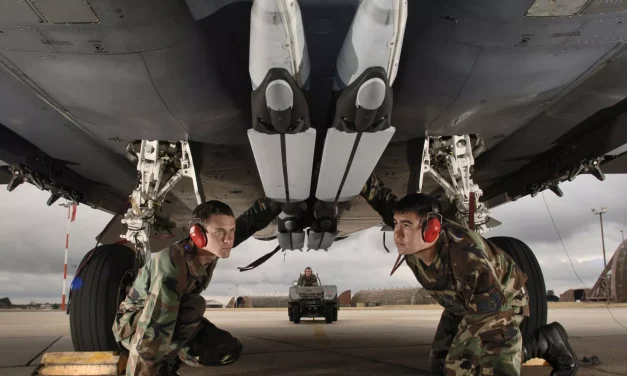
Balancing in the chain of chokepoints; from sea-based deterrence to pluralistic diplomacy

Strategic Council Online – Note: Recent developments in the political geography of West Asia, from rising tensions in the Persian Gulf to missile and drone activities in the Red Sea and the recent warning by Kaja Kallas, the European Union’s foreign policy chief, regarding the threat to freedom of navigation, indicate a key pattern shift; the US-Iran war has moved beyond the scope of a regional and local confrontation and has linked two vital passageways for the global economy: the Strait of Hormuz and the Bab el-Mandeb Strait.

Indicators for Choosing Between War and Diplomacy

SCFR Online – Opinion: Foreign policy analysis is valid when it evaluates decisions based on the information and circumstances prevailing at the time they were made, not on the basis of outcomes that only become apparent after the crisis has ended.

Loading

Politics

Ambiguous Prospects of the Zionist Regime’s Strategy for the Occupation of Gaza

Ambiguous Prospects of the Zionist Regime’s Strategy for the Occupation of Gaza

Strategic Council Online – Opinion: Despite widespread disagreements between Netanyahu and the Chief of the General Staff of the Zionist regime’s army, Eyal Zamir, the main framework of the plan to occupy Gaza City was finally signed after the war cabinet agreed to seize Gaza City; a decision that could have extensive consequences in the Occupied Territories and the region.

Netanyahu’s Legal Liability After Confession About Assassination of Iranian Nuclear Scientists

Netanyahu’s Legal Liability After Confession About Assassination of Iranian Nuclear Scientists

Strategic Council Online – Interview: A West Asia affairs analyst said: Recently, Benjamin Netanyahu, the Prime Minister of the Zionist regime, explicitly stated in an interview with Channel 14 of this regime that a significant number of Iran’s nuclear scientists have been killed as part of a targeted assassination program. This is the first time that a senior official of the Israeli regime has made such an explicit confession. Although the Israeli regime had previously been accused of playing a role in the assassination of Iranian scientists, this official confession opens a new chapter in legal and political pursuits; a chapter that could, by utilizing international capacities, confront a regime that sees itself as above the law with serious consequences.

An Analysis of Mahmoud Abbas’s Proposal for General Elections in the Occupied Territories

An Analysis of Mahmoud Abbas’s Proposal for General Elections in the Occupied Territories

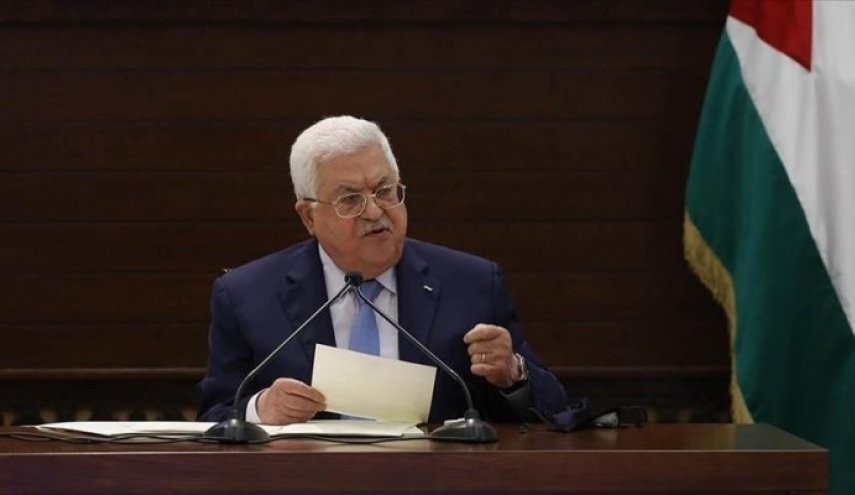
Strategic Council Online – Interview: A regional affairs expert stated that the remarks by Mahmoud Abbas, President of the Palestinian Authority, about holding general elections with the participation of Palestinians, while Gaza and the West Bank are facing the most severe attacks and threats, are a theatrical move aimed at legitimizing Mahmoud Abbas. This comes while Mahmoud Abbas suffers from severe illegitimacy among Palestinians, which is precisely why he raises such proposals.

France’s Parliament Concerned About the EU’s Catastrophic Strategic Dependence on America

France’s Parliament Concerned About the EU’s Catastrophic Strategic Dependence on America

Strategic Council Online – Interview: A senior international affairs analyst stated that the current geopolitical situation has created an unprecedented space for strategic changes in Europe, adding that the recommendation letter from France’s parliament is essentially a strategic response to these conditions. The release of the French parliament’s 153-page report—dubbed by Arnaud Bertrand (French journalist) as “the most prominent geopolitical document of the century”—has sparked a wave of debate and reactions in global political and intellectual circles. This document describes the European Union’s strategic dependence on the United States as a catastrophic failure and, through 50 practical recommendations, proposes a new path to escape Atlanticist hegemony and move towards equal partnership with China. If the contents and recommendations of this document are taken seriously in Europe, the consequences will extend beyond the geography of the Green Continent and directly impact relations among emerging powers, financial markets, and even international security equations. Furthermore, the document goes beyond “defense independence” to address “economic and monetary independence”—an area hitherto under the shadow of the US dollar and Washington’s policies. From this perspective, the present moment may mark the beginning of a new chapter in international politics, where Europe defines itself as an independent actor in the future multipolar order.

Critical Analysis of the Security Council’s Approach Towards the Gaza Crisis

Critical Analysis of the Security Council’s Approach Towards the Gaza Crisis

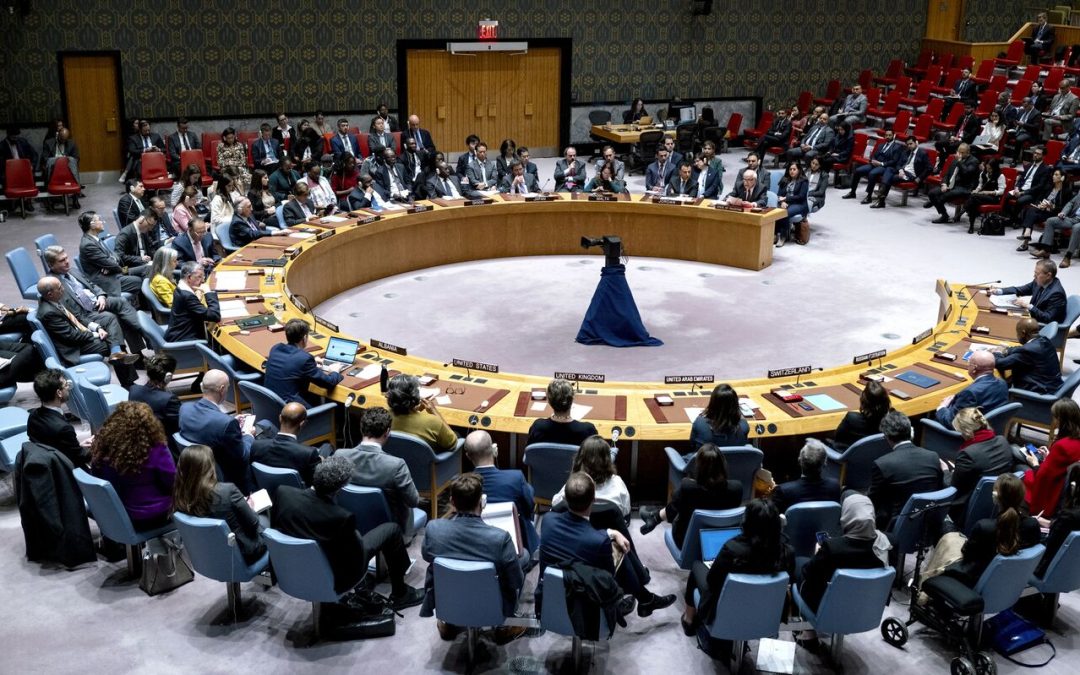
Strategic Council Online in – Interview: A senior Arab world analyst stated: When 61 thousand people are killed in Gaza and the Security Council is not even willing to issue a simple resolution in condemnation of the Zionist regime, it means the international structure is entirely dysfunctional. In such a situation, it is the nations that must cry out and awaken the global conscience.

Alaska: Deal-Making Stage or Geopolitical Minefield?

Alaska: Deal-Making Stage or Geopolitical Minefield?

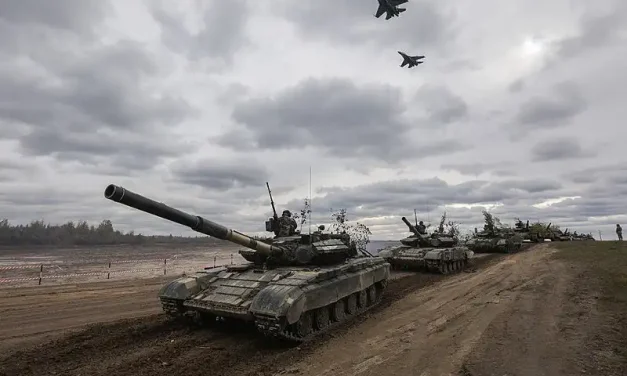
Strategic Council Online – Interview: A senior international affairs analyst stated: “The final week of summer 2025 marks a sensitive test for international relations and the future of the Ukraine war. The meeting between Donald Trump and Vladimir Putin in Alaska was merely seven months after Trump’s return to the White House, as the Ukraine war rages on relentlessly.” Volodymyr Zelenskyy, Ukraine’s president, has preemptively rejected Trump’s proposed peace plan—likely based on territorial concessions to Russia—warning that any agreement without Kyiv’s presence and consent would be a “dead solution.” Observers view the clash of interests among Moscow, Washington, Kyiv, and Europe as the intersection of four conflicting logics: Washington’s deal-driven logic, Moscow’s consolidationist logic, and Kyiv’s and Europe’s survivalist logic. While scenarios range from a minimal agreement to tacit Putin-Trump collusion solidifying current frontlines, each carries profound implications for European security and global power balances. Zelenskyy’s absence from Alaska could heighten risks of a deal that not only weakens Ukraine’s position but also undermines the legitimacy of fundamental international law.

Brussels and Beijing: Cautious Cooperation Based on Dependency with a Flavor of Distrust

Brussels and Beijing: Cautious Cooperation Based on Dependency with a Flavor of Distrust

Strategy Council Online – Opinion: At the recent summit of European Union leaders and China, held in Beijing to mark the 50th anniversary of diplomatic relations, the parties once again sought to redefine their relationship in an atmosphere filled with mutual opportunities and threats. While the European Union emphasized the need to deepen cooperation with China, particularly in combating climate change and removing trade barriers, the heavy shadow of the Ukraine crisis and the escalating geopolitical tensions between Washington and Beijing pushed the talks to an unprecedented level of prudence and caution.

Consequences of the “Lebanon Minus Resistance” Scenario

Consequences of the “Lebanon Minus Resistance” Scenario

Strategic Council Online – Interview: An expert on Arab world affairs said: One of the Zionist regime’s primary motives for insisting on disarming Hezbollah is to create a security vacuum in Lebanon so that, if needed, the possibility of attacking it again is provided. Today, Lebanon is witnessing one of its most sensitive political junctures in recent years; the Lebanese cabinet, in its recent session chaired by Najib Mikati, the country’s Prime Minister, approved the content of the US proposal for disarming Hezbollah and monopolizing weapons in the hands of the army, despite opposition from some ministers. The US proposal, which has faced firm opposition from the Hezbollah, was brought to Beirut by Thomas Barrack, the US Special Envoy, and with a paternalistic approach, considers disarming the Hezbollah a precondition for starting any dialogue and border demarcation, explicitly stating that this plan must either be entirely accepted or Lebanon must accept the consequences of its rejection.

An Analysis of France’s Decision to Recognize the Palestinian State

An Analysis of France’s Decision to Recognize the Palestinian State

Strategic Council Online – Interview: A senior West Asia affairs analyst stated: The explicit support of Spain, Ireland, Portugal, and some political factions in the Netherlands and Britain for France’s decision to recognize the Palestinian state indicates that the public atmosphere in Europe is changing. Emmanuel Macron, the President of France, has announced that in September, coinciding with the United Nations General Assembly, his government will recognize the State of Palestine. This decision, amid the humanitarian crisis in the Gaza Strip and the continuation of the Israeli regime’s military attacks, is considered a significant step in the diplomatic arena. Of course, it should not go unmentioned that France, as one of the founders of the Israeli regime’s nuclear program and a member of the Rome Statute, has a past full of legal and moral responsibilities towards this regime. In this vein, many analysts believe that if France wants to go beyond this symbolic decision and truly play a role in changing international relations regarding the Palestinian crisis, now is the time to reexamine its historical past.

أحدث الوظائف

Balancing in the chain of chokepoints; from sea-based deterrence to pluralistic diplomacy

Strategic Council Online – Note: Recent developments in the political geography of West Asia, from rising tensions in the Persian Gulf to missile and drone activities in the Red Sea and the recent warning by Kaja Kallas, the European Union’s foreign policy chief, regarding the threat to freedom of navigation, indicate a key pattern shift; the US-Iran war has moved beyond the scope of a regional and local confrontation and has linked two vital passageways for the global economy: the Strait of Hormuz and the Bab el-Mandeb Strait.

Indicators for Choosing Between War and Diplomacy

SCFR Online – Opinion: Foreign policy analysis is valid when it evaluates decisions based on the information and circumstances prevailing at the time they were made, not on the basis of outcomes that only become apparent after the crisis has ended.

Loading

Politics

Ambiguous Prospects of the Zionist Regime’s Strategy for the Occupation of Gaza

Ambiguous Prospects of the Zionist Regime’s Strategy for the Occupation of Gaza

Strategic Council Online – Opinion: Despite widespread disagreements between Netanyahu and the Chief of the General Staff of the Zionist regime’s army, Eyal Zamir, the main framework of the plan to occupy Gaza City was finally signed after the war cabinet agreed to seize Gaza City; a decision that could have extensive consequences in the Occupied Territories and the region.

Netanyahu’s Legal Liability After Confession About Assassination of Iranian Nuclear Scientists

Netanyahu’s Legal Liability After Confession About Assassination of Iranian Nuclear Scientists

Strategic Council Online – Interview: A West Asia affairs analyst said: Recently, Benjamin Netanyahu, the Prime Minister of the Zionist regime, explicitly stated in an interview with Channel 14 of this regime that a significant number of Iran’s nuclear scientists have been killed as part of a targeted assassination program. This is the first time that a senior official of the Israeli regime has made such an explicit confession. Although the Israeli regime had previously been accused of playing a role in the assassination of Iranian scientists, this official confession opens a new chapter in legal and political pursuits; a chapter that could, by utilizing international capacities, confront a regime that sees itself as above the law with serious consequences.

An Analysis of Mahmoud Abbas’s Proposal for General Elections in the Occupied Territories

An Analysis of Mahmoud Abbas’s Proposal for General Elections in the Occupied Territories

Strategic Council Online – Interview: A regional affairs expert stated that the remarks by Mahmoud Abbas, President of the Palestinian Authority, about holding general elections with the participation of Palestinians, while Gaza and the West Bank are facing the most severe attacks and threats, are a theatrical move aimed at legitimizing Mahmoud Abbas. This comes while Mahmoud Abbas suffers from severe illegitimacy among Palestinians, which is precisely why he raises such proposals.

France’s Parliament Concerned About the EU’s Catastrophic Strategic Dependence on America

France’s Parliament Concerned About the EU’s Catastrophic Strategic Dependence on America

Strategic Council Online – Interview: A senior international affairs analyst stated that the current geopolitical situation has created an unprecedented space for strategic changes in Europe, adding that the recommendation letter from France’s parliament is essentially a strategic response to these conditions. The release of the French parliament’s 153-page report—dubbed by Arnaud Bertrand (French journalist) as “the most prominent geopolitical document of the century”—has sparked a wave of debate and reactions in global political and intellectual circles. This document describes the European Union’s strategic dependence on the United States as a catastrophic failure and, through 50 practical recommendations, proposes a new path to escape Atlanticist hegemony and move towards equal partnership with China. If the contents and recommendations of this document are taken seriously in Europe, the consequences will extend beyond the geography of the Green Continent and directly impact relations among emerging powers, financial markets, and even international security equations. Furthermore, the document goes beyond “defense independence” to address “economic and monetary independence”—an area hitherto under the shadow of the US dollar and Washington’s policies. From this perspective, the present moment may mark the beginning of a new chapter in international politics, where Europe defines itself as an independent actor in the future multipolar order.

Critical Analysis of the Security Council’s Approach Towards the Gaza Crisis

Critical Analysis of the Security Council’s Approach Towards the Gaza Crisis

Strategic Council Online in – Interview: A senior Arab world analyst stated: When 61 thousand people are killed in Gaza and the Security Council is not even willing to issue a simple resolution in condemnation of the Zionist regime, it means the international structure is entirely dysfunctional. In such a situation, it is the nations that must cry out and awaken the global conscience.

Alaska: Deal-Making Stage or Geopolitical Minefield?

Alaska: Deal-Making Stage or Geopolitical Minefield?

Strategic Council Online – Interview: A senior international affairs analyst stated: “The final week of summer 2025 marks a sensitive test for international relations and the future of the Ukraine war. The meeting between Donald Trump and Vladimir Putin in Alaska was merely seven months after Trump’s return to the White House, as the Ukraine war rages on relentlessly.” Volodymyr Zelenskyy, Ukraine’s president, has preemptively rejected Trump’s proposed peace plan—likely based on territorial concessions to Russia—warning that any agreement without Kyiv’s presence and consent would be a “dead solution.” Observers view the clash of interests among Moscow, Washington, Kyiv, and Europe as the intersection of four conflicting logics: Washington’s deal-driven logic, Moscow’s consolidationist logic, and Kyiv’s and Europe’s survivalist logic. While scenarios range from a minimal agreement to tacit Putin-Trump collusion solidifying current frontlines, each carries profound implications for European security and global power balances. Zelenskyy’s absence from Alaska could heighten risks of a deal that not only weakens Ukraine’s position but also undermines the legitimacy of fundamental international law.

Brussels and Beijing: Cautious Cooperation Based on Dependency with a Flavor of Distrust

Brussels and Beijing: Cautious Cooperation Based on Dependency with a Flavor of Distrust

Strategy Council Online – Opinion: At the recent summit of European Union leaders and China, held in Beijing to mark the 50th anniversary of diplomatic relations, the parties once again sought to redefine their relationship in an atmosphere filled with mutual opportunities and threats. While the European Union emphasized the need to deepen cooperation with China, particularly in combating climate change and removing trade barriers, the heavy shadow of the Ukraine crisis and the escalating geopolitical tensions between Washington and Beijing pushed the talks to an unprecedented level of prudence and caution.

Consequences of the “Lebanon Minus Resistance” Scenario

Consequences of the “Lebanon Minus Resistance” Scenario

Strategic Council Online – Interview: An expert on Arab world affairs said: One of the Zionist regime’s primary motives for insisting on disarming Hezbollah is to create a security vacuum in Lebanon so that, if needed, the possibility of attacking it again is provided. Today, Lebanon is witnessing one of its most sensitive political junctures in recent years; the Lebanese cabinet, in its recent session chaired by Najib Mikati, the country’s Prime Minister, approved the content of the US proposal for disarming Hezbollah and monopolizing weapons in the hands of the army, despite opposition from some ministers. The US proposal, which has faced firm opposition from the Hezbollah, was brought to Beirut by Thomas Barrack, the US Special Envoy, and with a paternalistic approach, considers disarming the Hezbollah a precondition for starting any dialogue and border demarcation, explicitly stating that this plan must either be entirely accepted or Lebanon must accept the consequences of its rejection.

An Analysis of France’s Decision to Recognize the Palestinian State

An Analysis of France’s Decision to Recognize the Palestinian State

Strategic Council Online – Interview: A senior West Asia affairs analyst stated: The explicit support of Spain, Ireland, Portugal, and some political factions in the Netherlands and Britain for France’s decision to recognize the Palestinian state indicates that the public atmosphere in Europe is changing. Emmanuel Macron, the President of France, has announced that in September, coinciding with the United Nations General Assembly, his government will recognize the State of Palestine. This decision, amid the humanitarian crisis in the Gaza Strip and the continuation of the Israeli regime’s military attacks, is considered a significant step in the diplomatic arena. Of course, it should not go unmentioned that France, as one of the founders of the Israeli regime’s nuclear program and a member of the Rome Statute, has a past full of legal and moral responsibilities towards this regime. In this vein, many analysts believe that if France wants to go beyond this symbolic decision and truly play a role in changing international relations regarding the Palestinian crisis, now is the time to reexamine its historical past.

Politics

Ambiguous Prospects of the Zionist Regime’s Strategy for the Occupation of Gaza

Ambiguous Prospects of the Zionist Regime’s Strategy for the Occupation of Gaza

Strategic Council Online – Opinion: Despite widespread disagreements between Netanyahu and the Chief of the General Staff of the Zionist regime’s army, Eyal Zamir, the main framework of the plan to occupy Gaza City was finally signed after the war cabinet agreed to seize Gaza City; a decision that could have extensive consequences in the Occupied Territories and the region.

Netanyahu’s Legal Liability After Confession About Assassination of Iranian Nuclear Scientists

Netanyahu’s Legal Liability After Confession About Assassination of Iranian Nuclear Scientists

Strategic Council Online – Interview: A West Asia affairs analyst said: Recently, Benjamin Netanyahu, the Prime Minister of the Zionist regime, explicitly stated in an interview with Channel 14 of this regime that a significant number of Iran’s nuclear scientists have been killed as part of a targeted assassination program. This is the first time that a senior official of the Israeli regime has made such an explicit confession. Although the Israeli regime had previously been accused of playing a role in the assassination of Iranian scientists, this official confession opens a new chapter in legal and political pursuits; a chapter that could, by utilizing international capacities, confront a regime that sees itself as above the law with serious consequences.

An Analysis of Mahmoud Abbas’s Proposal for General Elections in the Occupied Territories

An Analysis of Mahmoud Abbas’s Proposal for General Elections in the Occupied Territories

Strategic Council Online – Interview: A regional affairs expert stated that the remarks by Mahmoud Abbas, President of the Palestinian Authority, about holding general elections with the participation of Palestinians, while Gaza and the West Bank are facing the most severe attacks and threats, are a theatrical move aimed at legitimizing Mahmoud Abbas. This comes while Mahmoud Abbas suffers from severe illegitimacy among Palestinians, which is precisely why he raises such proposals.

France’s Parliament Concerned About the EU’s Catastrophic Strategic Dependence on America

France’s Parliament Concerned About the EU’s Catastrophic Strategic Dependence on America

Strategic Council Online – Interview: A senior international affairs analyst stated that the current geopolitical situation has created an unprecedented space for strategic changes in Europe, adding that the recommendation letter from France’s parliament is essentially a strategic response to these conditions. The release of the French parliament’s 153-page report—dubbed by Arnaud Bertrand (French journalist) as “the most prominent geopolitical document of the century”—has sparked a wave of debate and reactions in global political and intellectual circles. This document describes the European Union’s strategic dependence on the United States as a catastrophic failure and, through 50 practical recommendations, proposes a new path to escape Atlanticist hegemony and move towards equal partnership with China. If the contents and recommendations of this document are taken seriously in Europe, the consequences will extend beyond the geography of the Green Continent and directly impact relations among emerging powers, financial markets, and even international security equations. Furthermore, the document goes beyond “defense independence” to address “economic and monetary independence”—an area hitherto under the shadow of the US dollar and Washington’s policies. From this perspective, the present moment may mark the beginning of a new chapter in international politics, where Europe defines itself as an independent actor in the future multipolar order.

Critical Analysis of the Security Council’s Approach Towards the Gaza Crisis

Critical Analysis of the Security Council’s Approach Towards the Gaza Crisis

Strategic Council Online in – Interview: A senior Arab world analyst stated: When 61 thousand people are killed in Gaza and the Security Council is not even willing to issue a simple resolution in condemnation of the Zionist regime, it means the international structure is entirely dysfunctional. In such a situation, it is the nations that must cry out and awaken the global conscience.

Alaska: Deal-Making Stage or Geopolitical Minefield?

Alaska: Deal-Making Stage or Geopolitical Minefield?

Strategic Council Online – Interview: A senior international affairs analyst stated: “The final week of summer 2025 marks a sensitive test for international relations and the future of the Ukraine war. The meeting between Donald Trump and Vladimir Putin in Alaska was merely seven months after Trump’s return to the White House, as the Ukraine war rages on relentlessly.” Volodymyr Zelenskyy, Ukraine’s president, has preemptively rejected Trump’s proposed peace plan—likely based on territorial concessions to Russia—warning that any agreement without Kyiv’s presence and consent would be a “dead solution.” Observers view the clash of interests among Moscow, Washington, Kyiv, and Europe as the intersection of four conflicting logics: Washington’s deal-driven logic, Moscow’s consolidationist logic, and Kyiv’s and Europe’s survivalist logic. While scenarios range from a minimal agreement to tacit Putin-Trump collusion solidifying current frontlines, each carries profound implications for European security and global power balances. Zelenskyy’s absence from Alaska could heighten risks of a deal that not only weakens Ukraine’s position but also undermines the legitimacy of fundamental international law.

Brussels and Beijing: Cautious Cooperation Based on Dependency with a Flavor of Distrust

Brussels and Beijing: Cautious Cooperation Based on Dependency with a Flavor of Distrust

Strategy Council Online – Opinion: At the recent summit of European Union leaders and China, held in Beijing to mark the 50th anniversary of diplomatic relations, the parties once again sought to redefine their relationship in an atmosphere filled with mutual opportunities and threats. While the European Union emphasized the need to deepen cooperation with China, particularly in combating climate change and removing trade barriers, the heavy shadow of the Ukraine crisis and the escalating geopolitical tensions between Washington and Beijing pushed the talks to an unprecedented level of prudence and caution.

Consequences of the “Lebanon Minus Resistance” Scenario

Consequences of the “Lebanon Minus Resistance” Scenario

Strategic Council Online – Interview: An expert on Arab world affairs said: One of the Zionist regime’s primary motives for insisting on disarming Hezbollah is to create a security vacuum in Lebanon so that, if needed, the possibility of attacking it again is provided. Today, Lebanon is witnessing one of its most sensitive political junctures in recent years; the Lebanese cabinet, in its recent session chaired by Najib Mikati, the country’s Prime Minister, approved the content of the US proposal for disarming Hezbollah and monopolizing weapons in the hands of the army, despite opposition from some ministers. The US proposal, which has faced firm opposition from the Hezbollah, was brought to Beirut by Thomas Barrack, the US Special Envoy, and with a paternalistic approach, considers disarming the Hezbollah a precondition for starting any dialogue and border demarcation, explicitly stating that this plan must either be entirely accepted or Lebanon must accept the consequences of its rejection.

An Analysis of France’s Decision to Recognize the Palestinian State

An Analysis of France’s Decision to Recognize the Palestinian State

Strategic Council Online – Interview: A senior West Asia affairs analyst stated: The explicit support of Spain, Ireland, Portugal, and some political factions in the Netherlands and Britain for France’s decision to recognize the Palestinian state indicates that the public atmosphere in Europe is changing. Emmanuel Macron, the President of France, has announced that in September, coinciding with the United Nations General Assembly, his government will recognize the State of Palestine. This decision, amid the humanitarian crisis in the Gaza Strip and the continuation of the Israeli regime’s military attacks, is considered a significant step in the diplomatic arena. Of course, it should not go unmentioned that France, as one of the founders of the Israeli regime’s nuclear program and a member of the Rome Statute, has a past full of legal and moral responsibilities towards this regime. In this vein, many analysts believe that if France wants to go beyond this symbolic decision and truly play a role in changing international relations regarding the Palestinian crisis, now is the time to reexamine its historical past.

LATEST CONTENT

Balancing in the chain of chokepoints; from sea-based deterrence to pluralistic diplomacy

Strategic Council Online – Note: Recent developments in the political geography of West Asia, from rising tensions in the Persian Gulf to missile and drone activities in the Red Sea and the recent warning by Kaja Kallas, the European Union’s foreign policy chief, regarding the threat to freedom of navigation, indicate a key pattern shift; the US-Iran war has moved beyond the scope of a regional and local confrontation and has linked two vital passageways for the global economy: the Strait of Hormuz and the Bab el-Mandeb Strait.

Indicators for Choosing Between War and Diplomacy

SCFR Online – Opinion: Foreign policy analysis is valid when it evaluates decisions based on the information and circumstances prevailing at the time they were made, not on the basis of outcomes that only become apparent after the crisis has ended.

Loading

Politics

Ambiguous Prospects of the Zionist Regime’s Strategy for the Occupation of Gaza

Ambiguous Prospects of the Zionist Regime’s Strategy for the Occupation of Gaza

Strategic Council Online – Opinion: Despite widespread disagreements between Netanyahu and the Chief of the General Staff of the Zionist regime’s army, Eyal Zamir, the main framework of the plan to occupy Gaza City was finally signed after the war cabinet agreed to seize Gaza City; a decision that could have extensive consequences in the Occupied Territories and the region.

Netanyahu’s Legal Liability After Confession About Assassination of Iranian Nuclear Scientists

Netanyahu’s Legal Liability After Confession About Assassination of Iranian Nuclear Scientists

Strategic Council Online – Interview: A West Asia affairs analyst said: Recently, Benjamin Netanyahu, the Prime Minister of the Zionist regime, explicitly stated in an interview with Channel 14 of this regime that a significant number of Iran’s nuclear scientists have been killed as part of a targeted assassination program. This is the first time that a senior official of the Israeli regime has made such an explicit confession. Although the Israeli regime had previously been accused of playing a role in the assassination of Iranian scientists, this official confession opens a new chapter in legal and political pursuits; a chapter that could, by utilizing international capacities, confront a regime that sees itself as above the law with serious consequences.

An Analysis of Mahmoud Abbas’s Proposal for General Elections in the Occupied Territories

An Analysis of Mahmoud Abbas’s Proposal for General Elections in the Occupied Territories

Strategic Council Online – Interview: A regional affairs expert stated that the remarks by Mahmoud Abbas, President of the Palestinian Authority, about holding general elections with the participation of Palestinians, while Gaza and the West Bank are facing the most severe attacks and threats, are a theatrical move aimed at legitimizing Mahmoud Abbas. This comes while Mahmoud Abbas suffers from severe illegitimacy among Palestinians, which is precisely why he raises such proposals.

France’s Parliament Concerned About the EU’s Catastrophic Strategic Dependence on America

France’s Parliament Concerned About the EU’s Catastrophic Strategic Dependence on America

Strategic Council Online – Interview: A senior international affairs analyst stated that the current geopolitical situation has created an unprecedented space for strategic changes in Europe, adding that the recommendation letter from France’s parliament is essentially a strategic response to these conditions. The release of the French parliament’s 153-page report—dubbed by Arnaud Bertrand (French journalist) as “the most prominent geopolitical document of the century”—has sparked a wave of debate and reactions in global political and intellectual circles. This document describes the European Union’s strategic dependence on the United States as a catastrophic failure and, through 50 practical recommendations, proposes a new path to escape Atlanticist hegemony and move towards equal partnership with China. If the contents and recommendations of this document are taken seriously in Europe, the consequences will extend beyond the geography of the Green Continent and directly impact relations among emerging powers, financial markets, and even international security equations. Furthermore, the document goes beyond “defense independence” to address “economic and monetary independence”—an area hitherto under the shadow of the US dollar and Washington’s policies. From this perspective, the present moment may mark the beginning of a new chapter in international politics, where Europe defines itself as an independent actor in the future multipolar order.

Critical Analysis of the Security Council’s Approach Towards the Gaza Crisis

Critical Analysis of the Security Council’s Approach Towards the Gaza Crisis

Strategic Council Online in – Interview: A senior Arab world analyst stated: When 61 thousand people are killed in Gaza and the Security Council is not even willing to issue a simple resolution in condemnation of the Zionist regime, it means the international structure is entirely dysfunctional. In such a situation, it is the nations that must cry out and awaken the global conscience.

Alaska: Deal-Making Stage or Geopolitical Minefield?

Alaska: Deal-Making Stage or Geopolitical Minefield?

Strategic Council Online – Interview: A senior international affairs analyst stated: “The final week of summer 2025 marks a sensitive test for international relations and the future of the Ukraine war. The meeting between Donald Trump and Vladimir Putin in Alaska was merely seven months after Trump’s return to the White House, as the Ukraine war rages on relentlessly.” Volodymyr Zelenskyy, Ukraine’s president, has preemptively rejected Trump’s proposed peace plan—likely based on territorial concessions to Russia—warning that any agreement without Kyiv’s presence and consent would be a “dead solution.” Observers view the clash of interests among Moscow, Washington, Kyiv, and Europe as the intersection of four conflicting logics: Washington’s deal-driven logic, Moscow’s consolidationist logic, and Kyiv’s and Europe’s survivalist logic. While scenarios range from a minimal agreement to tacit Putin-Trump collusion solidifying current frontlines, each carries profound implications for European security and global power balances. Zelenskyy’s absence from Alaska could heighten risks of a deal that not only weakens Ukraine’s position but also undermines the legitimacy of fundamental international law.

Brussels and Beijing: Cautious Cooperation Based on Dependency with a Flavor of Distrust

Brussels and Beijing: Cautious Cooperation Based on Dependency with a Flavor of Distrust

Strategy Council Online – Opinion: At the recent summit of European Union leaders and China, held in Beijing to mark the 50th anniversary of diplomatic relations, the parties once again sought to redefine their relationship in an atmosphere filled with mutual opportunities and threats. While the European Union emphasized the need to deepen cooperation with China, particularly in combating climate change and removing trade barriers, the heavy shadow of the Ukraine crisis and the escalating geopolitical tensions between Washington and Beijing pushed the talks to an unprecedented level of prudence and caution.

Consequences of the “Lebanon Minus Resistance” Scenario

Consequences of the “Lebanon Minus Resistance” Scenario

Strategic Council Online – Interview: An expert on Arab world affairs said: One of the Zionist regime’s primary motives for insisting on disarming Hezbollah is to create a security vacuum in Lebanon so that, if needed, the possibility of attacking it again is provided. Today, Lebanon is witnessing one of its most sensitive political junctures in recent years; the Lebanese cabinet, in its recent session chaired by Najib Mikati, the country’s Prime Minister, approved the content of the US proposal for disarming Hezbollah and monopolizing weapons in the hands of the army, despite opposition from some ministers. The US proposal, which has faced firm opposition from the Hezbollah, was brought to Beirut by Thomas Barrack, the US Special Envoy, and with a paternalistic approach, considers disarming the Hezbollah a precondition for starting any dialogue and border demarcation, explicitly stating that this plan must either be entirely accepted or Lebanon must accept the consequences of its rejection.

An Analysis of France’s Decision to Recognize the Palestinian State

An Analysis of France’s Decision to Recognize the Palestinian State

Strategic Council Online – Interview: A senior West Asia affairs analyst stated: The explicit support of Spain, Ireland, Portugal, and some political factions in the Netherlands and Britain for France’s decision to recognize the Palestinian state indicates that the public atmosphere in Europe is changing. Emmanuel Macron, the President of France, has announced that in September, coinciding with the United Nations General Assembly, his government will recognize the State of Palestine. This decision, amid the humanitarian crisis in the Gaza Strip and the continuation of the Israeli regime’s military attacks, is considered a significant step in the diplomatic arena. Of course, it should not go unmentioned that France, as one of the founders of the Israeli regime’s nuclear program and a member of the Rome Statute, has a past full of legal and moral responsibilities towards this regime. In this vein, many analysts believe that if France wants to go beyond this symbolic decision and truly play a role in changing international relations regarding the Palestinian crisis, now is the time to reexamine its historical past.

ÚLTIMAS PUBLICACIONES

Balancing in the chain of chokepoints; from sea-based deterrence to pluralistic diplomacy

Strategic Council Online – Note: Recent developments in the political geography of West Asia, from rising tensions in the Persian Gulf to missile and drone activities in the Red Sea and the recent warning by Kaja Kallas, the European Union’s foreign policy chief, regarding the threat to freedom of navigation, indicate a key pattern shift; the US-Iran war has moved beyond the scope of a regional and local confrontation and has linked two vital passageways for the global economy: the Strait of Hormuz and the Bab el-Mandeb Strait.

Indicators for Choosing Between War and Diplomacy

SCFR Online – Opinion: Foreign policy analysis is valid when it evaluates decisions based on the information and circumstances prevailing at the time they were made, not on the basis of outcomes that only become apparent after the crisis has ended.

Loading

Politics

Ambiguous Prospects of the Zionist Regime’s Strategy for the Occupation of Gaza

Ambiguous Prospects of the Zionist Regime’s Strategy for the Occupation of Gaza

Strategic Council Online – Opinion: Despite widespread disagreements between Netanyahu and the Chief of the General Staff of the Zionist regime’s army, Eyal Zamir, the main framework of the plan to occupy Gaza City was finally signed after the war cabinet agreed to seize Gaza City; a decision that could have extensive consequences in the Occupied Territories and the region.

Netanyahu’s Legal Liability After Confession About Assassination of Iranian Nuclear Scientists

Netanyahu’s Legal Liability After Confession About Assassination of Iranian Nuclear Scientists

Strategic Council Online – Interview: A West Asia affairs analyst said: Recently, Benjamin Netanyahu, the Prime Minister of the Zionist regime, explicitly stated in an interview with Channel 14 of this regime that a significant number of Iran’s nuclear scientists have been killed as part of a targeted assassination program. This is the first time that a senior official of the Israeli regime has made such an explicit confession. Although the Israeli regime had previously been accused of playing a role in the assassination of Iranian scientists, this official confession opens a new chapter in legal and political pursuits; a chapter that could, by utilizing international capacities, confront a regime that sees itself as above the law with serious consequences.

An Analysis of Mahmoud Abbas’s Proposal for General Elections in the Occupied Territories

An Analysis of Mahmoud Abbas’s Proposal for General Elections in the Occupied Territories

Strategic Council Online – Interview: A regional affairs expert stated that the remarks by Mahmoud Abbas, President of the Palestinian Authority, about holding general elections with the participation of Palestinians, while Gaza and the West Bank are facing the most severe attacks and threats, are a theatrical move aimed at legitimizing Mahmoud Abbas. This comes while Mahmoud Abbas suffers from severe illegitimacy among Palestinians, which is precisely why he raises such proposals.

France’s Parliament Concerned About the EU’s Catastrophic Strategic Dependence on America

France’s Parliament Concerned About the EU’s Catastrophic Strategic Dependence on America

Strategic Council Online – Interview: A senior international affairs analyst stated that the current geopolitical situation has created an unprecedented space for strategic changes in Europe, adding that the recommendation letter from France’s parliament is essentially a strategic response to these conditions. The release of the French parliament’s 153-page report—dubbed by Arnaud Bertrand (French journalist) as “the most prominent geopolitical document of the century”—has sparked a wave of debate and reactions in global political and intellectual circles. This document describes the European Union’s strategic dependence on the United States as a catastrophic failure and, through 50 practical recommendations, proposes a new path to escape Atlanticist hegemony and move towards equal partnership with China. If the contents and recommendations of this document are taken seriously in Europe, the consequences will extend beyond the geography of the Green Continent and directly impact relations among emerging powers, financial markets, and even international security equations. Furthermore, the document goes beyond “defense independence” to address “economic and monetary independence”—an area hitherto under the shadow of the US dollar and Washington’s policies. From this perspective, the present moment may mark the beginning of a new chapter in international politics, where Europe defines itself as an independent actor in the future multipolar order.

Critical Analysis of the Security Council’s Approach Towards the Gaza Crisis

Critical Analysis of the Security Council’s Approach Towards the Gaza Crisis

Strategic Council Online in – Interview: A senior Arab world analyst stated: When 61 thousand people are killed in Gaza and the Security Council is not even willing to issue a simple resolution in condemnation of the Zionist regime, it means the international structure is entirely dysfunctional. In such a situation, it is the nations that must cry out and awaken the global conscience.

Alaska: Deal-Making Stage or Geopolitical Minefield?

Alaska: Deal-Making Stage or Geopolitical Minefield?

Strategic Council Online – Interview: A senior international affairs analyst stated: “The final week of summer 2025 marks a sensitive test for international relations and the future of the Ukraine war. The meeting between Donald Trump and Vladimir Putin in Alaska was merely seven months after Trump’s return to the White House, as the Ukraine war rages on relentlessly.” Volodymyr Zelenskyy, Ukraine’s president, has preemptively rejected Trump’s proposed peace plan—likely based on territorial concessions to Russia—warning that any agreement without Kyiv’s presence and consent would be a “dead solution.” Observers view the clash of interests among Moscow, Washington, Kyiv, and Europe as the intersection of four conflicting logics: Washington’s deal-driven logic, Moscow’s consolidationist logic, and Kyiv’s and Europe’s survivalist logic. While scenarios range from a minimal agreement to tacit Putin-Trump collusion solidifying current frontlines, each carries profound implications for European security and global power balances. Zelenskyy’s absence from Alaska could heighten risks of a deal that not only weakens Ukraine’s position but also undermines the legitimacy of fundamental international law.

Brussels and Beijing: Cautious Cooperation Based on Dependency with a Flavor of Distrust

Brussels and Beijing: Cautious Cooperation Based on Dependency with a Flavor of Distrust

Strategy Council Online – Opinion: At the recent summit of European Union leaders and China, held in Beijing to mark the 50th anniversary of diplomatic relations, the parties once again sought to redefine their relationship in an atmosphere filled with mutual opportunities and threats. While the European Union emphasized the need to deepen cooperation with China, particularly in combating climate change and removing trade barriers, the heavy shadow of the Ukraine crisis and the escalating geopolitical tensions between Washington and Beijing pushed the talks to an unprecedented level of prudence and caution.

Consequences of the “Lebanon Minus Resistance” Scenario

Consequences of the “Lebanon Minus Resistance” Scenario

Strategic Council Online – Interview: An expert on Arab world affairs said: One of the Zionist regime’s primary motives for insisting on disarming Hezbollah is to create a security vacuum in Lebanon so that, if needed, the possibility of attacking it again is provided. Today, Lebanon is witnessing one of its most sensitive political junctures in recent years; the Lebanese cabinet, in its recent session chaired by Najib Mikati, the country’s Prime Minister, approved the content of the US proposal for disarming Hezbollah and monopolizing weapons in the hands of the army, despite opposition from some ministers. The US proposal, which has faced firm opposition from the Hezbollah, was brought to Beirut by Thomas Barrack, the US Special Envoy, and with a paternalistic approach, considers disarming the Hezbollah a precondition for starting any dialogue and border demarcation, explicitly stating that this plan must either be entirely accepted or Lebanon must accept the consequences of its rejection.

An Analysis of France’s Decision to Recognize the Palestinian State

An Analysis of France’s Decision to Recognize the Palestinian State

Strategic Council Online – Interview: A senior West Asia affairs analyst stated: The explicit support of Spain, Ireland, Portugal, and some political factions in the Netherlands and Britain for France’s decision to recognize the Palestinian state indicates that the public atmosphere in Europe is changing. Emmanuel Macron, the President of France, has announced that in September, coinciding with the United Nations General Assembly, his government will recognize the State of Palestine. This decision, amid the humanitarian crisis in the Gaza Strip and the continuation of the Israeli regime’s military attacks, is considered a significant step in the diplomatic arena. Of course, it should not go unmentioned that France, as one of the founders of the Israeli regime’s nuclear program and a member of the Rome Statute, has a past full of legal and moral responsibilities towards this regime. In this vein, many analysts believe that if France wants to go beyond this symbolic decision and truly play a role in changing international relations regarding the Palestinian crisis, now is the time to reexamine its historical past.

ÚLTIMAS PUBLICACIONES

Balancing in the chain of chokepoints; from sea-based deterrence to pluralistic diplomacy

Strategic Council Online – Note: Recent developments in the political geography of West Asia, from rising tensions in the Persian Gulf to missile and drone activities in the Red Sea and the recent warning by Kaja Kallas, the European Union’s foreign policy chief, regarding the threat to freedom of navigation, indicate a key pattern shift; the US-Iran war has moved beyond the scope of a regional and local confrontation and has linked two vital passageways for the global economy: the Strait of Hormuz and the Bab el-Mandeb Strait.

Indicators for Choosing Between War and Diplomacy

SCFR Online – Opinion: Foreign policy analysis is valid when it evaluates decisions based on the information and circumstances prevailing at the time they were made, not on the basis of outcomes that only become apparent after the crisis has ended.

Loading

Politics

Ambiguous Prospects of the Zionist Regime’s Strategy for the Occupation of Gaza

Ambiguous Prospects of the Zionist Regime’s Strategy for the Occupation of Gaza

Strategic Council Online – Opinion: Despite widespread disagreements between Netanyahu and the Chief of the General Staff of the Zionist regime’s army, Eyal Zamir, the main framework of the plan to occupy Gaza City was finally signed after the war cabinet agreed to seize Gaza City; a decision that could have extensive consequences in the Occupied Territories and the region.

Netanyahu’s Legal Liability After Confession About Assassination of Iranian Nuclear Scientists

Netanyahu’s Legal Liability After Confession About Assassination of Iranian Nuclear Scientists

Strategic Council Online – Interview: A West Asia affairs analyst said: Recently, Benjamin Netanyahu, the Prime Minister of the Zionist regime, explicitly stated in an interview with Channel 14 of this regime that a significant number of Iran’s nuclear scientists have been killed as part of a targeted assassination program. This is the first time that a senior official of the Israeli regime has made such an explicit confession. Although the Israeli regime had previously been accused of playing a role in the assassination of Iranian scientists, this official confession opens a new chapter in legal and political pursuits; a chapter that could, by utilizing international capacities, confront a regime that sees itself as above the law with serious consequences.

An Analysis of Mahmoud Abbas’s Proposal for General Elections in the Occupied Territories

An Analysis of Mahmoud Abbas’s Proposal for General Elections in the Occupied Territories

Strategic Council Online – Interview: A regional affairs expert stated that the remarks by Mahmoud Abbas, President of the Palestinian Authority, about holding general elections with the participation of Palestinians, while Gaza and the West Bank are facing the most severe attacks and threats, are a theatrical move aimed at legitimizing Mahmoud Abbas. This comes while Mahmoud Abbas suffers from severe illegitimacy among Palestinians, which is precisely why he raises such proposals.

France’s Parliament Concerned About the EU’s Catastrophic Strategic Dependence on America

France’s Parliament Concerned About the EU’s Catastrophic Strategic Dependence on America

Strategic Council Online – Interview: A senior international affairs analyst stated that the current geopolitical situation has created an unprecedented space for strategic changes in Europe, adding that the recommendation letter from France’s parliament is essentially a strategic response to these conditions. The release of the French parliament’s 153-page report—dubbed by Arnaud Bertrand (French journalist) as “the most prominent geopolitical document of the century”—has sparked a wave of debate and reactions in global political and intellectual circles. This document describes the European Union’s strategic dependence on the United States as a catastrophic failure and, through 50 practical recommendations, proposes a new path to escape Atlanticist hegemony and move towards equal partnership with China. If the contents and recommendations of this document are taken seriously in Europe, the consequences will extend beyond the geography of the Green Continent and directly impact relations among emerging powers, financial markets, and even international security equations. Furthermore, the document goes beyond “defense independence” to address “economic and monetary independence”—an area hitherto under the shadow of the US dollar and Washington’s policies. From this perspective, the present moment may mark the beginning of a new chapter in international politics, where Europe defines itself as an independent actor in the future multipolar order.

Critical Analysis of the Security Council’s Approach Towards the Gaza Crisis

Critical Analysis of the Security Council’s Approach Towards the Gaza Crisis

Strategic Council Online in – Interview: A senior Arab world analyst stated: When 61 thousand people are killed in Gaza and the Security Council is not even willing to issue a simple resolution in condemnation of the Zionist regime, it means the international structure is entirely dysfunctional. In such a situation, it is the nations that must cry out and awaken the global conscience.

Alaska: Deal-Making Stage or Geopolitical Minefield?

Alaska: Deal-Making Stage or Geopolitical Minefield?

Strategic Council Online – Interview: A senior international affairs analyst stated: “The final week of summer 2025 marks a sensitive test for international relations and the future of the Ukraine war. The meeting between Donald Trump and Vladimir Putin in Alaska was merely seven months after Trump’s return to the White House, as the Ukraine war rages on relentlessly.” Volodymyr Zelenskyy, Ukraine’s president, has preemptively rejected Trump’s proposed peace plan—likely based on territorial concessions to Russia—warning that any agreement without Kyiv’s presence and consent would be a “dead solution.” Observers view the clash of interests among Moscow, Washington, Kyiv, and Europe as the intersection of four conflicting logics: Washington’s deal-driven logic, Moscow’s consolidationist logic, and Kyiv’s and Europe’s survivalist logic. While scenarios range from a minimal agreement to tacit Putin-Trump collusion solidifying current frontlines, each carries profound implications for European security and global power balances. Zelenskyy’s absence from Alaska could heighten risks of a deal that not only weakens Ukraine’s position but also undermines the legitimacy of fundamental international law.

Brussels and Beijing: Cautious Cooperation Based on Dependency with a Flavor of Distrust

Brussels and Beijing: Cautious Cooperation Based on Dependency with a Flavor of Distrust

Strategy Council Online – Opinion: At the recent summit of European Union leaders and China, held in Beijing to mark the 50th anniversary of diplomatic relations, the parties once again sought to redefine their relationship in an atmosphere filled with mutual opportunities and threats. While the European Union emphasized the need to deepen cooperation with China, particularly in combating climate change and removing trade barriers, the heavy shadow of the Ukraine crisis and the escalating geopolitical tensions between Washington and Beijing pushed the talks to an unprecedented level of prudence and caution.

Consequences of the “Lebanon Minus Resistance” Scenario

Consequences of the “Lebanon Minus Resistance” Scenario

Strategic Council Online – Interview: An expert on Arab world affairs said: One of the Zionist regime’s primary motives for insisting on disarming Hezbollah is to create a security vacuum in Lebanon so that, if needed, the possibility of attacking it again is provided. Today, Lebanon is witnessing one of its most sensitive political junctures in recent years; the Lebanese cabinet, in its recent session chaired by Najib Mikati, the country’s Prime Minister, approved the content of the US proposal for disarming Hezbollah and monopolizing weapons in the hands of the army, despite opposition from some ministers. The US proposal, which has faced firm opposition from the Hezbollah, was brought to Beirut by Thomas Barrack, the US Special Envoy, and with a paternalistic approach, considers disarming the Hezbollah a precondition for starting any dialogue and border demarcation, explicitly stating that this plan must either be entirely accepted or Lebanon must accept the consequences of its rejection.

An Analysis of France’s Decision to Recognize the Palestinian State

An Analysis of France’s Decision to Recognize the Palestinian State

Strategic Council Online – Interview: A senior West Asia affairs analyst stated: The explicit support of Spain, Ireland, Portugal, and some political factions in the Netherlands and Britain for France’s decision to recognize the Palestinian state indicates that the public atmosphere in Europe is changing. Emmanuel Macron, the President of France, has announced that in September, coinciding with the United Nations General Assembly, his government will recognize the State of Palestine. This decision, amid the humanitarian crisis in the Gaza Strip and the continuation of the Israeli regime’s military attacks, is considered a significant step in the diplomatic arena. Of course, it should not go unmentioned that France, as one of the founders of the Israeli regime’s nuclear program and a member of the Rome Statute, has a past full of legal and moral responsibilities towards this regime. In this vein, many analysts believe that if France wants to go beyond this symbolic decision and truly play a role in changing international relations regarding the Palestinian crisis, now is the time to reexamine its historical past.

ÚLTIMAS PUBLICACIONES

Balancing in the chain of chokepoints; from sea-based deterrence to pluralistic diplomacy

Strategic Council Online – Note: Recent developments in the political geography of West Asia, from rising tensions in the Persian Gulf to missile and drone activities in the Red Sea and the recent warning by Kaja Kallas, the European Union’s foreign policy chief, regarding the threat to freedom of navigation, indicate a key pattern shift; the US-Iran war has moved beyond the scope of a regional and local confrontation and has linked two vital passageways for the global economy: the Strait of Hormuz and the Bab el-Mandeb Strait.

Indicators for Choosing Between War and Diplomacy

SCFR Online – Opinion: Foreign policy analysis is valid when it evaluates decisions based on the information and circumstances prevailing at the time they were made, not on the basis of outcomes that only become apparent after the crisis has ended.

Loading

Politics

Ambiguous Prospects of the Zionist Regime’s Strategy for the Occupation of Gaza

Ambiguous Prospects of the Zionist Regime’s Strategy for the Occupation of Gaza

Strategic Council Online – Opinion: Despite widespread disagreements between Netanyahu and the Chief of the General Staff of the Zionist regime’s army, Eyal Zamir, the main framework of the plan to occupy Gaza City was finally signed after the war cabinet agreed to seize Gaza City; a decision that could have extensive consequences in the Occupied Territories and the region.

Netanyahu’s Legal Liability After Confession About Assassination of Iranian Nuclear Scientists

Netanyahu’s Legal Liability After Confession About Assassination of Iranian Nuclear Scientists

Strategic Council Online – Interview: A West Asia affairs analyst said: Recently, Benjamin Netanyahu, the Prime Minister of the Zionist regime, explicitly stated in an interview with Channel 14 of this regime that a significant number of Iran’s nuclear scientists have been killed as part of a targeted assassination program. This is the first time that a senior official of the Israeli regime has made such an explicit confession. Although the Israeli regime had previously been accused of playing a role in the assassination of Iranian scientists, this official confession opens a new chapter in legal and political pursuits; a chapter that could, by utilizing international capacities, confront a regime that sees itself as above the law with serious consequences.

An Analysis of Mahmoud Abbas’s Proposal for General Elections in the Occupied Territories

An Analysis of Mahmoud Abbas’s Proposal for General Elections in the Occupied Territories

Strategic Council Online – Interview: A regional affairs expert stated that the remarks by Mahmoud Abbas, President of the Palestinian Authority, about holding general elections with the participation of Palestinians, while Gaza and the West Bank are facing the most severe attacks and threats, are a theatrical move aimed at legitimizing Mahmoud Abbas. This comes while Mahmoud Abbas suffers from severe illegitimacy among Palestinians, which is precisely why he raises such proposals.

France’s Parliament Concerned About the EU’s Catastrophic Strategic Dependence on America

France’s Parliament Concerned About the EU’s Catastrophic Strategic Dependence on America

Strategic Council Online – Interview: A senior international affairs analyst stated that the current geopolitical situation has created an unprecedented space for strategic changes in Europe, adding that the recommendation letter from France’s parliament is essentially a strategic response to these conditions. The release of the French parliament’s 153-page report—dubbed by Arnaud Bertrand (French journalist) as “the most prominent geopolitical document of the century”—has sparked a wave of debate and reactions in global political and intellectual circles. This document describes the European Union’s strategic dependence on the United States as a catastrophic failure and, through 50 practical recommendations, proposes a new path to escape Atlanticist hegemony and move towards equal partnership with China. If the contents and recommendations of this document are taken seriously in Europe, the consequences will extend beyond the geography of the Green Continent and directly impact relations among emerging powers, financial markets, and even international security equations. Furthermore, the document goes beyond “defense independence” to address “economic and monetary independence”—an area hitherto under the shadow of the US dollar and Washington’s policies. From this perspective, the present moment may mark the beginning of a new chapter in international politics, where Europe defines itself as an independent actor in the future multipolar order.

Critical Analysis of the Security Council’s Approach Towards the Gaza Crisis

Critical Analysis of the Security Council’s Approach Towards the Gaza Crisis

Strategic Council Online in – Interview: A senior Arab world analyst stated: When 61 thousand people are killed in Gaza and the Security Council is not even willing to issue a simple resolution in condemnation of the Zionist regime, it means the international structure is entirely dysfunctional. In such a situation, it is the nations that must cry out and awaken the global conscience.

Alaska: Deal-Making Stage or Geopolitical Minefield?

Alaska: Deal-Making Stage or Geopolitical Minefield?

Strategic Council Online – Interview: A senior international affairs analyst stated: “The final week of summer 2025 marks a sensitive test for international relations and the future of the Ukraine war. The meeting between Donald Trump and Vladimir Putin in Alaska was merely seven months after Trump’s return to the White House, as the Ukraine war rages on relentlessly.” Volodymyr Zelenskyy, Ukraine’s president, has preemptively rejected Trump’s proposed peace plan—likely based on territorial concessions to Russia—warning that any agreement without Kyiv’s presence and consent would be a “dead solution.” Observers view the clash of interests among Moscow, Washington, Kyiv, and Europe as the intersection of four conflicting logics: Washington’s deal-driven logic, Moscow’s consolidationist logic, and Kyiv’s and Europe’s survivalist logic. While scenarios range from a minimal agreement to tacit Putin-Trump collusion solidifying current frontlines, each carries profound implications for European security and global power balances. Zelenskyy’s absence from Alaska could heighten risks of a deal that not only weakens Ukraine’s position but also undermines the legitimacy of fundamental international law.

Brussels and Beijing: Cautious Cooperation Based on Dependency with a Flavor of Distrust

Brussels and Beijing: Cautious Cooperation Based on Dependency with a Flavor of Distrust

Strategy Council Online – Opinion: At the recent summit of European Union leaders and China, held in Beijing to mark the 50th anniversary of diplomatic relations, the parties once again sought to redefine their relationship in an atmosphere filled with mutual opportunities and threats. While the European Union emphasized the need to deepen cooperation with China, particularly in combating climate change and removing trade barriers, the heavy shadow of the Ukraine crisis and the escalating geopolitical tensions between Washington and Beijing pushed the talks to an unprecedented level of prudence and caution.

Consequences of the “Lebanon Minus Resistance” Scenario

Consequences of the “Lebanon Minus Resistance” Scenario

Strategic Council Online – Interview: An expert on Arab world affairs said: One of the Zionist regime’s primary motives for insisting on disarming Hezbollah is to create a security vacuum in Lebanon so that, if needed, the possibility of attacking it again is provided. Today, Lebanon is witnessing one of its most sensitive political junctures in recent years; the Lebanese cabinet, in its recent session chaired by Najib Mikati, the country’s Prime Minister, approved the content of the US proposal for disarming Hezbollah and monopolizing weapons in the hands of the army, despite opposition from some ministers. The US proposal, which has faced firm opposition from the Hezbollah, was brought to Beirut by Thomas Barrack, the US Special Envoy, and with a paternalistic approach, considers disarming the Hezbollah a precondition for starting any dialogue and border demarcation, explicitly stating that this plan must either be entirely accepted or Lebanon must accept the consequences of its rejection.

An Analysis of France’s Decision to Recognize the Palestinian State

An Analysis of France’s Decision to Recognize the Palestinian State

Strategic Council Online – Interview: A senior West Asia affairs analyst stated: The explicit support of Spain, Ireland, Portugal, and some political factions in the Netherlands and Britain for France’s decision to recognize the Palestinian state indicates that the public atmosphere in Europe is changing. Emmanuel Macron, the President of France, has announced that in September, coinciding with the United Nations General Assembly, his government will recognize the State of Palestine. This decision, amid the humanitarian crisis in the Gaza Strip and the continuation of the Israeli regime’s military attacks, is considered a significant step in the diplomatic arena. Of course, it should not go unmentioned that France, as one of the founders of the Israeli regime’s nuclear program and a member of the Rome Statute, has a past full of legal and moral responsibilities towards this regime. In this vein, many analysts believe that if France wants to go beyond this symbolic decision and truly play a role in changing international relations regarding the Palestinian crisis, now is the time to reexamine its historical past.

ÚLTIMAS PUBLICACIONES

Balancing in the chain of chokepoints; from sea-based deterrence to pluralistic diplomacy

Strategic Council Online – Note: Recent developments in the political geography of West Asia, from rising tensions in the Persian Gulf to missile and drone activities in the Red Sea and the recent warning by Kaja Kallas, the European Union’s foreign policy chief, regarding the threat to freedom of navigation, indicate a key pattern shift; the US-Iran war has moved beyond the scope of a regional and local confrontation and has linked two vital passageways for the global economy: the Strait of Hormuz and the Bab el-Mandeb Strait.

Indicators for Choosing Between War and Diplomacy

SCFR Online – Opinion: Foreign policy analysis is valid when it evaluates decisions based on the information and circumstances prevailing at the time they were made, not on the basis of outcomes that only become apparent after the crisis has ended.

Loading