جدیدترین مطالب

The Makkah Pact; Reasons for its Formation and Challenges Ahead

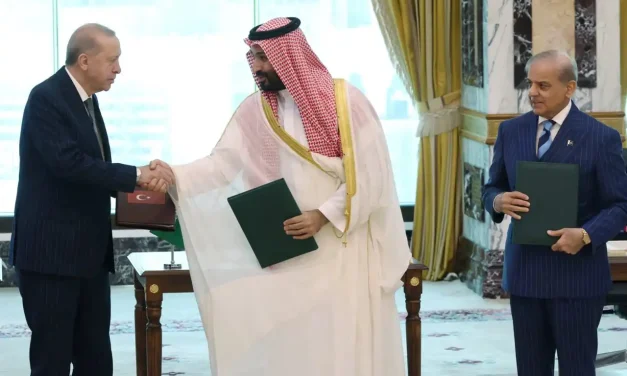
SCFR Online – Opinion: The Makkah Pact, signed between Saudi Arabia, Pakistan, and Turkey under the motto “an attack on one is an attack on all,” is viewed by some analysts less as a full-fledged military coalition and more as an attempt to reduce security dependence on an external power and to establish a regional security mechanism.

Implications of the US-Saudi Nuclear Agreement

SCFR Online – Opinion: The new US-Saudi nuclear agreement, despite legal and political ambiguities, could alter previous non-proliferation standards in West Asia and intensify nuclear competition, ushering it into a new phase.

An Analysis of Recent Turkey-Israeli Regime Tensions

SCFR Online – Opinion: Recent developments in Syria indicate an intensification of strategic rivalry between Turkey and the Israeli regime, but mutual considerations and the role of the United States have limited the likelihood of direct war.

Increasing criticism of the extensive Zionist lobby network

SCFR Online – Opinion: An examination of the mechanisms of the Israeli regime’s influence in the United States depicts a complex picture of shared interests, strategic dependencies, and the limitations of this relationship.

Realities of the Tripartite Makkah Pact

SCFR Online – Interview: The signing of the Makkah agreement between Saudi Arabia, Pakistan, and Turkey has raised questions about the future of the region’s security structure and the position of these countries in West Asian equations. Can this agreement become a genuine collective defense mechanism, or does it have more of a political and deterrent function than creating new military capacity?

Strategic Implications of the Reduction of US Weapons Stockpiles

SCFR Online – Opinion: The continuation of the US war against Iran, in addition to increasing operational costs, has called into question the actual capacity of the American arsenal to simultaneously fulfill security commitments on multiple fronts; an issue that affects deterrence, defense production capacity, and Washington’s resource prioritization.

Loading

Politics

Europe’s Challenge to Lift Sanctions on Syria

Europe’s Challenge to Lift Sanctions on Syria

Strategic Council Online: An international affairs expert said that Europe and the United States will definitely put pressure on various ruling groups to change their approach towards minorities, women, and different ethnic groups in Syria in order to normalize political and economic relations with Syria domestically, regionally, and internationally. Only then can the lifting of sanctions be justified for Europe and the United States.

Europe’s Strategic Independence Overshadowed by Domestic Challenges and Trump’s Policies

Europe’s Strategic Independence Overshadowed by Domestic Challenges and Trump’s Policies

Strategic Council Online—Opinion: Over the past three years, Europe has acted during the Ukrainian conflict in a way that has allowed it to pursue disparate policy options, including supporting Ukraine in its conflict with Russia, maintaining the structure of the European security order, and not bringing European military forces into the war. The escalation of military conflicts in Ukraine, the possibility of a reduction in military aid from Washington, and the possibility of a forced ceasefire have placed European governments in a difficult position.

Continuity and Increasing Growth of the Resistance Despite Developments in Syria

Continuity and Increasing Growth of the Resistance Despite Developments in Syria

Strategic Council Online—Opinion: It is noteworthy that Bashar al-Assad’s government was an ally of the Islamic Resistance Front and that his fall from power is a challenge to this front. However, for various reasons, such an event can never be considered a “defeat” for the Resistance Front in the region.

Outlook of the Political Crisis in Lebanon

Outlook of the Political Crisis in Lebanon

Strategic Council Online – Opinion: After the recent long war between the Israeli regime and Hezbollah in Lebanon, which finally ended with a ceasefire agreement on November 27, the most important issue in Lebanon today is the outlook for the political situation in the country.

Analysis of the Political Turmoil of the French Government

Analysis of the Political Turmoil of the French Government

Strategic Council Online—Opinion: François Bayrou has embarked on a difficult mission from the center-right in France. He was appointed prime minister by President Emmanuel Macron less than 10 days after the fall of the government of Michel Barnier, a veteran French politician. Michel Barnier’s government collapsed after just three months following a vote of no confidence in the French National Assembly. The same problems that Michel Barnier faced in approving the 2025 budget await François Bayrou.

Dr. Kharrazi: The Fall of Syria Was an American-Israeli Plot

Dr. Kharrazi: The Fall of Syria Was an American-Israeli Plot

Strategic Council Online: Dr. Seyed Kamal Kharrazi stated that the fall of Bashar al-Assad’s government in Syria was part of an American-Israeli plot, with the most compelling evidence being the immediate visit of a U.S. Deputy Secretary of State to Damascus and the withdrawal of the $10 million bounty for the capture of Golani.

Analysis of the PA Position and Role in Palestine

Analysis of the PA Position and Role in Palestine

Strategic Council Online – Interview: An expert on Middle East issues said: Recently, the head of the Palestinian Authority appointed the speaker of the National Assembly of the Palestine Liberation Organization (PLO) as the interim head of the PA during the transition period. In the course of his speech on the eve of the “Declaration of Independence” of the State of Palestine, Mahmoud Abbass, the head of the Palestinian Authority, noted: “In the event of a vacancy in the position of the chairman of the Palestinian Authority, in accordance with the Palestinian electoral law, the speaker of the Palestinian National Assembly will temporarily assume the presidency of the PA until the elections are held.” Rawfi Fattuh is currently the chairman of the Palestinian National Assembly, the legislative body of the Palestine Liberation Organization (PLO).

Analysis of the Political Crisis in South Korea

Analysis of the Political Crisis in South Korea

Strategy Council Online – Opinion: The South Korean parliament finally voted to impeach Yoon Suk Yeol, removing the country’s president. The South Korean president had recently declared martial law in a sudden move, but the two main parties in Korea opposed it.

Syrian Developments and the Perspective of Islamic Resistance

Syrian Developments and the Perspective of Islamic Resistance

Strategic Council Online—Opinion: With the recent developments in Syria, although there may be changes in the Islamic Resistance’s “tactical” areas, there will be no disruption or change in its macro strategies and anti-American and anti-Zionist approaches.

أحدث الوظائف

The Makkah Pact; Reasons for its Formation and Challenges Ahead

SCFR Online – Opinion: The Makkah Pact, signed between Saudi Arabia, Pakistan, and Turkey under the motto “an attack on one is an attack on all,” is viewed by some analysts less as a full-fledged military coalition and more as an attempt to reduce security dependence on an external power and to establish a regional security mechanism.

Implications of the US-Saudi Nuclear Agreement

SCFR Online – Opinion: The new US-Saudi nuclear agreement, despite legal and political ambiguities, could alter previous non-proliferation standards in West Asia and intensify nuclear competition, ushering it into a new phase.

An Analysis of Recent Turkey-Israeli Regime Tensions

SCFR Online – Opinion: Recent developments in Syria indicate an intensification of strategic rivalry between Turkey and the Israeli regime, but mutual considerations and the role of the United States have limited the likelihood of direct war.

Increasing criticism of the extensive Zionist lobby network

SCFR Online – Opinion: An examination of the mechanisms of the Israeli regime’s influence in the United States depicts a complex picture of shared interests, strategic dependencies, and the limitations of this relationship.

Realities of the Tripartite Makkah Pact

SCFR Online – Interview: The signing of the Makkah agreement between Saudi Arabia, Pakistan, and Turkey has raised questions about the future of the region’s security structure and the position of these countries in West Asian equations. Can this agreement become a genuine collective defense mechanism, or does it have more of a political and deterrent function than creating new military capacity?

Strategic Implications of the Reduction of US Weapons Stockpiles

SCFR Online – Opinion: The continuation of the US war against Iran, in addition to increasing operational costs, has called into question the actual capacity of the American arsenal to simultaneously fulfill security commitments on multiple fronts; an issue that affects deterrence, defense production capacity, and Washington’s resource prioritization.

Loading

Politics

Europe’s Challenge to Lift Sanctions on Syria

Europe’s Challenge to Lift Sanctions on Syria

Strategic Council Online: An international affairs expert said that Europe and the United States will definitely put pressure on various ruling groups to change their approach towards minorities, women, and different ethnic groups in Syria in order to normalize political and economic relations with Syria domestically, regionally, and internationally. Only then can the lifting of sanctions be justified for Europe and the United States.

Europe’s Strategic Independence Overshadowed by Domestic Challenges and Trump’s Policies

Europe’s Strategic Independence Overshadowed by Domestic Challenges and Trump’s Policies

Strategic Council Online—Opinion: Over the past three years, Europe has acted during the Ukrainian conflict in a way that has allowed it to pursue disparate policy options, including supporting Ukraine in its conflict with Russia, maintaining the structure of the European security order, and not bringing European military forces into the war. The escalation of military conflicts in Ukraine, the possibility of a reduction in military aid from Washington, and the possibility of a forced ceasefire have placed European governments in a difficult position.

Continuity and Increasing Growth of the Resistance Despite Developments in Syria

Continuity and Increasing Growth of the Resistance Despite Developments in Syria

Strategic Council Online—Opinion: It is noteworthy that Bashar al-Assad’s government was an ally of the Islamic Resistance Front and that his fall from power is a challenge to this front. However, for various reasons, such an event can never be considered a “defeat” for the Resistance Front in the region.

Outlook of the Political Crisis in Lebanon

Outlook of the Political Crisis in Lebanon

Strategic Council Online – Opinion: After the recent long war between the Israeli regime and Hezbollah in Lebanon, which finally ended with a ceasefire agreement on November 27, the most important issue in Lebanon today is the outlook for the political situation in the country.

Analysis of the Political Turmoil of the French Government

Analysis of the Political Turmoil of the French Government

Strategic Council Online—Opinion: François Bayrou has embarked on a difficult mission from the center-right in France. He was appointed prime minister by President Emmanuel Macron less than 10 days after the fall of the government of Michel Barnier, a veteran French politician. Michel Barnier’s government collapsed after just three months following a vote of no confidence in the French National Assembly. The same problems that Michel Barnier faced in approving the 2025 budget await François Bayrou.

Dr. Kharrazi: The Fall of Syria Was an American-Israeli Plot

Dr. Kharrazi: The Fall of Syria Was an American-Israeli Plot

Strategic Council Online: Dr. Seyed Kamal Kharrazi stated that the fall of Bashar al-Assad’s government in Syria was part of an American-Israeli plot, with the most compelling evidence being the immediate visit of a U.S. Deputy Secretary of State to Damascus and the withdrawal of the $10 million bounty for the capture of Golani.

Analysis of the PA Position and Role in Palestine

Analysis of the PA Position and Role in Palestine

Strategic Council Online – Interview: An expert on Middle East issues said: Recently, the head of the Palestinian Authority appointed the speaker of the National Assembly of the Palestine Liberation Organization (PLO) as the interim head of the PA during the transition period. In the course of his speech on the eve of the “Declaration of Independence” of the State of Palestine, Mahmoud Abbass, the head of the Palestinian Authority, noted: “In the event of a vacancy in the position of the chairman of the Palestinian Authority, in accordance with the Palestinian electoral law, the speaker of the Palestinian National Assembly will temporarily assume the presidency of the PA until the elections are held.” Rawfi Fattuh is currently the chairman of the Palestinian National Assembly, the legislative body of the Palestine Liberation Organization (PLO).

Analysis of the Political Crisis in South Korea

Analysis of the Political Crisis in South Korea

Strategy Council Online – Opinion: The South Korean parliament finally voted to impeach Yoon Suk Yeol, removing the country’s president. The South Korean president had recently declared martial law in a sudden move, but the two main parties in Korea opposed it.

Syrian Developments and the Perspective of Islamic Resistance

Syrian Developments and the Perspective of Islamic Resistance

Strategic Council Online—Opinion: With the recent developments in Syria, although there may be changes in the Islamic Resistance’s “tactical” areas, there will be no disruption or change in its macro strategies and anti-American and anti-Zionist approaches.

Politics

Europe’s Challenge to Lift Sanctions on Syria

Europe’s Challenge to Lift Sanctions on Syria

Strategic Council Online: An international affairs expert said that Europe and the United States will definitely put pressure on various ruling groups to change their approach towards minorities, women, and different ethnic groups in Syria in order to normalize political and economic relations with Syria domestically, regionally, and internationally. Only then can the lifting of sanctions be justified for Europe and the United States.

Europe’s Strategic Independence Overshadowed by Domestic Challenges and Trump’s Policies

Europe’s Strategic Independence Overshadowed by Domestic Challenges and Trump’s Policies

Strategic Council Online—Opinion: Over the past three years, Europe has acted during the Ukrainian conflict in a way that has allowed it to pursue disparate policy options, including supporting Ukraine in its conflict with Russia, maintaining the structure of the European security order, and not bringing European military forces into the war. The escalation of military conflicts in Ukraine, the possibility of a reduction in military aid from Washington, and the possibility of a forced ceasefire have placed European governments in a difficult position.

Continuity and Increasing Growth of the Resistance Despite Developments in Syria

Continuity and Increasing Growth of the Resistance Despite Developments in Syria

Strategic Council Online—Opinion: It is noteworthy that Bashar al-Assad’s government was an ally of the Islamic Resistance Front and that his fall from power is a challenge to this front. However, for various reasons, such an event can never be considered a “defeat” for the Resistance Front in the region.

Outlook of the Political Crisis in Lebanon

Outlook of the Political Crisis in Lebanon

Strategic Council Online – Opinion: After the recent long war between the Israeli regime and Hezbollah in Lebanon, which finally ended with a ceasefire agreement on November 27, the most important issue in Lebanon today is the outlook for the political situation in the country.

Analysis of the Political Turmoil of the French Government

Analysis of the Political Turmoil of the French Government

Strategic Council Online—Opinion: François Bayrou has embarked on a difficult mission from the center-right in France. He was appointed prime minister by President Emmanuel Macron less than 10 days after the fall of the government of Michel Barnier, a veteran French politician. Michel Barnier’s government collapsed after just three months following a vote of no confidence in the French National Assembly. The same problems that Michel Barnier faced in approving the 2025 budget await François Bayrou.

Dr. Kharrazi: The Fall of Syria Was an American-Israeli Plot

Dr. Kharrazi: The Fall of Syria Was an American-Israeli Plot

Strategic Council Online: Dr. Seyed Kamal Kharrazi stated that the fall of Bashar al-Assad’s government in Syria was part of an American-Israeli plot, with the most compelling evidence being the immediate visit of a U.S. Deputy Secretary of State to Damascus and the withdrawal of the $10 million bounty for the capture of Golani.

Analysis of the PA Position and Role in Palestine

Analysis of the PA Position and Role in Palestine

Strategic Council Online – Interview: An expert on Middle East issues said: Recently, the head of the Palestinian Authority appointed the speaker of the National Assembly of the Palestine Liberation Organization (PLO) as the interim head of the PA during the transition period. In the course of his speech on the eve of the “Declaration of Independence” of the State of Palestine, Mahmoud Abbass, the head of the Palestinian Authority, noted: “In the event of a vacancy in the position of the chairman of the Palestinian Authority, in accordance with the Palestinian electoral law, the speaker of the Palestinian National Assembly will temporarily assume the presidency of the PA until the elections are held.” Rawfi Fattuh is currently the chairman of the Palestinian National Assembly, the legislative body of the Palestine Liberation Organization (PLO).

Analysis of the Political Crisis in South Korea

Analysis of the Political Crisis in South Korea

Strategy Council Online – Opinion: The South Korean parliament finally voted to impeach Yoon Suk Yeol, removing the country’s president. The South Korean president had recently declared martial law in a sudden move, but the two main parties in Korea opposed it.

Syrian Developments and the Perspective of Islamic Resistance

Syrian Developments and the Perspective of Islamic Resistance

Strategic Council Online—Opinion: With the recent developments in Syria, although there may be changes in the Islamic Resistance’s “tactical” areas, there will be no disruption or change in its macro strategies and anti-American and anti-Zionist approaches.

LATEST CONTENT

The Makkah Pact; Reasons for its Formation and Challenges Ahead

SCFR Online – Opinion: The Makkah Pact, signed between Saudi Arabia, Pakistan, and Turkey under the motto “an attack on one is an attack on all,” is viewed by some analysts less as a full-fledged military coalition and more as an attempt to reduce security dependence on an external power and to establish a regional security mechanism.

Implications of the US-Saudi Nuclear Agreement

SCFR Online – Opinion: The new US-Saudi nuclear agreement, despite legal and political ambiguities, could alter previous non-proliferation standards in West Asia and intensify nuclear competition, ushering it into a new phase.

An Analysis of Recent Turkey-Israeli Regime Tensions

SCFR Online – Opinion: Recent developments in Syria indicate an intensification of strategic rivalry between Turkey and the Israeli regime, but mutual considerations and the role of the United States have limited the likelihood of direct war.

Increasing criticism of the extensive Zionist lobby network

SCFR Online – Opinion: An examination of the mechanisms of the Israeli regime’s influence in the United States depicts a complex picture of shared interests, strategic dependencies, and the limitations of this relationship.

Realities of the Tripartite Makkah Pact

SCFR Online – Interview: The signing of the Makkah agreement between Saudi Arabia, Pakistan, and Turkey has raised questions about the future of the region’s security structure and the position of these countries in West Asian equations. Can this agreement become a genuine collective defense mechanism, or does it have more of a political and deterrent function than creating new military capacity?

Strategic Implications of the Reduction of US Weapons Stockpiles

SCFR Online – Opinion: The continuation of the US war against Iran, in addition to increasing operational costs, has called into question the actual capacity of the American arsenal to simultaneously fulfill security commitments on multiple fronts; an issue that affects deterrence, defense production capacity, and Washington’s resource prioritization.

Loading

Politics

Europe’s Challenge to Lift Sanctions on Syria

Europe’s Challenge to Lift Sanctions on Syria

Strategic Council Online: An international affairs expert said that Europe and the United States will definitely put pressure on various ruling groups to change their approach towards minorities, women, and different ethnic groups in Syria in order to normalize political and economic relations with Syria domestically, regionally, and internationally. Only then can the lifting of sanctions be justified for Europe and the United States.

Europe’s Strategic Independence Overshadowed by Domestic Challenges and Trump’s Policies

Europe’s Strategic Independence Overshadowed by Domestic Challenges and Trump’s Policies

Strategic Council Online—Opinion: Over the past three years, Europe has acted during the Ukrainian conflict in a way that has allowed it to pursue disparate policy options, including supporting Ukraine in its conflict with Russia, maintaining the structure of the European security order, and not bringing European military forces into the war. The escalation of military conflicts in Ukraine, the possibility of a reduction in military aid from Washington, and the possibility of a forced ceasefire have placed European governments in a difficult position.

Continuity and Increasing Growth of the Resistance Despite Developments in Syria

Continuity and Increasing Growth of the Resistance Despite Developments in Syria

Strategic Council Online—Opinion: It is noteworthy that Bashar al-Assad’s government was an ally of the Islamic Resistance Front and that his fall from power is a challenge to this front. However, for various reasons, such an event can never be considered a “defeat” for the Resistance Front in the region.

Outlook of the Political Crisis in Lebanon

Outlook of the Political Crisis in Lebanon

Strategic Council Online – Opinion: After the recent long war between the Israeli regime and Hezbollah in Lebanon, which finally ended with a ceasefire agreement on November 27, the most important issue in Lebanon today is the outlook for the political situation in the country.

Analysis of the Political Turmoil of the French Government

Analysis of the Political Turmoil of the French Government

Strategic Council Online—Opinion: François Bayrou has embarked on a difficult mission from the center-right in France. He was appointed prime minister by President Emmanuel Macron less than 10 days after the fall of the government of Michel Barnier, a veteran French politician. Michel Barnier’s government collapsed after just three months following a vote of no confidence in the French National Assembly. The same problems that Michel Barnier faced in approving the 2025 budget await François Bayrou.

Dr. Kharrazi: The Fall of Syria Was an American-Israeli Plot

Dr. Kharrazi: The Fall of Syria Was an American-Israeli Plot

Strategic Council Online: Dr. Seyed Kamal Kharrazi stated that the fall of Bashar al-Assad’s government in Syria was part of an American-Israeli plot, with the most compelling evidence being the immediate visit of a U.S. Deputy Secretary of State to Damascus and the withdrawal of the $10 million bounty for the capture of Golani.

Analysis of the PA Position and Role in Palestine

Analysis of the PA Position and Role in Palestine

Strategic Council Online – Interview: An expert on Middle East issues said: Recently, the head of the Palestinian Authority appointed the speaker of the National Assembly of the Palestine Liberation Organization (PLO) as the interim head of the PA during the transition period. In the course of his speech on the eve of the “Declaration of Independence” of the State of Palestine, Mahmoud Abbass, the head of the Palestinian Authority, noted: “In the event of a vacancy in the position of the chairman of the Palestinian Authority, in accordance with the Palestinian electoral law, the speaker of the Palestinian National Assembly will temporarily assume the presidency of the PA until the elections are held.” Rawfi Fattuh is currently the chairman of the Palestinian National Assembly, the legislative body of the Palestine Liberation Organization (PLO).

Analysis of the Political Crisis in South Korea

Analysis of the Political Crisis in South Korea

Strategy Council Online – Opinion: The South Korean parliament finally voted to impeach Yoon Suk Yeol, removing the country’s president. The South Korean president had recently declared martial law in a sudden move, but the two main parties in Korea opposed it.

Syrian Developments and the Perspective of Islamic Resistance

Syrian Developments and the Perspective of Islamic Resistance

Strategic Council Online—Opinion: With the recent developments in Syria, although there may be changes in the Islamic Resistance’s “tactical” areas, there will be no disruption or change in its macro strategies and anti-American and anti-Zionist approaches.

ÚLTIMAS PUBLICACIONES

The Makkah Pact; Reasons for its Formation and Challenges Ahead

SCFR Online – Opinion: The Makkah Pact, signed between Saudi Arabia, Pakistan, and Turkey under the motto “an attack on one is an attack on all,” is viewed by some analysts less as a full-fledged military coalition and more as an attempt to reduce security dependence on an external power and to establish a regional security mechanism.

Implications of the US-Saudi Nuclear Agreement

SCFR Online – Opinion: The new US-Saudi nuclear agreement, despite legal and political ambiguities, could alter previous non-proliferation standards in West Asia and intensify nuclear competition, ushering it into a new phase.

An Analysis of Recent Turkey-Israeli Regime Tensions

SCFR Online – Opinion: Recent developments in Syria indicate an intensification of strategic rivalry between Turkey and the Israeli regime, but mutual considerations and the role of the United States have limited the likelihood of direct war.

Increasing criticism of the extensive Zionist lobby network

SCFR Online – Opinion: An examination of the mechanisms of the Israeli regime’s influence in the United States depicts a complex picture of shared interests, strategic dependencies, and the limitations of this relationship.

Realities of the Tripartite Makkah Pact

SCFR Online – Interview: The signing of the Makkah agreement between Saudi Arabia, Pakistan, and Turkey has raised questions about the future of the region’s security structure and the position of these countries in West Asian equations. Can this agreement become a genuine collective defense mechanism, or does it have more of a political and deterrent function than creating new military capacity?

Strategic Implications of the Reduction of US Weapons Stockpiles

SCFR Online – Opinion: The continuation of the US war against Iran, in addition to increasing operational costs, has called into question the actual capacity of the American arsenal to simultaneously fulfill security commitments on multiple fronts; an issue that affects deterrence, defense production capacity, and Washington’s resource prioritization.

Loading

Politics

Europe’s Challenge to Lift Sanctions on Syria

Europe’s Challenge to Lift Sanctions on Syria

Strategic Council Online: An international affairs expert said that Europe and the United States will definitely put pressure on various ruling groups to change their approach towards minorities, women, and different ethnic groups in Syria in order to normalize political and economic relations with Syria domestically, regionally, and internationally. Only then can the lifting of sanctions be justified for Europe and the United States.

Europe’s Strategic Independence Overshadowed by Domestic Challenges and Trump’s Policies

Europe’s Strategic Independence Overshadowed by Domestic Challenges and Trump’s Policies

Strategic Council Online—Opinion: Over the past three years, Europe has acted during the Ukrainian conflict in a way that has allowed it to pursue disparate policy options, including supporting Ukraine in its conflict with Russia, maintaining the structure of the European security order, and not bringing European military forces into the war. The escalation of military conflicts in Ukraine, the possibility of a reduction in military aid from Washington, and the possibility of a forced ceasefire have placed European governments in a difficult position.

Continuity and Increasing Growth of the Resistance Despite Developments in Syria

Continuity and Increasing Growth of the Resistance Despite Developments in Syria

Strategic Council Online—Opinion: It is noteworthy that Bashar al-Assad’s government was an ally of the Islamic Resistance Front and that his fall from power is a challenge to this front. However, for various reasons, such an event can never be considered a “defeat” for the Resistance Front in the region.

Outlook of the Political Crisis in Lebanon

Outlook of the Political Crisis in Lebanon

Strategic Council Online – Opinion: After the recent long war between the Israeli regime and Hezbollah in Lebanon, which finally ended with a ceasefire agreement on November 27, the most important issue in Lebanon today is the outlook for the political situation in the country.

Analysis of the Political Turmoil of the French Government

Analysis of the Political Turmoil of the French Government

Strategic Council Online—Opinion: François Bayrou has embarked on a difficult mission from the center-right in France. He was appointed prime minister by President Emmanuel Macron less than 10 days after the fall of the government of Michel Barnier, a veteran French politician. Michel Barnier’s government collapsed after just three months following a vote of no confidence in the French National Assembly. The same problems that Michel Barnier faced in approving the 2025 budget await François Bayrou.

Dr. Kharrazi: The Fall of Syria Was an American-Israeli Plot

Dr. Kharrazi: The Fall of Syria Was an American-Israeli Plot

Strategic Council Online: Dr. Seyed Kamal Kharrazi stated that the fall of Bashar al-Assad’s government in Syria was part of an American-Israeli plot, with the most compelling evidence being the immediate visit of a U.S. Deputy Secretary of State to Damascus and the withdrawal of the $10 million bounty for the capture of Golani.

Analysis of the PA Position and Role in Palestine

Analysis of the PA Position and Role in Palestine

Strategic Council Online – Interview: An expert on Middle East issues said: Recently, the head of the Palestinian Authority appointed the speaker of the National Assembly of the Palestine Liberation Organization (PLO) as the interim head of the PA during the transition period. In the course of his speech on the eve of the “Declaration of Independence” of the State of Palestine, Mahmoud Abbass, the head of the Palestinian Authority, noted: “In the event of a vacancy in the position of the chairman of the Palestinian Authority, in accordance with the Palestinian electoral law, the speaker of the Palestinian National Assembly will temporarily assume the presidency of the PA until the elections are held.” Rawfi Fattuh is currently the chairman of the Palestinian National Assembly, the legislative body of the Palestine Liberation Organization (PLO).

Analysis of the Political Crisis in South Korea

Analysis of the Political Crisis in South Korea

Strategy Council Online – Opinion: The South Korean parliament finally voted to impeach Yoon Suk Yeol, removing the country’s president. The South Korean president had recently declared martial law in a sudden move, but the two main parties in Korea opposed it.

Syrian Developments and the Perspective of Islamic Resistance

Syrian Developments and the Perspective of Islamic Resistance

Strategic Council Online—Opinion: With the recent developments in Syria, although there may be changes in the Islamic Resistance’s “tactical” areas, there will be no disruption or change in its macro strategies and anti-American and anti-Zionist approaches.

ÚLTIMAS PUBLICACIONES

The Makkah Pact; Reasons for its Formation and Challenges Ahead

SCFR Online – Opinion: The Makkah Pact, signed between Saudi Arabia, Pakistan, and Turkey under the motto “an attack on one is an attack on all,” is viewed by some analysts less as a full-fledged military coalition and more as an attempt to reduce security dependence on an external power and to establish a regional security mechanism.

Implications of the US-Saudi Nuclear Agreement

SCFR Online – Opinion: The new US-Saudi nuclear agreement, despite legal and political ambiguities, could alter previous non-proliferation standards in West Asia and intensify nuclear competition, ushering it into a new phase.

An Analysis of Recent Turkey-Israeli Regime Tensions

SCFR Online – Opinion: Recent developments in Syria indicate an intensification of strategic rivalry between Turkey and the Israeli regime, but mutual considerations and the role of the United States have limited the likelihood of direct war.

Increasing criticism of the extensive Zionist lobby network

SCFR Online – Opinion: An examination of the mechanisms of the Israeli regime’s influence in the United States depicts a complex picture of shared interests, strategic dependencies, and the limitations of this relationship.

Realities of the Tripartite Makkah Pact

SCFR Online – Interview: The signing of the Makkah agreement between Saudi Arabia, Pakistan, and Turkey has raised questions about the future of the region’s security structure and the position of these countries in West Asian equations. Can this agreement become a genuine collective defense mechanism, or does it have more of a political and deterrent function than creating new military capacity?

Strategic Implications of the Reduction of US Weapons Stockpiles

SCFR Online – Opinion: The continuation of the US war against Iran, in addition to increasing operational costs, has called into question the actual capacity of the American arsenal to simultaneously fulfill security commitments on multiple fronts; an issue that affects deterrence, defense production capacity, and Washington’s resource prioritization.

Loading

Politics

Europe’s Challenge to Lift Sanctions on Syria

Europe’s Challenge to Lift Sanctions on Syria

Strategic Council Online: An international affairs expert said that Europe and the United States will definitely put pressure on various ruling groups to change their approach towards minorities, women, and different ethnic groups in Syria in order to normalize political and economic relations with Syria domestically, regionally, and internationally. Only then can the lifting of sanctions be justified for Europe and the United States.

Europe’s Strategic Independence Overshadowed by Domestic Challenges and Trump’s Policies

Europe’s Strategic Independence Overshadowed by Domestic Challenges and Trump’s Policies

Strategic Council Online—Opinion: Over the past three years, Europe has acted during the Ukrainian conflict in a way that has allowed it to pursue disparate policy options, including supporting Ukraine in its conflict with Russia, maintaining the structure of the European security order, and not bringing European military forces into the war. The escalation of military conflicts in Ukraine, the possibility of a reduction in military aid from Washington, and the possibility of a forced ceasefire have placed European governments in a difficult position.

Continuity and Increasing Growth of the Resistance Despite Developments in Syria

Continuity and Increasing Growth of the Resistance Despite Developments in Syria

Strategic Council Online—Opinion: It is noteworthy that Bashar al-Assad’s government was an ally of the Islamic Resistance Front and that his fall from power is a challenge to this front. However, for various reasons, such an event can never be considered a “defeat” for the Resistance Front in the region.

Outlook of the Political Crisis in Lebanon

Outlook of the Political Crisis in Lebanon

Strategic Council Online – Opinion: After the recent long war between the Israeli regime and Hezbollah in Lebanon, which finally ended with a ceasefire agreement on November 27, the most important issue in Lebanon today is the outlook for the political situation in the country.

Analysis of the Political Turmoil of the French Government

Analysis of the Political Turmoil of the French Government

Strategic Council Online—Opinion: François Bayrou has embarked on a difficult mission from the center-right in France. He was appointed prime minister by President Emmanuel Macron less than 10 days after the fall of the government of Michel Barnier, a veteran French politician. Michel Barnier’s government collapsed after just three months following a vote of no confidence in the French National Assembly. The same problems that Michel Barnier faced in approving the 2025 budget await François Bayrou.

Dr. Kharrazi: The Fall of Syria Was an American-Israeli Plot

Dr. Kharrazi: The Fall of Syria Was an American-Israeli Plot

Strategic Council Online: Dr. Seyed Kamal Kharrazi stated that the fall of Bashar al-Assad’s government in Syria was part of an American-Israeli plot, with the most compelling evidence being the immediate visit of a U.S. Deputy Secretary of State to Damascus and the withdrawal of the $10 million bounty for the capture of Golani.

Analysis of the PA Position and Role in Palestine

Analysis of the PA Position and Role in Palestine

Strategic Council Online – Interview: An expert on Middle East issues said: Recently, the head of the Palestinian Authority appointed the speaker of the National Assembly of the Palestine Liberation Organization (PLO) as the interim head of the PA during the transition period. In the course of his speech on the eve of the “Declaration of Independence” of the State of Palestine, Mahmoud Abbass, the head of the Palestinian Authority, noted: “In the event of a vacancy in the position of the chairman of the Palestinian Authority, in accordance with the Palestinian electoral law, the speaker of the Palestinian National Assembly will temporarily assume the presidency of the PA until the elections are held.” Rawfi Fattuh is currently the chairman of the Palestinian National Assembly, the legislative body of the Palestine Liberation Organization (PLO).

Analysis of the Political Crisis in South Korea

Analysis of the Political Crisis in South Korea

Strategy Council Online – Opinion: The South Korean parliament finally voted to impeach Yoon Suk Yeol, removing the country’s president. The South Korean president had recently declared martial law in a sudden move, but the two main parties in Korea opposed it.

Syrian Developments and the Perspective of Islamic Resistance

Syrian Developments and the Perspective of Islamic Resistance

Strategic Council Online—Opinion: With the recent developments in Syria, although there may be changes in the Islamic Resistance’s “tactical” areas, there will be no disruption or change in its macro strategies and anti-American and anti-Zionist approaches.

ÚLTIMAS PUBLICACIONES

The Makkah Pact; Reasons for its Formation and Challenges Ahead

SCFR Online – Opinion: The Makkah Pact, signed between Saudi Arabia, Pakistan, and Turkey under the motto “an attack on one is an attack on all,” is viewed by some analysts less as a full-fledged military coalition and more as an attempt to reduce security dependence on an external power and to establish a regional security mechanism.

Implications of the US-Saudi Nuclear Agreement

SCFR Online – Opinion: The new US-Saudi nuclear agreement, despite legal and political ambiguities, could alter previous non-proliferation standards in West Asia and intensify nuclear competition, ushering it into a new phase.

An Analysis of Recent Turkey-Israeli Regime Tensions

SCFR Online – Opinion: Recent developments in Syria indicate an intensification of strategic rivalry between Turkey and the Israeli regime, but mutual considerations and the role of the United States have limited the likelihood of direct war.

Increasing criticism of the extensive Zionist lobby network

SCFR Online – Opinion: An examination of the mechanisms of the Israeli regime’s influence in the United States depicts a complex picture of shared interests, strategic dependencies, and the limitations of this relationship.

Realities of the Tripartite Makkah Pact

SCFR Online – Interview: The signing of the Makkah agreement between Saudi Arabia, Pakistan, and Turkey has raised questions about the future of the region’s security structure and the position of these countries in West Asian equations. Can this agreement become a genuine collective defense mechanism, or does it have more of a political and deterrent function than creating new military capacity?

Strategic Implications of the Reduction of US Weapons Stockpiles

SCFR Online – Opinion: The continuation of the US war against Iran, in addition to increasing operational costs, has called into question the actual capacity of the American arsenal to simultaneously fulfill security commitments on multiple fronts; an issue that affects deterrence, defense production capacity, and Washington’s resource prioritization.

Loading

Politics

Europe’s Challenge to Lift Sanctions on Syria

Europe’s Challenge to Lift Sanctions on Syria

Strategic Council Online: An international affairs expert said that Europe and the United States will definitely put pressure on various ruling groups to change their approach towards minorities, women, and different ethnic groups in Syria in order to normalize political and economic relations with Syria domestically, regionally, and internationally. Only then can the lifting of sanctions be justified for Europe and the United States.

Europe’s Strategic Independence Overshadowed by Domestic Challenges and Trump’s Policies

Europe’s Strategic Independence Overshadowed by Domestic Challenges and Trump’s Policies

Strategic Council Online—Opinion: Over the past three years, Europe has acted during the Ukrainian conflict in a way that has allowed it to pursue disparate policy options, including supporting Ukraine in its conflict with Russia, maintaining the structure of the European security order, and not bringing European military forces into the war. The escalation of military conflicts in Ukraine, the possibility of a reduction in military aid from Washington, and the possibility of a forced ceasefire have placed European governments in a difficult position.

Continuity and Increasing Growth of the Resistance Despite Developments in Syria

Continuity and Increasing Growth of the Resistance Despite Developments in Syria

Strategic Council Online—Opinion: It is noteworthy that Bashar al-Assad’s government was an ally of the Islamic Resistance Front and that his fall from power is a challenge to this front. However, for various reasons, such an event can never be considered a “defeat” for the Resistance Front in the region.

Outlook of the Political Crisis in Lebanon

Outlook of the Political Crisis in Lebanon

Strategic Council Online – Opinion: After the recent long war between the Israeli regime and Hezbollah in Lebanon, which finally ended with a ceasefire agreement on November 27, the most important issue in Lebanon today is the outlook for the political situation in the country.

Analysis of the Political Turmoil of the French Government

Analysis of the Political Turmoil of the French Government

Strategic Council Online—Opinion: François Bayrou has embarked on a difficult mission from the center-right in France. He was appointed prime minister by President Emmanuel Macron less than 10 days after the fall of the government of Michel Barnier, a veteran French politician. Michel Barnier’s government collapsed after just three months following a vote of no confidence in the French National Assembly. The same problems that Michel Barnier faced in approving the 2025 budget await François Bayrou.

Dr. Kharrazi: The Fall of Syria Was an American-Israeli Plot

Dr. Kharrazi: The Fall of Syria Was an American-Israeli Plot

Strategic Council Online: Dr. Seyed Kamal Kharrazi stated that the fall of Bashar al-Assad’s government in Syria was part of an American-Israeli plot, with the most compelling evidence being the immediate visit of a U.S. Deputy Secretary of State to Damascus and the withdrawal of the $10 million bounty for the capture of Golani.

Analysis of the PA Position and Role in Palestine

Analysis of the PA Position and Role in Palestine

Strategic Council Online – Interview: An expert on Middle East issues said: Recently, the head of the Palestinian Authority appointed the speaker of the National Assembly of the Palestine Liberation Organization (PLO) as the interim head of the PA during the transition period. In the course of his speech on the eve of the “Declaration of Independence” of the State of Palestine, Mahmoud Abbass, the head of the Palestinian Authority, noted: “In the event of a vacancy in the position of the chairman of the Palestinian Authority, in accordance with the Palestinian electoral law, the speaker of the Palestinian National Assembly will temporarily assume the presidency of the PA until the elections are held.” Rawfi Fattuh is currently the chairman of the Palestinian National Assembly, the legislative body of the Palestine Liberation Organization (PLO).

Analysis of the Political Crisis in South Korea

Analysis of the Political Crisis in South Korea

Strategy Council Online – Opinion: The South Korean parliament finally voted to impeach Yoon Suk Yeol, removing the country’s president. The South Korean president had recently declared martial law in a sudden move, but the two main parties in Korea opposed it.

Syrian Developments and the Perspective of Islamic Resistance

Syrian Developments and the Perspective of Islamic Resistance

Strategic Council Online—Opinion: With the recent developments in Syria, although there may be changes in the Islamic Resistance’s “tactical” areas, there will be no disruption or change in its macro strategies and anti-American and anti-Zionist approaches.

ÚLTIMAS PUBLICACIONES

The Makkah Pact; Reasons for its Formation and Challenges Ahead

SCFR Online – Opinion: The Makkah Pact, signed between Saudi Arabia, Pakistan, and Turkey under the motto “an attack on one is an attack on all,” is viewed by some analysts less as a full-fledged military coalition and more as an attempt to reduce security dependence on an external power and to establish a regional security mechanism.

Implications of the US-Saudi Nuclear Agreement

SCFR Online – Opinion: The new US-Saudi nuclear agreement, despite legal and political ambiguities, could alter previous non-proliferation standards in West Asia and intensify nuclear competition, ushering it into a new phase.

An Analysis of Recent Turkey-Israeli Regime Tensions

SCFR Online – Opinion: Recent developments in Syria indicate an intensification of strategic rivalry between Turkey and the Israeli regime, but mutual considerations and the role of the United States have limited the likelihood of direct war.

Increasing criticism of the extensive Zionist lobby network

SCFR Online – Opinion: An examination of the mechanisms of the Israeli regime’s influence in the United States depicts a complex picture of shared interests, strategic dependencies, and the limitations of this relationship.

Realities of the Tripartite Makkah Pact

SCFR Online – Interview: The signing of the Makkah agreement between Saudi Arabia, Pakistan, and Turkey has raised questions about the future of the region’s security structure and the position of these countries in West Asian equations. Can this agreement become a genuine collective defense mechanism, or does it have more of a political and deterrent function than creating new military capacity?

Strategic Implications of the Reduction of US Weapons Stockpiles

SCFR Online – Opinion: The continuation of the US war against Iran, in addition to increasing operational costs, has called into question the actual capacity of the American arsenal to simultaneously fulfill security commitments on multiple fronts; an issue that affects deterrence, defense production capacity, and Washington’s resource prioritization.

Loading