جدیدترین مطالب

The Makkah Pact; Reasons for its Formation and Challenges Ahead

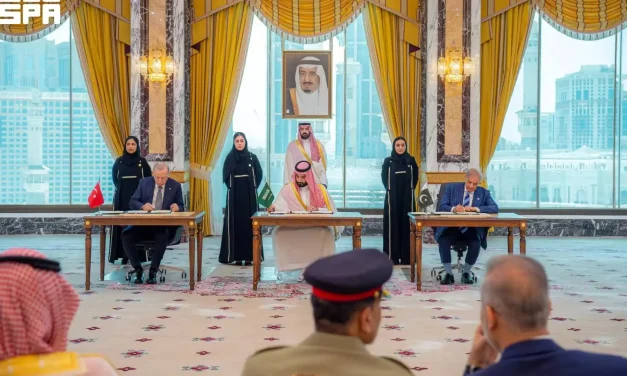
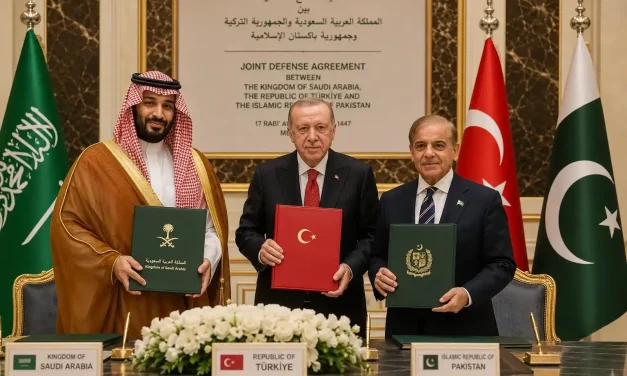
SCFR Online – Opinion: The Makkah Pact, signed between Saudi Arabia, Pakistan, and Turkey under the motto “an attack on one is an attack on all,” is viewed by some analysts less as a full-fledged military coalition and more as an attempt to reduce security dependence on an external power and to establish a regional security mechanism.

Implications of the US-Saudi Nuclear Agreement

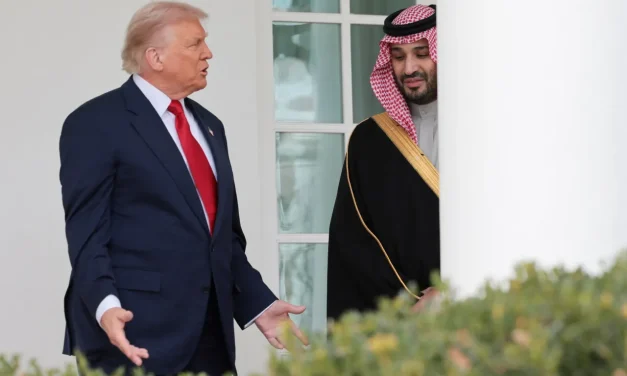
SCFR Online – Opinion: The new US-Saudi nuclear agreement, despite legal and political ambiguities, could alter previous non-proliferation standards in West Asia and intensify nuclear competition, ushering it into a new phase.

An Analysis of Recent Turkey-Israeli Regime Tensions

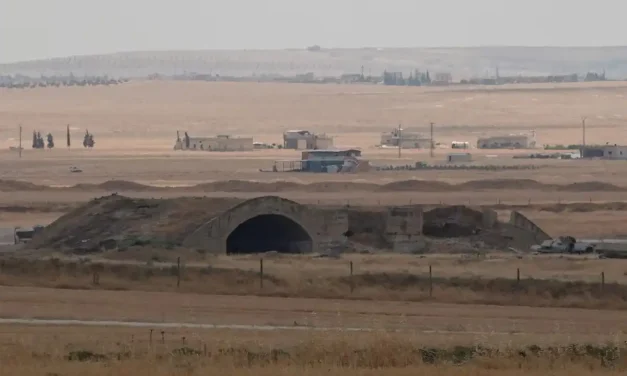
SCFR Online – Opinion: Recent developments in Syria indicate an intensification of strategic rivalry between Turkey and the Israeli regime, but mutual considerations and the role of the United States have limited the likelihood of direct war.

Increasing criticism of the extensive Zionist lobby network

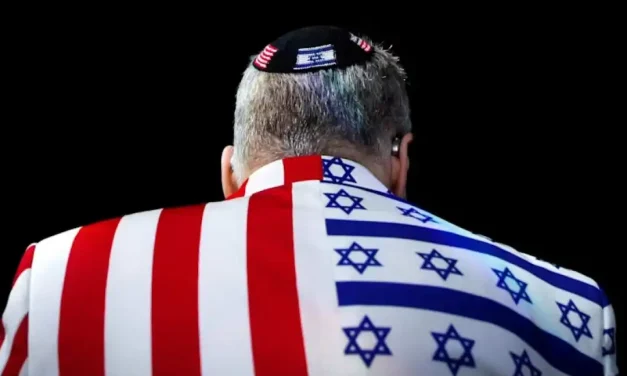
SCFR Online – Opinion: An examination of the mechanisms of the Israeli regime’s influence in the United States depicts a complex picture of shared interests, strategic dependencies, and the limitations of this relationship.

Realities of the Tripartite Makkah Pact

SCFR Online – Interview: The signing of the Makkah agreement between Saudi Arabia, Pakistan, and Turkey has raised questions about the future of the region’s security structure and the position of these countries in West Asian equations. Can this agreement become a genuine collective defense mechanism, or does it have more of a political and deterrent function than creating new military capacity?

Strategic Implications of the Reduction of US Weapons Stockpiles

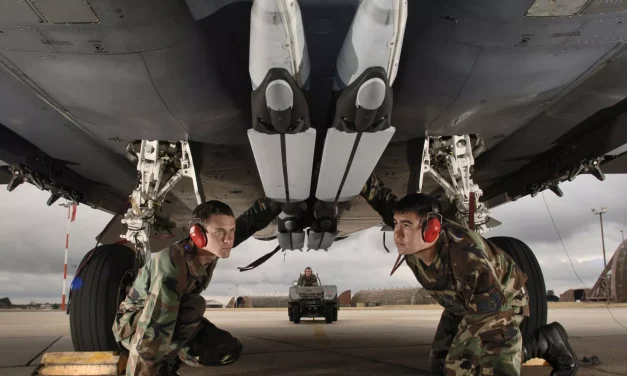
SCFR Online – Opinion: The continuation of the US war against Iran, in addition to increasing operational costs, has called into question the actual capacity of the American arsenal to simultaneously fulfill security commitments on multiple fronts; an issue that affects deterrence, defense production capacity, and Washington’s resource prioritization.

Loading

Strategic Perspective

US Role, Responsibility in Weakening States’ Environmental Commitments

US Role, Responsibility in Weakening States’ Environmental Commitments

Strategic Council Online – A university professor said that the withdrawal of the United States from its climatic obligations has caused a decline in the international resolve on this matter, adding that if the powers violate climate agreements and ignore them, small countries, following their example, are well prepared not to observe climate accords, especially with regard to the line-ups.

Mutual Turkey-EU Feeling; Too Close, Too Far

Mutual Turkey-EU Feeling; Too Close, Too Far

Strategic Council Online – Europe is pursuing a kind of “tilt but don’t spill” attitude towards Turkey, based on which it is neither indifferent nor reacts harshly.
Afshin Zargar – PhD in International Relations, Faculty Member

Britain’s Reduced Presence in Middle East after Hard Brexit

Britain’s Reduced Presence in Middle East after Hard Brexit

Strategic Council Online – A faculty member of the School of International Relations said that after a hard Brexit, in the medium and long term we will be witness to a decreased political, military and economic presence of Britain in the Middle East and the Persian Gulf, adding: The United Kingdom will increase its coordination with the United States in the Persian Gulf, while trying to introduce new cards for playing in the region.

Ambiguity Surrounds Turkey’s Goals in 6-Country Regional Coop Platform

Ambiguity Surrounds Turkey’s Goals in 6-Country Regional Coop Platform

Strategic Council Online – A faculty member of Tarbiat Modares University, stating that Turkey seeks to revive its soft power with the idea of regional convergence, said: Details of this plan, its common interests and threats are not clear and there is an ambiguity that basically to what extent bringing those countries together can be realistic and practical.

Support for Moroccan Sovereignty over Western Sahara; Trump’s Reward to Moroccan Government

Support for Moroccan Sovereignty over Western Sahara; Trump’s Reward to Moroccan Government

Strategic Council Online – Former Middle East director-general of the Ministry of Foreign Affairs, stating that the conflict in Western Sahara will not end easily, noted: It seems that under the current situation an opportunity has been created for the Moroccan government to make an exchange in return for official recognition of Israel and get concessions from the Trump administration at the end of his term for taking control over Western Sahara.

US Attempt to Negotiate with Ansarollah a Success for the Resistance

US Attempt to Negotiate with Ansarollah a Success for the Resistance

Strategic Council Online – An expert on West Asia affairs assessed the US letter to Ansarollah and the attempt to negotiate with them as a sign of the effectiveness of the Resistance and said: One of the factors that led Mohammed bin Salman to resort to the United States for putting an end to the war in Yemen is the issue of balance of power which has now changed in favour of Ansarollah.

No Possibility to Renegotiate JCPOA, Extending It to Non-Nuclear Issues

No Possibility to Renegotiate JCPOA, Extending It to Non-Nuclear Issues

Strategic Council Online – An expert on international affairs said in case the sanctions are lifted, Iran will reverse its steps in reducing its commitments towards the Joint Comprehensive Plan of Action (JCPOA) but is not willing to renegotiate the JCPOA with the United States.

أحدث الوظائف

The Makkah Pact; Reasons for its Formation and Challenges Ahead

SCFR Online – Opinion: The Makkah Pact, signed between Saudi Arabia, Pakistan, and Turkey under the motto “an attack on one is an attack on all,” is viewed by some analysts less as a full-fledged military coalition and more as an attempt to reduce security dependence on an external power and to establish a regional security mechanism.

Implications of the US-Saudi Nuclear Agreement

SCFR Online – Opinion: The new US-Saudi nuclear agreement, despite legal and political ambiguities, could alter previous non-proliferation standards in West Asia and intensify nuclear competition, ushering it into a new phase.

An Analysis of Recent Turkey-Israeli Regime Tensions

SCFR Online – Opinion: Recent developments in Syria indicate an intensification of strategic rivalry between Turkey and the Israeli regime, but mutual considerations and the role of the United States have limited the likelihood of direct war.

Increasing criticism of the extensive Zionist lobby network

SCFR Online – Opinion: An examination of the mechanisms of the Israeli regime’s influence in the United States depicts a complex picture of shared interests, strategic dependencies, and the limitations of this relationship.

Realities of the Tripartite Makkah Pact

SCFR Online – Interview: The signing of the Makkah agreement between Saudi Arabia, Pakistan, and Turkey has raised questions about the future of the region’s security structure and the position of these countries in West Asian equations. Can this agreement become a genuine collective defense mechanism, or does it have more of a political and deterrent function than creating new military capacity?

Strategic Implications of the Reduction of US Weapons Stockpiles

SCFR Online – Opinion: The continuation of the US war against Iran, in addition to increasing operational costs, has called into question the actual capacity of the American arsenal to simultaneously fulfill security commitments on multiple fronts; an issue that affects deterrence, defense production capacity, and Washington’s resource prioritization.

Loading

Strategic Perspective

US Role, Responsibility in Weakening States’ Environmental Commitments

US Role, Responsibility in Weakening States’ Environmental Commitments

Strategic Council Online – A university professor said that the withdrawal of the United States from its climatic obligations has caused a decline in the international resolve on this matter, adding that if the powers violate climate agreements and ignore them, small countries, following their example, are well prepared not to observe climate accords, especially with regard to the line-ups.

Mutual Turkey-EU Feeling; Too Close, Too Far

Mutual Turkey-EU Feeling; Too Close, Too Far

Strategic Council Online – Europe is pursuing a kind of “tilt but don’t spill” attitude towards Turkey, based on which it is neither indifferent nor reacts harshly.
Afshin Zargar – PhD in International Relations, Faculty Member

Britain’s Reduced Presence in Middle East after Hard Brexit

Britain’s Reduced Presence in Middle East after Hard Brexit

Strategic Council Online – A faculty member of the School of International Relations said that after a hard Brexit, in the medium and long term we will be witness to a decreased political, military and economic presence of Britain in the Middle East and the Persian Gulf, adding: The United Kingdom will increase its coordination with the United States in the Persian Gulf, while trying to introduce new cards for playing in the region.

Ambiguity Surrounds Turkey’s Goals in 6-Country Regional Coop Platform

Ambiguity Surrounds Turkey’s Goals in 6-Country Regional Coop Platform

Strategic Council Online – A faculty member of Tarbiat Modares University, stating that Turkey seeks to revive its soft power with the idea of regional convergence, said: Details of this plan, its common interests and threats are not clear and there is an ambiguity that basically to what extent bringing those countries together can be realistic and practical.

Support for Moroccan Sovereignty over Western Sahara; Trump’s Reward to Moroccan Government

Support for Moroccan Sovereignty over Western Sahara; Trump’s Reward to Moroccan Government

Strategic Council Online – Former Middle East director-general of the Ministry of Foreign Affairs, stating that the conflict in Western Sahara will not end easily, noted: It seems that under the current situation an opportunity has been created for the Moroccan government to make an exchange in return for official recognition of Israel and get concessions from the Trump administration at the end of his term for taking control over Western Sahara.

US Attempt to Negotiate with Ansarollah a Success for the Resistance

US Attempt to Negotiate with Ansarollah a Success for the Resistance

Strategic Council Online – An expert on West Asia affairs assessed the US letter to Ansarollah and the attempt to negotiate with them as a sign of the effectiveness of the Resistance and said: One of the factors that led Mohammed bin Salman to resort to the United States for putting an end to the war in Yemen is the issue of balance of power which has now changed in favour of Ansarollah.

No Possibility to Renegotiate JCPOA, Extending It to Non-Nuclear Issues

No Possibility to Renegotiate JCPOA, Extending It to Non-Nuclear Issues

Strategic Council Online – An expert on international affairs said in case the sanctions are lifted, Iran will reverse its steps in reducing its commitments towards the Joint Comprehensive Plan of Action (JCPOA) but is not willing to renegotiate the JCPOA with the United States.

Strategic Perspective

US Role, Responsibility in Weakening States’ Environmental Commitments

US Role, Responsibility in Weakening States’ Environmental Commitments

Strategic Council Online – A university professor said that the withdrawal of the United States from its climatic obligations has caused a decline in the international resolve on this matter, adding that if the powers violate climate agreements and ignore them, small countries, following their example, are well prepared not to observe climate accords, especially with regard to the line-ups.

Mutual Turkey-EU Feeling; Too Close, Too Far

Mutual Turkey-EU Feeling; Too Close, Too Far

Strategic Council Online – Europe is pursuing a kind of “tilt but don’t spill” attitude towards Turkey, based on which it is neither indifferent nor reacts harshly.
Afshin Zargar – PhD in International Relations, Faculty Member

Britain’s Reduced Presence in Middle East after Hard Brexit

Britain’s Reduced Presence in Middle East after Hard Brexit

Strategic Council Online – A faculty member of the School of International Relations said that after a hard Brexit, in the medium and long term we will be witness to a decreased political, military and economic presence of Britain in the Middle East and the Persian Gulf, adding: The United Kingdom will increase its coordination with the United States in the Persian Gulf, while trying to introduce new cards for playing in the region.

Ambiguity Surrounds Turkey’s Goals in 6-Country Regional Coop Platform

Ambiguity Surrounds Turkey’s Goals in 6-Country Regional Coop Platform

Strategic Council Online – A faculty member of Tarbiat Modares University, stating that Turkey seeks to revive its soft power with the idea of regional convergence, said: Details of this plan, its common interests and threats are not clear and there is an ambiguity that basically to what extent bringing those countries together can be realistic and practical.

Support for Moroccan Sovereignty over Western Sahara; Trump’s Reward to Moroccan Government

Support for Moroccan Sovereignty over Western Sahara; Trump’s Reward to Moroccan Government

Strategic Council Online – Former Middle East director-general of the Ministry of Foreign Affairs, stating that the conflict in Western Sahara will not end easily, noted: It seems that under the current situation an opportunity has been created for the Moroccan government to make an exchange in return for official recognition of Israel and get concessions from the Trump administration at the end of his term for taking control over Western Sahara.

US Attempt to Negotiate with Ansarollah a Success for the Resistance

US Attempt to Negotiate with Ansarollah a Success for the Resistance

Strategic Council Online – An expert on West Asia affairs assessed the US letter to Ansarollah and the attempt to negotiate with them as a sign of the effectiveness of the Resistance and said: One of the factors that led Mohammed bin Salman to resort to the United States for putting an end to the war in Yemen is the issue of balance of power which has now changed in favour of Ansarollah.

No Possibility to Renegotiate JCPOA, Extending It to Non-Nuclear Issues

No Possibility to Renegotiate JCPOA, Extending It to Non-Nuclear Issues

Strategic Council Online – An expert on international affairs said in case the sanctions are lifted, Iran will reverse its steps in reducing its commitments towards the Joint Comprehensive Plan of Action (JCPOA) but is not willing to renegotiate the JCPOA with the United States.

LATEST CONTENT

The Makkah Pact; Reasons for its Formation and Challenges Ahead

SCFR Online – Opinion: The Makkah Pact, signed between Saudi Arabia, Pakistan, and Turkey under the motto “an attack on one is an attack on all,” is viewed by some analysts less as a full-fledged military coalition and more as an attempt to reduce security dependence on an external power and to establish a regional security mechanism.

Implications of the US-Saudi Nuclear Agreement

SCFR Online – Opinion: The new US-Saudi nuclear agreement, despite legal and political ambiguities, could alter previous non-proliferation standards in West Asia and intensify nuclear competition, ushering it into a new phase.

An Analysis of Recent Turkey-Israeli Regime Tensions

SCFR Online – Opinion: Recent developments in Syria indicate an intensification of strategic rivalry between Turkey and the Israeli regime, but mutual considerations and the role of the United States have limited the likelihood of direct war.

Increasing criticism of the extensive Zionist lobby network

SCFR Online – Opinion: An examination of the mechanisms of the Israeli regime’s influence in the United States depicts a complex picture of shared interests, strategic dependencies, and the limitations of this relationship.

Realities of the Tripartite Makkah Pact

SCFR Online – Interview: The signing of the Makkah agreement between Saudi Arabia, Pakistan, and Turkey has raised questions about the future of the region’s security structure and the position of these countries in West Asian equations. Can this agreement become a genuine collective defense mechanism, or does it have more of a political and deterrent function than creating new military capacity?

Strategic Implications of the Reduction of US Weapons Stockpiles

SCFR Online – Opinion: The continuation of the US war against Iran, in addition to increasing operational costs, has called into question the actual capacity of the American arsenal to simultaneously fulfill security commitments on multiple fronts; an issue that affects deterrence, defense production capacity, and Washington’s resource prioritization.

Loading

Strategic Perspective

US Role, Responsibility in Weakening States’ Environmental Commitments

US Role, Responsibility in Weakening States’ Environmental Commitments

Strategic Council Online – A university professor said that the withdrawal of the United States from its climatic obligations has caused a decline in the international resolve on this matter, adding that if the powers violate climate agreements and ignore them, small countries, following their example, are well prepared not to observe climate accords, especially with regard to the line-ups.

Mutual Turkey-EU Feeling; Too Close, Too Far

Mutual Turkey-EU Feeling; Too Close, Too Far

Strategic Council Online – Europe is pursuing a kind of “tilt but don’t spill” attitude towards Turkey, based on which it is neither indifferent nor reacts harshly.
Afshin Zargar – PhD in International Relations, Faculty Member

Britain’s Reduced Presence in Middle East after Hard Brexit

Britain’s Reduced Presence in Middle East after Hard Brexit

Strategic Council Online – A faculty member of the School of International Relations said that after a hard Brexit, in the medium and long term we will be witness to a decreased political, military and economic presence of Britain in the Middle East and the Persian Gulf, adding: The United Kingdom will increase its coordination with the United States in the Persian Gulf, while trying to introduce new cards for playing in the region.

Ambiguity Surrounds Turkey’s Goals in 6-Country Regional Coop Platform

Ambiguity Surrounds Turkey’s Goals in 6-Country Regional Coop Platform

Strategic Council Online – A faculty member of Tarbiat Modares University, stating that Turkey seeks to revive its soft power with the idea of regional convergence, said: Details of this plan, its common interests and threats are not clear and there is an ambiguity that basically to what extent bringing those countries together can be realistic and practical.

Support for Moroccan Sovereignty over Western Sahara; Trump’s Reward to Moroccan Government

Support for Moroccan Sovereignty over Western Sahara; Trump’s Reward to Moroccan Government

Strategic Council Online – Former Middle East director-general of the Ministry of Foreign Affairs, stating that the conflict in Western Sahara will not end easily, noted: It seems that under the current situation an opportunity has been created for the Moroccan government to make an exchange in return for official recognition of Israel and get concessions from the Trump administration at the end of his term for taking control over Western Sahara.

US Attempt to Negotiate with Ansarollah a Success for the Resistance

US Attempt to Negotiate with Ansarollah a Success for the Resistance

Strategic Council Online – An expert on West Asia affairs assessed the US letter to Ansarollah and the attempt to negotiate with them as a sign of the effectiveness of the Resistance and said: One of the factors that led Mohammed bin Salman to resort to the United States for putting an end to the war in Yemen is the issue of balance of power which has now changed in favour of Ansarollah.

No Possibility to Renegotiate JCPOA, Extending It to Non-Nuclear Issues

No Possibility to Renegotiate JCPOA, Extending It to Non-Nuclear Issues

Strategic Council Online – An expert on international affairs said in case the sanctions are lifted, Iran will reverse its steps in reducing its commitments towards the Joint Comprehensive Plan of Action (JCPOA) but is not willing to renegotiate the JCPOA with the United States.

ÚLTIMAS PUBLICACIONES

The Makkah Pact; Reasons for its Formation and Challenges Ahead

SCFR Online – Opinion: The Makkah Pact, signed between Saudi Arabia, Pakistan, and Turkey under the motto “an attack on one is an attack on all,” is viewed by some analysts less as a full-fledged military coalition and more as an attempt to reduce security dependence on an external power and to establish a regional security mechanism.

Implications of the US-Saudi Nuclear Agreement

SCFR Online – Opinion: The new US-Saudi nuclear agreement, despite legal and political ambiguities, could alter previous non-proliferation standards in West Asia and intensify nuclear competition, ushering it into a new phase.

An Analysis of Recent Turkey-Israeli Regime Tensions

SCFR Online – Opinion: Recent developments in Syria indicate an intensification of strategic rivalry between Turkey and the Israeli regime, but mutual considerations and the role of the United States have limited the likelihood of direct war.

Increasing criticism of the extensive Zionist lobby network

SCFR Online – Opinion: An examination of the mechanisms of the Israeli regime’s influence in the United States depicts a complex picture of shared interests, strategic dependencies, and the limitations of this relationship.

Realities of the Tripartite Makkah Pact

SCFR Online – Interview: The signing of the Makkah agreement between Saudi Arabia, Pakistan, and Turkey has raised questions about the future of the region’s security structure and the position of these countries in West Asian equations. Can this agreement become a genuine collective defense mechanism, or does it have more of a political and deterrent function than creating new military capacity?

Strategic Implications of the Reduction of US Weapons Stockpiles

SCFR Online – Opinion: The continuation of the US war against Iran, in addition to increasing operational costs, has called into question the actual capacity of the American arsenal to simultaneously fulfill security commitments on multiple fronts; an issue that affects deterrence, defense production capacity, and Washington’s resource prioritization.

Loading

Strategic Perspective

US Role, Responsibility in Weakening States’ Environmental Commitments

US Role, Responsibility in Weakening States’ Environmental Commitments

Strategic Council Online – A university professor said that the withdrawal of the United States from its climatic obligations has caused a decline in the international resolve on this matter, adding that if the powers violate climate agreements and ignore them, small countries, following their example, are well prepared not to observe climate accords, especially with regard to the line-ups.

Mutual Turkey-EU Feeling; Too Close, Too Far

Mutual Turkey-EU Feeling; Too Close, Too Far

Strategic Council Online – Europe is pursuing a kind of “tilt but don’t spill” attitude towards Turkey, based on which it is neither indifferent nor reacts harshly.
Afshin Zargar – PhD in International Relations, Faculty Member

Britain’s Reduced Presence in Middle East after Hard Brexit

Britain’s Reduced Presence in Middle East after Hard Brexit

Strategic Council Online – A faculty member of the School of International Relations said that after a hard Brexit, in the medium and long term we will be witness to a decreased political, military and economic presence of Britain in the Middle East and the Persian Gulf, adding: The United Kingdom will increase its coordination with the United States in the Persian Gulf, while trying to introduce new cards for playing in the region.

Ambiguity Surrounds Turkey’s Goals in 6-Country Regional Coop Platform

Ambiguity Surrounds Turkey’s Goals in 6-Country Regional Coop Platform

Strategic Council Online – A faculty member of Tarbiat Modares University, stating that Turkey seeks to revive its soft power with the idea of regional convergence, said: Details of this plan, its common interests and threats are not clear and there is an ambiguity that basically to what extent bringing those countries together can be realistic and practical.

Support for Moroccan Sovereignty over Western Sahara; Trump’s Reward to Moroccan Government

Support for Moroccan Sovereignty over Western Sahara; Trump’s Reward to Moroccan Government

Strategic Council Online – Former Middle East director-general of the Ministry of Foreign Affairs, stating that the conflict in Western Sahara will not end easily, noted: It seems that under the current situation an opportunity has been created for the Moroccan government to make an exchange in return for official recognition of Israel and get concessions from the Trump administration at the end of his term for taking control over Western Sahara.

US Attempt to Negotiate with Ansarollah a Success for the Resistance

US Attempt to Negotiate with Ansarollah a Success for the Resistance

Strategic Council Online – An expert on West Asia affairs assessed the US letter to Ansarollah and the attempt to negotiate with them as a sign of the effectiveness of the Resistance and said: One of the factors that led Mohammed bin Salman to resort to the United States for putting an end to the war in Yemen is the issue of balance of power which has now changed in favour of Ansarollah.

No Possibility to Renegotiate JCPOA, Extending It to Non-Nuclear Issues

No Possibility to Renegotiate JCPOA, Extending It to Non-Nuclear Issues

Strategic Council Online – An expert on international affairs said in case the sanctions are lifted, Iran will reverse its steps in reducing its commitments towards the Joint Comprehensive Plan of Action (JCPOA) but is not willing to renegotiate the JCPOA with the United States.

ÚLTIMAS PUBLICACIONES

The Makkah Pact; Reasons for its Formation and Challenges Ahead

SCFR Online – Opinion: The Makkah Pact, signed between Saudi Arabia, Pakistan, and Turkey under the motto “an attack on one is an attack on all,” is viewed by some analysts less as a full-fledged military coalition and more as an attempt to reduce security dependence on an external power and to establish a regional security mechanism.

Implications of the US-Saudi Nuclear Agreement

SCFR Online – Opinion: The new US-Saudi nuclear agreement, despite legal and political ambiguities, could alter previous non-proliferation standards in West Asia and intensify nuclear competition, ushering it into a new phase.

An Analysis of Recent Turkey-Israeli Regime Tensions

SCFR Online – Opinion: Recent developments in Syria indicate an intensification of strategic rivalry between Turkey and the Israeli regime, but mutual considerations and the role of the United States have limited the likelihood of direct war.

Increasing criticism of the extensive Zionist lobby network

SCFR Online – Opinion: An examination of the mechanisms of the Israeli regime’s influence in the United States depicts a complex picture of shared interests, strategic dependencies, and the limitations of this relationship.

Realities of the Tripartite Makkah Pact

SCFR Online – Interview: The signing of the Makkah agreement between Saudi Arabia, Pakistan, and Turkey has raised questions about the future of the region’s security structure and the position of these countries in West Asian equations. Can this agreement become a genuine collective defense mechanism, or does it have more of a political and deterrent function than creating new military capacity?

Strategic Implications of the Reduction of US Weapons Stockpiles

SCFR Online – Opinion: The continuation of the US war against Iran, in addition to increasing operational costs, has called into question the actual capacity of the American arsenal to simultaneously fulfill security commitments on multiple fronts; an issue that affects deterrence, defense production capacity, and Washington’s resource prioritization.

Loading

Strategic Perspective

US Role, Responsibility in Weakening States’ Environmental Commitments

US Role, Responsibility in Weakening States’ Environmental Commitments

Strategic Council Online – A university professor said that the withdrawal of the United States from its climatic obligations has caused a decline in the international resolve on this matter, adding that if the powers violate climate agreements and ignore them, small countries, following their example, are well prepared not to observe climate accords, especially with regard to the line-ups.

Mutual Turkey-EU Feeling; Too Close, Too Far

Mutual Turkey-EU Feeling; Too Close, Too Far

Strategic Council Online – Europe is pursuing a kind of “tilt but don’t spill” attitude towards Turkey, based on which it is neither indifferent nor reacts harshly.
Afshin Zargar – PhD in International Relations, Faculty Member

Britain’s Reduced Presence in Middle East after Hard Brexit

Britain’s Reduced Presence in Middle East after Hard Brexit

Strategic Council Online – A faculty member of the School of International Relations said that after a hard Brexit, in the medium and long term we will be witness to a decreased political, military and economic presence of Britain in the Middle East and the Persian Gulf, adding: The United Kingdom will increase its coordination with the United States in the Persian Gulf, while trying to introduce new cards for playing in the region.

Ambiguity Surrounds Turkey’s Goals in 6-Country Regional Coop Platform

Ambiguity Surrounds Turkey’s Goals in 6-Country Regional Coop Platform

Strategic Council Online – A faculty member of Tarbiat Modares University, stating that Turkey seeks to revive its soft power with the idea of regional convergence, said: Details of this plan, its common interests and threats are not clear and there is an ambiguity that basically to what extent bringing those countries together can be realistic and practical.

Support for Moroccan Sovereignty over Western Sahara; Trump’s Reward to Moroccan Government

Support for Moroccan Sovereignty over Western Sahara; Trump’s Reward to Moroccan Government

Strategic Council Online – Former Middle East director-general of the Ministry of Foreign Affairs, stating that the conflict in Western Sahara will not end easily, noted: It seems that under the current situation an opportunity has been created for the Moroccan government to make an exchange in return for official recognition of Israel and get concessions from the Trump administration at the end of his term for taking control over Western Sahara.

US Attempt to Negotiate with Ansarollah a Success for the Resistance

US Attempt to Negotiate with Ansarollah a Success for the Resistance

Strategic Council Online – An expert on West Asia affairs assessed the US letter to Ansarollah and the attempt to negotiate with them as a sign of the effectiveness of the Resistance and said: One of the factors that led Mohammed bin Salman to resort to the United States for putting an end to the war in Yemen is the issue of balance of power which has now changed in favour of Ansarollah.

No Possibility to Renegotiate JCPOA, Extending It to Non-Nuclear Issues

No Possibility to Renegotiate JCPOA, Extending It to Non-Nuclear Issues

Strategic Council Online – An expert on international affairs said in case the sanctions are lifted, Iran will reverse its steps in reducing its commitments towards the Joint Comprehensive Plan of Action (JCPOA) but is not willing to renegotiate the JCPOA with the United States.

ÚLTIMAS PUBLICACIONES

The Makkah Pact; Reasons for its Formation and Challenges Ahead

SCFR Online – Opinion: The Makkah Pact, signed between Saudi Arabia, Pakistan, and Turkey under the motto “an attack on one is an attack on all,” is viewed by some analysts less as a full-fledged military coalition and more as an attempt to reduce security dependence on an external power and to establish a regional security mechanism.

Implications of the US-Saudi Nuclear Agreement

SCFR Online – Opinion: The new US-Saudi nuclear agreement, despite legal and political ambiguities, could alter previous non-proliferation standards in West Asia and intensify nuclear competition, ushering it into a new phase.

An Analysis of Recent Turkey-Israeli Regime Tensions

SCFR Online – Opinion: Recent developments in Syria indicate an intensification of strategic rivalry between Turkey and the Israeli regime, but mutual considerations and the role of the United States have limited the likelihood of direct war.

Increasing criticism of the extensive Zionist lobby network

SCFR Online – Opinion: An examination of the mechanisms of the Israeli regime’s influence in the United States depicts a complex picture of shared interests, strategic dependencies, and the limitations of this relationship.

Realities of the Tripartite Makkah Pact

SCFR Online – Interview: The signing of the Makkah agreement between Saudi Arabia, Pakistan, and Turkey has raised questions about the future of the region’s security structure and the position of these countries in West Asian equations. Can this agreement become a genuine collective defense mechanism, or does it have more of a political and deterrent function than creating new military capacity?

Strategic Implications of the Reduction of US Weapons Stockpiles

SCFR Online – Opinion: The continuation of the US war against Iran, in addition to increasing operational costs, has called into question the actual capacity of the American arsenal to simultaneously fulfill security commitments on multiple fronts; an issue that affects deterrence, defense production capacity, and Washington’s resource prioritization.

Loading

Strategic Perspective

US Role, Responsibility in Weakening States’ Environmental Commitments

US Role, Responsibility in Weakening States’ Environmental Commitments

Strategic Council Online – A university professor said that the withdrawal of the United States from its climatic obligations has caused a decline in the international resolve on this matter, adding that if the powers violate climate agreements and ignore them, small countries, following their example, are well prepared not to observe climate accords, especially with regard to the line-ups.

Mutual Turkey-EU Feeling; Too Close, Too Far

Mutual Turkey-EU Feeling; Too Close, Too Far

Strategic Council Online – Europe is pursuing a kind of “tilt but don’t spill” attitude towards Turkey, based on which it is neither indifferent nor reacts harshly.
Afshin Zargar – PhD in International Relations, Faculty Member

Britain’s Reduced Presence in Middle East after Hard Brexit

Britain’s Reduced Presence in Middle East after Hard Brexit

Strategic Council Online – A faculty member of the School of International Relations said that after a hard Brexit, in the medium and long term we will be witness to a decreased political, military and economic presence of Britain in the Middle East and the Persian Gulf, adding: The United Kingdom will increase its coordination with the United States in the Persian Gulf, while trying to introduce new cards for playing in the region.

Ambiguity Surrounds Turkey’s Goals in 6-Country Regional Coop Platform

Ambiguity Surrounds Turkey’s Goals in 6-Country Regional Coop Platform

Strategic Council Online – A faculty member of Tarbiat Modares University, stating that Turkey seeks to revive its soft power with the idea of regional convergence, said: Details of this plan, its common interests and threats are not clear and there is an ambiguity that basically to what extent bringing those countries together can be realistic and practical.

Support for Moroccan Sovereignty over Western Sahara; Trump’s Reward to Moroccan Government

Support for Moroccan Sovereignty over Western Sahara; Trump’s Reward to Moroccan Government

Strategic Council Online – Former Middle East director-general of the Ministry of Foreign Affairs, stating that the conflict in Western Sahara will not end easily, noted: It seems that under the current situation an opportunity has been created for the Moroccan government to make an exchange in return for official recognition of Israel and get concessions from the Trump administration at the end of his term for taking control over Western Sahara.

US Attempt to Negotiate with Ansarollah a Success for the Resistance

US Attempt to Negotiate with Ansarollah a Success for the Resistance

Strategic Council Online – An expert on West Asia affairs assessed the US letter to Ansarollah and the attempt to negotiate with them as a sign of the effectiveness of the Resistance and said: One of the factors that led Mohammed bin Salman to resort to the United States for putting an end to the war in Yemen is the issue of balance of power which has now changed in favour of Ansarollah.

No Possibility to Renegotiate JCPOA, Extending It to Non-Nuclear Issues

No Possibility to Renegotiate JCPOA, Extending It to Non-Nuclear Issues

Strategic Council Online – An expert on international affairs said in case the sanctions are lifted, Iran will reverse its steps in reducing its commitments towards the Joint Comprehensive Plan of Action (JCPOA) but is not willing to renegotiate the JCPOA with the United States.

ÚLTIMAS PUBLICACIONES

The Makkah Pact; Reasons for its Formation and Challenges Ahead

SCFR Online – Opinion: The Makkah Pact, signed between Saudi Arabia, Pakistan, and Turkey under the motto “an attack on one is an attack on all,” is viewed by some analysts less as a full-fledged military coalition and more as an attempt to reduce security dependence on an external power and to establish a regional security mechanism.

Implications of the US-Saudi Nuclear Agreement

SCFR Online – Opinion: The new US-Saudi nuclear agreement, despite legal and political ambiguities, could alter previous non-proliferation standards in West Asia and intensify nuclear competition, ushering it into a new phase.

An Analysis of Recent Turkey-Israeli Regime Tensions

SCFR Online – Opinion: Recent developments in Syria indicate an intensification of strategic rivalry between Turkey and the Israeli regime, but mutual considerations and the role of the United States have limited the likelihood of direct war.

Increasing criticism of the extensive Zionist lobby network

SCFR Online – Opinion: An examination of the mechanisms of the Israeli regime’s influence in the United States depicts a complex picture of shared interests, strategic dependencies, and the limitations of this relationship.

Realities of the Tripartite Makkah Pact

SCFR Online – Interview: The signing of the Makkah agreement between Saudi Arabia, Pakistan, and Turkey has raised questions about the future of the region’s security structure and the position of these countries in West Asian equations. Can this agreement become a genuine collective defense mechanism, or does it have more of a political and deterrent function than creating new military capacity?

Strategic Implications of the Reduction of US Weapons Stockpiles

SCFR Online – Opinion: The continuation of the US war against Iran, in addition to increasing operational costs, has called into question the actual capacity of the American arsenal to simultaneously fulfill security commitments on multiple fronts; an issue that affects deterrence, defense production capacity, and Washington’s resource prioritization.

Loading