Reza Majidzadeh – Development Affairs Expert
Space competition is not a new topic; it also occurred during the Cold War between the Soviet Union and the United States. Understanding the reasons for space competition in that era is essential for comprehending the new competition between the U.S. and China. However, other dimensions must also be considered to fully grasp the logic of the new competition and its potential futures.
The U.S. perspective on space is revealed in the stance of a former U.S. Deputy Secretary of Defense: “Just as medieval castles were often built on hills and air superiority was crucial for the Allies’ victory in World War II, space also acts as an important strategic area in modern warfare.” This viewpoint also reflects why space was important during the Cold War; for the United States, space leadership is crucial for national security, international influence, economic growth, and addressing environmental and climate change concerns.
Over the past few decades, space has become a source of soft power and international influence. The United States leverages participation in space missions as well as opportunities to share the benefits of space assets for climate or other applications. The global space economy is currently worth hundreds of billions of dollars and is projected to reach $1.8 trillion by 2035. Consequently, the growing competition among countries worldwide to enter this market and secure a worthy share has gained strategic importance. Furthermore, the dual-use capacity of many space capabilities, particularly in the realm of military superiority, means that a country leading in this area can seize significant economic advantages.
The United States has been the global leader in space for decades, but this position is not guaranteed, as other countries are also increasing their investments in space. Today, China has taken the place of the former Soviet Union; China successfully completed its first static test by igniting seven parallel YF-100K engines at the Wenchang facility in Hainan. Another rocket in the same series, the partially reusable two-stage Long March-10a, is still under development, with its first flight planned for 2026, intended for carrying crew and cargo to China’s Tiangong space station.
Beijing has organized its plans to land its astronauts on the Moon before 2030, thereby placing itself in direct competition with the United States and NASA’s similar Artemis program, which aims to return American astronauts to the lunar surface around 2027.
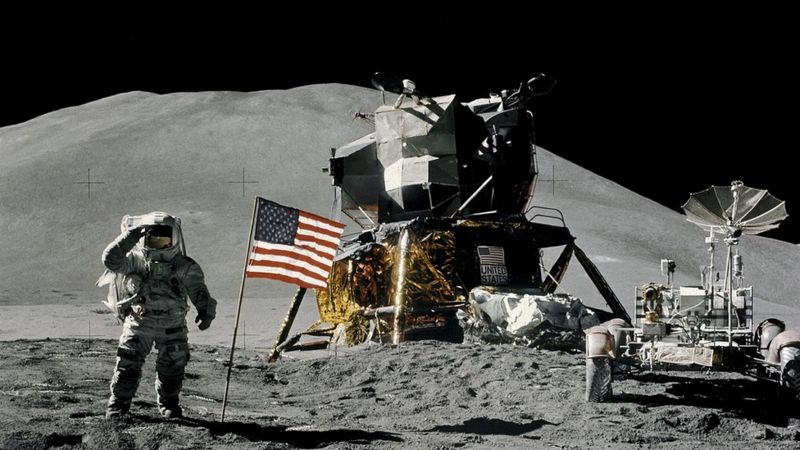
Other countries are also active in the space economy; however, this arena has primarily become a bipolar one. To describe this competition, it could be said that, given NASA now has its eyes set on the redder pastures of Mars, the United States is almost six decades ahead after the success of the Apollo program.
Nevertheless, U.S. concern over China’s rapid advancement in other technological fields has driven NASA to restrict access to its facilities for Chinese citizens. NASA officials believe the agency has taken internal measures regarding Chinese citizens, including limiting physical and cyber access to its facilities, materials, and network, to ensure the security of its work. Chinese citizens were previously permitted to work as contractors or students in research. The U.S. now finds itself in a space race, and China wants to set foot on the Moon before America does. China also seeks to become the first country to return a sample from the surface of Mars to Earth with a robotic mission scheduled to launch in 2028 and return the rocks by 2031. Therefore, an increasingly intense competition has taken shape in the space arena. Beyond its implications for commercial rivalries and neo-colonialism on Earth, it also encompasses the conquest of new territories in space and the application of these conquests to achieve superiority on Earth, as well as future space plans for human settlement on other planets, which will intensify.
Growing U.S.-China Competition in Space

LATEST CONTENT
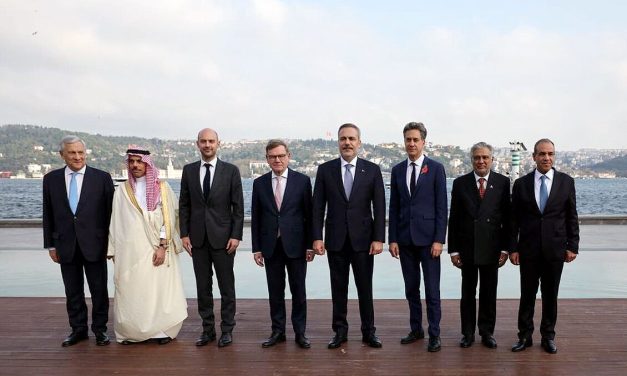
A Reflection on the Capacities and Challenges of the Istanbul Ministerial Meeting
SCFR Online – Opinion: The meeting of the foreign ministers of Turkey, Saudi Arabia, Pakistan, and Egypt in Istanbul has provided an opportunity for diplomatic coordination regarding West Asian crises, but its success will depend on the participation of key actors and the transformation of consultations into practical measures.
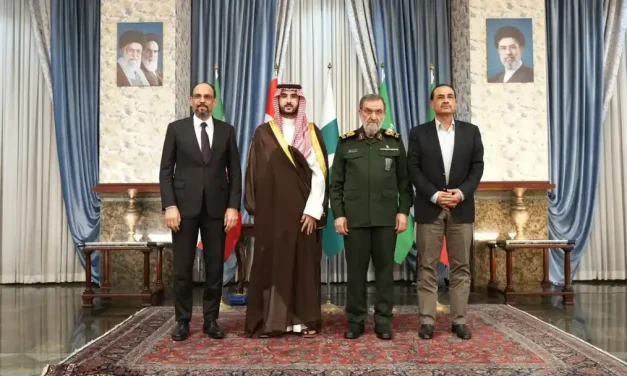
From the “Makkah Pact” to “Collective Security”; a Historic Opportunity for West Asia
SCFR Online – Opinion: The presence of high-ranking delegations from the member states of the “Makkah Joint Defense Agreement” in Tehran, at a time when the region is embroiled in military tensions and the fragile process of Iran-US negotiations, is considered a turning point in the security equations of the Persian Gulf and West Asia.
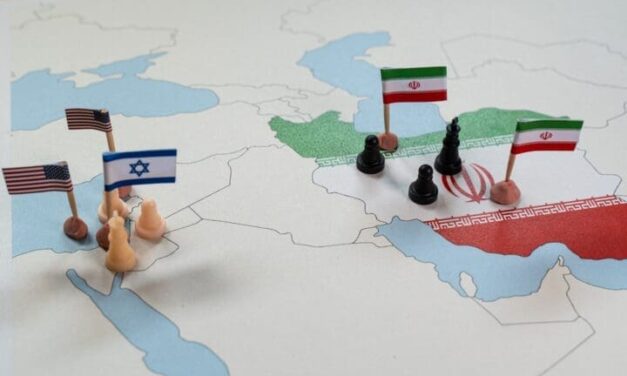
The Non-impact of the Israeli Regime’s Elections on the Strategy of the Axis of Resistance
SCFR Online – Opinion: The results of the Israeli regime’s elections can affect the composition of this regime’s cabinet and the manner of implementing its aggressive plans, but internal political changes do not necessarily lead to a strategic transformation in its approach to Palestine, Iran, and the Axis of Resistance.
Últimas publicaciones
A Reflection on the Capacities and Challenges of the Istanbul Ministerial Meeting
SCFR Online – Opinion: The meeting of the foreign ministers of Turkey, Saudi Arabia, Pakistan, and Egypt in Istanbul has provided an opportunity for diplomatic coordination regarding West Asian crises, but its success will depend on the participation of key actors and the transformation of consultations into practical measures.
From the “Makkah Pact” to “Collective Security”; a Historic Opportunity for West Asia
SCFR Online – Opinion: The presence of high-ranking delegations from the member states of the “Makkah Joint Defense Agreement” in Tehran, at a time when the region is embroiled in military tensions and the fragile process of Iran-US negotiations, is considered a turning point in the security equations of the Persian Gulf and West Asia.
The Non-impact of the Israeli Regime’s Elections on the Strategy of the Axis of Resistance
SCFR Online – Opinion: The results of the Israeli regime’s elections can affect the composition of this regime’s cabinet and the manner of implementing its aggressive plans, but internal political changes do not necessarily lead to a strategic transformation in its approach to Palestine, Iran, and the Axis of Resistance.
DERNIER CONTENU
A Reflection on the Capacities and Challenges of the Istanbul Ministerial Meeting
SCFR Online – Opinion: The meeting of the foreign ministers of Turkey, Saudi Arabia, Pakistan, and Egypt in Istanbul has provided an opportunity for diplomatic coordination regarding West Asian crises, but its success will depend on the participation of key actors and the transformation of consultations into practical measures.
From the “Makkah Pact” to “Collective Security”; a Historic Opportunity for West Asia
SCFR Online – Opinion: The presence of high-ranking delegations from the member states of the “Makkah Joint Defense Agreement” in Tehran, at a time when the region is embroiled in military tensions and the fragile process of Iran-US negotiations, is considered a turning point in the security equations of the Persian Gulf and West Asia.
The Non-impact of the Israeli Regime’s Elections on the Strategy of the Axis of Resistance
SCFR Online – Opinion: The results of the Israeli regime’s elections can affect the composition of this regime’s cabinet and the manner of implementing its aggressive plans, but internal political changes do not necessarily lead to a strategic transformation in its approach to Palestine, Iran, and the Axis of Resistance.
0 Comments