An Analysis of the Makkah Defense Pact
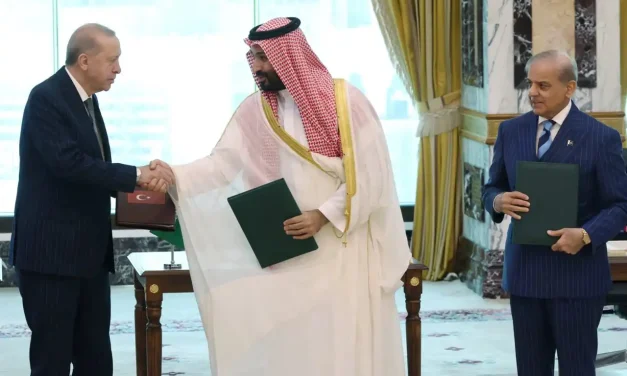
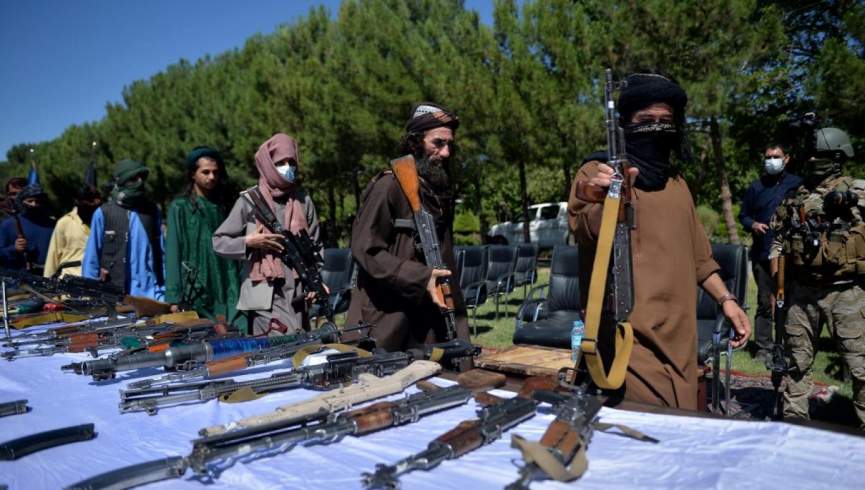
SCFR Online – Opinion: On Friday, August 7, the heads of state of three countries – Saudi Arabia, Turkey, and Pakistan – signed a text under the title “Makkah Joint Defense Agreement.”
Strategic Council Online – Note: The initiative to revive the Hejaz Railway, beyond being a transportation project, constitutes an attempt to redefine geopolitics, the economy, and Turkey’s regional position; however, its realization appears to face significant financial, security, and institutional challenges.
SCFR Online – Opinion: The Strait of Hormuz crisis is no longer merely the consequence of a military confrontation, but rather a sign of the transition from the US-centered maritime order to a new energy security structure involving the participation of emerging and influential powers.
SCFR Online – Opinion: Iran’s active deterrence strategy, while increasing the costs of US intervention, has increasingly exposed the hidden rifts between Washington’s interests and those of the Israeli regime.
SCFR Online – Opinion: The escalation of verbal and strategic tensions between Turkey and the Israeli regime, although not increasing the likelihood of direct war, indicates the formation of a new order in West Asian geopolitical rivalries.
Strategic Council Online – Note: Recent developments in the political geography of West Asia, from rising tensions in the Persian Gulf to missile and drone activities in the Red Sea and the recent warning by Kaja Kallas, the European Union’s foreign policy chief, regarding the threat to freedom of navigation, indicate a key pattern shift; the US-Iran war has moved beyond the scope of a regional and local confrontation and has linked two vital passageways for the global economy: the Strait of Hormuz and the Bab el-Mandeb Strait.
SCFR Online – Opinion: The Ukraine war was not merely a European crisis, but rather the starting point for the rearrangement of the global balance of power and a shift in the strategic behavior of great powers.
SCFR Online – Opinion: Great power competition is now pursued more in trade, currency, technology, and global supply chains than on the battlefields of military confrontation.
Strategic Council Online—Opinion: The recent military border tensions between Pakistan and Afghanistan have characteristics that completely distinguish them from the process of increasing and gradual conflict between the two countries over the past three and a half years and even before that. Their consequences make it necessary for the neighboring countries to consult.
Strategic Council Online—Interview: The cultural attaché and head of Iran’s House of Culture in Pakistan said: In addition to Pakistan pursuing a balanced relationship with major powers such as America and China, the relationship with the countries of the Persian Gulf, especially Saudi Arabia, is also important for economic stability and regional diplomacy.
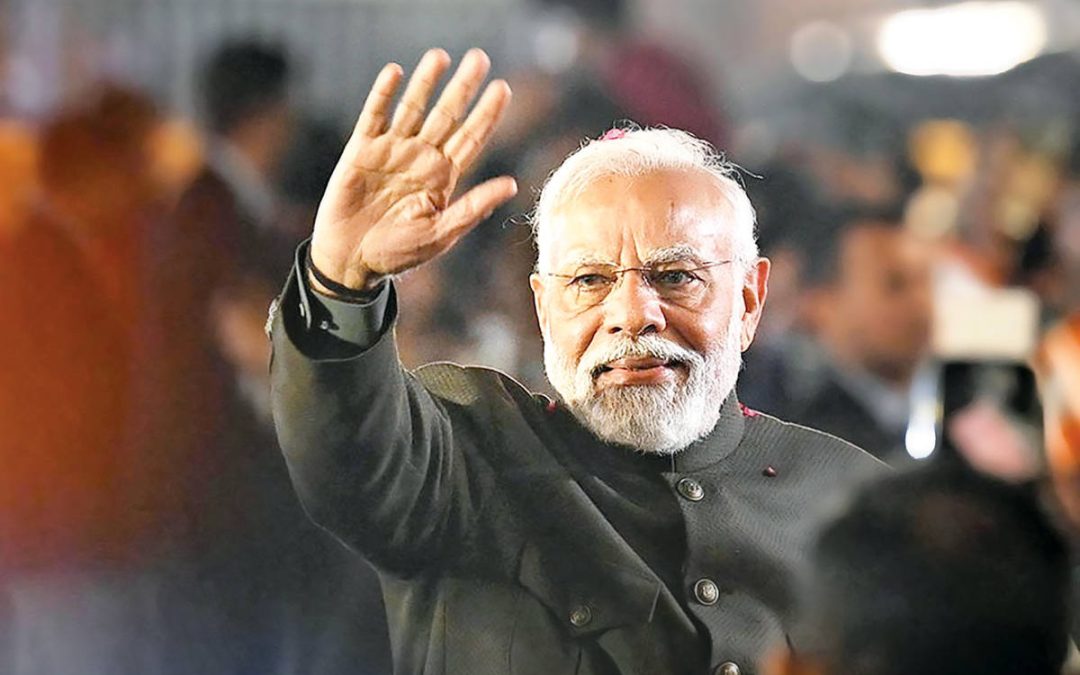
Strategic Council Online – Interview: An expert on East Asian affairs said: Despite the chances of victory, the number of seats that Indian Prime Minister Narendra Modi will have in the next parliament is likely to be less because it seems that Muslims and other ethnic groups would vote for parties opposed to the ruling party.
Strategic Council Online – Note: With the rise of the Taliban in Afghanistan, the issue of ISIS-Khorasan, the conflict between these two groups, and the expansion of the scope of their security threats in the region have become more critical than ever before, as the terrorist activities of this terrorist group disrupt regional security. In addition to this, support for suicide activities and armed individuals in the region has also put the security of Iran at risk. Therefore, ISIS-Khorasan is recognized as a significant threat to the eastern security of our country.
Dr. Hossein Ebrahimnia – Regional Issues Expert
Strategic Council Online – Opinion: A regional affairs researcher said that the legislative, judicial, and military institutions of Pakistan have a positive view of Prime Minister Shahbaz Sharif, the Muslim League candidate.
Strategic Council Online—Interview: An expert on Asian issues considered the tripartite meeting in Islamabad regarding Afghanistan as another Chinese initiative to establish peace and stability in the region by using economic tools, adding that this meeting arose from the security concerns of Pakistan and China concerning the realization of their political and economic interests in Afghanistan.
Strategic Council Online – Interview: Former official in charge of Afghanistan Support Headquarters at the Ministry of Foreign Affairs said: Iranian people are witnessing the high and unusual presence of Afghan refugees, adding that vigilance is needed concerning their presence in the strategic context of cities, as well as to the possibility of targeted organization and possible use of them against the interests and security of Iran.
Strategic Council Online – Interview: A former Iranian diplomat said that the main challenges and concerns of the foreign ministers of neighboring countries of Afghanistan, which had been raised in the first meeting in Samarkand, were prominent in the second meeting as well, adding: The Taliban have come to power by force of arms and all the past concerns are still standing about the future situation of Afghanistan.
Strategic Council Online – Interview: An expert on Asia affairs, stating that the recent evidence shows the deepening of Pakistan’s relations with Arab countries of the Persian Gulf, focusing on economic assistance in exchange for military aid, said: The Middle East region is witnessing a new security order and needs to strengthen itself more in terms of military, and the view of Arab countries of the Persian Gulf towards the East and Pakistan can be evaluated in this regard.
Strategic Council Online – Interview: A former Iranian diplomat said that currently Indians have a superior position and the upper hand against Pakistan and in response to Islamabad request for reconciliation, set conditions and terms. He added: Due to internal problems, now the relations with India and the issue of Kashmir is out of Pakistan’s priority and their main problem is the terrorist and extremist groups that threaten the Islamabad government in Pakistan. The government of Pakistan is interested in creating peace on the Kashmir front so that it can better deal with its internal problems.
SCFR Online – Opinion: On Friday, August 7, the heads of state of three countries – Saudi Arabia, Turkey, and Pakistan – signed a text under the title “Makkah Joint Defense Agreement.”
Strategic Council Online – Note: The initiative to revive the Hejaz Railway, beyond being a transportation project, constitutes an attempt to redefine geopolitics, the economy, and Turkey’s regional position; however, its realization appears to face significant financial, security, and institutional challenges.
SCFR Online – Opinion: The Strait of Hormuz crisis is no longer merely the consequence of a military confrontation, but rather a sign of the transition from the US-centered maritime order to a new energy security structure involving the participation of emerging and influential powers.
SCFR Online – Opinion: Iran’s active deterrence strategy, while increasing the costs of US intervention, has increasingly exposed the hidden rifts between Washington’s interests and those of the Israeli regime.
SCFR Online – Opinion: The escalation of verbal and strategic tensions between Turkey and the Israeli regime, although not increasing the likelihood of direct war, indicates the formation of a new order in West Asian geopolitical rivalries.
Strategic Council Online – Note: Recent developments in the political geography of West Asia, from rising tensions in the Persian Gulf to missile and drone activities in the Red Sea and the recent warning by Kaja Kallas, the European Union’s foreign policy chief, regarding the threat to freedom of navigation, indicate a key pattern shift; the US-Iran war has moved beyond the scope of a regional and local confrontation and has linked two vital passageways for the global economy: the Strait of Hormuz and the Bab el-Mandeb Strait.
SCFR Online – Opinion: The Ukraine war was not merely a European crisis, but rather the starting point for the rearrangement of the global balance of power and a shift in the strategic behavior of great powers.
SCFR Online – Opinion: Great power competition is now pursued more in trade, currency, technology, and global supply chains than on the battlefields of military confrontation.
Strategic Council Online—Opinion: The recent military border tensions between Pakistan and Afghanistan have characteristics that completely distinguish them from the process of increasing and gradual conflict between the two countries over the past three and a half years and even before that. Their consequences make it necessary for the neighboring countries to consult.
Strategic Council Online—Interview: The cultural attaché and head of Iran’s House of Culture in Pakistan said: In addition to Pakistan pursuing a balanced relationship with major powers such as America and China, the relationship with the countries of the Persian Gulf, especially Saudi Arabia, is also important for economic stability and regional diplomacy.
Strategic Council Online – Interview: An expert on East Asian affairs said: Despite the chances of victory, the number of seats that Indian Prime Minister Narendra Modi will have in the next parliament is likely to be less because it seems that Muslims and other ethnic groups would vote for parties opposed to the ruling party.
Strategic Council Online – Note: With the rise of the Taliban in Afghanistan, the issue of ISIS-Khorasan, the conflict between these two groups, and the expansion of the scope of their security threats in the region have become more critical than ever before, as the terrorist activities of this terrorist group disrupt regional security. In addition to this, support for suicide activities and armed individuals in the region has also put the security of Iran at risk. Therefore, ISIS-Khorasan is recognized as a significant threat to the eastern security of our country.
Dr. Hossein Ebrahimnia – Regional Issues Expert
Strategic Council Online – Opinion: A regional affairs researcher said that the legislative, judicial, and military institutions of Pakistan have a positive view of Prime Minister Shahbaz Sharif, the Muslim League candidate.
Strategic Council Online—Interview: An expert on Asian issues considered the tripartite meeting in Islamabad regarding Afghanistan as another Chinese initiative to establish peace and stability in the region by using economic tools, adding that this meeting arose from the security concerns of Pakistan and China concerning the realization of their political and economic interests in Afghanistan.
Strategic Council Online – Interview: Former official in charge of Afghanistan Support Headquarters at the Ministry of Foreign Affairs said: Iranian people are witnessing the high and unusual presence of Afghan refugees, adding that vigilance is needed concerning their presence in the strategic context of cities, as well as to the possibility of targeted organization and possible use of them against the interests and security of Iran.
Strategic Council Online – Interview: A former Iranian diplomat said that the main challenges and concerns of the foreign ministers of neighboring countries of Afghanistan, which had been raised in the first meeting in Samarkand, were prominent in the second meeting as well, adding: The Taliban have come to power by force of arms and all the past concerns are still standing about the future situation of Afghanistan.
Strategic Council Online – Interview: An expert on Asia affairs, stating that the recent evidence shows the deepening of Pakistan’s relations with Arab countries of the Persian Gulf, focusing on economic assistance in exchange for military aid, said: The Middle East region is witnessing a new security order and needs to strengthen itself more in terms of military, and the view of Arab countries of the Persian Gulf towards the East and Pakistan can be evaluated in this regard.
Strategic Council Online – Interview: A former Iranian diplomat said that currently Indians have a superior position and the upper hand against Pakistan and in response to Islamabad request for reconciliation, set conditions and terms. He added: Due to internal problems, now the relations with India and the issue of Kashmir is out of Pakistan’s priority and their main problem is the terrorist and extremist groups that threaten the Islamabad government in Pakistan. The government of Pakistan is interested in creating peace on the Kashmir front so that it can better deal with its internal problems.
Strategic Council Online—Opinion: The recent military border tensions between Pakistan and Afghanistan have characteristics that completely distinguish them from the process of increasing and gradual conflict between the two countries over the past three and a half years and even before that. Their consequences make it necessary for the neighboring countries to consult.
Strategic Council Online—Interview: The cultural attaché and head of Iran’s House of Culture in Pakistan said: In addition to Pakistan pursuing a balanced relationship with major powers such as America and China, the relationship with the countries of the Persian Gulf, especially Saudi Arabia, is also important for economic stability and regional diplomacy.
Strategic Council Online – Interview: An expert on East Asian affairs said: Despite the chances of victory, the number of seats that Indian Prime Minister Narendra Modi will have in the next parliament is likely to be less because it seems that Muslims and other ethnic groups would vote for parties opposed to the ruling party.
Strategic Council Online – Note: With the rise of the Taliban in Afghanistan, the issue of ISIS-Khorasan, the conflict between these two groups, and the expansion of the scope of their security threats in the region have become more critical than ever before, as the terrorist activities of this terrorist group disrupt regional security. In addition to this, support for suicide activities and armed individuals in the region has also put the security of Iran at risk. Therefore, ISIS-Khorasan is recognized as a significant threat to the eastern security of our country.
Dr. Hossein Ebrahimnia – Regional Issues Expert
Strategic Council Online – Opinion: A regional affairs researcher said that the legislative, judicial, and military institutions of Pakistan have a positive view of Prime Minister Shahbaz Sharif, the Muslim League candidate.
Strategic Council Online—Interview: An expert on Asian issues considered the tripartite meeting in Islamabad regarding Afghanistan as another Chinese initiative to establish peace and stability in the region by using economic tools, adding that this meeting arose from the security concerns of Pakistan and China concerning the realization of their political and economic interests in Afghanistan.
Strategic Council Online – Interview: Former official in charge of Afghanistan Support Headquarters at the Ministry of Foreign Affairs said: Iranian people are witnessing the high and unusual presence of Afghan refugees, adding that vigilance is needed concerning their presence in the strategic context of cities, as well as to the possibility of targeted organization and possible use of them against the interests and security of Iran.
Strategic Council Online – Interview: A former Iranian diplomat said that the main challenges and concerns of the foreign ministers of neighboring countries of Afghanistan, which had been raised in the first meeting in Samarkand, were prominent in the second meeting as well, adding: The Taliban have come to power by force of arms and all the past concerns are still standing about the future situation of Afghanistan.
Strategic Council Online – Interview: An expert on Asia affairs, stating that the recent evidence shows the deepening of Pakistan’s relations with Arab countries of the Persian Gulf, focusing on economic assistance in exchange for military aid, said: The Middle East region is witnessing a new security order and needs to strengthen itself more in terms of military, and the view of Arab countries of the Persian Gulf towards the East and Pakistan can be evaluated in this regard.
Strategic Council Online – Interview: A former Iranian diplomat said that currently Indians have a superior position and the upper hand against Pakistan and in response to Islamabad request for reconciliation, set conditions and terms. He added: Due to internal problems, now the relations with India and the issue of Kashmir is out of Pakistan’s priority and their main problem is the terrorist and extremist groups that threaten the Islamabad government in Pakistan. The government of Pakistan is interested in creating peace on the Kashmir front so that it can better deal with its internal problems.
SCFR Online – Opinion: On Friday, August 7, the heads of state of three countries – Saudi Arabia, Turkey, and Pakistan – signed a text under the title “Makkah Joint Defense Agreement.”
Strategic Council Online – Note: The initiative to revive the Hejaz Railway, beyond being a transportation project, constitutes an attempt to redefine geopolitics, the economy, and Turkey’s regional position; however, its realization appears to face significant financial, security, and institutional challenges.
SCFR Online – Opinion: The Strait of Hormuz crisis is no longer merely the consequence of a military confrontation, but rather a sign of the transition from the US-centered maritime order to a new energy security structure involving the participation of emerging and influential powers.
SCFR Online – Opinion: Iran’s active deterrence strategy, while increasing the costs of US intervention, has increasingly exposed the hidden rifts between Washington’s interests and those of the Israeli regime.
SCFR Online – Opinion: The escalation of verbal and strategic tensions between Turkey and the Israeli regime, although not increasing the likelihood of direct war, indicates the formation of a new order in West Asian geopolitical rivalries.
Strategic Council Online – Note: Recent developments in the political geography of West Asia, from rising tensions in the Persian Gulf to missile and drone activities in the Red Sea and the recent warning by Kaja Kallas, the European Union’s foreign policy chief, regarding the threat to freedom of navigation, indicate a key pattern shift; the US-Iran war has moved beyond the scope of a regional and local confrontation and has linked two vital passageways for the global economy: the Strait of Hormuz and the Bab el-Mandeb Strait.
SCFR Online – Opinion: The Ukraine war was not merely a European crisis, but rather the starting point for the rearrangement of the global balance of power and a shift in the strategic behavior of great powers.
SCFR Online – Opinion: Great power competition is now pursued more in trade, currency, technology, and global supply chains than on the battlefields of military confrontation.
Strategic Council Online—Opinion: The recent military border tensions between Pakistan and Afghanistan have characteristics that completely distinguish them from the process of increasing and gradual conflict between the two countries over the past three and a half years and even before that. Their consequences make it necessary for the neighboring countries to consult.
Strategic Council Online—Interview: The cultural attaché and head of Iran’s House of Culture in Pakistan said: In addition to Pakistan pursuing a balanced relationship with major powers such as America and China, the relationship with the countries of the Persian Gulf, especially Saudi Arabia, is also important for economic stability and regional diplomacy.
Strategic Council Online – Interview: An expert on East Asian affairs said: Despite the chances of victory, the number of seats that Indian Prime Minister Narendra Modi will have in the next parliament is likely to be less because it seems that Muslims and other ethnic groups would vote for parties opposed to the ruling party.
Strategic Council Online – Note: With the rise of the Taliban in Afghanistan, the issue of ISIS-Khorasan, the conflict between these two groups, and the expansion of the scope of their security threats in the region have become more critical than ever before, as the terrorist activities of this terrorist group disrupt regional security. In addition to this, support for suicide activities and armed individuals in the region has also put the security of Iran at risk. Therefore, ISIS-Khorasan is recognized as a significant threat to the eastern security of our country.
Dr. Hossein Ebrahimnia – Regional Issues Expert
Strategic Council Online – Opinion: A regional affairs researcher said that the legislative, judicial, and military institutions of Pakistan have a positive view of Prime Minister Shahbaz Sharif, the Muslim League candidate.
Strategic Council Online—Interview: An expert on Asian issues considered the tripartite meeting in Islamabad regarding Afghanistan as another Chinese initiative to establish peace and stability in the region by using economic tools, adding that this meeting arose from the security concerns of Pakistan and China concerning the realization of their political and economic interests in Afghanistan.
Strategic Council Online – Interview: Former official in charge of Afghanistan Support Headquarters at the Ministry of Foreign Affairs said: Iranian people are witnessing the high and unusual presence of Afghan refugees, adding that vigilance is needed concerning their presence in the strategic context of cities, as well as to the possibility of targeted organization and possible use of them against the interests and security of Iran.
Strategic Council Online – Interview: A former Iranian diplomat said that the main challenges and concerns of the foreign ministers of neighboring countries of Afghanistan, which had been raised in the first meeting in Samarkand, were prominent in the second meeting as well, adding: The Taliban have come to power by force of arms and all the past concerns are still standing about the future situation of Afghanistan.
Strategic Council Online – Interview: An expert on Asia affairs, stating that the recent evidence shows the deepening of Pakistan’s relations with Arab countries of the Persian Gulf, focusing on economic assistance in exchange for military aid, said: The Middle East region is witnessing a new security order and needs to strengthen itself more in terms of military, and the view of Arab countries of the Persian Gulf towards the East and Pakistan can be evaluated in this regard.
Strategic Council Online – Interview: A former Iranian diplomat said that currently Indians have a superior position and the upper hand against Pakistan and in response to Islamabad request for reconciliation, set conditions and terms. He added: Due to internal problems, now the relations with India and the issue of Kashmir is out of Pakistan’s priority and their main problem is the terrorist and extremist groups that threaten the Islamabad government in Pakistan. The government of Pakistan is interested in creating peace on the Kashmir front so that it can better deal with its internal problems.
SCFR Online – Opinion: On Friday, August 7, the heads of state of three countries – Saudi Arabia, Turkey, and Pakistan – signed a text under the title “Makkah Joint Defense Agreement.”
Strategic Council Online – Note: The initiative to revive the Hejaz Railway, beyond being a transportation project, constitutes an attempt to redefine geopolitics, the economy, and Turkey’s regional position; however, its realization appears to face significant financial, security, and institutional challenges.
SCFR Online – Opinion: The Strait of Hormuz crisis is no longer merely the consequence of a military confrontation, but rather a sign of the transition from the US-centered maritime order to a new energy security structure involving the participation of emerging and influential powers.
SCFR Online – Opinion: Iran’s active deterrence strategy, while increasing the costs of US intervention, has increasingly exposed the hidden rifts between Washington’s interests and those of the Israeli regime.
SCFR Online – Opinion: The escalation of verbal and strategic tensions between Turkey and the Israeli regime, although not increasing the likelihood of direct war, indicates the formation of a new order in West Asian geopolitical rivalries.
Strategic Council Online – Note: Recent developments in the political geography of West Asia, from rising tensions in the Persian Gulf to missile and drone activities in the Red Sea and the recent warning by Kaja Kallas, the European Union’s foreign policy chief, regarding the threat to freedom of navigation, indicate a key pattern shift; the US-Iran war has moved beyond the scope of a regional and local confrontation and has linked two vital passageways for the global economy: the Strait of Hormuz and the Bab el-Mandeb Strait.
SCFR Online – Opinion: The Ukraine war was not merely a European crisis, but rather the starting point for the rearrangement of the global balance of power and a shift in the strategic behavior of great powers.
SCFR Online – Opinion: Great power competition is now pursued more in trade, currency, technology, and global supply chains than on the battlefields of military confrontation.
Strategic Council Online—Opinion: The recent military border tensions between Pakistan and Afghanistan have characteristics that completely distinguish them from the process of increasing and gradual conflict between the two countries over the past three and a half years and even before that. Their consequences make it necessary for the neighboring countries to consult.
Strategic Council Online—Interview: The cultural attaché and head of Iran’s House of Culture in Pakistan said: In addition to Pakistan pursuing a balanced relationship with major powers such as America and China, the relationship with the countries of the Persian Gulf, especially Saudi Arabia, is also important for economic stability and regional diplomacy.
Strategic Council Online – Interview: An expert on East Asian affairs said: Despite the chances of victory, the number of seats that Indian Prime Minister Narendra Modi will have in the next parliament is likely to be less because it seems that Muslims and other ethnic groups would vote for parties opposed to the ruling party.
Strategic Council Online – Note: With the rise of the Taliban in Afghanistan, the issue of ISIS-Khorasan, the conflict between these two groups, and the expansion of the scope of their security threats in the region have become more critical than ever before, as the terrorist activities of this terrorist group disrupt regional security. In addition to this, support for suicide activities and armed individuals in the region has also put the security of Iran at risk. Therefore, ISIS-Khorasan is recognized as a significant threat to the eastern security of our country.
Dr. Hossein Ebrahimnia – Regional Issues Expert
Strategic Council Online – Opinion: A regional affairs researcher said that the legislative, judicial, and military institutions of Pakistan have a positive view of Prime Minister Shahbaz Sharif, the Muslim League candidate.
Strategic Council Online—Interview: An expert on Asian issues considered the tripartite meeting in Islamabad regarding Afghanistan as another Chinese initiative to establish peace and stability in the region by using economic tools, adding that this meeting arose from the security concerns of Pakistan and China concerning the realization of their political and economic interests in Afghanistan.
Strategic Council Online – Interview: Former official in charge of Afghanistan Support Headquarters at the Ministry of Foreign Affairs said: Iranian people are witnessing the high and unusual presence of Afghan refugees, adding that vigilance is needed concerning their presence in the strategic context of cities, as well as to the possibility of targeted organization and possible use of them against the interests and security of Iran.
Strategic Council Online – Interview: A former Iranian diplomat said that the main challenges and concerns of the foreign ministers of neighboring countries of Afghanistan, which had been raised in the first meeting in Samarkand, were prominent in the second meeting as well, adding: The Taliban have come to power by force of arms and all the past concerns are still standing about the future situation of Afghanistan.
Strategic Council Online – Interview: An expert on Asia affairs, stating that the recent evidence shows the deepening of Pakistan’s relations with Arab countries of the Persian Gulf, focusing on economic assistance in exchange for military aid, said: The Middle East region is witnessing a new security order and needs to strengthen itself more in terms of military, and the view of Arab countries of the Persian Gulf towards the East and Pakistan can be evaluated in this regard.
Strategic Council Online – Interview: A former Iranian diplomat said that currently Indians have a superior position and the upper hand against Pakistan and in response to Islamabad request for reconciliation, set conditions and terms. He added: Due to internal problems, now the relations with India and the issue of Kashmir is out of Pakistan’s priority and their main problem is the terrorist and extremist groups that threaten the Islamabad government in Pakistan. The government of Pakistan is interested in creating peace on the Kashmir front so that it can better deal with its internal problems.
SCFR Online – Opinion: On Friday, August 7, the heads of state of three countries – Saudi Arabia, Turkey, and Pakistan – signed a text under the title “Makkah Joint Defense Agreement.”
Strategic Council Online – Note: The initiative to revive the Hejaz Railway, beyond being a transportation project, constitutes an attempt to redefine geopolitics, the economy, and Turkey’s regional position; however, its realization appears to face significant financial, security, and institutional challenges.
SCFR Online – Opinion: The Strait of Hormuz crisis is no longer merely the consequence of a military confrontation, but rather a sign of the transition from the US-centered maritime order to a new energy security structure involving the participation of emerging and influential powers.
SCFR Online – Opinion: Iran’s active deterrence strategy, while increasing the costs of US intervention, has increasingly exposed the hidden rifts between Washington’s interests and those of the Israeli regime.
SCFR Online – Opinion: The escalation of verbal and strategic tensions between Turkey and the Israeli regime, although not increasing the likelihood of direct war, indicates the formation of a new order in West Asian geopolitical rivalries.
Strategic Council Online – Note: Recent developments in the political geography of West Asia, from rising tensions in the Persian Gulf to missile and drone activities in the Red Sea and the recent warning by Kaja Kallas, the European Union’s foreign policy chief, regarding the threat to freedom of navigation, indicate a key pattern shift; the US-Iran war has moved beyond the scope of a regional and local confrontation and has linked two vital passageways for the global economy: the Strait of Hormuz and the Bab el-Mandeb Strait.
SCFR Online – Opinion: The Ukraine war was not merely a European crisis, but rather the starting point for the rearrangement of the global balance of power and a shift in the strategic behavior of great powers.
SCFR Online – Opinion: Great power competition is now pursued more in trade, currency, technology, and global supply chains than on the battlefields of military confrontation.
Strategic Council Online—Opinion: The recent military border tensions between Pakistan and Afghanistan have characteristics that completely distinguish them from the process of increasing and gradual conflict between the two countries over the past three and a half years and even before that. Their consequences make it necessary for the neighboring countries to consult.
Strategic Council Online—Interview: The cultural attaché and head of Iran’s House of Culture in Pakistan said: In addition to Pakistan pursuing a balanced relationship with major powers such as America and China, the relationship with the countries of the Persian Gulf, especially Saudi Arabia, is also important for economic stability and regional diplomacy.
Strategic Council Online – Interview: An expert on East Asian affairs said: Despite the chances of victory, the number of seats that Indian Prime Minister Narendra Modi will have in the next parliament is likely to be less because it seems that Muslims and other ethnic groups would vote for parties opposed to the ruling party.
Strategic Council Online – Note: With the rise of the Taliban in Afghanistan, the issue of ISIS-Khorasan, the conflict between these two groups, and the expansion of the scope of their security threats in the region have become more critical than ever before, as the terrorist activities of this terrorist group disrupt regional security. In addition to this, support for suicide activities and armed individuals in the region has also put the security of Iran at risk. Therefore, ISIS-Khorasan is recognized as a significant threat to the eastern security of our country.
Dr. Hossein Ebrahimnia – Regional Issues Expert
Strategic Council Online – Opinion: A regional affairs researcher said that the legislative, judicial, and military institutions of Pakistan have a positive view of Prime Minister Shahbaz Sharif, the Muslim League candidate.
Strategic Council Online—Interview: An expert on Asian issues considered the tripartite meeting in Islamabad regarding Afghanistan as another Chinese initiative to establish peace and stability in the region by using economic tools, adding that this meeting arose from the security concerns of Pakistan and China concerning the realization of their political and economic interests in Afghanistan.
Strategic Council Online – Interview: Former official in charge of Afghanistan Support Headquarters at the Ministry of Foreign Affairs said: Iranian people are witnessing the high and unusual presence of Afghan refugees, adding that vigilance is needed concerning their presence in the strategic context of cities, as well as to the possibility of targeted organization and possible use of them against the interests and security of Iran.
Strategic Council Online – Interview: A former Iranian diplomat said that the main challenges and concerns of the foreign ministers of neighboring countries of Afghanistan, which had been raised in the first meeting in Samarkand, were prominent in the second meeting as well, adding: The Taliban have come to power by force of arms and all the past concerns are still standing about the future situation of Afghanistan.
Strategic Council Online – Interview: An expert on Asia affairs, stating that the recent evidence shows the deepening of Pakistan’s relations with Arab countries of the Persian Gulf, focusing on economic assistance in exchange for military aid, said: The Middle East region is witnessing a new security order and needs to strengthen itself more in terms of military, and the view of Arab countries of the Persian Gulf towards the East and Pakistan can be evaluated in this regard.
Strategic Council Online – Interview: A former Iranian diplomat said that currently Indians have a superior position and the upper hand against Pakistan and in response to Islamabad request for reconciliation, set conditions and terms. He added: Due to internal problems, now the relations with India and the issue of Kashmir is out of Pakistan’s priority and their main problem is the terrorist and extremist groups that threaten the Islamabad government in Pakistan. The government of Pakistan is interested in creating peace on the Kashmir front so that it can better deal with its internal problems.
SCFR Online – Opinion: On Friday, August 7, the heads of state of three countries – Saudi Arabia, Turkey, and Pakistan – signed a text under the title “Makkah Joint Defense Agreement.”
Strategic Council Online – Note: The initiative to revive the Hejaz Railway, beyond being a transportation project, constitutes an attempt to redefine geopolitics, the economy, and Turkey’s regional position; however, its realization appears to face significant financial, security, and institutional challenges.
SCFR Online – Opinion: The Strait of Hormuz crisis is no longer merely the consequence of a military confrontation, but rather a sign of the transition from the US-centered maritime order to a new energy security structure involving the participation of emerging and influential powers.
SCFR Online – Opinion: Iran’s active deterrence strategy, while increasing the costs of US intervention, has increasingly exposed the hidden rifts between Washington’s interests and those of the Israeli regime.
SCFR Online – Opinion: The escalation of verbal and strategic tensions between Turkey and the Israeli regime, although not increasing the likelihood of direct war, indicates the formation of a new order in West Asian geopolitical rivalries.
Strategic Council Online – Note: Recent developments in the political geography of West Asia, from rising tensions in the Persian Gulf to missile and drone activities in the Red Sea and the recent warning by Kaja Kallas, the European Union’s foreign policy chief, regarding the threat to freedom of navigation, indicate a key pattern shift; the US-Iran war has moved beyond the scope of a regional and local confrontation and has linked two vital passageways for the global economy: the Strait of Hormuz and the Bab el-Mandeb Strait.
SCFR Online – Opinion: The Ukraine war was not merely a European crisis, but rather the starting point for the rearrangement of the global balance of power and a shift in the strategic behavior of great powers.
SCFR Online – Opinion: Great power competition is now pursued more in trade, currency, technology, and global supply chains than on the battlefields of military confrontation.
Strategic Council Online—Opinion: The recent military border tensions between Pakistan and Afghanistan have characteristics that completely distinguish them from the process of increasing and gradual conflict between the two countries over the past three and a half years and even before that. Their consequences make it necessary for the neighboring countries to consult.
Strategic Council Online—Interview: The cultural attaché and head of Iran’s House of Culture in Pakistan said: In addition to Pakistan pursuing a balanced relationship with major powers such as America and China, the relationship with the countries of the Persian Gulf, especially Saudi Arabia, is also important for economic stability and regional diplomacy.
Strategic Council Online – Interview: An expert on East Asian affairs said: Despite the chances of victory, the number of seats that Indian Prime Minister Narendra Modi will have in the next parliament is likely to be less because it seems that Muslims and other ethnic groups would vote for parties opposed to the ruling party.
Strategic Council Online – Note: With the rise of the Taliban in Afghanistan, the issue of ISIS-Khorasan, the conflict between these two groups, and the expansion of the scope of their security threats in the region have become more critical than ever before, as the terrorist activities of this terrorist group disrupt regional security. In addition to this, support for suicide activities and armed individuals in the region has also put the security of Iran at risk. Therefore, ISIS-Khorasan is recognized as a significant threat to the eastern security of our country.
Dr. Hossein Ebrahimnia – Regional Issues Expert
Strategic Council Online – Opinion: A regional affairs researcher said that the legislative, judicial, and military institutions of Pakistan have a positive view of Prime Minister Shahbaz Sharif, the Muslim League candidate.
Strategic Council Online—Interview: An expert on Asian issues considered the tripartite meeting in Islamabad regarding Afghanistan as another Chinese initiative to establish peace and stability in the region by using economic tools, adding that this meeting arose from the security concerns of Pakistan and China concerning the realization of their political and economic interests in Afghanistan.
Strategic Council Online – Interview: Former official in charge of Afghanistan Support Headquarters at the Ministry of Foreign Affairs said: Iranian people are witnessing the high and unusual presence of Afghan refugees, adding that vigilance is needed concerning their presence in the strategic context of cities, as well as to the possibility of targeted organization and possible use of them against the interests and security of Iran.
Strategic Council Online – Interview: A former Iranian diplomat said that the main challenges and concerns of the foreign ministers of neighboring countries of Afghanistan, which had been raised in the first meeting in Samarkand, were prominent in the second meeting as well, adding: The Taliban have come to power by force of arms and all the past concerns are still standing about the future situation of Afghanistan.
Strategic Council Online – Interview: An expert on Asia affairs, stating that the recent evidence shows the deepening of Pakistan’s relations with Arab countries of the Persian Gulf, focusing on economic assistance in exchange for military aid, said: The Middle East region is witnessing a new security order and needs to strengthen itself more in terms of military, and the view of Arab countries of the Persian Gulf towards the East and Pakistan can be evaluated in this regard.
Strategic Council Online – Interview: A former Iranian diplomat said that currently Indians have a superior position and the upper hand against Pakistan and in response to Islamabad request for reconciliation, set conditions and terms. He added: Due to internal problems, now the relations with India and the issue of Kashmir is out of Pakistan’s priority and their main problem is the terrorist and extremist groups that threaten the Islamabad government in Pakistan. The government of Pakistan is interested in creating peace on the Kashmir front so that it can better deal with its internal problems.
SCFR Online – Opinion: On Friday, August 7, the heads of state of three countries – Saudi Arabia, Turkey, and Pakistan – signed a text under the title “Makkah Joint Defense Agreement.”
Strategic Council Online – Note: The initiative to revive the Hejaz Railway, beyond being a transportation project, constitutes an attempt to redefine geopolitics, the economy, and Turkey’s regional position; however, its realization appears to face significant financial, security, and institutional challenges.
SCFR Online – Opinion: The Strait of Hormuz crisis is no longer merely the consequence of a military confrontation, but rather a sign of the transition from the US-centered maritime order to a new energy security structure involving the participation of emerging and influential powers.
SCFR Online – Opinion: Iran’s active deterrence strategy, while increasing the costs of US intervention, has increasingly exposed the hidden rifts between Washington’s interests and those of the Israeli regime.
SCFR Online – Opinion: The escalation of verbal and strategic tensions between Turkey and the Israeli regime, although not increasing the likelihood of direct war, indicates the formation of a new order in West Asian geopolitical rivalries.
Strategic Council Online – Note: Recent developments in the political geography of West Asia, from rising tensions in the Persian Gulf to missile and drone activities in the Red Sea and the recent warning by Kaja Kallas, the European Union’s foreign policy chief, regarding the threat to freedom of navigation, indicate a key pattern shift; the US-Iran war has moved beyond the scope of a regional and local confrontation and has linked two vital passageways for the global economy: the Strait of Hormuz and the Bab el-Mandeb Strait.
SCFR Online – Opinion: The Ukraine war was not merely a European crisis, but rather the starting point for the rearrangement of the global balance of power and a shift in the strategic behavior of great powers.
SCFR Online – Opinion: Great power competition is now pursued more in trade, currency, technology, and global supply chains than on the battlefields of military confrontation.