جدیدترین مطالب

The Makkah Pact; Reasons for its Formation and Challenges Ahead

SCFR Online – Opinion: The Makkah Pact, signed between Saudi Arabia, Pakistan, and Turkey under the motto “an attack on one is an attack on all,” is viewed by some analysts less as a full-fledged military coalition and more as an attempt to reduce security dependence on an external power and to establish a regional security mechanism.

Implications of the US-Saudi Nuclear Agreement

SCFR Online – Opinion: The new US-Saudi nuclear agreement, despite legal and political ambiguities, could alter previous non-proliferation standards in West Asia and intensify nuclear competition, ushering it into a new phase.

An Analysis of Recent Turkey-Israeli Regime Tensions

SCFR Online – Opinion: Recent developments in Syria indicate an intensification of strategic rivalry between Turkey and the Israeli regime, but mutual considerations and the role of the United States have limited the likelihood of direct war.

Increasing criticism of the extensive Zionist lobby network

SCFR Online – Opinion: An examination of the mechanisms of the Israeli regime’s influence in the United States depicts a complex picture of shared interests, strategic dependencies, and the limitations of this relationship.

Realities of the Tripartite Makkah Pact

SCFR Online – Interview: The signing of the Makkah agreement between Saudi Arabia, Pakistan, and Turkey has raised questions about the future of the region’s security structure and the position of these countries in West Asian equations. Can this agreement become a genuine collective defense mechanism, or does it have more of a political and deterrent function than creating new military capacity?

Strategic Implications of the Reduction of US Weapons Stockpiles

SCFR Online – Opinion: The continuation of the US war against Iran, in addition to increasing operational costs, has called into question the actual capacity of the American arsenal to simultaneously fulfill security commitments on multiple fronts; an issue that affects deterrence, defense production capacity, and Washington’s resource prioritization.

Loading

Energy

Analysis of Erdogan’s Trip to Three Persian Gulf States

Analysis of Erdogan’s Trip to Three Persian Gulf States

Strategic Council Online – Opinion: During the Turkish President’s recent visit to Saudi Arabia, Qatar, and the UAE, several agreements were signed between the three Persian Gulf states and Turkey. The economic aspect of this trip has received widespread attention in the media, and the main objective of the trip, from Ankara’s point of view, has been referred to as attracting capital from Arab states of the Persian Gulf region.
Mahmoud Fazeli – Analyst of international affairs

Analysis of British Strategy against China, Causes of its Escalation against Beijing

Analysis of British Strategy against China, Causes of its Escalation against Beijing

Strategic Council Online – Interview: An analyst of Europe affairs considered the harsh positions of Britain against China in line with the old policy of using political levers for exerting pressure to obtain commercial and economic concessions and said: In the current situation, Britain is no longer able to influence power relations at the global level in the domestic and international arenas, and for this reason, it is trying to prevent further decline in its global position by maintaining its strategic alliance with the United States of America.

Foreign Policy Challenges of the New Greek Government

Foreign Policy Challenges of the New Greek Government

Strategic Council Online – Opinion: With the holding of the national elections in Greece on May 21, although the winning party announced priorities of its future government to be mainly improvement of the economic situation, the continuation of the national policy in foreign relations, security, and immigration would be most important challenges for this EU and NATO member country. Although the new leaders defend the continuation of the foreign and defense policy, strengthening of the country’s armed forces, creation of solid alliances, and development of the weapons program over the past four years, they differ in the field of energy exploration, the militarization of some islands in the Aegean Sea, and the issue of refugees.
Mahmoud Fazeli – International Affairs analyst

Consequences of Moscow-Riyadh Cooperation on Sale of Russian Oil

Consequences of Moscow-Riyadh Cooperation on Sale of Russian Oil

Strategic Council Online – Interview: A faculty member of the Institute of Strategic Studies says there has been a change in the global energy transmission lines after the Ukraine war began. He noted: With the continued shift in the oil trade routes of Russia, India and China have become strategic business partners for Moscow. This development has taken place in the shadow of the decline of the US influence among its key allies in the Middle East.

Strategic Implications of Saudi-UAE Tension in Yemen

Strategic Implications of Saudi-UAE Tension in Yemen

Strategic Council Online – Opinion: Since the beginning of Saudi Arabia’s military attack on Yemen, political, military, and security relations between Riyadh and Abu Dhabi have gone through four different stages. Based on “unity and convergence” at the beginning of the war, bilateral ties have become “rivalries” after a while. This competition led to many “disagreements,s,” With its continuation, the two countries have passed the stage of disagreement and have “tension” with each other.
Hamid Khoshayand – Expert on regional affairs

Analysis of China’s Statement Regarding War in Ukraine, Beijing’s Motivations

Analysis of China’s Statement Regarding War in Ukraine, Beijing’s Motivations

Strategic Council Online – Interview: An expert on Russian affairs says the Chinese statement lacked a specific proposal to exchange concessions between the two parties involved in the Ukraine war and open a passage for peace and only demanded to start negotiations. He added: During the Ukraine war, China, by buying cheap energy from Russia and increasing its energy reserves, has not only become an energy exporter for the first time but also gained more bargaining power against other energy exporters to China.

Ukraine War; Approach of World Powers, Iran’s Policy

Ukraine War; Approach of World Powers, Iran’s Policy

Strategic Council Online – Guest opinion: Russia’s attack on Ukraine, which was initially thought to be a lightning attack with quick and tangible results, has lasted a year; meantime with the recent stances taken by certain European countries at the Munich Security Conference to the effect that they have prepared for a long-term war, no definite end can be expected for the conflict.
Dr. Mohammad Mahdi Mazaheri – University professor

Place of Energy in Possible Economic Recession in Germany, Effects on Europe

Place of Energy in Possible Economic Recession in Germany, Effects on Europe

Strategic Council Online – Opinion: Statistical data shows that in the fourth quarter of 2022, the German economy has suffered a slight decline and it is possible that a period of recession will begin in that country; a recession, which of course, is less than what should be worried about.
Reza Majidzadeh – Development researcher

Baku’s role playing in gas supply to Europe; from propaganda to reality

Baku’s role playing in gas supply to Europe; from propaganda to reality

Strategic Council Online – Interview: An expert on energy economy, referring to the media and political space-making by Europe and Baku regarding Azerbaijan’s gas reserves, noted: Considering the issues of the Caucasus region and efforts we are witnessing being made by foreign players to increase the presence and role-playing in it, Baku tries to demonstrate itself as an important and decisive player.

Cyprus: Need to Break Current Deadlock with Support of International Institutions

Cyprus: Need to Break Current Deadlock with Support of International Institutions

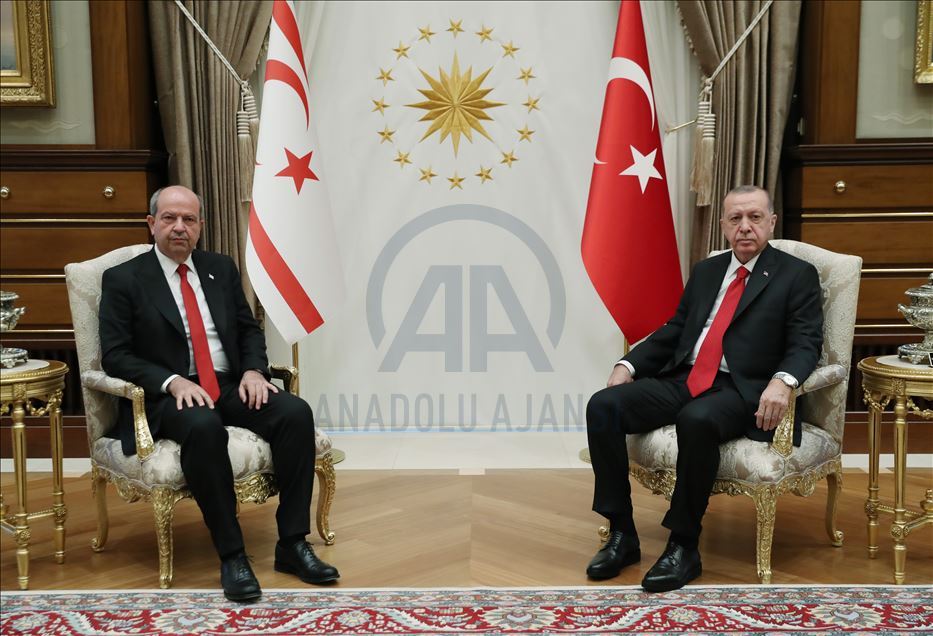
Strategic Council Online – Opinion: The recent report of the UN Secretary-General Antonio Guterres on the peacekeeping forces in Cyprus emphasizes lack of common ground between the two sides for peace talks to reach a common solution which has followed concerns among the Cypriot authorities as well as Greek parties. The Greek Cypriot side does not seem satisfied with the UN Secretary General’s reports as an official document of the UN Security Council published on January 13, because such reports are close to the “two societies” policy and include subjective and non-objective views. According to Nicosia, the correct report should ask all parties to adhere to a common solution to the Cyprus issue, which is the formation of a common bi-regional federation and political equality.
Mahmoud Fazeli – International affairs analyst

أحدث الوظائف

The Makkah Pact; Reasons for its Formation and Challenges Ahead

SCFR Online – Opinion: The Makkah Pact, signed between Saudi Arabia, Pakistan, and Turkey under the motto “an attack on one is an attack on all,” is viewed by some analysts less as a full-fledged military coalition and more as an attempt to reduce security dependence on an external power and to establish a regional security mechanism.

Implications of the US-Saudi Nuclear Agreement

SCFR Online – Opinion: The new US-Saudi nuclear agreement, despite legal and political ambiguities, could alter previous non-proliferation standards in West Asia and intensify nuclear competition, ushering it into a new phase.

An Analysis of Recent Turkey-Israeli Regime Tensions

SCFR Online – Opinion: Recent developments in Syria indicate an intensification of strategic rivalry between Turkey and the Israeli regime, but mutual considerations and the role of the United States have limited the likelihood of direct war.

Increasing criticism of the extensive Zionist lobby network

SCFR Online – Opinion: An examination of the mechanisms of the Israeli regime’s influence in the United States depicts a complex picture of shared interests, strategic dependencies, and the limitations of this relationship.

Realities of the Tripartite Makkah Pact

SCFR Online – Interview: The signing of the Makkah agreement between Saudi Arabia, Pakistan, and Turkey has raised questions about the future of the region’s security structure and the position of these countries in West Asian equations. Can this agreement become a genuine collective defense mechanism, or does it have more of a political and deterrent function than creating new military capacity?

Strategic Implications of the Reduction of US Weapons Stockpiles

SCFR Online – Opinion: The continuation of the US war against Iran, in addition to increasing operational costs, has called into question the actual capacity of the American arsenal to simultaneously fulfill security commitments on multiple fronts; an issue that affects deterrence, defense production capacity, and Washington’s resource prioritization.

Loading

Energy

Analysis of Erdogan’s Trip to Three Persian Gulf States

Analysis of Erdogan’s Trip to Three Persian Gulf States

Strategic Council Online – Opinion: During the Turkish President’s recent visit to Saudi Arabia, Qatar, and the UAE, several agreements were signed between the three Persian Gulf states and Turkey. The economic aspect of this trip has received widespread attention in the media, and the main objective of the trip, from Ankara’s point of view, has been referred to as attracting capital from Arab states of the Persian Gulf region.
Mahmoud Fazeli – Analyst of international affairs

Analysis of British Strategy against China, Causes of its Escalation against Beijing

Analysis of British Strategy against China, Causes of its Escalation against Beijing

Strategic Council Online – Interview: An analyst of Europe affairs considered the harsh positions of Britain against China in line with the old policy of using political levers for exerting pressure to obtain commercial and economic concessions and said: In the current situation, Britain is no longer able to influence power relations at the global level in the domestic and international arenas, and for this reason, it is trying to prevent further decline in its global position by maintaining its strategic alliance with the United States of America.

Foreign Policy Challenges of the New Greek Government

Foreign Policy Challenges of the New Greek Government

Strategic Council Online – Opinion: With the holding of the national elections in Greece on May 21, although the winning party announced priorities of its future government to be mainly improvement of the economic situation, the continuation of the national policy in foreign relations, security, and immigration would be most important challenges for this EU and NATO member country. Although the new leaders defend the continuation of the foreign and defense policy, strengthening of the country’s armed forces, creation of solid alliances, and development of the weapons program over the past four years, they differ in the field of energy exploration, the militarization of some islands in the Aegean Sea, and the issue of refugees.
Mahmoud Fazeli – International Affairs analyst

Consequences of Moscow-Riyadh Cooperation on Sale of Russian Oil

Consequences of Moscow-Riyadh Cooperation on Sale of Russian Oil

Strategic Council Online – Interview: A faculty member of the Institute of Strategic Studies says there has been a change in the global energy transmission lines after the Ukraine war began. He noted: With the continued shift in the oil trade routes of Russia, India and China have become strategic business partners for Moscow. This development has taken place in the shadow of the decline of the US influence among its key allies in the Middle East.

Strategic Implications of Saudi-UAE Tension in Yemen

Strategic Implications of Saudi-UAE Tension in Yemen

Strategic Council Online – Opinion: Since the beginning of Saudi Arabia’s military attack on Yemen, political, military, and security relations between Riyadh and Abu Dhabi have gone through four different stages. Based on “unity and convergence” at the beginning of the war, bilateral ties have become “rivalries” after a while. This competition led to many “disagreements,s,” With its continuation, the two countries have passed the stage of disagreement and have “tension” with each other.
Hamid Khoshayand – Expert on regional affairs

Analysis of China’s Statement Regarding War in Ukraine, Beijing’s Motivations

Analysis of China’s Statement Regarding War in Ukraine, Beijing’s Motivations

Strategic Council Online – Interview: An expert on Russian affairs says the Chinese statement lacked a specific proposal to exchange concessions between the two parties involved in the Ukraine war and open a passage for peace and only demanded to start negotiations. He added: During the Ukraine war, China, by buying cheap energy from Russia and increasing its energy reserves, has not only become an energy exporter for the first time but also gained more bargaining power against other energy exporters to China.

Ukraine War; Approach of World Powers, Iran’s Policy

Ukraine War; Approach of World Powers, Iran’s Policy

Strategic Council Online – Guest opinion: Russia’s attack on Ukraine, which was initially thought to be a lightning attack with quick and tangible results, has lasted a year; meantime with the recent stances taken by certain European countries at the Munich Security Conference to the effect that they have prepared for a long-term war, no definite end can be expected for the conflict.
Dr. Mohammad Mahdi Mazaheri – University professor

Place of Energy in Possible Economic Recession in Germany, Effects on Europe

Place of Energy in Possible Economic Recession in Germany, Effects on Europe

Strategic Council Online – Opinion: Statistical data shows that in the fourth quarter of 2022, the German economy has suffered a slight decline and it is possible that a period of recession will begin in that country; a recession, which of course, is less than what should be worried about.
Reza Majidzadeh – Development researcher

Baku’s role playing in gas supply to Europe; from propaganda to reality

Baku’s role playing in gas supply to Europe; from propaganda to reality

Strategic Council Online – Interview: An expert on energy economy, referring to the media and political space-making by Europe and Baku regarding Azerbaijan’s gas reserves, noted: Considering the issues of the Caucasus region and efforts we are witnessing being made by foreign players to increase the presence and role-playing in it, Baku tries to demonstrate itself as an important and decisive player.

Cyprus: Need to Break Current Deadlock with Support of International Institutions

Cyprus: Need to Break Current Deadlock with Support of International Institutions

Strategic Council Online – Opinion: The recent report of the UN Secretary-General Antonio Guterres on the peacekeeping forces in Cyprus emphasizes lack of common ground between the two sides for peace talks to reach a common solution which has followed concerns among the Cypriot authorities as well as Greek parties. The Greek Cypriot side does not seem satisfied with the UN Secretary General’s reports as an official document of the UN Security Council published on January 13, because such reports are close to the “two societies” policy and include subjective and non-objective views. According to Nicosia, the correct report should ask all parties to adhere to a common solution to the Cyprus issue, which is the formation of a common bi-regional federation and political equality.
Mahmoud Fazeli – International affairs analyst

Energy

Analysis of Erdogan’s Trip to Three Persian Gulf States

Analysis of Erdogan’s Trip to Three Persian Gulf States

Strategic Council Online – Opinion: During the Turkish President’s recent visit to Saudi Arabia, Qatar, and the UAE, several agreements were signed between the three Persian Gulf states and Turkey. The economic aspect of this trip has received widespread attention in the media, and the main objective of the trip, from Ankara’s point of view, has been referred to as attracting capital from Arab states of the Persian Gulf region.
Mahmoud Fazeli – Analyst of international affairs

Analysis of British Strategy against China, Causes of its Escalation against Beijing

Analysis of British Strategy against China, Causes of its Escalation against Beijing

Strategic Council Online – Interview: An analyst of Europe affairs considered the harsh positions of Britain against China in line with the old policy of using political levers for exerting pressure to obtain commercial and economic concessions and said: In the current situation, Britain is no longer able to influence power relations at the global level in the domestic and international arenas, and for this reason, it is trying to prevent further decline in its global position by maintaining its strategic alliance with the United States of America.

Foreign Policy Challenges of the New Greek Government

Foreign Policy Challenges of the New Greek Government

Strategic Council Online – Opinion: With the holding of the national elections in Greece on May 21, although the winning party announced priorities of its future government to be mainly improvement of the economic situation, the continuation of the national policy in foreign relations, security, and immigration would be most important challenges for this EU and NATO member country. Although the new leaders defend the continuation of the foreign and defense policy, strengthening of the country’s armed forces, creation of solid alliances, and development of the weapons program over the past four years, they differ in the field of energy exploration, the militarization of some islands in the Aegean Sea, and the issue of refugees.
Mahmoud Fazeli – International Affairs analyst

Consequences of Moscow-Riyadh Cooperation on Sale of Russian Oil

Consequences of Moscow-Riyadh Cooperation on Sale of Russian Oil

Strategic Council Online – Interview: A faculty member of the Institute of Strategic Studies says there has been a change in the global energy transmission lines after the Ukraine war began. He noted: With the continued shift in the oil trade routes of Russia, India and China have become strategic business partners for Moscow. This development has taken place in the shadow of the decline of the US influence among its key allies in the Middle East.

Strategic Implications of Saudi-UAE Tension in Yemen

Strategic Implications of Saudi-UAE Tension in Yemen

Strategic Council Online – Opinion: Since the beginning of Saudi Arabia’s military attack on Yemen, political, military, and security relations between Riyadh and Abu Dhabi have gone through four different stages. Based on “unity and convergence” at the beginning of the war, bilateral ties have become “rivalries” after a while. This competition led to many “disagreements,s,” With its continuation, the two countries have passed the stage of disagreement and have “tension” with each other.
Hamid Khoshayand – Expert on regional affairs

Analysis of China’s Statement Regarding War in Ukraine, Beijing’s Motivations

Analysis of China’s Statement Regarding War in Ukraine, Beijing’s Motivations

Strategic Council Online – Interview: An expert on Russian affairs says the Chinese statement lacked a specific proposal to exchange concessions between the two parties involved in the Ukraine war and open a passage for peace and only demanded to start negotiations. He added: During the Ukraine war, China, by buying cheap energy from Russia and increasing its energy reserves, has not only become an energy exporter for the first time but also gained more bargaining power against other energy exporters to China.

Ukraine War; Approach of World Powers, Iran’s Policy

Ukraine War; Approach of World Powers, Iran’s Policy

Strategic Council Online – Guest opinion: Russia’s attack on Ukraine, which was initially thought to be a lightning attack with quick and tangible results, has lasted a year; meantime with the recent stances taken by certain European countries at the Munich Security Conference to the effect that they have prepared for a long-term war, no definite end can be expected for the conflict.
Dr. Mohammad Mahdi Mazaheri – University professor

Place of Energy in Possible Economic Recession in Germany, Effects on Europe

Place of Energy in Possible Economic Recession in Germany, Effects on Europe

Strategic Council Online – Opinion: Statistical data shows that in the fourth quarter of 2022, the German economy has suffered a slight decline and it is possible that a period of recession will begin in that country; a recession, which of course, is less than what should be worried about.
Reza Majidzadeh – Development researcher

Baku’s role playing in gas supply to Europe; from propaganda to reality

Baku’s role playing in gas supply to Europe; from propaganda to reality

Strategic Council Online – Interview: An expert on energy economy, referring to the media and political space-making by Europe and Baku regarding Azerbaijan’s gas reserves, noted: Considering the issues of the Caucasus region and efforts we are witnessing being made by foreign players to increase the presence and role-playing in it, Baku tries to demonstrate itself as an important and decisive player.

Cyprus: Need to Break Current Deadlock with Support of International Institutions

Cyprus: Need to Break Current Deadlock with Support of International Institutions

Strategic Council Online – Opinion: The recent report of the UN Secretary-General Antonio Guterres on the peacekeeping forces in Cyprus emphasizes lack of common ground between the two sides for peace talks to reach a common solution which has followed concerns among the Cypriot authorities as well as Greek parties. The Greek Cypriot side does not seem satisfied with the UN Secretary General’s reports as an official document of the UN Security Council published on January 13, because such reports are close to the “two societies” policy and include subjective and non-objective views. According to Nicosia, the correct report should ask all parties to adhere to a common solution to the Cyprus issue, which is the formation of a common bi-regional federation and political equality.
Mahmoud Fazeli – International affairs analyst

LATEST CONTENT

The Makkah Pact; Reasons for its Formation and Challenges Ahead

SCFR Online – Opinion: The Makkah Pact, signed between Saudi Arabia, Pakistan, and Turkey under the motto “an attack on one is an attack on all,” is viewed by some analysts less as a full-fledged military coalition and more as an attempt to reduce security dependence on an external power and to establish a regional security mechanism.

Implications of the US-Saudi Nuclear Agreement

SCFR Online – Opinion: The new US-Saudi nuclear agreement, despite legal and political ambiguities, could alter previous non-proliferation standards in West Asia and intensify nuclear competition, ushering it into a new phase.

An Analysis of Recent Turkey-Israeli Regime Tensions

SCFR Online – Opinion: Recent developments in Syria indicate an intensification of strategic rivalry between Turkey and the Israeli regime, but mutual considerations and the role of the United States have limited the likelihood of direct war.

Increasing criticism of the extensive Zionist lobby network

SCFR Online – Opinion: An examination of the mechanisms of the Israeli regime’s influence in the United States depicts a complex picture of shared interests, strategic dependencies, and the limitations of this relationship.

Realities of the Tripartite Makkah Pact

SCFR Online – Interview: The signing of the Makkah agreement between Saudi Arabia, Pakistan, and Turkey has raised questions about the future of the region’s security structure and the position of these countries in West Asian equations. Can this agreement become a genuine collective defense mechanism, or does it have more of a political and deterrent function than creating new military capacity?

Strategic Implications of the Reduction of US Weapons Stockpiles

SCFR Online – Opinion: The continuation of the US war against Iran, in addition to increasing operational costs, has called into question the actual capacity of the American arsenal to simultaneously fulfill security commitments on multiple fronts; an issue that affects deterrence, defense production capacity, and Washington’s resource prioritization.

Loading

Energy

Analysis of Erdogan’s Trip to Three Persian Gulf States

Analysis of Erdogan’s Trip to Three Persian Gulf States

Strategic Council Online – Opinion: During the Turkish President’s recent visit to Saudi Arabia, Qatar, and the UAE, several agreements were signed between the three Persian Gulf states and Turkey. The economic aspect of this trip has received widespread attention in the media, and the main objective of the trip, from Ankara’s point of view, has been referred to as attracting capital from Arab states of the Persian Gulf region.
Mahmoud Fazeli – Analyst of international affairs

Analysis of British Strategy against China, Causes of its Escalation against Beijing

Analysis of British Strategy against China, Causes of its Escalation against Beijing

Strategic Council Online – Interview: An analyst of Europe affairs considered the harsh positions of Britain against China in line with the old policy of using political levers for exerting pressure to obtain commercial and economic concessions and said: In the current situation, Britain is no longer able to influence power relations at the global level in the domestic and international arenas, and for this reason, it is trying to prevent further decline in its global position by maintaining its strategic alliance with the United States of America.

Foreign Policy Challenges of the New Greek Government

Foreign Policy Challenges of the New Greek Government

Strategic Council Online – Opinion: With the holding of the national elections in Greece on May 21, although the winning party announced priorities of its future government to be mainly improvement of the economic situation, the continuation of the national policy in foreign relations, security, and immigration would be most important challenges for this EU and NATO member country. Although the new leaders defend the continuation of the foreign and defense policy, strengthening of the country’s armed forces, creation of solid alliances, and development of the weapons program over the past four years, they differ in the field of energy exploration, the militarization of some islands in the Aegean Sea, and the issue of refugees.
Mahmoud Fazeli – International Affairs analyst

Consequences of Moscow-Riyadh Cooperation on Sale of Russian Oil

Consequences of Moscow-Riyadh Cooperation on Sale of Russian Oil

Strategic Council Online – Interview: A faculty member of the Institute of Strategic Studies says there has been a change in the global energy transmission lines after the Ukraine war began. He noted: With the continued shift in the oil trade routes of Russia, India and China have become strategic business partners for Moscow. This development has taken place in the shadow of the decline of the US influence among its key allies in the Middle East.

Strategic Implications of Saudi-UAE Tension in Yemen

Strategic Implications of Saudi-UAE Tension in Yemen

Strategic Council Online – Opinion: Since the beginning of Saudi Arabia’s military attack on Yemen, political, military, and security relations between Riyadh and Abu Dhabi have gone through four different stages. Based on “unity and convergence” at the beginning of the war, bilateral ties have become “rivalries” after a while. This competition led to many “disagreements,s,” With its continuation, the two countries have passed the stage of disagreement and have “tension” with each other.
Hamid Khoshayand – Expert on regional affairs

Analysis of China’s Statement Regarding War in Ukraine, Beijing’s Motivations

Analysis of China’s Statement Regarding War in Ukraine, Beijing’s Motivations

Strategic Council Online – Interview: An expert on Russian affairs says the Chinese statement lacked a specific proposal to exchange concessions between the two parties involved in the Ukraine war and open a passage for peace and only demanded to start negotiations. He added: During the Ukraine war, China, by buying cheap energy from Russia and increasing its energy reserves, has not only become an energy exporter for the first time but also gained more bargaining power against other energy exporters to China.

Ukraine War; Approach of World Powers, Iran’s Policy

Ukraine War; Approach of World Powers, Iran’s Policy

Strategic Council Online – Guest opinion: Russia’s attack on Ukraine, which was initially thought to be a lightning attack with quick and tangible results, has lasted a year; meantime with the recent stances taken by certain European countries at the Munich Security Conference to the effect that they have prepared for a long-term war, no definite end can be expected for the conflict.
Dr. Mohammad Mahdi Mazaheri – University professor

Place of Energy in Possible Economic Recession in Germany, Effects on Europe

Place of Energy in Possible Economic Recession in Germany, Effects on Europe

Strategic Council Online – Opinion: Statistical data shows that in the fourth quarter of 2022, the German economy has suffered a slight decline and it is possible that a period of recession will begin in that country; a recession, which of course, is less than what should be worried about.
Reza Majidzadeh – Development researcher

Baku’s role playing in gas supply to Europe; from propaganda to reality

Baku’s role playing in gas supply to Europe; from propaganda to reality

Strategic Council Online – Interview: An expert on energy economy, referring to the media and political space-making by Europe and Baku regarding Azerbaijan’s gas reserves, noted: Considering the issues of the Caucasus region and efforts we are witnessing being made by foreign players to increase the presence and role-playing in it, Baku tries to demonstrate itself as an important and decisive player.

Cyprus: Need to Break Current Deadlock with Support of International Institutions

Cyprus: Need to Break Current Deadlock with Support of International Institutions

Strategic Council Online – Opinion: The recent report of the UN Secretary-General Antonio Guterres on the peacekeeping forces in Cyprus emphasizes lack of common ground between the two sides for peace talks to reach a common solution which has followed concerns among the Cypriot authorities as well as Greek parties. The Greek Cypriot side does not seem satisfied with the UN Secretary General’s reports as an official document of the UN Security Council published on January 13, because such reports are close to the “two societies” policy and include subjective and non-objective views. According to Nicosia, the correct report should ask all parties to adhere to a common solution to the Cyprus issue, which is the formation of a common bi-regional federation and political equality.
Mahmoud Fazeli – International affairs analyst

ÚLTIMAS PUBLICACIONES

The Makkah Pact; Reasons for its Formation and Challenges Ahead

SCFR Online – Opinion: The Makkah Pact, signed between Saudi Arabia, Pakistan, and Turkey under the motto “an attack on one is an attack on all,” is viewed by some analysts less as a full-fledged military coalition and more as an attempt to reduce security dependence on an external power and to establish a regional security mechanism.

Implications of the US-Saudi Nuclear Agreement

SCFR Online – Opinion: The new US-Saudi nuclear agreement, despite legal and political ambiguities, could alter previous non-proliferation standards in West Asia and intensify nuclear competition, ushering it into a new phase.

An Analysis of Recent Turkey-Israeli Regime Tensions

SCFR Online – Opinion: Recent developments in Syria indicate an intensification of strategic rivalry between Turkey and the Israeli regime, but mutual considerations and the role of the United States have limited the likelihood of direct war.

Increasing criticism of the extensive Zionist lobby network

SCFR Online – Opinion: An examination of the mechanisms of the Israeli regime’s influence in the United States depicts a complex picture of shared interests, strategic dependencies, and the limitations of this relationship.

Realities of the Tripartite Makkah Pact

SCFR Online – Interview: The signing of the Makkah agreement between Saudi Arabia, Pakistan, and Turkey has raised questions about the future of the region’s security structure and the position of these countries in West Asian equations. Can this agreement become a genuine collective defense mechanism, or does it have more of a political and deterrent function than creating new military capacity?

Strategic Implications of the Reduction of US Weapons Stockpiles

SCFR Online – Opinion: The continuation of the US war against Iran, in addition to increasing operational costs, has called into question the actual capacity of the American arsenal to simultaneously fulfill security commitments on multiple fronts; an issue that affects deterrence, defense production capacity, and Washington’s resource prioritization.

Loading

Energy

Analysis of Erdogan’s Trip to Three Persian Gulf States

Analysis of Erdogan’s Trip to Three Persian Gulf States

Strategic Council Online – Opinion: During the Turkish President’s recent visit to Saudi Arabia, Qatar, and the UAE, several agreements were signed between the three Persian Gulf states and Turkey. The economic aspect of this trip has received widespread attention in the media, and the main objective of the trip, from Ankara’s point of view, has been referred to as attracting capital from Arab states of the Persian Gulf region.
Mahmoud Fazeli – Analyst of international affairs

Analysis of British Strategy against China, Causes of its Escalation against Beijing

Analysis of British Strategy against China, Causes of its Escalation against Beijing

Strategic Council Online – Interview: An analyst of Europe affairs considered the harsh positions of Britain against China in line with the old policy of using political levers for exerting pressure to obtain commercial and economic concessions and said: In the current situation, Britain is no longer able to influence power relations at the global level in the domestic and international arenas, and for this reason, it is trying to prevent further decline in its global position by maintaining its strategic alliance with the United States of America.

Foreign Policy Challenges of the New Greek Government

Foreign Policy Challenges of the New Greek Government

Strategic Council Online – Opinion: With the holding of the national elections in Greece on May 21, although the winning party announced priorities of its future government to be mainly improvement of the economic situation, the continuation of the national policy in foreign relations, security, and immigration would be most important challenges for this EU and NATO member country. Although the new leaders defend the continuation of the foreign and defense policy, strengthening of the country’s armed forces, creation of solid alliances, and development of the weapons program over the past four years, they differ in the field of energy exploration, the militarization of some islands in the Aegean Sea, and the issue of refugees.
Mahmoud Fazeli – International Affairs analyst

Consequences of Moscow-Riyadh Cooperation on Sale of Russian Oil

Consequences of Moscow-Riyadh Cooperation on Sale of Russian Oil

Strategic Council Online – Interview: A faculty member of the Institute of Strategic Studies says there has been a change in the global energy transmission lines after the Ukraine war began. He noted: With the continued shift in the oil trade routes of Russia, India and China have become strategic business partners for Moscow. This development has taken place in the shadow of the decline of the US influence among its key allies in the Middle East.

Strategic Implications of Saudi-UAE Tension in Yemen

Strategic Implications of Saudi-UAE Tension in Yemen

Strategic Council Online – Opinion: Since the beginning of Saudi Arabia’s military attack on Yemen, political, military, and security relations between Riyadh and Abu Dhabi have gone through four different stages. Based on “unity and convergence” at the beginning of the war, bilateral ties have become “rivalries” after a while. This competition led to many “disagreements,s,” With its continuation, the two countries have passed the stage of disagreement and have “tension” with each other.
Hamid Khoshayand – Expert on regional affairs

Analysis of China’s Statement Regarding War in Ukraine, Beijing’s Motivations

Analysis of China’s Statement Regarding War in Ukraine, Beijing’s Motivations

Strategic Council Online – Interview: An expert on Russian affairs says the Chinese statement lacked a specific proposal to exchange concessions between the two parties involved in the Ukraine war and open a passage for peace and only demanded to start negotiations. He added: During the Ukraine war, China, by buying cheap energy from Russia and increasing its energy reserves, has not only become an energy exporter for the first time but also gained more bargaining power against other energy exporters to China.

Ukraine War; Approach of World Powers, Iran’s Policy

Ukraine War; Approach of World Powers, Iran’s Policy

Strategic Council Online – Guest opinion: Russia’s attack on Ukraine, which was initially thought to be a lightning attack with quick and tangible results, has lasted a year; meantime with the recent stances taken by certain European countries at the Munich Security Conference to the effect that they have prepared for a long-term war, no definite end can be expected for the conflict.
Dr. Mohammad Mahdi Mazaheri – University professor

Place of Energy in Possible Economic Recession in Germany, Effects on Europe

Place of Energy in Possible Economic Recession in Germany, Effects on Europe

Strategic Council Online – Opinion: Statistical data shows that in the fourth quarter of 2022, the German economy has suffered a slight decline and it is possible that a period of recession will begin in that country; a recession, which of course, is less than what should be worried about.
Reza Majidzadeh – Development researcher

Baku’s role playing in gas supply to Europe; from propaganda to reality

Baku’s role playing in gas supply to Europe; from propaganda to reality

Strategic Council Online – Interview: An expert on energy economy, referring to the media and political space-making by Europe and Baku regarding Azerbaijan’s gas reserves, noted: Considering the issues of the Caucasus region and efforts we are witnessing being made by foreign players to increase the presence and role-playing in it, Baku tries to demonstrate itself as an important and decisive player.

Cyprus: Need to Break Current Deadlock with Support of International Institutions

Cyprus: Need to Break Current Deadlock with Support of International Institutions

Strategic Council Online – Opinion: The recent report of the UN Secretary-General Antonio Guterres on the peacekeeping forces in Cyprus emphasizes lack of common ground between the two sides for peace talks to reach a common solution which has followed concerns among the Cypriot authorities as well as Greek parties. The Greek Cypriot side does not seem satisfied with the UN Secretary General’s reports as an official document of the UN Security Council published on January 13, because such reports are close to the “two societies” policy and include subjective and non-objective views. According to Nicosia, the correct report should ask all parties to adhere to a common solution to the Cyprus issue, which is the formation of a common bi-regional federation and political equality.
Mahmoud Fazeli – International affairs analyst

ÚLTIMAS PUBLICACIONES

The Makkah Pact; Reasons for its Formation and Challenges Ahead

SCFR Online – Opinion: The Makkah Pact, signed between Saudi Arabia, Pakistan, and Turkey under the motto “an attack on one is an attack on all,” is viewed by some analysts less as a full-fledged military coalition and more as an attempt to reduce security dependence on an external power and to establish a regional security mechanism.

Implications of the US-Saudi Nuclear Agreement

SCFR Online – Opinion: The new US-Saudi nuclear agreement, despite legal and political ambiguities, could alter previous non-proliferation standards in West Asia and intensify nuclear competition, ushering it into a new phase.

An Analysis of Recent Turkey-Israeli Regime Tensions

SCFR Online – Opinion: Recent developments in Syria indicate an intensification of strategic rivalry between Turkey and the Israeli regime, but mutual considerations and the role of the United States have limited the likelihood of direct war.

Increasing criticism of the extensive Zionist lobby network

SCFR Online – Opinion: An examination of the mechanisms of the Israeli regime’s influence in the United States depicts a complex picture of shared interests, strategic dependencies, and the limitations of this relationship.

Realities of the Tripartite Makkah Pact

SCFR Online – Interview: The signing of the Makkah agreement between Saudi Arabia, Pakistan, and Turkey has raised questions about the future of the region’s security structure and the position of these countries in West Asian equations. Can this agreement become a genuine collective defense mechanism, or does it have more of a political and deterrent function than creating new military capacity?

Strategic Implications of the Reduction of US Weapons Stockpiles

SCFR Online – Opinion: The continuation of the US war against Iran, in addition to increasing operational costs, has called into question the actual capacity of the American arsenal to simultaneously fulfill security commitments on multiple fronts; an issue that affects deterrence, defense production capacity, and Washington’s resource prioritization.

Loading

Energy

Analysis of Erdogan’s Trip to Three Persian Gulf States

Analysis of Erdogan’s Trip to Three Persian Gulf States

Strategic Council Online – Opinion: During the Turkish President’s recent visit to Saudi Arabia, Qatar, and the UAE, several agreements were signed between the three Persian Gulf states and Turkey. The economic aspect of this trip has received widespread attention in the media, and the main objective of the trip, from Ankara’s point of view, has been referred to as attracting capital from Arab states of the Persian Gulf region.
Mahmoud Fazeli – Analyst of international affairs

Analysis of British Strategy against China, Causes of its Escalation against Beijing

Analysis of British Strategy against China, Causes of its Escalation against Beijing

Strategic Council Online – Interview: An analyst of Europe affairs considered the harsh positions of Britain against China in line with the old policy of using political levers for exerting pressure to obtain commercial and economic concessions and said: In the current situation, Britain is no longer able to influence power relations at the global level in the domestic and international arenas, and for this reason, it is trying to prevent further decline in its global position by maintaining its strategic alliance with the United States of America.

Foreign Policy Challenges of the New Greek Government

Foreign Policy Challenges of the New Greek Government

Strategic Council Online – Opinion: With the holding of the national elections in Greece on May 21, although the winning party announced priorities of its future government to be mainly improvement of the economic situation, the continuation of the national policy in foreign relations, security, and immigration would be most important challenges for this EU and NATO member country. Although the new leaders defend the continuation of the foreign and defense policy, strengthening of the country’s armed forces, creation of solid alliances, and development of the weapons program over the past four years, they differ in the field of energy exploration, the militarization of some islands in the Aegean Sea, and the issue of refugees.
Mahmoud Fazeli – International Affairs analyst

Consequences of Moscow-Riyadh Cooperation on Sale of Russian Oil

Consequences of Moscow-Riyadh Cooperation on Sale of Russian Oil

Strategic Council Online – Interview: A faculty member of the Institute of Strategic Studies says there has been a change in the global energy transmission lines after the Ukraine war began. He noted: With the continued shift in the oil trade routes of Russia, India and China have become strategic business partners for Moscow. This development has taken place in the shadow of the decline of the US influence among its key allies in the Middle East.

Strategic Implications of Saudi-UAE Tension in Yemen

Strategic Implications of Saudi-UAE Tension in Yemen

Strategic Council Online – Opinion: Since the beginning of Saudi Arabia’s military attack on Yemen, political, military, and security relations between Riyadh and Abu Dhabi have gone through four different stages. Based on “unity and convergence” at the beginning of the war, bilateral ties have become “rivalries” after a while. This competition led to many “disagreements,s,” With its continuation, the two countries have passed the stage of disagreement and have “tension” with each other.
Hamid Khoshayand – Expert on regional affairs

Analysis of China’s Statement Regarding War in Ukraine, Beijing’s Motivations

Analysis of China’s Statement Regarding War in Ukraine, Beijing’s Motivations

Strategic Council Online – Interview: An expert on Russian affairs says the Chinese statement lacked a specific proposal to exchange concessions between the two parties involved in the Ukraine war and open a passage for peace and only demanded to start negotiations. He added: During the Ukraine war, China, by buying cheap energy from Russia and increasing its energy reserves, has not only become an energy exporter for the first time but also gained more bargaining power against other energy exporters to China.

Ukraine War; Approach of World Powers, Iran’s Policy

Ukraine War; Approach of World Powers, Iran’s Policy

Strategic Council Online – Guest opinion: Russia’s attack on Ukraine, which was initially thought to be a lightning attack with quick and tangible results, has lasted a year; meantime with the recent stances taken by certain European countries at the Munich Security Conference to the effect that they have prepared for a long-term war, no definite end can be expected for the conflict.
Dr. Mohammad Mahdi Mazaheri – University professor

Place of Energy in Possible Economic Recession in Germany, Effects on Europe

Place of Energy in Possible Economic Recession in Germany, Effects on Europe

Strategic Council Online – Opinion: Statistical data shows that in the fourth quarter of 2022, the German economy has suffered a slight decline and it is possible that a period of recession will begin in that country; a recession, which of course, is less than what should be worried about.
Reza Majidzadeh – Development researcher

Baku’s role playing in gas supply to Europe; from propaganda to reality

Baku’s role playing in gas supply to Europe; from propaganda to reality

Strategic Council Online – Interview: An expert on energy economy, referring to the media and political space-making by Europe and Baku regarding Azerbaijan’s gas reserves, noted: Considering the issues of the Caucasus region and efforts we are witnessing being made by foreign players to increase the presence and role-playing in it, Baku tries to demonstrate itself as an important and decisive player.

Cyprus: Need to Break Current Deadlock with Support of International Institutions

Cyprus: Need to Break Current Deadlock with Support of International Institutions

Strategic Council Online – Opinion: The recent report of the UN Secretary-General Antonio Guterres on the peacekeeping forces in Cyprus emphasizes lack of common ground between the two sides for peace talks to reach a common solution which has followed concerns among the Cypriot authorities as well as Greek parties. The Greek Cypriot side does not seem satisfied with the UN Secretary General’s reports as an official document of the UN Security Council published on January 13, because such reports are close to the “two societies” policy and include subjective and non-objective views. According to Nicosia, the correct report should ask all parties to adhere to a common solution to the Cyprus issue, which is the formation of a common bi-regional federation and political equality.
Mahmoud Fazeli – International affairs analyst

ÚLTIMAS PUBLICACIONES

The Makkah Pact; Reasons for its Formation and Challenges Ahead

SCFR Online – Opinion: The Makkah Pact, signed between Saudi Arabia, Pakistan, and Turkey under the motto “an attack on one is an attack on all,” is viewed by some analysts less as a full-fledged military coalition and more as an attempt to reduce security dependence on an external power and to establish a regional security mechanism.

Implications of the US-Saudi Nuclear Agreement

SCFR Online – Opinion: The new US-Saudi nuclear agreement, despite legal and political ambiguities, could alter previous non-proliferation standards in West Asia and intensify nuclear competition, ushering it into a new phase.

An Analysis of Recent Turkey-Israeli Regime Tensions

SCFR Online – Opinion: Recent developments in Syria indicate an intensification of strategic rivalry between Turkey and the Israeli regime, but mutual considerations and the role of the United States have limited the likelihood of direct war.

Increasing criticism of the extensive Zionist lobby network

SCFR Online – Opinion: An examination of the mechanisms of the Israeli regime’s influence in the United States depicts a complex picture of shared interests, strategic dependencies, and the limitations of this relationship.

Realities of the Tripartite Makkah Pact

SCFR Online – Interview: The signing of the Makkah agreement between Saudi Arabia, Pakistan, and Turkey has raised questions about the future of the region’s security structure and the position of these countries in West Asian equations. Can this agreement become a genuine collective defense mechanism, or does it have more of a political and deterrent function than creating new military capacity?

Strategic Implications of the Reduction of US Weapons Stockpiles

SCFR Online – Opinion: The continuation of the US war against Iran, in addition to increasing operational costs, has called into question the actual capacity of the American arsenal to simultaneously fulfill security commitments on multiple fronts; an issue that affects deterrence, defense production capacity, and Washington’s resource prioritization.

Loading

Energy

Analysis of Erdogan’s Trip to Three Persian Gulf States

Analysis of Erdogan’s Trip to Three Persian Gulf States

Strategic Council Online – Opinion: During the Turkish President’s recent visit to Saudi Arabia, Qatar, and the UAE, several agreements were signed between the three Persian Gulf states and Turkey. The economic aspect of this trip has received widespread attention in the media, and the main objective of the trip, from Ankara’s point of view, has been referred to as attracting capital from Arab states of the Persian Gulf region.
Mahmoud Fazeli – Analyst of international affairs

Analysis of British Strategy against China, Causes of its Escalation against Beijing

Analysis of British Strategy against China, Causes of its Escalation against Beijing

Strategic Council Online – Interview: An analyst of Europe affairs considered the harsh positions of Britain against China in line with the old policy of using political levers for exerting pressure to obtain commercial and economic concessions and said: In the current situation, Britain is no longer able to influence power relations at the global level in the domestic and international arenas, and for this reason, it is trying to prevent further decline in its global position by maintaining its strategic alliance with the United States of America.

Foreign Policy Challenges of the New Greek Government

Foreign Policy Challenges of the New Greek Government

Strategic Council Online – Opinion: With the holding of the national elections in Greece on May 21, although the winning party announced priorities of its future government to be mainly improvement of the economic situation, the continuation of the national policy in foreign relations, security, and immigration would be most important challenges for this EU and NATO member country. Although the new leaders defend the continuation of the foreign and defense policy, strengthening of the country’s armed forces, creation of solid alliances, and development of the weapons program over the past four years, they differ in the field of energy exploration, the militarization of some islands in the Aegean Sea, and the issue of refugees.
Mahmoud Fazeli – International Affairs analyst

Consequences of Moscow-Riyadh Cooperation on Sale of Russian Oil

Consequences of Moscow-Riyadh Cooperation on Sale of Russian Oil

Strategic Council Online – Interview: A faculty member of the Institute of Strategic Studies says there has been a change in the global energy transmission lines after the Ukraine war began. He noted: With the continued shift in the oil trade routes of Russia, India and China have become strategic business partners for Moscow. This development has taken place in the shadow of the decline of the US influence among its key allies in the Middle East.

Strategic Implications of Saudi-UAE Tension in Yemen

Strategic Implications of Saudi-UAE Tension in Yemen

Strategic Council Online – Opinion: Since the beginning of Saudi Arabia’s military attack on Yemen, political, military, and security relations between Riyadh and Abu Dhabi have gone through four different stages. Based on “unity and convergence” at the beginning of the war, bilateral ties have become “rivalries” after a while. This competition led to many “disagreements,s,” With its continuation, the two countries have passed the stage of disagreement and have “tension” with each other.
Hamid Khoshayand – Expert on regional affairs

Analysis of China’s Statement Regarding War in Ukraine, Beijing’s Motivations

Analysis of China’s Statement Regarding War in Ukraine, Beijing’s Motivations

Strategic Council Online – Interview: An expert on Russian affairs says the Chinese statement lacked a specific proposal to exchange concessions between the two parties involved in the Ukraine war and open a passage for peace and only demanded to start negotiations. He added: During the Ukraine war, China, by buying cheap energy from Russia and increasing its energy reserves, has not only become an energy exporter for the first time but also gained more bargaining power against other energy exporters to China.

Ukraine War; Approach of World Powers, Iran’s Policy

Ukraine War; Approach of World Powers, Iran’s Policy

Strategic Council Online – Guest opinion: Russia’s attack on Ukraine, which was initially thought to be a lightning attack with quick and tangible results, has lasted a year; meantime with the recent stances taken by certain European countries at the Munich Security Conference to the effect that they have prepared for a long-term war, no definite end can be expected for the conflict.
Dr. Mohammad Mahdi Mazaheri – University professor

Place of Energy in Possible Economic Recession in Germany, Effects on Europe

Place of Energy in Possible Economic Recession in Germany, Effects on Europe

Strategic Council Online – Opinion: Statistical data shows that in the fourth quarter of 2022, the German economy has suffered a slight decline and it is possible that a period of recession will begin in that country; a recession, which of course, is less than what should be worried about.
Reza Majidzadeh – Development researcher

Baku’s role playing in gas supply to Europe; from propaganda to reality

Baku’s role playing in gas supply to Europe; from propaganda to reality

Strategic Council Online – Interview: An expert on energy economy, referring to the media and political space-making by Europe and Baku regarding Azerbaijan’s gas reserves, noted: Considering the issues of the Caucasus region and efforts we are witnessing being made by foreign players to increase the presence and role-playing in it, Baku tries to demonstrate itself as an important and decisive player.

Cyprus: Need to Break Current Deadlock with Support of International Institutions

Cyprus: Need to Break Current Deadlock with Support of International Institutions

Strategic Council Online – Opinion: The recent report of the UN Secretary-General Antonio Guterres on the peacekeeping forces in Cyprus emphasizes lack of common ground between the two sides for peace talks to reach a common solution which has followed concerns among the Cypriot authorities as well as Greek parties. The Greek Cypriot side does not seem satisfied with the UN Secretary General’s reports as an official document of the UN Security Council published on January 13, because such reports are close to the “two societies” policy and include subjective and non-objective views. According to Nicosia, the correct report should ask all parties to adhere to a common solution to the Cyprus issue, which is the formation of a common bi-regional federation and political equality.
Mahmoud Fazeli – International affairs analyst

ÚLTIMAS PUBLICACIONES

The Makkah Pact; Reasons for its Formation and Challenges Ahead

SCFR Online – Opinion: The Makkah Pact, signed between Saudi Arabia, Pakistan, and Turkey under the motto “an attack on one is an attack on all,” is viewed by some analysts less as a full-fledged military coalition and more as an attempt to reduce security dependence on an external power and to establish a regional security mechanism.

Implications of the US-Saudi Nuclear Agreement

SCFR Online – Opinion: The new US-Saudi nuclear agreement, despite legal and political ambiguities, could alter previous non-proliferation standards in West Asia and intensify nuclear competition, ushering it into a new phase.

An Analysis of Recent Turkey-Israeli Regime Tensions

SCFR Online – Opinion: Recent developments in Syria indicate an intensification of strategic rivalry between Turkey and the Israeli regime, but mutual considerations and the role of the United States have limited the likelihood of direct war.

Increasing criticism of the extensive Zionist lobby network

SCFR Online – Opinion: An examination of the mechanisms of the Israeli regime’s influence in the United States depicts a complex picture of shared interests, strategic dependencies, and the limitations of this relationship.

Realities of the Tripartite Makkah Pact

SCFR Online – Interview: The signing of the Makkah agreement between Saudi Arabia, Pakistan, and Turkey has raised questions about the future of the region’s security structure and the position of these countries in West Asian equations. Can this agreement become a genuine collective defense mechanism, or does it have more of a political and deterrent function than creating new military capacity?

Strategic Implications of the Reduction of US Weapons Stockpiles

SCFR Online – Opinion: The continuation of the US war against Iran, in addition to increasing operational costs, has called into question the actual capacity of the American arsenal to simultaneously fulfill security commitments on multiple fronts; an issue that affects deterrence, defense production capacity, and Washington’s resource prioritization.

Loading