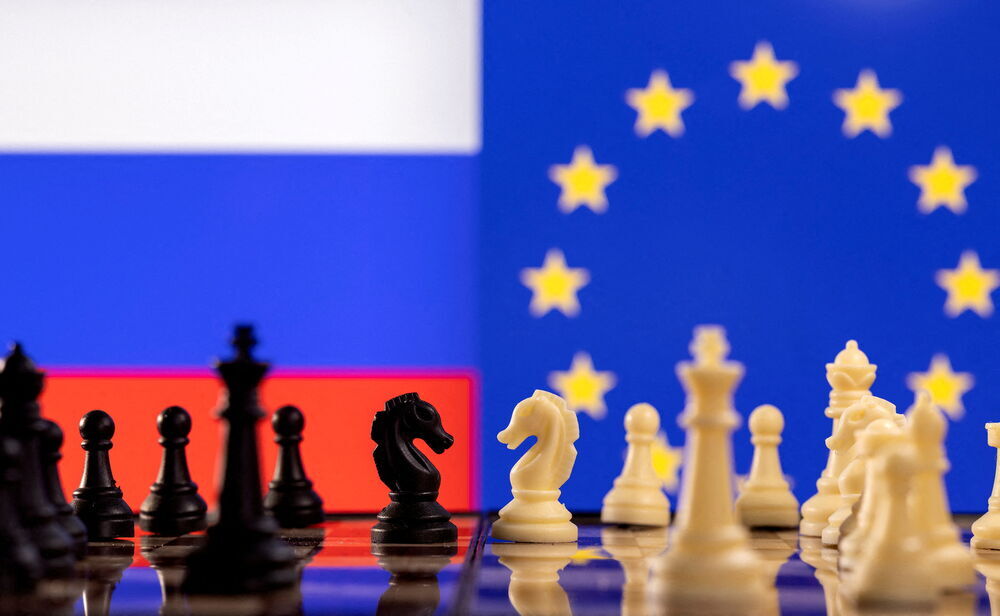
The Ukraine War and Europe’s Security Scenarios

Strategic Council Online – Interview: A Russia affairs expert stated that Europe will face a complex security environment in the future, including increased militarization, economic challenges stemming from cutting dependence on Russian energy, and the need to redefine relations with the U.S. and NATO. As a result, without sustainable solutions, Europe may face greater existential, economic, and social threats in the future.

Seyed Mehdi Saif Tabrizi, in an interview with the website of the Strategic Council on Foreign Relations, discussed the fate of the war between Russia and Ukraine in the coming months, saying: “It does not seem that the current trajectory of the war will change significantly, at least in the short and medium term. The Russians are still steadily pursuing the Kremlin’s objectives in the four annexed regions and aim to fully complete the annexation of Luhansk, Donetsk, Zaporizhzhia, and Kharkiv through military actions. Meanwhile, to pressure Western countries, they have expanded operations toward northeastern Ukraine, such as Sumy, to gain the upper hand in potential negotiations. The Russians are not attempting to achieve these advances through heavy attacks and large-scale destruction, as they do not want European countries to exploit media propaganda to incite Trump’s America and restart the flow of U.S. aid to Ukraine. Thus, they are proceeding with routine operations to advance their strategic plans in Ukraine.”

He added: “On the diplomatic front, the Russians have skillfully managed to keep Trump and the U.S. entirely away from the Ukrainian front over the past six months. Since Trump took office, Washington has not provided any military or financial aid to Ukraine, and the European Union has also failed to demonstrate the ability to equip Kyiv during this period. Therefore, even if diplomatic equations shift and the U.S. re-enters the battlefield, supplying the necessary weapons to establish defensive lines on the Ukrainian side will take months. In the meantime, Russia’s operational tactics on the frontlines will likely undergo significant changes. Given these factors, Russia still holds the upper hand on the battlefield, and no major or dramatic shifts should be expected, even if the U.S. decides to send weapons like Patriot missiles to Ukraine.”

This Russia expert commented on the role of the U.S., particularly Trump, in the Russia-Ukraine developments: “One clear observation during the six months of Trump’s second presidency regarding the Ukraine war is the lack of serious willingness for the U.S. to engage in a European war with Russia directly. Additionally, Trump’s political approach and his inner circle clearly prioritize avoiding a return to war in Europe. Trump has tried to steer this war toward at least a temporary ceasefire by implementing different policies toward Russia, Ukraine, and NATO—though he has not succeeded in achieving his stated goals. However, by withholding weapons from Ukraine, he has somewhat reduced the intensity of clashes and prevented the conflict from escalating into a full-scale war in Europe (World War III).”

Saif Tabrizi continued: “The U.S. still aims to maintain its decisive role in addressing major global challenges. Hence, if peace is not achieved, it will have to intervene in the war and align with NATO members. However, Trump’s model of intervention will certainly differ from Biden’s administration. Trump has shown that any re-entry into the war would be indirect—through selling weapons and equipment to European countries, which would then transfer them to Ukraine. In reality, Washington does not want direct involvement in a war with Russia, believing that this conflict has no military solution and is unwilling to bear further costs in a European war.”

In response to the question of what kind of security environment Europeans can expect in the future regarding Ukraine, he stated: “Given the Ukraine war and recent developments, especially since Trump took office and his interactions with security structures like NATO, this question must be answered from geopolitical, military, economic, and political perspectives. Based on available information, several key scenarios and trends can be outlined for Europe’s security environment, the most important of which are:”

First Scenario: “Escalation of Militarization and European Rearmament”
Under this scenario, the Ukraine crisis has led European countries—particularly EU and NATO members—to increase their defense budgets significantly. For example, the “European Rearmament Plan,” with an €800 billion budget, aims to strengthen the continent’s defense capabilities. This plan reflects a move toward military self-sufficiency and reduced reliance on the U.S., indicating Europe’s distrust in America’s commitments under Trump and the return of isolationist policies. However, this military budget increase will bring numerous economic, political, and social challenges for Europe.

Second Scenario: “Unlimited Continuation of the Ukraine War”
In this framework, the prolonged war in Europe, as desired by the leaders of Britain, France, and Germany, could pose three major threats to Europe:

  1. Immediate Threat: If Ukraine uses advanced NATO weapons and long-range missiles to target Russian territory, Russia will likely retaliate with heavy operations, such as striking NATO supply lines (e.g., Poland and Romania). This would put NATO in a difficult position—not responding would weaken its credibility, while responding could escalate tensions and even pose an existential threat to Europe.
  2. Medium- and Long-Term Threats: If the war becomes a static or protracted conflict, Russia may resort to asymmetric warfare, forcing Europe into a security dilemma. Increased support for Ukraine could lead to greater instability.
  3. Economic Threat: Losing access to cheap Russian energy and relying on more expensive alternatives (like U.S. LNG) will drive up energy prices and cause persistent economic problems in Europe.

Third Scenario: “Changes in Relations with NATO and the U.S.”
According to U.S. officials, such as the remarks made by J.D. Vance, Trump’s deputy at the NATO conference, pressure on Europe to allocate 5% of their GDP to NATO—aimed at taking on greater responsibility for their own security—has drawn attention. This has led some European leaders, like Emmanuel Macron, to propose the idea of forming a “European Army.” Additionally, reduced U.S. support for Ukraine could force Europe to support Ukraine alone, which, given the limitations in arms production and financial resources, would be highly challenging for the European Union.

Fourth Scenario: “Increased Tensions with Russia and the Return of Securitization”
The Ukraine crisis has led NATO and Western countries once again to identify Russia as Europe’s primary security threat. This has resulted in collective responses against Russia, such as sanctions and further NATO expansion eastward. On the other hand, Russia views the actions of Ukraine and NATO as a threat to its own security, creating a cycle of mutual securitization that could escalate tensions in the long term.

Regarding the economic and social consequences of the Ukraine-Russia war for Europe, he stated:
The Ukraine war has not only jeopardized Europe’s energy security but also its food security and economic stability. Europe will certainly not return to dependence on Russian gas, and this shift will lead to higher energy costs and pressure on European economies. Additionally, a protracted or even intensified war in Ukraine will continue the flow of Ukrainian refugees into Europe, potentially fueling social, political, and economic challenges within the Union.

This Russia affairs expert emphasized: “Given the above scenarios, the European continent will face a complex security environment in the future, including increased militarization, economic challenges stemming from cutting dependence on Russian energy, and the need to redefine relations with the U.S. and NATO. In reality, Europe must strike a balance between security and prosperity. Without effective diplomacy and sustainable solutions to the Ukraine crisis, Europe may face greater existential, economic, and social threats.

Saif Tabrizi on Ukraine’s Reconstruction and Proposed Ideas:
After the war began in Ukraine, various ideas and proposals for the country’s reconstruction were presented—from the Rome Conference to the eventual minerals agreement between Ukraine and the U.S., where part of the revenue was earmarked for rebuilding Kyiv’s infrastructure. Some of these plans were close to on-the-ground realities, while others remained aspirational. Below are the most significant ones:

  • “International Conference on Ukraine’s Reconstruction” in Rome (2024): Attended by officials from over 60 allied countries and dozens of Western international institutions, this meeting aimed to coordinate financial aid, plan infrastructure rebuilding, and support Ukraine’s economy. The focus was on public-private partnerships to enable effective reconstruction investments. Essentially, the conference was held to garner international support for Ukraine’s reconstruction.
  • EU’s July 2025 Announcement: The EU allocated €2.3 billion for Ukraine’s reconstruction, including €1.8 billion in loan guarantees and €580 million in grants from Western financial institutions for Kyiv. A new reconstruction fund, supported by the European Investment Bank, France, Germany, Italy, and Poland, was also proposed, designed to attract up to €10 billion in investments for Ukraine’s rebuilding.
  • Ukraine’s Reconstruction Projects to Turkey (February 2025): Ukraine submitted a set of reconstruction projects to Turkey, including modernizing customs checkpoints, highways, constructing new routes, and implementing a nationwide toll system. Tenders for these projects were set to be announced in spring 2025 but have yet to materialize due to the country’s conditions.
  • The Most Controversial Proposal: Charles Michel, President of the European Council, suggested using frozen Russian Central Bank assets (approx. $630 billion in foreign reserves) for Ukraine’s reconstruction. This idea, aimed at compensating Ukraine for damages and funding reconstruction, has been denounced by Moscow as “international theft,” with warnings of harsh retaliation if implemented. Beyond legal hurdles, Michel’s proposal risks escalating conflict in Europe and dimming hopes for Ukraine’s reconstruction.
  • IMF and World Bank Programs: The IMF prepared a $2.2 billion loan package for Ukraine, while the World Bank is exploring economic and financial support options for Ukraine and regional countries. These aids are designed to rebuild infrastructure and shield Ukraine’s economy from war impacts.

Meanwhile, proposals have been made to form political, humanitarian, and military task forces for Ukraine’s reconstruction, operating online alongside peace negotiations. This idea, suggested by Vladimir Medinsky, head of Russia’s negotiation team, could provide a platform for international coordination in reconstruction efforts.

On Cost Estimates for Reconstruction:
Estimates vary: Ukrainian Prime Minister Denys Shmyhal puts reconstruction costs at around $750 billion, while the European Commission President estimates damages at roughly €600 billion. Given these figures, massive investment and international coordination will be required, though challenges—such as political disagreements among European countries over funding—complicate the process.

Saif Tabrizi identified financial shortages as a key challenge, stating:
Despite pledges from European nations, securing such vast funding—especially with potential reductions in U.S. financial support under Trump—remains a significant hurdle for Kyiv’s allies. Long-term war effects, like environmental damage and gender imbalances in Ukraine’s workforce, also pose obstacles to reconstruction plans.

0 Comments

LATEST CONTENT

Implications of the US-Saudi Nuclear Agreement

SCFR Online – Opinion: The new US-Saudi nuclear agreement, despite legal and political ambiguities, could alter previous non-proliferation standards in West Asia and intensify nuclear competition, ushering it into a new phase.

An Analysis of Recent Turkey-Israeli Regime Tensions

SCFR Online – Opinion: Recent developments in Syria indicate an intensification of strategic rivalry between Turkey and the Israeli regime, but mutual considerations and the role of the United States have limited the likelihood of direct war.

Increasing criticism of the extensive Zionist lobby network

SCFR Online – Opinion: An examination of the mechanisms of the Israeli regime’s influence in the United States depicts a complex picture of shared interests, strategic dependencies, and the limitations of this relationship.

Realities of the Tripartite Makkah Pact

SCFR Online – Interview: The signing of the Makkah agreement between Saudi Arabia, Pakistan, and Turkey has raised questions about the future of the region’s security structure and the position of these countries in West Asian equations. Can this agreement become a genuine collective defense mechanism, or does it have more of a political and deterrent function than creating new military capacity?

Strategic Implications of the Reduction of US Weapons Stockpiles

SCFR Online – Opinion: The continuation of the US war against Iran, in addition to increasing operational costs, has called into question the actual capacity of the American arsenal to simultaneously fulfill security commitments on multiple fronts; an issue that affects deterrence, defense production capacity, and Washington’s resource prioritization.

The Formation of a New Order in Relations Between Powers

SCFR Online – Opinion: The Russia-Ukraine war and the war of the United States and the Israeli regime against Iran have been formed with different objectives and actors, but field and political developments indicate that they are not entirely separate from one another.

An Analysis of the Makkah Defense Pact

SCFR Online – Opinion: On Friday, August 7, the heads of state of three countries – Saudi Arabia, Turkey, and Pakistan – signed a text under the title “Makkah Joint Defense Agreement.”

Loading

Últimas publicaciones

Implications of the US-Saudi Nuclear Agreement

SCFR Online – Opinion: The new US-Saudi nuclear agreement, despite legal and political ambiguities, could alter previous non-proliferation standards in West Asia and intensify nuclear competition, ushering it into a new phase.

An Analysis of Recent Turkey-Israeli Regime Tensions

SCFR Online – Opinion: Recent developments in Syria indicate an intensification of strategic rivalry between Turkey and the Israeli regime, but mutual considerations and the role of the United States have limited the likelihood of direct war.

Increasing criticism of the extensive Zionist lobby network

SCFR Online – Opinion: An examination of the mechanisms of the Israeli regime’s influence in the United States depicts a complex picture of shared interests, strategic dependencies, and the limitations of this relationship.

Realities of the Tripartite Makkah Pact

SCFR Online – Interview: The signing of the Makkah agreement between Saudi Arabia, Pakistan, and Turkey has raised questions about the future of the region’s security structure and the position of these countries in West Asian equations. Can this agreement become a genuine collective defense mechanism, or does it have more of a political and deterrent function than creating new military capacity?

Strategic Implications of the Reduction of US Weapons Stockpiles

SCFR Online – Opinion: The continuation of the US war against Iran, in addition to increasing operational costs, has called into question the actual capacity of the American arsenal to simultaneously fulfill security commitments on multiple fronts; an issue that affects deterrence, defense production capacity, and Washington’s resource prioritization.

The Formation of a New Order in Relations Between Powers

SCFR Online – Opinion: The Russia-Ukraine war and the war of the United States and the Israeli regime against Iran have been formed with different objectives and actors, but field and political developments indicate that they are not entirely separate from one another.

An Analysis of the Makkah Defense Pact

SCFR Online – Opinion: On Friday, August 7, the heads of state of three countries – Saudi Arabia, Turkey, and Pakistan – signed a text under the title “Makkah Joint Defense Agreement.”

Loading

DERNIER CONTENU

Implications of the US-Saudi Nuclear Agreement

SCFR Online – Opinion: The new US-Saudi nuclear agreement, despite legal and political ambiguities, could alter previous non-proliferation standards in West Asia and intensify nuclear competition, ushering it into a new phase.

An Analysis of Recent Turkey-Israeli Regime Tensions

SCFR Online – Opinion: Recent developments in Syria indicate an intensification of strategic rivalry between Turkey and the Israeli regime, but mutual considerations and the role of the United States have limited the likelihood of direct war.

Increasing criticism of the extensive Zionist lobby network

SCFR Online – Opinion: An examination of the mechanisms of the Israeli regime’s influence in the United States depicts a complex picture of shared interests, strategic dependencies, and the limitations of this relationship.

Realities of the Tripartite Makkah Pact

SCFR Online – Interview: The signing of the Makkah agreement between Saudi Arabia, Pakistan, and Turkey has raised questions about the future of the region’s security structure and the position of these countries in West Asian equations. Can this agreement become a genuine collective defense mechanism, or does it have more of a political and deterrent function than creating new military capacity?

Strategic Implications of the Reduction of US Weapons Stockpiles

SCFR Online – Opinion: The continuation of the US war against Iran, in addition to increasing operational costs, has called into question the actual capacity of the American arsenal to simultaneously fulfill security commitments on multiple fronts; an issue that affects deterrence, defense production capacity, and Washington’s resource prioritization.

The Formation of a New Order in Relations Between Powers

SCFR Online – Opinion: The Russia-Ukraine war and the war of the United States and the Israeli regime against Iran have been formed with different objectives and actors, but field and political developments indicate that they are not entirely separate from one another.

An Analysis of the Makkah Defense Pact

SCFR Online – Opinion: On Friday, August 7, the heads of state of three countries – Saudi Arabia, Turkey, and Pakistan – signed a text under the title “Makkah Joint Defense Agreement.”

Loading

DERNIER CONTENU

Implications of the US-Saudi Nuclear Agreement

SCFR Online – Opinion: The new US-Saudi nuclear agreement, despite legal and political ambiguities, could alter previous non-proliferation standards in West Asia and intensify nuclear competition, ushering it into a new phase.

An Analysis of Recent Turkey-Israeli Regime Tensions

SCFR Online – Opinion: Recent developments in Syria indicate an intensification of strategic rivalry between Turkey and the Israeli regime, but mutual considerations and the role of the United States have limited the likelihood of direct war.

Increasing criticism of the extensive Zionist lobby network

SCFR Online – Opinion: An examination of the mechanisms of the Israeli regime’s influence in the United States depicts a complex picture of shared interests, strategic dependencies, and the limitations of this relationship.

Realities of the Tripartite Makkah Pact

SCFR Online – Interview: The signing of the Makkah agreement between Saudi Arabia, Pakistan, and Turkey has raised questions about the future of the region’s security structure and the position of these countries in West Asian equations. Can this agreement become a genuine collective defense mechanism, or does it have more of a political and deterrent function than creating new military capacity?

Strategic Implications of the Reduction of US Weapons Stockpiles

SCFR Online – Opinion: The continuation of the US war against Iran, in addition to increasing operational costs, has called into question the actual capacity of the American arsenal to simultaneously fulfill security commitments on multiple fronts; an issue that affects deterrence, defense production capacity, and Washington’s resource prioritization.

The Formation of a New Order in Relations Between Powers

SCFR Online – Opinion: The Russia-Ukraine war and the war of the United States and the Israeli regime against Iran have been formed with different objectives and actors, but field and political developments indicate that they are not entirely separate from one another.

An Analysis of the Makkah Defense Pact

SCFR Online – Opinion: On Friday, August 7, the heads of state of three countries – Saudi Arabia, Turkey, and Pakistan – signed a text under the title “Makkah Joint Defense Agreement.”

Loading

DERNIER CONTENU

Implications of the US-Saudi Nuclear Agreement

SCFR Online – Opinion: The new US-Saudi nuclear agreement, despite legal and political ambiguities, could alter previous non-proliferation standards in West Asia and intensify nuclear competition, ushering it into a new phase.

An Analysis of Recent Turkey-Israeli Regime Tensions

SCFR Online – Opinion: Recent developments in Syria indicate an intensification of strategic rivalry between Turkey and the Israeli regime, but mutual considerations and the role of the United States have limited the likelihood of direct war.

Increasing criticism of the extensive Zionist lobby network

SCFR Online – Opinion: An examination of the mechanisms of the Israeli regime’s influence in the United States depicts a complex picture of shared interests, strategic dependencies, and the limitations of this relationship.

Realities of the Tripartite Makkah Pact

SCFR Online – Interview: The signing of the Makkah agreement between Saudi Arabia, Pakistan, and Turkey has raised questions about the future of the region’s security structure and the position of these countries in West Asian equations. Can this agreement become a genuine collective defense mechanism, or does it have more of a political and deterrent function than creating new military capacity?

Strategic Implications of the Reduction of US Weapons Stockpiles

SCFR Online – Opinion: The continuation of the US war against Iran, in addition to increasing operational costs, has called into question the actual capacity of the American arsenal to simultaneously fulfill security commitments on multiple fronts; an issue that affects deterrence, defense production capacity, and Washington’s resource prioritization.

The Formation of a New Order in Relations Between Powers

SCFR Online – Opinion: The Russia-Ukraine war and the war of the United States and the Israeli regime against Iran have been formed with different objectives and actors, but field and political developments indicate that they are not entirely separate from one another.

An Analysis of the Makkah Defense Pact

SCFR Online – Opinion: On Friday, August 7, the heads of state of three countries – Saudi Arabia, Turkey, and Pakistan – signed a text under the title “Makkah Joint Defense Agreement.”

Loading





