جدیدترین مطالب

The Inseparability of the Lebanese Front from the Axis of Resistance

SCFR Online–Opinion: By providing an extensive network of social, healthcare, educational, and post-war reconstruction services, Hezbollah has established a strong social base for itself among Lebanon’s Shiites and Sunnis, and even beyond that, among other segments of Lebanese society, including Christians. Hezbollah has never been an external actor imposed upon Lebanon; rather, it is a phenomenon fundamentally born out of the occupation and crimes of the Zionist regime and itself influenced by popular resistance.

The Increasing Efforts of the Zionist Regime to Redefine Borders and the Regional Order and Its Consequences

SCFR Online– Opinion: Security and military developments in the region over recent months indicate that the ongoing crises and wars in Gaza, southern Lebanon, and parts of Syrian territory encompass broader dimensions of geopolitical and geostrategic transformations. In this context, the increased military presence and control of the Zionist regime over parts of the territories of these areas, along with proposals regarding the creation of buffer zones or even the expansion of security borders, have raised serious questions about the future of the regional order and its consequences for the countries of West Asia.

The Components of Iran’s Deterrence Power

SCFR Online – Opinion: At a time when regional security equations have reached a sensitive stage under the influence of Iran’s strategic confrontation with the United States and the Zionist regime, the question of the nature of Tehran’s defensive power has gained greater significance than ever before. While Washington and Tel Aviv rely on their technological superiority, the Islamic Republic of Iran has presented a model of deterrence that extends beyond the material calculations of the world’s classical militaries. This power, rooted in the connection between “the field” and “the people,” has not only altered the balance of power in recent conflicts but has also disrupted adversaries’ calculations when confronting Iran’s strategic depth.

The Persian Gulf; A Cold Battlefield Between Beijing and Washington

SCFR Online – Opinion: The competition in recent years between the United States and China encompasses various geographical regions—including the Indo-Pacific, West Asia, the Arctic and Antarctic, and Africa—as well as multiple domains such as economics and technology. Within this context, a strategic competition has also emerged in the Persian Gulf region across economic, technological, and military spheres.

Europe’s Enduring Dependence on Persian Gulf Energy

SCFR Online – Opinion: The dominant discourse in the field of European energy security over the past two decades has revolved around diversification of supply sources and the gradual reduction of dependence on fossil fuels. This narrative, which gained particular momentum after the Ukraine gas crisis in 2006 and its intensification in 2014 and 2022, was based on the assumption that Europe could free itself from the geopolitical vulnerabilities arising from dependence on specific suppliers through investment in renewable energy, imports of liquefied natural gas from diversified sources, and the establishment of new infrastructure. However, a closer analysis of energy trade data and the structure of the global oil and gas supply chain presents a different picture. Europe has not only failed to meaningfully reduce its dependence on the Persian Gulf, but in some sectors — particularly in liquefied natural gas imports — this dependence has deepened. This reality, which is often overlooked in public discourse, raises fundamental questions about the sustainability of Europe’s energy security strategies and their impact on regional power equations.

Loading

Saudi Arabia

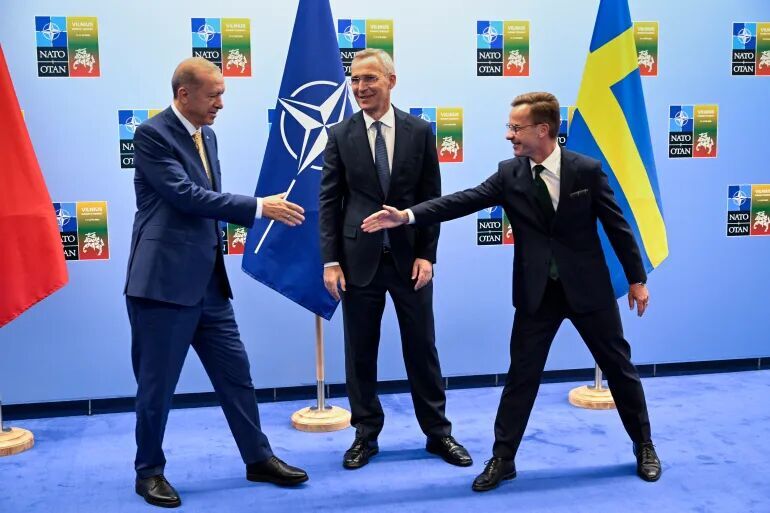
Turkey’s Expectations & Achievements after Voting for Sweden’s NATO Membership

Turkey’s Expectations & Achievements after Voting for Sweden’s NATO Membership

Strategic Council Online – Interview: A former Iranian Deputy Foreign Minister says it is unlikely for the Turkish government to put all its eggs in the basket of the West and NATO and jeopardize its relations with Russia at a time when Russia is involved in the Ukraine war and has close relations with Ankara. It should be seen what kind of a deal Turkey has made to persuade it to vote for Sweden’s membership in NATO.

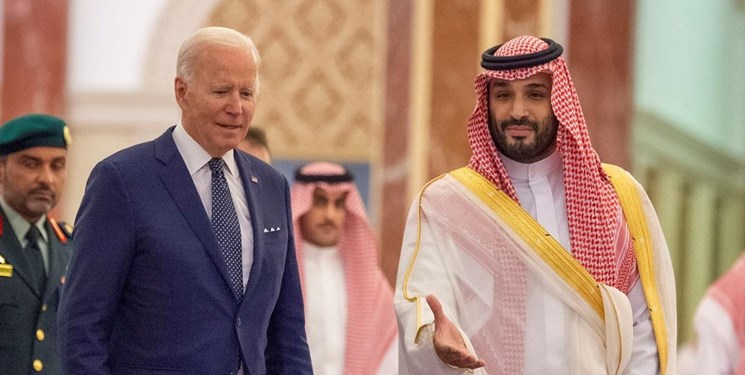
Biden’s Gamble to Revive Process of Normalizing Relations between Saudi Arabia and Zionist regime

Biden’s Gamble to Revive Process of Normalizing Relations between Saudi Arabia and Zionist regime

Strategic Council Online – Note: Since the beginning of the Gaza war, the US Secretary of State has visited Saudi Arabia twice and met and conferred with the kingdom officials. Tel Aviv Riyadh’s “reconciliation process” and the establishment of diplomatic relations were the most important agenda of the US secretary of state in his recent meeting with Saudi authorities (January 6, 2024).
Hamid Khoshayand – expert on regional issues

Reasons for Ineffectiveness of Riyadh Summit Concerning Expectations of Gazans

Reasons for Ineffectiveness of Riyadh Summit Concerning Expectations of Gazans

Strategic Council Online – Opinion: Recently, we witnessed an extraordinary summit of Islamic countries in Riyadh. The Palestinians, especially the people of Gaza, had built hope on the meeting, and it was expected that at the end of it, we would see a collective, serious, and deterrent decision by the Islamic countries. But, unfortunately, such expectations were not met.
Dr. Mohammad Mehdi Mazaheri – University professor

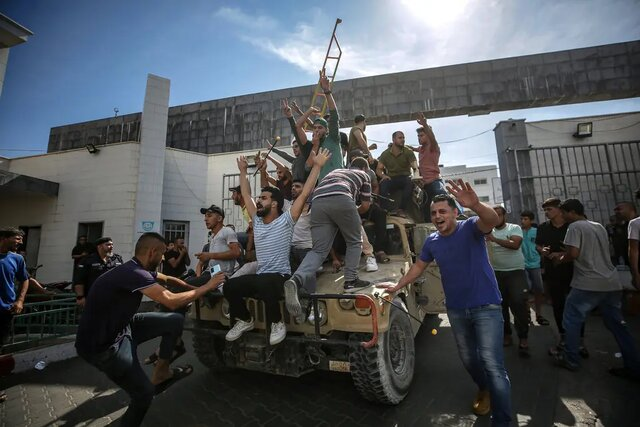
Al-Aqsa Storm, Defeat of Misconceptions of Arab States about Normalization

Al-Aqsa Storm, Defeat of Misconceptions of Arab States about Normalization

Strategic Council Online – Interview: An expert on Israeli affairs, saying that the blow the Zionist regime has received from the “Al-Aqsa Storm” operation severely shattered the notion that the regime is an immutable reality that must be dealt with in the region noted: The crimes committed by the Zionist regime in Gaza will remain in the minds of the people of Islamic countries for a long time and will be a serious challenge for normalization.

Al-Aqsa Storm, Vanishing of Normalization of Relations with Zionist Regime

Al-Aqsa Storm, Vanishing of Normalization of Relations with Zionist Regime

Strategic Council Online – Interview: An expert on international affairs stated that due to the ongoing conflict between Hamas and Palestine, the normalization of relations with the Zionist regime will be suspended and seriously challenged, adding: In this situation, with an increase of conflicts and human casualties, considering the sensitivity of public opinion, in the short term, less governments in the region will dare to raise the issue of normalization.

An analysis of the positive process of negotiations between Ansarullah and Riyadh and the perspective of stability in Yemen

An analysis of the positive process of negotiations between Ansarullah and Riyadh and the perspective of stability in Yemen

Strategic Council Online—Interview: An expert on Yemen issues said that conducting negotiations between Yemeni political groups will be a big part of Ansarollah’s problems and Yemen’s problems. Despite the influence of regional and international powers, these negotiations seem to be unsuccessful because they are trying to institutionalize the internal crisis in Yemen.

New Arabia: the need to develop a suitable strategy

New Arabia: the need to develop a suitable strategy

Strategic Council Online—Opinion: At the end of August this year, Saudi Arabia announced that it had appointed its first ambassador to the Palestinian Authority. Based on this decision, Nayef bin Bandar al-Sudairi, as the extraordinary, plenipotentiary and non-resident ambassador (accredited) of Saudi Arabia in Ramallah and the Saudi consul general in occupied Quds, handed over his credentials to Majdi Al-Khalidi, the diplomatic advisor of Mahmoud Abbas, the head of the Palestinian Authority. Now, less than two months have passed since these decisions and actions, the Saudi government has announced that an official delegation from this country, headed by Nayef Bin Bandar Al-Sudairi, will travel to Ramallah to celebrate the birthday of the Prophet of Islam (PBUH) and to offer prayers in Al-Aqsa Mosque; An unprecedented action since the occupation of Quds in 1967, which will open a new chapter in Saudi Arabia’s diplomatic and role-playing activities in the West Asian region.

Mohammad Mehdi Mazaheri – University professor

Significance of Formation of “Dialogue and Cooperation Assembly” among Persian Gulf States

Significance of Formation of “Dialogue and Cooperation Assembly” among Persian Gulf States

Strategic Council Online – Opinion: One of the most important issues raised during Amir Abdollahian’s trip to the coastal states of the Persian Gulf a few months ago was the formation of a joint mechanism called “Dialogue and Cooperation Assembly” for negotiation and cooperation with the presence of all countries in the Persian Gulf region.
Barsam Mohammadi – Expert on regional affairs

Lebanon’s Presidential Election, France’s Declining Role

Lebanon’s Presidential Election, France’s Declining Role

Strategic Council Online – Interview: An expert on West Asia affairs said that the meeting of the five-party committee in New York has failed. The failure that French President Macron experienced after the events related to the Beirut port explosion showed that France trying to play a role in Lebanon, as in the past, does not have the necessary place in the public opinion of that country for the settlement of disputes.

Obstacles, Prospect of Normalization of Riyadh-Tel Aviv Relations

Obstacles, Prospect of Normalization of Riyadh-Tel Aviv Relations

Strategic Council Online – Opinion: Normalization and recognition of relations between the Zionist regime and Saudi Arabia is still at the focal point of the political circles of the Zionist regime. Israel and, recently, the United States administration have focused on this issue and are discussing the imminent compromise between Tel Aviv and Riyadh, which is unrealistic.
Hamid Khoshayand – Expert on regional affairs

أحدث الوظائف

The Inseparability of the Lebanese Front from the Axis of Resistance

SCFR Online–Opinion: By providing an extensive network of social, healthcare, educational, and post-war reconstruction services, Hezbollah has established a strong social base for itself among Lebanon’s Shiites and Sunnis, and even beyond that, among other segments of Lebanese society, including Christians. Hezbollah has never been an external actor imposed upon Lebanon; rather, it is a phenomenon fundamentally born out of the occupation and crimes of the Zionist regime and itself influenced by popular resistance.

The Increasing Efforts of the Zionist Regime to Redefine Borders and the Regional Order and Its Consequences

SCFR Online– Opinion: Security and military developments in the region over recent months indicate that the ongoing crises and wars in Gaza, southern Lebanon, and parts of Syrian territory encompass broader dimensions of geopolitical and geostrategic transformations. In this context, the increased military presence and control of the Zionist regime over parts of the territories of these areas, along with proposals regarding the creation of buffer zones or even the expansion of security borders, have raised serious questions about the future of the regional order and its consequences for the countries of West Asia.

The Components of Iran’s Deterrence Power

SCFR Online – Opinion: At a time when regional security equations have reached a sensitive stage under the influence of Iran’s strategic confrontation with the United States and the Zionist regime, the question of the nature of Tehran’s defensive power has gained greater significance than ever before. While Washington and Tel Aviv rely on their technological superiority, the Islamic Republic of Iran has presented a model of deterrence that extends beyond the material calculations of the world’s classical militaries. This power, rooted in the connection between “the field” and “the people,” has not only altered the balance of power in recent conflicts but has also disrupted adversaries’ calculations when confronting Iran’s strategic depth.

The Persian Gulf; A Cold Battlefield Between Beijing and Washington

SCFR Online – Opinion: The competition in recent years between the United States and China encompasses various geographical regions—including the Indo-Pacific, West Asia, the Arctic and Antarctic, and Africa—as well as multiple domains such as economics and technology. Within this context, a strategic competition has also emerged in the Persian Gulf region across economic, technological, and military spheres.

Europe’s Enduring Dependence on Persian Gulf Energy

SCFR Online – Opinion: The dominant discourse in the field of European energy security over the past two decades has revolved around diversification of supply sources and the gradual reduction of dependence on fossil fuels. This narrative, which gained particular momentum after the Ukraine gas crisis in 2006 and its intensification in 2014 and 2022, was based on the assumption that Europe could free itself from the geopolitical vulnerabilities arising from dependence on specific suppliers through investment in renewable energy, imports of liquefied natural gas from diversified sources, and the establishment of new infrastructure. However, a closer analysis of energy trade data and the structure of the global oil and gas supply chain presents a different picture. Europe has not only failed to meaningfully reduce its dependence on the Persian Gulf, but in some sectors — particularly in liquefied natural gas imports — this dependence has deepened. This reality, which is often overlooked in public discourse, raises fundamental questions about the sustainability of Europe’s energy security strategies and their impact on regional power equations.

Loading

Saudi Arabia

Turkey’s Expectations & Achievements after Voting for Sweden’s NATO Membership

Turkey’s Expectations & Achievements after Voting for Sweden’s NATO Membership

Strategic Council Online – Interview: A former Iranian Deputy Foreign Minister says it is unlikely for the Turkish government to put all its eggs in the basket of the West and NATO and jeopardize its relations with Russia at a time when Russia is involved in the Ukraine war and has close relations with Ankara. It should be seen what kind of a deal Turkey has made to persuade it to vote for Sweden’s membership in NATO.

Biden’s Gamble to Revive Process of Normalizing Relations between Saudi Arabia and Zionist regime

Biden’s Gamble to Revive Process of Normalizing Relations between Saudi Arabia and Zionist regime

Strategic Council Online – Note: Since the beginning of the Gaza war, the US Secretary of State has visited Saudi Arabia twice and met and conferred with the kingdom officials. Tel Aviv Riyadh’s “reconciliation process” and the establishment of diplomatic relations were the most important agenda of the US secretary of state in his recent meeting with Saudi authorities (January 6, 2024).
Hamid Khoshayand – expert on regional issues

Reasons for Ineffectiveness of Riyadh Summit Concerning Expectations of Gazans

Reasons for Ineffectiveness of Riyadh Summit Concerning Expectations of Gazans

Strategic Council Online – Opinion: Recently, we witnessed an extraordinary summit of Islamic countries in Riyadh. The Palestinians, especially the people of Gaza, had built hope on the meeting, and it was expected that at the end of it, we would see a collective, serious, and deterrent decision by the Islamic countries. But, unfortunately, such expectations were not met.
Dr. Mohammad Mehdi Mazaheri – University professor

Al-Aqsa Storm, Defeat of Misconceptions of Arab States about Normalization

Al-Aqsa Storm, Defeat of Misconceptions of Arab States about Normalization

Strategic Council Online – Interview: An expert on Israeli affairs, saying that the blow the Zionist regime has received from the “Al-Aqsa Storm” operation severely shattered the notion that the regime is an immutable reality that must be dealt with in the region noted: The crimes committed by the Zionist regime in Gaza will remain in the minds of the people of Islamic countries for a long time and will be a serious challenge for normalization.

Al-Aqsa Storm, Vanishing of Normalization of Relations with Zionist Regime

Al-Aqsa Storm, Vanishing of Normalization of Relations with Zionist Regime

Strategic Council Online – Interview: An expert on international affairs stated that due to the ongoing conflict between Hamas and Palestine, the normalization of relations with the Zionist regime will be suspended and seriously challenged, adding: In this situation, with an increase of conflicts and human casualties, considering the sensitivity of public opinion, in the short term, less governments in the region will dare to raise the issue of normalization.

An analysis of the positive process of negotiations between Ansarullah and Riyadh and the perspective of stability in Yemen

An analysis of the positive process of negotiations between Ansarullah and Riyadh and the perspective of stability in Yemen

Strategic Council Online—Interview: An expert on Yemen issues said that conducting negotiations between Yemeni political groups will be a big part of Ansarollah’s problems and Yemen’s problems. Despite the influence of regional and international powers, these negotiations seem to be unsuccessful because they are trying to institutionalize the internal crisis in Yemen.

New Arabia: the need to develop a suitable strategy

New Arabia: the need to develop a suitable strategy

Strategic Council Online—Opinion: At the end of August this year, Saudi Arabia announced that it had appointed its first ambassador to the Palestinian Authority. Based on this decision, Nayef bin Bandar al-Sudairi, as the extraordinary, plenipotentiary and non-resident ambassador (accredited) of Saudi Arabia in Ramallah and the Saudi consul general in occupied Quds, handed over his credentials to Majdi Al-Khalidi, the diplomatic advisor of Mahmoud Abbas, the head of the Palestinian Authority. Now, less than two months have passed since these decisions and actions, the Saudi government has announced that an official delegation from this country, headed by Nayef Bin Bandar Al-Sudairi, will travel to Ramallah to celebrate the birthday of the Prophet of Islam (PBUH) and to offer prayers in Al-Aqsa Mosque; An unprecedented action since the occupation of Quds in 1967, which will open a new chapter in Saudi Arabia’s diplomatic and role-playing activities in the West Asian region.

Mohammad Mehdi Mazaheri – University professor

Significance of Formation of “Dialogue and Cooperation Assembly” among Persian Gulf States

Significance of Formation of “Dialogue and Cooperation Assembly” among Persian Gulf States

Strategic Council Online – Opinion: One of the most important issues raised during Amir Abdollahian’s trip to the coastal states of the Persian Gulf a few months ago was the formation of a joint mechanism called “Dialogue and Cooperation Assembly” for negotiation and cooperation with the presence of all countries in the Persian Gulf region.
Barsam Mohammadi – Expert on regional affairs

Lebanon’s Presidential Election, France’s Declining Role

Lebanon’s Presidential Election, France’s Declining Role

Strategic Council Online – Interview: An expert on West Asia affairs said that the meeting of the five-party committee in New York has failed. The failure that French President Macron experienced after the events related to the Beirut port explosion showed that France trying to play a role in Lebanon, as in the past, does not have the necessary place in the public opinion of that country for the settlement of disputes.

Obstacles, Prospect of Normalization of Riyadh-Tel Aviv Relations

Obstacles, Prospect of Normalization of Riyadh-Tel Aviv Relations

Strategic Council Online – Opinion: Normalization and recognition of relations between the Zionist regime and Saudi Arabia is still at the focal point of the political circles of the Zionist regime. Israel and, recently, the United States administration have focused on this issue and are discussing the imminent compromise between Tel Aviv and Riyadh, which is unrealistic.
Hamid Khoshayand – Expert on regional affairs

Saudi Arabia

Turkey’s Expectations & Achievements after Voting for Sweden’s NATO Membership

Turkey’s Expectations & Achievements after Voting for Sweden’s NATO Membership

Strategic Council Online – Interview: A former Iranian Deputy Foreign Minister says it is unlikely for the Turkish government to put all its eggs in the basket of the West and NATO and jeopardize its relations with Russia at a time when Russia is involved in the Ukraine war and has close relations with Ankara. It should be seen what kind of a deal Turkey has made to persuade it to vote for Sweden’s membership in NATO.

Biden’s Gamble to Revive Process of Normalizing Relations between Saudi Arabia and Zionist regime

Biden’s Gamble to Revive Process of Normalizing Relations between Saudi Arabia and Zionist regime

Strategic Council Online – Note: Since the beginning of the Gaza war, the US Secretary of State has visited Saudi Arabia twice and met and conferred with the kingdom officials. Tel Aviv Riyadh’s “reconciliation process” and the establishment of diplomatic relations were the most important agenda of the US secretary of state in his recent meeting with Saudi authorities (January 6, 2024).
Hamid Khoshayand – expert on regional issues

Reasons for Ineffectiveness of Riyadh Summit Concerning Expectations of Gazans

Reasons for Ineffectiveness of Riyadh Summit Concerning Expectations of Gazans

Strategic Council Online – Opinion: Recently, we witnessed an extraordinary summit of Islamic countries in Riyadh. The Palestinians, especially the people of Gaza, had built hope on the meeting, and it was expected that at the end of it, we would see a collective, serious, and deterrent decision by the Islamic countries. But, unfortunately, such expectations were not met.
Dr. Mohammad Mehdi Mazaheri – University professor

Al-Aqsa Storm, Defeat of Misconceptions of Arab States about Normalization

Al-Aqsa Storm, Defeat of Misconceptions of Arab States about Normalization

Strategic Council Online – Interview: An expert on Israeli affairs, saying that the blow the Zionist regime has received from the “Al-Aqsa Storm” operation severely shattered the notion that the regime is an immutable reality that must be dealt with in the region noted: The crimes committed by the Zionist regime in Gaza will remain in the minds of the people of Islamic countries for a long time and will be a serious challenge for normalization.

Al-Aqsa Storm, Vanishing of Normalization of Relations with Zionist Regime

Al-Aqsa Storm, Vanishing of Normalization of Relations with Zionist Regime

Strategic Council Online – Interview: An expert on international affairs stated that due to the ongoing conflict between Hamas and Palestine, the normalization of relations with the Zionist regime will be suspended and seriously challenged, adding: In this situation, with an increase of conflicts and human casualties, considering the sensitivity of public opinion, in the short term, less governments in the region will dare to raise the issue of normalization.

An analysis of the positive process of negotiations between Ansarullah and Riyadh and the perspective of stability in Yemen

An analysis of the positive process of negotiations between Ansarullah and Riyadh and the perspective of stability in Yemen

Strategic Council Online—Interview: An expert on Yemen issues said that conducting negotiations between Yemeni political groups will be a big part of Ansarollah’s problems and Yemen’s problems. Despite the influence of regional and international powers, these negotiations seem to be unsuccessful because they are trying to institutionalize the internal crisis in Yemen.

New Arabia: the need to develop a suitable strategy

New Arabia: the need to develop a suitable strategy

Strategic Council Online—Opinion: At the end of August this year, Saudi Arabia announced that it had appointed its first ambassador to the Palestinian Authority. Based on this decision, Nayef bin Bandar al-Sudairi, as the extraordinary, plenipotentiary and non-resident ambassador (accredited) of Saudi Arabia in Ramallah and the Saudi consul general in occupied Quds, handed over his credentials to Majdi Al-Khalidi, the diplomatic advisor of Mahmoud Abbas, the head of the Palestinian Authority. Now, less than two months have passed since these decisions and actions, the Saudi government has announced that an official delegation from this country, headed by Nayef Bin Bandar Al-Sudairi, will travel to Ramallah to celebrate the birthday of the Prophet of Islam (PBUH) and to offer prayers in Al-Aqsa Mosque; An unprecedented action since the occupation of Quds in 1967, which will open a new chapter in Saudi Arabia’s diplomatic and role-playing activities in the West Asian region.

Mohammad Mehdi Mazaheri – University professor

Significance of Formation of “Dialogue and Cooperation Assembly” among Persian Gulf States

Significance of Formation of “Dialogue and Cooperation Assembly” among Persian Gulf States

Strategic Council Online – Opinion: One of the most important issues raised during Amir Abdollahian’s trip to the coastal states of the Persian Gulf a few months ago was the formation of a joint mechanism called “Dialogue and Cooperation Assembly” for negotiation and cooperation with the presence of all countries in the Persian Gulf region.
Barsam Mohammadi – Expert on regional affairs

Lebanon’s Presidential Election, France’s Declining Role

Lebanon’s Presidential Election, France’s Declining Role

Strategic Council Online – Interview: An expert on West Asia affairs said that the meeting of the five-party committee in New York has failed. The failure that French President Macron experienced after the events related to the Beirut port explosion showed that France trying to play a role in Lebanon, as in the past, does not have the necessary place in the public opinion of that country for the settlement of disputes.

Obstacles, Prospect of Normalization of Riyadh-Tel Aviv Relations

Obstacles, Prospect of Normalization of Riyadh-Tel Aviv Relations

Strategic Council Online – Opinion: Normalization and recognition of relations between the Zionist regime and Saudi Arabia is still at the focal point of the political circles of the Zionist regime. Israel and, recently, the United States administration have focused on this issue and are discussing the imminent compromise between Tel Aviv and Riyadh, which is unrealistic.
Hamid Khoshayand – Expert on regional affairs

LATEST CONTENT

The Inseparability of the Lebanese Front from the Axis of Resistance

SCFR Online–Opinion: By providing an extensive network of social, healthcare, educational, and post-war reconstruction services, Hezbollah has established a strong social base for itself among Lebanon’s Shiites and Sunnis, and even beyond that, among other segments of Lebanese society, including Christians. Hezbollah has never been an external actor imposed upon Lebanon; rather, it is a phenomenon fundamentally born out of the occupation and crimes of the Zionist regime and itself influenced by popular resistance.

The Increasing Efforts of the Zionist Regime to Redefine Borders and the Regional Order and Its Consequences

SCFR Online– Opinion: Security and military developments in the region over recent months indicate that the ongoing crises and wars in Gaza, southern Lebanon, and parts of Syrian territory encompass broader dimensions of geopolitical and geostrategic transformations. In this context, the increased military presence and control of the Zionist regime over parts of the territories of these areas, along with proposals regarding the creation of buffer zones or even the expansion of security borders, have raised serious questions about the future of the regional order and its consequences for the countries of West Asia.

The Components of Iran’s Deterrence Power

SCFR Online – Opinion: At a time when regional security equations have reached a sensitive stage under the influence of Iran’s strategic confrontation with the United States and the Zionist regime, the question of the nature of Tehran’s defensive power has gained greater significance than ever before. While Washington and Tel Aviv rely on their technological superiority, the Islamic Republic of Iran has presented a model of deterrence that extends beyond the material calculations of the world’s classical militaries. This power, rooted in the connection between “the field” and “the people,” has not only altered the balance of power in recent conflicts but has also disrupted adversaries’ calculations when confronting Iran’s strategic depth.

The Persian Gulf; A Cold Battlefield Between Beijing and Washington

SCFR Online – Opinion: The competition in recent years between the United States and China encompasses various geographical regions—including the Indo-Pacific, West Asia, the Arctic and Antarctic, and Africa—as well as multiple domains such as economics and technology. Within this context, a strategic competition has also emerged in the Persian Gulf region across economic, technological, and military spheres.

Europe’s Enduring Dependence on Persian Gulf Energy

SCFR Online – Opinion: The dominant discourse in the field of European energy security over the past two decades has revolved around diversification of supply sources and the gradual reduction of dependence on fossil fuels. This narrative, which gained particular momentum after the Ukraine gas crisis in 2006 and its intensification in 2014 and 2022, was based on the assumption that Europe could free itself from the geopolitical vulnerabilities arising from dependence on specific suppliers through investment in renewable energy, imports of liquefied natural gas from diversified sources, and the establishment of new infrastructure. However, a closer analysis of energy trade data and the structure of the global oil and gas supply chain presents a different picture. Europe has not only failed to meaningfully reduce its dependence on the Persian Gulf, but in some sectors — particularly in liquefied natural gas imports — this dependence has deepened. This reality, which is often overlooked in public discourse, raises fundamental questions about the sustainability of Europe’s energy security strategies and their impact on regional power equations.

Loading

Saudi Arabia

Turkey’s Expectations & Achievements after Voting for Sweden’s NATO Membership

Turkey’s Expectations & Achievements after Voting for Sweden’s NATO Membership

Strategic Council Online – Interview: A former Iranian Deputy Foreign Minister says it is unlikely for the Turkish government to put all its eggs in the basket of the West and NATO and jeopardize its relations with Russia at a time when Russia is involved in the Ukraine war and has close relations with Ankara. It should be seen what kind of a deal Turkey has made to persuade it to vote for Sweden’s membership in NATO.

Biden’s Gamble to Revive Process of Normalizing Relations between Saudi Arabia and Zionist regime

Biden’s Gamble to Revive Process of Normalizing Relations between Saudi Arabia and Zionist regime

Strategic Council Online – Note: Since the beginning of the Gaza war, the US Secretary of State has visited Saudi Arabia twice and met and conferred with the kingdom officials. Tel Aviv Riyadh’s “reconciliation process” and the establishment of diplomatic relations were the most important agenda of the US secretary of state in his recent meeting with Saudi authorities (January 6, 2024).
Hamid Khoshayand – expert on regional issues

Reasons for Ineffectiveness of Riyadh Summit Concerning Expectations of Gazans

Reasons for Ineffectiveness of Riyadh Summit Concerning Expectations of Gazans

Strategic Council Online – Opinion: Recently, we witnessed an extraordinary summit of Islamic countries in Riyadh. The Palestinians, especially the people of Gaza, had built hope on the meeting, and it was expected that at the end of it, we would see a collective, serious, and deterrent decision by the Islamic countries. But, unfortunately, such expectations were not met.
Dr. Mohammad Mehdi Mazaheri – University professor

Al-Aqsa Storm, Defeat of Misconceptions of Arab States about Normalization

Al-Aqsa Storm, Defeat of Misconceptions of Arab States about Normalization

Strategic Council Online – Interview: An expert on Israeli affairs, saying that the blow the Zionist regime has received from the “Al-Aqsa Storm” operation severely shattered the notion that the regime is an immutable reality that must be dealt with in the region noted: The crimes committed by the Zionist regime in Gaza will remain in the minds of the people of Islamic countries for a long time and will be a serious challenge for normalization.

Al-Aqsa Storm, Vanishing of Normalization of Relations with Zionist Regime

Al-Aqsa Storm, Vanishing of Normalization of Relations with Zionist Regime

Strategic Council Online – Interview: An expert on international affairs stated that due to the ongoing conflict between Hamas and Palestine, the normalization of relations with the Zionist regime will be suspended and seriously challenged, adding: In this situation, with an increase of conflicts and human casualties, considering the sensitivity of public opinion, in the short term, less governments in the region will dare to raise the issue of normalization.

An analysis of the positive process of negotiations between Ansarullah and Riyadh and the perspective of stability in Yemen

An analysis of the positive process of negotiations between Ansarullah and Riyadh and the perspective of stability in Yemen

Strategic Council Online—Interview: An expert on Yemen issues said that conducting negotiations between Yemeni political groups will be a big part of Ansarollah’s problems and Yemen’s problems. Despite the influence of regional and international powers, these negotiations seem to be unsuccessful because they are trying to institutionalize the internal crisis in Yemen.

New Arabia: the need to develop a suitable strategy

New Arabia: the need to develop a suitable strategy

Strategic Council Online—Opinion: At the end of August this year, Saudi Arabia announced that it had appointed its first ambassador to the Palestinian Authority. Based on this decision, Nayef bin Bandar al-Sudairi, as the extraordinary, plenipotentiary and non-resident ambassador (accredited) of Saudi Arabia in Ramallah and the Saudi consul general in occupied Quds, handed over his credentials to Majdi Al-Khalidi, the diplomatic advisor of Mahmoud Abbas, the head of the Palestinian Authority. Now, less than two months have passed since these decisions and actions, the Saudi government has announced that an official delegation from this country, headed by Nayef Bin Bandar Al-Sudairi, will travel to Ramallah to celebrate the birthday of the Prophet of Islam (PBUH) and to offer prayers in Al-Aqsa Mosque; An unprecedented action since the occupation of Quds in 1967, which will open a new chapter in Saudi Arabia’s diplomatic and role-playing activities in the West Asian region.

Mohammad Mehdi Mazaheri – University professor

Significance of Formation of “Dialogue and Cooperation Assembly” among Persian Gulf States

Significance of Formation of “Dialogue and Cooperation Assembly” among Persian Gulf States

Strategic Council Online – Opinion: One of the most important issues raised during Amir Abdollahian’s trip to the coastal states of the Persian Gulf a few months ago was the formation of a joint mechanism called “Dialogue and Cooperation Assembly” for negotiation and cooperation with the presence of all countries in the Persian Gulf region.
Barsam Mohammadi – Expert on regional affairs

Lebanon’s Presidential Election, France’s Declining Role

Lebanon’s Presidential Election, France’s Declining Role

Strategic Council Online – Interview: An expert on West Asia affairs said that the meeting of the five-party committee in New York has failed. The failure that French President Macron experienced after the events related to the Beirut port explosion showed that France trying to play a role in Lebanon, as in the past, does not have the necessary place in the public opinion of that country for the settlement of disputes.

Obstacles, Prospect of Normalization of Riyadh-Tel Aviv Relations

Obstacles, Prospect of Normalization of Riyadh-Tel Aviv Relations

Strategic Council Online – Opinion: Normalization and recognition of relations between the Zionist regime and Saudi Arabia is still at the focal point of the political circles of the Zionist regime. Israel and, recently, the United States administration have focused on this issue and are discussing the imminent compromise between Tel Aviv and Riyadh, which is unrealistic.
Hamid Khoshayand – Expert on regional affairs

ÚLTIMAS PUBLICACIONES

The Inseparability of the Lebanese Front from the Axis of Resistance

SCFR Online–Opinion: By providing an extensive network of social, healthcare, educational, and post-war reconstruction services, Hezbollah has established a strong social base for itself among Lebanon’s Shiites and Sunnis, and even beyond that, among other segments of Lebanese society, including Christians. Hezbollah has never been an external actor imposed upon Lebanon; rather, it is a phenomenon fundamentally born out of the occupation and crimes of the Zionist regime and itself influenced by popular resistance.

The Increasing Efforts of the Zionist Regime to Redefine Borders and the Regional Order and Its Consequences

SCFR Online– Opinion: Security and military developments in the region over recent months indicate that the ongoing crises and wars in Gaza, southern Lebanon, and parts of Syrian territory encompass broader dimensions of geopolitical and geostrategic transformations. In this context, the increased military presence and control of the Zionist regime over parts of the territories of these areas, along with proposals regarding the creation of buffer zones or even the expansion of security borders, have raised serious questions about the future of the regional order and its consequences for the countries of West Asia.

The Components of Iran’s Deterrence Power

SCFR Online – Opinion: At a time when regional security equations have reached a sensitive stage under the influence of Iran’s strategic confrontation with the United States and the Zionist regime, the question of the nature of Tehran’s defensive power has gained greater significance than ever before. While Washington and Tel Aviv rely on their technological superiority, the Islamic Republic of Iran has presented a model of deterrence that extends beyond the material calculations of the world’s classical militaries. This power, rooted in the connection between “the field” and “the people,” has not only altered the balance of power in recent conflicts but has also disrupted adversaries’ calculations when confronting Iran’s strategic depth.

The Persian Gulf; A Cold Battlefield Between Beijing and Washington

SCFR Online – Opinion: The competition in recent years between the United States and China encompasses various geographical regions—including the Indo-Pacific, West Asia, the Arctic and Antarctic, and Africa—as well as multiple domains such as economics and technology. Within this context, a strategic competition has also emerged in the Persian Gulf region across economic, technological, and military spheres.

Europe’s Enduring Dependence on Persian Gulf Energy

SCFR Online – Opinion: The dominant discourse in the field of European energy security over the past two decades has revolved around diversification of supply sources and the gradual reduction of dependence on fossil fuels. This narrative, which gained particular momentum after the Ukraine gas crisis in 2006 and its intensification in 2014 and 2022, was based on the assumption that Europe could free itself from the geopolitical vulnerabilities arising from dependence on specific suppliers through investment in renewable energy, imports of liquefied natural gas from diversified sources, and the establishment of new infrastructure. However, a closer analysis of energy trade data and the structure of the global oil and gas supply chain presents a different picture. Europe has not only failed to meaningfully reduce its dependence on the Persian Gulf, but in some sectors — particularly in liquefied natural gas imports — this dependence has deepened. This reality, which is often overlooked in public discourse, raises fundamental questions about the sustainability of Europe’s energy security strategies and their impact on regional power equations.

Loading

Saudi Arabia

Turkey’s Expectations & Achievements after Voting for Sweden’s NATO Membership

Turkey’s Expectations & Achievements after Voting for Sweden’s NATO Membership

Strategic Council Online – Interview: A former Iranian Deputy Foreign Minister says it is unlikely for the Turkish government to put all its eggs in the basket of the West and NATO and jeopardize its relations with Russia at a time when Russia is involved in the Ukraine war and has close relations with Ankara. It should be seen what kind of a deal Turkey has made to persuade it to vote for Sweden’s membership in NATO.

Biden’s Gamble to Revive Process of Normalizing Relations between Saudi Arabia and Zionist regime

Biden’s Gamble to Revive Process of Normalizing Relations between Saudi Arabia and Zionist regime

Strategic Council Online – Note: Since the beginning of the Gaza war, the US Secretary of State has visited Saudi Arabia twice and met and conferred with the kingdom officials. Tel Aviv Riyadh’s “reconciliation process” and the establishment of diplomatic relations were the most important agenda of the US secretary of state in his recent meeting with Saudi authorities (January 6, 2024).
Hamid Khoshayand – expert on regional issues

Reasons for Ineffectiveness of Riyadh Summit Concerning Expectations of Gazans

Reasons for Ineffectiveness of Riyadh Summit Concerning Expectations of Gazans

Strategic Council Online – Opinion: Recently, we witnessed an extraordinary summit of Islamic countries in Riyadh. The Palestinians, especially the people of Gaza, had built hope on the meeting, and it was expected that at the end of it, we would see a collective, serious, and deterrent decision by the Islamic countries. But, unfortunately, such expectations were not met.
Dr. Mohammad Mehdi Mazaheri – University professor

Al-Aqsa Storm, Defeat of Misconceptions of Arab States about Normalization

Al-Aqsa Storm, Defeat of Misconceptions of Arab States about Normalization

Strategic Council Online – Interview: An expert on Israeli affairs, saying that the blow the Zionist regime has received from the “Al-Aqsa Storm” operation severely shattered the notion that the regime is an immutable reality that must be dealt with in the region noted: The crimes committed by the Zionist regime in Gaza will remain in the minds of the people of Islamic countries for a long time and will be a serious challenge for normalization.

Al-Aqsa Storm, Vanishing of Normalization of Relations with Zionist Regime

Al-Aqsa Storm, Vanishing of Normalization of Relations with Zionist Regime

Strategic Council Online – Interview: An expert on international affairs stated that due to the ongoing conflict between Hamas and Palestine, the normalization of relations with the Zionist regime will be suspended and seriously challenged, adding: In this situation, with an increase of conflicts and human casualties, considering the sensitivity of public opinion, in the short term, less governments in the region will dare to raise the issue of normalization.

An analysis of the positive process of negotiations between Ansarullah and Riyadh and the perspective of stability in Yemen

An analysis of the positive process of negotiations between Ansarullah and Riyadh and the perspective of stability in Yemen

Strategic Council Online—Interview: An expert on Yemen issues said that conducting negotiations between Yemeni political groups will be a big part of Ansarollah’s problems and Yemen’s problems. Despite the influence of regional and international powers, these negotiations seem to be unsuccessful because they are trying to institutionalize the internal crisis in Yemen.

New Arabia: the need to develop a suitable strategy

New Arabia: the need to develop a suitable strategy

Strategic Council Online—Opinion: At the end of August this year, Saudi Arabia announced that it had appointed its first ambassador to the Palestinian Authority. Based on this decision, Nayef bin Bandar al-Sudairi, as the extraordinary, plenipotentiary and non-resident ambassador (accredited) of Saudi Arabia in Ramallah and the Saudi consul general in occupied Quds, handed over his credentials to Majdi Al-Khalidi, the diplomatic advisor of Mahmoud Abbas, the head of the Palestinian Authority. Now, less than two months have passed since these decisions and actions, the Saudi government has announced that an official delegation from this country, headed by Nayef Bin Bandar Al-Sudairi, will travel to Ramallah to celebrate the birthday of the Prophet of Islam (PBUH) and to offer prayers in Al-Aqsa Mosque; An unprecedented action since the occupation of Quds in 1967, which will open a new chapter in Saudi Arabia’s diplomatic and role-playing activities in the West Asian region.

Mohammad Mehdi Mazaheri – University professor

Significance of Formation of “Dialogue and Cooperation Assembly” among Persian Gulf States

Significance of Formation of “Dialogue and Cooperation Assembly” among Persian Gulf States

Strategic Council Online – Opinion: One of the most important issues raised during Amir Abdollahian’s trip to the coastal states of the Persian Gulf a few months ago was the formation of a joint mechanism called “Dialogue and Cooperation Assembly” for negotiation and cooperation with the presence of all countries in the Persian Gulf region.
Barsam Mohammadi – Expert on regional affairs

Lebanon’s Presidential Election, France’s Declining Role

Lebanon’s Presidential Election, France’s Declining Role

Strategic Council Online – Interview: An expert on West Asia affairs said that the meeting of the five-party committee in New York has failed. The failure that French President Macron experienced after the events related to the Beirut port explosion showed that France trying to play a role in Lebanon, as in the past, does not have the necessary place in the public opinion of that country for the settlement of disputes.

Obstacles, Prospect of Normalization of Riyadh-Tel Aviv Relations

Obstacles, Prospect of Normalization of Riyadh-Tel Aviv Relations

Strategic Council Online – Opinion: Normalization and recognition of relations between the Zionist regime and Saudi Arabia is still at the focal point of the political circles of the Zionist regime. Israel and, recently, the United States administration have focused on this issue and are discussing the imminent compromise between Tel Aviv and Riyadh, which is unrealistic.
Hamid Khoshayand – Expert on regional affairs

ÚLTIMAS PUBLICACIONES

The Inseparability of the Lebanese Front from the Axis of Resistance

SCFR Online–Opinion: By providing an extensive network of social, healthcare, educational, and post-war reconstruction services, Hezbollah has established a strong social base for itself among Lebanon’s Shiites and Sunnis, and even beyond that, among other segments of Lebanese society, including Christians. Hezbollah has never been an external actor imposed upon Lebanon; rather, it is a phenomenon fundamentally born out of the occupation and crimes of the Zionist regime and itself influenced by popular resistance.

The Increasing Efforts of the Zionist Regime to Redefine Borders and the Regional Order and Its Consequences

SCFR Online– Opinion: Security and military developments in the region over recent months indicate that the ongoing crises and wars in Gaza, southern Lebanon, and parts of Syrian territory encompass broader dimensions of geopolitical and geostrategic transformations. In this context, the increased military presence and control of the Zionist regime over parts of the territories of these areas, along with proposals regarding the creation of buffer zones or even the expansion of security borders, have raised serious questions about the future of the regional order and its consequences for the countries of West Asia.

The Components of Iran’s Deterrence Power

SCFR Online – Opinion: At a time when regional security equations have reached a sensitive stage under the influence of Iran’s strategic confrontation with the United States and the Zionist regime, the question of the nature of Tehran’s defensive power has gained greater significance than ever before. While Washington and Tel Aviv rely on their technological superiority, the Islamic Republic of Iran has presented a model of deterrence that extends beyond the material calculations of the world’s classical militaries. This power, rooted in the connection between “the field” and “the people,” has not only altered the balance of power in recent conflicts but has also disrupted adversaries’ calculations when confronting Iran’s strategic depth.

The Persian Gulf; A Cold Battlefield Between Beijing and Washington

SCFR Online – Opinion: The competition in recent years between the United States and China encompasses various geographical regions—including the Indo-Pacific, West Asia, the Arctic and Antarctic, and Africa—as well as multiple domains such as economics and technology. Within this context, a strategic competition has also emerged in the Persian Gulf region across economic, technological, and military spheres.

Europe’s Enduring Dependence on Persian Gulf Energy

SCFR Online – Opinion: The dominant discourse in the field of European energy security over the past two decades has revolved around diversification of supply sources and the gradual reduction of dependence on fossil fuels. This narrative, which gained particular momentum after the Ukraine gas crisis in 2006 and its intensification in 2014 and 2022, was based on the assumption that Europe could free itself from the geopolitical vulnerabilities arising from dependence on specific suppliers through investment in renewable energy, imports of liquefied natural gas from diversified sources, and the establishment of new infrastructure. However, a closer analysis of energy trade data and the structure of the global oil and gas supply chain presents a different picture. Europe has not only failed to meaningfully reduce its dependence on the Persian Gulf, but in some sectors — particularly in liquefied natural gas imports — this dependence has deepened. This reality, which is often overlooked in public discourse, raises fundamental questions about the sustainability of Europe’s energy security strategies and their impact on regional power equations.

Loading

Saudi Arabia

Turkey’s Expectations & Achievements after Voting for Sweden’s NATO Membership

Turkey’s Expectations & Achievements after Voting for Sweden’s NATO Membership

Strategic Council Online – Interview: A former Iranian Deputy Foreign Minister says it is unlikely for the Turkish government to put all its eggs in the basket of the West and NATO and jeopardize its relations with Russia at a time when Russia is involved in the Ukraine war and has close relations with Ankara. It should be seen what kind of a deal Turkey has made to persuade it to vote for Sweden’s membership in NATO.

Biden’s Gamble to Revive Process of Normalizing Relations between Saudi Arabia and Zionist regime

Biden’s Gamble to Revive Process of Normalizing Relations between Saudi Arabia and Zionist regime

Strategic Council Online – Note: Since the beginning of the Gaza war, the US Secretary of State has visited Saudi Arabia twice and met and conferred with the kingdom officials. Tel Aviv Riyadh’s “reconciliation process” and the establishment of diplomatic relations were the most important agenda of the US secretary of state in his recent meeting with Saudi authorities (January 6, 2024).
Hamid Khoshayand – expert on regional issues

Reasons for Ineffectiveness of Riyadh Summit Concerning Expectations of Gazans

Reasons for Ineffectiveness of Riyadh Summit Concerning Expectations of Gazans

Strategic Council Online – Opinion: Recently, we witnessed an extraordinary summit of Islamic countries in Riyadh. The Palestinians, especially the people of Gaza, had built hope on the meeting, and it was expected that at the end of it, we would see a collective, serious, and deterrent decision by the Islamic countries. But, unfortunately, such expectations were not met.
Dr. Mohammad Mehdi Mazaheri – University professor

Al-Aqsa Storm, Defeat of Misconceptions of Arab States about Normalization

Al-Aqsa Storm, Defeat of Misconceptions of Arab States about Normalization

Strategic Council Online – Interview: An expert on Israeli affairs, saying that the blow the Zionist regime has received from the “Al-Aqsa Storm” operation severely shattered the notion that the regime is an immutable reality that must be dealt with in the region noted: The crimes committed by the Zionist regime in Gaza will remain in the minds of the people of Islamic countries for a long time and will be a serious challenge for normalization.

Al-Aqsa Storm, Vanishing of Normalization of Relations with Zionist Regime

Al-Aqsa Storm, Vanishing of Normalization of Relations with Zionist Regime

Strategic Council Online – Interview: An expert on international affairs stated that due to the ongoing conflict between Hamas and Palestine, the normalization of relations with the Zionist regime will be suspended and seriously challenged, adding: In this situation, with an increase of conflicts and human casualties, considering the sensitivity of public opinion, in the short term, less governments in the region will dare to raise the issue of normalization.

An analysis of the positive process of negotiations between Ansarullah and Riyadh and the perspective of stability in Yemen

An analysis of the positive process of negotiations between Ansarullah and Riyadh and the perspective of stability in Yemen

Strategic Council Online—Interview: An expert on Yemen issues said that conducting negotiations between Yemeni political groups will be a big part of Ansarollah’s problems and Yemen’s problems. Despite the influence of regional and international powers, these negotiations seem to be unsuccessful because they are trying to institutionalize the internal crisis in Yemen.

New Arabia: the need to develop a suitable strategy

New Arabia: the need to develop a suitable strategy

Strategic Council Online—Opinion: At the end of August this year, Saudi Arabia announced that it had appointed its first ambassador to the Palestinian Authority. Based on this decision, Nayef bin Bandar al-Sudairi, as the extraordinary, plenipotentiary and non-resident ambassador (accredited) of Saudi Arabia in Ramallah and the Saudi consul general in occupied Quds, handed over his credentials to Majdi Al-Khalidi, the diplomatic advisor of Mahmoud Abbas, the head of the Palestinian Authority. Now, less than two months have passed since these decisions and actions, the Saudi government has announced that an official delegation from this country, headed by Nayef Bin Bandar Al-Sudairi, will travel to Ramallah to celebrate the birthday of the Prophet of Islam (PBUH) and to offer prayers in Al-Aqsa Mosque; An unprecedented action since the occupation of Quds in 1967, which will open a new chapter in Saudi Arabia’s diplomatic and role-playing activities in the West Asian region.

Mohammad Mehdi Mazaheri – University professor

Significance of Formation of “Dialogue and Cooperation Assembly” among Persian Gulf States

Significance of Formation of “Dialogue and Cooperation Assembly” among Persian Gulf States

Strategic Council Online – Opinion: One of the most important issues raised during Amir Abdollahian’s trip to the coastal states of the Persian Gulf a few months ago was the formation of a joint mechanism called “Dialogue and Cooperation Assembly” for negotiation and cooperation with the presence of all countries in the Persian Gulf region.
Barsam Mohammadi – Expert on regional affairs

Lebanon’s Presidential Election, France’s Declining Role

Lebanon’s Presidential Election, France’s Declining Role

Strategic Council Online – Interview: An expert on West Asia affairs said that the meeting of the five-party committee in New York has failed. The failure that French President Macron experienced after the events related to the Beirut port explosion showed that France trying to play a role in Lebanon, as in the past, does not have the necessary place in the public opinion of that country for the settlement of disputes.

Obstacles, Prospect of Normalization of Riyadh-Tel Aviv Relations

Obstacles, Prospect of Normalization of Riyadh-Tel Aviv Relations

Strategic Council Online – Opinion: Normalization and recognition of relations between the Zionist regime and Saudi Arabia is still at the focal point of the political circles of the Zionist regime. Israel and, recently, the United States administration have focused on this issue and are discussing the imminent compromise between Tel Aviv and Riyadh, which is unrealistic.
Hamid Khoshayand – Expert on regional affairs

ÚLTIMAS PUBLICACIONES

The Inseparability of the Lebanese Front from the Axis of Resistance

SCFR Online–Opinion: By providing an extensive network of social, healthcare, educational, and post-war reconstruction services, Hezbollah has established a strong social base for itself among Lebanon’s Shiites and Sunnis, and even beyond that, among other segments of Lebanese society, including Christians. Hezbollah has never been an external actor imposed upon Lebanon; rather, it is a phenomenon fundamentally born out of the occupation and crimes of the Zionist regime and itself influenced by popular resistance.

The Increasing Efforts of the Zionist Regime to Redefine Borders and the Regional Order and Its Consequences

SCFR Online– Opinion: Security and military developments in the region over recent months indicate that the ongoing crises and wars in Gaza, southern Lebanon, and parts of Syrian territory encompass broader dimensions of geopolitical and geostrategic transformations. In this context, the increased military presence and control of the Zionist regime over parts of the territories of these areas, along with proposals regarding the creation of buffer zones or even the expansion of security borders, have raised serious questions about the future of the regional order and its consequences for the countries of West Asia.

The Components of Iran’s Deterrence Power

SCFR Online – Opinion: At a time when regional security equations have reached a sensitive stage under the influence of Iran’s strategic confrontation with the United States and the Zionist regime, the question of the nature of Tehran’s defensive power has gained greater significance than ever before. While Washington and Tel Aviv rely on their technological superiority, the Islamic Republic of Iran has presented a model of deterrence that extends beyond the material calculations of the world’s classical militaries. This power, rooted in the connection between “the field” and “the people,” has not only altered the balance of power in recent conflicts but has also disrupted adversaries’ calculations when confronting Iran’s strategic depth.

The Persian Gulf; A Cold Battlefield Between Beijing and Washington

SCFR Online – Opinion: The competition in recent years between the United States and China encompasses various geographical regions—including the Indo-Pacific, West Asia, the Arctic and Antarctic, and Africa—as well as multiple domains such as economics and technology. Within this context, a strategic competition has also emerged in the Persian Gulf region across economic, technological, and military spheres.

Europe’s Enduring Dependence on Persian Gulf Energy

SCFR Online – Opinion: The dominant discourse in the field of European energy security over the past two decades has revolved around diversification of supply sources and the gradual reduction of dependence on fossil fuels. This narrative, which gained particular momentum after the Ukraine gas crisis in 2006 and its intensification in 2014 and 2022, was based on the assumption that Europe could free itself from the geopolitical vulnerabilities arising from dependence on specific suppliers through investment in renewable energy, imports of liquefied natural gas from diversified sources, and the establishment of new infrastructure. However, a closer analysis of energy trade data and the structure of the global oil and gas supply chain presents a different picture. Europe has not only failed to meaningfully reduce its dependence on the Persian Gulf, but in some sectors — particularly in liquefied natural gas imports — this dependence has deepened. This reality, which is often overlooked in public discourse, raises fundamental questions about the sustainability of Europe’s energy security strategies and their impact on regional power equations.

Loading

Saudi Arabia

Turkey’s Expectations & Achievements after Voting for Sweden’s NATO Membership

Turkey’s Expectations & Achievements after Voting for Sweden’s NATO Membership

Strategic Council Online – Interview: A former Iranian Deputy Foreign Minister says it is unlikely for the Turkish government to put all its eggs in the basket of the West and NATO and jeopardize its relations with Russia at a time when Russia is involved in the Ukraine war and has close relations with Ankara. It should be seen what kind of a deal Turkey has made to persuade it to vote for Sweden’s membership in NATO.

Biden’s Gamble to Revive Process of Normalizing Relations between Saudi Arabia and Zionist regime

Biden’s Gamble to Revive Process of Normalizing Relations between Saudi Arabia and Zionist regime

Strategic Council Online – Note: Since the beginning of the Gaza war, the US Secretary of State has visited Saudi Arabia twice and met and conferred with the kingdom officials. Tel Aviv Riyadh’s “reconciliation process” and the establishment of diplomatic relations were the most important agenda of the US secretary of state in his recent meeting with Saudi authorities (January 6, 2024).
Hamid Khoshayand – expert on regional issues

Reasons for Ineffectiveness of Riyadh Summit Concerning Expectations of Gazans

Reasons for Ineffectiveness of Riyadh Summit Concerning Expectations of Gazans

Strategic Council Online – Opinion: Recently, we witnessed an extraordinary summit of Islamic countries in Riyadh. The Palestinians, especially the people of Gaza, had built hope on the meeting, and it was expected that at the end of it, we would see a collective, serious, and deterrent decision by the Islamic countries. But, unfortunately, such expectations were not met.
Dr. Mohammad Mehdi Mazaheri – University professor

Al-Aqsa Storm, Defeat of Misconceptions of Arab States about Normalization

Al-Aqsa Storm, Defeat of Misconceptions of Arab States about Normalization

Strategic Council Online – Interview: An expert on Israeli affairs, saying that the blow the Zionist regime has received from the “Al-Aqsa Storm” operation severely shattered the notion that the regime is an immutable reality that must be dealt with in the region noted: The crimes committed by the Zionist regime in Gaza will remain in the minds of the people of Islamic countries for a long time and will be a serious challenge for normalization.

Al-Aqsa Storm, Vanishing of Normalization of Relations with Zionist Regime

Al-Aqsa Storm, Vanishing of Normalization of Relations with Zionist Regime

Strategic Council Online – Interview: An expert on international affairs stated that due to the ongoing conflict between Hamas and Palestine, the normalization of relations with the Zionist regime will be suspended and seriously challenged, adding: In this situation, with an increase of conflicts and human casualties, considering the sensitivity of public opinion, in the short term, less governments in the region will dare to raise the issue of normalization.

An analysis of the positive process of negotiations between Ansarullah and Riyadh and the perspective of stability in Yemen

An analysis of the positive process of negotiations between Ansarullah and Riyadh and the perspective of stability in Yemen

Strategic Council Online—Interview: An expert on Yemen issues said that conducting negotiations between Yemeni political groups will be a big part of Ansarollah’s problems and Yemen’s problems. Despite the influence of regional and international powers, these negotiations seem to be unsuccessful because they are trying to institutionalize the internal crisis in Yemen.

New Arabia: the need to develop a suitable strategy

New Arabia: the need to develop a suitable strategy

Strategic Council Online—Opinion: At the end of August this year, Saudi Arabia announced that it had appointed its first ambassador to the Palestinian Authority. Based on this decision, Nayef bin Bandar al-Sudairi, as the extraordinary, plenipotentiary and non-resident ambassador (accredited) of Saudi Arabia in Ramallah and the Saudi consul general in occupied Quds, handed over his credentials to Majdi Al-Khalidi, the diplomatic advisor of Mahmoud Abbas, the head of the Palestinian Authority. Now, less than two months have passed since these decisions and actions, the Saudi government has announced that an official delegation from this country, headed by Nayef Bin Bandar Al-Sudairi, will travel to Ramallah to celebrate the birthday of the Prophet of Islam (PBUH) and to offer prayers in Al-Aqsa Mosque; An unprecedented action since the occupation of Quds in 1967, which will open a new chapter in Saudi Arabia’s diplomatic and role-playing activities in the West Asian region.

Mohammad Mehdi Mazaheri – University professor

Significance of Formation of “Dialogue and Cooperation Assembly” among Persian Gulf States

Significance of Formation of “Dialogue and Cooperation Assembly” among Persian Gulf States

Strategic Council Online – Opinion: One of the most important issues raised during Amir Abdollahian’s trip to the coastal states of the Persian Gulf a few months ago was the formation of a joint mechanism called “Dialogue and Cooperation Assembly” for negotiation and cooperation with the presence of all countries in the Persian Gulf region.
Barsam Mohammadi – Expert on regional affairs

Lebanon’s Presidential Election, France’s Declining Role

Lebanon’s Presidential Election, France’s Declining Role

Strategic Council Online – Interview: An expert on West Asia affairs said that the meeting of the five-party committee in New York has failed. The failure that French President Macron experienced after the events related to the Beirut port explosion showed that France trying to play a role in Lebanon, as in the past, does not have the necessary place in the public opinion of that country for the settlement of disputes.

Obstacles, Prospect of Normalization of Riyadh-Tel Aviv Relations

Obstacles, Prospect of Normalization of Riyadh-Tel Aviv Relations

Strategic Council Online – Opinion: Normalization and recognition of relations between the Zionist regime and Saudi Arabia is still at the focal point of the political circles of the Zionist regime. Israel and, recently, the United States administration have focused on this issue and are discussing the imminent compromise between Tel Aviv and Riyadh, which is unrealistic.
Hamid Khoshayand – Expert on regional affairs

ÚLTIMAS PUBLICACIONES

The Inseparability of the Lebanese Front from the Axis of Resistance

SCFR Online–Opinion: By providing an extensive network of social, healthcare, educational, and post-war reconstruction services, Hezbollah has established a strong social base for itself among Lebanon’s Shiites and Sunnis, and even beyond that, among other segments of Lebanese society, including Christians. Hezbollah has never been an external actor imposed upon Lebanon; rather, it is a phenomenon fundamentally born out of the occupation and crimes of the Zionist regime and itself influenced by popular resistance.

The Increasing Efforts of the Zionist Regime to Redefine Borders and the Regional Order and Its Consequences

SCFR Online– Opinion: Security and military developments in the region over recent months indicate that the ongoing crises and wars in Gaza, southern Lebanon, and parts of Syrian territory encompass broader dimensions of geopolitical and geostrategic transformations. In this context, the increased military presence and control of the Zionist regime over parts of the territories of these areas, along with proposals regarding the creation of buffer zones or even the expansion of security borders, have raised serious questions about the future of the regional order and its consequences for the countries of West Asia.

The Components of Iran’s Deterrence Power

SCFR Online – Opinion: At a time when regional security equations have reached a sensitive stage under the influence of Iran’s strategic confrontation with the United States and the Zionist regime, the question of the nature of Tehran’s defensive power has gained greater significance than ever before. While Washington and Tel Aviv rely on their technological superiority, the Islamic Republic of Iran has presented a model of deterrence that extends beyond the material calculations of the world’s classical militaries. This power, rooted in the connection between “the field” and “the people,” has not only altered the balance of power in recent conflicts but has also disrupted adversaries’ calculations when confronting Iran’s strategic depth.

The Persian Gulf; A Cold Battlefield Between Beijing and Washington

SCFR Online – Opinion: The competition in recent years between the United States and China encompasses various geographical regions—including the Indo-Pacific, West Asia, the Arctic and Antarctic, and Africa—as well as multiple domains such as economics and technology. Within this context, a strategic competition has also emerged in the Persian Gulf region across economic, technological, and military spheres.

Europe’s Enduring Dependence on Persian Gulf Energy

SCFR Online – Opinion: The dominant discourse in the field of European energy security over the past two decades has revolved around diversification of supply sources and the gradual reduction of dependence on fossil fuels. This narrative, which gained particular momentum after the Ukraine gas crisis in 2006 and its intensification in 2014 and 2022, was based on the assumption that Europe could free itself from the geopolitical vulnerabilities arising from dependence on specific suppliers through investment in renewable energy, imports of liquefied natural gas from diversified sources, and the establishment of new infrastructure. However, a closer analysis of energy trade data and the structure of the global oil and gas supply chain presents a different picture. Europe has not only failed to meaningfully reduce its dependence on the Persian Gulf, but in some sectors — particularly in liquefied natural gas imports — this dependence has deepened. This reality, which is often overlooked in public discourse, raises fundamental questions about the sustainability of Europe’s energy security strategies and their impact on regional power equations.

Loading