Reasons for the Ineffectiveness of Trump’s “Economic War” against Iran
SCFR Online – Opinion: The intensification of U.S. sanctions against Iran on the eve of the U.S. midterm elections indicates Washington’s inability to achieve its war objectives.
SCFR Online – Opinion: The competition between Washington and Beijing over chips and artificial intelligence, simultaneously with the shifting of technological balances, has taken on new economic and security dimensions.
SCFR Online – Opinion: The Shanghai Cooperation Organization summit has created a new opportunity for Iran to transform its membership from a political achievement into economic and transit cooperation.
Strategic Council Online – Note: The Makkah Defense Pact can be seen as a sign of regional countries’ efforts to reduce security dependence on extra-regional powers and redefine the balance in West Asia.
SCFR Online – Opinion: The Ukraine war, by exhausting US military capability on one hand and strengthening European defense capacity on the other, has altered the balance of power in the European continent, cast uncertainty over NATO’s future, and is driving it toward a European NATO.
SCFR Online – Opinion: The dissolution of the SDF, although considered an achievement for Turkey’s security, does not put an end to the challenges arising from the Israeli regime’s aggression and expansionism, refugees, and Syria’s fragility.
SCFR Online – Opinion: Concurrent with the official commencement of the United States’ economic war against our country, focusing on sanctions instruments, isolation, and economic pressure, what has now become increasingly important is the lack of alignment of other major global powers, especially China, with this policy.
SCFR Online – Opinion: The new US sanctions against Iran, despite extensive propaganda, face serious obstacles to success due to the ineffectiveness of sanctions tools and opposition from some of Tehran’s trading partners.
SCFR Online – Opinion: The dominant discourse in the field of European energy security over the past two decades has revolved around diversification of supply sources and the gradual reduction of dependence on fossil fuels. This narrative, which gained particular momentum after the Ukraine gas crisis in 2006 and its intensification in 2014 and 2022, was based on the assumption that Europe could free itself from the geopolitical vulnerabilities arising from dependence on specific suppliers through investment in renewable energy, imports of liquefied natural gas from diversified sources, and the establishment of new infrastructure. However, a closer analysis of energy trade data and the structure of the global oil and gas supply chain presents a different picture. Europe has not only failed to meaningfully reduce its dependence on the Persian Gulf, but in some sectors — particularly in liquefied natural gas imports — this dependence has deepened. This reality, which is often overlooked in public discourse, raises fundamental questions about the sustainability of Europe’s energy security strategies and their impact on regional power equations.
Strategic Council Online – Opinion: In the strategic geography of the global economy, certain regions attain such significance that they effectively become determining factors of the international order. The Strait of Hormuz is among these points; a narrow yet vital passage through which a considerable portion of the world’s energy transits, and whose stability is directly intertwined with the interests and economic security of many countries. However, the importance of the Strait of Hormuz is not limited solely to the volume of energy passing through it. This strait is also a stage upon which the limitations and challenges of great power politics are revealed. From China’s perspective, the policy of the United States regarding the security of this strategic chokepoint, rather than reflecting a stable order, demonstrates a set of contradictions and strategic difficulties that Washington faces in managing the regional order.
Online Strategic Council – Note: Three years after the start of the Ukraine war, the West is facing a reality that was predictable from the very beginning in the calculations of many realistic analysts: neither side can achieve a complete victory.
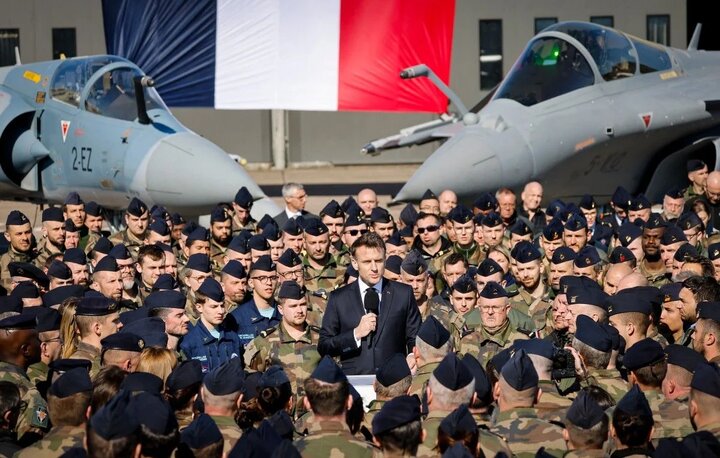
Online Strategic Council – Memo: The dispatch of three French Rafale fighter jets to Poland as part of NATO’s “Enhanced Forward Presence” operation carries a political and strategic message more than it is a tactical move to strengthen air defense.
Strategic Council Online – Opinion: On June 2, 2025, the Council of the European Union took an unprecedented step toward strengthening Europe’s military self-sufficiency by officially approving a new defense fund worth 150 billion euros. This decision, made after decades of institutional debate and effort in common security policy, is now regarded not merely as a technical or budgetary initiative but as a reflection of a paradigm shift in Europe’s strategic outlook on its security future.
Strategic Council Online – Opinion: After decades of relying on the U.S. security umbrella and institutions like NATO, Europe now finds itself in a position where it can no longer treat concepts such as “balance,” “deterrence,” and “strategic autonomy” as mere slogans.
Strategic Council Online – Opinion: Based on the latest developments in the Ukraine war Vladimir Putin, citing new sanctions and “aggressive remarks” of the West, led by the United States, has put Russia’s nuclear forces on alert.
Abed Akbari – Expert on international affairs
Strategic Council Online – Opinion: Following recent events in Ukraine, Germany increased it defense budget. The new coalition government of Germany increased the military budget of the country that used to be about 1.5% of GDP and will be increased to a new rate near to 2% of GDP or even more than that.
Aabed Akbari, Expert of international issues
Strategic Council Online – Opinion: One of the most important international developments that will have a significant impact on future trends in the international system is the impact of the France rotating presidency over the European Union in 2022 in advancing strategic relations and cooperation between China and the EU.
Abed Akbari – International affairs expert
Strategic Council Online – Opinion: Rising tension between the U.S. and Europe from one hand and Russia from the other hand within the recent years and months, Western parties with the U.S pivotal role are making effort to further contain the Russian economic and military influence.
Abed Akbari- Expert of International Affairs
SCFR Online – Opinion: The intensification of U.S. sanctions against Iran on the eve of the U.S. midterm elections indicates Washington’s inability to achieve its war objectives.
SCFR Online – Opinion: The competition between Washington and Beijing over chips and artificial intelligence, simultaneously with the shifting of technological balances, has taken on new economic and security dimensions.
SCFR Online – Opinion: The Shanghai Cooperation Organization summit has created a new opportunity for Iran to transform its membership from a political achievement into economic and transit cooperation.
Strategic Council Online – Note: The Makkah Defense Pact can be seen as a sign of regional countries’ efforts to reduce security dependence on extra-regional powers and redefine the balance in West Asia.
SCFR Online – Opinion: The Ukraine war, by exhausting US military capability on one hand and strengthening European defense capacity on the other, has altered the balance of power in the European continent, cast uncertainty over NATO’s future, and is driving it toward a European NATO.
SCFR Online – Opinion: The dissolution of the SDF, although considered an achievement for Turkey’s security, does not put an end to the challenges arising from the Israeli regime’s aggression and expansionism, refugees, and Syria’s fragility.
SCFR Online – Opinion: Concurrent with the official commencement of the United States’ economic war against our country, focusing on sanctions instruments, isolation, and economic pressure, what has now become increasingly important is the lack of alignment of other major global powers, especially China, with this policy.
SCFR Online – Opinion: The new US sanctions against Iran, despite extensive propaganda, face serious obstacles to success due to the ineffectiveness of sanctions tools and opposition from some of Tehran’s trading partners.
SCFR Online – Opinion: The dominant discourse in the field of European energy security over the past two decades has revolved around diversification of supply sources and the gradual reduction of dependence on fossil fuels. This narrative, which gained particular momentum after the Ukraine gas crisis in 2006 and its intensification in 2014 and 2022, was based on the assumption that Europe could free itself from the geopolitical vulnerabilities arising from dependence on specific suppliers through investment in renewable energy, imports of liquefied natural gas from diversified sources, and the establishment of new infrastructure. However, a closer analysis of energy trade data and the structure of the global oil and gas supply chain presents a different picture. Europe has not only failed to meaningfully reduce its dependence on the Persian Gulf, but in some sectors — particularly in liquefied natural gas imports — this dependence has deepened. This reality, which is often overlooked in public discourse, raises fundamental questions about the sustainability of Europe’s energy security strategies and their impact on regional power equations.
Strategic Council Online – Opinion: In the strategic geography of the global economy, certain regions attain such significance that they effectively become determining factors of the international order. The Strait of Hormuz is among these points; a narrow yet vital passage through which a considerable portion of the world’s energy transits, and whose stability is directly intertwined with the interests and economic security of many countries. However, the importance of the Strait of Hormuz is not limited solely to the volume of energy passing through it. This strait is also a stage upon which the limitations and challenges of great power politics are revealed. From China’s perspective, the policy of the United States regarding the security of this strategic chokepoint, rather than reflecting a stable order, demonstrates a set of contradictions and strategic difficulties that Washington faces in managing the regional order.
Online Strategic Council – Note: Three years after the start of the Ukraine war, the West is facing a reality that was predictable from the very beginning in the calculations of many realistic analysts: neither side can achieve a complete victory.
Online Strategic Council – Memo: The dispatch of three French Rafale fighter jets to Poland as part of NATO’s “Enhanced Forward Presence” operation carries a political and strategic message more than it is a tactical move to strengthen air defense.
Strategic Council Online – Opinion: On June 2, 2025, the Council of the European Union took an unprecedented step toward strengthening Europe’s military self-sufficiency by officially approving a new defense fund worth 150 billion euros. This decision, made after decades of institutional debate and effort in common security policy, is now regarded not merely as a technical or budgetary initiative but as a reflection of a paradigm shift in Europe’s strategic outlook on its security future.
Strategic Council Online – Opinion: After decades of relying on the U.S. security umbrella and institutions like NATO, Europe now finds itself in a position where it can no longer treat concepts such as “balance,” “deterrence,” and “strategic autonomy” as mere slogans.
Strategic Council Online – Opinion: Based on the latest developments in the Ukraine war Vladimir Putin, citing new sanctions and “aggressive remarks” of the West, led by the United States, has put Russia’s nuclear forces on alert.
Abed Akbari – Expert on international affairs
Strategic Council Online – Opinion: Following recent events in Ukraine, Germany increased it defense budget. The new coalition government of Germany increased the military budget of the country that used to be about 1.5% of GDP and will be increased to a new rate near to 2% of GDP or even more than that.
Aabed Akbari, Expert of international issues
Strategic Council Online – Opinion: One of the most important international developments that will have a significant impact on future trends in the international system is the impact of the France rotating presidency over the European Union in 2022 in advancing strategic relations and cooperation between China and the EU.
Abed Akbari – International affairs expert
Strategic Council Online – Opinion: Rising tension between the U.S. and Europe from one hand and Russia from the other hand within the recent years and months, Western parties with the U.S pivotal role are making effort to further contain the Russian economic and military influence.
Abed Akbari- Expert of International Affairs
SCFR Online – Opinion: The dominant discourse in the field of European energy security over the past two decades has revolved around diversification of supply sources and the gradual reduction of dependence on fossil fuels. This narrative, which gained particular momentum after the Ukraine gas crisis in 2006 and its intensification in 2014 and 2022, was based on the assumption that Europe could free itself from the geopolitical vulnerabilities arising from dependence on specific suppliers through investment in renewable energy, imports of liquefied natural gas from diversified sources, and the establishment of new infrastructure. However, a closer analysis of energy trade data and the structure of the global oil and gas supply chain presents a different picture. Europe has not only failed to meaningfully reduce its dependence on the Persian Gulf, but in some sectors — particularly in liquefied natural gas imports — this dependence has deepened. This reality, which is often overlooked in public discourse, raises fundamental questions about the sustainability of Europe’s energy security strategies and their impact on regional power equations.
Strategic Council Online – Opinion: In the strategic geography of the global economy, certain regions attain such significance that they effectively become determining factors of the international order. The Strait of Hormuz is among these points; a narrow yet vital passage through which a considerable portion of the world’s energy transits, and whose stability is directly intertwined with the interests and economic security of many countries. However, the importance of the Strait of Hormuz is not limited solely to the volume of energy passing through it. This strait is also a stage upon which the limitations and challenges of great power politics are revealed. From China’s perspective, the policy of the United States regarding the security of this strategic chokepoint, rather than reflecting a stable order, demonstrates a set of contradictions and strategic difficulties that Washington faces in managing the regional order.
Online Strategic Council – Note: Three years after the start of the Ukraine war, the West is facing a reality that was predictable from the very beginning in the calculations of many realistic analysts: neither side can achieve a complete victory.
Online Strategic Council – Memo: The dispatch of three French Rafale fighter jets to Poland as part of NATO’s “Enhanced Forward Presence” operation carries a political and strategic message more than it is a tactical move to strengthen air defense.
Strategic Council Online – Opinion: On June 2, 2025, the Council of the European Union took an unprecedented step toward strengthening Europe’s military self-sufficiency by officially approving a new defense fund worth 150 billion euros. This decision, made after decades of institutional debate and effort in common security policy, is now regarded not merely as a technical or budgetary initiative but as a reflection of a paradigm shift in Europe’s strategic outlook on its security future.
Strategic Council Online – Opinion: After decades of relying on the U.S. security umbrella and institutions like NATO, Europe now finds itself in a position where it can no longer treat concepts such as “balance,” “deterrence,” and “strategic autonomy” as mere slogans.
Strategic Council Online – Opinion: Based on the latest developments in the Ukraine war Vladimir Putin, citing new sanctions and “aggressive remarks” of the West, led by the United States, has put Russia’s nuclear forces on alert.
Abed Akbari – Expert on international affairs
Strategic Council Online – Opinion: Following recent events in Ukraine, Germany increased it defense budget. The new coalition government of Germany increased the military budget of the country that used to be about 1.5% of GDP and will be increased to a new rate near to 2% of GDP or even more than that.
Aabed Akbari, Expert of international issues
Strategic Council Online – Opinion: One of the most important international developments that will have a significant impact on future trends in the international system is the impact of the France rotating presidency over the European Union in 2022 in advancing strategic relations and cooperation between China and the EU.
Abed Akbari – International affairs expert
Strategic Council Online – Opinion: Rising tension between the U.S. and Europe from one hand and Russia from the other hand within the recent years and months, Western parties with the U.S pivotal role are making effort to further contain the Russian economic and military influence.
Abed Akbari- Expert of International Affairs
SCFR Online – Opinion: The intensification of U.S. sanctions against Iran on the eve of the U.S. midterm elections indicates Washington’s inability to achieve its war objectives.
SCFR Online – Opinion: The competition between Washington and Beijing over chips and artificial intelligence, simultaneously with the shifting of technological balances, has taken on new economic and security dimensions.
SCFR Online – Opinion: The Shanghai Cooperation Organization summit has created a new opportunity for Iran to transform its membership from a political achievement into economic and transit cooperation.
Strategic Council Online – Note: The Makkah Defense Pact can be seen as a sign of regional countries’ efforts to reduce security dependence on extra-regional powers and redefine the balance in West Asia.
SCFR Online – Opinion: The Ukraine war, by exhausting US military capability on one hand and strengthening European defense capacity on the other, has altered the balance of power in the European continent, cast uncertainty over NATO’s future, and is driving it toward a European NATO.
SCFR Online – Opinion: The dissolution of the SDF, although considered an achievement for Turkey’s security, does not put an end to the challenges arising from the Israeli regime’s aggression and expansionism, refugees, and Syria’s fragility.
SCFR Online – Opinion: Concurrent with the official commencement of the United States’ economic war against our country, focusing on sanctions instruments, isolation, and economic pressure, what has now become increasingly important is the lack of alignment of other major global powers, especially China, with this policy.
SCFR Online – Opinion: The new US sanctions against Iran, despite extensive propaganda, face serious obstacles to success due to the ineffectiveness of sanctions tools and opposition from some of Tehran’s trading partners.
SCFR Online – Opinion: The dominant discourse in the field of European energy security over the past two decades has revolved around diversification of supply sources and the gradual reduction of dependence on fossil fuels. This narrative, which gained particular momentum after the Ukraine gas crisis in 2006 and its intensification in 2014 and 2022, was based on the assumption that Europe could free itself from the geopolitical vulnerabilities arising from dependence on specific suppliers through investment in renewable energy, imports of liquefied natural gas from diversified sources, and the establishment of new infrastructure. However, a closer analysis of energy trade data and the structure of the global oil and gas supply chain presents a different picture. Europe has not only failed to meaningfully reduce its dependence on the Persian Gulf, but in some sectors — particularly in liquefied natural gas imports — this dependence has deepened. This reality, which is often overlooked in public discourse, raises fundamental questions about the sustainability of Europe’s energy security strategies and their impact on regional power equations.
Strategic Council Online – Opinion: In the strategic geography of the global economy, certain regions attain such significance that they effectively become determining factors of the international order. The Strait of Hormuz is among these points; a narrow yet vital passage through which a considerable portion of the world’s energy transits, and whose stability is directly intertwined with the interests and economic security of many countries. However, the importance of the Strait of Hormuz is not limited solely to the volume of energy passing through it. This strait is also a stage upon which the limitations and challenges of great power politics are revealed. From China’s perspective, the policy of the United States regarding the security of this strategic chokepoint, rather than reflecting a stable order, demonstrates a set of contradictions and strategic difficulties that Washington faces in managing the regional order.
Online Strategic Council – Note: Three years after the start of the Ukraine war, the West is facing a reality that was predictable from the very beginning in the calculations of many realistic analysts: neither side can achieve a complete victory.
Online Strategic Council – Memo: The dispatch of three French Rafale fighter jets to Poland as part of NATO’s “Enhanced Forward Presence” operation carries a political and strategic message more than it is a tactical move to strengthen air defense.
Strategic Council Online – Opinion: On June 2, 2025, the Council of the European Union took an unprecedented step toward strengthening Europe’s military self-sufficiency by officially approving a new defense fund worth 150 billion euros. This decision, made after decades of institutional debate and effort in common security policy, is now regarded not merely as a technical or budgetary initiative but as a reflection of a paradigm shift in Europe’s strategic outlook on its security future.
Strategic Council Online – Opinion: After decades of relying on the U.S. security umbrella and institutions like NATO, Europe now finds itself in a position where it can no longer treat concepts such as “balance,” “deterrence,” and “strategic autonomy” as mere slogans.
Strategic Council Online – Opinion: Based on the latest developments in the Ukraine war Vladimir Putin, citing new sanctions and “aggressive remarks” of the West, led by the United States, has put Russia’s nuclear forces on alert.
Abed Akbari – Expert on international affairs
Strategic Council Online – Opinion: Following recent events in Ukraine, Germany increased it defense budget. The new coalition government of Germany increased the military budget of the country that used to be about 1.5% of GDP and will be increased to a new rate near to 2% of GDP or even more than that.
Aabed Akbari, Expert of international issues
Strategic Council Online – Opinion: One of the most important international developments that will have a significant impact on future trends in the international system is the impact of the France rotating presidency over the European Union in 2022 in advancing strategic relations and cooperation between China and the EU.
Abed Akbari – International affairs expert
Strategic Council Online – Opinion: Rising tension between the U.S. and Europe from one hand and Russia from the other hand within the recent years and months, Western parties with the U.S pivotal role are making effort to further contain the Russian economic and military influence.
Abed Akbari- Expert of International Affairs
SCFR Online – Opinion: The intensification of U.S. sanctions against Iran on the eve of the U.S. midterm elections indicates Washington’s inability to achieve its war objectives.
SCFR Online – Opinion: The competition between Washington and Beijing over chips and artificial intelligence, simultaneously with the shifting of technological balances, has taken on new economic and security dimensions.
SCFR Online – Opinion: The Shanghai Cooperation Organization summit has created a new opportunity for Iran to transform its membership from a political achievement into economic and transit cooperation.
Strategic Council Online – Note: The Makkah Defense Pact can be seen as a sign of regional countries’ efforts to reduce security dependence on extra-regional powers and redefine the balance in West Asia.
SCFR Online – Opinion: The Ukraine war, by exhausting US military capability on one hand and strengthening European defense capacity on the other, has altered the balance of power in the European continent, cast uncertainty over NATO’s future, and is driving it toward a European NATO.
SCFR Online – Opinion: The dissolution of the SDF, although considered an achievement for Turkey’s security, does not put an end to the challenges arising from the Israeli regime’s aggression and expansionism, refugees, and Syria’s fragility.
SCFR Online – Opinion: Concurrent with the official commencement of the United States’ economic war against our country, focusing on sanctions instruments, isolation, and economic pressure, what has now become increasingly important is the lack of alignment of other major global powers, especially China, with this policy.
SCFR Online – Opinion: The new US sanctions against Iran, despite extensive propaganda, face serious obstacles to success due to the ineffectiveness of sanctions tools and opposition from some of Tehran’s trading partners.
SCFR Online – Opinion: The dominant discourse in the field of European energy security over the past two decades has revolved around diversification of supply sources and the gradual reduction of dependence on fossil fuels. This narrative, which gained particular momentum after the Ukraine gas crisis in 2006 and its intensification in 2014 and 2022, was based on the assumption that Europe could free itself from the geopolitical vulnerabilities arising from dependence on specific suppliers through investment in renewable energy, imports of liquefied natural gas from diversified sources, and the establishment of new infrastructure. However, a closer analysis of energy trade data and the structure of the global oil and gas supply chain presents a different picture. Europe has not only failed to meaningfully reduce its dependence on the Persian Gulf, but in some sectors — particularly in liquefied natural gas imports — this dependence has deepened. This reality, which is often overlooked in public discourse, raises fundamental questions about the sustainability of Europe’s energy security strategies and their impact on regional power equations.
Strategic Council Online – Opinion: In the strategic geography of the global economy, certain regions attain such significance that they effectively become determining factors of the international order. The Strait of Hormuz is among these points; a narrow yet vital passage through which a considerable portion of the world’s energy transits, and whose stability is directly intertwined with the interests and economic security of many countries. However, the importance of the Strait of Hormuz is not limited solely to the volume of energy passing through it. This strait is also a stage upon which the limitations and challenges of great power politics are revealed. From China’s perspective, the policy of the United States regarding the security of this strategic chokepoint, rather than reflecting a stable order, demonstrates a set of contradictions and strategic difficulties that Washington faces in managing the regional order.
Online Strategic Council – Note: Three years after the start of the Ukraine war, the West is facing a reality that was predictable from the very beginning in the calculations of many realistic analysts: neither side can achieve a complete victory.
Online Strategic Council – Memo: The dispatch of three French Rafale fighter jets to Poland as part of NATO’s “Enhanced Forward Presence” operation carries a political and strategic message more than it is a tactical move to strengthen air defense.
Strategic Council Online – Opinion: On June 2, 2025, the Council of the European Union took an unprecedented step toward strengthening Europe’s military self-sufficiency by officially approving a new defense fund worth 150 billion euros. This decision, made after decades of institutional debate and effort in common security policy, is now regarded not merely as a technical or budgetary initiative but as a reflection of a paradigm shift in Europe’s strategic outlook on its security future.
Strategic Council Online – Opinion: After decades of relying on the U.S. security umbrella and institutions like NATO, Europe now finds itself in a position where it can no longer treat concepts such as “balance,” “deterrence,” and “strategic autonomy” as mere slogans.
Strategic Council Online – Opinion: Based on the latest developments in the Ukraine war Vladimir Putin, citing new sanctions and “aggressive remarks” of the West, led by the United States, has put Russia’s nuclear forces on alert.
Abed Akbari – Expert on international affairs
Strategic Council Online – Opinion: Following recent events in Ukraine, Germany increased it defense budget. The new coalition government of Germany increased the military budget of the country that used to be about 1.5% of GDP and will be increased to a new rate near to 2% of GDP or even more than that.
Aabed Akbari, Expert of international issues
Strategic Council Online – Opinion: One of the most important international developments that will have a significant impact on future trends in the international system is the impact of the France rotating presidency over the European Union in 2022 in advancing strategic relations and cooperation between China and the EU.
Abed Akbari – International affairs expert
Strategic Council Online – Opinion: Rising tension between the U.S. and Europe from one hand and Russia from the other hand within the recent years and months, Western parties with the U.S pivotal role are making effort to further contain the Russian economic and military influence.
Abed Akbari- Expert of International Affairs
SCFR Online – Opinion: The intensification of U.S. sanctions against Iran on the eve of the U.S. midterm elections indicates Washington’s inability to achieve its war objectives.
SCFR Online – Opinion: The competition between Washington and Beijing over chips and artificial intelligence, simultaneously with the shifting of technological balances, has taken on new economic and security dimensions.
SCFR Online – Opinion: The Shanghai Cooperation Organization summit has created a new opportunity for Iran to transform its membership from a political achievement into economic and transit cooperation.
Strategic Council Online – Note: The Makkah Defense Pact can be seen as a sign of regional countries’ efforts to reduce security dependence on extra-regional powers and redefine the balance in West Asia.
SCFR Online – Opinion: The Ukraine war, by exhausting US military capability on one hand and strengthening European defense capacity on the other, has altered the balance of power in the European continent, cast uncertainty over NATO’s future, and is driving it toward a European NATO.
SCFR Online – Opinion: The dissolution of the SDF, although considered an achievement for Turkey’s security, does not put an end to the challenges arising from the Israeli regime’s aggression and expansionism, refugees, and Syria’s fragility.
SCFR Online – Opinion: Concurrent with the official commencement of the United States’ economic war against our country, focusing on sanctions instruments, isolation, and economic pressure, what has now become increasingly important is the lack of alignment of other major global powers, especially China, with this policy.
SCFR Online – Opinion: The new US sanctions against Iran, despite extensive propaganda, face serious obstacles to success due to the ineffectiveness of sanctions tools and opposition from some of Tehran’s trading partners.
SCFR Online – Opinion: The dominant discourse in the field of European energy security over the past two decades has revolved around diversification of supply sources and the gradual reduction of dependence on fossil fuels. This narrative, which gained particular momentum after the Ukraine gas crisis in 2006 and its intensification in 2014 and 2022, was based on the assumption that Europe could free itself from the geopolitical vulnerabilities arising from dependence on specific suppliers through investment in renewable energy, imports of liquefied natural gas from diversified sources, and the establishment of new infrastructure. However, a closer analysis of energy trade data and the structure of the global oil and gas supply chain presents a different picture. Europe has not only failed to meaningfully reduce its dependence on the Persian Gulf, but in some sectors — particularly in liquefied natural gas imports — this dependence has deepened. This reality, which is often overlooked in public discourse, raises fundamental questions about the sustainability of Europe’s energy security strategies and their impact on regional power equations.
Strategic Council Online – Opinion: In the strategic geography of the global economy, certain regions attain such significance that they effectively become determining factors of the international order. The Strait of Hormuz is among these points; a narrow yet vital passage through which a considerable portion of the world’s energy transits, and whose stability is directly intertwined with the interests and economic security of many countries. However, the importance of the Strait of Hormuz is not limited solely to the volume of energy passing through it. This strait is also a stage upon which the limitations and challenges of great power politics are revealed. From China’s perspective, the policy of the United States regarding the security of this strategic chokepoint, rather than reflecting a stable order, demonstrates a set of contradictions and strategic difficulties that Washington faces in managing the regional order.
Online Strategic Council – Note: Three years after the start of the Ukraine war, the West is facing a reality that was predictable from the very beginning in the calculations of many realistic analysts: neither side can achieve a complete victory.
Online Strategic Council – Memo: The dispatch of three French Rafale fighter jets to Poland as part of NATO’s “Enhanced Forward Presence” operation carries a political and strategic message more than it is a tactical move to strengthen air defense.
Strategic Council Online – Opinion: On June 2, 2025, the Council of the European Union took an unprecedented step toward strengthening Europe’s military self-sufficiency by officially approving a new defense fund worth 150 billion euros. This decision, made after decades of institutional debate and effort in common security policy, is now regarded not merely as a technical or budgetary initiative but as a reflection of a paradigm shift in Europe’s strategic outlook on its security future.
Strategic Council Online – Opinion: After decades of relying on the U.S. security umbrella and institutions like NATO, Europe now finds itself in a position where it can no longer treat concepts such as “balance,” “deterrence,” and “strategic autonomy” as mere slogans.
Strategic Council Online – Opinion: Based on the latest developments in the Ukraine war Vladimir Putin, citing new sanctions and “aggressive remarks” of the West, led by the United States, has put Russia’s nuclear forces on alert.
Abed Akbari – Expert on international affairs
Strategic Council Online – Opinion: Following recent events in Ukraine, Germany increased it defense budget. The new coalition government of Germany increased the military budget of the country that used to be about 1.5% of GDP and will be increased to a new rate near to 2% of GDP or even more than that.
Aabed Akbari, Expert of international issues
Strategic Council Online – Opinion: One of the most important international developments that will have a significant impact on future trends in the international system is the impact of the France rotating presidency over the European Union in 2022 in advancing strategic relations and cooperation between China and the EU.
Abed Akbari – International affairs expert
Strategic Council Online – Opinion: Rising tension between the U.S. and Europe from one hand and Russia from the other hand within the recent years and months, Western parties with the U.S pivotal role are making effort to further contain the Russian economic and military influence.
Abed Akbari- Expert of International Affairs
SCFR Online – Opinion: The intensification of U.S. sanctions against Iran on the eve of the U.S. midterm elections indicates Washington’s inability to achieve its war objectives.
SCFR Online – Opinion: The competition between Washington and Beijing over chips and artificial intelligence, simultaneously with the shifting of technological balances, has taken on new economic and security dimensions.
SCFR Online – Opinion: The Shanghai Cooperation Organization summit has created a new opportunity for Iran to transform its membership from a political achievement into economic and transit cooperation.
Strategic Council Online – Note: The Makkah Defense Pact can be seen as a sign of regional countries’ efforts to reduce security dependence on extra-regional powers and redefine the balance in West Asia.
SCFR Online – Opinion: The Ukraine war, by exhausting US military capability on one hand and strengthening European defense capacity on the other, has altered the balance of power in the European continent, cast uncertainty over NATO’s future, and is driving it toward a European NATO.
SCFR Online – Opinion: The dissolution of the SDF, although considered an achievement for Turkey’s security, does not put an end to the challenges arising from the Israeli regime’s aggression and expansionism, refugees, and Syria’s fragility.
SCFR Online – Opinion: Concurrent with the official commencement of the United States’ economic war against our country, focusing on sanctions instruments, isolation, and economic pressure, what has now become increasingly important is the lack of alignment of other major global powers, especially China, with this policy.
SCFR Online – Opinion: The new US sanctions against Iran, despite extensive propaganda, face serious obstacles to success due to the ineffectiveness of sanctions tools and opposition from some of Tehran’s trading partners.
SCFR Online – Opinion: The dominant discourse in the field of European energy security over the past two decades has revolved around diversification of supply sources and the gradual reduction of dependence on fossil fuels. This narrative, which gained particular momentum after the Ukraine gas crisis in 2006 and its intensification in 2014 and 2022, was based on the assumption that Europe could free itself from the geopolitical vulnerabilities arising from dependence on specific suppliers through investment in renewable energy, imports of liquefied natural gas from diversified sources, and the establishment of new infrastructure. However, a closer analysis of energy trade data and the structure of the global oil and gas supply chain presents a different picture. Europe has not only failed to meaningfully reduce its dependence on the Persian Gulf, but in some sectors — particularly in liquefied natural gas imports — this dependence has deepened. This reality, which is often overlooked in public discourse, raises fundamental questions about the sustainability of Europe’s energy security strategies and their impact on regional power equations.
Strategic Council Online – Opinion: In the strategic geography of the global economy, certain regions attain such significance that they effectively become determining factors of the international order. The Strait of Hormuz is among these points; a narrow yet vital passage through which a considerable portion of the world’s energy transits, and whose stability is directly intertwined with the interests and economic security of many countries. However, the importance of the Strait of Hormuz is not limited solely to the volume of energy passing through it. This strait is also a stage upon which the limitations and challenges of great power politics are revealed. From China’s perspective, the policy of the United States regarding the security of this strategic chokepoint, rather than reflecting a stable order, demonstrates a set of contradictions and strategic difficulties that Washington faces in managing the regional order.
Online Strategic Council – Note: Three years after the start of the Ukraine war, the West is facing a reality that was predictable from the very beginning in the calculations of many realistic analysts: neither side can achieve a complete victory.
Online Strategic Council – Memo: The dispatch of three French Rafale fighter jets to Poland as part of NATO’s “Enhanced Forward Presence” operation carries a political and strategic message more than it is a tactical move to strengthen air defense.
Strategic Council Online – Opinion: On June 2, 2025, the Council of the European Union took an unprecedented step toward strengthening Europe’s military self-sufficiency by officially approving a new defense fund worth 150 billion euros. This decision, made after decades of institutional debate and effort in common security policy, is now regarded not merely as a technical or budgetary initiative but as a reflection of a paradigm shift in Europe’s strategic outlook on its security future.
Strategic Council Online – Opinion: After decades of relying on the U.S. security umbrella and institutions like NATO, Europe now finds itself in a position where it can no longer treat concepts such as “balance,” “deterrence,” and “strategic autonomy” as mere slogans.
Strategic Council Online – Opinion: Based on the latest developments in the Ukraine war Vladimir Putin, citing new sanctions and “aggressive remarks” of the West, led by the United States, has put Russia’s nuclear forces on alert.
Abed Akbari – Expert on international affairs
Strategic Council Online – Opinion: Following recent events in Ukraine, Germany increased it defense budget. The new coalition government of Germany increased the military budget of the country that used to be about 1.5% of GDP and will be increased to a new rate near to 2% of GDP or even more than that.
Aabed Akbari, Expert of international issues
Strategic Council Online – Opinion: One of the most important international developments that will have a significant impact on future trends in the international system is the impact of the France rotating presidency over the European Union in 2022 in advancing strategic relations and cooperation between China and the EU.
Abed Akbari – International affairs expert
Strategic Council Online – Opinion: Rising tension between the U.S. and Europe from one hand and Russia from the other hand within the recent years and months, Western parties with the U.S pivotal role are making effort to further contain the Russian economic and military influence.
Abed Akbari- Expert of International Affairs
SCFR Online – Opinion: The intensification of U.S. sanctions against Iran on the eve of the U.S. midterm elections indicates Washington’s inability to achieve its war objectives.
SCFR Online – Opinion: The competition between Washington and Beijing over chips and artificial intelligence, simultaneously with the shifting of technological balances, has taken on new economic and security dimensions.
SCFR Online – Opinion: The Shanghai Cooperation Organization summit has created a new opportunity for Iran to transform its membership from a political achievement into economic and transit cooperation.
Strategic Council Online – Note: The Makkah Defense Pact can be seen as a sign of regional countries’ efforts to reduce security dependence on extra-regional powers and redefine the balance in West Asia.
SCFR Online – Opinion: The Ukraine war, by exhausting US military capability on one hand and strengthening European defense capacity on the other, has altered the balance of power in the European continent, cast uncertainty over NATO’s future, and is driving it toward a European NATO.
SCFR Online – Opinion: The dissolution of the SDF, although considered an achievement for Turkey’s security, does not put an end to the challenges arising from the Israeli regime’s aggression and expansionism, refugees, and Syria’s fragility.
SCFR Online – Opinion: Concurrent with the official commencement of the United States’ economic war against our country, focusing on sanctions instruments, isolation, and economic pressure, what has now become increasingly important is the lack of alignment of other major global powers, especially China, with this policy.
SCFR Online – Opinion: The new US sanctions against Iran, despite extensive propaganda, face serious obstacles to success due to the ineffectiveness of sanctions tools and opposition from some of Tehran’s trading partners.