The Ukraine War: From the War of Attrition to the Redistribution of Power

2025/10/11 | Note, Politics, Top News

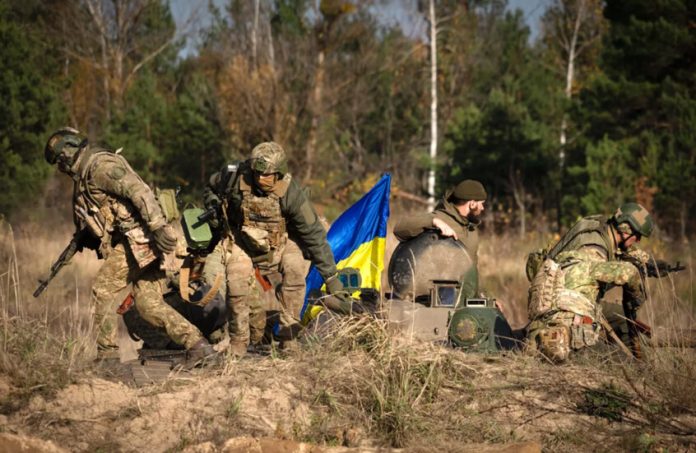
Online Strategic Council – Note: Three years after the start of the Ukraine war, the West is facing a reality that was predictable from the very beginning in the calculations of many realistic analysts: neither side can achieve a complete victory.

Abed Akbari – European Affairs Researcher
The war, which began with slogans of defending the international order, deterring Russia, and unconditional support for Ukraine, has now turned into a test of the West’s capacity, will, and cohesion. What was initially intended to be a symbol of the unity of democracies is now facing deep doubts within the West itself.
At the start of the war, the United States and Europe confidently spoke of Russia’s rapid defeat, but now not only is victory on the battlefield out of reach, but the political, economic, and social costs of the war have unprecedentedly called the legitimacy of the Western strategy into question. Rising inflation, the energy crisis, eroding public support, and the emergence of anti-war populist movements in Europe are signs of strategic erosion and internal division within the West. This comes as the initial goal of restoring Ukraine to its pre-2014 borders has effectively disappeared from policymakers’ agenda.
Europe is more than anyone a victim of its own contradictions. On the one hand, the European Union seeks to present a united front by showing cohesion against Russia; on the other hand, economic dependence on energy, conflicting interests between Eastern and Western Europe, and social pressures from the costs of the war have turned superficial cohesion into a deep challenge. Eastern European countries emphasize continuing the war, while in Western capitals such as Paris and Berlin, whispers of the need for negotiation and agreement are heard. These rifts show that Europe has neither a strategy for exiting the war nor the ability to sustain a war of attrition.
On the other side, the United States, which initially entered the arena with the motivation of rebuilding its global credibility and deterring Russia, now faces a dual challenge: on one hand, the need to contain China in East Asia, and on the other, the need to respond to internal pressures to reduce foreign costs has doubled. Internal American political competitions have also added to the complexity of the situation. Donald Trump’s contradictory statements, from criticizing the endless costs of supporting Ukraine to promising to restore Western power against Russia, reflect an identity crisis in American foreign policy; a crisis that shows the strategic consensus in Washington is eroding.
The West’s claim of defending a “rules-based international order” has also been called into question more than ever. Unconditional support for Ukraine against Russia, while in other regions of the world, especially in West Asia and Africa, double standards and silence towards humanitarian crises prevail, has tarnished the West’s image as a defender of universal values. Many Global South countries see this war not as a defense of order, but as an effort to preserve Western power monopoly. This view, especially in international forums, has led to political distancing from Western positions and growing distrust towards it.
Despite Western claims about NATO’s cohesion, the reality is that the Atlantic Alliance is facing hidden tensions more than ever before. Disagreements over defense budget allocation, the inability to develop an exit strategy, and some members’ doubts about the unlimited costs of supporting Ukraine indicate structural rifts within NATO. Furthermore, Europe’s excessive reliance on America in security decision-making has once again revealed the strategic weakness of the European Union. Europe has still not been able to define a security policy independent of Washington, casting doubt on its future cohesion.
On a broader level, the Ukraine war has accelerated the transition from a unipolar order to a more multipolar one. The West’s failure to achieve its goals has created opportunities for other actors, including China and India, to play mediating and balancing roles. Consequently, what is taking shape is an order in which power is more diffusely distributed, and the West will no longer be the absolute dominant player. This trend is not the result of deliberate Western decisions but rather the unintended consequence of their own policies.
The Ukraine war has also exposed the gap between the West’s idealistic goals and geopolitical realities; the West wanted to send a deterrent message to other powers by supporting Ukraine, but the result was the opposite: China’s stance on Taiwan has hardened, Russia has become more active in cooperating with non-Western powers, and the global order has moved further away from Western centrality. The questioning of its credibility is perhaps the most significant cost the United States and its allies have paid in this crisis.
Under such circumstances, peace in Ukraine, although unlikely, will not be the endpoint of the crisis. Instead, it will be the beginning of a new stage of redefining global roles and balances. Europe is compelled to rewrite its security strategy, America must redistribute resources among its global priorities, and Russia, by revising its policies, will seek to counter international isolation.
In this context, for countries like Iran, the most important issue is not the war or peace itself, but its structural consequences for the international order. A potential peace in Ukraine could redirect Western attention back to other regions, including West Asia, and increase political and security pressures. Therefore, Iran must define its position in the new order through realism, diversification of foreign relations, and avoidance of dependence on shifting poles of power; an order in which only those players will succeed who can leverage rifts and changes to enhance their own independence and influence.

0 Comments

LATEST CONTENT

The Inseparability of the Lebanese Front from the Axis of Resistance

SCFR Online–Opinion: By providing an extensive network of social, healthcare, educational, and post-war reconstruction services, Hezbollah has established a strong social base for itself among Lebanon’s Shiites and Sunnis, and even beyond that, among other segments of Lebanese society, including Christians. Hezbollah has never been an external actor imposed upon Lebanon; rather, it is a phenomenon fundamentally born out of the occupation and crimes of the Zionist regime and itself influenced by popular resistance.

The Increasing Efforts of the Zionist Regime to Redefine Borders and the Regional Order and Its Consequences

SCFR Online– Opinion: Security and military developments in the region over recent months indicate that the ongoing crises and wars in Gaza, southern Lebanon, and parts of Syrian territory encompass broader dimensions of geopolitical and geostrategic transformations. In this context, the increased military presence and control of the Zionist regime over parts of the territories of these areas, along with proposals regarding the creation of buffer zones or even the expansion of security borders, have raised serious questions about the future of the regional order and its consequences for the countries of West Asia.

The Components of Iran’s Deterrence Power

SCFR Online – Opinion: At a time when regional security equations have reached a sensitive stage under the influence of Iran’s strategic confrontation with the United States and the Zionist regime, the question of the nature of Tehran’s defensive power has gained greater significance than ever before. While Washington and Tel Aviv rely on their technological superiority, the Islamic Republic of Iran has presented a model of deterrence that extends beyond the material calculations of the world’s classical militaries. This power, rooted in the connection between “the field” and “the people,” has not only altered the balance of power in recent conflicts but has also disrupted adversaries’ calculations when confronting Iran’s strategic depth.

Loading

Últimas publicaciones

The Inseparability of the Lebanese Front from the Axis of Resistance

SCFR Online–Opinion: By providing an extensive network of social, healthcare, educational, and post-war reconstruction services, Hezbollah has established a strong social base for itself among Lebanon’s Shiites and Sunnis, and even beyond that, among other segments of Lebanese society, including Christians. Hezbollah has never been an external actor imposed upon Lebanon; rather, it is a phenomenon fundamentally born out of the occupation and crimes of the Zionist regime and itself influenced by popular resistance.

The Increasing Efforts of the Zionist Regime to Redefine Borders and the Regional Order and Its Consequences

SCFR Online– Opinion: Security and military developments in the region over recent months indicate that the ongoing crises and wars in Gaza, southern Lebanon, and parts of Syrian territory encompass broader dimensions of geopolitical and geostrategic transformations. In this context, the increased military presence and control of the Zionist regime over parts of the territories of these areas, along with proposals regarding the creation of buffer zones or even the expansion of security borders, have raised serious questions about the future of the regional order and its consequences for the countries of West Asia.

The Components of Iran’s Deterrence Power

SCFR Online – Opinion: At a time when regional security equations have reached a sensitive stage under the influence of Iran’s strategic confrontation with the United States and the Zionist regime, the question of the nature of Tehran’s defensive power has gained greater significance than ever before. While Washington and Tel Aviv rely on their technological superiority, the Islamic Republic of Iran has presented a model of deterrence that extends beyond the material calculations of the world’s classical militaries. This power, rooted in the connection between “the field” and “the people,” has not only altered the balance of power in recent conflicts but has also disrupted adversaries’ calculations when confronting Iran’s strategic depth.

Loading

DERNIER CONTENU

The Inseparability of the Lebanese Front from the Axis of Resistance

SCFR Online–Opinion: By providing an extensive network of social, healthcare, educational, and post-war reconstruction services, Hezbollah has established a strong social base for itself among Lebanon’s Shiites and Sunnis, and even beyond that, among other segments of Lebanese society, including Christians. Hezbollah has never been an external actor imposed upon Lebanon; rather, it is a phenomenon fundamentally born out of the occupation and crimes of the Zionist regime and itself influenced by popular resistance.

The Increasing Efforts of the Zionist Regime to Redefine Borders and the Regional Order and Its Consequences

SCFR Online– Opinion: Security and military developments in the region over recent months indicate that the ongoing crises and wars in Gaza, southern Lebanon, and parts of Syrian territory encompass broader dimensions of geopolitical and geostrategic transformations. In this context, the increased military presence and control of the Zionist regime over parts of the territories of these areas, along with proposals regarding the creation of buffer zones or even the expansion of security borders, have raised serious questions about the future of the regional order and its consequences for the countries of West Asia.

The Components of Iran’s Deterrence Power

SCFR Online – Opinion: At a time when regional security equations have reached a sensitive stage under the influence of Iran’s strategic confrontation with the United States and the Zionist regime, the question of the nature of Tehran’s defensive power has gained greater significance than ever before. While Washington and Tel Aviv rely on their technological superiority, the Islamic Republic of Iran has presented a model of deterrence that extends beyond the material calculations of the world’s classical militaries. This power, rooted in the connection between “the field” and “the people,” has not only altered the balance of power in recent conflicts but has also disrupted adversaries’ calculations when confronting Iran’s strategic depth.

Loading

DERNIER CONTENU

The Inseparability of the Lebanese Front from the Axis of Resistance

SCFR Online–Opinion: By providing an extensive network of social, healthcare, educational, and post-war reconstruction services, Hezbollah has established a strong social base for itself among Lebanon’s Shiites and Sunnis, and even beyond that, among other segments of Lebanese society, including Christians. Hezbollah has never been an external actor imposed upon Lebanon; rather, it is a phenomenon fundamentally born out of the occupation and crimes of the Zionist regime and itself influenced by popular resistance.

The Increasing Efforts of the Zionist Regime to Redefine Borders and the Regional Order and Its Consequences

SCFR Online– Opinion: Security and military developments in the region over recent months indicate that the ongoing crises and wars in Gaza, southern Lebanon, and parts of Syrian territory encompass broader dimensions of geopolitical and geostrategic transformations. In this context, the increased military presence and control of the Zionist regime over parts of the territories of these areas, along with proposals regarding the creation of buffer zones or even the expansion of security borders, have raised serious questions about the future of the regional order and its consequences for the countries of West Asia.

The Components of Iran’s Deterrence Power

SCFR Online – Opinion: At a time when regional security equations have reached a sensitive stage under the influence of Iran’s strategic confrontation with the United States and the Zionist regime, the question of the nature of Tehran’s defensive power has gained greater significance than ever before. While Washington and Tel Aviv rely on their technological superiority, the Islamic Republic of Iran has presented a model of deterrence that extends beyond the material calculations of the world’s classical militaries. This power, rooted in the connection between “the field” and “the people,” has not only altered the balance of power in recent conflicts but has also disrupted adversaries’ calculations when confronting Iran’s strategic depth.

Loading

DERNIER CONTENU

The Inseparability of the Lebanese Front from the Axis of Resistance

SCFR Online–Opinion: By providing an extensive network of social, healthcare, educational, and post-war reconstruction services, Hezbollah has established a strong social base for itself among Lebanon’s Shiites and Sunnis, and even beyond that, among other segments of Lebanese society, including Christians. Hezbollah has never been an external actor imposed upon Lebanon; rather, it is a phenomenon fundamentally born out of the occupation and crimes of the Zionist regime and itself influenced by popular resistance.

The Increasing Efforts of the Zionist Regime to Redefine Borders and the Regional Order and Its Consequences

SCFR Online– Opinion: Security and military developments in the region over recent months indicate that the ongoing crises and wars in Gaza, southern Lebanon, and parts of Syrian territory encompass broader dimensions of geopolitical and geostrategic transformations. In this context, the increased military presence and control of the Zionist regime over parts of the territories of these areas, along with proposals regarding the creation of buffer zones or even the expansion of security borders, have raised serious questions about the future of the regional order and its consequences for the countries of West Asia.

The Components of Iran’s Deterrence Power

SCFR Online – Opinion: At a time when regional security equations have reached a sensitive stage under the influence of Iran’s strategic confrontation with the United States and the Zionist regime, the question of the nature of Tehran’s defensive power has gained greater significance than ever before. While Washington and Tel Aviv rely on their technological superiority, the Islamic Republic of Iran has presented a model of deterrence that extends beyond the material calculations of the world’s classical militaries. This power, rooted in the connection between “the field” and “the people,” has not only altered the balance of power in recent conflicts but has also disrupted adversaries’ calculations when confronting Iran’s strategic depth.

Loading





