An Analysis of the Makkah Defense Pact
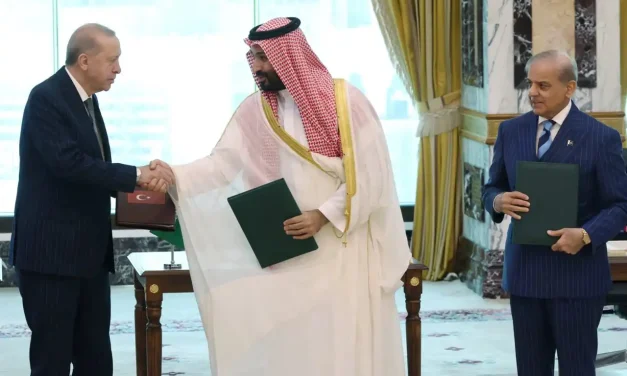
SCFR Online – Opinion: On Friday, August 7, the heads of state of three countries – Saudi Arabia, Turkey, and Pakistan – signed a text under the title “Makkah Joint Defense Agreement.”
Strategic Council Online – Note: The initiative to revive the Hejaz Railway, beyond being a transportation project, constitutes an attempt to redefine geopolitics, the economy, and Turkey’s regional position; however, its realization appears to face significant financial, security, and institutional challenges.
SCFR Online – Opinion: The Strait of Hormuz crisis is no longer merely the consequence of a military confrontation, but rather a sign of the transition from the US-centered maritime order to a new energy security structure involving the participation of emerging and influential powers.
SCFR Online – Opinion: Iran’s active deterrence strategy, while increasing the costs of US intervention, has increasingly exposed the hidden rifts between Washington’s interests and those of the Israeli regime.
SCFR Online – Opinion: The escalation of verbal and strategic tensions between Turkey and the Israeli regime, although not increasing the likelihood of direct war, indicates the formation of a new order in West Asian geopolitical rivalries.
Strategic Council Online – Note: Recent developments in the political geography of West Asia, from rising tensions in the Persian Gulf to missile and drone activities in the Red Sea and the recent warning by Kaja Kallas, the European Union’s foreign policy chief, regarding the threat to freedom of navigation, indicate a key pattern shift; the US-Iran war has moved beyond the scope of a regional and local confrontation and has linked two vital passageways for the global economy: the Strait of Hormuz and the Bab el-Mandeb Strait.
SCFR Online – Opinion: The Ukraine war was not merely a European crisis, but rather the starting point for the rearrangement of the global balance of power and a shift in the strategic behavior of great powers.
SCFR Online – Opinion: Great power competition is now pursued more in trade, currency, technology, and global supply chains than on the battlefields of military confrontation.
SCFR Online – Opinion: Iran’s active deterrence strategy, while increasing the costs of US intervention, has increasingly exposed the hidden rifts between Washington’s interests and those of the Israeli regime.
Strategic Council Online- Interview: An expert on West Asian issues stated: The developments following the Gaza war indicate that the U.S. strategy to redefine the West Asian order through the normalization of relations with the Israeli regime has reached a dead end. Therefore, the post-Gaza war developments have once again placed the U.S. security engineering strategy in West Asia at the center of analysts’ attention.
Strategic Council Online – Interview: A senior West Asia analyst stated that The Washington Post recently emphasized in a report that the attacks by the Zionist regime and the U.S. on Iran not only failed in their strategy to isolate Tehran but also altered the perspective of Persian Gulf countries regarding regional threats, identifying the Zionists as the primary destabilizing force in the region.
Strategic Council Online-Opinion: It has been about six months since the Israeli regime attacked the Gaza Strip in October 2023. In the initial weeks and months of the attack, many analysts believed that the Israeli regime, based on its usual practice in wars after the Palestinian intifada, would agree to a truce and end the war after inflicting multiple casualties and damages.
Mohammad Mehdi Mazaheri—University professor
Strategic Council Online- Opinion: While the Gaza crisis and Israel’s inhuman behavior in dealing with the people of the Strip cast a shadow over all international issues and has become the biggest challenge facing the world community, the type and nature of America’s relationship with the Israeli regime and the impact of its actions on the global level and in different regions have also made the upcoming US elections a key and important issue in 2024.
Dr. Mohammad Mehdi Mazaheri – university professor
Strategic Council Online – Interview: An expert on Israeli affairs, saying that the blow the Zionist regime has received from the “Al-Aqsa Storm” operation severely shattered the notion that the regime is an immutable reality that must be dealt with in the region noted: The crimes committed by the Zionist regime in Gaza will remain in the minds of the people of Islamic countries for a long time and will be a serious challenge for normalization.
Strategic Council Online – Opinion: Following the escalation of the Zionist regime’s racist and provocative measures against the Palestinian nation and the desecration of Al-Aqsa Mosque, Hamas and the Islamic Jihad movement carried out pre-emptive operations on the anniversary of the “Yom Kippur” war against the positions, centers, and strongholds of the Zionist regime, that has become the focus of the attention of the world.
Hamid Khoshayand – Expert on regional affairs
Strategic Council Online – Opinion: The idea of developing transportation routes to boost trade in the Persian Gulf and eliminate the need for the strategic Strait of Hormuz was formed among the Persian Gulf Cooperation Council member states some years ago. To realize the idea, the rail transport corridor along the Persian Gulf was started in 2016 by launching the Persian Gulf Cooperation Council rail network. According to the agreement signed among the member states of the Council, each of the countries was expected to build and complete their rail network independently. Finally, after completing all national lines, the Persian Gulf Cooperation Council network would be launched by connecting the national rail networks of those countries. In this way, an Arab railway network would be formed, connecting all six Persian Gulf Cooperation Council member countries through a railway line of 2177 kilometers.
Dr. Mohammad Mehdi Mazaheri – University professor
Strategic Council Online – Opinion: Almost eight years have passed since the last failure in establishing peace between Palestine and the Zionist regime at the United States of America initiative.
Hossein Sayyahi – Researcher of international politics
SCFR Online – Opinion: On Friday, August 7, the heads of state of three countries – Saudi Arabia, Turkey, and Pakistan – signed a text under the title “Makkah Joint Defense Agreement.”
Strategic Council Online – Note: The initiative to revive the Hejaz Railway, beyond being a transportation project, constitutes an attempt to redefine geopolitics, the economy, and Turkey’s regional position; however, its realization appears to face significant financial, security, and institutional challenges.
SCFR Online – Opinion: The Strait of Hormuz crisis is no longer merely the consequence of a military confrontation, but rather a sign of the transition from the US-centered maritime order to a new energy security structure involving the participation of emerging and influential powers.
SCFR Online – Opinion: Iran’s active deterrence strategy, while increasing the costs of US intervention, has increasingly exposed the hidden rifts between Washington’s interests and those of the Israeli regime.
SCFR Online – Opinion: The escalation of verbal and strategic tensions between Turkey and the Israeli regime, although not increasing the likelihood of direct war, indicates the formation of a new order in West Asian geopolitical rivalries.
Strategic Council Online – Note: Recent developments in the political geography of West Asia, from rising tensions in the Persian Gulf to missile and drone activities in the Red Sea and the recent warning by Kaja Kallas, the European Union’s foreign policy chief, regarding the threat to freedom of navigation, indicate a key pattern shift; the US-Iran war has moved beyond the scope of a regional and local confrontation and has linked two vital passageways for the global economy: the Strait of Hormuz and the Bab el-Mandeb Strait.
SCFR Online – Opinion: The Ukraine war was not merely a European crisis, but rather the starting point for the rearrangement of the global balance of power and a shift in the strategic behavior of great powers.
SCFR Online – Opinion: Great power competition is now pursued more in trade, currency, technology, and global supply chains than on the battlefields of military confrontation.
SCFR Online – Opinion: Iran’s active deterrence strategy, while increasing the costs of US intervention, has increasingly exposed the hidden rifts between Washington’s interests and those of the Israeli regime.
Strategic Council Online- Interview: An expert on West Asian issues stated: The developments following the Gaza war indicate that the U.S. strategy to redefine the West Asian order through the normalization of relations with the Israeli regime has reached a dead end. Therefore, the post-Gaza war developments have once again placed the U.S. security engineering strategy in West Asia at the center of analysts’ attention.
Strategic Council Online – Interview: A senior West Asia analyst stated that The Washington Post recently emphasized in a report that the attacks by the Zionist regime and the U.S. on Iran not only failed in their strategy to isolate Tehran but also altered the perspective of Persian Gulf countries regarding regional threats, identifying the Zionists as the primary destabilizing force in the region.
Strategic Council Online-Opinion: It has been about six months since the Israeli regime attacked the Gaza Strip in October 2023. In the initial weeks and months of the attack, many analysts believed that the Israeli regime, based on its usual practice in wars after the Palestinian intifada, would agree to a truce and end the war after inflicting multiple casualties and damages.
Mohammad Mehdi Mazaheri—University professor
Strategic Council Online- Opinion: While the Gaza crisis and Israel’s inhuman behavior in dealing with the people of the Strip cast a shadow over all international issues and has become the biggest challenge facing the world community, the type and nature of America’s relationship with the Israeli regime and the impact of its actions on the global level and in different regions have also made the upcoming US elections a key and important issue in 2024.
Dr. Mohammad Mehdi Mazaheri – university professor
Strategic Council Online – Interview: An expert on Israeli affairs, saying that the blow the Zionist regime has received from the “Al-Aqsa Storm” operation severely shattered the notion that the regime is an immutable reality that must be dealt with in the region noted: The crimes committed by the Zionist regime in Gaza will remain in the minds of the people of Islamic countries for a long time and will be a serious challenge for normalization.
Strategic Council Online – Opinion: Following the escalation of the Zionist regime’s racist and provocative measures against the Palestinian nation and the desecration of Al-Aqsa Mosque, Hamas and the Islamic Jihad movement carried out pre-emptive operations on the anniversary of the “Yom Kippur” war against the positions, centers, and strongholds of the Zionist regime, that has become the focus of the attention of the world.
Hamid Khoshayand – Expert on regional affairs
Strategic Council Online – Opinion: The idea of developing transportation routes to boost trade in the Persian Gulf and eliminate the need for the strategic Strait of Hormuz was formed among the Persian Gulf Cooperation Council member states some years ago. To realize the idea, the rail transport corridor along the Persian Gulf was started in 2016 by launching the Persian Gulf Cooperation Council rail network. According to the agreement signed among the member states of the Council, each of the countries was expected to build and complete their rail network independently. Finally, after completing all national lines, the Persian Gulf Cooperation Council network would be launched by connecting the national rail networks of those countries. In this way, an Arab railway network would be formed, connecting all six Persian Gulf Cooperation Council member countries through a railway line of 2177 kilometers.
Dr. Mohammad Mehdi Mazaheri – University professor
Strategic Council Online – Opinion: Almost eight years have passed since the last failure in establishing peace between Palestine and the Zionist regime at the United States of America initiative.
Hossein Sayyahi – Researcher of international politics
SCFR Online – Opinion: Iran’s active deterrence strategy, while increasing the costs of US intervention, has increasingly exposed the hidden rifts between Washington’s interests and those of the Israeli regime.
Strategic Council Online- Interview: An expert on West Asian issues stated: The developments following the Gaza war indicate that the U.S. strategy to redefine the West Asian order through the normalization of relations with the Israeli regime has reached a dead end. Therefore, the post-Gaza war developments have once again placed the U.S. security engineering strategy in West Asia at the center of analysts’ attention.
Strategic Council Online – Interview: A senior West Asia analyst stated that The Washington Post recently emphasized in a report that the attacks by the Zionist regime and the U.S. on Iran not only failed in their strategy to isolate Tehran but also altered the perspective of Persian Gulf countries regarding regional threats, identifying the Zionists as the primary destabilizing force in the region.
Strategic Council Online-Opinion: It has been about six months since the Israeli regime attacked the Gaza Strip in October 2023. In the initial weeks and months of the attack, many analysts believed that the Israeli regime, based on its usual practice in wars after the Palestinian intifada, would agree to a truce and end the war after inflicting multiple casualties and damages.
Mohammad Mehdi Mazaheri—University professor
Strategic Council Online- Opinion: While the Gaza crisis and Israel’s inhuman behavior in dealing with the people of the Strip cast a shadow over all international issues and has become the biggest challenge facing the world community, the type and nature of America’s relationship with the Israeli regime and the impact of its actions on the global level and in different regions have also made the upcoming US elections a key and important issue in 2024.
Dr. Mohammad Mehdi Mazaheri – university professor
Strategic Council Online – Interview: An expert on Israeli affairs, saying that the blow the Zionist regime has received from the “Al-Aqsa Storm” operation severely shattered the notion that the regime is an immutable reality that must be dealt with in the region noted: The crimes committed by the Zionist regime in Gaza will remain in the minds of the people of Islamic countries for a long time and will be a serious challenge for normalization.
Strategic Council Online – Opinion: Following the escalation of the Zionist regime’s racist and provocative measures against the Palestinian nation and the desecration of Al-Aqsa Mosque, Hamas and the Islamic Jihad movement carried out pre-emptive operations on the anniversary of the “Yom Kippur” war against the positions, centers, and strongholds of the Zionist regime, that has become the focus of the attention of the world.
Hamid Khoshayand – Expert on regional affairs
Strategic Council Online – Opinion: The idea of developing transportation routes to boost trade in the Persian Gulf and eliminate the need for the strategic Strait of Hormuz was formed among the Persian Gulf Cooperation Council member states some years ago. To realize the idea, the rail transport corridor along the Persian Gulf was started in 2016 by launching the Persian Gulf Cooperation Council rail network. According to the agreement signed among the member states of the Council, each of the countries was expected to build and complete their rail network independently. Finally, after completing all national lines, the Persian Gulf Cooperation Council network would be launched by connecting the national rail networks of those countries. In this way, an Arab railway network would be formed, connecting all six Persian Gulf Cooperation Council member countries through a railway line of 2177 kilometers.
Dr. Mohammad Mehdi Mazaheri – University professor
Strategic Council Online – Opinion: Almost eight years have passed since the last failure in establishing peace between Palestine and the Zionist regime at the United States of America initiative.
Hossein Sayyahi – Researcher of international politics
SCFR Online – Opinion: On Friday, August 7, the heads of state of three countries – Saudi Arabia, Turkey, and Pakistan – signed a text under the title “Makkah Joint Defense Agreement.”
Strategic Council Online – Note: The initiative to revive the Hejaz Railway, beyond being a transportation project, constitutes an attempt to redefine geopolitics, the economy, and Turkey’s regional position; however, its realization appears to face significant financial, security, and institutional challenges.
SCFR Online – Opinion: The Strait of Hormuz crisis is no longer merely the consequence of a military confrontation, but rather a sign of the transition from the US-centered maritime order to a new energy security structure involving the participation of emerging and influential powers.
SCFR Online – Opinion: Iran’s active deterrence strategy, while increasing the costs of US intervention, has increasingly exposed the hidden rifts between Washington’s interests and those of the Israeli regime.
SCFR Online – Opinion: The escalation of verbal and strategic tensions between Turkey and the Israeli regime, although not increasing the likelihood of direct war, indicates the formation of a new order in West Asian geopolitical rivalries.
Strategic Council Online – Note: Recent developments in the political geography of West Asia, from rising tensions in the Persian Gulf to missile and drone activities in the Red Sea and the recent warning by Kaja Kallas, the European Union’s foreign policy chief, regarding the threat to freedom of navigation, indicate a key pattern shift; the US-Iran war has moved beyond the scope of a regional and local confrontation and has linked two vital passageways for the global economy: the Strait of Hormuz and the Bab el-Mandeb Strait.
SCFR Online – Opinion: The Ukraine war was not merely a European crisis, but rather the starting point for the rearrangement of the global balance of power and a shift in the strategic behavior of great powers.
SCFR Online – Opinion: Great power competition is now pursued more in trade, currency, technology, and global supply chains than on the battlefields of military confrontation.
SCFR Online – Opinion: Iran’s active deterrence strategy, while increasing the costs of US intervention, has increasingly exposed the hidden rifts between Washington’s interests and those of the Israeli regime.
Strategic Council Online- Interview: An expert on West Asian issues stated: The developments following the Gaza war indicate that the U.S. strategy to redefine the West Asian order through the normalization of relations with the Israeli regime has reached a dead end. Therefore, the post-Gaza war developments have once again placed the U.S. security engineering strategy in West Asia at the center of analysts’ attention.
Strategic Council Online – Interview: A senior West Asia analyst stated that The Washington Post recently emphasized in a report that the attacks by the Zionist regime and the U.S. on Iran not only failed in their strategy to isolate Tehran but also altered the perspective of Persian Gulf countries regarding regional threats, identifying the Zionists as the primary destabilizing force in the region.
Strategic Council Online-Opinion: It has been about six months since the Israeli regime attacked the Gaza Strip in October 2023. In the initial weeks and months of the attack, many analysts believed that the Israeli regime, based on its usual practice in wars after the Palestinian intifada, would agree to a truce and end the war after inflicting multiple casualties and damages.
Mohammad Mehdi Mazaheri—University professor
Strategic Council Online- Opinion: While the Gaza crisis and Israel’s inhuman behavior in dealing with the people of the Strip cast a shadow over all international issues and has become the biggest challenge facing the world community, the type and nature of America’s relationship with the Israeli regime and the impact of its actions on the global level and in different regions have also made the upcoming US elections a key and important issue in 2024.
Dr. Mohammad Mehdi Mazaheri – university professor
Strategic Council Online – Interview: An expert on Israeli affairs, saying that the blow the Zionist regime has received from the “Al-Aqsa Storm” operation severely shattered the notion that the regime is an immutable reality that must be dealt with in the region noted: The crimes committed by the Zionist regime in Gaza will remain in the minds of the people of Islamic countries for a long time and will be a serious challenge for normalization.
Strategic Council Online – Opinion: Following the escalation of the Zionist regime’s racist and provocative measures against the Palestinian nation and the desecration of Al-Aqsa Mosque, Hamas and the Islamic Jihad movement carried out pre-emptive operations on the anniversary of the “Yom Kippur” war against the positions, centers, and strongholds of the Zionist regime, that has become the focus of the attention of the world.
Hamid Khoshayand – Expert on regional affairs
Strategic Council Online – Opinion: The idea of developing transportation routes to boost trade in the Persian Gulf and eliminate the need for the strategic Strait of Hormuz was formed among the Persian Gulf Cooperation Council member states some years ago. To realize the idea, the rail transport corridor along the Persian Gulf was started in 2016 by launching the Persian Gulf Cooperation Council rail network. According to the agreement signed among the member states of the Council, each of the countries was expected to build and complete their rail network independently. Finally, after completing all national lines, the Persian Gulf Cooperation Council network would be launched by connecting the national rail networks of those countries. In this way, an Arab railway network would be formed, connecting all six Persian Gulf Cooperation Council member countries through a railway line of 2177 kilometers.
Dr. Mohammad Mehdi Mazaheri – University professor
Strategic Council Online – Opinion: Almost eight years have passed since the last failure in establishing peace between Palestine and the Zionist regime at the United States of America initiative.
Hossein Sayyahi – Researcher of international politics
SCFR Online – Opinion: On Friday, August 7, the heads of state of three countries – Saudi Arabia, Turkey, and Pakistan – signed a text under the title “Makkah Joint Defense Agreement.”
Strategic Council Online – Note: The initiative to revive the Hejaz Railway, beyond being a transportation project, constitutes an attempt to redefine geopolitics, the economy, and Turkey’s regional position; however, its realization appears to face significant financial, security, and institutional challenges.
SCFR Online – Opinion: The Strait of Hormuz crisis is no longer merely the consequence of a military confrontation, but rather a sign of the transition from the US-centered maritime order to a new energy security structure involving the participation of emerging and influential powers.
SCFR Online – Opinion: Iran’s active deterrence strategy, while increasing the costs of US intervention, has increasingly exposed the hidden rifts between Washington’s interests and those of the Israeli regime.
SCFR Online – Opinion: The escalation of verbal and strategic tensions between Turkey and the Israeli regime, although not increasing the likelihood of direct war, indicates the formation of a new order in West Asian geopolitical rivalries.
Strategic Council Online – Note: Recent developments in the political geography of West Asia, from rising tensions in the Persian Gulf to missile and drone activities in the Red Sea and the recent warning by Kaja Kallas, the European Union’s foreign policy chief, regarding the threat to freedom of navigation, indicate a key pattern shift; the US-Iran war has moved beyond the scope of a regional and local confrontation and has linked two vital passageways for the global economy: the Strait of Hormuz and the Bab el-Mandeb Strait.
SCFR Online – Opinion: The Ukraine war was not merely a European crisis, but rather the starting point for the rearrangement of the global balance of power and a shift in the strategic behavior of great powers.
SCFR Online – Opinion: Great power competition is now pursued more in trade, currency, technology, and global supply chains than on the battlefields of military confrontation.
SCFR Online – Opinion: Iran’s active deterrence strategy, while increasing the costs of US intervention, has increasingly exposed the hidden rifts between Washington’s interests and those of the Israeli regime.
Strategic Council Online- Interview: An expert on West Asian issues stated: The developments following the Gaza war indicate that the U.S. strategy to redefine the West Asian order through the normalization of relations with the Israeli regime has reached a dead end. Therefore, the post-Gaza war developments have once again placed the U.S. security engineering strategy in West Asia at the center of analysts’ attention.
Strategic Council Online – Interview: A senior West Asia analyst stated that The Washington Post recently emphasized in a report that the attacks by the Zionist regime and the U.S. on Iran not only failed in their strategy to isolate Tehran but also altered the perspective of Persian Gulf countries regarding regional threats, identifying the Zionists as the primary destabilizing force in the region.
Strategic Council Online-Opinion: It has been about six months since the Israeli regime attacked the Gaza Strip in October 2023. In the initial weeks and months of the attack, many analysts believed that the Israeli regime, based on its usual practice in wars after the Palestinian intifada, would agree to a truce and end the war after inflicting multiple casualties and damages.
Mohammad Mehdi Mazaheri—University professor
Strategic Council Online- Opinion: While the Gaza crisis and Israel’s inhuman behavior in dealing with the people of the Strip cast a shadow over all international issues and has become the biggest challenge facing the world community, the type and nature of America’s relationship with the Israeli regime and the impact of its actions on the global level and in different regions have also made the upcoming US elections a key and important issue in 2024.
Dr. Mohammad Mehdi Mazaheri – university professor
Strategic Council Online – Interview: An expert on Israeli affairs, saying that the blow the Zionist regime has received from the “Al-Aqsa Storm” operation severely shattered the notion that the regime is an immutable reality that must be dealt with in the region noted: The crimes committed by the Zionist regime in Gaza will remain in the minds of the people of Islamic countries for a long time and will be a serious challenge for normalization.
Strategic Council Online – Opinion: Following the escalation of the Zionist regime’s racist and provocative measures against the Palestinian nation and the desecration of Al-Aqsa Mosque, Hamas and the Islamic Jihad movement carried out pre-emptive operations on the anniversary of the “Yom Kippur” war against the positions, centers, and strongholds of the Zionist regime, that has become the focus of the attention of the world.
Hamid Khoshayand – Expert on regional affairs
Strategic Council Online – Opinion: The idea of developing transportation routes to boost trade in the Persian Gulf and eliminate the need for the strategic Strait of Hormuz was formed among the Persian Gulf Cooperation Council member states some years ago. To realize the idea, the rail transport corridor along the Persian Gulf was started in 2016 by launching the Persian Gulf Cooperation Council rail network. According to the agreement signed among the member states of the Council, each of the countries was expected to build and complete their rail network independently. Finally, after completing all national lines, the Persian Gulf Cooperation Council network would be launched by connecting the national rail networks of those countries. In this way, an Arab railway network would be formed, connecting all six Persian Gulf Cooperation Council member countries through a railway line of 2177 kilometers.
Dr. Mohammad Mehdi Mazaheri – University professor
Strategic Council Online – Opinion: Almost eight years have passed since the last failure in establishing peace between Palestine and the Zionist regime at the United States of America initiative.
Hossein Sayyahi – Researcher of international politics
SCFR Online – Opinion: On Friday, August 7, the heads of state of three countries – Saudi Arabia, Turkey, and Pakistan – signed a text under the title “Makkah Joint Defense Agreement.”
Strategic Council Online – Note: The initiative to revive the Hejaz Railway, beyond being a transportation project, constitutes an attempt to redefine geopolitics, the economy, and Turkey’s regional position; however, its realization appears to face significant financial, security, and institutional challenges.
SCFR Online – Opinion: The Strait of Hormuz crisis is no longer merely the consequence of a military confrontation, but rather a sign of the transition from the US-centered maritime order to a new energy security structure involving the participation of emerging and influential powers.
SCFR Online – Opinion: Iran’s active deterrence strategy, while increasing the costs of US intervention, has increasingly exposed the hidden rifts between Washington’s interests and those of the Israeli regime.
SCFR Online – Opinion: The escalation of verbal and strategic tensions between Turkey and the Israeli regime, although not increasing the likelihood of direct war, indicates the formation of a new order in West Asian geopolitical rivalries.
Strategic Council Online – Note: Recent developments in the political geography of West Asia, from rising tensions in the Persian Gulf to missile and drone activities in the Red Sea and the recent warning by Kaja Kallas, the European Union’s foreign policy chief, regarding the threat to freedom of navigation, indicate a key pattern shift; the US-Iran war has moved beyond the scope of a regional and local confrontation and has linked two vital passageways for the global economy: the Strait of Hormuz and the Bab el-Mandeb Strait.
SCFR Online – Opinion: The Ukraine war was not merely a European crisis, but rather the starting point for the rearrangement of the global balance of power and a shift in the strategic behavior of great powers.
SCFR Online – Opinion: Great power competition is now pursued more in trade, currency, technology, and global supply chains than on the battlefields of military confrontation.
SCFR Online – Opinion: Iran’s active deterrence strategy, while increasing the costs of US intervention, has increasingly exposed the hidden rifts between Washington’s interests and those of the Israeli regime.
Strategic Council Online- Interview: An expert on West Asian issues stated: The developments following the Gaza war indicate that the U.S. strategy to redefine the West Asian order through the normalization of relations with the Israeli regime has reached a dead end. Therefore, the post-Gaza war developments have once again placed the U.S. security engineering strategy in West Asia at the center of analysts’ attention.
Strategic Council Online – Interview: A senior West Asia analyst stated that The Washington Post recently emphasized in a report that the attacks by the Zionist regime and the U.S. on Iran not only failed in their strategy to isolate Tehran but also altered the perspective of Persian Gulf countries regarding regional threats, identifying the Zionists as the primary destabilizing force in the region.
Strategic Council Online-Opinion: It has been about six months since the Israeli regime attacked the Gaza Strip in October 2023. In the initial weeks and months of the attack, many analysts believed that the Israeli regime, based on its usual practice in wars after the Palestinian intifada, would agree to a truce and end the war after inflicting multiple casualties and damages.
Mohammad Mehdi Mazaheri—University professor
Strategic Council Online- Opinion: While the Gaza crisis and Israel’s inhuman behavior in dealing with the people of the Strip cast a shadow over all international issues and has become the biggest challenge facing the world community, the type and nature of America’s relationship with the Israeli regime and the impact of its actions on the global level and in different regions have also made the upcoming US elections a key and important issue in 2024.
Dr. Mohammad Mehdi Mazaheri – university professor
Strategic Council Online – Interview: An expert on Israeli affairs, saying that the blow the Zionist regime has received from the “Al-Aqsa Storm” operation severely shattered the notion that the regime is an immutable reality that must be dealt with in the region noted: The crimes committed by the Zionist regime in Gaza will remain in the minds of the people of Islamic countries for a long time and will be a serious challenge for normalization.
Strategic Council Online – Opinion: Following the escalation of the Zionist regime’s racist and provocative measures against the Palestinian nation and the desecration of Al-Aqsa Mosque, Hamas and the Islamic Jihad movement carried out pre-emptive operations on the anniversary of the “Yom Kippur” war against the positions, centers, and strongholds of the Zionist regime, that has become the focus of the attention of the world.
Hamid Khoshayand – Expert on regional affairs
Strategic Council Online – Opinion: The idea of developing transportation routes to boost trade in the Persian Gulf and eliminate the need for the strategic Strait of Hormuz was formed among the Persian Gulf Cooperation Council member states some years ago. To realize the idea, the rail transport corridor along the Persian Gulf was started in 2016 by launching the Persian Gulf Cooperation Council rail network. According to the agreement signed among the member states of the Council, each of the countries was expected to build and complete their rail network independently. Finally, after completing all national lines, the Persian Gulf Cooperation Council network would be launched by connecting the national rail networks of those countries. In this way, an Arab railway network would be formed, connecting all six Persian Gulf Cooperation Council member countries through a railway line of 2177 kilometers.
Dr. Mohammad Mehdi Mazaheri – University professor
Strategic Council Online – Opinion: Almost eight years have passed since the last failure in establishing peace between Palestine and the Zionist regime at the United States of America initiative.
Hossein Sayyahi – Researcher of international politics
SCFR Online – Opinion: On Friday, August 7, the heads of state of three countries – Saudi Arabia, Turkey, and Pakistan – signed a text under the title “Makkah Joint Defense Agreement.”
Strategic Council Online – Note: The initiative to revive the Hejaz Railway, beyond being a transportation project, constitutes an attempt to redefine geopolitics, the economy, and Turkey’s regional position; however, its realization appears to face significant financial, security, and institutional challenges.
SCFR Online – Opinion: The Strait of Hormuz crisis is no longer merely the consequence of a military confrontation, but rather a sign of the transition from the US-centered maritime order to a new energy security structure involving the participation of emerging and influential powers.
SCFR Online – Opinion: Iran’s active deterrence strategy, while increasing the costs of US intervention, has increasingly exposed the hidden rifts between Washington’s interests and those of the Israeli regime.
SCFR Online – Opinion: The escalation of verbal and strategic tensions between Turkey and the Israeli regime, although not increasing the likelihood of direct war, indicates the formation of a new order in West Asian geopolitical rivalries.
Strategic Council Online – Note: Recent developments in the political geography of West Asia, from rising tensions in the Persian Gulf to missile and drone activities in the Red Sea and the recent warning by Kaja Kallas, the European Union’s foreign policy chief, regarding the threat to freedom of navigation, indicate a key pattern shift; the US-Iran war has moved beyond the scope of a regional and local confrontation and has linked two vital passageways for the global economy: the Strait of Hormuz and the Bab el-Mandeb Strait.
SCFR Online – Opinion: The Ukraine war was not merely a European crisis, but rather the starting point for the rearrangement of the global balance of power and a shift in the strategic behavior of great powers.
SCFR Online – Opinion: Great power competition is now pursued more in trade, currency, technology, and global supply chains than on the battlefields of military confrontation.
SCFR Online – Opinion: Iran’s active deterrence strategy, while increasing the costs of US intervention, has increasingly exposed the hidden rifts between Washington’s interests and those of the Israeli regime.
Strategic Council Online- Interview: An expert on West Asian issues stated: The developments following the Gaza war indicate that the U.S. strategy to redefine the West Asian order through the normalization of relations with the Israeli regime has reached a dead end. Therefore, the post-Gaza war developments have once again placed the U.S. security engineering strategy in West Asia at the center of analysts’ attention.
Strategic Council Online – Interview: A senior West Asia analyst stated that The Washington Post recently emphasized in a report that the attacks by the Zionist regime and the U.S. on Iran not only failed in their strategy to isolate Tehran but also altered the perspective of Persian Gulf countries regarding regional threats, identifying the Zionists as the primary destabilizing force in the region.
Strategic Council Online-Opinion: It has been about six months since the Israeli regime attacked the Gaza Strip in October 2023. In the initial weeks and months of the attack, many analysts believed that the Israeli regime, based on its usual practice in wars after the Palestinian intifada, would agree to a truce and end the war after inflicting multiple casualties and damages.
Mohammad Mehdi Mazaheri—University professor
Strategic Council Online- Opinion: While the Gaza crisis and Israel’s inhuman behavior in dealing with the people of the Strip cast a shadow over all international issues and has become the biggest challenge facing the world community, the type and nature of America’s relationship with the Israeli regime and the impact of its actions on the global level and in different regions have also made the upcoming US elections a key and important issue in 2024.
Dr. Mohammad Mehdi Mazaheri – university professor
Strategic Council Online – Interview: An expert on Israeli affairs, saying that the blow the Zionist regime has received from the “Al-Aqsa Storm” operation severely shattered the notion that the regime is an immutable reality that must be dealt with in the region noted: The crimes committed by the Zionist regime in Gaza will remain in the minds of the people of Islamic countries for a long time and will be a serious challenge for normalization.
Strategic Council Online – Opinion: Following the escalation of the Zionist regime’s racist and provocative measures against the Palestinian nation and the desecration of Al-Aqsa Mosque, Hamas and the Islamic Jihad movement carried out pre-emptive operations on the anniversary of the “Yom Kippur” war against the positions, centers, and strongholds of the Zionist regime, that has become the focus of the attention of the world.
Hamid Khoshayand – Expert on regional affairs
Strategic Council Online – Opinion: The idea of developing transportation routes to boost trade in the Persian Gulf and eliminate the need for the strategic Strait of Hormuz was formed among the Persian Gulf Cooperation Council member states some years ago. To realize the idea, the rail transport corridor along the Persian Gulf was started in 2016 by launching the Persian Gulf Cooperation Council rail network. According to the agreement signed among the member states of the Council, each of the countries was expected to build and complete their rail network independently. Finally, after completing all national lines, the Persian Gulf Cooperation Council network would be launched by connecting the national rail networks of those countries. In this way, an Arab railway network would be formed, connecting all six Persian Gulf Cooperation Council member countries through a railway line of 2177 kilometers.
Dr. Mohammad Mehdi Mazaheri – University professor
Strategic Council Online – Opinion: Almost eight years have passed since the last failure in establishing peace between Palestine and the Zionist regime at the United States of America initiative.
Hossein Sayyahi – Researcher of international politics
SCFR Online – Opinion: On Friday, August 7, the heads of state of three countries – Saudi Arabia, Turkey, and Pakistan – signed a text under the title “Makkah Joint Defense Agreement.”
Strategic Council Online – Note: The initiative to revive the Hejaz Railway, beyond being a transportation project, constitutes an attempt to redefine geopolitics, the economy, and Turkey’s regional position; however, its realization appears to face significant financial, security, and institutional challenges.
SCFR Online – Opinion: The Strait of Hormuz crisis is no longer merely the consequence of a military confrontation, but rather a sign of the transition from the US-centered maritime order to a new energy security structure involving the participation of emerging and influential powers.
SCFR Online – Opinion: Iran’s active deterrence strategy, while increasing the costs of US intervention, has increasingly exposed the hidden rifts between Washington’s interests and those of the Israeli regime.
SCFR Online – Opinion: The escalation of verbal and strategic tensions between Turkey and the Israeli regime, although not increasing the likelihood of direct war, indicates the formation of a new order in West Asian geopolitical rivalries.
Strategic Council Online – Note: Recent developments in the political geography of West Asia, from rising tensions in the Persian Gulf to missile and drone activities in the Red Sea and the recent warning by Kaja Kallas, the European Union’s foreign policy chief, regarding the threat to freedom of navigation, indicate a key pattern shift; the US-Iran war has moved beyond the scope of a regional and local confrontation and has linked two vital passageways for the global economy: the Strait of Hormuz and the Bab el-Mandeb Strait.
SCFR Online – Opinion: The Ukraine war was not merely a European crisis, but rather the starting point for the rearrangement of the global balance of power and a shift in the strategic behavior of great powers.
SCFR Online – Opinion: Great power competition is now pursued more in trade, currency, technology, and global supply chains than on the battlefields of military confrontation.