
Reza Pouladvand – International relations expert
The geopolitical developments in West Asia in recent years indicate a fundamental paradigm shift in the regional balance of power. The Islamic Republic of Iran, relying on its active deterrence doctrine and strategic depth, has been able to play an effective role in redefining the complex security equations in the region.
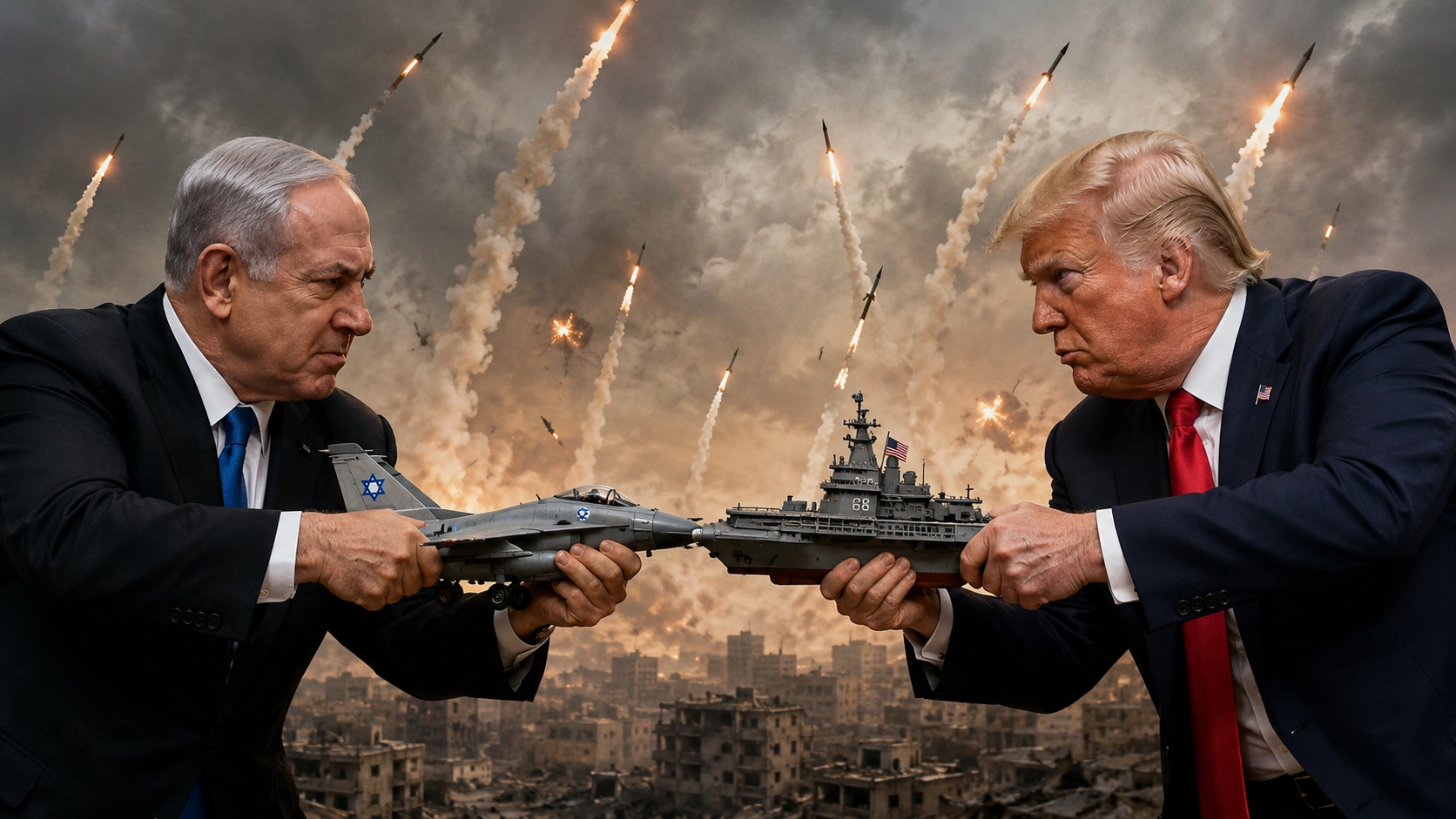
In this context, influencing the exposure of divergent interests between Washington and Tel Aviv is of great significance as one of Tehran’s most successful diplomatic and security maneuvers on the international stage. This has not only targeted the apparent cohesion of anti-Iranian coalitions, but has also exposed the inherent contradictions in the strategic ties between the United States and the Israeli regime.
Prominent international relations analysts believe that Tehran, through precise calculation of risk and opportunity, has managed to manage the costs of US intervention in such a way that hidden fractures in this alliance have turned into visible fault lines.
The central core of the Islamic Republic of Iran’s strategy is based on the principle that the United States’ national interests and the expansionist goals of the Israeli regime do not completely overlap. Tehran has been able to convey to Washington that any unconditional US support for Tel Aviv’s provocative actions will directly endanger the security of US forces and economic interests. Analyses published by reputable Western think tanks, including the Quincy Institute, confirm that there exists a deep rift in the geostrategic interests of these two regimes.
According to these analyses, the pressures of Zionist lobbies can no longer conceal the field realities and the growing divergence between the United States’ national interests and those of the Israeli regime. The more the Israeli regime attempts to draw the United States into deeper involvement in West Asia, the more the inclination of American public opinion and political elites to reconsider this special relationship increases.
This new dynamic allows Iran to raise the political and economic costs of Washington’s alignment with Netanyahu’s warmongering to an unprecedented level, without engaging in a full-scale direct confrontation with the global superpower.
Rising domestic costs of warmongering for the White House
Unlimited military and financial support for the Israeli regime, once a bipartisan consensus in the US Congress, has now become one of the most contentious issues in the country’s domestic politics.
Analytical reports published in media outlets close to the Israeli regime’s security institutions, such as the JINSA Institute, explicitly acknowledge that the recent congressional vote on military aid to this regime has revealed a deep rift among representatives, particularly among Democrats.
More than half of Democratic representatives in the US House of Representatives voted against providing military funding for Israel. This shift in stance is rooted in the growing understanding among American politicians that endless wars in West Asia only serve to weaken Washington’s global influence and impose heavy economic burdens on American taxpayers.
The Strait of Hormuz pressure lever and active deterrence
Alongside diplomatic and political dimensions, the Islamic Republic of Iran also skillfully exploits its geoeconomic levers. The Strait of Hormuz, as the world’s vital energy artery, has always been one of Iran’s most decisive pieces on the geopolitical chessboard.
Strategic analyses indicate that Tehran’s primary priority in recent conflicts has been to demonstrate authority and effective control over this vital waterway, rather than engaging in a full-scale war that might be defined within the framework of the Israeli regime’s demands.
By adopting precise and targeted security measures against shipping in the region, Iran warns any actor that seeks to challenge Iran’s control over the Persian Gulf. This approach allows Iran to maintain full control over its leverage points without accepting the political burden of unequal negotiations.
Tehran is well aware that the continuation of this situation places the White House in a difficult dilemma between preserving global credibility and preventing a new economic crisis in energy markets.
The collapse of the security logic of regional pacts
The implications of Iran’s intelligent strategy extend beyond the bilateral relationship between Washington and Tel Aviv and have overshadowed the structure of regional normalization pacts. The Abraham Accords, once touted by the West as a major achievement for West Asian stability, are now facing serious existential challenges.
The Israeli regime’s warmongering and its efforts to drag the United States into a broader conflict with Iran have destroyed the strategic logic of these agreements. The Persian Gulf countries, which once sought security guarantees through alliance with the Israeli regime, have now come to understand that such pacts not only fail to create sustainable security, but also place them on the front lines of proxy and direct conflicts.
The divergence of interests between regional Arab countries and the Israeli regime has become clearly apparent. These countries have realized that normalizing relations with Tel Aviv without fundamentally resolving regional issues and ignoring the pivotal role of the Islamic Republic of Iran will only lead to greater instability. Thus, Iran has succeeded, through demonstrating power and stability, in imposing new security equations in which no sustainable security arrangement is conceivable without Tehran’s participation and consent.
Tehran’s approach has raised the costs of US alignment with the Israeli regime’s warmongering to a level where its continuation has become unbearable for Washington. This is not only the result of Iran’s military power and deterrence, but is also rooted in Tehran’s profound understanding of geopolitical developments and inherent rifts in the opposing camp. The future of international relations in West Asia indicates that any attempt to form anti-Iranian coalitions without considering the Islamic Republic of Iran’s national interests and the field realities of the region is doomed to failure.
Iran is advancing with full authority on the path of preserving its achievements and imposing its logical will upon regional equations, and this will usher in a new chapter in the balance of power in West Asia.








0 Comments