An Analysis of the Makkah Defense Pact
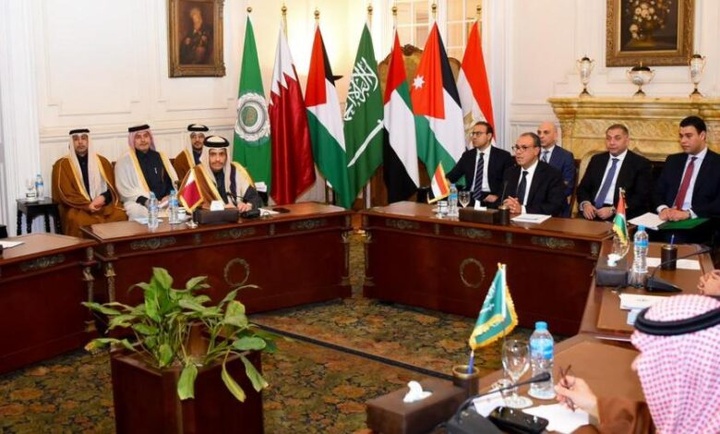
SCFR Online – Opinion: On Friday, August 7, the heads of state of three countries – Saudi Arabia, Turkey, and Pakistan – signed a text under the title “Makkah Joint Defense Agreement.”
Strategic Council Online – Note: The initiative to revive the Hejaz Railway, beyond being a transportation project, constitutes an attempt to redefine geopolitics, the economy, and Turkey’s regional position; however, its realization appears to face significant financial, security, and institutional challenges.
SCFR Online – Opinion: The Strait of Hormuz crisis is no longer merely the consequence of a military confrontation, but rather a sign of the transition from the US-centered maritime order to a new energy security structure involving the participation of emerging and influential powers.
SCFR Online – Opinion: Iran’s active deterrence strategy, while increasing the costs of US intervention, has increasingly exposed the hidden rifts between Washington’s interests and those of the Israeli regime.
SCFR Online – Opinion: The escalation of verbal and strategic tensions between Turkey and the Israeli regime, although not increasing the likelihood of direct war, indicates the formation of a new order in West Asian geopolitical rivalries.
Strategic Council Online – Note: Recent developments in the political geography of West Asia, from rising tensions in the Persian Gulf to missile and drone activities in the Red Sea and the recent warning by Kaja Kallas, the European Union’s foreign policy chief, regarding the threat to freedom of navigation, indicate a key pattern shift; the US-Iran war has moved beyond the scope of a regional and local confrontation and has linked two vital passageways for the global economy: the Strait of Hormuz and the Bab el-Mandeb Strait.
SCFR Online – Opinion: The Ukraine war was not merely a European crisis, but rather the starting point for the rearrangement of the global balance of power and a shift in the strategic behavior of great powers.
SCFR Online – Opinion: Great power competition is now pursued more in trade, currency, technology, and global supply chains than on the battlefields of military confrontation.
Strategic Council Online – Opinion: The Trump administration continues to insist on its plan to clear Gaza of its indigenous population. Given the knowledge and experience of the resistance of the people of Gaza and Palestine, it is already clear that Trump’s plan will ultimately lead nowhere. Global reactions, especially in the region and among Arab and Islamic countries, have presented serious challenges to the advancement of Trump’s plan.
Strategic Council Online–Opinion: The positions of the Arab countries on the developments in Syria can be divided into three groups.
Strategic Council Online – Opinion: One of the most important issues raised during Amir Abdollahian’s trip to the coastal states of the Persian Gulf a few months ago was the formation of a joint mechanism called “Dialogue and Cooperation Assembly” for negotiation and cooperation with the presence of all countries in the Persian Gulf region.
Barsam Mohammadi – Expert on regional affairs
Strategic Council Online – Opinion: Under circumstances that the Zionist regime is in a difficult situation in terms of security, political, economic, social … issues which, as admitted by the leaders of that regime, has been unprecedented in the past 75 years, we are witnessing actions taken by certain important Arab states, including Iraq, for confronting the strategy of normalization of the Zionist regime’s relations with Arab and Islamic countries.
Hamid Khoshayand – Expert on regional affairs
Strategic Council Online – The widespread reactions of the political authorities and the nations of the region to the signing of the plan to normalize relations between the UAE, Bahrain, Sudan and Morocco with the Zionist regime in the closing months of 2020, in fact brought the future of this plan under question and raised this question that whether this normalization is a mere show and a ceremonial move, or in reality a strategic and sustained effort on the path of making peace between the Arabs and Israel.
Kourosh Salehi – International affairs analyst
Strategic Council Online – A university professor, referring to the cold relations between Pakistan and Arab countries in the Persian Gulf, said: Imran Khan’s government is trying to develop its relations with countries in the region and play an active role in de-escalating some of the tensions, but politicians of that country should be capable of balancing their relations with important countries.
Strategic Council Online: Editorial—The Security Council of the United Nations, having passed four UN resolutions in the primary years of the 1990s, has delegated the issue of the return of peace to Karabakh to regional organizations in particular to the Organization for Security and Co-operation in Europe (OSCE). In 1992, the Organization for Security and Co-operation in Europe set up a mechanism under the title of the “Minsk Group”, comprising of nine countries, to deal with the settlement of the issue. The Minsk Group is currently chaired by the United States, Russia and France. Even though the Minsk Group managed to organize a ceasefire between the Republic of Azerbaijan and Armenia in Bishkek on 12 May 1994, it has failed during the past recent years to completely resolve the Karabakh dispute. Given the occurrence of two consecutive military confrontations since the beginning of 2020 with numerous dimensions, the issue of the performance and effectiveness of the Minsk Group is once again placed at the centre of the world’s attention.
Dr Shoayb Bahman, Expert of Russia affairs
Strategic Council Online – An expert on West Asian affairs said that what the Americans are saying in terms of achieving their goals or changing the course of peace in the Middle East is more propaganda and media feed, adding “The Arab states of the Persian Gulf have considerations and they know that this action will have serious consequences for them.”
Strategic Council Online: An expert on political economy said that until now the treasury of the Persian Gulf Arab states was the unofficial treasury of the Americans, adding that this type of funding will practically be cut with the falling oil prices because the Arab states themselves are faced with budget deficits and cannot afford supporting US terrorist schemes in the region.
Strategic Council Online: An expert on Middle East affairs said that the beginning of the distortion of the name of the Persian Gulf is associated with the phenomenon of colonialism. “Certain Persian Gulf states and some other Arab countries in the region are still trying to change the name of the Persian Gulf by bribing some Arab and international media, but using a fake name will never overshadow the historical facts.
SCFR Online – Opinion: On Friday, August 7, the heads of state of three countries – Saudi Arabia, Turkey, and Pakistan – signed a text under the title “Makkah Joint Defense Agreement.”
Strategic Council Online – Note: The initiative to revive the Hejaz Railway, beyond being a transportation project, constitutes an attempt to redefine geopolitics, the economy, and Turkey’s regional position; however, its realization appears to face significant financial, security, and institutional challenges.
SCFR Online – Opinion: The Strait of Hormuz crisis is no longer merely the consequence of a military confrontation, but rather a sign of the transition from the US-centered maritime order to a new energy security structure involving the participation of emerging and influential powers.
SCFR Online – Opinion: Iran’s active deterrence strategy, while increasing the costs of US intervention, has increasingly exposed the hidden rifts between Washington’s interests and those of the Israeli regime.
SCFR Online – Opinion: The escalation of verbal and strategic tensions between Turkey and the Israeli regime, although not increasing the likelihood of direct war, indicates the formation of a new order in West Asian geopolitical rivalries.
Strategic Council Online – Note: Recent developments in the political geography of West Asia, from rising tensions in the Persian Gulf to missile and drone activities in the Red Sea and the recent warning by Kaja Kallas, the European Union’s foreign policy chief, regarding the threat to freedom of navigation, indicate a key pattern shift; the US-Iran war has moved beyond the scope of a regional and local confrontation and has linked two vital passageways for the global economy: the Strait of Hormuz and the Bab el-Mandeb Strait.
SCFR Online – Opinion: The Ukraine war was not merely a European crisis, but rather the starting point for the rearrangement of the global balance of power and a shift in the strategic behavior of great powers.
SCFR Online – Opinion: Great power competition is now pursued more in trade, currency, technology, and global supply chains than on the battlefields of military confrontation.
Strategic Council Online – Opinion: The Trump administration continues to insist on its plan to clear Gaza of its indigenous population. Given the knowledge and experience of the resistance of the people of Gaza and Palestine, it is already clear that Trump’s plan will ultimately lead nowhere. Global reactions, especially in the region and among Arab and Islamic countries, have presented serious challenges to the advancement of Trump’s plan.
Strategic Council Online–Opinion: The positions of the Arab countries on the developments in Syria can be divided into three groups.
Strategic Council Online – Opinion: One of the most important issues raised during Amir Abdollahian’s trip to the coastal states of the Persian Gulf a few months ago was the formation of a joint mechanism called “Dialogue and Cooperation Assembly” for negotiation and cooperation with the presence of all countries in the Persian Gulf region.
Barsam Mohammadi – Expert on regional affairs
Strategic Council Online – Opinion: Under circumstances that the Zionist regime is in a difficult situation in terms of security, political, economic, social … issues which, as admitted by the leaders of that regime, has been unprecedented in the past 75 years, we are witnessing actions taken by certain important Arab states, including Iraq, for confronting the strategy of normalization of the Zionist regime’s relations with Arab and Islamic countries.
Hamid Khoshayand – Expert on regional affairs
Strategic Council Online – The widespread reactions of the political authorities and the nations of the region to the signing of the plan to normalize relations between the UAE, Bahrain, Sudan and Morocco with the Zionist regime in the closing months of 2020, in fact brought the future of this plan under question and raised this question that whether this normalization is a mere show and a ceremonial move, or in reality a strategic and sustained effort on the path of making peace between the Arabs and Israel.
Kourosh Salehi – International affairs analyst
Strategic Council Online – A university professor, referring to the cold relations between Pakistan and Arab countries in the Persian Gulf, said: Imran Khan’s government is trying to develop its relations with countries in the region and play an active role in de-escalating some of the tensions, but politicians of that country should be capable of balancing their relations with important countries.
Strategic Council Online: Editorial—The Security Council of the United Nations, having passed four UN resolutions in the primary years of the 1990s, has delegated the issue of the return of peace to Karabakh to regional organizations in particular to the Organization for Security and Co-operation in Europe (OSCE). In 1992, the Organization for Security and Co-operation in Europe set up a mechanism under the title of the “Minsk Group”, comprising of nine countries, to deal with the settlement of the issue. The Minsk Group is currently chaired by the United States, Russia and France. Even though the Minsk Group managed to organize a ceasefire between the Republic of Azerbaijan and Armenia in Bishkek on 12 May 1994, it has failed during the past recent years to completely resolve the Karabakh dispute. Given the occurrence of two consecutive military confrontations since the beginning of 2020 with numerous dimensions, the issue of the performance and effectiveness of the Minsk Group is once again placed at the centre of the world’s attention.
Dr Shoayb Bahman, Expert of Russia affairs
Strategic Council Online – An expert on West Asian affairs said that what the Americans are saying in terms of achieving their goals or changing the course of peace in the Middle East is more propaganda and media feed, adding “The Arab states of the Persian Gulf have considerations and they know that this action will have serious consequences for them.”
Strategic Council Online: An expert on political economy said that until now the treasury of the Persian Gulf Arab states was the unofficial treasury of the Americans, adding that this type of funding will practically be cut with the falling oil prices because the Arab states themselves are faced with budget deficits and cannot afford supporting US terrorist schemes in the region.
Strategic Council Online: An expert on Middle East affairs said that the beginning of the distortion of the name of the Persian Gulf is associated with the phenomenon of colonialism. “Certain Persian Gulf states and some other Arab countries in the region are still trying to change the name of the Persian Gulf by bribing some Arab and international media, but using a fake name will never overshadow the historical facts.
Strategic Council Online – Opinion: The Trump administration continues to insist on its plan to clear Gaza of its indigenous population. Given the knowledge and experience of the resistance of the people of Gaza and Palestine, it is already clear that Trump’s plan will ultimately lead nowhere. Global reactions, especially in the region and among Arab and Islamic countries, have presented serious challenges to the advancement of Trump’s plan.
Strategic Council Online–Opinion: The positions of the Arab countries on the developments in Syria can be divided into three groups.
Strategic Council Online – Opinion: One of the most important issues raised during Amir Abdollahian’s trip to the coastal states of the Persian Gulf a few months ago was the formation of a joint mechanism called “Dialogue and Cooperation Assembly” for negotiation and cooperation with the presence of all countries in the Persian Gulf region.
Barsam Mohammadi – Expert on regional affairs
Strategic Council Online – Opinion: Under circumstances that the Zionist regime is in a difficult situation in terms of security, political, economic, social … issues which, as admitted by the leaders of that regime, has been unprecedented in the past 75 years, we are witnessing actions taken by certain important Arab states, including Iraq, for confronting the strategy of normalization of the Zionist regime’s relations with Arab and Islamic countries.
Hamid Khoshayand – Expert on regional affairs
Strategic Council Online – The widespread reactions of the political authorities and the nations of the region to the signing of the plan to normalize relations between the UAE, Bahrain, Sudan and Morocco with the Zionist regime in the closing months of 2020, in fact brought the future of this plan under question and raised this question that whether this normalization is a mere show and a ceremonial move, or in reality a strategic and sustained effort on the path of making peace between the Arabs and Israel.
Kourosh Salehi – International affairs analyst
Strategic Council Online – A university professor, referring to the cold relations between Pakistan and Arab countries in the Persian Gulf, said: Imran Khan’s government is trying to develop its relations with countries in the region and play an active role in de-escalating some of the tensions, but politicians of that country should be capable of balancing their relations with important countries.
Strategic Council Online: Editorial—The Security Council of the United Nations, having passed four UN resolutions in the primary years of the 1990s, has delegated the issue of the return of peace to Karabakh to regional organizations in particular to the Organization for Security and Co-operation in Europe (OSCE). In 1992, the Organization for Security and Co-operation in Europe set up a mechanism under the title of the “Minsk Group”, comprising of nine countries, to deal with the settlement of the issue. The Minsk Group is currently chaired by the United States, Russia and France. Even though the Minsk Group managed to organize a ceasefire between the Republic of Azerbaijan and Armenia in Bishkek on 12 May 1994, it has failed during the past recent years to completely resolve the Karabakh dispute. Given the occurrence of two consecutive military confrontations since the beginning of 2020 with numerous dimensions, the issue of the performance and effectiveness of the Minsk Group is once again placed at the centre of the world’s attention.
Dr Shoayb Bahman, Expert of Russia affairs
Strategic Council Online – An expert on West Asian affairs said that what the Americans are saying in terms of achieving their goals or changing the course of peace in the Middle East is more propaganda and media feed, adding “The Arab states of the Persian Gulf have considerations and they know that this action will have serious consequences for them.”
Strategic Council Online: An expert on political economy said that until now the treasury of the Persian Gulf Arab states was the unofficial treasury of the Americans, adding that this type of funding will practically be cut with the falling oil prices because the Arab states themselves are faced with budget deficits and cannot afford supporting US terrorist schemes in the region.
Strategic Council Online: An expert on Middle East affairs said that the beginning of the distortion of the name of the Persian Gulf is associated with the phenomenon of colonialism. “Certain Persian Gulf states and some other Arab countries in the region are still trying to change the name of the Persian Gulf by bribing some Arab and international media, but using a fake name will never overshadow the historical facts.
SCFR Online – Opinion: On Friday, August 7, the heads of state of three countries – Saudi Arabia, Turkey, and Pakistan – signed a text under the title “Makkah Joint Defense Agreement.”
Strategic Council Online – Note: The initiative to revive the Hejaz Railway, beyond being a transportation project, constitutes an attempt to redefine geopolitics, the economy, and Turkey’s regional position; however, its realization appears to face significant financial, security, and institutional challenges.
SCFR Online – Opinion: The Strait of Hormuz crisis is no longer merely the consequence of a military confrontation, but rather a sign of the transition from the US-centered maritime order to a new energy security structure involving the participation of emerging and influential powers.
SCFR Online – Opinion: Iran’s active deterrence strategy, while increasing the costs of US intervention, has increasingly exposed the hidden rifts between Washington’s interests and those of the Israeli regime.
SCFR Online – Opinion: The escalation of verbal and strategic tensions between Turkey and the Israeli regime, although not increasing the likelihood of direct war, indicates the formation of a new order in West Asian geopolitical rivalries.
Strategic Council Online – Note: Recent developments in the political geography of West Asia, from rising tensions in the Persian Gulf to missile and drone activities in the Red Sea and the recent warning by Kaja Kallas, the European Union’s foreign policy chief, regarding the threat to freedom of navigation, indicate a key pattern shift; the US-Iran war has moved beyond the scope of a regional and local confrontation and has linked two vital passageways for the global economy: the Strait of Hormuz and the Bab el-Mandeb Strait.
SCFR Online – Opinion: The Ukraine war was not merely a European crisis, but rather the starting point for the rearrangement of the global balance of power and a shift in the strategic behavior of great powers.
SCFR Online – Opinion: Great power competition is now pursued more in trade, currency, technology, and global supply chains than on the battlefields of military confrontation.
Strategic Council Online – Opinion: The Trump administration continues to insist on its plan to clear Gaza of its indigenous population. Given the knowledge and experience of the resistance of the people of Gaza and Palestine, it is already clear that Trump’s plan will ultimately lead nowhere. Global reactions, especially in the region and among Arab and Islamic countries, have presented serious challenges to the advancement of Trump’s plan.
Strategic Council Online–Opinion: The positions of the Arab countries on the developments in Syria can be divided into three groups.
Strategic Council Online – Opinion: One of the most important issues raised during Amir Abdollahian’s trip to the coastal states of the Persian Gulf a few months ago was the formation of a joint mechanism called “Dialogue and Cooperation Assembly” for negotiation and cooperation with the presence of all countries in the Persian Gulf region.
Barsam Mohammadi – Expert on regional affairs
Strategic Council Online – Opinion: Under circumstances that the Zionist regime is in a difficult situation in terms of security, political, economic, social … issues which, as admitted by the leaders of that regime, has been unprecedented in the past 75 years, we are witnessing actions taken by certain important Arab states, including Iraq, for confronting the strategy of normalization of the Zionist regime’s relations with Arab and Islamic countries.
Hamid Khoshayand – Expert on regional affairs
Strategic Council Online – The widespread reactions of the political authorities and the nations of the region to the signing of the plan to normalize relations between the UAE, Bahrain, Sudan and Morocco with the Zionist regime in the closing months of 2020, in fact brought the future of this plan under question and raised this question that whether this normalization is a mere show and a ceremonial move, or in reality a strategic and sustained effort on the path of making peace between the Arabs and Israel.
Kourosh Salehi – International affairs analyst
Strategic Council Online – A university professor, referring to the cold relations between Pakistan and Arab countries in the Persian Gulf, said: Imran Khan’s government is trying to develop its relations with countries in the region and play an active role in de-escalating some of the tensions, but politicians of that country should be capable of balancing their relations with important countries.
Strategic Council Online: Editorial—The Security Council of the United Nations, having passed four UN resolutions in the primary years of the 1990s, has delegated the issue of the return of peace to Karabakh to regional organizations in particular to the Organization for Security and Co-operation in Europe (OSCE). In 1992, the Organization for Security and Co-operation in Europe set up a mechanism under the title of the “Minsk Group”, comprising of nine countries, to deal with the settlement of the issue. The Minsk Group is currently chaired by the United States, Russia and France. Even though the Minsk Group managed to organize a ceasefire between the Republic of Azerbaijan and Armenia in Bishkek on 12 May 1994, it has failed during the past recent years to completely resolve the Karabakh dispute. Given the occurrence of two consecutive military confrontations since the beginning of 2020 with numerous dimensions, the issue of the performance and effectiveness of the Minsk Group is once again placed at the centre of the world’s attention.
Dr Shoayb Bahman, Expert of Russia affairs
Strategic Council Online – An expert on West Asian affairs said that what the Americans are saying in terms of achieving their goals or changing the course of peace in the Middle East is more propaganda and media feed, adding “The Arab states of the Persian Gulf have considerations and they know that this action will have serious consequences for them.”
Strategic Council Online: An expert on political economy said that until now the treasury of the Persian Gulf Arab states was the unofficial treasury of the Americans, adding that this type of funding will practically be cut with the falling oil prices because the Arab states themselves are faced with budget deficits and cannot afford supporting US terrorist schemes in the region.
Strategic Council Online: An expert on Middle East affairs said that the beginning of the distortion of the name of the Persian Gulf is associated with the phenomenon of colonialism. “Certain Persian Gulf states and some other Arab countries in the region are still trying to change the name of the Persian Gulf by bribing some Arab and international media, but using a fake name will never overshadow the historical facts.
SCFR Online – Opinion: On Friday, August 7, the heads of state of three countries – Saudi Arabia, Turkey, and Pakistan – signed a text under the title “Makkah Joint Defense Agreement.”
Strategic Council Online – Note: The initiative to revive the Hejaz Railway, beyond being a transportation project, constitutes an attempt to redefine geopolitics, the economy, and Turkey’s regional position; however, its realization appears to face significant financial, security, and institutional challenges.
SCFR Online – Opinion: The Strait of Hormuz crisis is no longer merely the consequence of a military confrontation, but rather a sign of the transition from the US-centered maritime order to a new energy security structure involving the participation of emerging and influential powers.
SCFR Online – Opinion: Iran’s active deterrence strategy, while increasing the costs of US intervention, has increasingly exposed the hidden rifts between Washington’s interests and those of the Israeli regime.
SCFR Online – Opinion: The escalation of verbal and strategic tensions between Turkey and the Israeli regime, although not increasing the likelihood of direct war, indicates the formation of a new order in West Asian geopolitical rivalries.
Strategic Council Online – Note: Recent developments in the political geography of West Asia, from rising tensions in the Persian Gulf to missile and drone activities in the Red Sea and the recent warning by Kaja Kallas, the European Union’s foreign policy chief, regarding the threat to freedom of navigation, indicate a key pattern shift; the US-Iran war has moved beyond the scope of a regional and local confrontation and has linked two vital passageways for the global economy: the Strait of Hormuz and the Bab el-Mandeb Strait.
SCFR Online – Opinion: The Ukraine war was not merely a European crisis, but rather the starting point for the rearrangement of the global balance of power and a shift in the strategic behavior of great powers.
SCFR Online – Opinion: Great power competition is now pursued more in trade, currency, technology, and global supply chains than on the battlefields of military confrontation.
Strategic Council Online – Opinion: The Trump administration continues to insist on its plan to clear Gaza of its indigenous population. Given the knowledge and experience of the resistance of the people of Gaza and Palestine, it is already clear that Trump’s plan will ultimately lead nowhere. Global reactions, especially in the region and among Arab and Islamic countries, have presented serious challenges to the advancement of Trump’s plan.
Strategic Council Online–Opinion: The positions of the Arab countries on the developments in Syria can be divided into three groups.
Strategic Council Online – Opinion: One of the most important issues raised during Amir Abdollahian’s trip to the coastal states of the Persian Gulf a few months ago was the formation of a joint mechanism called “Dialogue and Cooperation Assembly” for negotiation and cooperation with the presence of all countries in the Persian Gulf region.
Barsam Mohammadi – Expert on regional affairs
Strategic Council Online – Opinion: Under circumstances that the Zionist regime is in a difficult situation in terms of security, political, economic, social … issues which, as admitted by the leaders of that regime, has been unprecedented in the past 75 years, we are witnessing actions taken by certain important Arab states, including Iraq, for confronting the strategy of normalization of the Zionist regime’s relations with Arab and Islamic countries.
Hamid Khoshayand – Expert on regional affairs
Strategic Council Online – The widespread reactions of the political authorities and the nations of the region to the signing of the plan to normalize relations between the UAE, Bahrain, Sudan and Morocco with the Zionist regime in the closing months of 2020, in fact brought the future of this plan under question and raised this question that whether this normalization is a mere show and a ceremonial move, or in reality a strategic and sustained effort on the path of making peace between the Arabs and Israel.
Kourosh Salehi – International affairs analyst
Strategic Council Online – A university professor, referring to the cold relations between Pakistan and Arab countries in the Persian Gulf, said: Imran Khan’s government is trying to develop its relations with countries in the region and play an active role in de-escalating some of the tensions, but politicians of that country should be capable of balancing their relations with important countries.
Strategic Council Online: Editorial—The Security Council of the United Nations, having passed four UN resolutions in the primary years of the 1990s, has delegated the issue of the return of peace to Karabakh to regional organizations in particular to the Organization for Security and Co-operation in Europe (OSCE). In 1992, the Organization for Security and Co-operation in Europe set up a mechanism under the title of the “Minsk Group”, comprising of nine countries, to deal with the settlement of the issue. The Minsk Group is currently chaired by the United States, Russia and France. Even though the Minsk Group managed to organize a ceasefire between the Republic of Azerbaijan and Armenia in Bishkek on 12 May 1994, it has failed during the past recent years to completely resolve the Karabakh dispute. Given the occurrence of two consecutive military confrontations since the beginning of 2020 with numerous dimensions, the issue of the performance and effectiveness of the Minsk Group is once again placed at the centre of the world’s attention.
Dr Shoayb Bahman, Expert of Russia affairs
Strategic Council Online – An expert on West Asian affairs said that what the Americans are saying in terms of achieving their goals or changing the course of peace in the Middle East is more propaganda and media feed, adding “The Arab states of the Persian Gulf have considerations and they know that this action will have serious consequences for them.”
Strategic Council Online: An expert on political economy said that until now the treasury of the Persian Gulf Arab states was the unofficial treasury of the Americans, adding that this type of funding will practically be cut with the falling oil prices because the Arab states themselves are faced with budget deficits and cannot afford supporting US terrorist schemes in the region.
Strategic Council Online: An expert on Middle East affairs said that the beginning of the distortion of the name of the Persian Gulf is associated with the phenomenon of colonialism. “Certain Persian Gulf states and some other Arab countries in the region are still trying to change the name of the Persian Gulf by bribing some Arab and international media, but using a fake name will never overshadow the historical facts.
SCFR Online – Opinion: On Friday, August 7, the heads of state of three countries – Saudi Arabia, Turkey, and Pakistan – signed a text under the title “Makkah Joint Defense Agreement.”
Strategic Council Online – Note: The initiative to revive the Hejaz Railway, beyond being a transportation project, constitutes an attempt to redefine geopolitics, the economy, and Turkey’s regional position; however, its realization appears to face significant financial, security, and institutional challenges.
SCFR Online – Opinion: The Strait of Hormuz crisis is no longer merely the consequence of a military confrontation, but rather a sign of the transition from the US-centered maritime order to a new energy security structure involving the participation of emerging and influential powers.
SCFR Online – Opinion: Iran’s active deterrence strategy, while increasing the costs of US intervention, has increasingly exposed the hidden rifts between Washington’s interests and those of the Israeli regime.
SCFR Online – Opinion: The escalation of verbal and strategic tensions between Turkey and the Israeli regime, although not increasing the likelihood of direct war, indicates the formation of a new order in West Asian geopolitical rivalries.
Strategic Council Online – Note: Recent developments in the political geography of West Asia, from rising tensions in the Persian Gulf to missile and drone activities in the Red Sea and the recent warning by Kaja Kallas, the European Union’s foreign policy chief, regarding the threat to freedom of navigation, indicate a key pattern shift; the US-Iran war has moved beyond the scope of a regional and local confrontation and has linked two vital passageways for the global economy: the Strait of Hormuz and the Bab el-Mandeb Strait.
SCFR Online – Opinion: The Ukraine war was not merely a European crisis, but rather the starting point for the rearrangement of the global balance of power and a shift in the strategic behavior of great powers.
SCFR Online – Opinion: Great power competition is now pursued more in trade, currency, technology, and global supply chains than on the battlefields of military confrontation.
Strategic Council Online – Opinion: The Trump administration continues to insist on its plan to clear Gaza of its indigenous population. Given the knowledge and experience of the resistance of the people of Gaza and Palestine, it is already clear that Trump’s plan will ultimately lead nowhere. Global reactions, especially in the region and among Arab and Islamic countries, have presented serious challenges to the advancement of Trump’s plan.
Strategic Council Online–Opinion: The positions of the Arab countries on the developments in Syria can be divided into three groups.
Strategic Council Online – Opinion: One of the most important issues raised during Amir Abdollahian’s trip to the coastal states of the Persian Gulf a few months ago was the formation of a joint mechanism called “Dialogue and Cooperation Assembly” for negotiation and cooperation with the presence of all countries in the Persian Gulf region.
Barsam Mohammadi – Expert on regional affairs
Strategic Council Online – Opinion: Under circumstances that the Zionist regime is in a difficult situation in terms of security, political, economic, social … issues which, as admitted by the leaders of that regime, has been unprecedented in the past 75 years, we are witnessing actions taken by certain important Arab states, including Iraq, for confronting the strategy of normalization of the Zionist regime’s relations with Arab and Islamic countries.
Hamid Khoshayand – Expert on regional affairs
Strategic Council Online – The widespread reactions of the political authorities and the nations of the region to the signing of the plan to normalize relations between the UAE, Bahrain, Sudan and Morocco with the Zionist regime in the closing months of 2020, in fact brought the future of this plan under question and raised this question that whether this normalization is a mere show and a ceremonial move, or in reality a strategic and sustained effort on the path of making peace between the Arabs and Israel.
Kourosh Salehi – International affairs analyst
Strategic Council Online – A university professor, referring to the cold relations between Pakistan and Arab countries in the Persian Gulf, said: Imran Khan’s government is trying to develop its relations with countries in the region and play an active role in de-escalating some of the tensions, but politicians of that country should be capable of balancing their relations with important countries.
Strategic Council Online: Editorial—The Security Council of the United Nations, having passed four UN resolutions in the primary years of the 1990s, has delegated the issue of the return of peace to Karabakh to regional organizations in particular to the Organization for Security and Co-operation in Europe (OSCE). In 1992, the Organization for Security and Co-operation in Europe set up a mechanism under the title of the “Minsk Group”, comprising of nine countries, to deal with the settlement of the issue. The Minsk Group is currently chaired by the United States, Russia and France. Even though the Minsk Group managed to organize a ceasefire between the Republic of Azerbaijan and Armenia in Bishkek on 12 May 1994, it has failed during the past recent years to completely resolve the Karabakh dispute. Given the occurrence of two consecutive military confrontations since the beginning of 2020 with numerous dimensions, the issue of the performance and effectiveness of the Minsk Group is once again placed at the centre of the world’s attention.
Dr Shoayb Bahman, Expert of Russia affairs
Strategic Council Online – An expert on West Asian affairs said that what the Americans are saying in terms of achieving their goals or changing the course of peace in the Middle East is more propaganda and media feed, adding “The Arab states of the Persian Gulf have considerations and they know that this action will have serious consequences for them.”
Strategic Council Online: An expert on political economy said that until now the treasury of the Persian Gulf Arab states was the unofficial treasury of the Americans, adding that this type of funding will practically be cut with the falling oil prices because the Arab states themselves are faced with budget deficits and cannot afford supporting US terrorist schemes in the region.
Strategic Council Online: An expert on Middle East affairs said that the beginning of the distortion of the name of the Persian Gulf is associated with the phenomenon of colonialism. “Certain Persian Gulf states and some other Arab countries in the region are still trying to change the name of the Persian Gulf by bribing some Arab and international media, but using a fake name will never overshadow the historical facts.
SCFR Online – Opinion: On Friday, August 7, the heads of state of three countries – Saudi Arabia, Turkey, and Pakistan – signed a text under the title “Makkah Joint Defense Agreement.”
Strategic Council Online – Note: The initiative to revive the Hejaz Railway, beyond being a transportation project, constitutes an attempt to redefine geopolitics, the economy, and Turkey’s regional position; however, its realization appears to face significant financial, security, and institutional challenges.
SCFR Online – Opinion: The Strait of Hormuz crisis is no longer merely the consequence of a military confrontation, but rather a sign of the transition from the US-centered maritime order to a new energy security structure involving the participation of emerging and influential powers.
SCFR Online – Opinion: Iran’s active deterrence strategy, while increasing the costs of US intervention, has increasingly exposed the hidden rifts between Washington’s interests and those of the Israeli regime.
SCFR Online – Opinion: The escalation of verbal and strategic tensions between Turkey and the Israeli regime, although not increasing the likelihood of direct war, indicates the formation of a new order in West Asian geopolitical rivalries.
Strategic Council Online – Note: Recent developments in the political geography of West Asia, from rising tensions in the Persian Gulf to missile and drone activities in the Red Sea and the recent warning by Kaja Kallas, the European Union’s foreign policy chief, regarding the threat to freedom of navigation, indicate a key pattern shift; the US-Iran war has moved beyond the scope of a regional and local confrontation and has linked two vital passageways for the global economy: the Strait of Hormuz and the Bab el-Mandeb Strait.
SCFR Online – Opinion: The Ukraine war was not merely a European crisis, but rather the starting point for the rearrangement of the global balance of power and a shift in the strategic behavior of great powers.
SCFR Online – Opinion: Great power competition is now pursued more in trade, currency, technology, and global supply chains than on the battlefields of military confrontation.
Strategic Council Online – Opinion: The Trump administration continues to insist on its plan to clear Gaza of its indigenous population. Given the knowledge and experience of the resistance of the people of Gaza and Palestine, it is already clear that Trump’s plan will ultimately lead nowhere. Global reactions, especially in the region and among Arab and Islamic countries, have presented serious challenges to the advancement of Trump’s plan.
Strategic Council Online–Opinion: The positions of the Arab countries on the developments in Syria can be divided into three groups.
Strategic Council Online – Opinion: One of the most important issues raised during Amir Abdollahian’s trip to the coastal states of the Persian Gulf a few months ago was the formation of a joint mechanism called “Dialogue and Cooperation Assembly” for negotiation and cooperation with the presence of all countries in the Persian Gulf region.
Barsam Mohammadi – Expert on regional affairs
Strategic Council Online – Opinion: Under circumstances that the Zionist regime is in a difficult situation in terms of security, political, economic, social … issues which, as admitted by the leaders of that regime, has been unprecedented in the past 75 years, we are witnessing actions taken by certain important Arab states, including Iraq, for confronting the strategy of normalization of the Zionist regime’s relations with Arab and Islamic countries.
Hamid Khoshayand – Expert on regional affairs
Strategic Council Online – The widespread reactions of the political authorities and the nations of the region to the signing of the plan to normalize relations between the UAE, Bahrain, Sudan and Morocco with the Zionist regime in the closing months of 2020, in fact brought the future of this plan under question and raised this question that whether this normalization is a mere show and a ceremonial move, or in reality a strategic and sustained effort on the path of making peace between the Arabs and Israel.
Kourosh Salehi – International affairs analyst
Strategic Council Online – A university professor, referring to the cold relations between Pakistan and Arab countries in the Persian Gulf, said: Imran Khan’s government is trying to develop its relations with countries in the region and play an active role in de-escalating some of the tensions, but politicians of that country should be capable of balancing their relations with important countries.
Strategic Council Online: Editorial—The Security Council of the United Nations, having passed four UN resolutions in the primary years of the 1990s, has delegated the issue of the return of peace to Karabakh to regional organizations in particular to the Organization for Security and Co-operation in Europe (OSCE). In 1992, the Organization for Security and Co-operation in Europe set up a mechanism under the title of the “Minsk Group”, comprising of nine countries, to deal with the settlement of the issue. The Minsk Group is currently chaired by the United States, Russia and France. Even though the Minsk Group managed to organize a ceasefire between the Republic of Azerbaijan and Armenia in Bishkek on 12 May 1994, it has failed during the past recent years to completely resolve the Karabakh dispute. Given the occurrence of two consecutive military confrontations since the beginning of 2020 with numerous dimensions, the issue of the performance and effectiveness of the Minsk Group is once again placed at the centre of the world’s attention.
Dr Shoayb Bahman, Expert of Russia affairs
Strategic Council Online – An expert on West Asian affairs said that what the Americans are saying in terms of achieving their goals or changing the course of peace in the Middle East is more propaganda and media feed, adding “The Arab states of the Persian Gulf have considerations and they know that this action will have serious consequences for them.”
Strategic Council Online: An expert on political economy said that until now the treasury of the Persian Gulf Arab states was the unofficial treasury of the Americans, adding that this type of funding will practically be cut with the falling oil prices because the Arab states themselves are faced with budget deficits and cannot afford supporting US terrorist schemes in the region.
Strategic Council Online: An expert on Middle East affairs said that the beginning of the distortion of the name of the Persian Gulf is associated with the phenomenon of colonialism. “Certain Persian Gulf states and some other Arab countries in the region are still trying to change the name of the Persian Gulf by bribing some Arab and international media, but using a fake name will never overshadow the historical facts.
SCFR Online – Opinion: On Friday, August 7, the heads of state of three countries – Saudi Arabia, Turkey, and Pakistan – signed a text under the title “Makkah Joint Defense Agreement.”
Strategic Council Online – Note: The initiative to revive the Hejaz Railway, beyond being a transportation project, constitutes an attempt to redefine geopolitics, the economy, and Turkey’s regional position; however, its realization appears to face significant financial, security, and institutional challenges.
SCFR Online – Opinion: The Strait of Hormuz crisis is no longer merely the consequence of a military confrontation, but rather a sign of the transition from the US-centered maritime order to a new energy security structure involving the participation of emerging and influential powers.
SCFR Online – Opinion: Iran’s active deterrence strategy, while increasing the costs of US intervention, has increasingly exposed the hidden rifts between Washington’s interests and those of the Israeli regime.
SCFR Online – Opinion: The escalation of verbal and strategic tensions between Turkey and the Israeli regime, although not increasing the likelihood of direct war, indicates the formation of a new order in West Asian geopolitical rivalries.
Strategic Council Online – Note: Recent developments in the political geography of West Asia, from rising tensions in the Persian Gulf to missile and drone activities in the Red Sea and the recent warning by Kaja Kallas, the European Union’s foreign policy chief, regarding the threat to freedom of navigation, indicate a key pattern shift; the US-Iran war has moved beyond the scope of a regional and local confrontation and has linked two vital passageways for the global economy: the Strait of Hormuz and the Bab el-Mandeb Strait.
SCFR Online – Opinion: The Ukraine war was not merely a European crisis, but rather the starting point for the rearrangement of the global balance of power and a shift in the strategic behavior of great powers.
SCFR Online – Opinion: Great power competition is now pursued more in trade, currency, technology, and global supply chains than on the battlefields of military confrontation.