Normalization; a Cover for Advancing Racist Policies of Zionist Regime

2021/01/18 | Note, Politics, top news

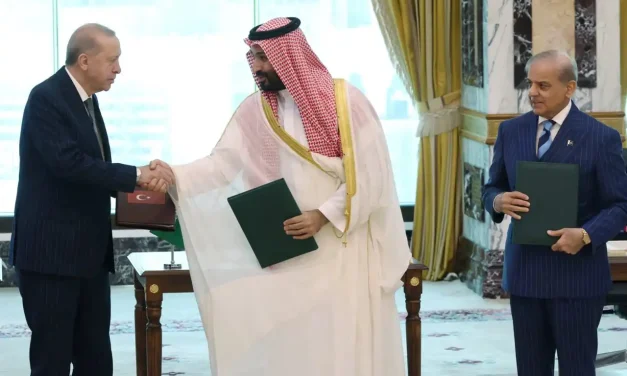
Strategic Council Online - The widespread reactions of the political authorities and the nations of the region to the signing of the plan to normalize relations between the UAE, Bahrain, Sudan and Morocco with the Zionist regime in the closing months of 2020, in fact brought the future of this plan under question and raised this question that whether this normalization is a mere show and a ceremonial move, or in reality a strategic and sustained effort on the path of making peace between the Arabs and Israel. Kourosh Salehi - International affairs analyst

On the other hand, Donald Trump’s efforts in the closing months of his presidency to maximize support for the normalization of relations between the Zionist regime and Arab states, with an aim of presenting an effective picture of US foreign policy, did not lead to his victory in the November 3, 2020 presidential elections.

Therefore, the proposition that the American people also assessed this agreement as a political show and refused to support the policies of their president has been reinforced. Now, the main question is whether the plan to normalize Israel’s relations with some Islamic Arab states really shows a substantial change or can it be considered as a strategic plan with political originality or it just  should be taken into consideration within the framework of a show and propaganda plan to maintain the positions of Trump and Netanyahu? Is it possible to talk about the normalization of Israel’s relations with other countries when Joe Biden comes to power in the United States? Or should we wait for the next developments in order to uphold the rights of the Palestinians? Has the Islamic world undergone a fundamental change in its relationship with the Zionist regime? Is the Zionist regime willing to give credit to the Arabs, contrary to its past political practice? Can the 70-year-old anti-Arabism of the political Zionists be forgotten in this new plan?

Responding to such questions could lead to a new explanation of the new developments in the long process of Arab-Israeli conflict. An issue that has not been resolved in the last 70 years since 1948. In this regard, we must either focus on the fundamental change of Israel towards the Arabs and Muslims, or change the Muslim rulers in the re-reading of their past positions. Has Netanyahu really undergone an ideological transformation? Have the Arab rulers suffered a substantive revolution? In order to correctly elucidate the current situation, the following propositions are presented, in order to be able to find out the truth of the issue to some extent.

  1. Lack of accompaniment and opposition of important and influential countries of the Islamic world such as the Islamic Republic of Iran, Turkey, Algeria, Syria, Lebanon and Iraq … Certainly, the issue of Palestine is considered as the prime issue of the Islamic world among governments and nations of Islamic countries, and therefore, the stance of influential Islamic countries cannot be ignored.
  2. The Palestinian government, as the plaintiff and the main party to the Zionist regime, has stated its opposition. Not only has the PA taken a negative stance on this issue, but all Islamic groups, such as Hamas and Islamic Jihad, agree with the government of Mahmoud Abbas.
  3. The agreement reached with countries such as Bahrain, the United Arab Emirates, Sudan and Morocco is confined to the level of political sovereignty and due to lack of civil society in those countries on the one hand and the creation of an atmosphere of pressure and repression on the other hand, it cannot be considered as a matter of normalization and the natural outcome of the will of the Arab people and government, but under the present circumstances it is merely a political agreement to gain concessions. In the meantime, reference can be made to the delivery of the US F-35 aircraft to the UAE or removal of the name of Sudan from the list of terrorist countries by the United States. The situation of the three countries that have so far signed an agreement to normalize relations with Israel also does not show a long-term perspective; because all the three countries, due to the political and monarchy structure, do not actually involve the will of their social and popular institutions in this decision-making. For this reason, in the long run, the popular will of those countries will not be accompanied by this decision of their rulers. For example, what opinion polls in Morocco show is that 70% do not welcome and do not agree with the normalization policy with Israel and on the contrary agree with accompaniment with the Palestinian people. What is clear from this opinion poll is that the majority of people have taken a clear and different position from the kingdom.
  4. What can be deduced from the historical components, considering the long history of the Zionist regime’s conflict with the Arabs from 1948 until today and the opposition of the Arab world and the Islamic world to Israel until today and the failure of any peace between them, is that this change of position and the sudden turn for normalization made by Israel, given the volatile situation of Netanyahu at the end of his term as prime minister, is aimed at escaping the crisis of legitimacy and internal acceptability, and is being assessed as the deception of public opinion.
  5. Since the countries involved in this normalization plan are not strategically necessary to influence the regional equations and are known as the “Tiny Arab States”, it can be said that those countries due to being in alliance with the United States and lack of an independent policy and the limits of influence on the equations of the region and the Islamic world are not considered as very effective.
  6. Lack of accompaniment of major world powers such as China, Russia and the European Union shows the political alignment of those countries with Trump’s policies in the West Asian region and the weakness of the agreement reached as a long-term and strategic deal.
  7. Attempts of the Zionist regime to implement this agreement with some small and insignificant countries are assessed as the containment and isolation of the Islamic Republic of Iran in the West Asian region as well as the reduction of the depth of Iran’s strategic influence.
  8. With the coming to power of the Biden administration in the United States, we will be witness to the weakening of US unilateral policies in the Middle East, especially the Arab-Israeli issue. The current concerns of the “Tiny Arab States” in the closing months of 2020 about the change of Biden’s policies towards Trump in the Middle East fully confirm this claim.

In general, it should be noted that the policy of normalization of relations between Israel and some Islamic countries not only is not in the form of a substantial change in Israeli policy, but also a continuation of the policy of secret relations between those countries over the past two decades. Indeed, Israel is the same Israel of the 1950s in the twentieth-century which, in the twenty-first century seeks to legitimize its racist policies and behavior through a variety of civilian and security channels, such as the Trump administration’s trade protectionist policies.

Israel, with the widespread support of Trump, which began with the “deal of the century” project, pursued a policy of exposing its relations with Arab allies and trying to impose its policies in the region by the US threatening and enticing policy. Certainly, such artificial measures cannot have much effect on changing Israel’s relations with Islamic countries, but accepting the rights of the oppressed Palestinian people is the only solution to the conflict.


0 Comments

Submit a Comment

Your email address will not be published. Required fields are marked *

LATEST CONTENT

Europe’s Enduring Dependence on Persian Gulf Energy

SCFR Online – Opinion: The dominant discourse in the field of European energy security over the past two decades has revolved around diversification of supply sources and the gradual reduction of dependence on fossil fuels. This narrative, which gained particular momentum after the Ukraine gas crisis in 2006 and its intensification in 2014 and 2022, was based on the assumption that Europe could free itself from the geopolitical vulnerabilities arising from dependence on specific suppliers through investment in renewable energy, imports of liquefied natural gas from diversified sources, and the establishment of new infrastructure. However, a closer analysis of energy trade data and the structure of the global oil and gas supply chain presents a different picture. Europe has not only failed to meaningfully reduce its dependence on the Persian Gulf, but in some sectors — particularly in liquefied natural gas imports — this dependence has deepened. This reality, which is often overlooked in public discourse, raises fundamental questions about the sustainability of Europe’s energy security strategies and their impact on regional power equations.

The Challenge of Hezbollah’s Low-Cost “FPV” Drones for the Zionist Regime

SCFR Online – Opinion: In modern warfare, it has always been assumed that the more expensive, and advanced the weapon—particularly from well-known companies—the more certain the victory will be. However, developments on the northern front of occupied Palestine in recent months have challenged this long-held belief. Here, the Zionist regime’s military, despite possessing the most advanced defense systems such as Iron Dome, David’s Sling, and Arrow, as well as fifth-generation F-35 fighter jets, Merkava tanks, and other modern equipment found in few countries worldwide, has effectively been rendered helpless against Hezbollah Lebanon’s few-hundred-dollar drones. Benjamin Netanyahu’s bitter admission regarding the inability to counter this threat, and his order to allocate an unlimited budget to find a solution, underscores the reality that the era of pure superiority through expensive technologies has come to an end.

The Impact of West Asian Developments on the Ukraine War

SCFR Online – Note: Vladimir Putin, President of Russia, recently announced—more than four years after the commencement of military aggression against Ukraine—that he believes the conflict between Russia and Ukraine is drawing to a close.

Temporary China–U.S. Trade Truce in the Shadow of Fundamental Distrust

SCFR Online – Opinion: The recent visit of the President of the United States to China is significant from various aspects; because China is recognized as the world’s second-largest economic power and a growing economy. The Chinese are also advancing in various fields, including the space sector, artificial intelligence, and military industries; to the extent that in the military sector, whereas they previously lacked an aircraft carrier, they now possess their third aircraft carrier. On the other hand, the United States, as a superpower, has always regarded China as its rival and continues to view it as such today.

Loading

Últimas publicaciones

Europe’s Enduring Dependence on Persian Gulf Energy

SCFR Online – Opinion: The dominant discourse in the field of European energy security over the past two decades has revolved around diversification of supply sources and the gradual reduction of dependence on fossil fuels. This narrative, which gained particular momentum after the Ukraine gas crisis in 2006 and its intensification in 2014 and 2022, was based on the assumption that Europe could free itself from the geopolitical vulnerabilities arising from dependence on specific suppliers through investment in renewable energy, imports of liquefied natural gas from diversified sources, and the establishment of new infrastructure. However, a closer analysis of energy trade data and the structure of the global oil and gas supply chain presents a different picture. Europe has not only failed to meaningfully reduce its dependence on the Persian Gulf, but in some sectors — particularly in liquefied natural gas imports — this dependence has deepened. This reality, which is often overlooked in public discourse, raises fundamental questions about the sustainability of Europe’s energy security strategies and their impact on regional power equations.

The Challenge of Hezbollah’s Low-Cost “FPV” Drones for the Zionist Regime

SCFR Online – Opinion: In modern warfare, it has always been assumed that the more expensive, and advanced the weapon—particularly from well-known companies—the more certain the victory will be. However, developments on the northern front of occupied Palestine in recent months have challenged this long-held belief. Here, the Zionist regime’s military, despite possessing the most advanced defense systems such as Iron Dome, David’s Sling, and Arrow, as well as fifth-generation F-35 fighter jets, Merkava tanks, and other modern equipment found in few countries worldwide, has effectively been rendered helpless against Hezbollah Lebanon’s few-hundred-dollar drones. Benjamin Netanyahu’s bitter admission regarding the inability to counter this threat, and his order to allocate an unlimited budget to find a solution, underscores the reality that the era of pure superiority through expensive technologies has come to an end.

The Impact of West Asian Developments on the Ukraine War

SCFR Online – Note: Vladimir Putin, President of Russia, recently announced—more than four years after the commencement of military aggression against Ukraine—that he believes the conflict between Russia and Ukraine is drawing to a close.

Temporary China–U.S. Trade Truce in the Shadow of Fundamental Distrust

SCFR Online – Opinion: The recent visit of the President of the United States to China is significant from various aspects; because China is recognized as the world’s second-largest economic power and a growing economy. The Chinese are also advancing in various fields, including the space sector, artificial intelligence, and military industries; to the extent that in the military sector, whereas they previously lacked an aircraft carrier, they now possess their third aircraft carrier. On the other hand, the United States, as a superpower, has always regarded China as its rival and continues to view it as such today.

Loading

DERNIER CONTENU

Europe’s Enduring Dependence on Persian Gulf Energy

SCFR Online – Opinion: The dominant discourse in the field of European energy security over the past two decades has revolved around diversification of supply sources and the gradual reduction of dependence on fossil fuels. This narrative, which gained particular momentum after the Ukraine gas crisis in 2006 and its intensification in 2014 and 2022, was based on the assumption that Europe could free itself from the geopolitical vulnerabilities arising from dependence on specific suppliers through investment in renewable energy, imports of liquefied natural gas from diversified sources, and the establishment of new infrastructure. However, a closer analysis of energy trade data and the structure of the global oil and gas supply chain presents a different picture. Europe has not only failed to meaningfully reduce its dependence on the Persian Gulf, but in some sectors — particularly in liquefied natural gas imports — this dependence has deepened. This reality, which is often overlooked in public discourse, raises fundamental questions about the sustainability of Europe’s energy security strategies and their impact on regional power equations.

The Challenge of Hezbollah’s Low-Cost “FPV” Drones for the Zionist Regime

SCFR Online – Opinion: In modern warfare, it has always been assumed that the more expensive, and advanced the weapon—particularly from well-known companies—the more certain the victory will be. However, developments on the northern front of occupied Palestine in recent months have challenged this long-held belief. Here, the Zionist regime’s military, despite possessing the most advanced defense systems such as Iron Dome, David’s Sling, and Arrow, as well as fifth-generation F-35 fighter jets, Merkava tanks, and other modern equipment found in few countries worldwide, has effectively been rendered helpless against Hezbollah Lebanon’s few-hundred-dollar drones. Benjamin Netanyahu’s bitter admission regarding the inability to counter this threat, and his order to allocate an unlimited budget to find a solution, underscores the reality that the era of pure superiority through expensive technologies has come to an end.

The Impact of West Asian Developments on the Ukraine War

SCFR Online – Note: Vladimir Putin, President of Russia, recently announced—more than four years after the commencement of military aggression against Ukraine—that he believes the conflict between Russia and Ukraine is drawing to a close.

Temporary China–U.S. Trade Truce in the Shadow of Fundamental Distrust

SCFR Online – Opinion: The recent visit of the President of the United States to China is significant from various aspects; because China is recognized as the world’s second-largest economic power and a growing economy. The Chinese are also advancing in various fields, including the space sector, artificial intelligence, and military industries; to the extent that in the military sector, whereas they previously lacked an aircraft carrier, they now possess their third aircraft carrier. On the other hand, the United States, as a superpower, has always regarded China as its rival and continues to view it as such today.

Loading

DERNIER CONTENU

Europe’s Enduring Dependence on Persian Gulf Energy

SCFR Online – Opinion: The dominant discourse in the field of European energy security over the past two decades has revolved around diversification of supply sources and the gradual reduction of dependence on fossil fuels. This narrative, which gained particular momentum after the Ukraine gas crisis in 2006 and its intensification in 2014 and 2022, was based on the assumption that Europe could free itself from the geopolitical vulnerabilities arising from dependence on specific suppliers through investment in renewable energy, imports of liquefied natural gas from diversified sources, and the establishment of new infrastructure. However, a closer analysis of energy trade data and the structure of the global oil and gas supply chain presents a different picture. Europe has not only failed to meaningfully reduce its dependence on the Persian Gulf, but in some sectors — particularly in liquefied natural gas imports — this dependence has deepened. This reality, which is often overlooked in public discourse, raises fundamental questions about the sustainability of Europe’s energy security strategies and their impact on regional power equations.

The Challenge of Hezbollah’s Low-Cost “FPV” Drones for the Zionist Regime

SCFR Online – Opinion: In modern warfare, it has always been assumed that the more expensive, and advanced the weapon—particularly from well-known companies—the more certain the victory will be. However, developments on the northern front of occupied Palestine in recent months have challenged this long-held belief. Here, the Zionist regime’s military, despite possessing the most advanced defense systems such as Iron Dome, David’s Sling, and Arrow, as well as fifth-generation F-35 fighter jets, Merkava tanks, and other modern equipment found in few countries worldwide, has effectively been rendered helpless against Hezbollah Lebanon’s few-hundred-dollar drones. Benjamin Netanyahu’s bitter admission regarding the inability to counter this threat, and his order to allocate an unlimited budget to find a solution, underscores the reality that the era of pure superiority through expensive technologies has come to an end.

The Impact of West Asian Developments on the Ukraine War

SCFR Online – Note: Vladimir Putin, President of Russia, recently announced—more than four years after the commencement of military aggression against Ukraine—that he believes the conflict between Russia and Ukraine is drawing to a close.

Temporary China–U.S. Trade Truce in the Shadow of Fundamental Distrust

SCFR Online – Opinion: The recent visit of the President of the United States to China is significant from various aspects; because China is recognized as the world’s second-largest economic power and a growing economy. The Chinese are also advancing in various fields, including the space sector, artificial intelligence, and military industries; to the extent that in the military sector, whereas they previously lacked an aircraft carrier, they now possess their third aircraft carrier. On the other hand, the United States, as a superpower, has always regarded China as its rival and continues to view it as such today.

Loading

DERNIER CONTENU

Europe’s Enduring Dependence on Persian Gulf Energy

SCFR Online – Opinion: The dominant discourse in the field of European energy security over the past two decades has revolved around diversification of supply sources and the gradual reduction of dependence on fossil fuels. This narrative, which gained particular momentum after the Ukraine gas crisis in 2006 and its intensification in 2014 and 2022, was based on the assumption that Europe could free itself from the geopolitical vulnerabilities arising from dependence on specific suppliers through investment in renewable energy, imports of liquefied natural gas from diversified sources, and the establishment of new infrastructure. However, a closer analysis of energy trade data and the structure of the global oil and gas supply chain presents a different picture. Europe has not only failed to meaningfully reduce its dependence on the Persian Gulf, but in some sectors — particularly in liquefied natural gas imports — this dependence has deepened. This reality, which is often overlooked in public discourse, raises fundamental questions about the sustainability of Europe’s energy security strategies and their impact on regional power equations.

The Challenge of Hezbollah’s Low-Cost “FPV” Drones for the Zionist Regime

SCFR Online – Opinion: In modern warfare, it has always been assumed that the more expensive, and advanced the weapon—particularly from well-known companies—the more certain the victory will be. However, developments on the northern front of occupied Palestine in recent months have challenged this long-held belief. Here, the Zionist regime’s military, despite possessing the most advanced defense systems such as Iron Dome, David’s Sling, and Arrow, as well as fifth-generation F-35 fighter jets, Merkava tanks, and other modern equipment found in few countries worldwide, has effectively been rendered helpless against Hezbollah Lebanon’s few-hundred-dollar drones. Benjamin Netanyahu’s bitter admission regarding the inability to counter this threat, and his order to allocate an unlimited budget to find a solution, underscores the reality that the era of pure superiority through expensive technologies has come to an end.

The Impact of West Asian Developments on the Ukraine War

SCFR Online – Note: Vladimir Putin, President of Russia, recently announced—more than four years after the commencement of military aggression against Ukraine—that he believes the conflict between Russia and Ukraine is drawing to a close.

Temporary China–U.S. Trade Truce in the Shadow of Fundamental Distrust

SCFR Online – Opinion: The recent visit of the President of the United States to China is significant from various aspects; because China is recognized as the world’s second-largest economic power and a growing economy. The Chinese are also advancing in various fields, including the space sector, artificial intelligence, and military industries; to the extent that in the military sector, whereas they previously lacked an aircraft carrier, they now possess their third aircraft carrier. On the other hand, the United States, as a superpower, has always regarded China as its rival and continues to view it as such today.

Loading