Arab States Voice Strong Opposition to Trump’s Gaza Evacuation Plan

2025/02/28 | Note, Politics, Top News

Strategic Council Online - Opinion: The Trump administration continues to insist on its plan to clear Gaza of its indigenous population. Given the knowledge and experience of the resistance of the people of Gaza and Palestine, it is already clear that Trump’s plan will ultimately lead nowhere. Global reactions, especially in the region and among Arab and Islamic countries, have presented serious challenges to the advancement of Trump’s plan.

Barsam Mohammadi – Regional Affairs Expert

Jordan and Egypt are two countries that, according to the US government, must create the necessary “grounds” to host more than two million Gaza residents. This issue has not only faced strong opposition from Amman and Cairo, but for the first time in more than three decades, it has put Cairo’s relations with Washington in a “tense” state, to the extent that the Egyptian president has “canceled” his visit to the US and postponed it to an unknown date.

There are two important “assumptions” regarding the Trump administration’s goals in proposing the evacuation of Gaza: First, Trump, as one of the staunchest supporters of the Zionist regime in the American governments, is seeking the “ethnic cleansing” of Gaza; a plan that the Zionist regime was unable to implement in the 16 months of war, and now Trump is seeking to implement it during the ceasefire period and by exploiting the dire humanitarian and biological situation in Gaza. Second, the Trump administration, given its knowledge of the sensitivity of Arab and Islamic countries to Gaza, has proposed this plan as a “lever” to pressure these countries, especially Egypt, Jordan, Saudi Arabia, the UAE, and Qatar, to “expel Hamas from Gaza and destroy the resistance” in this city. In a broad view, regardless of which of the aforementioned speculations is real and correct, Trump’s plan is a “threat” and a “full-scale disaster” for Arab countries in the region. Because, first, clearing Gaza will anger Arab nations and, in this regard, will pose complex security, political, and other problems to Arab governments. Second, attempting to expel Hamas or other resistance groups from Gaza by Arab countries is impossible and consequential. Third, there is no guarantee that Trump and the Zionist regime will not pursue territorial claims in other Arab states after Gaza and Palestine. Therefore, the only solution available is “serious and practical confrontation” with this plan.

As mentioned, the people of Gaza and the Palestinian Resistance will never allow such a plan to be realized. But this alone is not enough; the process the Trump administration has started, and of course, the “passivity” of a large part of Arab and Islamic countries during the 16-month Gaza war, is not without its related effects; in other words, it will not stop in Gaza and will definitely pose “important consequences” to Arab and Islamic countries.

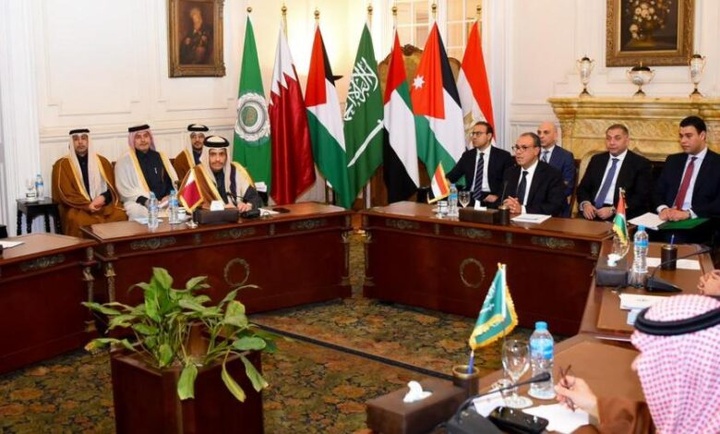
The strong opposition of various Arab countries, especially Egypt, to the expulsion of Gaza residents and the recent statement issued by Saudi Arabia, the UAE, Qatar, Egypt, Jordan, and the PA on this issue is a significant step, but it is not enough.

Beyond the positions and declared opposition, Arab countries have “powerful levers” in various dimensions to push the Trump administration back off from its Gaza plan.

One of the “effective” levers in this regard is the reconstruction of Gaza with the pioneering role of Arab countries. The rebuilding of Gaza costs about 60 billion dollars, which is not difficult for Arab countries to provide. Given that the reconstruction of Gaza is today the most important concern and priority of the international community, international institutions, and the Islamic world regarding Gaza, therefore, if Arab countries take the lead in this regard, they will become an important part of the “current and future arrangements” surrounding Gaza. In addition, this will increase the motivation for resistance among the people of Gaza.

The second lever is consensus and a “real coalition” against Trump’s racist and ethnic cleansing motives. That is a coalition that could be “effective” and could confront the “consequences” and “outcomes” of Trump’s efforts to advance his plan against the United States and the Zionist regime.

The next lever is “the support and accompaniment of Arab and Islamic countries for Jordan and Egypt” on this issue. Egypt and Jordan are on the list of countries receiving financial and economic aid from the United States for years. The threat of Egypt and Jordan to cut off economic and financial aid is one of Trump’s main levers of pressure to evacuate the people of Gaza and transfer them to these two countries. If other Arab countries can at least get together and meet some of the economic and financial needs and problems of Egypt and Jordan by adopting “practical mechanisms,” including foreign investment, allocation of loans, etc., and safeguard the two countries’ economy against US threats, the US government will be largely stripped of this leverage, and Cairo and Amman will also set aside economic considerations in opposing Trump’s plan.

Although the Trump administration, according to its own statement, is seeking to “take over” Gaza by relying solely on “force” and “under US authority,” without regard to legal and political regulations, the people of Gaza and Palestine will not allow Trump’s plan to be realized under any circumstances. The seriousness and effective and practical support of Arab countries for Gaza in this regard will not only reduce the costs of Palestinian Resistance, but they will also create a “safe haven” for Arab countries against future Trump threats.


0 Comments

LATEST CONTENT

The Makkah Pact; Reasons for its Formation and Challenges Ahead

SCFR Online – Opinion: The Makkah Pact, signed between Saudi Arabia, Pakistan, and Turkey under the motto “an attack on one is an attack on all,” is viewed by some analysts less as a full-fledged military coalition and more as an attempt to reduce security dependence on an external power and to establish a regional security mechanism.

Implications of the US-Saudi Nuclear Agreement

SCFR Online – Opinion: The new US-Saudi nuclear agreement, despite legal and political ambiguities, could alter previous non-proliferation standards in West Asia and intensify nuclear competition, ushering it into a new phase.

An Analysis of Recent Turkey-Israeli Regime Tensions

SCFR Online – Opinion: Recent developments in Syria indicate an intensification of strategic rivalry between Turkey and the Israeli regime, but mutual considerations and the role of the United States have limited the likelihood of direct war.

Increasing criticism of the extensive Zionist lobby network

SCFR Online – Opinion: An examination of the mechanisms of the Israeli regime’s influence in the United States depicts a complex picture of shared interests, strategic dependencies, and the limitations of this relationship.

Realities of the Tripartite Makkah Pact

SCFR Online – Interview: The signing of the Makkah agreement between Saudi Arabia, Pakistan, and Turkey has raised questions about the future of the region’s security structure and the position of these countries in West Asian equations. Can this agreement become a genuine collective defense mechanism, or does it have more of a political and deterrent function than creating new military capacity?

Strategic Implications of the Reduction of US Weapons Stockpiles

SCFR Online – Opinion: The continuation of the US war against Iran, in addition to increasing operational costs, has called into question the actual capacity of the American arsenal to simultaneously fulfill security commitments on multiple fronts; an issue that affects deterrence, defense production capacity, and Washington’s resource prioritization.

Loading

Últimas publicaciones

The Makkah Pact; Reasons for its Formation and Challenges Ahead

SCFR Online – Opinion: The Makkah Pact, signed between Saudi Arabia, Pakistan, and Turkey under the motto “an attack on one is an attack on all,” is viewed by some analysts less as a full-fledged military coalition and more as an attempt to reduce security dependence on an external power and to establish a regional security mechanism.

Implications of the US-Saudi Nuclear Agreement

SCFR Online – Opinion: The new US-Saudi nuclear agreement, despite legal and political ambiguities, could alter previous non-proliferation standards in West Asia and intensify nuclear competition, ushering it into a new phase.

An Analysis of Recent Turkey-Israeli Regime Tensions

SCFR Online – Opinion: Recent developments in Syria indicate an intensification of strategic rivalry between Turkey and the Israeli regime, but mutual considerations and the role of the United States have limited the likelihood of direct war.

Increasing criticism of the extensive Zionist lobby network

SCFR Online – Opinion: An examination of the mechanisms of the Israeli regime’s influence in the United States depicts a complex picture of shared interests, strategic dependencies, and the limitations of this relationship.

Realities of the Tripartite Makkah Pact

SCFR Online – Interview: The signing of the Makkah agreement between Saudi Arabia, Pakistan, and Turkey has raised questions about the future of the region’s security structure and the position of these countries in West Asian equations. Can this agreement become a genuine collective defense mechanism, or does it have more of a political and deterrent function than creating new military capacity?

Strategic Implications of the Reduction of US Weapons Stockpiles

SCFR Online – Opinion: The continuation of the US war against Iran, in addition to increasing operational costs, has called into question the actual capacity of the American arsenal to simultaneously fulfill security commitments on multiple fronts; an issue that affects deterrence, defense production capacity, and Washington’s resource prioritization.

Loading

DERNIER CONTENU

The Makkah Pact; Reasons for its Formation and Challenges Ahead

SCFR Online – Opinion: The Makkah Pact, signed between Saudi Arabia, Pakistan, and Turkey under the motto “an attack on one is an attack on all,” is viewed by some analysts less as a full-fledged military coalition and more as an attempt to reduce security dependence on an external power and to establish a regional security mechanism.

Implications of the US-Saudi Nuclear Agreement

SCFR Online – Opinion: The new US-Saudi nuclear agreement, despite legal and political ambiguities, could alter previous non-proliferation standards in West Asia and intensify nuclear competition, ushering it into a new phase.

An Analysis of Recent Turkey-Israeli Regime Tensions

SCFR Online – Opinion: Recent developments in Syria indicate an intensification of strategic rivalry between Turkey and the Israeli regime, but mutual considerations and the role of the United States have limited the likelihood of direct war.

Increasing criticism of the extensive Zionist lobby network

SCFR Online – Opinion: An examination of the mechanisms of the Israeli regime’s influence in the United States depicts a complex picture of shared interests, strategic dependencies, and the limitations of this relationship.

Realities of the Tripartite Makkah Pact

SCFR Online – Interview: The signing of the Makkah agreement between Saudi Arabia, Pakistan, and Turkey has raised questions about the future of the region’s security structure and the position of these countries in West Asian equations. Can this agreement become a genuine collective defense mechanism, or does it have more of a political and deterrent function than creating new military capacity?

Strategic Implications of the Reduction of US Weapons Stockpiles

SCFR Online – Opinion: The continuation of the US war against Iran, in addition to increasing operational costs, has called into question the actual capacity of the American arsenal to simultaneously fulfill security commitments on multiple fronts; an issue that affects deterrence, defense production capacity, and Washington’s resource prioritization.

Loading

DERNIER CONTENU

The Makkah Pact; Reasons for its Formation and Challenges Ahead

SCFR Online – Opinion: The Makkah Pact, signed between Saudi Arabia, Pakistan, and Turkey under the motto “an attack on one is an attack on all,” is viewed by some analysts less as a full-fledged military coalition and more as an attempt to reduce security dependence on an external power and to establish a regional security mechanism.

Implications of the US-Saudi Nuclear Agreement

SCFR Online – Opinion: The new US-Saudi nuclear agreement, despite legal and political ambiguities, could alter previous non-proliferation standards in West Asia and intensify nuclear competition, ushering it into a new phase.

An Analysis of Recent Turkey-Israeli Regime Tensions

SCFR Online – Opinion: Recent developments in Syria indicate an intensification of strategic rivalry between Turkey and the Israeli regime, but mutual considerations and the role of the United States have limited the likelihood of direct war.

Increasing criticism of the extensive Zionist lobby network

SCFR Online – Opinion: An examination of the mechanisms of the Israeli regime’s influence in the United States depicts a complex picture of shared interests, strategic dependencies, and the limitations of this relationship.

Realities of the Tripartite Makkah Pact

SCFR Online – Interview: The signing of the Makkah agreement between Saudi Arabia, Pakistan, and Turkey has raised questions about the future of the region’s security structure and the position of these countries in West Asian equations. Can this agreement become a genuine collective defense mechanism, or does it have more of a political and deterrent function than creating new military capacity?

Strategic Implications of the Reduction of US Weapons Stockpiles

SCFR Online – Opinion: The continuation of the US war against Iran, in addition to increasing operational costs, has called into question the actual capacity of the American arsenal to simultaneously fulfill security commitments on multiple fronts; an issue that affects deterrence, defense production capacity, and Washington’s resource prioritization.

Loading

DERNIER CONTENU

The Makkah Pact; Reasons for its Formation and Challenges Ahead

SCFR Online – Opinion: The Makkah Pact, signed between Saudi Arabia, Pakistan, and Turkey under the motto “an attack on one is an attack on all,” is viewed by some analysts less as a full-fledged military coalition and more as an attempt to reduce security dependence on an external power and to establish a regional security mechanism.

Implications of the US-Saudi Nuclear Agreement

SCFR Online – Opinion: The new US-Saudi nuclear agreement, despite legal and political ambiguities, could alter previous non-proliferation standards in West Asia and intensify nuclear competition, ushering it into a new phase.

An Analysis of Recent Turkey-Israeli Regime Tensions

SCFR Online – Opinion: Recent developments in Syria indicate an intensification of strategic rivalry between Turkey and the Israeli regime, but mutual considerations and the role of the United States have limited the likelihood of direct war.

Increasing criticism of the extensive Zionist lobby network

SCFR Online – Opinion: An examination of the mechanisms of the Israeli regime’s influence in the United States depicts a complex picture of shared interests, strategic dependencies, and the limitations of this relationship.

Realities of the Tripartite Makkah Pact

SCFR Online – Interview: The signing of the Makkah agreement between Saudi Arabia, Pakistan, and Turkey has raised questions about the future of the region’s security structure and the position of these countries in West Asian equations. Can this agreement become a genuine collective defense mechanism, or does it have more of a political and deterrent function than creating new military capacity?

Strategic Implications of the Reduction of US Weapons Stockpiles

SCFR Online – Opinion: The continuation of the US war against Iran, in addition to increasing operational costs, has called into question the actual capacity of the American arsenal to simultaneously fulfill security commitments on multiple fronts; an issue that affects deterrence, defense production capacity, and Washington’s resource prioritization.

Loading




