An Analysis of the Makkah Defense Pact
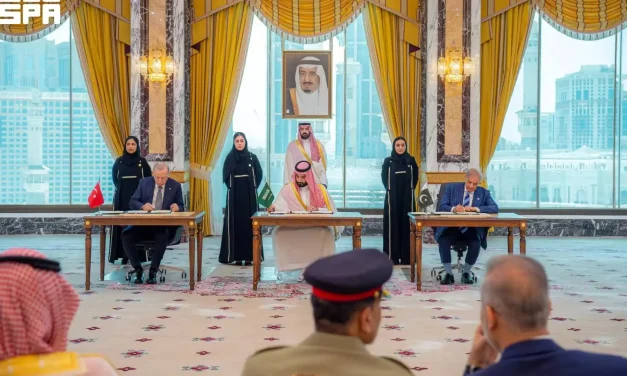
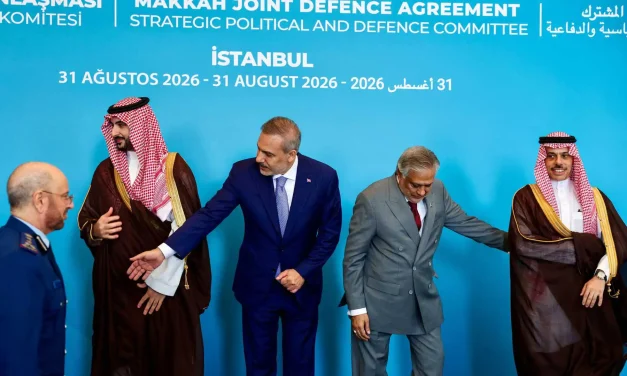
SCFR Online – Opinion: On Friday, August 7, the heads of state of three countries – Saudi Arabia, Turkey, and Pakistan – signed a text under the title “Makkah Joint Defense Agreement.”
Strategic Council Online – Note: The initiative to revive the Hejaz Railway, beyond being a transportation project, constitutes an attempt to redefine geopolitics, the economy, and Turkey’s regional position; however, its realization appears to face significant financial, security, and institutional challenges.
SCFR Online – Opinion: The Strait of Hormuz crisis is no longer merely the consequence of a military confrontation, but rather a sign of the transition from the US-centered maritime order to a new energy security structure involving the participation of emerging and influential powers.
SCFR Online – Opinion: Iran’s active deterrence strategy, while increasing the costs of US intervention, has increasingly exposed the hidden rifts between Washington’s interests and those of the Israeli regime.
SCFR Online – Opinion: The escalation of verbal and strategic tensions between Turkey and the Israeli regime, although not increasing the likelihood of direct war, indicates the formation of a new order in West Asian geopolitical rivalries.
Strategic Council Online – Note: Recent developments in the political geography of West Asia, from rising tensions in the Persian Gulf to missile and drone activities in the Red Sea and the recent warning by Kaja Kallas, the European Union’s foreign policy chief, regarding the threat to freedom of navigation, indicate a key pattern shift; the US-Iran war has moved beyond the scope of a regional and local confrontation and has linked two vital passageways for the global economy: the Strait of Hormuz and the Bab el-Mandeb Strait.
SCFR Online – Opinion: The Ukraine war was not merely a European crisis, but rather the starting point for the rearrangement of the global balance of power and a shift in the strategic behavior of great powers.
SCFR Online – Opinion: Great power competition is now pursued more in trade, currency, technology, and global supply chains than on the battlefields of military confrontation.
Strategic Council Online – Opinion: Banning the use of the Chinese application TikTok in Britain, for security reasons, is considered the last reaction of the West to China’s influence and global power-building.
Hossein Sayyahi – International politics researcher
Strategic Council Online – Interview: A university professor said Japan is after preparations to save itself from the strategic isolation created due to the focus of the West on Ukraine. He added: The United States is very willing to turn Southeast Asia into another Ukraine and with China’s military involvement it will be contained by military and security means in which the US has a definite superiority; but so far China has not moved in this direction any way.
Strategic Council online – Opinion: In its recent meeting in Germany, G-7 has introduced a new infra-structural plan which is considered, in a way, as a competitor to China’s One Belt – One Road initiative. The objective of the Partnership for Global Infrastructure and Investment (PGII) is to allocate $ 600 billion for global infrastructural projects in countries with low and medium-income within the next five years.
Alireza Samoudi, Expert on European Affairs
Strategic Council Online – Opinion: Although various questions and hypotheses have been raised about the reason why India and the European Union returned to negotiating table on Comprehensive Trade and Investment Agreement talks after a long pause, despite the importance of economic and trade issues on the foreign policy of both sides, it seems that the most important and essential impetus for New Delhi and Brussels were new geopolitical realities for the revival of negotiations and making effort to reach the Agreement.
Hossein Sayahi, Researcher of International Affaires
Strategic Council Online- Interview: An expert on Asian affairs commented on gaining power of Russia and China and their confrontation with the U.S. and said:” in the light of new changes emanated from the emergence of new powers, the international system has been placed at the threshold of a new era, in which powers like China and Russia are activists in international system and have managed to increase their share of power resources. This has caused for the U.S. a new and of course, serious challenge that can endanger the status of the country”.
Strategic Council Online – The United States began its confrontation with China more explicitly and objectively during the Donald Trump era than the Obama administration; and the Biden administration seems to be pursuing Trump policies, as the United States is well aware that it is now in a good position to compete with China, while China must continue its economic growth and development for at least another two decades to be in a good position to compete.
Dr. Tahmoureth Gholami – Expert on the US Affairs
Strategic Council Online – The former Director-General of the Middle East Department of the Ministry of Foreign Affairs, stating that the interests of governments and regional powers in the Middle East are in conflict and trans-regional players too are not interested in its stability and security, said: In case relations with Saudi Arabia are organized through diplomacy and differences are resolved through negotiation it would help improve the two countries’ position in the world.
Strategic Council Online – Referring to the strategic dialogue between Chinese Foreign Minister Wang Yi and French President’s diplomatic adviser Emmanuel Boone, a European affairs expert stressed that the recent meeting of high-ranking Chinese and French officials is important because we are witnessing escalating tensions between China and the United States, and somehow there is a deep rift between European governments and the United States on how to deal with Beijing.
SCFR Online – Opinion: On Friday, August 7, the heads of state of three countries – Saudi Arabia, Turkey, and Pakistan – signed a text under the title “Makkah Joint Defense Agreement.”
Strategic Council Online – Note: The initiative to revive the Hejaz Railway, beyond being a transportation project, constitutes an attempt to redefine geopolitics, the economy, and Turkey’s regional position; however, its realization appears to face significant financial, security, and institutional challenges.
SCFR Online – Opinion: The Strait of Hormuz crisis is no longer merely the consequence of a military confrontation, but rather a sign of the transition from the US-centered maritime order to a new energy security structure involving the participation of emerging and influential powers.
SCFR Online – Opinion: Iran’s active deterrence strategy, while increasing the costs of US intervention, has increasingly exposed the hidden rifts between Washington’s interests and those of the Israeli regime.
SCFR Online – Opinion: The escalation of verbal and strategic tensions between Turkey and the Israeli regime, although not increasing the likelihood of direct war, indicates the formation of a new order in West Asian geopolitical rivalries.
Strategic Council Online – Note: Recent developments in the political geography of West Asia, from rising tensions in the Persian Gulf to missile and drone activities in the Red Sea and the recent warning by Kaja Kallas, the European Union’s foreign policy chief, regarding the threat to freedom of navigation, indicate a key pattern shift; the US-Iran war has moved beyond the scope of a regional and local confrontation and has linked two vital passageways for the global economy: the Strait of Hormuz and the Bab el-Mandeb Strait.
SCFR Online – Opinion: The Ukraine war was not merely a European crisis, but rather the starting point for the rearrangement of the global balance of power and a shift in the strategic behavior of great powers.
SCFR Online – Opinion: Great power competition is now pursued more in trade, currency, technology, and global supply chains than on the battlefields of military confrontation.
Strategic Council Online – Opinion: Banning the use of the Chinese application TikTok in Britain, for security reasons, is considered the last reaction of the West to China’s influence and global power-building.
Hossein Sayyahi – International politics researcher
Strategic Council Online – Interview: A university professor said Japan is after preparations to save itself from the strategic isolation created due to the focus of the West on Ukraine. He added: The United States is very willing to turn Southeast Asia into another Ukraine and with China’s military involvement it will be contained by military and security means in which the US has a definite superiority; but so far China has not moved in this direction any way.
Strategic Council online – Opinion: In its recent meeting in Germany, G-7 has introduced a new infra-structural plan which is considered, in a way, as a competitor to China’s One Belt – One Road initiative. The objective of the Partnership for Global Infrastructure and Investment (PGII) is to allocate $ 600 billion for global infrastructural projects in countries with low and medium-income within the next five years.
Alireza Samoudi, Expert on European Affairs
Strategic Council Online – Opinion: Although various questions and hypotheses have been raised about the reason why India and the European Union returned to negotiating table on Comprehensive Trade and Investment Agreement talks after a long pause, despite the importance of economic and trade issues on the foreign policy of both sides, it seems that the most important and essential impetus for New Delhi and Brussels were new geopolitical realities for the revival of negotiations and making effort to reach the Agreement.
Hossein Sayahi, Researcher of International Affaires
Strategic Council Online- Interview: An expert on Asian affairs commented on gaining power of Russia and China and their confrontation with the U.S. and said:” in the light of new changes emanated from the emergence of new powers, the international system has been placed at the threshold of a new era, in which powers like China and Russia are activists in international system and have managed to increase their share of power resources. This has caused for the U.S. a new and of course, serious challenge that can endanger the status of the country”.
Strategic Council Online – The United States began its confrontation with China more explicitly and objectively during the Donald Trump era than the Obama administration; and the Biden administration seems to be pursuing Trump policies, as the United States is well aware that it is now in a good position to compete with China, while China must continue its economic growth and development for at least another two decades to be in a good position to compete.
Dr. Tahmoureth Gholami – Expert on the US Affairs
Strategic Council Online – The former Director-General of the Middle East Department of the Ministry of Foreign Affairs, stating that the interests of governments and regional powers in the Middle East are in conflict and trans-regional players too are not interested in its stability and security, said: In case relations with Saudi Arabia are organized through diplomacy and differences are resolved through negotiation it would help improve the two countries’ position in the world.
Strategic Council Online – Referring to the strategic dialogue between Chinese Foreign Minister Wang Yi and French President’s diplomatic adviser Emmanuel Boone, a European affairs expert stressed that the recent meeting of high-ranking Chinese and French officials is important because we are witnessing escalating tensions between China and the United States, and somehow there is a deep rift between European governments and the United States on how to deal with Beijing.
Strategic Council Online – Opinion: Banning the use of the Chinese application TikTok in Britain, for security reasons, is considered the last reaction of the West to China’s influence and global power-building.
Hossein Sayyahi – International politics researcher
Strategic Council Online – Interview: A university professor said Japan is after preparations to save itself from the strategic isolation created due to the focus of the West on Ukraine. He added: The United States is very willing to turn Southeast Asia into another Ukraine and with China’s military involvement it will be contained by military and security means in which the US has a definite superiority; but so far China has not moved in this direction any way.
Strategic Council online – Opinion: In its recent meeting in Germany, G-7 has introduced a new infra-structural plan which is considered, in a way, as a competitor to China’s One Belt – One Road initiative. The objective of the Partnership for Global Infrastructure and Investment (PGII) is to allocate $ 600 billion for global infrastructural projects in countries with low and medium-income within the next five years.
Alireza Samoudi, Expert on European Affairs
Strategic Council Online – Opinion: Although various questions and hypotheses have been raised about the reason why India and the European Union returned to negotiating table on Comprehensive Trade and Investment Agreement talks after a long pause, despite the importance of economic and trade issues on the foreign policy of both sides, it seems that the most important and essential impetus for New Delhi and Brussels were new geopolitical realities for the revival of negotiations and making effort to reach the Agreement.
Hossein Sayahi, Researcher of International Affaires
Strategic Council Online- Interview: An expert on Asian affairs commented on gaining power of Russia and China and their confrontation with the U.S. and said:” in the light of new changes emanated from the emergence of new powers, the international system has been placed at the threshold of a new era, in which powers like China and Russia are activists in international system and have managed to increase their share of power resources. This has caused for the U.S. a new and of course, serious challenge that can endanger the status of the country”.
Strategic Council Online – The United States began its confrontation with China more explicitly and objectively during the Donald Trump era than the Obama administration; and the Biden administration seems to be pursuing Trump policies, as the United States is well aware that it is now in a good position to compete with China, while China must continue its economic growth and development for at least another two decades to be in a good position to compete.
Dr. Tahmoureth Gholami – Expert on the US Affairs
Strategic Council Online – The former Director-General of the Middle East Department of the Ministry of Foreign Affairs, stating that the interests of governments and regional powers in the Middle East are in conflict and trans-regional players too are not interested in its stability and security, said: In case relations with Saudi Arabia are organized through diplomacy and differences are resolved through negotiation it would help improve the two countries’ position in the world.
Strategic Council Online – Referring to the strategic dialogue between Chinese Foreign Minister Wang Yi and French President’s diplomatic adviser Emmanuel Boone, a European affairs expert stressed that the recent meeting of high-ranking Chinese and French officials is important because we are witnessing escalating tensions between China and the United States, and somehow there is a deep rift between European governments and the United States on how to deal with Beijing.
SCFR Online – Opinion: On Friday, August 7, the heads of state of three countries – Saudi Arabia, Turkey, and Pakistan – signed a text under the title “Makkah Joint Defense Agreement.”
Strategic Council Online – Note: The initiative to revive the Hejaz Railway, beyond being a transportation project, constitutes an attempt to redefine geopolitics, the economy, and Turkey’s regional position; however, its realization appears to face significant financial, security, and institutional challenges.
SCFR Online – Opinion: The Strait of Hormuz crisis is no longer merely the consequence of a military confrontation, but rather a sign of the transition from the US-centered maritime order to a new energy security structure involving the participation of emerging and influential powers.
SCFR Online – Opinion: Iran’s active deterrence strategy, while increasing the costs of US intervention, has increasingly exposed the hidden rifts between Washington’s interests and those of the Israeli regime.
SCFR Online – Opinion: The escalation of verbal and strategic tensions between Turkey and the Israeli regime, although not increasing the likelihood of direct war, indicates the formation of a new order in West Asian geopolitical rivalries.
Strategic Council Online – Note: Recent developments in the political geography of West Asia, from rising tensions in the Persian Gulf to missile and drone activities in the Red Sea and the recent warning by Kaja Kallas, the European Union’s foreign policy chief, regarding the threat to freedom of navigation, indicate a key pattern shift; the US-Iran war has moved beyond the scope of a regional and local confrontation and has linked two vital passageways for the global economy: the Strait of Hormuz and the Bab el-Mandeb Strait.
SCFR Online – Opinion: The Ukraine war was not merely a European crisis, but rather the starting point for the rearrangement of the global balance of power and a shift in the strategic behavior of great powers.
SCFR Online – Opinion: Great power competition is now pursued more in trade, currency, technology, and global supply chains than on the battlefields of military confrontation.
Strategic Council Online – Opinion: Banning the use of the Chinese application TikTok in Britain, for security reasons, is considered the last reaction of the West to China’s influence and global power-building.
Hossein Sayyahi – International politics researcher
Strategic Council Online – Interview: A university professor said Japan is after preparations to save itself from the strategic isolation created due to the focus of the West on Ukraine. He added: The United States is very willing to turn Southeast Asia into another Ukraine and with China’s military involvement it will be contained by military and security means in which the US has a definite superiority; but so far China has not moved in this direction any way.
Strategic Council online – Opinion: In its recent meeting in Germany, G-7 has introduced a new infra-structural plan which is considered, in a way, as a competitor to China’s One Belt – One Road initiative. The objective of the Partnership for Global Infrastructure and Investment (PGII) is to allocate $ 600 billion for global infrastructural projects in countries with low and medium-income within the next five years.
Alireza Samoudi, Expert on European Affairs
Strategic Council Online – Opinion: Although various questions and hypotheses have been raised about the reason why India and the European Union returned to negotiating table on Comprehensive Trade and Investment Agreement talks after a long pause, despite the importance of economic and trade issues on the foreign policy of both sides, it seems that the most important and essential impetus for New Delhi and Brussels were new geopolitical realities for the revival of negotiations and making effort to reach the Agreement.
Hossein Sayahi, Researcher of International Affaires
Strategic Council Online- Interview: An expert on Asian affairs commented on gaining power of Russia and China and their confrontation with the U.S. and said:” in the light of new changes emanated from the emergence of new powers, the international system has been placed at the threshold of a new era, in which powers like China and Russia are activists in international system and have managed to increase their share of power resources. This has caused for the U.S. a new and of course, serious challenge that can endanger the status of the country”.
Strategic Council Online – The United States began its confrontation with China more explicitly and objectively during the Donald Trump era than the Obama administration; and the Biden administration seems to be pursuing Trump policies, as the United States is well aware that it is now in a good position to compete with China, while China must continue its economic growth and development for at least another two decades to be in a good position to compete.
Dr. Tahmoureth Gholami – Expert on the US Affairs
Strategic Council Online – The former Director-General of the Middle East Department of the Ministry of Foreign Affairs, stating that the interests of governments and regional powers in the Middle East are in conflict and trans-regional players too are not interested in its stability and security, said: In case relations with Saudi Arabia are organized through diplomacy and differences are resolved through negotiation it would help improve the two countries’ position in the world.
Strategic Council Online – Referring to the strategic dialogue between Chinese Foreign Minister Wang Yi and French President’s diplomatic adviser Emmanuel Boone, a European affairs expert stressed that the recent meeting of high-ranking Chinese and French officials is important because we are witnessing escalating tensions between China and the United States, and somehow there is a deep rift between European governments and the United States on how to deal with Beijing.
SCFR Online – Opinion: On Friday, August 7, the heads of state of three countries – Saudi Arabia, Turkey, and Pakistan – signed a text under the title “Makkah Joint Defense Agreement.”
Strategic Council Online – Note: The initiative to revive the Hejaz Railway, beyond being a transportation project, constitutes an attempt to redefine geopolitics, the economy, and Turkey’s regional position; however, its realization appears to face significant financial, security, and institutional challenges.
SCFR Online – Opinion: The Strait of Hormuz crisis is no longer merely the consequence of a military confrontation, but rather a sign of the transition from the US-centered maritime order to a new energy security structure involving the participation of emerging and influential powers.
SCFR Online – Opinion: Iran’s active deterrence strategy, while increasing the costs of US intervention, has increasingly exposed the hidden rifts between Washington’s interests and those of the Israeli regime.
SCFR Online – Opinion: The escalation of verbal and strategic tensions between Turkey and the Israeli regime, although not increasing the likelihood of direct war, indicates the formation of a new order in West Asian geopolitical rivalries.
Strategic Council Online – Note: Recent developments in the political geography of West Asia, from rising tensions in the Persian Gulf to missile and drone activities in the Red Sea and the recent warning by Kaja Kallas, the European Union’s foreign policy chief, regarding the threat to freedom of navigation, indicate a key pattern shift; the US-Iran war has moved beyond the scope of a regional and local confrontation and has linked two vital passageways for the global economy: the Strait of Hormuz and the Bab el-Mandeb Strait.
SCFR Online – Opinion: The Ukraine war was not merely a European crisis, but rather the starting point for the rearrangement of the global balance of power and a shift in the strategic behavior of great powers.
SCFR Online – Opinion: Great power competition is now pursued more in trade, currency, technology, and global supply chains than on the battlefields of military confrontation.
Strategic Council Online – Opinion: Banning the use of the Chinese application TikTok in Britain, for security reasons, is considered the last reaction of the West to China’s influence and global power-building.
Hossein Sayyahi – International politics researcher
Strategic Council Online – Interview: A university professor said Japan is after preparations to save itself from the strategic isolation created due to the focus of the West on Ukraine. He added: The United States is very willing to turn Southeast Asia into another Ukraine and with China’s military involvement it will be contained by military and security means in which the US has a definite superiority; but so far China has not moved in this direction any way.
Strategic Council online – Opinion: In its recent meeting in Germany, G-7 has introduced a new infra-structural plan which is considered, in a way, as a competitor to China’s One Belt – One Road initiative. The objective of the Partnership for Global Infrastructure and Investment (PGII) is to allocate $ 600 billion for global infrastructural projects in countries with low and medium-income within the next five years.
Alireza Samoudi, Expert on European Affairs
Strategic Council Online – Opinion: Although various questions and hypotheses have been raised about the reason why India and the European Union returned to negotiating table on Comprehensive Trade and Investment Agreement talks after a long pause, despite the importance of economic and trade issues on the foreign policy of both sides, it seems that the most important and essential impetus for New Delhi and Brussels were new geopolitical realities for the revival of negotiations and making effort to reach the Agreement.
Hossein Sayahi, Researcher of International Affaires
Strategic Council Online- Interview: An expert on Asian affairs commented on gaining power of Russia and China and their confrontation with the U.S. and said:” in the light of new changes emanated from the emergence of new powers, the international system has been placed at the threshold of a new era, in which powers like China and Russia are activists in international system and have managed to increase their share of power resources. This has caused for the U.S. a new and of course, serious challenge that can endanger the status of the country”.
Strategic Council Online – The United States began its confrontation with China more explicitly and objectively during the Donald Trump era than the Obama administration; and the Biden administration seems to be pursuing Trump policies, as the United States is well aware that it is now in a good position to compete with China, while China must continue its economic growth and development for at least another two decades to be in a good position to compete.
Dr. Tahmoureth Gholami – Expert on the US Affairs
Strategic Council Online – The former Director-General of the Middle East Department of the Ministry of Foreign Affairs, stating that the interests of governments and regional powers in the Middle East are in conflict and trans-regional players too are not interested in its stability and security, said: In case relations with Saudi Arabia are organized through diplomacy and differences are resolved through negotiation it would help improve the two countries’ position in the world.
Strategic Council Online – Referring to the strategic dialogue between Chinese Foreign Minister Wang Yi and French President’s diplomatic adviser Emmanuel Boone, a European affairs expert stressed that the recent meeting of high-ranking Chinese and French officials is important because we are witnessing escalating tensions between China and the United States, and somehow there is a deep rift between European governments and the United States on how to deal with Beijing.
SCFR Online – Opinion: On Friday, August 7, the heads of state of three countries – Saudi Arabia, Turkey, and Pakistan – signed a text under the title “Makkah Joint Defense Agreement.”
Strategic Council Online – Note: The initiative to revive the Hejaz Railway, beyond being a transportation project, constitutes an attempt to redefine geopolitics, the economy, and Turkey’s regional position; however, its realization appears to face significant financial, security, and institutional challenges.
SCFR Online – Opinion: The Strait of Hormuz crisis is no longer merely the consequence of a military confrontation, but rather a sign of the transition from the US-centered maritime order to a new energy security structure involving the participation of emerging and influential powers.
SCFR Online – Opinion: Iran’s active deterrence strategy, while increasing the costs of US intervention, has increasingly exposed the hidden rifts between Washington’s interests and those of the Israeli regime.
SCFR Online – Opinion: The escalation of verbal and strategic tensions between Turkey and the Israeli regime, although not increasing the likelihood of direct war, indicates the formation of a new order in West Asian geopolitical rivalries.
Strategic Council Online – Note: Recent developments in the political geography of West Asia, from rising tensions in the Persian Gulf to missile and drone activities in the Red Sea and the recent warning by Kaja Kallas, the European Union’s foreign policy chief, regarding the threat to freedom of navigation, indicate a key pattern shift; the US-Iran war has moved beyond the scope of a regional and local confrontation and has linked two vital passageways for the global economy: the Strait of Hormuz and the Bab el-Mandeb Strait.
SCFR Online – Opinion: The Ukraine war was not merely a European crisis, but rather the starting point for the rearrangement of the global balance of power and a shift in the strategic behavior of great powers.
SCFR Online – Opinion: Great power competition is now pursued more in trade, currency, technology, and global supply chains than on the battlefields of military confrontation.
Strategic Council Online – Opinion: Banning the use of the Chinese application TikTok in Britain, for security reasons, is considered the last reaction of the West to China’s influence and global power-building.
Hossein Sayyahi – International politics researcher
Strategic Council Online – Interview: A university professor said Japan is after preparations to save itself from the strategic isolation created due to the focus of the West on Ukraine. He added: The United States is very willing to turn Southeast Asia into another Ukraine and with China’s military involvement it will be contained by military and security means in which the US has a definite superiority; but so far China has not moved in this direction any way.
Strategic Council online – Opinion: In its recent meeting in Germany, G-7 has introduced a new infra-structural plan which is considered, in a way, as a competitor to China’s One Belt – One Road initiative. The objective of the Partnership for Global Infrastructure and Investment (PGII) is to allocate $ 600 billion for global infrastructural projects in countries with low and medium-income within the next five years.
Alireza Samoudi, Expert on European Affairs
Strategic Council Online – Opinion: Although various questions and hypotheses have been raised about the reason why India and the European Union returned to negotiating table on Comprehensive Trade and Investment Agreement talks after a long pause, despite the importance of economic and trade issues on the foreign policy of both sides, it seems that the most important and essential impetus for New Delhi and Brussels were new geopolitical realities for the revival of negotiations and making effort to reach the Agreement.
Hossein Sayahi, Researcher of International Affaires
Strategic Council Online- Interview: An expert on Asian affairs commented on gaining power of Russia and China and their confrontation with the U.S. and said:” in the light of new changes emanated from the emergence of new powers, the international system has been placed at the threshold of a new era, in which powers like China and Russia are activists in international system and have managed to increase their share of power resources. This has caused for the U.S. a new and of course, serious challenge that can endanger the status of the country”.
Strategic Council Online – The United States began its confrontation with China more explicitly and objectively during the Donald Trump era than the Obama administration; and the Biden administration seems to be pursuing Trump policies, as the United States is well aware that it is now in a good position to compete with China, while China must continue its economic growth and development for at least another two decades to be in a good position to compete.
Dr. Tahmoureth Gholami – Expert on the US Affairs
Strategic Council Online – The former Director-General of the Middle East Department of the Ministry of Foreign Affairs, stating that the interests of governments and regional powers in the Middle East are in conflict and trans-regional players too are not interested in its stability and security, said: In case relations with Saudi Arabia are organized through diplomacy and differences are resolved through negotiation it would help improve the two countries’ position in the world.
Strategic Council Online – Referring to the strategic dialogue between Chinese Foreign Minister Wang Yi and French President’s diplomatic adviser Emmanuel Boone, a European affairs expert stressed that the recent meeting of high-ranking Chinese and French officials is important because we are witnessing escalating tensions between China and the United States, and somehow there is a deep rift between European governments and the United States on how to deal with Beijing.
SCFR Online – Opinion: On Friday, August 7, the heads of state of three countries – Saudi Arabia, Turkey, and Pakistan – signed a text under the title “Makkah Joint Defense Agreement.”
Strategic Council Online – Note: The initiative to revive the Hejaz Railway, beyond being a transportation project, constitutes an attempt to redefine geopolitics, the economy, and Turkey’s regional position; however, its realization appears to face significant financial, security, and institutional challenges.
SCFR Online – Opinion: The Strait of Hormuz crisis is no longer merely the consequence of a military confrontation, but rather a sign of the transition from the US-centered maritime order to a new energy security structure involving the participation of emerging and influential powers.
SCFR Online – Opinion: Iran’s active deterrence strategy, while increasing the costs of US intervention, has increasingly exposed the hidden rifts between Washington’s interests and those of the Israeli regime.
SCFR Online – Opinion: The escalation of verbal and strategic tensions between Turkey and the Israeli regime, although not increasing the likelihood of direct war, indicates the formation of a new order in West Asian geopolitical rivalries.
Strategic Council Online – Note: Recent developments in the political geography of West Asia, from rising tensions in the Persian Gulf to missile and drone activities in the Red Sea and the recent warning by Kaja Kallas, the European Union’s foreign policy chief, regarding the threat to freedom of navigation, indicate a key pattern shift; the US-Iran war has moved beyond the scope of a regional and local confrontation and has linked two vital passageways for the global economy: the Strait of Hormuz and the Bab el-Mandeb Strait.
SCFR Online – Opinion: The Ukraine war was not merely a European crisis, but rather the starting point for the rearrangement of the global balance of power and a shift in the strategic behavior of great powers.
SCFR Online – Opinion: Great power competition is now pursued more in trade, currency, technology, and global supply chains than on the battlefields of military confrontation.
Strategic Council Online – Opinion: Banning the use of the Chinese application TikTok in Britain, for security reasons, is considered the last reaction of the West to China’s influence and global power-building.
Hossein Sayyahi – International politics researcher
Strategic Council Online – Interview: A university professor said Japan is after preparations to save itself from the strategic isolation created due to the focus of the West on Ukraine. He added: The United States is very willing to turn Southeast Asia into another Ukraine and with China’s military involvement it will be contained by military and security means in which the US has a definite superiority; but so far China has not moved in this direction any way.
Strategic Council online – Opinion: In its recent meeting in Germany, G-7 has introduced a new infra-structural plan which is considered, in a way, as a competitor to China’s One Belt – One Road initiative. The objective of the Partnership for Global Infrastructure and Investment (PGII) is to allocate $ 600 billion for global infrastructural projects in countries with low and medium-income within the next five years.
Alireza Samoudi, Expert on European Affairs
Strategic Council Online – Opinion: Although various questions and hypotheses have been raised about the reason why India and the European Union returned to negotiating table on Comprehensive Trade and Investment Agreement talks after a long pause, despite the importance of economic and trade issues on the foreign policy of both sides, it seems that the most important and essential impetus for New Delhi and Brussels were new geopolitical realities for the revival of negotiations and making effort to reach the Agreement.
Hossein Sayahi, Researcher of International Affaires
Strategic Council Online- Interview: An expert on Asian affairs commented on gaining power of Russia and China and their confrontation with the U.S. and said:” in the light of new changes emanated from the emergence of new powers, the international system has been placed at the threshold of a new era, in which powers like China and Russia are activists in international system and have managed to increase their share of power resources. This has caused for the U.S. a new and of course, serious challenge that can endanger the status of the country”.
Strategic Council Online – The United States began its confrontation with China more explicitly and objectively during the Donald Trump era than the Obama administration; and the Biden administration seems to be pursuing Trump policies, as the United States is well aware that it is now in a good position to compete with China, while China must continue its economic growth and development for at least another two decades to be in a good position to compete.
Dr. Tahmoureth Gholami – Expert on the US Affairs
Strategic Council Online – The former Director-General of the Middle East Department of the Ministry of Foreign Affairs, stating that the interests of governments and regional powers in the Middle East are in conflict and trans-regional players too are not interested in its stability and security, said: In case relations with Saudi Arabia are organized through diplomacy and differences are resolved through negotiation it would help improve the two countries’ position in the world.
Strategic Council Online – Referring to the strategic dialogue between Chinese Foreign Minister Wang Yi and French President’s diplomatic adviser Emmanuel Boone, a European affairs expert stressed that the recent meeting of high-ranking Chinese and French officials is important because we are witnessing escalating tensions between China and the United States, and somehow there is a deep rift between European governments and the United States on how to deal with Beijing.
SCFR Online – Opinion: On Friday, August 7, the heads of state of three countries – Saudi Arabia, Turkey, and Pakistan – signed a text under the title “Makkah Joint Defense Agreement.”
Strategic Council Online – Note: The initiative to revive the Hejaz Railway, beyond being a transportation project, constitutes an attempt to redefine geopolitics, the economy, and Turkey’s regional position; however, its realization appears to face significant financial, security, and institutional challenges.
SCFR Online – Opinion: The Strait of Hormuz crisis is no longer merely the consequence of a military confrontation, but rather a sign of the transition from the US-centered maritime order to a new energy security structure involving the participation of emerging and influential powers.
SCFR Online – Opinion: Iran’s active deterrence strategy, while increasing the costs of US intervention, has increasingly exposed the hidden rifts between Washington’s interests and those of the Israeli regime.
SCFR Online – Opinion: The escalation of verbal and strategic tensions between Turkey and the Israeli regime, although not increasing the likelihood of direct war, indicates the formation of a new order in West Asian geopolitical rivalries.
Strategic Council Online – Note: Recent developments in the political geography of West Asia, from rising tensions in the Persian Gulf to missile and drone activities in the Red Sea and the recent warning by Kaja Kallas, the European Union’s foreign policy chief, regarding the threat to freedom of navigation, indicate a key pattern shift; the US-Iran war has moved beyond the scope of a regional and local confrontation and has linked two vital passageways for the global economy: the Strait of Hormuz and the Bab el-Mandeb Strait.
SCFR Online – Opinion: The Ukraine war was not merely a European crisis, but rather the starting point for the rearrangement of the global balance of power and a shift in the strategic behavior of great powers.
SCFR Online – Opinion: Great power competition is now pursued more in trade, currency, technology, and global supply chains than on the battlefields of military confrontation.