جدیدترین مطالب

Realities of the Tripartite Makkah Pact

SCFR Online – Interview: The signing of the Makkah agreement between Saudi Arabia, Pakistan, and Turkey has raised questions about the future of the region’s security structure and the position of these countries in West Asian equations. Can this agreement become a genuine collective defense mechanism, or does it have more of a political and deterrent function than creating new military capacity?

Strategic Implications of the Reduction of US Weapons Stockpiles

SCFR Online – Opinion: The continuation of the US war against Iran, in addition to increasing operational costs, has called into question the actual capacity of the American arsenal to simultaneously fulfill security commitments on multiple fronts; an issue that affects deterrence, defense production capacity, and Washington’s resource prioritization.

The Formation of a New Order in Relations Between Powers

SCFR Online – Opinion: The Russia-Ukraine war and the war of the United States and the Israeli regime against Iran have been formed with different objectives and actors, but field and political developments indicate that they are not entirely separate from one another.

An Analysis of the Makkah Defense Pact

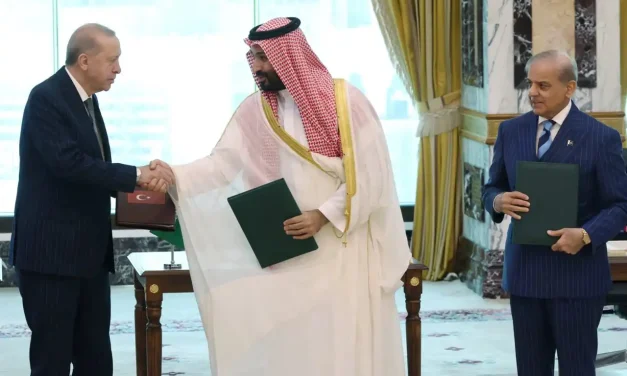
SCFR Online – Opinion: On Friday, August 7, the heads of state of three countries – Saudi Arabia, Turkey, and Pakistan – signed a text under the title “Makkah Joint Defense Agreement.”

Dimensions and challenges of the initiative to revive the Hejaz Railway

Strategic Council Online – Note: The initiative to revive the Hejaz Railway, beyond being a transportation project, constitutes an attempt to redefine geopolitics, the economy, and Turkey’s regional position; however, its realization appears to face significant financial, security, and institutional challenges.

Loading

COP 28

COP 28, Need for Strategic Transition of West Asia Region

COP 28, Need for Strategic Transition of West Asia Region

Strategic Council Online – Opinion: In the past two weeks, the leaders and officials of the countries participating in the United Nations Climate Change Conference known as COP28 gathered in Dubai, United Arab Emirates, to make efforts to limit global warming and increase the reduction of the role of fossil fuels in the world. Although the heavy shadow of the Israeli regime’s inhumane attacks on the Gaza Strip has cast a shadow on the conference, this year’s dry autumn and low rainfall and the dark and low rainfall winters of the past few years remind us that attention to climate change and addressing its causes and reasons is no longer a luxury or an unimportant issue, and neglecting it can directly endanger the food security, welfare, and life of the citizens of different countries, and as a result, face those governments with serious risks.
Dr. Mohammad Mehdi Mazaheri – University professor

أحدث الوظائف

Realities of the Tripartite Makkah Pact

SCFR Online – Interview: The signing of the Makkah agreement between Saudi Arabia, Pakistan, and Turkey has raised questions about the future of the region’s security structure and the position of these countries in West Asian equations. Can this agreement become a genuine collective defense mechanism, or does it have more of a political and deterrent function than creating new military capacity?

Strategic Implications of the Reduction of US Weapons Stockpiles

SCFR Online – Opinion: The continuation of the US war against Iran, in addition to increasing operational costs, has called into question the actual capacity of the American arsenal to simultaneously fulfill security commitments on multiple fronts; an issue that affects deterrence, defense production capacity, and Washington’s resource prioritization.

The Formation of a New Order in Relations Between Powers

SCFR Online – Opinion: The Russia-Ukraine war and the war of the United States and the Israeli regime against Iran have been formed with different objectives and actors, but field and political developments indicate that they are not entirely separate from one another.

An Analysis of the Makkah Defense Pact

SCFR Online – Opinion: On Friday, August 7, the heads of state of three countries – Saudi Arabia, Turkey, and Pakistan – signed a text under the title “Makkah Joint Defense Agreement.”

Dimensions and challenges of the initiative to revive the Hejaz Railway

Strategic Council Online – Note: The initiative to revive the Hejaz Railway, beyond being a transportation project, constitutes an attempt to redefine geopolitics, the economy, and Turkey’s regional position; however, its realization appears to face significant financial, security, and institutional challenges.

Loading

COP 28

COP 28, Need for Strategic Transition of West Asia Region

COP 28, Need for Strategic Transition of West Asia Region

Strategic Council Online – Opinion: In the past two weeks, the leaders and officials of the countries participating in the United Nations Climate Change Conference known as COP28 gathered in Dubai, United Arab Emirates, to make efforts to limit global warming and increase the reduction of the role of fossil fuels in the world. Although the heavy shadow of the Israeli regime’s inhumane attacks on the Gaza Strip has cast a shadow on the conference, this year’s dry autumn and low rainfall and the dark and low rainfall winters of the past few years remind us that attention to climate change and addressing its causes and reasons is no longer a luxury or an unimportant issue, and neglecting it can directly endanger the food security, welfare, and life of the citizens of different countries, and as a result, face those governments with serious risks.
Dr. Mohammad Mehdi Mazaheri – University professor

COP 28

COP 28, Need for Strategic Transition of West Asia Region

COP 28, Need for Strategic Transition of West Asia Region

Strategic Council Online – Opinion: In the past two weeks, the leaders and officials of the countries participating in the United Nations Climate Change Conference known as COP28 gathered in Dubai, United Arab Emirates, to make efforts to limit global warming and increase the reduction of the role of fossil fuels in the world. Although the heavy shadow of the Israeli regime’s inhumane attacks on the Gaza Strip has cast a shadow on the conference, this year’s dry autumn and low rainfall and the dark and low rainfall winters of the past few years remind us that attention to climate change and addressing its causes and reasons is no longer a luxury or an unimportant issue, and neglecting it can directly endanger the food security, welfare, and life of the citizens of different countries, and as a result, face those governments with serious risks.
Dr. Mohammad Mehdi Mazaheri – University professor

LATEST CONTENT

Realities of the Tripartite Makkah Pact

SCFR Online – Interview: The signing of the Makkah agreement between Saudi Arabia, Pakistan, and Turkey has raised questions about the future of the region’s security structure and the position of these countries in West Asian equations. Can this agreement become a genuine collective defense mechanism, or does it have more of a political and deterrent function than creating new military capacity?

Strategic Implications of the Reduction of US Weapons Stockpiles

SCFR Online – Opinion: The continuation of the US war against Iran, in addition to increasing operational costs, has called into question the actual capacity of the American arsenal to simultaneously fulfill security commitments on multiple fronts; an issue that affects deterrence, defense production capacity, and Washington’s resource prioritization.

The Formation of a New Order in Relations Between Powers

SCFR Online – Opinion: The Russia-Ukraine war and the war of the United States and the Israeli regime against Iran have been formed with different objectives and actors, but field and political developments indicate that they are not entirely separate from one another.

An Analysis of the Makkah Defense Pact

SCFR Online – Opinion: On Friday, August 7, the heads of state of three countries – Saudi Arabia, Turkey, and Pakistan – signed a text under the title “Makkah Joint Defense Agreement.”

Dimensions and challenges of the initiative to revive the Hejaz Railway

Strategic Council Online – Note: The initiative to revive the Hejaz Railway, beyond being a transportation project, constitutes an attempt to redefine geopolitics, the economy, and Turkey’s regional position; however, its realization appears to face significant financial, security, and institutional challenges.

Loading

COP 28

COP 28, Need for Strategic Transition of West Asia Region

COP 28, Need for Strategic Transition of West Asia Region

Strategic Council Online – Opinion: In the past two weeks, the leaders and officials of the countries participating in the United Nations Climate Change Conference known as COP28 gathered in Dubai, United Arab Emirates, to make efforts to limit global warming and increase the reduction of the role of fossil fuels in the world. Although the heavy shadow of the Israeli regime’s inhumane attacks on the Gaza Strip has cast a shadow on the conference, this year’s dry autumn and low rainfall and the dark and low rainfall winters of the past few years remind us that attention to climate change and addressing its causes and reasons is no longer a luxury or an unimportant issue, and neglecting it can directly endanger the food security, welfare, and life of the citizens of different countries, and as a result, face those governments with serious risks.
Dr. Mohammad Mehdi Mazaheri – University professor

ÚLTIMAS PUBLICACIONES

Realities of the Tripartite Makkah Pact

SCFR Online – Interview: The signing of the Makkah agreement between Saudi Arabia, Pakistan, and Turkey has raised questions about the future of the region’s security structure and the position of these countries in West Asian equations. Can this agreement become a genuine collective defense mechanism, or does it have more of a political and deterrent function than creating new military capacity?

Strategic Implications of the Reduction of US Weapons Stockpiles

SCFR Online – Opinion: The continuation of the US war against Iran, in addition to increasing operational costs, has called into question the actual capacity of the American arsenal to simultaneously fulfill security commitments on multiple fronts; an issue that affects deterrence, defense production capacity, and Washington’s resource prioritization.

The Formation of a New Order in Relations Between Powers

SCFR Online – Opinion: The Russia-Ukraine war and the war of the United States and the Israeli regime against Iran have been formed with different objectives and actors, but field and political developments indicate that they are not entirely separate from one another.

An Analysis of the Makkah Defense Pact

SCFR Online – Opinion: On Friday, August 7, the heads of state of three countries – Saudi Arabia, Turkey, and Pakistan – signed a text under the title “Makkah Joint Defense Agreement.”

Dimensions and challenges of the initiative to revive the Hejaz Railway

Strategic Council Online – Note: The initiative to revive the Hejaz Railway, beyond being a transportation project, constitutes an attempt to redefine geopolitics, the economy, and Turkey’s regional position; however, its realization appears to face significant financial, security, and institutional challenges.

Loading

COP 28

COP 28, Need for Strategic Transition of West Asia Region

COP 28, Need for Strategic Transition of West Asia Region

Strategic Council Online – Opinion: In the past two weeks, the leaders and officials of the countries participating in the United Nations Climate Change Conference known as COP28 gathered in Dubai, United Arab Emirates, to make efforts to limit global warming and increase the reduction of the role of fossil fuels in the world. Although the heavy shadow of the Israeli regime’s inhumane attacks on the Gaza Strip has cast a shadow on the conference, this year’s dry autumn and low rainfall and the dark and low rainfall winters of the past few years remind us that attention to climate change and addressing its causes and reasons is no longer a luxury or an unimportant issue, and neglecting it can directly endanger the food security, welfare, and life of the citizens of different countries, and as a result, face those governments with serious risks.
Dr. Mohammad Mehdi Mazaheri – University professor

ÚLTIMAS PUBLICACIONES

Realities of the Tripartite Makkah Pact

SCFR Online – Interview: The signing of the Makkah agreement between Saudi Arabia, Pakistan, and Turkey has raised questions about the future of the region’s security structure and the position of these countries in West Asian equations. Can this agreement become a genuine collective defense mechanism, or does it have more of a political and deterrent function than creating new military capacity?

Strategic Implications of the Reduction of US Weapons Stockpiles

SCFR Online – Opinion: The continuation of the US war against Iran, in addition to increasing operational costs, has called into question the actual capacity of the American arsenal to simultaneously fulfill security commitments on multiple fronts; an issue that affects deterrence, defense production capacity, and Washington’s resource prioritization.

The Formation of a New Order in Relations Between Powers

SCFR Online – Opinion: The Russia-Ukraine war and the war of the United States and the Israeli regime against Iran have been formed with different objectives and actors, but field and political developments indicate that they are not entirely separate from one another.

An Analysis of the Makkah Defense Pact

SCFR Online – Opinion: On Friday, August 7, the heads of state of three countries – Saudi Arabia, Turkey, and Pakistan – signed a text under the title “Makkah Joint Defense Agreement.”

Dimensions and challenges of the initiative to revive the Hejaz Railway

Strategic Council Online – Note: The initiative to revive the Hejaz Railway, beyond being a transportation project, constitutes an attempt to redefine geopolitics, the economy, and Turkey’s regional position; however, its realization appears to face significant financial, security, and institutional challenges.

Loading

COP 28

COP 28, Need for Strategic Transition of West Asia Region

COP 28, Need for Strategic Transition of West Asia Region

Strategic Council Online – Opinion: In the past two weeks, the leaders and officials of the countries participating in the United Nations Climate Change Conference known as COP28 gathered in Dubai, United Arab Emirates, to make efforts to limit global warming and increase the reduction of the role of fossil fuels in the world. Although the heavy shadow of the Israeli regime’s inhumane attacks on the Gaza Strip has cast a shadow on the conference, this year’s dry autumn and low rainfall and the dark and low rainfall winters of the past few years remind us that attention to climate change and addressing its causes and reasons is no longer a luxury or an unimportant issue, and neglecting it can directly endanger the food security, welfare, and life of the citizens of different countries, and as a result, face those governments with serious risks.
Dr. Mohammad Mehdi Mazaheri – University professor

ÚLTIMAS PUBLICACIONES

Realities of the Tripartite Makkah Pact

SCFR Online – Interview: The signing of the Makkah agreement between Saudi Arabia, Pakistan, and Turkey has raised questions about the future of the region’s security structure and the position of these countries in West Asian equations. Can this agreement become a genuine collective defense mechanism, or does it have more of a political and deterrent function than creating new military capacity?

Strategic Implications of the Reduction of US Weapons Stockpiles

SCFR Online – Opinion: The continuation of the US war against Iran, in addition to increasing operational costs, has called into question the actual capacity of the American arsenal to simultaneously fulfill security commitments on multiple fronts; an issue that affects deterrence, defense production capacity, and Washington’s resource prioritization.

The Formation of a New Order in Relations Between Powers

SCFR Online – Opinion: The Russia-Ukraine war and the war of the United States and the Israeli regime against Iran have been formed with different objectives and actors, but field and political developments indicate that they are not entirely separate from one another.

An Analysis of the Makkah Defense Pact

SCFR Online – Opinion: On Friday, August 7, the heads of state of three countries – Saudi Arabia, Turkey, and Pakistan – signed a text under the title “Makkah Joint Defense Agreement.”

Dimensions and challenges of the initiative to revive the Hejaz Railway

Strategic Council Online – Note: The initiative to revive the Hejaz Railway, beyond being a transportation project, constitutes an attempt to redefine geopolitics, the economy, and Turkey’s regional position; however, its realization appears to face significant financial, security, and institutional challenges.

Loading

COP 28

COP 28, Need for Strategic Transition of West Asia Region

COP 28, Need for Strategic Transition of West Asia Region

Strategic Council Online – Opinion: In the past two weeks, the leaders and officials of the countries participating in the United Nations Climate Change Conference known as COP28 gathered in Dubai, United Arab Emirates, to make efforts to limit global warming and increase the reduction of the role of fossil fuels in the world. Although the heavy shadow of the Israeli regime’s inhumane attacks on the Gaza Strip has cast a shadow on the conference, this year’s dry autumn and low rainfall and the dark and low rainfall winters of the past few years remind us that attention to climate change and addressing its causes and reasons is no longer a luxury or an unimportant issue, and neglecting it can directly endanger the food security, welfare, and life of the citizens of different countries, and as a result, face those governments with serious risks.
Dr. Mohammad Mehdi Mazaheri – University professor

ÚLTIMAS PUBLICACIONES

Realities of the Tripartite Makkah Pact

SCFR Online – Interview: The signing of the Makkah agreement between Saudi Arabia, Pakistan, and Turkey has raised questions about the future of the region’s security structure and the position of these countries in West Asian equations. Can this agreement become a genuine collective defense mechanism, or does it have more of a political and deterrent function than creating new military capacity?

Strategic Implications of the Reduction of US Weapons Stockpiles

SCFR Online – Opinion: The continuation of the US war against Iran, in addition to increasing operational costs, has called into question the actual capacity of the American arsenal to simultaneously fulfill security commitments on multiple fronts; an issue that affects deterrence, defense production capacity, and Washington’s resource prioritization.

The Formation of a New Order in Relations Between Powers

SCFR Online – Opinion: The Russia-Ukraine war and the war of the United States and the Israeli regime against Iran have been formed with different objectives and actors, but field and political developments indicate that they are not entirely separate from one another.

An Analysis of the Makkah Defense Pact

SCFR Online – Opinion: On Friday, August 7, the heads of state of three countries – Saudi Arabia, Turkey, and Pakistan – signed a text under the title “Makkah Joint Defense Agreement.”

Dimensions and challenges of the initiative to revive the Hejaz Railway

Strategic Council Online – Note: The initiative to revive the Hejaz Railway, beyond being a transportation project, constitutes an attempt to redefine geopolitics, the economy, and Turkey’s regional position; however, its realization appears to face significant financial, security, and institutional challenges.

Loading