جدیدترین مطالب

China’s Rejection of US Sanctions; Strengthening Iran’s Geopolitical Leverage

SCFR Online – Opinion: Concurrent with the official commencement of the United States’ economic war against our country, focusing on sanctions instruments, isolation, and economic pressure, what has now become increasingly important is the lack of alignment of other major global powers, especially China, with this policy.

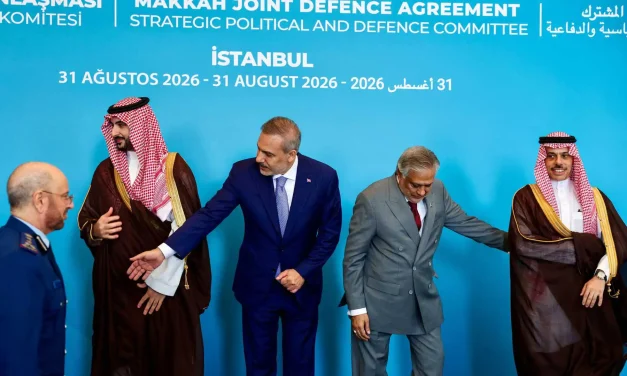
The Makkah Pact; Reasons for its Formation and Challenges Ahead

SCFR Online – Opinion: The Makkah Pact, signed between Saudi Arabia, Pakistan, and Turkey under the motto “an attack on one is an attack on all,” is viewed by some analysts less as a full-fledged military coalition and more as an attempt to reduce security dependence on an external power and to establish a regional security mechanism.

Implications of the US-Saudi Nuclear Agreement

SCFR Online – Opinion: The new US-Saudi nuclear agreement, despite legal and political ambiguities, could alter previous non-proliferation standards in West Asia and intensify nuclear competition, ushering it into a new phase.

An Analysis of Recent Turkey-Israeli Regime Tensions

SCFR Online – Opinion: Recent developments in Syria indicate an intensification of strategic rivalry between Turkey and the Israeli regime, but mutual considerations and the role of the United States have limited the likelihood of direct war.

Loading

Digital Age

The Role of Artificial Intelligence in Redefining Diplomacy in the Digital Age

The Role of Artificial Intelligence in Redefining Diplomacy in the Digital Age

Strategic Council Online– Opinion: From the past to the present, there has been a close relationship between technology and international relations. From the introduction of the steam engine to the emergence of the telephone and radio, significant milestones were achieved that enabled faster and more direct communication, reducing the need for intermediaries and diplomatic bureaucracy. The development and deployment of artificial intelligence (AI) systems also have the potential to transform various aspects of human life, much like climate change did decades ago in the international system. The reason AI impacts the international system, particularly in diplomacy, is that politics and political issues are among the most complex human behaviors, and this complexity reaches its peak in the international arena.

أحدث الوظائف

China’s Rejection of US Sanctions; Strengthening Iran’s Geopolitical Leverage

SCFR Online – Opinion: Concurrent with the official commencement of the United States’ economic war against our country, focusing on sanctions instruments, isolation, and economic pressure, what has now become increasingly important is the lack of alignment of other major global powers, especially China, with this policy.

The Makkah Pact; Reasons for its Formation and Challenges Ahead

SCFR Online – Opinion: The Makkah Pact, signed between Saudi Arabia, Pakistan, and Turkey under the motto “an attack on one is an attack on all,” is viewed by some analysts less as a full-fledged military coalition and more as an attempt to reduce security dependence on an external power and to establish a regional security mechanism.

Implications of the US-Saudi Nuclear Agreement

SCFR Online – Opinion: The new US-Saudi nuclear agreement, despite legal and political ambiguities, could alter previous non-proliferation standards in West Asia and intensify nuclear competition, ushering it into a new phase.

An Analysis of Recent Turkey-Israeli Regime Tensions

SCFR Online – Opinion: Recent developments in Syria indicate an intensification of strategic rivalry between Turkey and the Israeli regime, but mutual considerations and the role of the United States have limited the likelihood of direct war.

Loading

Digital Age

The Role of Artificial Intelligence in Redefining Diplomacy in the Digital Age

The Role of Artificial Intelligence in Redefining Diplomacy in the Digital Age

Strategic Council Online– Opinion: From the past to the present, there has been a close relationship between technology and international relations. From the introduction of the steam engine to the emergence of the telephone and radio, significant milestones were achieved that enabled faster and more direct communication, reducing the need for intermediaries and diplomatic bureaucracy. The development and deployment of artificial intelligence (AI) systems also have the potential to transform various aspects of human life, much like climate change did decades ago in the international system. The reason AI impacts the international system, particularly in diplomacy, is that politics and political issues are among the most complex human behaviors, and this complexity reaches its peak in the international arena.

Digital Age

The Role of Artificial Intelligence in Redefining Diplomacy in the Digital Age

The Role of Artificial Intelligence in Redefining Diplomacy in the Digital Age

Strategic Council Online– Opinion: From the past to the present, there has been a close relationship between technology and international relations. From the introduction of the steam engine to the emergence of the telephone and radio, significant milestones were achieved that enabled faster and more direct communication, reducing the need for intermediaries and diplomatic bureaucracy. The development and deployment of artificial intelligence (AI) systems also have the potential to transform various aspects of human life, much like climate change did decades ago in the international system. The reason AI impacts the international system, particularly in diplomacy, is that politics and political issues are among the most complex human behaviors, and this complexity reaches its peak in the international arena.

LATEST CONTENT

China’s Rejection of US Sanctions; Strengthening Iran’s Geopolitical Leverage

SCFR Online – Opinion: Concurrent with the official commencement of the United States’ economic war against our country, focusing on sanctions instruments, isolation, and economic pressure, what has now become increasingly important is the lack of alignment of other major global powers, especially China, with this policy.

The Makkah Pact; Reasons for its Formation and Challenges Ahead

SCFR Online – Opinion: The Makkah Pact, signed between Saudi Arabia, Pakistan, and Turkey under the motto “an attack on one is an attack on all,” is viewed by some analysts less as a full-fledged military coalition and more as an attempt to reduce security dependence on an external power and to establish a regional security mechanism.

Implications of the US-Saudi Nuclear Agreement

SCFR Online – Opinion: The new US-Saudi nuclear agreement, despite legal and political ambiguities, could alter previous non-proliferation standards in West Asia and intensify nuclear competition, ushering it into a new phase.

An Analysis of Recent Turkey-Israeli Regime Tensions

SCFR Online – Opinion: Recent developments in Syria indicate an intensification of strategic rivalry between Turkey and the Israeli regime, but mutual considerations and the role of the United States have limited the likelihood of direct war.

Loading

Digital Age

The Role of Artificial Intelligence in Redefining Diplomacy in the Digital Age

The Role of Artificial Intelligence in Redefining Diplomacy in the Digital Age

Strategic Council Online– Opinion: From the past to the present, there has been a close relationship between technology and international relations. From the introduction of the steam engine to the emergence of the telephone and radio, significant milestones were achieved that enabled faster and more direct communication, reducing the need for intermediaries and diplomatic bureaucracy. The development and deployment of artificial intelligence (AI) systems also have the potential to transform various aspects of human life, much like climate change did decades ago in the international system. The reason AI impacts the international system, particularly in diplomacy, is that politics and political issues are among the most complex human behaviors, and this complexity reaches its peak in the international arena.

ÚLTIMAS PUBLICACIONES

China’s Rejection of US Sanctions; Strengthening Iran’s Geopolitical Leverage

SCFR Online – Opinion: Concurrent with the official commencement of the United States’ economic war against our country, focusing on sanctions instruments, isolation, and economic pressure, what has now become increasingly important is the lack of alignment of other major global powers, especially China, with this policy.

The Makkah Pact; Reasons for its Formation and Challenges Ahead

SCFR Online – Opinion: The Makkah Pact, signed between Saudi Arabia, Pakistan, and Turkey under the motto “an attack on one is an attack on all,” is viewed by some analysts less as a full-fledged military coalition and more as an attempt to reduce security dependence on an external power and to establish a regional security mechanism.

Implications of the US-Saudi Nuclear Agreement

SCFR Online – Opinion: The new US-Saudi nuclear agreement, despite legal and political ambiguities, could alter previous non-proliferation standards in West Asia and intensify nuclear competition, ushering it into a new phase.

An Analysis of Recent Turkey-Israeli Regime Tensions

SCFR Online – Opinion: Recent developments in Syria indicate an intensification of strategic rivalry between Turkey and the Israeli regime, but mutual considerations and the role of the United States have limited the likelihood of direct war.

Loading

Digital Age

The Role of Artificial Intelligence in Redefining Diplomacy in the Digital Age

The Role of Artificial Intelligence in Redefining Diplomacy in the Digital Age

Strategic Council Online– Opinion: From the past to the present, there has been a close relationship between technology and international relations. From the introduction of the steam engine to the emergence of the telephone and radio, significant milestones were achieved that enabled faster and more direct communication, reducing the need for intermediaries and diplomatic bureaucracy. The development and deployment of artificial intelligence (AI) systems also have the potential to transform various aspects of human life, much like climate change did decades ago in the international system. The reason AI impacts the international system, particularly in diplomacy, is that politics and political issues are among the most complex human behaviors, and this complexity reaches its peak in the international arena.

ÚLTIMAS PUBLICACIONES

China’s Rejection of US Sanctions; Strengthening Iran’s Geopolitical Leverage

SCFR Online – Opinion: Concurrent with the official commencement of the United States’ economic war against our country, focusing on sanctions instruments, isolation, and economic pressure, what has now become increasingly important is the lack of alignment of other major global powers, especially China, with this policy.

The Makkah Pact; Reasons for its Formation and Challenges Ahead

SCFR Online – Opinion: The Makkah Pact, signed between Saudi Arabia, Pakistan, and Turkey under the motto “an attack on one is an attack on all,” is viewed by some analysts less as a full-fledged military coalition and more as an attempt to reduce security dependence on an external power and to establish a regional security mechanism.

Implications of the US-Saudi Nuclear Agreement

SCFR Online – Opinion: The new US-Saudi nuclear agreement, despite legal and political ambiguities, could alter previous non-proliferation standards in West Asia and intensify nuclear competition, ushering it into a new phase.

An Analysis of Recent Turkey-Israeli Regime Tensions

SCFR Online – Opinion: Recent developments in Syria indicate an intensification of strategic rivalry between Turkey and the Israeli regime, but mutual considerations and the role of the United States have limited the likelihood of direct war.

Loading

Digital Age

The Role of Artificial Intelligence in Redefining Diplomacy in the Digital Age

The Role of Artificial Intelligence in Redefining Diplomacy in the Digital Age

Strategic Council Online– Opinion: From the past to the present, there has been a close relationship between technology and international relations. From the introduction of the steam engine to the emergence of the telephone and radio, significant milestones were achieved that enabled faster and more direct communication, reducing the need for intermediaries and diplomatic bureaucracy. The development and deployment of artificial intelligence (AI) systems also have the potential to transform various aspects of human life, much like climate change did decades ago in the international system. The reason AI impacts the international system, particularly in diplomacy, is that politics and political issues are among the most complex human behaviors, and this complexity reaches its peak in the international arena.

ÚLTIMAS PUBLICACIONES

China’s Rejection of US Sanctions; Strengthening Iran’s Geopolitical Leverage

SCFR Online – Opinion: Concurrent with the official commencement of the United States’ economic war against our country, focusing on sanctions instruments, isolation, and economic pressure, what has now become increasingly important is the lack of alignment of other major global powers, especially China, with this policy.

The Makkah Pact; Reasons for its Formation and Challenges Ahead

SCFR Online – Opinion: The Makkah Pact, signed between Saudi Arabia, Pakistan, and Turkey under the motto “an attack on one is an attack on all,” is viewed by some analysts less as a full-fledged military coalition and more as an attempt to reduce security dependence on an external power and to establish a regional security mechanism.

Implications of the US-Saudi Nuclear Agreement

SCFR Online – Opinion: The new US-Saudi nuclear agreement, despite legal and political ambiguities, could alter previous non-proliferation standards in West Asia and intensify nuclear competition, ushering it into a new phase.

An Analysis of Recent Turkey-Israeli Regime Tensions

SCFR Online – Opinion: Recent developments in Syria indicate an intensification of strategic rivalry between Turkey and the Israeli regime, but mutual considerations and the role of the United States have limited the likelihood of direct war.

Loading

Digital Age

The Role of Artificial Intelligence in Redefining Diplomacy in the Digital Age

The Role of Artificial Intelligence in Redefining Diplomacy in the Digital Age

Strategic Council Online– Opinion: From the past to the present, there has been a close relationship between technology and international relations. From the introduction of the steam engine to the emergence of the telephone and radio, significant milestones were achieved that enabled faster and more direct communication, reducing the need for intermediaries and diplomatic bureaucracy. The development and deployment of artificial intelligence (AI) systems also have the potential to transform various aspects of human life, much like climate change did decades ago in the international system. The reason AI impacts the international system, particularly in diplomacy, is that politics and political issues are among the most complex human behaviors, and this complexity reaches its peak in the international arena.

ÚLTIMAS PUBLICACIONES

China’s Rejection of US Sanctions; Strengthening Iran’s Geopolitical Leverage

SCFR Online – Opinion: Concurrent with the official commencement of the United States’ economic war against our country, focusing on sanctions instruments, isolation, and economic pressure, what has now become increasingly important is the lack of alignment of other major global powers, especially China, with this policy.

The Makkah Pact; Reasons for its Formation and Challenges Ahead

SCFR Online – Opinion: The Makkah Pact, signed between Saudi Arabia, Pakistan, and Turkey under the motto “an attack on one is an attack on all,” is viewed by some analysts less as a full-fledged military coalition and more as an attempt to reduce security dependence on an external power and to establish a regional security mechanism.

Implications of the US-Saudi Nuclear Agreement

SCFR Online – Opinion: The new US-Saudi nuclear agreement, despite legal and political ambiguities, could alter previous non-proliferation standards in West Asia and intensify nuclear competition, ushering it into a new phase.

An Analysis of Recent Turkey-Israeli Regime Tensions

SCFR Online – Opinion: Recent developments in Syria indicate an intensification of strategic rivalry between Turkey and the Israeli regime, but mutual considerations and the role of the United States have limited the likelihood of direct war.

Loading