An Analysis of the Makkah Defense Pact
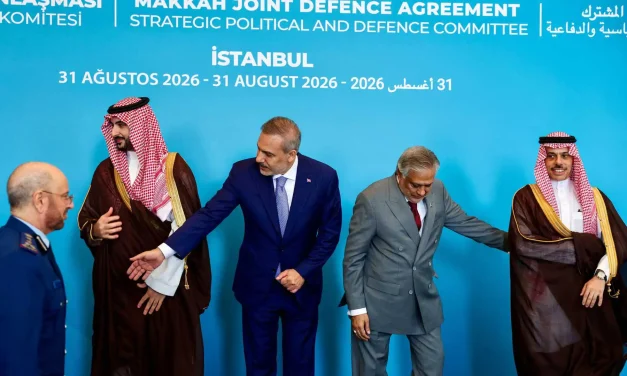
SCFR Online – Opinion: On Friday, August 7, the heads of state of three countries – Saudi Arabia, Turkey, and Pakistan – signed a text under the title “Makkah Joint Defense Agreement.”
Strategic Council Online – Note: The initiative to revive the Hejaz Railway, beyond being a transportation project, constitutes an attempt to redefine geopolitics, the economy, and Turkey’s regional position; however, its realization appears to face significant financial, security, and institutional challenges.
SCFR Online – Opinion: The Strait of Hormuz crisis is no longer merely the consequence of a military confrontation, but rather a sign of the transition from the US-centered maritime order to a new energy security structure involving the participation of emerging and influential powers.
SCFR Online – Opinion: Iran’s active deterrence strategy, while increasing the costs of US intervention, has increasingly exposed the hidden rifts between Washington’s interests and those of the Israeli regime.
SCFR Online – Opinion: The escalation of verbal and strategic tensions between Turkey and the Israeli regime, although not increasing the likelihood of direct war, indicates the formation of a new order in West Asian geopolitical rivalries.
Strategic Council Online – Note: Recent developments in the political geography of West Asia, from rising tensions in the Persian Gulf to missile and drone activities in the Red Sea and the recent warning by Kaja Kallas, the European Union’s foreign policy chief, regarding the threat to freedom of navigation, indicate a key pattern shift; the US-Iran war has moved beyond the scope of a regional and local confrontation and has linked two vital passageways for the global economy: the Strait of Hormuz and the Bab el-Mandeb Strait.
SCFR Online – Opinion: The Ukraine war was not merely a European crisis, but rather the starting point for the rearrangement of the global balance of power and a shift in the strategic behavior of great powers.
SCFR Online – Opinion: Great power competition is now pursued more in trade, currency, technology, and global supply chains than on the battlefields of military confrontation.
Strategic Council Online – The latest G7 summit showed that the conflict among the big world powers is intensifying and the world is moving towards a greater confrontation of the big powers.
Reza Majidzadeh – Researcher of the political economy of development
Strategic Council Online – An expert on international affairs said that in Europe we are witnessing a kind of confusion and also differences among various factions towards Russia, adding: Europe’s strategy towards Russia is first to guarantee supply over demand and then to extend this style of agreement to other contentious issues, including human rights or conflicting interests in Eastern Europe.
Strategic Council Online – A faculty member of Allameh Tabatabai University said that the growing tension between Russia and the United States has gripped Ukraine and will be fueled by Biden’s policies, adding that dispatch of NATO troops around Russia will force Moscow to increase its military spending at the cost of rising inflation and unemployment.
Strategic Council Online – An expert and analyst on Caucasus affairs, referring to the role of regional and trans-regional powers in the South Caucasus, said: There are issues and crises in the South Caucasus region, tensions have been frozen and if not properly managed, it is likely that the fire of ethnic and regional and perhaps international conflicts in this region would flare up again.
Strategic Council Online – An expert on European affairs, saying that perhaps with Brexit in future, the unity among the EU countries with the focus on France and Germany will increase, added: Of course, these assumptions are in the theoretical field and on paper, and we should see how France and Germany intend to use the situation as an opportunity to develop convergence within the European Union.
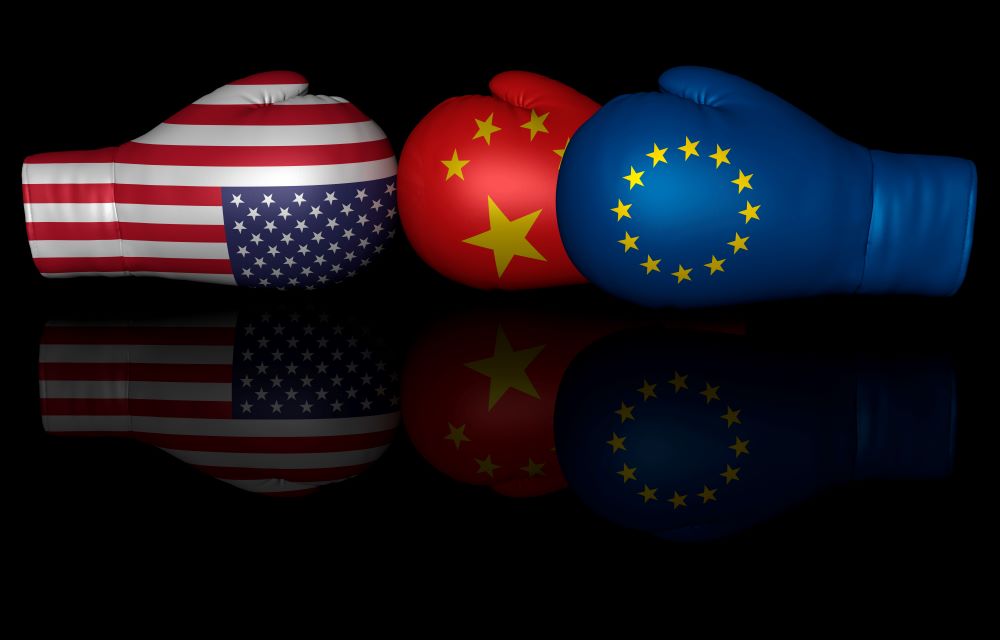
Strategic Council Online: An expert on Europe affairs believes that if the EU was to fully approach China, in the post-Trump period it would cause them harm and would lead to more transatlantic gap. To this end, Europe has taken a double-standard policy towards China.
Strategic Council Online—Interview: An expert of international relations says economic inequalities, discrimination and injustice in the United States would ultimately lead to the further fall of the US power.
Strategic Council Online – Perhaps one of the goals of the United States in transferring troops from Germany to Poland is to divert Moscow’s attention to Russia’s western borders, forcing the Russians to spend a significant portion of their troops and equipment, as well as their military budgets on the western borders.
Seyed Reza Mirtaher – Expert in Military and Strategic Issues
Strategic Council Online – An expert on European developments said that the withdrawal of US troops from Germany is a policy to intensify divergence in the European Union, adding that when part of the US military is to be concentrated in other European countries and long-term military ties and agreements are established with the US, political differences and divisions within the EU will increase.
Strategic Council Online: In the short term, given the EU’s internal crises, it cannot be hoped that Brussels-Moscow relations will improve quickly, but in the medium and long terms, the EU due to its dependence on Russian energy and the fact that part of Russia is on the European continent, is forced to settle differences with Moscow and to reduce tensions in the relations with Russia.
Alireza Samoudi – European Affairs Expert
SCFR Online – Opinion: On Friday, August 7, the heads of state of three countries – Saudi Arabia, Turkey, and Pakistan – signed a text under the title “Makkah Joint Defense Agreement.”
Strategic Council Online – Note: The initiative to revive the Hejaz Railway, beyond being a transportation project, constitutes an attempt to redefine geopolitics, the economy, and Turkey’s regional position; however, its realization appears to face significant financial, security, and institutional challenges.
SCFR Online – Opinion: The Strait of Hormuz crisis is no longer merely the consequence of a military confrontation, but rather a sign of the transition from the US-centered maritime order to a new energy security structure involving the participation of emerging and influential powers.
SCFR Online – Opinion: Iran’s active deterrence strategy, while increasing the costs of US intervention, has increasingly exposed the hidden rifts between Washington’s interests and those of the Israeli regime.
SCFR Online – Opinion: The escalation of verbal and strategic tensions between Turkey and the Israeli regime, although not increasing the likelihood of direct war, indicates the formation of a new order in West Asian geopolitical rivalries.
Strategic Council Online – Note: Recent developments in the political geography of West Asia, from rising tensions in the Persian Gulf to missile and drone activities in the Red Sea and the recent warning by Kaja Kallas, the European Union’s foreign policy chief, regarding the threat to freedom of navigation, indicate a key pattern shift; the US-Iran war has moved beyond the scope of a regional and local confrontation and has linked two vital passageways for the global economy: the Strait of Hormuz and the Bab el-Mandeb Strait.
SCFR Online – Opinion: The Ukraine war was not merely a European crisis, but rather the starting point for the rearrangement of the global balance of power and a shift in the strategic behavior of great powers.
SCFR Online – Opinion: Great power competition is now pursued more in trade, currency, technology, and global supply chains than on the battlefields of military confrontation.
Strategic Council Online – The latest G7 summit showed that the conflict among the big world powers is intensifying and the world is moving towards a greater confrontation of the big powers.
Reza Majidzadeh – Researcher of the political economy of development
Strategic Council Online – An expert on international affairs said that in Europe we are witnessing a kind of confusion and also differences among various factions towards Russia, adding: Europe’s strategy towards Russia is first to guarantee supply over demand and then to extend this style of agreement to other contentious issues, including human rights or conflicting interests in Eastern Europe.
Strategic Council Online – A faculty member of Allameh Tabatabai University said that the growing tension between Russia and the United States has gripped Ukraine and will be fueled by Biden’s policies, adding that dispatch of NATO troops around Russia will force Moscow to increase its military spending at the cost of rising inflation and unemployment.
Strategic Council Online – An expert and analyst on Caucasus affairs, referring to the role of regional and trans-regional powers in the South Caucasus, said: There are issues and crises in the South Caucasus region, tensions have been frozen and if not properly managed, it is likely that the fire of ethnic and regional and perhaps international conflicts in this region would flare up again.
Strategic Council Online – An expert on European affairs, saying that perhaps with Brexit in future, the unity among the EU countries with the focus on France and Germany will increase, added: Of course, these assumptions are in the theoretical field and on paper, and we should see how France and Germany intend to use the situation as an opportunity to develop convergence within the European Union.
Strategic Council Online: An expert on Europe affairs believes that if the EU was to fully approach China, in the post-Trump period it would cause them harm and would lead to more transatlantic gap. To this end, Europe has taken a double-standard policy towards China.
Strategic Council Online—Interview: An expert of international relations says economic inequalities, discrimination and injustice in the United States would ultimately lead to the further fall of the US power.
Strategic Council Online – Perhaps one of the goals of the United States in transferring troops from Germany to Poland is to divert Moscow’s attention to Russia’s western borders, forcing the Russians to spend a significant portion of their troops and equipment, as well as their military budgets on the western borders.
Seyed Reza Mirtaher – Expert in Military and Strategic Issues
Strategic Council Online – An expert on European developments said that the withdrawal of US troops from Germany is a policy to intensify divergence in the European Union, adding that when part of the US military is to be concentrated in other European countries and long-term military ties and agreements are established with the US, political differences and divisions within the EU will increase.
Strategic Council Online: In the short term, given the EU’s internal crises, it cannot be hoped that Brussels-Moscow relations will improve quickly, but in the medium and long terms, the EU due to its dependence on Russian energy and the fact that part of Russia is on the European continent, is forced to settle differences with Moscow and to reduce tensions in the relations with Russia.
Alireza Samoudi – European Affairs Expert
Strategic Council Online – The latest G7 summit showed that the conflict among the big world powers is intensifying and the world is moving towards a greater confrontation of the big powers.
Reza Majidzadeh – Researcher of the political economy of development
Strategic Council Online – An expert on international affairs said that in Europe we are witnessing a kind of confusion and also differences among various factions towards Russia, adding: Europe’s strategy towards Russia is first to guarantee supply over demand and then to extend this style of agreement to other contentious issues, including human rights or conflicting interests in Eastern Europe.
Strategic Council Online – A faculty member of Allameh Tabatabai University said that the growing tension between Russia and the United States has gripped Ukraine and will be fueled by Biden’s policies, adding that dispatch of NATO troops around Russia will force Moscow to increase its military spending at the cost of rising inflation and unemployment.
Strategic Council Online – An expert and analyst on Caucasus affairs, referring to the role of regional and trans-regional powers in the South Caucasus, said: There are issues and crises in the South Caucasus region, tensions have been frozen and if not properly managed, it is likely that the fire of ethnic and regional and perhaps international conflicts in this region would flare up again.
Strategic Council Online – An expert on European affairs, saying that perhaps with Brexit in future, the unity among the EU countries with the focus on France and Germany will increase, added: Of course, these assumptions are in the theoretical field and on paper, and we should see how France and Germany intend to use the situation as an opportunity to develop convergence within the European Union.
Strategic Council Online: An expert on Europe affairs believes that if the EU was to fully approach China, in the post-Trump period it would cause them harm and would lead to more transatlantic gap. To this end, Europe has taken a double-standard policy towards China.
Strategic Council Online—Interview: An expert of international relations says economic inequalities, discrimination and injustice in the United States would ultimately lead to the further fall of the US power.
Strategic Council Online – Perhaps one of the goals of the United States in transferring troops from Germany to Poland is to divert Moscow’s attention to Russia’s western borders, forcing the Russians to spend a significant portion of their troops and equipment, as well as their military budgets on the western borders.
Seyed Reza Mirtaher – Expert in Military and Strategic Issues
Strategic Council Online – An expert on European developments said that the withdrawal of US troops from Germany is a policy to intensify divergence in the European Union, adding that when part of the US military is to be concentrated in other European countries and long-term military ties and agreements are established with the US, political differences and divisions within the EU will increase.
Strategic Council Online: In the short term, given the EU’s internal crises, it cannot be hoped that Brussels-Moscow relations will improve quickly, but in the medium and long terms, the EU due to its dependence on Russian energy and the fact that part of Russia is on the European continent, is forced to settle differences with Moscow and to reduce tensions in the relations with Russia.
Alireza Samoudi – European Affairs Expert
SCFR Online – Opinion: On Friday, August 7, the heads of state of three countries – Saudi Arabia, Turkey, and Pakistan – signed a text under the title “Makkah Joint Defense Agreement.”
Strategic Council Online – Note: The initiative to revive the Hejaz Railway, beyond being a transportation project, constitutes an attempt to redefine geopolitics, the economy, and Turkey’s regional position; however, its realization appears to face significant financial, security, and institutional challenges.
SCFR Online – Opinion: The Strait of Hormuz crisis is no longer merely the consequence of a military confrontation, but rather a sign of the transition from the US-centered maritime order to a new energy security structure involving the participation of emerging and influential powers.
SCFR Online – Opinion: Iran’s active deterrence strategy, while increasing the costs of US intervention, has increasingly exposed the hidden rifts between Washington’s interests and those of the Israeli regime.
SCFR Online – Opinion: The escalation of verbal and strategic tensions between Turkey and the Israeli regime, although not increasing the likelihood of direct war, indicates the formation of a new order in West Asian geopolitical rivalries.
Strategic Council Online – Note: Recent developments in the political geography of West Asia, from rising tensions in the Persian Gulf to missile and drone activities in the Red Sea and the recent warning by Kaja Kallas, the European Union’s foreign policy chief, regarding the threat to freedom of navigation, indicate a key pattern shift; the US-Iran war has moved beyond the scope of a regional and local confrontation and has linked two vital passageways for the global economy: the Strait of Hormuz and the Bab el-Mandeb Strait.
SCFR Online – Opinion: The Ukraine war was not merely a European crisis, but rather the starting point for the rearrangement of the global balance of power and a shift in the strategic behavior of great powers.
SCFR Online – Opinion: Great power competition is now pursued more in trade, currency, technology, and global supply chains than on the battlefields of military confrontation.
Strategic Council Online – The latest G7 summit showed that the conflict among the big world powers is intensifying and the world is moving towards a greater confrontation of the big powers.
Reza Majidzadeh – Researcher of the political economy of development
Strategic Council Online – An expert on international affairs said that in Europe we are witnessing a kind of confusion and also differences among various factions towards Russia, adding: Europe’s strategy towards Russia is first to guarantee supply over demand and then to extend this style of agreement to other contentious issues, including human rights or conflicting interests in Eastern Europe.
Strategic Council Online – A faculty member of Allameh Tabatabai University said that the growing tension between Russia and the United States has gripped Ukraine and will be fueled by Biden’s policies, adding that dispatch of NATO troops around Russia will force Moscow to increase its military spending at the cost of rising inflation and unemployment.
Strategic Council Online – An expert and analyst on Caucasus affairs, referring to the role of regional and trans-regional powers in the South Caucasus, said: There are issues and crises in the South Caucasus region, tensions have been frozen and if not properly managed, it is likely that the fire of ethnic and regional and perhaps international conflicts in this region would flare up again.
Strategic Council Online – An expert on European affairs, saying that perhaps with Brexit in future, the unity among the EU countries with the focus on France and Germany will increase, added: Of course, these assumptions are in the theoretical field and on paper, and we should see how France and Germany intend to use the situation as an opportunity to develop convergence within the European Union.
Strategic Council Online: An expert on Europe affairs believes that if the EU was to fully approach China, in the post-Trump period it would cause them harm and would lead to more transatlantic gap. To this end, Europe has taken a double-standard policy towards China.
Strategic Council Online—Interview: An expert of international relations says economic inequalities, discrimination and injustice in the United States would ultimately lead to the further fall of the US power.
Strategic Council Online – Perhaps one of the goals of the United States in transferring troops from Germany to Poland is to divert Moscow’s attention to Russia’s western borders, forcing the Russians to spend a significant portion of their troops and equipment, as well as their military budgets on the western borders.
Seyed Reza Mirtaher – Expert in Military and Strategic Issues
Strategic Council Online – An expert on European developments said that the withdrawal of US troops from Germany is a policy to intensify divergence in the European Union, adding that when part of the US military is to be concentrated in other European countries and long-term military ties and agreements are established with the US, political differences and divisions within the EU will increase.
Strategic Council Online: In the short term, given the EU’s internal crises, it cannot be hoped that Brussels-Moscow relations will improve quickly, but in the medium and long terms, the EU due to its dependence on Russian energy and the fact that part of Russia is on the European continent, is forced to settle differences with Moscow and to reduce tensions in the relations with Russia.
Alireza Samoudi – European Affairs Expert
SCFR Online – Opinion: On Friday, August 7, the heads of state of three countries – Saudi Arabia, Turkey, and Pakistan – signed a text under the title “Makkah Joint Defense Agreement.”
Strategic Council Online – Note: The initiative to revive the Hejaz Railway, beyond being a transportation project, constitutes an attempt to redefine geopolitics, the economy, and Turkey’s regional position; however, its realization appears to face significant financial, security, and institutional challenges.
SCFR Online – Opinion: The Strait of Hormuz crisis is no longer merely the consequence of a military confrontation, but rather a sign of the transition from the US-centered maritime order to a new energy security structure involving the participation of emerging and influential powers.
SCFR Online – Opinion: Iran’s active deterrence strategy, while increasing the costs of US intervention, has increasingly exposed the hidden rifts between Washington’s interests and those of the Israeli regime.
SCFR Online – Opinion: The escalation of verbal and strategic tensions between Turkey and the Israeli regime, although not increasing the likelihood of direct war, indicates the formation of a new order in West Asian geopolitical rivalries.
Strategic Council Online – Note: Recent developments in the political geography of West Asia, from rising tensions in the Persian Gulf to missile and drone activities in the Red Sea and the recent warning by Kaja Kallas, the European Union’s foreign policy chief, regarding the threat to freedom of navigation, indicate a key pattern shift; the US-Iran war has moved beyond the scope of a regional and local confrontation and has linked two vital passageways for the global economy: the Strait of Hormuz and the Bab el-Mandeb Strait.
SCFR Online – Opinion: The Ukraine war was not merely a European crisis, but rather the starting point for the rearrangement of the global balance of power and a shift in the strategic behavior of great powers.
SCFR Online – Opinion: Great power competition is now pursued more in trade, currency, technology, and global supply chains than on the battlefields of military confrontation.
Strategic Council Online – The latest G7 summit showed that the conflict among the big world powers is intensifying and the world is moving towards a greater confrontation of the big powers.
Reza Majidzadeh – Researcher of the political economy of development
Strategic Council Online – An expert on international affairs said that in Europe we are witnessing a kind of confusion and also differences among various factions towards Russia, adding: Europe’s strategy towards Russia is first to guarantee supply over demand and then to extend this style of agreement to other contentious issues, including human rights or conflicting interests in Eastern Europe.
Strategic Council Online – A faculty member of Allameh Tabatabai University said that the growing tension between Russia and the United States has gripped Ukraine and will be fueled by Biden’s policies, adding that dispatch of NATO troops around Russia will force Moscow to increase its military spending at the cost of rising inflation and unemployment.
Strategic Council Online – An expert and analyst on Caucasus affairs, referring to the role of regional and trans-regional powers in the South Caucasus, said: There are issues and crises in the South Caucasus region, tensions have been frozen and if not properly managed, it is likely that the fire of ethnic and regional and perhaps international conflicts in this region would flare up again.
Strategic Council Online – An expert on European affairs, saying that perhaps with Brexit in future, the unity among the EU countries with the focus on France and Germany will increase, added: Of course, these assumptions are in the theoretical field and on paper, and we should see how France and Germany intend to use the situation as an opportunity to develop convergence within the European Union.
Strategic Council Online: An expert on Europe affairs believes that if the EU was to fully approach China, in the post-Trump period it would cause them harm and would lead to more transatlantic gap. To this end, Europe has taken a double-standard policy towards China.
Strategic Council Online—Interview: An expert of international relations says economic inequalities, discrimination and injustice in the United States would ultimately lead to the further fall of the US power.
Strategic Council Online – Perhaps one of the goals of the United States in transferring troops from Germany to Poland is to divert Moscow’s attention to Russia’s western borders, forcing the Russians to spend a significant portion of their troops and equipment, as well as their military budgets on the western borders.
Seyed Reza Mirtaher – Expert in Military and Strategic Issues
Strategic Council Online – An expert on European developments said that the withdrawal of US troops from Germany is a policy to intensify divergence in the European Union, adding that when part of the US military is to be concentrated in other European countries and long-term military ties and agreements are established with the US, political differences and divisions within the EU will increase.
Strategic Council Online: In the short term, given the EU’s internal crises, it cannot be hoped that Brussels-Moscow relations will improve quickly, but in the medium and long terms, the EU due to its dependence on Russian energy and the fact that part of Russia is on the European continent, is forced to settle differences with Moscow and to reduce tensions in the relations with Russia.
Alireza Samoudi – European Affairs Expert
SCFR Online – Opinion: On Friday, August 7, the heads of state of three countries – Saudi Arabia, Turkey, and Pakistan – signed a text under the title “Makkah Joint Defense Agreement.”
Strategic Council Online – Note: The initiative to revive the Hejaz Railway, beyond being a transportation project, constitutes an attempt to redefine geopolitics, the economy, and Turkey’s regional position; however, its realization appears to face significant financial, security, and institutional challenges.
SCFR Online – Opinion: The Strait of Hormuz crisis is no longer merely the consequence of a military confrontation, but rather a sign of the transition from the US-centered maritime order to a new energy security structure involving the participation of emerging and influential powers.
SCFR Online – Opinion: Iran’s active deterrence strategy, while increasing the costs of US intervention, has increasingly exposed the hidden rifts between Washington’s interests and those of the Israeli regime.
SCFR Online – Opinion: The escalation of verbal and strategic tensions between Turkey and the Israeli regime, although not increasing the likelihood of direct war, indicates the formation of a new order in West Asian geopolitical rivalries.
Strategic Council Online – Note: Recent developments in the political geography of West Asia, from rising tensions in the Persian Gulf to missile and drone activities in the Red Sea and the recent warning by Kaja Kallas, the European Union’s foreign policy chief, regarding the threat to freedom of navigation, indicate a key pattern shift; the US-Iran war has moved beyond the scope of a regional and local confrontation and has linked two vital passageways for the global economy: the Strait of Hormuz and the Bab el-Mandeb Strait.
SCFR Online – Opinion: The Ukraine war was not merely a European crisis, but rather the starting point for the rearrangement of the global balance of power and a shift in the strategic behavior of great powers.
SCFR Online – Opinion: Great power competition is now pursued more in trade, currency, technology, and global supply chains than on the battlefields of military confrontation.
Strategic Council Online – The latest G7 summit showed that the conflict among the big world powers is intensifying and the world is moving towards a greater confrontation of the big powers.
Reza Majidzadeh – Researcher of the political economy of development
Strategic Council Online – An expert on international affairs said that in Europe we are witnessing a kind of confusion and also differences among various factions towards Russia, adding: Europe’s strategy towards Russia is first to guarantee supply over demand and then to extend this style of agreement to other contentious issues, including human rights or conflicting interests in Eastern Europe.
Strategic Council Online – A faculty member of Allameh Tabatabai University said that the growing tension between Russia and the United States has gripped Ukraine and will be fueled by Biden’s policies, adding that dispatch of NATO troops around Russia will force Moscow to increase its military spending at the cost of rising inflation and unemployment.
Strategic Council Online – An expert and analyst on Caucasus affairs, referring to the role of regional and trans-regional powers in the South Caucasus, said: There are issues and crises in the South Caucasus region, tensions have been frozen and if not properly managed, it is likely that the fire of ethnic and regional and perhaps international conflicts in this region would flare up again.
Strategic Council Online – An expert on European affairs, saying that perhaps with Brexit in future, the unity among the EU countries with the focus on France and Germany will increase, added: Of course, these assumptions are in the theoretical field and on paper, and we should see how France and Germany intend to use the situation as an opportunity to develop convergence within the European Union.
Strategic Council Online: An expert on Europe affairs believes that if the EU was to fully approach China, in the post-Trump period it would cause them harm and would lead to more transatlantic gap. To this end, Europe has taken a double-standard policy towards China.
Strategic Council Online—Interview: An expert of international relations says economic inequalities, discrimination and injustice in the United States would ultimately lead to the further fall of the US power.
Strategic Council Online – Perhaps one of the goals of the United States in transferring troops from Germany to Poland is to divert Moscow’s attention to Russia’s western borders, forcing the Russians to spend a significant portion of their troops and equipment, as well as their military budgets on the western borders.
Seyed Reza Mirtaher – Expert in Military and Strategic Issues
Strategic Council Online – An expert on European developments said that the withdrawal of US troops from Germany is a policy to intensify divergence in the European Union, adding that when part of the US military is to be concentrated in other European countries and long-term military ties and agreements are established with the US, political differences and divisions within the EU will increase.
Strategic Council Online: In the short term, given the EU’s internal crises, it cannot be hoped that Brussels-Moscow relations will improve quickly, but in the medium and long terms, the EU due to its dependence on Russian energy and the fact that part of Russia is on the European continent, is forced to settle differences with Moscow and to reduce tensions in the relations with Russia.
Alireza Samoudi – European Affairs Expert
SCFR Online – Opinion: On Friday, August 7, the heads of state of three countries – Saudi Arabia, Turkey, and Pakistan – signed a text under the title “Makkah Joint Defense Agreement.”
Strategic Council Online – Note: The initiative to revive the Hejaz Railway, beyond being a transportation project, constitutes an attempt to redefine geopolitics, the economy, and Turkey’s regional position; however, its realization appears to face significant financial, security, and institutional challenges.
SCFR Online – Opinion: The Strait of Hormuz crisis is no longer merely the consequence of a military confrontation, but rather a sign of the transition from the US-centered maritime order to a new energy security structure involving the participation of emerging and influential powers.
SCFR Online – Opinion: Iran’s active deterrence strategy, while increasing the costs of US intervention, has increasingly exposed the hidden rifts between Washington’s interests and those of the Israeli regime.
SCFR Online – Opinion: The escalation of verbal and strategic tensions between Turkey and the Israeli regime, although not increasing the likelihood of direct war, indicates the formation of a new order in West Asian geopolitical rivalries.
Strategic Council Online – Note: Recent developments in the political geography of West Asia, from rising tensions in the Persian Gulf to missile and drone activities in the Red Sea and the recent warning by Kaja Kallas, the European Union’s foreign policy chief, regarding the threat to freedom of navigation, indicate a key pattern shift; the US-Iran war has moved beyond the scope of a regional and local confrontation and has linked two vital passageways for the global economy: the Strait of Hormuz and the Bab el-Mandeb Strait.
SCFR Online – Opinion: The Ukraine war was not merely a European crisis, but rather the starting point for the rearrangement of the global balance of power and a shift in the strategic behavior of great powers.
SCFR Online – Opinion: Great power competition is now pursued more in trade, currency, technology, and global supply chains than on the battlefields of military confrontation.
Strategic Council Online – The latest G7 summit showed that the conflict among the big world powers is intensifying and the world is moving towards a greater confrontation of the big powers.
Reza Majidzadeh – Researcher of the political economy of development
Strategic Council Online – An expert on international affairs said that in Europe we are witnessing a kind of confusion and also differences among various factions towards Russia, adding: Europe’s strategy towards Russia is first to guarantee supply over demand and then to extend this style of agreement to other contentious issues, including human rights or conflicting interests in Eastern Europe.
Strategic Council Online – A faculty member of Allameh Tabatabai University said that the growing tension between Russia and the United States has gripped Ukraine and will be fueled by Biden’s policies, adding that dispatch of NATO troops around Russia will force Moscow to increase its military spending at the cost of rising inflation and unemployment.
Strategic Council Online – An expert and analyst on Caucasus affairs, referring to the role of regional and trans-regional powers in the South Caucasus, said: There are issues and crises in the South Caucasus region, tensions have been frozen and if not properly managed, it is likely that the fire of ethnic and regional and perhaps international conflicts in this region would flare up again.
Strategic Council Online – An expert on European affairs, saying that perhaps with Brexit in future, the unity among the EU countries with the focus on France and Germany will increase, added: Of course, these assumptions are in the theoretical field and on paper, and we should see how France and Germany intend to use the situation as an opportunity to develop convergence within the European Union.
Strategic Council Online: An expert on Europe affairs believes that if the EU was to fully approach China, in the post-Trump period it would cause them harm and would lead to more transatlantic gap. To this end, Europe has taken a double-standard policy towards China.
Strategic Council Online—Interview: An expert of international relations says economic inequalities, discrimination and injustice in the United States would ultimately lead to the further fall of the US power.
Strategic Council Online – Perhaps one of the goals of the United States in transferring troops from Germany to Poland is to divert Moscow’s attention to Russia’s western borders, forcing the Russians to spend a significant portion of their troops and equipment, as well as their military budgets on the western borders.
Seyed Reza Mirtaher – Expert in Military and Strategic Issues
Strategic Council Online – An expert on European developments said that the withdrawal of US troops from Germany is a policy to intensify divergence in the European Union, adding that when part of the US military is to be concentrated in other European countries and long-term military ties and agreements are established with the US, political differences and divisions within the EU will increase.
Strategic Council Online: In the short term, given the EU’s internal crises, it cannot be hoped that Brussels-Moscow relations will improve quickly, but in the medium and long terms, the EU due to its dependence on Russian energy and the fact that part of Russia is on the European continent, is forced to settle differences with Moscow and to reduce tensions in the relations with Russia.
Alireza Samoudi – European Affairs Expert
SCFR Online – Opinion: On Friday, August 7, the heads of state of three countries – Saudi Arabia, Turkey, and Pakistan – signed a text under the title “Makkah Joint Defense Agreement.”
Strategic Council Online – Note: The initiative to revive the Hejaz Railway, beyond being a transportation project, constitutes an attempt to redefine geopolitics, the economy, and Turkey’s regional position; however, its realization appears to face significant financial, security, and institutional challenges.
SCFR Online – Opinion: The Strait of Hormuz crisis is no longer merely the consequence of a military confrontation, but rather a sign of the transition from the US-centered maritime order to a new energy security structure involving the participation of emerging and influential powers.
SCFR Online – Opinion: Iran’s active deterrence strategy, while increasing the costs of US intervention, has increasingly exposed the hidden rifts between Washington’s interests and those of the Israeli regime.
SCFR Online – Opinion: The escalation of verbal and strategic tensions between Turkey and the Israeli regime, although not increasing the likelihood of direct war, indicates the formation of a new order in West Asian geopolitical rivalries.
Strategic Council Online – Note: Recent developments in the political geography of West Asia, from rising tensions in the Persian Gulf to missile and drone activities in the Red Sea and the recent warning by Kaja Kallas, the European Union’s foreign policy chief, regarding the threat to freedom of navigation, indicate a key pattern shift; the US-Iran war has moved beyond the scope of a regional and local confrontation and has linked two vital passageways for the global economy: the Strait of Hormuz and the Bab el-Mandeb Strait.
SCFR Online – Opinion: The Ukraine war was not merely a European crisis, but rather the starting point for the rearrangement of the global balance of power and a shift in the strategic behavior of great powers.
SCFR Online – Opinion: Great power competition is now pursued more in trade, currency, technology, and global supply chains than on the battlefields of military confrontation.