جدیدترین مطالب

China’s Rejection of US Sanctions; Strengthening Iran’s Geopolitical Leverage

SCFR Online – Opinion: Concurrent with the official commencement of the United States’ economic war against our country, focusing on sanctions instruments, isolation, and economic pressure, what has now become increasingly important is the lack of alignment of other major global powers, especially China, with this policy.

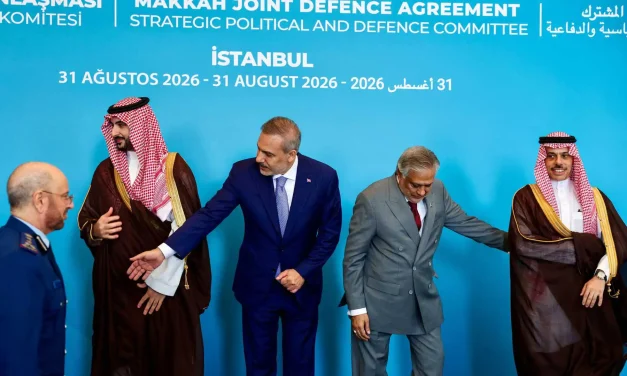
The Makkah Pact; Reasons for its Formation and Challenges Ahead

SCFR Online – Opinion: The Makkah Pact, signed between Saudi Arabia, Pakistan, and Turkey under the motto “an attack on one is an attack on all,” is viewed by some analysts less as a full-fledged military coalition and more as an attempt to reduce security dependence on an external power and to establish a regional security mechanism.

Implications of the US-Saudi Nuclear Agreement

SCFR Online – Opinion: The new US-Saudi nuclear agreement, despite legal and political ambiguities, could alter previous non-proliferation standards in West Asia and intensify nuclear competition, ushering it into a new phase.

An Analysis of Recent Turkey-Israeli Regime Tensions

SCFR Online – Opinion: Recent developments in Syria indicate an intensification of strategic rivalry between Turkey and the Israeli regime, but mutual considerations and the role of the United States have limited the likelihood of direct war.

Loading

Japan

Quad; Strategic Partnership in Soft Confrontation with China

Quad; Strategic Partnership in Soft Confrontation with China

Strategic Council Online – Opinion: Joe Biden recently met with prime ministers of Australia, Japan and India in the United States. It was in 2007 that the first meeting of the Quad Group (the US, Australia, Japan and India) was held in New York in order to confront China’s growing power in the two diplomacy and security areas in Indo-Pacific region.
Reza Majidzadeh – Director of Simorgh Development Working Group, Pasargad Millennium Plan Think Tank

Factors Affective in Strengthening EU-India Relations

Factors Affective in Strengthening EU-India Relations

Strategic Council Online – Opinion: Although the European Union and India have stepped up their efforts to strengthen trade cooperation in recent months, prospects for economic cooperation between Brussels and Delhi remain unclear.
Alireza Thamoudi – Expert on Europe affairs

North Korea’s Offensive Strategy; a Response to US Sanctions

North Korea’s Offensive Strategy; a Response to US Sanctions

Strategic Council Online: An expert on Asian affairs said that the Trump administration’s pressure on North Korea has not been effective, adding that Pyongyang’s efforts to achieve definitive results in negotiations and lack of proper response from the United States have made North Korea mistrustful towards the US and the negotiation table more than the past. Pyongyang also considers diplomacy an ineffective way to restore peace.

Failed US-North Korea Summit & Korean Peninsula Developments

Strategic Council Online: The second US-North Korean summit ended in Vietnam without a clear conclusion and agreement. The main question occupying the minds of analysts is whether this summit meeting is the end of the first step of the two countries in trying diplomacy. Or is the end of diplomacy between the United States and North Korea due to the continuation of negotiations because of differences in approaches?
Assadollah Kaveh – East Asia Affairs Expert

أحدث الوظائف

China’s Rejection of US Sanctions; Strengthening Iran’s Geopolitical Leverage

SCFR Online – Opinion: Concurrent with the official commencement of the United States’ economic war against our country, focusing on sanctions instruments, isolation, and economic pressure, what has now become increasingly important is the lack of alignment of other major global powers, especially China, with this policy.

The Makkah Pact; Reasons for its Formation and Challenges Ahead

SCFR Online – Opinion: The Makkah Pact, signed between Saudi Arabia, Pakistan, and Turkey under the motto “an attack on one is an attack on all,” is viewed by some analysts less as a full-fledged military coalition and more as an attempt to reduce security dependence on an external power and to establish a regional security mechanism.

Implications of the US-Saudi Nuclear Agreement

SCFR Online – Opinion: The new US-Saudi nuclear agreement, despite legal and political ambiguities, could alter previous non-proliferation standards in West Asia and intensify nuclear competition, ushering it into a new phase.

An Analysis of Recent Turkey-Israeli Regime Tensions

SCFR Online – Opinion: Recent developments in Syria indicate an intensification of strategic rivalry between Turkey and the Israeli regime, but mutual considerations and the role of the United States have limited the likelihood of direct war.

Loading

Japan

Quad; Strategic Partnership in Soft Confrontation with China

Quad; Strategic Partnership in Soft Confrontation with China

Strategic Council Online – Opinion: Joe Biden recently met with prime ministers of Australia, Japan and India in the United States. It was in 2007 that the first meeting of the Quad Group (the US, Australia, Japan and India) was held in New York in order to confront China’s growing power in the two diplomacy and security areas in Indo-Pacific region.
Reza Majidzadeh – Director of Simorgh Development Working Group, Pasargad Millennium Plan Think Tank

Factors Affective in Strengthening EU-India Relations

Factors Affective in Strengthening EU-India Relations

Strategic Council Online – Opinion: Although the European Union and India have stepped up their efforts to strengthen trade cooperation in recent months, prospects for economic cooperation between Brussels and Delhi remain unclear.
Alireza Thamoudi – Expert on Europe affairs

North Korea’s Offensive Strategy; a Response to US Sanctions

North Korea’s Offensive Strategy; a Response to US Sanctions

Strategic Council Online: An expert on Asian affairs said that the Trump administration’s pressure on North Korea has not been effective, adding that Pyongyang’s efforts to achieve definitive results in negotiations and lack of proper response from the United States have made North Korea mistrustful towards the US and the negotiation table more than the past. Pyongyang also considers diplomacy an ineffective way to restore peace.

Failed US-North Korea Summit & Korean Peninsula Developments

Strategic Council Online: The second US-North Korean summit ended in Vietnam without a clear conclusion and agreement. The main question occupying the minds of analysts is whether this summit meeting is the end of the first step of the two countries in trying diplomacy. Or is the end of diplomacy between the United States and North Korea due to the continuation of negotiations because of differences in approaches?
Assadollah Kaveh – East Asia Affairs Expert

Japan

Quad; Strategic Partnership in Soft Confrontation with China

Quad; Strategic Partnership in Soft Confrontation with China

Strategic Council Online – Opinion: Joe Biden recently met with prime ministers of Australia, Japan and India in the United States. It was in 2007 that the first meeting of the Quad Group (the US, Australia, Japan and India) was held in New York in order to confront China’s growing power in the two diplomacy and security areas in Indo-Pacific region.
Reza Majidzadeh – Director of Simorgh Development Working Group, Pasargad Millennium Plan Think Tank

Factors Affective in Strengthening EU-India Relations

Factors Affective in Strengthening EU-India Relations

Strategic Council Online – Opinion: Although the European Union and India have stepped up their efforts to strengthen trade cooperation in recent months, prospects for economic cooperation between Brussels and Delhi remain unclear.
Alireza Thamoudi – Expert on Europe affairs

North Korea’s Offensive Strategy; a Response to US Sanctions

North Korea’s Offensive Strategy; a Response to US Sanctions

Strategic Council Online: An expert on Asian affairs said that the Trump administration’s pressure on North Korea has not been effective, adding that Pyongyang’s efforts to achieve definitive results in negotiations and lack of proper response from the United States have made North Korea mistrustful towards the US and the negotiation table more than the past. Pyongyang also considers diplomacy an ineffective way to restore peace.

Failed US-North Korea Summit & Korean Peninsula Developments

Strategic Council Online: The second US-North Korean summit ended in Vietnam without a clear conclusion and agreement. The main question occupying the minds of analysts is whether this summit meeting is the end of the first step of the two countries in trying diplomacy. Or is the end of diplomacy between the United States and North Korea due to the continuation of negotiations because of differences in approaches?
Assadollah Kaveh – East Asia Affairs Expert

LATEST CONTENT

China’s Rejection of US Sanctions; Strengthening Iran’s Geopolitical Leverage

SCFR Online – Opinion: Concurrent with the official commencement of the United States’ economic war against our country, focusing on sanctions instruments, isolation, and economic pressure, what has now become increasingly important is the lack of alignment of other major global powers, especially China, with this policy.

The Makkah Pact; Reasons for its Formation and Challenges Ahead

SCFR Online – Opinion: The Makkah Pact, signed between Saudi Arabia, Pakistan, and Turkey under the motto “an attack on one is an attack on all,” is viewed by some analysts less as a full-fledged military coalition and more as an attempt to reduce security dependence on an external power and to establish a regional security mechanism.

Implications of the US-Saudi Nuclear Agreement

SCFR Online – Opinion: The new US-Saudi nuclear agreement, despite legal and political ambiguities, could alter previous non-proliferation standards in West Asia and intensify nuclear competition, ushering it into a new phase.

An Analysis of Recent Turkey-Israeli Regime Tensions

SCFR Online – Opinion: Recent developments in Syria indicate an intensification of strategic rivalry between Turkey and the Israeli regime, but mutual considerations and the role of the United States have limited the likelihood of direct war.

Loading

Japan

Quad; Strategic Partnership in Soft Confrontation with China

Quad; Strategic Partnership in Soft Confrontation with China

Strategic Council Online – Opinion: Joe Biden recently met with prime ministers of Australia, Japan and India in the United States. It was in 2007 that the first meeting of the Quad Group (the US, Australia, Japan and India) was held in New York in order to confront China’s growing power in the two diplomacy and security areas in Indo-Pacific region.
Reza Majidzadeh – Director of Simorgh Development Working Group, Pasargad Millennium Plan Think Tank

Factors Affective in Strengthening EU-India Relations

Factors Affective in Strengthening EU-India Relations

Strategic Council Online – Opinion: Although the European Union and India have stepped up their efforts to strengthen trade cooperation in recent months, prospects for economic cooperation between Brussels and Delhi remain unclear.
Alireza Thamoudi – Expert on Europe affairs

North Korea’s Offensive Strategy; a Response to US Sanctions

North Korea’s Offensive Strategy; a Response to US Sanctions

Strategic Council Online: An expert on Asian affairs said that the Trump administration’s pressure on North Korea has not been effective, adding that Pyongyang’s efforts to achieve definitive results in negotiations and lack of proper response from the United States have made North Korea mistrustful towards the US and the negotiation table more than the past. Pyongyang also considers diplomacy an ineffective way to restore peace.

Failed US-North Korea Summit & Korean Peninsula Developments

Strategic Council Online: The second US-North Korean summit ended in Vietnam without a clear conclusion and agreement. The main question occupying the minds of analysts is whether this summit meeting is the end of the first step of the two countries in trying diplomacy. Or is the end of diplomacy between the United States and North Korea due to the continuation of negotiations because of differences in approaches?
Assadollah Kaveh – East Asia Affairs Expert

ÚLTIMAS PUBLICACIONES

China’s Rejection of US Sanctions; Strengthening Iran’s Geopolitical Leverage

SCFR Online – Opinion: Concurrent with the official commencement of the United States’ economic war against our country, focusing on sanctions instruments, isolation, and economic pressure, what has now become increasingly important is the lack of alignment of other major global powers, especially China, with this policy.

The Makkah Pact; Reasons for its Formation and Challenges Ahead

SCFR Online – Opinion: The Makkah Pact, signed between Saudi Arabia, Pakistan, and Turkey under the motto “an attack on one is an attack on all,” is viewed by some analysts less as a full-fledged military coalition and more as an attempt to reduce security dependence on an external power and to establish a regional security mechanism.

Implications of the US-Saudi Nuclear Agreement

SCFR Online – Opinion: The new US-Saudi nuclear agreement, despite legal and political ambiguities, could alter previous non-proliferation standards in West Asia and intensify nuclear competition, ushering it into a new phase.

An Analysis of Recent Turkey-Israeli Regime Tensions

SCFR Online – Opinion: Recent developments in Syria indicate an intensification of strategic rivalry between Turkey and the Israeli regime, but mutual considerations and the role of the United States have limited the likelihood of direct war.

Loading

Japan

Quad; Strategic Partnership in Soft Confrontation with China

Quad; Strategic Partnership in Soft Confrontation with China

Strategic Council Online – Opinion: Joe Biden recently met with prime ministers of Australia, Japan and India in the United States. It was in 2007 that the first meeting of the Quad Group (the US, Australia, Japan and India) was held in New York in order to confront China’s growing power in the two diplomacy and security areas in Indo-Pacific region.
Reza Majidzadeh – Director of Simorgh Development Working Group, Pasargad Millennium Plan Think Tank

Factors Affective in Strengthening EU-India Relations

Factors Affective in Strengthening EU-India Relations

Strategic Council Online – Opinion: Although the European Union and India have stepped up their efforts to strengthen trade cooperation in recent months, prospects for economic cooperation between Brussels and Delhi remain unclear.
Alireza Thamoudi – Expert on Europe affairs

North Korea’s Offensive Strategy; a Response to US Sanctions

North Korea’s Offensive Strategy; a Response to US Sanctions

Strategic Council Online: An expert on Asian affairs said that the Trump administration’s pressure on North Korea has not been effective, adding that Pyongyang’s efforts to achieve definitive results in negotiations and lack of proper response from the United States have made North Korea mistrustful towards the US and the negotiation table more than the past. Pyongyang also considers diplomacy an ineffective way to restore peace.

Failed US-North Korea Summit & Korean Peninsula Developments

Strategic Council Online: The second US-North Korean summit ended in Vietnam without a clear conclusion and agreement. The main question occupying the minds of analysts is whether this summit meeting is the end of the first step of the two countries in trying diplomacy. Or is the end of diplomacy between the United States and North Korea due to the continuation of negotiations because of differences in approaches?
Assadollah Kaveh – East Asia Affairs Expert

ÚLTIMAS PUBLICACIONES

China’s Rejection of US Sanctions; Strengthening Iran’s Geopolitical Leverage

SCFR Online – Opinion: Concurrent with the official commencement of the United States’ economic war against our country, focusing on sanctions instruments, isolation, and economic pressure, what has now become increasingly important is the lack of alignment of other major global powers, especially China, with this policy.

The Makkah Pact; Reasons for its Formation and Challenges Ahead

SCFR Online – Opinion: The Makkah Pact, signed between Saudi Arabia, Pakistan, and Turkey under the motto “an attack on one is an attack on all,” is viewed by some analysts less as a full-fledged military coalition and more as an attempt to reduce security dependence on an external power and to establish a regional security mechanism.

Implications of the US-Saudi Nuclear Agreement

SCFR Online – Opinion: The new US-Saudi nuclear agreement, despite legal and political ambiguities, could alter previous non-proliferation standards in West Asia and intensify nuclear competition, ushering it into a new phase.

An Analysis of Recent Turkey-Israeli Regime Tensions

SCFR Online – Opinion: Recent developments in Syria indicate an intensification of strategic rivalry between Turkey and the Israeli regime, but mutual considerations and the role of the United States have limited the likelihood of direct war.

Loading

Japan

Quad; Strategic Partnership in Soft Confrontation with China

Quad; Strategic Partnership in Soft Confrontation with China

Strategic Council Online – Opinion: Joe Biden recently met with prime ministers of Australia, Japan and India in the United States. It was in 2007 that the first meeting of the Quad Group (the US, Australia, Japan and India) was held in New York in order to confront China’s growing power in the two diplomacy and security areas in Indo-Pacific region.
Reza Majidzadeh – Director of Simorgh Development Working Group, Pasargad Millennium Plan Think Tank

Factors Affective in Strengthening EU-India Relations

Factors Affective in Strengthening EU-India Relations

Strategic Council Online – Opinion: Although the European Union and India have stepped up their efforts to strengthen trade cooperation in recent months, prospects for economic cooperation between Brussels and Delhi remain unclear.
Alireza Thamoudi – Expert on Europe affairs

North Korea’s Offensive Strategy; a Response to US Sanctions

North Korea’s Offensive Strategy; a Response to US Sanctions

Strategic Council Online: An expert on Asian affairs said that the Trump administration’s pressure on North Korea has not been effective, adding that Pyongyang’s efforts to achieve definitive results in negotiations and lack of proper response from the United States have made North Korea mistrustful towards the US and the negotiation table more than the past. Pyongyang also considers diplomacy an ineffective way to restore peace.

Failed US-North Korea Summit & Korean Peninsula Developments

Strategic Council Online: The second US-North Korean summit ended in Vietnam without a clear conclusion and agreement. The main question occupying the minds of analysts is whether this summit meeting is the end of the first step of the two countries in trying diplomacy. Or is the end of diplomacy between the United States and North Korea due to the continuation of negotiations because of differences in approaches?
Assadollah Kaveh – East Asia Affairs Expert

ÚLTIMAS PUBLICACIONES

China’s Rejection of US Sanctions; Strengthening Iran’s Geopolitical Leverage

SCFR Online – Opinion: Concurrent with the official commencement of the United States’ economic war against our country, focusing on sanctions instruments, isolation, and economic pressure, what has now become increasingly important is the lack of alignment of other major global powers, especially China, with this policy.

The Makkah Pact; Reasons for its Formation and Challenges Ahead

SCFR Online – Opinion: The Makkah Pact, signed between Saudi Arabia, Pakistan, and Turkey under the motto “an attack on one is an attack on all,” is viewed by some analysts less as a full-fledged military coalition and more as an attempt to reduce security dependence on an external power and to establish a regional security mechanism.

Implications of the US-Saudi Nuclear Agreement

SCFR Online – Opinion: The new US-Saudi nuclear agreement, despite legal and political ambiguities, could alter previous non-proliferation standards in West Asia and intensify nuclear competition, ushering it into a new phase.

An Analysis of Recent Turkey-Israeli Regime Tensions

SCFR Online – Opinion: Recent developments in Syria indicate an intensification of strategic rivalry between Turkey and the Israeli regime, but mutual considerations and the role of the United States have limited the likelihood of direct war.

Loading

Japan

Quad; Strategic Partnership in Soft Confrontation with China

Quad; Strategic Partnership in Soft Confrontation with China

Strategic Council Online – Opinion: Joe Biden recently met with prime ministers of Australia, Japan and India in the United States. It was in 2007 that the first meeting of the Quad Group (the US, Australia, Japan and India) was held in New York in order to confront China’s growing power in the two diplomacy and security areas in Indo-Pacific region.
Reza Majidzadeh – Director of Simorgh Development Working Group, Pasargad Millennium Plan Think Tank

Factors Affective in Strengthening EU-India Relations

Factors Affective in Strengthening EU-India Relations

Strategic Council Online – Opinion: Although the European Union and India have stepped up their efforts to strengthen trade cooperation in recent months, prospects for economic cooperation between Brussels and Delhi remain unclear.
Alireza Thamoudi – Expert on Europe affairs

North Korea’s Offensive Strategy; a Response to US Sanctions

North Korea’s Offensive Strategy; a Response to US Sanctions

Strategic Council Online: An expert on Asian affairs said that the Trump administration’s pressure on North Korea has not been effective, adding that Pyongyang’s efforts to achieve definitive results in negotiations and lack of proper response from the United States have made North Korea mistrustful towards the US and the negotiation table more than the past. Pyongyang also considers diplomacy an ineffective way to restore peace.

Failed US-North Korea Summit & Korean Peninsula Developments

Strategic Council Online: The second US-North Korean summit ended in Vietnam without a clear conclusion and agreement. The main question occupying the minds of analysts is whether this summit meeting is the end of the first step of the two countries in trying diplomacy. Or is the end of diplomacy between the United States and North Korea due to the continuation of negotiations because of differences in approaches?
Assadollah Kaveh – East Asia Affairs Expert

ÚLTIMAS PUBLICACIONES

China’s Rejection of US Sanctions; Strengthening Iran’s Geopolitical Leverage

SCFR Online – Opinion: Concurrent with the official commencement of the United States’ economic war against our country, focusing on sanctions instruments, isolation, and economic pressure, what has now become increasingly important is the lack of alignment of other major global powers, especially China, with this policy.

The Makkah Pact; Reasons for its Formation and Challenges Ahead

SCFR Online – Opinion: The Makkah Pact, signed between Saudi Arabia, Pakistan, and Turkey under the motto “an attack on one is an attack on all,” is viewed by some analysts less as a full-fledged military coalition and more as an attempt to reduce security dependence on an external power and to establish a regional security mechanism.

Implications of the US-Saudi Nuclear Agreement

SCFR Online – Opinion: The new US-Saudi nuclear agreement, despite legal and political ambiguities, could alter previous non-proliferation standards in West Asia and intensify nuclear competition, ushering it into a new phase.

An Analysis of Recent Turkey-Israeli Regime Tensions

SCFR Online – Opinion: Recent developments in Syria indicate an intensification of strategic rivalry between Turkey and the Israeli regime, but mutual considerations and the role of the United States have limited the likelihood of direct war.

Loading