جدیدترین مطالب

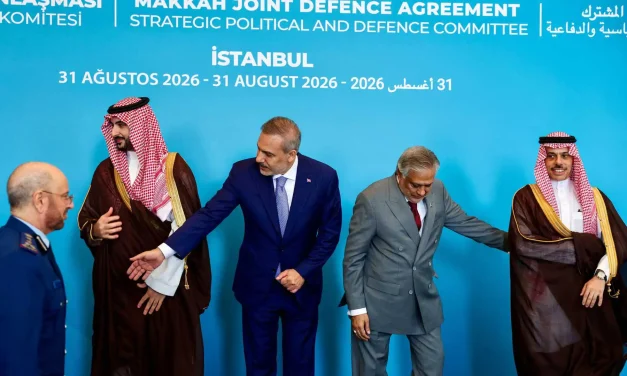
The Makkah Pact; Reasons for its Formation and Challenges Ahead

SCFR Online – Opinion: The Makkah Pact, signed between Saudi Arabia, Pakistan, and Turkey under the motto “an attack on one is an attack on all,” is viewed by some analysts less as a full-fledged military coalition and more as an attempt to reduce security dependence on an external power and to establish a regional security mechanism.

Implications of the US-Saudi Nuclear Agreement

SCFR Online – Opinion: The new US-Saudi nuclear agreement, despite legal and political ambiguities, could alter previous non-proliferation standards in West Asia and intensify nuclear competition, ushering it into a new phase.

An Analysis of Recent Turkey-Israeli Regime Tensions

SCFR Online – Opinion: Recent developments in Syria indicate an intensification of strategic rivalry between Turkey and the Israeli regime, but mutual considerations and the role of the United States have limited the likelihood of direct war.

Increasing criticism of the extensive Zionist lobby network

SCFR Online – Opinion: An examination of the mechanisms of the Israeli regime’s influence in the United States depicts a complex picture of shared interests, strategic dependencies, and the limitations of this relationship.

Realities of the Tripartite Makkah Pact

SCFR Online – Interview: The signing of the Makkah agreement between Saudi Arabia, Pakistan, and Turkey has raised questions about the future of the region’s security structure and the position of these countries in West Asian equations. Can this agreement become a genuine collective defense mechanism, or does it have more of a political and deterrent function than creating new military capacity?

Loading

Jewish lobby

The role of Iran in terminating the political life of Netanyahu

The role of Iran in terminating the political life of Netanyahu

Online Strategic Council—Interview: An expert of Middle East issues referred to the approach by Benjamin Netanyahu the prime minister of the Zionist regime concerning the issue of revival of the nuclear deal and his efforts to obstruct the return of the US to the JCPOA, saying Netanyahu has always made efforts to exploit the intensification of conflict between Tehran and Washington to advance his own goals.

Behind-the-Scenes Decision-Makers in American Foreign Policy

Behind-the-Scenes Decision-Makers in American Foreign Policy

Strategic Council Online – Politics and power in the United States, due to their decentralized and distributive political structure, are influenced by the presence and activity of two groups of “formal” and “informal” actors. Formal actors are influential in the “decision-making” and executive stages, and informal actors are influential in the critical “decision-making” stage. Simply put, the United States is a place for showoff and display of various informal actors who are always trying to play an effective role in the political, economic, security, etc. arenas of the United States by considering their own interests. For example, when it is said that the president in the United States is the representative of oil and arms cartels, etc., it is not an exaggeration and refers to a phenomenon that has a long and lasting history in this country.
Hamid Khoshayand – International Affairs Analyst

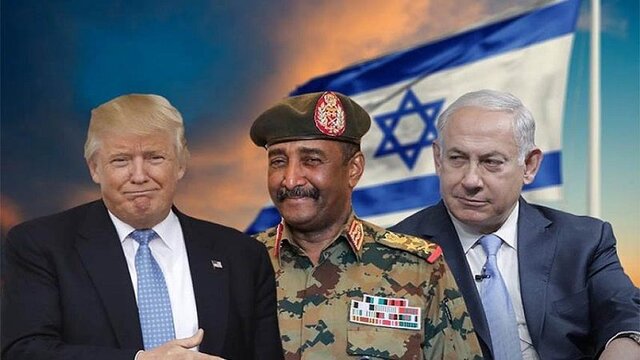
Normalization of Sudan’s Relations with Israel and Probability of Outbreak of Internal Conflicts

Normalization of Sudan’s Relations with Israel and Probability of Outbreak of Internal Conflicts

Strategic Council Online – A former Middle East Director at the Ministry of Foreign Affairs said that a large part of Sudanese society is not yet ready to accept the normalization of relations with Israel. He noted: Given that this measure is unlikely to help solve Sudan’s living and economic problems, it after a while, this decision may become the source of internal disputes and conflicts in Sudan.

أحدث الوظائف

The Makkah Pact; Reasons for its Formation and Challenges Ahead

SCFR Online – Opinion: The Makkah Pact, signed between Saudi Arabia, Pakistan, and Turkey under the motto “an attack on one is an attack on all,” is viewed by some analysts less as a full-fledged military coalition and more as an attempt to reduce security dependence on an external power and to establish a regional security mechanism.

Implications of the US-Saudi Nuclear Agreement

SCFR Online – Opinion: The new US-Saudi nuclear agreement, despite legal and political ambiguities, could alter previous non-proliferation standards in West Asia and intensify nuclear competition, ushering it into a new phase.

An Analysis of Recent Turkey-Israeli Regime Tensions

SCFR Online – Opinion: Recent developments in Syria indicate an intensification of strategic rivalry between Turkey and the Israeli regime, but mutual considerations and the role of the United States have limited the likelihood of direct war.

Increasing criticism of the extensive Zionist lobby network

SCFR Online – Opinion: An examination of the mechanisms of the Israeli regime’s influence in the United States depicts a complex picture of shared interests, strategic dependencies, and the limitations of this relationship.

Realities of the Tripartite Makkah Pact

SCFR Online – Interview: The signing of the Makkah agreement between Saudi Arabia, Pakistan, and Turkey has raised questions about the future of the region’s security structure and the position of these countries in West Asian equations. Can this agreement become a genuine collective defense mechanism, or does it have more of a political and deterrent function than creating new military capacity?

Loading

Jewish lobby

The role of Iran in terminating the political life of Netanyahu

The role of Iran in terminating the political life of Netanyahu

Online Strategic Council—Interview: An expert of Middle East issues referred to the approach by Benjamin Netanyahu the prime minister of the Zionist regime concerning the issue of revival of the nuclear deal and his efforts to obstruct the return of the US to the JCPOA, saying Netanyahu has always made efforts to exploit the intensification of conflict between Tehran and Washington to advance his own goals.

Behind-the-Scenes Decision-Makers in American Foreign Policy

Behind-the-Scenes Decision-Makers in American Foreign Policy

Strategic Council Online – Politics and power in the United States, due to their decentralized and distributive political structure, are influenced by the presence and activity of two groups of “formal” and “informal” actors. Formal actors are influential in the “decision-making” and executive stages, and informal actors are influential in the critical “decision-making” stage. Simply put, the United States is a place for showoff and display of various informal actors who are always trying to play an effective role in the political, economic, security, etc. arenas of the United States by considering their own interests. For example, when it is said that the president in the United States is the representative of oil and arms cartels, etc., it is not an exaggeration and refers to a phenomenon that has a long and lasting history in this country.
Hamid Khoshayand – International Affairs Analyst

Normalization of Sudan’s Relations with Israel and Probability of Outbreak of Internal Conflicts

Normalization of Sudan’s Relations with Israel and Probability of Outbreak of Internal Conflicts

Strategic Council Online – A former Middle East Director at the Ministry of Foreign Affairs said that a large part of Sudanese society is not yet ready to accept the normalization of relations with Israel. He noted: Given that this measure is unlikely to help solve Sudan’s living and economic problems, it after a while, this decision may become the source of internal disputes and conflicts in Sudan.

Jewish lobby

The role of Iran in terminating the political life of Netanyahu

The role of Iran in terminating the political life of Netanyahu

Online Strategic Council—Interview: An expert of Middle East issues referred to the approach by Benjamin Netanyahu the prime minister of the Zionist regime concerning the issue of revival of the nuclear deal and his efforts to obstruct the return of the US to the JCPOA, saying Netanyahu has always made efforts to exploit the intensification of conflict between Tehran and Washington to advance his own goals.

Behind-the-Scenes Decision-Makers in American Foreign Policy

Behind-the-Scenes Decision-Makers in American Foreign Policy

Strategic Council Online – Politics and power in the United States, due to their decentralized and distributive political structure, are influenced by the presence and activity of two groups of “formal” and “informal” actors. Formal actors are influential in the “decision-making” and executive stages, and informal actors are influential in the critical “decision-making” stage. Simply put, the United States is a place for showoff and display of various informal actors who are always trying to play an effective role in the political, economic, security, etc. arenas of the United States by considering their own interests. For example, when it is said that the president in the United States is the representative of oil and arms cartels, etc., it is not an exaggeration and refers to a phenomenon that has a long and lasting history in this country.
Hamid Khoshayand – International Affairs Analyst

Normalization of Sudan’s Relations with Israel and Probability of Outbreak of Internal Conflicts

Normalization of Sudan’s Relations with Israel and Probability of Outbreak of Internal Conflicts

Strategic Council Online – A former Middle East Director at the Ministry of Foreign Affairs said that a large part of Sudanese society is not yet ready to accept the normalization of relations with Israel. He noted: Given that this measure is unlikely to help solve Sudan’s living and economic problems, it after a while, this decision may become the source of internal disputes and conflicts in Sudan.

LATEST CONTENT

The Makkah Pact; Reasons for its Formation and Challenges Ahead

SCFR Online – Opinion: The Makkah Pact, signed between Saudi Arabia, Pakistan, and Turkey under the motto “an attack on one is an attack on all,” is viewed by some analysts less as a full-fledged military coalition and more as an attempt to reduce security dependence on an external power and to establish a regional security mechanism.

Implications of the US-Saudi Nuclear Agreement

SCFR Online – Opinion: The new US-Saudi nuclear agreement, despite legal and political ambiguities, could alter previous non-proliferation standards in West Asia and intensify nuclear competition, ushering it into a new phase.

An Analysis of Recent Turkey-Israeli Regime Tensions

SCFR Online – Opinion: Recent developments in Syria indicate an intensification of strategic rivalry between Turkey and the Israeli regime, but mutual considerations and the role of the United States have limited the likelihood of direct war.

Increasing criticism of the extensive Zionist lobby network

SCFR Online – Opinion: An examination of the mechanisms of the Israeli regime’s influence in the United States depicts a complex picture of shared interests, strategic dependencies, and the limitations of this relationship.

Realities of the Tripartite Makkah Pact

SCFR Online – Interview: The signing of the Makkah agreement between Saudi Arabia, Pakistan, and Turkey has raised questions about the future of the region’s security structure and the position of these countries in West Asian equations. Can this agreement become a genuine collective defense mechanism, or does it have more of a political and deterrent function than creating new military capacity?

Loading

Jewish lobby

The role of Iran in terminating the political life of Netanyahu

The role of Iran in terminating the political life of Netanyahu

Online Strategic Council—Interview: An expert of Middle East issues referred to the approach by Benjamin Netanyahu the prime minister of the Zionist regime concerning the issue of revival of the nuclear deal and his efforts to obstruct the return of the US to the JCPOA, saying Netanyahu has always made efforts to exploit the intensification of conflict between Tehran and Washington to advance his own goals.

Behind-the-Scenes Decision-Makers in American Foreign Policy

Behind-the-Scenes Decision-Makers in American Foreign Policy

Strategic Council Online – Politics and power in the United States, due to their decentralized and distributive political structure, are influenced by the presence and activity of two groups of “formal” and “informal” actors. Formal actors are influential in the “decision-making” and executive stages, and informal actors are influential in the critical “decision-making” stage. Simply put, the United States is a place for showoff and display of various informal actors who are always trying to play an effective role in the political, economic, security, etc. arenas of the United States by considering their own interests. For example, when it is said that the president in the United States is the representative of oil and arms cartels, etc., it is not an exaggeration and refers to a phenomenon that has a long and lasting history in this country.
Hamid Khoshayand – International Affairs Analyst

Normalization of Sudan’s Relations with Israel and Probability of Outbreak of Internal Conflicts

Normalization of Sudan’s Relations with Israel and Probability of Outbreak of Internal Conflicts

Strategic Council Online – A former Middle East Director at the Ministry of Foreign Affairs said that a large part of Sudanese society is not yet ready to accept the normalization of relations with Israel. He noted: Given that this measure is unlikely to help solve Sudan’s living and economic problems, it after a while, this decision may become the source of internal disputes and conflicts in Sudan.

ÚLTIMAS PUBLICACIONES

The Makkah Pact; Reasons for its Formation and Challenges Ahead

SCFR Online – Opinion: The Makkah Pact, signed between Saudi Arabia, Pakistan, and Turkey under the motto “an attack on one is an attack on all,” is viewed by some analysts less as a full-fledged military coalition and more as an attempt to reduce security dependence on an external power and to establish a regional security mechanism.

Implications of the US-Saudi Nuclear Agreement

SCFR Online – Opinion: The new US-Saudi nuclear agreement, despite legal and political ambiguities, could alter previous non-proliferation standards in West Asia and intensify nuclear competition, ushering it into a new phase.

An Analysis of Recent Turkey-Israeli Regime Tensions

SCFR Online – Opinion: Recent developments in Syria indicate an intensification of strategic rivalry between Turkey and the Israeli regime, but mutual considerations and the role of the United States have limited the likelihood of direct war.

Increasing criticism of the extensive Zionist lobby network

SCFR Online – Opinion: An examination of the mechanisms of the Israeli regime’s influence in the United States depicts a complex picture of shared interests, strategic dependencies, and the limitations of this relationship.

Realities of the Tripartite Makkah Pact

SCFR Online – Interview: The signing of the Makkah agreement between Saudi Arabia, Pakistan, and Turkey has raised questions about the future of the region’s security structure and the position of these countries in West Asian equations. Can this agreement become a genuine collective defense mechanism, or does it have more of a political and deterrent function than creating new military capacity?

Loading

Jewish lobby

The role of Iran in terminating the political life of Netanyahu

The role of Iran in terminating the political life of Netanyahu

Online Strategic Council—Interview: An expert of Middle East issues referred to the approach by Benjamin Netanyahu the prime minister of the Zionist regime concerning the issue of revival of the nuclear deal and his efforts to obstruct the return of the US to the JCPOA, saying Netanyahu has always made efforts to exploit the intensification of conflict between Tehran and Washington to advance his own goals.

Behind-the-Scenes Decision-Makers in American Foreign Policy

Behind-the-Scenes Decision-Makers in American Foreign Policy

Strategic Council Online – Politics and power in the United States, due to their decentralized and distributive political structure, are influenced by the presence and activity of two groups of “formal” and “informal” actors. Formal actors are influential in the “decision-making” and executive stages, and informal actors are influential in the critical “decision-making” stage. Simply put, the United States is a place for showoff and display of various informal actors who are always trying to play an effective role in the political, economic, security, etc. arenas of the United States by considering their own interests. For example, when it is said that the president in the United States is the representative of oil and arms cartels, etc., it is not an exaggeration and refers to a phenomenon that has a long and lasting history in this country.
Hamid Khoshayand – International Affairs Analyst

Normalization of Sudan’s Relations with Israel and Probability of Outbreak of Internal Conflicts

Normalization of Sudan’s Relations with Israel and Probability of Outbreak of Internal Conflicts

Strategic Council Online – A former Middle East Director at the Ministry of Foreign Affairs said that a large part of Sudanese society is not yet ready to accept the normalization of relations with Israel. He noted: Given that this measure is unlikely to help solve Sudan’s living and economic problems, it after a while, this decision may become the source of internal disputes and conflicts in Sudan.

ÚLTIMAS PUBLICACIONES

The Makkah Pact; Reasons for its Formation and Challenges Ahead

SCFR Online – Opinion: The Makkah Pact, signed between Saudi Arabia, Pakistan, and Turkey under the motto “an attack on one is an attack on all,” is viewed by some analysts less as a full-fledged military coalition and more as an attempt to reduce security dependence on an external power and to establish a regional security mechanism.

Implications of the US-Saudi Nuclear Agreement

SCFR Online – Opinion: The new US-Saudi nuclear agreement, despite legal and political ambiguities, could alter previous non-proliferation standards in West Asia and intensify nuclear competition, ushering it into a new phase.

An Analysis of Recent Turkey-Israeli Regime Tensions

SCFR Online – Opinion: Recent developments in Syria indicate an intensification of strategic rivalry between Turkey and the Israeli regime, but mutual considerations and the role of the United States have limited the likelihood of direct war.

Increasing criticism of the extensive Zionist lobby network

SCFR Online – Opinion: An examination of the mechanisms of the Israeli regime’s influence in the United States depicts a complex picture of shared interests, strategic dependencies, and the limitations of this relationship.

Realities of the Tripartite Makkah Pact

SCFR Online – Interview: The signing of the Makkah agreement between Saudi Arabia, Pakistan, and Turkey has raised questions about the future of the region’s security structure and the position of these countries in West Asian equations. Can this agreement become a genuine collective defense mechanism, or does it have more of a political and deterrent function than creating new military capacity?

Loading

Jewish lobby

The role of Iran in terminating the political life of Netanyahu

The role of Iran in terminating the political life of Netanyahu

Online Strategic Council—Interview: An expert of Middle East issues referred to the approach by Benjamin Netanyahu the prime minister of the Zionist regime concerning the issue of revival of the nuclear deal and his efforts to obstruct the return of the US to the JCPOA, saying Netanyahu has always made efforts to exploit the intensification of conflict between Tehran and Washington to advance his own goals.

Behind-the-Scenes Decision-Makers in American Foreign Policy

Behind-the-Scenes Decision-Makers in American Foreign Policy

Strategic Council Online – Politics and power in the United States, due to their decentralized and distributive political structure, are influenced by the presence and activity of two groups of “formal” and “informal” actors. Formal actors are influential in the “decision-making” and executive stages, and informal actors are influential in the critical “decision-making” stage. Simply put, the United States is a place for showoff and display of various informal actors who are always trying to play an effective role in the political, economic, security, etc. arenas of the United States by considering their own interests. For example, when it is said that the president in the United States is the representative of oil and arms cartels, etc., it is not an exaggeration and refers to a phenomenon that has a long and lasting history in this country.
Hamid Khoshayand – International Affairs Analyst

Normalization of Sudan’s Relations with Israel and Probability of Outbreak of Internal Conflicts

Normalization of Sudan’s Relations with Israel and Probability of Outbreak of Internal Conflicts

Strategic Council Online – A former Middle East Director at the Ministry of Foreign Affairs said that a large part of Sudanese society is not yet ready to accept the normalization of relations with Israel. He noted: Given that this measure is unlikely to help solve Sudan’s living and economic problems, it after a while, this decision may become the source of internal disputes and conflicts in Sudan.

ÚLTIMAS PUBLICACIONES

The Makkah Pact; Reasons for its Formation and Challenges Ahead

SCFR Online – Opinion: The Makkah Pact, signed between Saudi Arabia, Pakistan, and Turkey under the motto “an attack on one is an attack on all,” is viewed by some analysts less as a full-fledged military coalition and more as an attempt to reduce security dependence on an external power and to establish a regional security mechanism.

Implications of the US-Saudi Nuclear Agreement

SCFR Online – Opinion: The new US-Saudi nuclear agreement, despite legal and political ambiguities, could alter previous non-proliferation standards in West Asia and intensify nuclear competition, ushering it into a new phase.

An Analysis of Recent Turkey-Israeli Regime Tensions

SCFR Online – Opinion: Recent developments in Syria indicate an intensification of strategic rivalry between Turkey and the Israeli regime, but mutual considerations and the role of the United States have limited the likelihood of direct war.

Increasing criticism of the extensive Zionist lobby network

SCFR Online – Opinion: An examination of the mechanisms of the Israeli regime’s influence in the United States depicts a complex picture of shared interests, strategic dependencies, and the limitations of this relationship.

Realities of the Tripartite Makkah Pact

SCFR Online – Interview: The signing of the Makkah agreement between Saudi Arabia, Pakistan, and Turkey has raised questions about the future of the region’s security structure and the position of these countries in West Asian equations. Can this agreement become a genuine collective defense mechanism, or does it have more of a political and deterrent function than creating new military capacity?

Loading

Jewish lobby

The role of Iran in terminating the political life of Netanyahu

The role of Iran in terminating the political life of Netanyahu

Online Strategic Council—Interview: An expert of Middle East issues referred to the approach by Benjamin Netanyahu the prime minister of the Zionist regime concerning the issue of revival of the nuclear deal and his efforts to obstruct the return of the US to the JCPOA, saying Netanyahu has always made efforts to exploit the intensification of conflict between Tehran and Washington to advance his own goals.

Behind-the-Scenes Decision-Makers in American Foreign Policy

Behind-the-Scenes Decision-Makers in American Foreign Policy

Strategic Council Online – Politics and power in the United States, due to their decentralized and distributive political structure, are influenced by the presence and activity of two groups of “formal” and “informal” actors. Formal actors are influential in the “decision-making” and executive stages, and informal actors are influential in the critical “decision-making” stage. Simply put, the United States is a place for showoff and display of various informal actors who are always trying to play an effective role in the political, economic, security, etc. arenas of the United States by considering their own interests. For example, when it is said that the president in the United States is the representative of oil and arms cartels, etc., it is not an exaggeration and refers to a phenomenon that has a long and lasting history in this country.
Hamid Khoshayand – International Affairs Analyst

Normalization of Sudan’s Relations with Israel and Probability of Outbreak of Internal Conflicts

Normalization of Sudan’s Relations with Israel and Probability of Outbreak of Internal Conflicts

Strategic Council Online – A former Middle East Director at the Ministry of Foreign Affairs said that a large part of Sudanese society is not yet ready to accept the normalization of relations with Israel. He noted: Given that this measure is unlikely to help solve Sudan’s living and economic problems, it after a while, this decision may become the source of internal disputes and conflicts in Sudan.

ÚLTIMAS PUBLICACIONES

The Makkah Pact; Reasons for its Formation and Challenges Ahead

SCFR Online – Opinion: The Makkah Pact, signed between Saudi Arabia, Pakistan, and Turkey under the motto “an attack on one is an attack on all,” is viewed by some analysts less as a full-fledged military coalition and more as an attempt to reduce security dependence on an external power and to establish a regional security mechanism.

Implications of the US-Saudi Nuclear Agreement

SCFR Online – Opinion: The new US-Saudi nuclear agreement, despite legal and political ambiguities, could alter previous non-proliferation standards in West Asia and intensify nuclear competition, ushering it into a new phase.

An Analysis of Recent Turkey-Israeli Regime Tensions

SCFR Online – Opinion: Recent developments in Syria indicate an intensification of strategic rivalry between Turkey and the Israeli regime, but mutual considerations and the role of the United States have limited the likelihood of direct war.

Increasing criticism of the extensive Zionist lobby network

SCFR Online – Opinion: An examination of the mechanisms of the Israeli regime’s influence in the United States depicts a complex picture of shared interests, strategic dependencies, and the limitations of this relationship.

Realities of the Tripartite Makkah Pact

SCFR Online – Interview: The signing of the Makkah agreement between Saudi Arabia, Pakistan, and Turkey has raised questions about the future of the region’s security structure and the position of these countries in West Asian equations. Can this agreement become a genuine collective defense mechanism, or does it have more of a political and deterrent function than creating new military capacity?

Loading