جدیدترین مطالب

Europe’s Enduring Dependence on Persian Gulf Energy

SCFR Online – Opinion: The dominant discourse in the field of European energy security over the past two decades has revolved around diversification of supply sources and the gradual reduction of dependence on fossil fuels. This narrative, which gained particular momentum after the Ukraine gas crisis in 2006 and its intensification in 2014 and 2022, was based on the assumption that Europe could free itself from the geopolitical vulnerabilities arising from dependence on specific suppliers through investment in renewable energy, imports of liquefied natural gas from diversified sources, and the establishment of new infrastructure. However, a closer analysis of energy trade data and the structure of the global oil and gas supply chain presents a different picture. Europe has not only failed to meaningfully reduce its dependence on the Persian Gulf, but in some sectors — particularly in liquefied natural gas imports — this dependence has deepened. This reality, which is often overlooked in public discourse, raises fundamental questions about the sustainability of Europe’s energy security strategies and their impact on regional power equations.

The Challenge of Hezbollah’s Low-Cost “FPV” Drones for the Zionist Regime

SCFR Online – Opinion: In modern warfare, it has always been assumed that the more expensive, and advanced the weapon—particularly from well-known companies—the more certain the victory will be. However, developments on the northern front of occupied Palestine in recent months have challenged this long-held belief. Here, the Zionist regime’s military, despite possessing the most advanced defense systems such as Iron Dome, David’s Sling, and Arrow, as well as fifth-generation F-35 fighter jets, Merkava tanks, and other modern equipment found in few countries worldwide, has effectively been rendered helpless against Hezbollah Lebanon’s few-hundred-dollar drones. Benjamin Netanyahu’s bitter admission regarding the inability to counter this threat, and his order to allocate an unlimited budget to find a solution, underscores the reality that the era of pure superiority through expensive technologies has come to an end.

The Impact of West Asian Developments on the Ukraine War

SCFR Online – Note: Vladimir Putin, President of Russia, recently announced—more than four years after the commencement of military aggression against Ukraine—that he believes the conflict between Russia and Ukraine is drawing to a close.

Temporary China–U.S. Trade Truce in the Shadow of Fundamental Distrust

SCFR Online – Opinion: The recent visit of the President of the United States to China is significant from various aspects; because China is recognized as the world’s second-largest economic power and a growing economy. The Chinese are also advancing in various fields, including the space sector, artificial intelligence, and military industries; to the extent that in the military sector, whereas they previously lacked an aircraft carrier, they now possess their third aircraft carrier. On the other hand, the United States, as a superpower, has always regarded China as its rival and continues to view it as such today.

Loading

Middle East

Regional Implications of Saudi-Qatari Reconciliation

Regional Implications of Saudi-Qatari Reconciliation

Strategic Council Online – An expert on the Middle East affairs said: Given Iran’s goodwill towards Qatar, normalization of relations between Riyadh and Doha is not considered as being in line with dealing blows on Iran’s national interests. But, Qatar should be careful not to fall into the trap of Saudi conspiracy against Iran, in which case it will be harmed.

Concerns and challenges ahead of NATO

Concerns and challenges ahead of NATO

Strategic Council Online—Editorial: With Joe Biden going to the oval office in the White House next January, NATO is hoping to re-establish warm relations between the US and Europe after the end of the Trump tenure, and the presence of Biden as the President of the United States would increase hopes for the amelioration of trans-Atlantic relations. NATO Secretary-General Jens Stoltenberg announced an extraordinary session of the NATO Summit at the beginning of 2021 with the participation of Joe Biden after he assumes power in Washington. Many in Europe are waiting for fundamental changes in NATO after the remarks of the French president who described NATO as facing brain death—something suggestive of the depth of internal differences in this military alliance. Paris is also demanding a revision in the activities and objectives of NATO as a military coalition organization.
Mahmoud Fazeli, expert of European affairs

Future of JCPOA and Obstructions of European Side

Future of JCPOA and Obstructions of European Side

Strategy Council Online – An expert on Europe affairs said that the Europeans considered the Iran Nuclear Agreement a great political and security achievement and for this reason stood up to Donald Trump’s position on withdrawing from what is also known as the Joint Comprehensive Plan of Action (JCPOA).

Riyadh, Manama Concerned about Biden Administration’s Approach on Iran

Riyadh, Manama Concerned about Biden Administration’s Approach on Iran

Strategic Council Online – An analyst of West Asia affairs said that Saudi Arabia and Bahrain are concerned about their internal situation and their governments without popular support and noted that Saudi Arabia and Bahrain, due to their performance in the area of human rights, may have problems with the Democrats in the United States and this has caused concern for the two governments.

Prospects for negotiations to resolve the Libya crisis in Morocco

Prospects for negotiations to resolve the Libya crisis in Morocco

Strategic Council Online-Interview: A university professor says participants in the negotiations in Morocco are serious and determined to resolve the crisis in Libya, adding however that one cannot be optimistic about the outcome of the negotiations as there are ups and downs in the talks and the two sides are aware of the consequences of a war of attrition.

Behind-the-Scenes Decision-Makers in American Foreign Policy

Behind-the-Scenes Decision-Makers in American Foreign Policy

Strategic Council Online – Politics and power in the United States, due to their decentralized and distributive political structure, are influenced by the presence and activity of two groups of “formal” and “informal” actors. Formal actors are influential in the “decision-making” and executive stages, and informal actors are influential in the critical “decision-making” stage. Simply put, the United States is a place for showoff and display of various informal actors who are always trying to play an effective role in the political, economic, security, etc. arenas of the United States by considering their own interests. For example, when it is said that the president in the United States is the representative of oil and arms cartels, etc., it is not an exaggeration and refers to a phenomenon that has a long and lasting history in this country.
Hamid Khoshayand – International Affairs Analyst

Prospect of US-Saudi Relations under Biden

Prospect of US-Saudi Relations under Biden

Strategic Council Online – An expert on the Middle East affairs said that Saudi officials are concerned about the implementation of policies that would change the course of developments in the region to their detriment during the Biden era and expose the current precarious position of Riyadh in the region to further losses and shortcomings.

Implications of US Withdrawal from Iraq and Afghanistan

Implications of US Withdrawal from Iraq and Afghanistan

Strategic Council Online – Despite warnings, Ronald Trump intends to reduce the number of American troops from Afghanistan and Iraq ahead of the deadline. He wants to be still influential in foreign and security policy, and intends to constrain his successor, Joe Biden. Withdrawal of US troops from Iraq and Afghanistan, without coordination and acceptance of the responsibility, could have dangerous consequences for the region as well as for the European allies of the US.
Mahmoud Fazeli – Expert on International Affairs

Strengthening Marine, Air Power, Britain’s Post-Brexit Strategy

Strengthening Marine, Air Power, Britain’s Post-Brexit Strategy

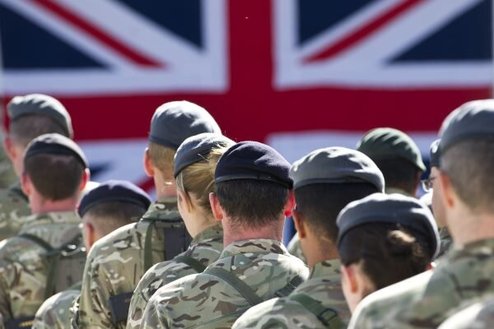
Strategic Council Online – One of Britain’s responses to instability in liberal order that, in the aftermath of the World War II and together with the United States, has been its most important advocate and builder, is strategic self-reliance, by strengthening its defense capability and the noteworthy point in the new defense assessment of that country is the shift in orientation and focus on national defense and foreign security around the naval and air forces and establishment of more military bases outside Britain.
Dr. Hossein Mofidi Ahmadi – Researcher on Britain and Europe affairs

Negative Consequences of Saudi Economic Investment in Iraq

Negative Consequences of Saudi Economic Investment in Iraq

Strategic Council Online: An expert on the Middle East affairs, referring to the protest rally of the Iraqis in response to Saudi Arabia’s investment in their country, said: The government of Mustafa Al-Kadhimi is looking to foreign investment, especially by the wealthy states in the Persian Gulf, to alleviate economic problems – countries that in the past two decades, with the support of the ISIS and some extremist Sunni groups in Iraq, have always tried to prevent any stabilization and security in the war-torn country.

أحدث الوظائف

Europe’s Enduring Dependence on Persian Gulf Energy

SCFR Online – Opinion: The dominant discourse in the field of European energy security over the past two decades has revolved around diversification of supply sources and the gradual reduction of dependence on fossil fuels. This narrative, which gained particular momentum after the Ukraine gas crisis in 2006 and its intensification in 2014 and 2022, was based on the assumption that Europe could free itself from the geopolitical vulnerabilities arising from dependence on specific suppliers through investment in renewable energy, imports of liquefied natural gas from diversified sources, and the establishment of new infrastructure. However, a closer analysis of energy trade data and the structure of the global oil and gas supply chain presents a different picture. Europe has not only failed to meaningfully reduce its dependence on the Persian Gulf, but in some sectors — particularly in liquefied natural gas imports — this dependence has deepened. This reality, which is often overlooked in public discourse, raises fundamental questions about the sustainability of Europe’s energy security strategies and their impact on regional power equations.

The Challenge of Hezbollah’s Low-Cost “FPV” Drones for the Zionist Regime

SCFR Online – Opinion: In modern warfare, it has always been assumed that the more expensive, and advanced the weapon—particularly from well-known companies—the more certain the victory will be. However, developments on the northern front of occupied Palestine in recent months have challenged this long-held belief. Here, the Zionist regime’s military, despite possessing the most advanced defense systems such as Iron Dome, David’s Sling, and Arrow, as well as fifth-generation F-35 fighter jets, Merkava tanks, and other modern equipment found in few countries worldwide, has effectively been rendered helpless against Hezbollah Lebanon’s few-hundred-dollar drones. Benjamin Netanyahu’s bitter admission regarding the inability to counter this threat, and his order to allocate an unlimited budget to find a solution, underscores the reality that the era of pure superiority through expensive technologies has come to an end.

The Impact of West Asian Developments on the Ukraine War

SCFR Online – Note: Vladimir Putin, President of Russia, recently announced—more than four years after the commencement of military aggression against Ukraine—that he believes the conflict between Russia and Ukraine is drawing to a close.

Temporary China–U.S. Trade Truce in the Shadow of Fundamental Distrust

SCFR Online – Opinion: The recent visit of the President of the United States to China is significant from various aspects; because China is recognized as the world’s second-largest economic power and a growing economy. The Chinese are also advancing in various fields, including the space sector, artificial intelligence, and military industries; to the extent that in the military sector, whereas they previously lacked an aircraft carrier, they now possess their third aircraft carrier. On the other hand, the United States, as a superpower, has always regarded China as its rival and continues to view it as such today.

Loading

Middle East

Regional Implications of Saudi-Qatari Reconciliation

Regional Implications of Saudi-Qatari Reconciliation

Strategic Council Online – An expert on the Middle East affairs said: Given Iran’s goodwill towards Qatar, normalization of relations between Riyadh and Doha is not considered as being in line with dealing blows on Iran’s national interests. But, Qatar should be careful not to fall into the trap of Saudi conspiracy against Iran, in which case it will be harmed.

Concerns and challenges ahead of NATO

Concerns and challenges ahead of NATO

Strategic Council Online—Editorial: With Joe Biden going to the oval office in the White House next January, NATO is hoping to re-establish warm relations between the US and Europe after the end of the Trump tenure, and the presence of Biden as the President of the United States would increase hopes for the amelioration of trans-Atlantic relations. NATO Secretary-General Jens Stoltenberg announced an extraordinary session of the NATO Summit at the beginning of 2021 with the participation of Joe Biden after he assumes power in Washington. Many in Europe are waiting for fundamental changes in NATO after the remarks of the French president who described NATO as facing brain death—something suggestive of the depth of internal differences in this military alliance. Paris is also demanding a revision in the activities and objectives of NATO as a military coalition organization.
Mahmoud Fazeli, expert of European affairs

Future of JCPOA and Obstructions of European Side

Future of JCPOA and Obstructions of European Side

Strategy Council Online – An expert on Europe affairs said that the Europeans considered the Iran Nuclear Agreement a great political and security achievement and for this reason stood up to Donald Trump’s position on withdrawing from what is also known as the Joint Comprehensive Plan of Action (JCPOA).

Riyadh, Manama Concerned about Biden Administration’s Approach on Iran

Riyadh, Manama Concerned about Biden Administration’s Approach on Iran

Strategic Council Online – An analyst of West Asia affairs said that Saudi Arabia and Bahrain are concerned about their internal situation and their governments without popular support and noted that Saudi Arabia and Bahrain, due to their performance in the area of human rights, may have problems with the Democrats in the United States and this has caused concern for the two governments.

Prospects for negotiations to resolve the Libya crisis in Morocco

Prospects for negotiations to resolve the Libya crisis in Morocco

Strategic Council Online-Interview: A university professor says participants in the negotiations in Morocco are serious and determined to resolve the crisis in Libya, adding however that one cannot be optimistic about the outcome of the negotiations as there are ups and downs in the talks and the two sides are aware of the consequences of a war of attrition.

Behind-the-Scenes Decision-Makers in American Foreign Policy

Behind-the-Scenes Decision-Makers in American Foreign Policy

Strategic Council Online – Politics and power in the United States, due to their decentralized and distributive political structure, are influenced by the presence and activity of two groups of “formal” and “informal” actors. Formal actors are influential in the “decision-making” and executive stages, and informal actors are influential in the critical “decision-making” stage. Simply put, the United States is a place for showoff and display of various informal actors who are always trying to play an effective role in the political, economic, security, etc. arenas of the United States by considering their own interests. For example, when it is said that the president in the United States is the representative of oil and arms cartels, etc., it is not an exaggeration and refers to a phenomenon that has a long and lasting history in this country.
Hamid Khoshayand – International Affairs Analyst

Prospect of US-Saudi Relations under Biden

Prospect of US-Saudi Relations under Biden

Strategic Council Online – An expert on the Middle East affairs said that Saudi officials are concerned about the implementation of policies that would change the course of developments in the region to their detriment during the Biden era and expose the current precarious position of Riyadh in the region to further losses and shortcomings.

Implications of US Withdrawal from Iraq and Afghanistan

Implications of US Withdrawal from Iraq and Afghanistan

Strategic Council Online – Despite warnings, Ronald Trump intends to reduce the number of American troops from Afghanistan and Iraq ahead of the deadline. He wants to be still influential in foreign and security policy, and intends to constrain his successor, Joe Biden. Withdrawal of US troops from Iraq and Afghanistan, without coordination and acceptance of the responsibility, could have dangerous consequences for the region as well as for the European allies of the US.
Mahmoud Fazeli – Expert on International Affairs

Strengthening Marine, Air Power, Britain’s Post-Brexit Strategy

Strengthening Marine, Air Power, Britain’s Post-Brexit Strategy

Strategic Council Online – One of Britain’s responses to instability in liberal order that, in the aftermath of the World War II and together with the United States, has been its most important advocate and builder, is strategic self-reliance, by strengthening its defense capability and the noteworthy point in the new defense assessment of that country is the shift in orientation and focus on national defense and foreign security around the naval and air forces and establishment of more military bases outside Britain.
Dr. Hossein Mofidi Ahmadi – Researcher on Britain and Europe affairs

Negative Consequences of Saudi Economic Investment in Iraq

Negative Consequences of Saudi Economic Investment in Iraq

Strategic Council Online: An expert on the Middle East affairs, referring to the protest rally of the Iraqis in response to Saudi Arabia’s investment in their country, said: The government of Mustafa Al-Kadhimi is looking to foreign investment, especially by the wealthy states in the Persian Gulf, to alleviate economic problems – countries that in the past two decades, with the support of the ISIS and some extremist Sunni groups in Iraq, have always tried to prevent any stabilization and security in the war-torn country.

Middle East

Regional Implications of Saudi-Qatari Reconciliation

Regional Implications of Saudi-Qatari Reconciliation

Strategic Council Online – An expert on the Middle East affairs said: Given Iran’s goodwill towards Qatar, normalization of relations between Riyadh and Doha is not considered as being in line with dealing blows on Iran’s national interests. But, Qatar should be careful not to fall into the trap of Saudi conspiracy against Iran, in which case it will be harmed.

Concerns and challenges ahead of NATO

Concerns and challenges ahead of NATO

Strategic Council Online—Editorial: With Joe Biden going to the oval office in the White House next January, NATO is hoping to re-establish warm relations between the US and Europe after the end of the Trump tenure, and the presence of Biden as the President of the United States would increase hopes for the amelioration of trans-Atlantic relations. NATO Secretary-General Jens Stoltenberg announced an extraordinary session of the NATO Summit at the beginning of 2021 with the participation of Joe Biden after he assumes power in Washington. Many in Europe are waiting for fundamental changes in NATO after the remarks of the French president who described NATO as facing brain death—something suggestive of the depth of internal differences in this military alliance. Paris is also demanding a revision in the activities and objectives of NATO as a military coalition organization.
Mahmoud Fazeli, expert of European affairs

Future of JCPOA and Obstructions of European Side

Future of JCPOA and Obstructions of European Side

Strategy Council Online – An expert on Europe affairs said that the Europeans considered the Iran Nuclear Agreement a great political and security achievement and for this reason stood up to Donald Trump’s position on withdrawing from what is also known as the Joint Comprehensive Plan of Action (JCPOA).

Riyadh, Manama Concerned about Biden Administration’s Approach on Iran

Riyadh, Manama Concerned about Biden Administration’s Approach on Iran

Strategic Council Online – An analyst of West Asia affairs said that Saudi Arabia and Bahrain are concerned about their internal situation and their governments without popular support and noted that Saudi Arabia and Bahrain, due to their performance in the area of human rights, may have problems with the Democrats in the United States and this has caused concern for the two governments.

Prospects for negotiations to resolve the Libya crisis in Morocco

Prospects for negotiations to resolve the Libya crisis in Morocco

Strategic Council Online-Interview: A university professor says participants in the negotiations in Morocco are serious and determined to resolve the crisis in Libya, adding however that one cannot be optimistic about the outcome of the negotiations as there are ups and downs in the talks and the two sides are aware of the consequences of a war of attrition.

Behind-the-Scenes Decision-Makers in American Foreign Policy

Behind-the-Scenes Decision-Makers in American Foreign Policy

Strategic Council Online – Politics and power in the United States, due to their decentralized and distributive political structure, are influenced by the presence and activity of two groups of “formal” and “informal” actors. Formal actors are influential in the “decision-making” and executive stages, and informal actors are influential in the critical “decision-making” stage. Simply put, the United States is a place for showoff and display of various informal actors who are always trying to play an effective role in the political, economic, security, etc. arenas of the United States by considering their own interests. For example, when it is said that the president in the United States is the representative of oil and arms cartels, etc., it is not an exaggeration and refers to a phenomenon that has a long and lasting history in this country.
Hamid Khoshayand – International Affairs Analyst

Prospect of US-Saudi Relations under Biden

Prospect of US-Saudi Relations under Biden

Strategic Council Online – An expert on the Middle East affairs said that Saudi officials are concerned about the implementation of policies that would change the course of developments in the region to their detriment during the Biden era and expose the current precarious position of Riyadh in the region to further losses and shortcomings.

Implications of US Withdrawal from Iraq and Afghanistan

Implications of US Withdrawal from Iraq and Afghanistan

Strategic Council Online – Despite warnings, Ronald Trump intends to reduce the number of American troops from Afghanistan and Iraq ahead of the deadline. He wants to be still influential in foreign and security policy, and intends to constrain his successor, Joe Biden. Withdrawal of US troops from Iraq and Afghanistan, without coordination and acceptance of the responsibility, could have dangerous consequences for the region as well as for the European allies of the US.
Mahmoud Fazeli – Expert on International Affairs

Strengthening Marine, Air Power, Britain’s Post-Brexit Strategy

Strengthening Marine, Air Power, Britain’s Post-Brexit Strategy

Strategic Council Online – One of Britain’s responses to instability in liberal order that, in the aftermath of the World War II and together with the United States, has been its most important advocate and builder, is strategic self-reliance, by strengthening its defense capability and the noteworthy point in the new defense assessment of that country is the shift in orientation and focus on national defense and foreign security around the naval and air forces and establishment of more military bases outside Britain.
Dr. Hossein Mofidi Ahmadi – Researcher on Britain and Europe affairs

Negative Consequences of Saudi Economic Investment in Iraq

Negative Consequences of Saudi Economic Investment in Iraq

Strategic Council Online: An expert on the Middle East affairs, referring to the protest rally of the Iraqis in response to Saudi Arabia’s investment in their country, said: The government of Mustafa Al-Kadhimi is looking to foreign investment, especially by the wealthy states in the Persian Gulf, to alleviate economic problems – countries that in the past two decades, with the support of the ISIS and some extremist Sunni groups in Iraq, have always tried to prevent any stabilization and security in the war-torn country.

LATEST CONTENT

Europe’s Enduring Dependence on Persian Gulf Energy

SCFR Online – Opinion: The dominant discourse in the field of European energy security over the past two decades has revolved around diversification of supply sources and the gradual reduction of dependence on fossil fuels. This narrative, which gained particular momentum after the Ukraine gas crisis in 2006 and its intensification in 2014 and 2022, was based on the assumption that Europe could free itself from the geopolitical vulnerabilities arising from dependence on specific suppliers through investment in renewable energy, imports of liquefied natural gas from diversified sources, and the establishment of new infrastructure. However, a closer analysis of energy trade data and the structure of the global oil and gas supply chain presents a different picture. Europe has not only failed to meaningfully reduce its dependence on the Persian Gulf, but in some sectors — particularly in liquefied natural gas imports — this dependence has deepened. This reality, which is often overlooked in public discourse, raises fundamental questions about the sustainability of Europe’s energy security strategies and their impact on regional power equations.

The Challenge of Hezbollah’s Low-Cost “FPV” Drones for the Zionist Regime

SCFR Online – Opinion: In modern warfare, it has always been assumed that the more expensive, and advanced the weapon—particularly from well-known companies—the more certain the victory will be. However, developments on the northern front of occupied Palestine in recent months have challenged this long-held belief. Here, the Zionist regime’s military, despite possessing the most advanced defense systems such as Iron Dome, David’s Sling, and Arrow, as well as fifth-generation F-35 fighter jets, Merkava tanks, and other modern equipment found in few countries worldwide, has effectively been rendered helpless against Hezbollah Lebanon’s few-hundred-dollar drones. Benjamin Netanyahu’s bitter admission regarding the inability to counter this threat, and his order to allocate an unlimited budget to find a solution, underscores the reality that the era of pure superiority through expensive technologies has come to an end.

The Impact of West Asian Developments on the Ukraine War

SCFR Online – Note: Vladimir Putin, President of Russia, recently announced—more than four years after the commencement of military aggression against Ukraine—that he believes the conflict between Russia and Ukraine is drawing to a close.

Temporary China–U.S. Trade Truce in the Shadow of Fundamental Distrust

SCFR Online – Opinion: The recent visit of the President of the United States to China is significant from various aspects; because China is recognized as the world’s second-largest economic power and a growing economy. The Chinese are also advancing in various fields, including the space sector, artificial intelligence, and military industries; to the extent that in the military sector, whereas they previously lacked an aircraft carrier, they now possess their third aircraft carrier. On the other hand, the United States, as a superpower, has always regarded China as its rival and continues to view it as such today.

Loading

Middle East

Regional Implications of Saudi-Qatari Reconciliation

Regional Implications of Saudi-Qatari Reconciliation

Strategic Council Online – An expert on the Middle East affairs said: Given Iran’s goodwill towards Qatar, normalization of relations between Riyadh and Doha is not considered as being in line with dealing blows on Iran’s national interests. But, Qatar should be careful not to fall into the trap of Saudi conspiracy against Iran, in which case it will be harmed.

Concerns and challenges ahead of NATO

Concerns and challenges ahead of NATO

Strategic Council Online—Editorial: With Joe Biden going to the oval office in the White House next January, NATO is hoping to re-establish warm relations between the US and Europe after the end of the Trump tenure, and the presence of Biden as the President of the United States would increase hopes for the amelioration of trans-Atlantic relations. NATO Secretary-General Jens Stoltenberg announced an extraordinary session of the NATO Summit at the beginning of 2021 with the participation of Joe Biden after he assumes power in Washington. Many in Europe are waiting for fundamental changes in NATO after the remarks of the French president who described NATO as facing brain death—something suggestive of the depth of internal differences in this military alliance. Paris is also demanding a revision in the activities and objectives of NATO as a military coalition organization.
Mahmoud Fazeli, expert of European affairs

Future of JCPOA and Obstructions of European Side

Future of JCPOA and Obstructions of European Side

Strategy Council Online – An expert on Europe affairs said that the Europeans considered the Iran Nuclear Agreement a great political and security achievement and for this reason stood up to Donald Trump’s position on withdrawing from what is also known as the Joint Comprehensive Plan of Action (JCPOA).

Riyadh, Manama Concerned about Biden Administration’s Approach on Iran

Riyadh, Manama Concerned about Biden Administration’s Approach on Iran

Strategic Council Online – An analyst of West Asia affairs said that Saudi Arabia and Bahrain are concerned about their internal situation and their governments without popular support and noted that Saudi Arabia and Bahrain, due to their performance in the area of human rights, may have problems with the Democrats in the United States and this has caused concern for the two governments.

Prospects for negotiations to resolve the Libya crisis in Morocco

Prospects for negotiations to resolve the Libya crisis in Morocco

Strategic Council Online-Interview: A university professor says participants in the negotiations in Morocco are serious and determined to resolve the crisis in Libya, adding however that one cannot be optimistic about the outcome of the negotiations as there are ups and downs in the talks and the two sides are aware of the consequences of a war of attrition.

Behind-the-Scenes Decision-Makers in American Foreign Policy

Behind-the-Scenes Decision-Makers in American Foreign Policy

Strategic Council Online – Politics and power in the United States, due to their decentralized and distributive political structure, are influenced by the presence and activity of two groups of “formal” and “informal” actors. Formal actors are influential in the “decision-making” and executive stages, and informal actors are influential in the critical “decision-making” stage. Simply put, the United States is a place for showoff and display of various informal actors who are always trying to play an effective role in the political, economic, security, etc. arenas of the United States by considering their own interests. For example, when it is said that the president in the United States is the representative of oil and arms cartels, etc., it is not an exaggeration and refers to a phenomenon that has a long and lasting history in this country.
Hamid Khoshayand – International Affairs Analyst

Prospect of US-Saudi Relations under Biden

Prospect of US-Saudi Relations under Biden

Strategic Council Online – An expert on the Middle East affairs said that Saudi officials are concerned about the implementation of policies that would change the course of developments in the region to their detriment during the Biden era and expose the current precarious position of Riyadh in the region to further losses and shortcomings.

Implications of US Withdrawal from Iraq and Afghanistan

Implications of US Withdrawal from Iraq and Afghanistan

Strategic Council Online – Despite warnings, Ronald Trump intends to reduce the number of American troops from Afghanistan and Iraq ahead of the deadline. He wants to be still influential in foreign and security policy, and intends to constrain his successor, Joe Biden. Withdrawal of US troops from Iraq and Afghanistan, without coordination and acceptance of the responsibility, could have dangerous consequences for the region as well as for the European allies of the US.
Mahmoud Fazeli – Expert on International Affairs

Strengthening Marine, Air Power, Britain’s Post-Brexit Strategy

Strengthening Marine, Air Power, Britain’s Post-Brexit Strategy

Strategic Council Online – One of Britain’s responses to instability in liberal order that, in the aftermath of the World War II and together with the United States, has been its most important advocate and builder, is strategic self-reliance, by strengthening its defense capability and the noteworthy point in the new defense assessment of that country is the shift in orientation and focus on national defense and foreign security around the naval and air forces and establishment of more military bases outside Britain.
Dr. Hossein Mofidi Ahmadi – Researcher on Britain and Europe affairs

Negative Consequences of Saudi Economic Investment in Iraq

Negative Consequences of Saudi Economic Investment in Iraq

Strategic Council Online: An expert on the Middle East affairs, referring to the protest rally of the Iraqis in response to Saudi Arabia’s investment in their country, said: The government of Mustafa Al-Kadhimi is looking to foreign investment, especially by the wealthy states in the Persian Gulf, to alleviate economic problems – countries that in the past two decades, with the support of the ISIS and some extremist Sunni groups in Iraq, have always tried to prevent any stabilization and security in the war-torn country.

ÚLTIMAS PUBLICACIONES

Europe’s Enduring Dependence on Persian Gulf Energy

SCFR Online – Opinion: The dominant discourse in the field of European energy security over the past two decades has revolved around diversification of supply sources and the gradual reduction of dependence on fossil fuels. This narrative, which gained particular momentum after the Ukraine gas crisis in 2006 and its intensification in 2014 and 2022, was based on the assumption that Europe could free itself from the geopolitical vulnerabilities arising from dependence on specific suppliers through investment in renewable energy, imports of liquefied natural gas from diversified sources, and the establishment of new infrastructure. However, a closer analysis of energy trade data and the structure of the global oil and gas supply chain presents a different picture. Europe has not only failed to meaningfully reduce its dependence on the Persian Gulf, but in some sectors — particularly in liquefied natural gas imports — this dependence has deepened. This reality, which is often overlooked in public discourse, raises fundamental questions about the sustainability of Europe’s energy security strategies and their impact on regional power equations.

The Challenge of Hezbollah’s Low-Cost “FPV” Drones for the Zionist Regime

SCFR Online – Opinion: In modern warfare, it has always been assumed that the more expensive, and advanced the weapon—particularly from well-known companies—the more certain the victory will be. However, developments on the northern front of occupied Palestine in recent months have challenged this long-held belief. Here, the Zionist regime’s military, despite possessing the most advanced defense systems such as Iron Dome, David’s Sling, and Arrow, as well as fifth-generation F-35 fighter jets, Merkava tanks, and other modern equipment found in few countries worldwide, has effectively been rendered helpless against Hezbollah Lebanon’s few-hundred-dollar drones. Benjamin Netanyahu’s bitter admission regarding the inability to counter this threat, and his order to allocate an unlimited budget to find a solution, underscores the reality that the era of pure superiority through expensive technologies has come to an end.

The Impact of West Asian Developments on the Ukraine War

SCFR Online – Note: Vladimir Putin, President of Russia, recently announced—more than four years after the commencement of military aggression against Ukraine—that he believes the conflict between Russia and Ukraine is drawing to a close.

Temporary China–U.S. Trade Truce in the Shadow of Fundamental Distrust

SCFR Online – Opinion: The recent visit of the President of the United States to China is significant from various aspects; because China is recognized as the world’s second-largest economic power and a growing economy. The Chinese are also advancing in various fields, including the space sector, artificial intelligence, and military industries; to the extent that in the military sector, whereas they previously lacked an aircraft carrier, they now possess their third aircraft carrier. On the other hand, the United States, as a superpower, has always regarded China as its rival and continues to view it as such today.

Loading

Middle East

Regional Implications of Saudi-Qatari Reconciliation

Regional Implications of Saudi-Qatari Reconciliation

Strategic Council Online – An expert on the Middle East affairs said: Given Iran’s goodwill towards Qatar, normalization of relations between Riyadh and Doha is not considered as being in line with dealing blows on Iran’s national interests. But, Qatar should be careful not to fall into the trap of Saudi conspiracy against Iran, in which case it will be harmed.

Concerns and challenges ahead of NATO

Concerns and challenges ahead of NATO

Strategic Council Online—Editorial: With Joe Biden going to the oval office in the White House next January, NATO is hoping to re-establish warm relations between the US and Europe after the end of the Trump tenure, and the presence of Biden as the President of the United States would increase hopes for the amelioration of trans-Atlantic relations. NATO Secretary-General Jens Stoltenberg announced an extraordinary session of the NATO Summit at the beginning of 2021 with the participation of Joe Biden after he assumes power in Washington. Many in Europe are waiting for fundamental changes in NATO after the remarks of the French president who described NATO as facing brain death—something suggestive of the depth of internal differences in this military alliance. Paris is also demanding a revision in the activities and objectives of NATO as a military coalition organization.
Mahmoud Fazeli, expert of European affairs

Future of JCPOA and Obstructions of European Side

Future of JCPOA and Obstructions of European Side

Strategy Council Online – An expert on Europe affairs said that the Europeans considered the Iran Nuclear Agreement a great political and security achievement and for this reason stood up to Donald Trump’s position on withdrawing from what is also known as the Joint Comprehensive Plan of Action (JCPOA).

Riyadh, Manama Concerned about Biden Administration’s Approach on Iran

Riyadh, Manama Concerned about Biden Administration’s Approach on Iran

Strategic Council Online – An analyst of West Asia affairs said that Saudi Arabia and Bahrain are concerned about their internal situation and their governments without popular support and noted that Saudi Arabia and Bahrain, due to their performance in the area of human rights, may have problems with the Democrats in the United States and this has caused concern for the two governments.

Prospects for negotiations to resolve the Libya crisis in Morocco

Prospects for negotiations to resolve the Libya crisis in Morocco

Strategic Council Online-Interview: A university professor says participants in the negotiations in Morocco are serious and determined to resolve the crisis in Libya, adding however that one cannot be optimistic about the outcome of the negotiations as there are ups and downs in the talks and the two sides are aware of the consequences of a war of attrition.

Behind-the-Scenes Decision-Makers in American Foreign Policy

Behind-the-Scenes Decision-Makers in American Foreign Policy

Strategic Council Online – Politics and power in the United States, due to their decentralized and distributive political structure, are influenced by the presence and activity of two groups of “formal” and “informal” actors. Formal actors are influential in the “decision-making” and executive stages, and informal actors are influential in the critical “decision-making” stage. Simply put, the United States is a place for showoff and display of various informal actors who are always trying to play an effective role in the political, economic, security, etc. arenas of the United States by considering their own interests. For example, when it is said that the president in the United States is the representative of oil and arms cartels, etc., it is not an exaggeration and refers to a phenomenon that has a long and lasting history in this country.
Hamid Khoshayand – International Affairs Analyst

Prospect of US-Saudi Relations under Biden

Prospect of US-Saudi Relations under Biden

Strategic Council Online – An expert on the Middle East affairs said that Saudi officials are concerned about the implementation of policies that would change the course of developments in the region to their detriment during the Biden era and expose the current precarious position of Riyadh in the region to further losses and shortcomings.

Implications of US Withdrawal from Iraq and Afghanistan

Implications of US Withdrawal from Iraq and Afghanistan

Strategic Council Online – Despite warnings, Ronald Trump intends to reduce the number of American troops from Afghanistan and Iraq ahead of the deadline. He wants to be still influential in foreign and security policy, and intends to constrain his successor, Joe Biden. Withdrawal of US troops from Iraq and Afghanistan, without coordination and acceptance of the responsibility, could have dangerous consequences for the region as well as for the European allies of the US.
Mahmoud Fazeli – Expert on International Affairs

Strengthening Marine, Air Power, Britain’s Post-Brexit Strategy

Strengthening Marine, Air Power, Britain’s Post-Brexit Strategy

Strategic Council Online – One of Britain’s responses to instability in liberal order that, in the aftermath of the World War II and together with the United States, has been its most important advocate and builder, is strategic self-reliance, by strengthening its defense capability and the noteworthy point in the new defense assessment of that country is the shift in orientation and focus on national defense and foreign security around the naval and air forces and establishment of more military bases outside Britain.
Dr. Hossein Mofidi Ahmadi – Researcher on Britain and Europe affairs

Negative Consequences of Saudi Economic Investment in Iraq

Negative Consequences of Saudi Economic Investment in Iraq

Strategic Council Online: An expert on the Middle East affairs, referring to the protest rally of the Iraqis in response to Saudi Arabia’s investment in their country, said: The government of Mustafa Al-Kadhimi is looking to foreign investment, especially by the wealthy states in the Persian Gulf, to alleviate economic problems – countries that in the past two decades, with the support of the ISIS and some extremist Sunni groups in Iraq, have always tried to prevent any stabilization and security in the war-torn country.

ÚLTIMAS PUBLICACIONES

Europe’s Enduring Dependence on Persian Gulf Energy

SCFR Online – Opinion: The dominant discourse in the field of European energy security over the past two decades has revolved around diversification of supply sources and the gradual reduction of dependence on fossil fuels. This narrative, which gained particular momentum after the Ukraine gas crisis in 2006 and its intensification in 2014 and 2022, was based on the assumption that Europe could free itself from the geopolitical vulnerabilities arising from dependence on specific suppliers through investment in renewable energy, imports of liquefied natural gas from diversified sources, and the establishment of new infrastructure. However, a closer analysis of energy trade data and the structure of the global oil and gas supply chain presents a different picture. Europe has not only failed to meaningfully reduce its dependence on the Persian Gulf, but in some sectors — particularly in liquefied natural gas imports — this dependence has deepened. This reality, which is often overlooked in public discourse, raises fundamental questions about the sustainability of Europe’s energy security strategies and their impact on regional power equations.

The Challenge of Hezbollah’s Low-Cost “FPV” Drones for the Zionist Regime

SCFR Online – Opinion: In modern warfare, it has always been assumed that the more expensive, and advanced the weapon—particularly from well-known companies—the more certain the victory will be. However, developments on the northern front of occupied Palestine in recent months have challenged this long-held belief. Here, the Zionist regime’s military, despite possessing the most advanced defense systems such as Iron Dome, David’s Sling, and Arrow, as well as fifth-generation F-35 fighter jets, Merkava tanks, and other modern equipment found in few countries worldwide, has effectively been rendered helpless against Hezbollah Lebanon’s few-hundred-dollar drones. Benjamin Netanyahu’s bitter admission regarding the inability to counter this threat, and his order to allocate an unlimited budget to find a solution, underscores the reality that the era of pure superiority through expensive technologies has come to an end.

The Impact of West Asian Developments on the Ukraine War

SCFR Online – Note: Vladimir Putin, President of Russia, recently announced—more than four years after the commencement of military aggression against Ukraine—that he believes the conflict between Russia and Ukraine is drawing to a close.

Temporary China–U.S. Trade Truce in the Shadow of Fundamental Distrust

SCFR Online – Opinion: The recent visit of the President of the United States to China is significant from various aspects; because China is recognized as the world’s second-largest economic power and a growing economy. The Chinese are also advancing in various fields, including the space sector, artificial intelligence, and military industries; to the extent that in the military sector, whereas they previously lacked an aircraft carrier, they now possess their third aircraft carrier. On the other hand, the United States, as a superpower, has always regarded China as its rival and continues to view it as such today.

Loading

Middle East

Regional Implications of Saudi-Qatari Reconciliation

Regional Implications of Saudi-Qatari Reconciliation

Strategic Council Online – An expert on the Middle East affairs said: Given Iran’s goodwill towards Qatar, normalization of relations between Riyadh and Doha is not considered as being in line with dealing blows on Iran’s national interests. But, Qatar should be careful not to fall into the trap of Saudi conspiracy against Iran, in which case it will be harmed.

Concerns and challenges ahead of NATO

Concerns and challenges ahead of NATO

Strategic Council Online—Editorial: With Joe Biden going to the oval office in the White House next January, NATO is hoping to re-establish warm relations between the US and Europe after the end of the Trump tenure, and the presence of Biden as the President of the United States would increase hopes for the amelioration of trans-Atlantic relations. NATO Secretary-General Jens Stoltenberg announced an extraordinary session of the NATO Summit at the beginning of 2021 with the participation of Joe Biden after he assumes power in Washington. Many in Europe are waiting for fundamental changes in NATO after the remarks of the French president who described NATO as facing brain death—something suggestive of the depth of internal differences in this military alliance. Paris is also demanding a revision in the activities and objectives of NATO as a military coalition organization.
Mahmoud Fazeli, expert of European affairs

Future of JCPOA and Obstructions of European Side

Future of JCPOA and Obstructions of European Side

Strategy Council Online – An expert on Europe affairs said that the Europeans considered the Iran Nuclear Agreement a great political and security achievement and for this reason stood up to Donald Trump’s position on withdrawing from what is also known as the Joint Comprehensive Plan of Action (JCPOA).

Riyadh, Manama Concerned about Biden Administration’s Approach on Iran

Riyadh, Manama Concerned about Biden Administration’s Approach on Iran

Strategic Council Online – An analyst of West Asia affairs said that Saudi Arabia and Bahrain are concerned about their internal situation and their governments without popular support and noted that Saudi Arabia and Bahrain, due to their performance in the area of human rights, may have problems with the Democrats in the United States and this has caused concern for the two governments.

Prospects for negotiations to resolve the Libya crisis in Morocco

Prospects for negotiations to resolve the Libya crisis in Morocco

Strategic Council Online-Interview: A university professor says participants in the negotiations in Morocco are serious and determined to resolve the crisis in Libya, adding however that one cannot be optimistic about the outcome of the negotiations as there are ups and downs in the talks and the two sides are aware of the consequences of a war of attrition.

Behind-the-Scenes Decision-Makers in American Foreign Policy

Behind-the-Scenes Decision-Makers in American Foreign Policy

Strategic Council Online – Politics and power in the United States, due to their decentralized and distributive political structure, are influenced by the presence and activity of two groups of “formal” and “informal” actors. Formal actors are influential in the “decision-making” and executive stages, and informal actors are influential in the critical “decision-making” stage. Simply put, the United States is a place for showoff and display of various informal actors who are always trying to play an effective role in the political, economic, security, etc. arenas of the United States by considering their own interests. For example, when it is said that the president in the United States is the representative of oil and arms cartels, etc., it is not an exaggeration and refers to a phenomenon that has a long and lasting history in this country.
Hamid Khoshayand – International Affairs Analyst

Prospect of US-Saudi Relations under Biden

Prospect of US-Saudi Relations under Biden

Strategic Council Online – An expert on the Middle East affairs said that Saudi officials are concerned about the implementation of policies that would change the course of developments in the region to their detriment during the Biden era and expose the current precarious position of Riyadh in the region to further losses and shortcomings.

Implications of US Withdrawal from Iraq and Afghanistan

Implications of US Withdrawal from Iraq and Afghanistan

Strategic Council Online – Despite warnings, Ronald Trump intends to reduce the number of American troops from Afghanistan and Iraq ahead of the deadline. He wants to be still influential in foreign and security policy, and intends to constrain his successor, Joe Biden. Withdrawal of US troops from Iraq and Afghanistan, without coordination and acceptance of the responsibility, could have dangerous consequences for the region as well as for the European allies of the US.
Mahmoud Fazeli – Expert on International Affairs

Strengthening Marine, Air Power, Britain’s Post-Brexit Strategy

Strengthening Marine, Air Power, Britain’s Post-Brexit Strategy

Strategic Council Online – One of Britain’s responses to instability in liberal order that, in the aftermath of the World War II and together with the United States, has been its most important advocate and builder, is strategic self-reliance, by strengthening its defense capability and the noteworthy point in the new defense assessment of that country is the shift in orientation and focus on national defense and foreign security around the naval and air forces and establishment of more military bases outside Britain.
Dr. Hossein Mofidi Ahmadi – Researcher on Britain and Europe affairs

Negative Consequences of Saudi Economic Investment in Iraq

Negative Consequences of Saudi Economic Investment in Iraq

Strategic Council Online: An expert on the Middle East affairs, referring to the protest rally of the Iraqis in response to Saudi Arabia’s investment in their country, said: The government of Mustafa Al-Kadhimi is looking to foreign investment, especially by the wealthy states in the Persian Gulf, to alleviate economic problems – countries that in the past two decades, with the support of the ISIS and some extremist Sunni groups in Iraq, have always tried to prevent any stabilization and security in the war-torn country.

ÚLTIMAS PUBLICACIONES

Europe’s Enduring Dependence on Persian Gulf Energy

SCFR Online – Opinion: The dominant discourse in the field of European energy security over the past two decades has revolved around diversification of supply sources and the gradual reduction of dependence on fossil fuels. This narrative, which gained particular momentum after the Ukraine gas crisis in 2006 and its intensification in 2014 and 2022, was based on the assumption that Europe could free itself from the geopolitical vulnerabilities arising from dependence on specific suppliers through investment in renewable energy, imports of liquefied natural gas from diversified sources, and the establishment of new infrastructure. However, a closer analysis of energy trade data and the structure of the global oil and gas supply chain presents a different picture. Europe has not only failed to meaningfully reduce its dependence on the Persian Gulf, but in some sectors — particularly in liquefied natural gas imports — this dependence has deepened. This reality, which is often overlooked in public discourse, raises fundamental questions about the sustainability of Europe’s energy security strategies and their impact on regional power equations.

The Challenge of Hezbollah’s Low-Cost “FPV” Drones for the Zionist Regime

SCFR Online – Opinion: In modern warfare, it has always been assumed that the more expensive, and advanced the weapon—particularly from well-known companies—the more certain the victory will be. However, developments on the northern front of occupied Palestine in recent months have challenged this long-held belief. Here, the Zionist regime’s military, despite possessing the most advanced defense systems such as Iron Dome, David’s Sling, and Arrow, as well as fifth-generation F-35 fighter jets, Merkava tanks, and other modern equipment found in few countries worldwide, has effectively been rendered helpless against Hezbollah Lebanon’s few-hundred-dollar drones. Benjamin Netanyahu’s bitter admission regarding the inability to counter this threat, and his order to allocate an unlimited budget to find a solution, underscores the reality that the era of pure superiority through expensive technologies has come to an end.

The Impact of West Asian Developments on the Ukraine War

SCFR Online – Note: Vladimir Putin, President of Russia, recently announced—more than four years after the commencement of military aggression against Ukraine—that he believes the conflict between Russia and Ukraine is drawing to a close.

Temporary China–U.S. Trade Truce in the Shadow of Fundamental Distrust

SCFR Online – Opinion: The recent visit of the President of the United States to China is significant from various aspects; because China is recognized as the world’s second-largest economic power and a growing economy. The Chinese are also advancing in various fields, including the space sector, artificial intelligence, and military industries; to the extent that in the military sector, whereas they previously lacked an aircraft carrier, they now possess their third aircraft carrier. On the other hand, the United States, as a superpower, has always regarded China as its rival and continues to view it as such today.

Loading

Middle East

Regional Implications of Saudi-Qatari Reconciliation

Regional Implications of Saudi-Qatari Reconciliation

Strategic Council Online – An expert on the Middle East affairs said: Given Iran’s goodwill towards Qatar, normalization of relations between Riyadh and Doha is not considered as being in line with dealing blows on Iran’s national interests. But, Qatar should be careful not to fall into the trap of Saudi conspiracy against Iran, in which case it will be harmed.

Concerns and challenges ahead of NATO

Concerns and challenges ahead of NATO

Strategic Council Online—Editorial: With Joe Biden going to the oval office in the White House next January, NATO is hoping to re-establish warm relations between the US and Europe after the end of the Trump tenure, and the presence of Biden as the President of the United States would increase hopes for the amelioration of trans-Atlantic relations. NATO Secretary-General Jens Stoltenberg announced an extraordinary session of the NATO Summit at the beginning of 2021 with the participation of Joe Biden after he assumes power in Washington. Many in Europe are waiting for fundamental changes in NATO after the remarks of the French president who described NATO as facing brain death—something suggestive of the depth of internal differences in this military alliance. Paris is also demanding a revision in the activities and objectives of NATO as a military coalition organization.
Mahmoud Fazeli, expert of European affairs

Future of JCPOA and Obstructions of European Side

Future of JCPOA and Obstructions of European Side

Strategy Council Online – An expert on Europe affairs said that the Europeans considered the Iran Nuclear Agreement a great political and security achievement and for this reason stood up to Donald Trump’s position on withdrawing from what is also known as the Joint Comprehensive Plan of Action (JCPOA).

Riyadh, Manama Concerned about Biden Administration’s Approach on Iran

Riyadh, Manama Concerned about Biden Administration’s Approach on Iran

Strategic Council Online – An analyst of West Asia affairs said that Saudi Arabia and Bahrain are concerned about their internal situation and their governments without popular support and noted that Saudi Arabia and Bahrain, due to their performance in the area of human rights, may have problems with the Democrats in the United States and this has caused concern for the two governments.

Prospects for negotiations to resolve the Libya crisis in Morocco

Prospects for negotiations to resolve the Libya crisis in Morocco

Strategic Council Online-Interview: A university professor says participants in the negotiations in Morocco are serious and determined to resolve the crisis in Libya, adding however that one cannot be optimistic about the outcome of the negotiations as there are ups and downs in the talks and the two sides are aware of the consequences of a war of attrition.

Behind-the-Scenes Decision-Makers in American Foreign Policy

Behind-the-Scenes Decision-Makers in American Foreign Policy

Strategic Council Online – Politics and power in the United States, due to their decentralized and distributive political structure, are influenced by the presence and activity of two groups of “formal” and “informal” actors. Formal actors are influential in the “decision-making” and executive stages, and informal actors are influential in the critical “decision-making” stage. Simply put, the United States is a place for showoff and display of various informal actors who are always trying to play an effective role in the political, economic, security, etc. arenas of the United States by considering their own interests. For example, when it is said that the president in the United States is the representative of oil and arms cartels, etc., it is not an exaggeration and refers to a phenomenon that has a long and lasting history in this country.
Hamid Khoshayand – International Affairs Analyst

Prospect of US-Saudi Relations under Biden

Prospect of US-Saudi Relations under Biden

Strategic Council Online – An expert on the Middle East affairs said that Saudi officials are concerned about the implementation of policies that would change the course of developments in the region to their detriment during the Biden era and expose the current precarious position of Riyadh in the region to further losses and shortcomings.

Implications of US Withdrawal from Iraq and Afghanistan

Implications of US Withdrawal from Iraq and Afghanistan

Strategic Council Online – Despite warnings, Ronald Trump intends to reduce the number of American troops from Afghanistan and Iraq ahead of the deadline. He wants to be still influential in foreign and security policy, and intends to constrain his successor, Joe Biden. Withdrawal of US troops from Iraq and Afghanistan, without coordination and acceptance of the responsibility, could have dangerous consequences for the region as well as for the European allies of the US.
Mahmoud Fazeli – Expert on International Affairs

Strengthening Marine, Air Power, Britain’s Post-Brexit Strategy

Strengthening Marine, Air Power, Britain’s Post-Brexit Strategy

Strategic Council Online – One of Britain’s responses to instability in liberal order that, in the aftermath of the World War II and together with the United States, has been its most important advocate and builder, is strategic self-reliance, by strengthening its defense capability and the noteworthy point in the new defense assessment of that country is the shift in orientation and focus on national defense and foreign security around the naval and air forces and establishment of more military bases outside Britain.
Dr. Hossein Mofidi Ahmadi – Researcher on Britain and Europe affairs

Negative Consequences of Saudi Economic Investment in Iraq

Negative Consequences of Saudi Economic Investment in Iraq

Strategic Council Online: An expert on the Middle East affairs, referring to the protest rally of the Iraqis in response to Saudi Arabia’s investment in their country, said: The government of Mustafa Al-Kadhimi is looking to foreign investment, especially by the wealthy states in the Persian Gulf, to alleviate economic problems – countries that in the past two decades, with the support of the ISIS and some extremist Sunni groups in Iraq, have always tried to prevent any stabilization and security in the war-torn country.

ÚLTIMAS PUBLICACIONES

Europe’s Enduring Dependence on Persian Gulf Energy

SCFR Online – Opinion: The dominant discourse in the field of European energy security over the past two decades has revolved around diversification of supply sources and the gradual reduction of dependence on fossil fuels. This narrative, which gained particular momentum after the Ukraine gas crisis in 2006 and its intensification in 2014 and 2022, was based on the assumption that Europe could free itself from the geopolitical vulnerabilities arising from dependence on specific suppliers through investment in renewable energy, imports of liquefied natural gas from diversified sources, and the establishment of new infrastructure. However, a closer analysis of energy trade data and the structure of the global oil and gas supply chain presents a different picture. Europe has not only failed to meaningfully reduce its dependence on the Persian Gulf, but in some sectors — particularly in liquefied natural gas imports — this dependence has deepened. This reality, which is often overlooked in public discourse, raises fundamental questions about the sustainability of Europe’s energy security strategies and their impact on regional power equations.

The Challenge of Hezbollah’s Low-Cost “FPV” Drones for the Zionist Regime

SCFR Online – Opinion: In modern warfare, it has always been assumed that the more expensive, and advanced the weapon—particularly from well-known companies—the more certain the victory will be. However, developments on the northern front of occupied Palestine in recent months have challenged this long-held belief. Here, the Zionist regime’s military, despite possessing the most advanced defense systems such as Iron Dome, David’s Sling, and Arrow, as well as fifth-generation F-35 fighter jets, Merkava tanks, and other modern equipment found in few countries worldwide, has effectively been rendered helpless against Hezbollah Lebanon’s few-hundred-dollar drones. Benjamin Netanyahu’s bitter admission regarding the inability to counter this threat, and his order to allocate an unlimited budget to find a solution, underscores the reality that the era of pure superiority through expensive technologies has come to an end.

The Impact of West Asian Developments on the Ukraine War

SCFR Online – Note: Vladimir Putin, President of Russia, recently announced—more than four years after the commencement of military aggression against Ukraine—that he believes the conflict between Russia and Ukraine is drawing to a close.

Temporary China–U.S. Trade Truce in the Shadow of Fundamental Distrust

SCFR Online – Opinion: The recent visit of the President of the United States to China is significant from various aspects; because China is recognized as the world’s second-largest economic power and a growing economy. The Chinese are also advancing in various fields, including the space sector, artificial intelligence, and military industries; to the extent that in the military sector, whereas they previously lacked an aircraft carrier, they now possess their third aircraft carrier. On the other hand, the United States, as a superpower, has always regarded China as its rival and continues to view it as such today.

Loading