An Analysis of the Makkah Defense Pact
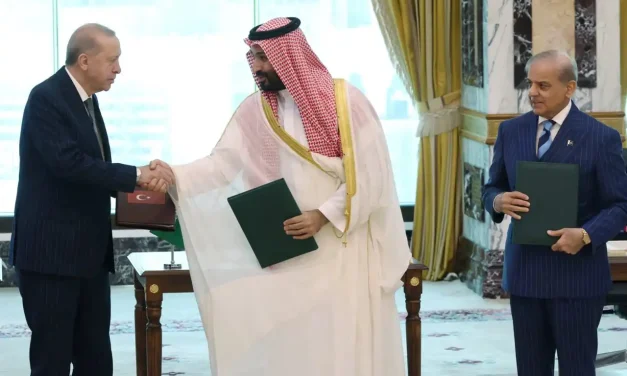
SCFR Online – Opinion: On Friday, August 7, the heads of state of three countries – Saudi Arabia, Turkey, and Pakistan – signed a text under the title “Makkah Joint Defense Agreement.”
Strategic Council Online – Note: The initiative to revive the Hejaz Railway, beyond being a transportation project, constitutes an attempt to redefine geopolitics, the economy, and Turkey’s regional position; however, its realization appears to face significant financial, security, and institutional challenges.
SCFR Online – Opinion: The Strait of Hormuz crisis is no longer merely the consequence of a military confrontation, but rather a sign of the transition from the US-centered maritime order to a new energy security structure involving the participation of emerging and influential powers.
SCFR Online – Opinion: Iran’s active deterrence strategy, while increasing the costs of US intervention, has increasingly exposed the hidden rifts between Washington’s interests and those of the Israeli regime.
SCFR Online – Opinion: The escalation of verbal and strategic tensions between Turkey and the Israeli regime, although not increasing the likelihood of direct war, indicates the formation of a new order in West Asian geopolitical rivalries.
Strategic Council Online – Note: Recent developments in the political geography of West Asia, from rising tensions in the Persian Gulf to missile and drone activities in the Red Sea and the recent warning by Kaja Kallas, the European Union’s foreign policy chief, regarding the threat to freedom of navigation, indicate a key pattern shift; the US-Iran war has moved beyond the scope of a regional and local confrontation and has linked two vital passageways for the global economy: the Strait of Hormuz and the Bab el-Mandeb Strait.
SCFR Online – Opinion: The Ukraine war was not merely a European crisis, but rather the starting point for the rearrangement of the global balance of power and a shift in the strategic behavior of great powers.
SCFR Online – Opinion: Great power competition is now pursued more in trade, currency, technology, and global supply chains than on the battlefields of military confrontation.
Strategic Council Online – Interview: An expert on international affairs stated that due to the ongoing conflict between Hamas and Palestine, the normalization of relations with the Zionist regime will be suspended and seriously challenged, adding: In this situation, with an increase of conflicts and human casualties, considering the sensitivity of public opinion, in the short term, less governments in the region will dare to raise the issue of normalization.
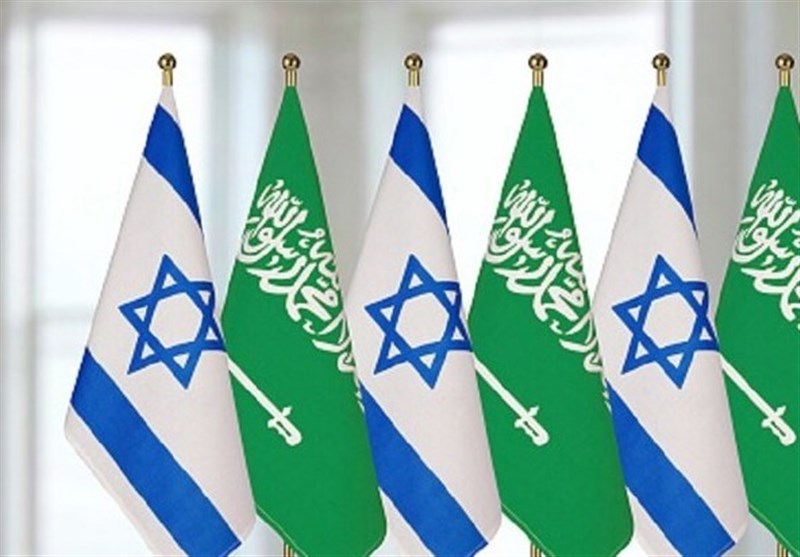
Strategic Council Online—Interview: An expert on West Asian issues stated that the frequent publication of news about the normalization of relations between the Zionist regime and Saudi Arabia in the Zionist media does not necessarily mean the occurrence of new developments that can change the geopolitics of the region, and said that repeatedly dealing with the issue of normalizing relations with Saudi Arabia is a media achievement. It is for Netanyahu and the Likud party to divert the attention of public opinion from the internal problems and challenges of the Zionist regime.
Strategic Council Online – Opinion: There are a couple of different readings on the recent Iraqi parliament bill about banning the normalization of relations with the Zionist regime; The first interpretation deals with it from micro scale and studies the case from executive background. The second interpretation reviews the bill from macro and strategic aspects and thus analyses its effects on Iraq’s foreign relations as well as political and military equations of the region.
Jafar Ghannad Baashi, Expert of the Middle East issues
Strategic Council Online – Guest Opinion: After a decade of cold relations, Turkey and the UAE are on the path to reviving bilateral relations. This new trend began in 2021 with a series of high-level diplomatic meetings and contacts, culminating in Mohamed bin Zayed’s November visit to Ankara. Recently, Recep Tayyip Erdogan visited Abu Dhabi to offer condolences on the death of Khalifa bin Zayed Al Nahyan. The trip also saw the signing of more than 10 agreements between the two countries, including a defense industry cooperation agreement.
Seyed Hamed Hosseini – PhD student in international relations
Motivations
Strategic Council Online – An analyst of West Asia affairs said that Saudi Arabia is the cradle of ISIS line of thinking and that Mohammed bin Salman’s approach to social reform is contradictory, adding: There is potentials for great socio-political changes in Saudi Arabia, but they have forcefully prevented this by spending huge money and through false propaganda.
SCFR Online – Opinion: On Friday, August 7, the heads of state of three countries – Saudi Arabia, Turkey, and Pakistan – signed a text under the title “Makkah Joint Defense Agreement.”
Strategic Council Online – Note: The initiative to revive the Hejaz Railway, beyond being a transportation project, constitutes an attempt to redefine geopolitics, the economy, and Turkey’s regional position; however, its realization appears to face significant financial, security, and institutional challenges.
SCFR Online – Opinion: The Strait of Hormuz crisis is no longer merely the consequence of a military confrontation, but rather a sign of the transition from the US-centered maritime order to a new energy security structure involving the participation of emerging and influential powers.
SCFR Online – Opinion: Iran’s active deterrence strategy, while increasing the costs of US intervention, has increasingly exposed the hidden rifts between Washington’s interests and those of the Israeli regime.
SCFR Online – Opinion: The escalation of verbal and strategic tensions between Turkey and the Israeli regime, although not increasing the likelihood of direct war, indicates the formation of a new order in West Asian geopolitical rivalries.
Strategic Council Online – Note: Recent developments in the political geography of West Asia, from rising tensions in the Persian Gulf to missile and drone activities in the Red Sea and the recent warning by Kaja Kallas, the European Union’s foreign policy chief, regarding the threat to freedom of navigation, indicate a key pattern shift; the US-Iran war has moved beyond the scope of a regional and local confrontation and has linked two vital passageways for the global economy: the Strait of Hormuz and the Bab el-Mandeb Strait.
SCFR Online – Opinion: The Ukraine war was not merely a European crisis, but rather the starting point for the rearrangement of the global balance of power and a shift in the strategic behavior of great powers.
SCFR Online – Opinion: Great power competition is now pursued more in trade, currency, technology, and global supply chains than on the battlefields of military confrontation.
Strategic Council Online – Interview: An expert on international affairs stated that due to the ongoing conflict between Hamas and Palestine, the normalization of relations with the Zionist regime will be suspended and seriously challenged, adding: In this situation, with an increase of conflicts and human casualties, considering the sensitivity of public opinion, in the short term, less governments in the region will dare to raise the issue of normalization.
Strategic Council Online—Interview: An expert on West Asian issues stated that the frequent publication of news about the normalization of relations between the Zionist regime and Saudi Arabia in the Zionist media does not necessarily mean the occurrence of new developments that can change the geopolitics of the region, and said that repeatedly dealing with the issue of normalizing relations with Saudi Arabia is a media achievement. It is for Netanyahu and the Likud party to divert the attention of public opinion from the internal problems and challenges of the Zionist regime.
Strategic Council Online – Opinion: There are a couple of different readings on the recent Iraqi parliament bill about banning the normalization of relations with the Zionist regime; The first interpretation deals with it from micro scale and studies the case from executive background. The second interpretation reviews the bill from macro and strategic aspects and thus analyses its effects on Iraq’s foreign relations as well as political and military equations of the region.
Jafar Ghannad Baashi, Expert of the Middle East issues
Strategic Council Online – Guest Opinion: After a decade of cold relations, Turkey and the UAE are on the path to reviving bilateral relations. This new trend began in 2021 with a series of high-level diplomatic meetings and contacts, culminating in Mohamed bin Zayed’s November visit to Ankara. Recently, Recep Tayyip Erdogan visited Abu Dhabi to offer condolences on the death of Khalifa bin Zayed Al Nahyan. The trip also saw the signing of more than 10 agreements between the two countries, including a defense industry cooperation agreement.
Seyed Hamed Hosseini – PhD student in international relations
Motivations
Strategic Council Online – An analyst of West Asia affairs said that Saudi Arabia is the cradle of ISIS line of thinking and that Mohammed bin Salman’s approach to social reform is contradictory, adding: There is potentials for great socio-political changes in Saudi Arabia, but they have forcefully prevented this by spending huge money and through false propaganda.
Strategic Council Online – Interview: An expert on international affairs stated that due to the ongoing conflict between Hamas and Palestine, the normalization of relations with the Zionist regime will be suspended and seriously challenged, adding: In this situation, with an increase of conflicts and human casualties, considering the sensitivity of public opinion, in the short term, less governments in the region will dare to raise the issue of normalization.
Strategic Council Online—Interview: An expert on West Asian issues stated that the frequent publication of news about the normalization of relations between the Zionist regime and Saudi Arabia in the Zionist media does not necessarily mean the occurrence of new developments that can change the geopolitics of the region, and said that repeatedly dealing with the issue of normalizing relations with Saudi Arabia is a media achievement. It is for Netanyahu and the Likud party to divert the attention of public opinion from the internal problems and challenges of the Zionist regime.
Strategic Council Online – Opinion: There are a couple of different readings on the recent Iraqi parliament bill about banning the normalization of relations with the Zionist regime; The first interpretation deals with it from micro scale and studies the case from executive background. The second interpretation reviews the bill from macro and strategic aspects and thus analyses its effects on Iraq’s foreign relations as well as political and military equations of the region.
Jafar Ghannad Baashi, Expert of the Middle East issues
Strategic Council Online – Guest Opinion: After a decade of cold relations, Turkey and the UAE are on the path to reviving bilateral relations. This new trend began in 2021 with a series of high-level diplomatic meetings and contacts, culminating in Mohamed bin Zayed’s November visit to Ankara. Recently, Recep Tayyip Erdogan visited Abu Dhabi to offer condolences on the death of Khalifa bin Zayed Al Nahyan. The trip also saw the signing of more than 10 agreements between the two countries, including a defense industry cooperation agreement.
Seyed Hamed Hosseini – PhD student in international relations
Motivations
Strategic Council Online – An analyst of West Asia affairs said that Saudi Arabia is the cradle of ISIS line of thinking and that Mohammed bin Salman’s approach to social reform is contradictory, adding: There is potentials for great socio-political changes in Saudi Arabia, but they have forcefully prevented this by spending huge money and through false propaganda.
SCFR Online – Opinion: On Friday, August 7, the heads of state of three countries – Saudi Arabia, Turkey, and Pakistan – signed a text under the title “Makkah Joint Defense Agreement.”
Strategic Council Online – Note: The initiative to revive the Hejaz Railway, beyond being a transportation project, constitutes an attempt to redefine geopolitics, the economy, and Turkey’s regional position; however, its realization appears to face significant financial, security, and institutional challenges.
SCFR Online – Opinion: The Strait of Hormuz crisis is no longer merely the consequence of a military confrontation, but rather a sign of the transition from the US-centered maritime order to a new energy security structure involving the participation of emerging and influential powers.
SCFR Online – Opinion: Iran’s active deterrence strategy, while increasing the costs of US intervention, has increasingly exposed the hidden rifts between Washington’s interests and those of the Israeli regime.
SCFR Online – Opinion: The escalation of verbal and strategic tensions between Turkey and the Israeli regime, although not increasing the likelihood of direct war, indicates the formation of a new order in West Asian geopolitical rivalries.
Strategic Council Online – Note: Recent developments in the political geography of West Asia, from rising tensions in the Persian Gulf to missile and drone activities in the Red Sea and the recent warning by Kaja Kallas, the European Union’s foreign policy chief, regarding the threat to freedom of navigation, indicate a key pattern shift; the US-Iran war has moved beyond the scope of a regional and local confrontation and has linked two vital passageways for the global economy: the Strait of Hormuz and the Bab el-Mandeb Strait.
SCFR Online – Opinion: The Ukraine war was not merely a European crisis, but rather the starting point for the rearrangement of the global balance of power and a shift in the strategic behavior of great powers.
SCFR Online – Opinion: Great power competition is now pursued more in trade, currency, technology, and global supply chains than on the battlefields of military confrontation.
Strategic Council Online – Interview: An expert on international affairs stated that due to the ongoing conflict between Hamas and Palestine, the normalization of relations with the Zionist regime will be suspended and seriously challenged, adding: In this situation, with an increase of conflicts and human casualties, considering the sensitivity of public opinion, in the short term, less governments in the region will dare to raise the issue of normalization.
Strategic Council Online—Interview: An expert on West Asian issues stated that the frequent publication of news about the normalization of relations between the Zionist regime and Saudi Arabia in the Zionist media does not necessarily mean the occurrence of new developments that can change the geopolitics of the region, and said that repeatedly dealing with the issue of normalizing relations with Saudi Arabia is a media achievement. It is for Netanyahu and the Likud party to divert the attention of public opinion from the internal problems and challenges of the Zionist regime.
Strategic Council Online – Opinion: There are a couple of different readings on the recent Iraqi parliament bill about banning the normalization of relations with the Zionist regime; The first interpretation deals with it from micro scale and studies the case from executive background. The second interpretation reviews the bill from macro and strategic aspects and thus analyses its effects on Iraq’s foreign relations as well as political and military equations of the region.
Jafar Ghannad Baashi, Expert of the Middle East issues
Strategic Council Online – Guest Opinion: After a decade of cold relations, Turkey and the UAE are on the path to reviving bilateral relations. This new trend began in 2021 with a series of high-level diplomatic meetings and contacts, culminating in Mohamed bin Zayed’s November visit to Ankara. Recently, Recep Tayyip Erdogan visited Abu Dhabi to offer condolences on the death of Khalifa bin Zayed Al Nahyan. The trip also saw the signing of more than 10 agreements between the two countries, including a defense industry cooperation agreement.
Seyed Hamed Hosseini – PhD student in international relations
Motivations
Strategic Council Online – An analyst of West Asia affairs said that Saudi Arabia is the cradle of ISIS line of thinking and that Mohammed bin Salman’s approach to social reform is contradictory, adding: There is potentials for great socio-political changes in Saudi Arabia, but they have forcefully prevented this by spending huge money and through false propaganda.
SCFR Online – Opinion: On Friday, August 7, the heads of state of three countries – Saudi Arabia, Turkey, and Pakistan – signed a text under the title “Makkah Joint Defense Agreement.”
Strategic Council Online – Note: The initiative to revive the Hejaz Railway, beyond being a transportation project, constitutes an attempt to redefine geopolitics, the economy, and Turkey’s regional position; however, its realization appears to face significant financial, security, and institutional challenges.
SCFR Online – Opinion: The Strait of Hormuz crisis is no longer merely the consequence of a military confrontation, but rather a sign of the transition from the US-centered maritime order to a new energy security structure involving the participation of emerging and influential powers.
SCFR Online – Opinion: Iran’s active deterrence strategy, while increasing the costs of US intervention, has increasingly exposed the hidden rifts between Washington’s interests and those of the Israeli regime.
SCFR Online – Opinion: The escalation of verbal and strategic tensions between Turkey and the Israeli regime, although not increasing the likelihood of direct war, indicates the formation of a new order in West Asian geopolitical rivalries.
Strategic Council Online – Note: Recent developments in the political geography of West Asia, from rising tensions in the Persian Gulf to missile and drone activities in the Red Sea and the recent warning by Kaja Kallas, the European Union’s foreign policy chief, regarding the threat to freedom of navigation, indicate a key pattern shift; the US-Iran war has moved beyond the scope of a regional and local confrontation and has linked two vital passageways for the global economy: the Strait of Hormuz and the Bab el-Mandeb Strait.
SCFR Online – Opinion: The Ukraine war was not merely a European crisis, but rather the starting point for the rearrangement of the global balance of power and a shift in the strategic behavior of great powers.
SCFR Online – Opinion: Great power competition is now pursued more in trade, currency, technology, and global supply chains than on the battlefields of military confrontation.
Strategic Council Online – Interview: An expert on international affairs stated that due to the ongoing conflict between Hamas and Palestine, the normalization of relations with the Zionist regime will be suspended and seriously challenged, adding: In this situation, with an increase of conflicts and human casualties, considering the sensitivity of public opinion, in the short term, less governments in the region will dare to raise the issue of normalization.
Strategic Council Online—Interview: An expert on West Asian issues stated that the frequent publication of news about the normalization of relations between the Zionist regime and Saudi Arabia in the Zionist media does not necessarily mean the occurrence of new developments that can change the geopolitics of the region, and said that repeatedly dealing with the issue of normalizing relations with Saudi Arabia is a media achievement. It is for Netanyahu and the Likud party to divert the attention of public opinion from the internal problems and challenges of the Zionist regime.
Strategic Council Online – Opinion: There are a couple of different readings on the recent Iraqi parliament bill about banning the normalization of relations with the Zionist regime; The first interpretation deals with it from micro scale and studies the case from executive background. The second interpretation reviews the bill from macro and strategic aspects and thus analyses its effects on Iraq’s foreign relations as well as political and military equations of the region.
Jafar Ghannad Baashi, Expert of the Middle East issues
Strategic Council Online – Guest Opinion: After a decade of cold relations, Turkey and the UAE are on the path to reviving bilateral relations. This new trend began in 2021 with a series of high-level diplomatic meetings and contacts, culminating in Mohamed bin Zayed’s November visit to Ankara. Recently, Recep Tayyip Erdogan visited Abu Dhabi to offer condolences on the death of Khalifa bin Zayed Al Nahyan. The trip also saw the signing of more than 10 agreements between the two countries, including a defense industry cooperation agreement.
Seyed Hamed Hosseini – PhD student in international relations
Motivations
Strategic Council Online – An analyst of West Asia affairs said that Saudi Arabia is the cradle of ISIS line of thinking and that Mohammed bin Salman’s approach to social reform is contradictory, adding: There is potentials for great socio-political changes in Saudi Arabia, but they have forcefully prevented this by spending huge money and through false propaganda.
SCFR Online – Opinion: On Friday, August 7, the heads of state of three countries – Saudi Arabia, Turkey, and Pakistan – signed a text under the title “Makkah Joint Defense Agreement.”
Strategic Council Online – Note: The initiative to revive the Hejaz Railway, beyond being a transportation project, constitutes an attempt to redefine geopolitics, the economy, and Turkey’s regional position; however, its realization appears to face significant financial, security, and institutional challenges.
SCFR Online – Opinion: The Strait of Hormuz crisis is no longer merely the consequence of a military confrontation, but rather a sign of the transition from the US-centered maritime order to a new energy security structure involving the participation of emerging and influential powers.
SCFR Online – Opinion: Iran’s active deterrence strategy, while increasing the costs of US intervention, has increasingly exposed the hidden rifts between Washington’s interests and those of the Israeli regime.
SCFR Online – Opinion: The escalation of verbal and strategic tensions between Turkey and the Israeli regime, although not increasing the likelihood of direct war, indicates the formation of a new order in West Asian geopolitical rivalries.
Strategic Council Online – Note: Recent developments in the political geography of West Asia, from rising tensions in the Persian Gulf to missile and drone activities in the Red Sea and the recent warning by Kaja Kallas, the European Union’s foreign policy chief, regarding the threat to freedom of navigation, indicate a key pattern shift; the US-Iran war has moved beyond the scope of a regional and local confrontation and has linked two vital passageways for the global economy: the Strait of Hormuz and the Bab el-Mandeb Strait.
SCFR Online – Opinion: The Ukraine war was not merely a European crisis, but rather the starting point for the rearrangement of the global balance of power and a shift in the strategic behavior of great powers.
SCFR Online – Opinion: Great power competition is now pursued more in trade, currency, technology, and global supply chains than on the battlefields of military confrontation.
Strategic Council Online – Interview: An expert on international affairs stated that due to the ongoing conflict between Hamas and Palestine, the normalization of relations with the Zionist regime will be suspended and seriously challenged, adding: In this situation, with an increase of conflicts and human casualties, considering the sensitivity of public opinion, in the short term, less governments in the region will dare to raise the issue of normalization.
Strategic Council Online—Interview: An expert on West Asian issues stated that the frequent publication of news about the normalization of relations between the Zionist regime and Saudi Arabia in the Zionist media does not necessarily mean the occurrence of new developments that can change the geopolitics of the region, and said that repeatedly dealing with the issue of normalizing relations with Saudi Arabia is a media achievement. It is for Netanyahu and the Likud party to divert the attention of public opinion from the internal problems and challenges of the Zionist regime.
Strategic Council Online – Opinion: There are a couple of different readings on the recent Iraqi parliament bill about banning the normalization of relations with the Zionist regime; The first interpretation deals with it from micro scale and studies the case from executive background. The second interpretation reviews the bill from macro and strategic aspects and thus analyses its effects on Iraq’s foreign relations as well as political and military equations of the region.
Jafar Ghannad Baashi, Expert of the Middle East issues
Strategic Council Online – Guest Opinion: After a decade of cold relations, Turkey and the UAE are on the path to reviving bilateral relations. This new trend began in 2021 with a series of high-level diplomatic meetings and contacts, culminating in Mohamed bin Zayed’s November visit to Ankara. Recently, Recep Tayyip Erdogan visited Abu Dhabi to offer condolences on the death of Khalifa bin Zayed Al Nahyan. The trip also saw the signing of more than 10 agreements between the two countries, including a defense industry cooperation agreement.
Seyed Hamed Hosseini – PhD student in international relations
Motivations
Strategic Council Online – An analyst of West Asia affairs said that Saudi Arabia is the cradle of ISIS line of thinking and that Mohammed bin Salman’s approach to social reform is contradictory, adding: There is potentials for great socio-political changes in Saudi Arabia, but they have forcefully prevented this by spending huge money and through false propaganda.
SCFR Online – Opinion: On Friday, August 7, the heads of state of three countries – Saudi Arabia, Turkey, and Pakistan – signed a text under the title “Makkah Joint Defense Agreement.”
Strategic Council Online – Note: The initiative to revive the Hejaz Railway, beyond being a transportation project, constitutes an attempt to redefine geopolitics, the economy, and Turkey’s regional position; however, its realization appears to face significant financial, security, and institutional challenges.
SCFR Online – Opinion: The Strait of Hormuz crisis is no longer merely the consequence of a military confrontation, but rather a sign of the transition from the US-centered maritime order to a new energy security structure involving the participation of emerging and influential powers.
SCFR Online – Opinion: Iran’s active deterrence strategy, while increasing the costs of US intervention, has increasingly exposed the hidden rifts between Washington’s interests and those of the Israeli regime.
SCFR Online – Opinion: The escalation of verbal and strategic tensions between Turkey and the Israeli regime, although not increasing the likelihood of direct war, indicates the formation of a new order in West Asian geopolitical rivalries.
Strategic Council Online – Note: Recent developments in the political geography of West Asia, from rising tensions in the Persian Gulf to missile and drone activities in the Red Sea and the recent warning by Kaja Kallas, the European Union’s foreign policy chief, regarding the threat to freedom of navigation, indicate a key pattern shift; the US-Iran war has moved beyond the scope of a regional and local confrontation and has linked two vital passageways for the global economy: the Strait of Hormuz and the Bab el-Mandeb Strait.
SCFR Online – Opinion: The Ukraine war was not merely a European crisis, but rather the starting point for the rearrangement of the global balance of power and a shift in the strategic behavior of great powers.
SCFR Online – Opinion: Great power competition is now pursued more in trade, currency, technology, and global supply chains than on the battlefields of military confrontation.
Strategic Council Online – Interview: An expert on international affairs stated that due to the ongoing conflict between Hamas and Palestine, the normalization of relations with the Zionist regime will be suspended and seriously challenged, adding: In this situation, with an increase of conflicts and human casualties, considering the sensitivity of public opinion, in the short term, less governments in the region will dare to raise the issue of normalization.
Strategic Council Online—Interview: An expert on West Asian issues stated that the frequent publication of news about the normalization of relations between the Zionist regime and Saudi Arabia in the Zionist media does not necessarily mean the occurrence of new developments that can change the geopolitics of the region, and said that repeatedly dealing with the issue of normalizing relations with Saudi Arabia is a media achievement. It is for Netanyahu and the Likud party to divert the attention of public opinion from the internal problems and challenges of the Zionist regime.
Strategic Council Online – Opinion: There are a couple of different readings on the recent Iraqi parliament bill about banning the normalization of relations with the Zionist regime; The first interpretation deals with it from micro scale and studies the case from executive background. The second interpretation reviews the bill from macro and strategic aspects and thus analyses its effects on Iraq’s foreign relations as well as political and military equations of the region.
Jafar Ghannad Baashi, Expert of the Middle East issues
Strategic Council Online – Guest Opinion: After a decade of cold relations, Turkey and the UAE are on the path to reviving bilateral relations. This new trend began in 2021 with a series of high-level diplomatic meetings and contacts, culminating in Mohamed bin Zayed’s November visit to Ankara. Recently, Recep Tayyip Erdogan visited Abu Dhabi to offer condolences on the death of Khalifa bin Zayed Al Nahyan. The trip also saw the signing of more than 10 agreements between the two countries, including a defense industry cooperation agreement.
Seyed Hamed Hosseini – PhD student in international relations
Motivations
Strategic Council Online – An analyst of West Asia affairs said that Saudi Arabia is the cradle of ISIS line of thinking and that Mohammed bin Salman’s approach to social reform is contradictory, adding: There is potentials for great socio-political changes in Saudi Arabia, but they have forcefully prevented this by spending huge money and through false propaganda.
SCFR Online – Opinion: On Friday, August 7, the heads of state of three countries – Saudi Arabia, Turkey, and Pakistan – signed a text under the title “Makkah Joint Defense Agreement.”
Strategic Council Online – Note: The initiative to revive the Hejaz Railway, beyond being a transportation project, constitutes an attempt to redefine geopolitics, the economy, and Turkey’s regional position; however, its realization appears to face significant financial, security, and institutional challenges.
SCFR Online – Opinion: The Strait of Hormuz crisis is no longer merely the consequence of a military confrontation, but rather a sign of the transition from the US-centered maritime order to a new energy security structure involving the participation of emerging and influential powers.
SCFR Online – Opinion: Iran’s active deterrence strategy, while increasing the costs of US intervention, has increasingly exposed the hidden rifts between Washington’s interests and those of the Israeli regime.
SCFR Online – Opinion: The escalation of verbal and strategic tensions between Turkey and the Israeli regime, although not increasing the likelihood of direct war, indicates the formation of a new order in West Asian geopolitical rivalries.
Strategic Council Online – Note: Recent developments in the political geography of West Asia, from rising tensions in the Persian Gulf to missile and drone activities in the Red Sea and the recent warning by Kaja Kallas, the European Union’s foreign policy chief, regarding the threat to freedom of navigation, indicate a key pattern shift; the US-Iran war has moved beyond the scope of a regional and local confrontation and has linked two vital passageways for the global economy: the Strait of Hormuz and the Bab el-Mandeb Strait.
SCFR Online – Opinion: The Ukraine war was not merely a European crisis, but rather the starting point for the rearrangement of the global balance of power and a shift in the strategic behavior of great powers.
SCFR Online – Opinion: Great power competition is now pursued more in trade, currency, technology, and global supply chains than on the battlefields of military confrontation.