Geoeconomics as the Most Important Arena of Great Power Competition
SCFR Online – Opinion: Great power competition is now pursued more in trade, currency, technology, and global supply chains than on the battlefields of military confrontation.
Strategic Council Online – Note: By disregarding Iran’s deterrence capabilities and political economy leverage in the Strait of Hormuz, Washington has reached a strategic deadlock from which military means are unable to extricate it.
SCFR Online – Opinion: Foreign policy analysis is valid when it evaluates decisions based on the information and circumstances prevailing at the time they were made, not on the basis of outcomes that only become apparent after the crisis has ended.
SCFR Online-Opinion: Sanctions are gradually transforming from classical financial instruments into complex mechanisms for the containment of technology, data, and global supply chains.
SCFR Online – Opinion: Emmanuel Macron’s visit to Damascus is an attempt to redefine France’s role in Syria following the recent political developments in that country; an effort pursued within the context of great power competition and the country’s security challenges.
Strategic Council Online – Note: Middle powers such as India, Turkey, Australia, and some Persian Gulf countries are no longer marginal actors, but are redefining global power equations through balancing diplomacy.
Strategic Council Online – Note: In today’s global politics, the creation of narratives has become as important as territorial control and economic management, and has turned into the main tool of great power competition.
Strategic Council Online – Note: Hamas’s handing over the civilian management in Gaza is assessed as an attempt to reduce political pressures, facilitate reconstruction, and preserve the status of resistance in the future equations of Palestine.
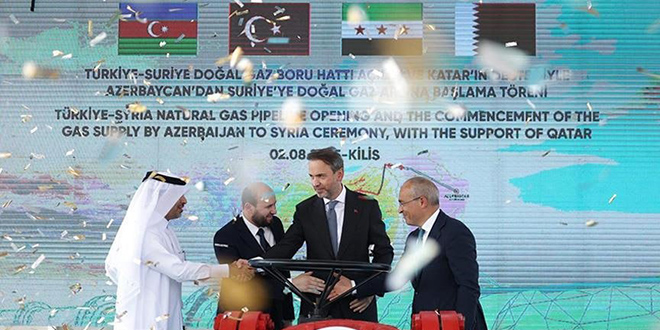
Strategic Council Online – Interview: A West Asia affairs analyst stated: The Syria-Turkey-Azerbaijan gas project goes beyond simple energy cooperation and must be evaluated within the context of regional power competition, efforts to redefine the political order in Syria, and the strengthening of the Turkish-Qatari-Azerbaijani axis in West Asia. An order whose future will largely depend on the stability of the Damascus government and Turkey’s ability to manage security, economic, and geopolitical crises simultaneously.
At a time when Syria is still grappling with extensive infrastructure problems and an energy crisis, the inauguration of the gas pipeline from Azerbaijan to Syria via Turkey, with Qatar’s financial support, has drawn the attention of regional analysts. This project, which in its first phase will transfer 3.4 million cubic meters of gas per day and will eventually reach a capacity of 6 million cubic meters per day, could add approximately 750 megawatts to Syria’s electricity generation capacity.
Strategic Council Online – An analyst of the Caucasus affairs believes that in negotiations in the aftermath of the second Karabakh war, issues have been taken into consideration that is not in the interest of lasting peace in the region, but in line with addressing the targets and objectives pursued by regional and trans-regional players. According to him, now the main issue has been overshadowed by the secondary issues.
SCFR Online – Opinion: Great power competition is now pursued more in trade, currency, technology, and global supply chains than on the battlefields of military confrontation.
Strategic Council Online – Note: By disregarding Iran’s deterrence capabilities and political economy leverage in the Strait of Hormuz, Washington has reached a strategic deadlock from which military means are unable to extricate it.
SCFR Online – Opinion: Foreign policy analysis is valid when it evaluates decisions based on the information and circumstances prevailing at the time they were made, not on the basis of outcomes that only become apparent after the crisis has ended.
SCFR Online-Opinion: Sanctions are gradually transforming from classical financial instruments into complex mechanisms for the containment of technology, data, and global supply chains.
SCFR Online – Opinion: Emmanuel Macron’s visit to Damascus is an attempt to redefine France’s role in Syria following the recent political developments in that country; an effort pursued within the context of great power competition and the country’s security challenges.
Strategic Council Online – Note: Middle powers such as India, Turkey, Australia, and some Persian Gulf countries are no longer marginal actors, but are redefining global power equations through balancing diplomacy.
Strategic Council Online – Note: In today’s global politics, the creation of narratives has become as important as territorial control and economic management, and has turned into the main tool of great power competition.
Strategic Council Online – Note: Hamas’s handing over the civilian management in Gaza is assessed as an attempt to reduce political pressures, facilitate reconstruction, and preserve the status of resistance in the future equations of Palestine.
Strategic Council Online – Interview: A West Asia affairs analyst stated: The Syria-Turkey-Azerbaijan gas project goes beyond simple energy cooperation and must be evaluated within the context of regional power competition, efforts to redefine the political order in Syria, and the strengthening of the Turkish-Qatari-Azerbaijani axis in West Asia. An order whose future will largely depend on the stability of the Damascus government and Turkey’s ability to manage security, economic, and geopolitical crises simultaneously.
At a time when Syria is still grappling with extensive infrastructure problems and an energy crisis, the inauguration of the gas pipeline from Azerbaijan to Syria via Turkey, with Qatar’s financial support, has drawn the attention of regional analysts. This project, which in its first phase will transfer 3.4 million cubic meters of gas per day and will eventually reach a capacity of 6 million cubic meters per day, could add approximately 750 megawatts to Syria’s electricity generation capacity.
Strategic Council Online – An analyst of the Caucasus affairs believes that in negotiations in the aftermath of the second Karabakh war, issues have been taken into consideration that is not in the interest of lasting peace in the region, but in line with addressing the targets and objectives pursued by regional and trans-regional players. According to him, now the main issue has been overshadowed by the secondary issues.
Strategic Council Online – Interview: A West Asia affairs analyst stated: The Syria-Turkey-Azerbaijan gas project goes beyond simple energy cooperation and must be evaluated within the context of regional power competition, efforts to redefine the political order in Syria, and the strengthening of the Turkish-Qatari-Azerbaijani axis in West Asia. An order whose future will largely depend on the stability of the Damascus government and Turkey’s ability to manage security, economic, and geopolitical crises simultaneously.
At a time when Syria is still grappling with extensive infrastructure problems and an energy crisis, the inauguration of the gas pipeline from Azerbaijan to Syria via Turkey, with Qatar’s financial support, has drawn the attention of regional analysts. This project, which in its first phase will transfer 3.4 million cubic meters of gas per day and will eventually reach a capacity of 6 million cubic meters per day, could add approximately 750 megawatts to Syria’s electricity generation capacity.
Strategic Council Online – An analyst of the Caucasus affairs believes that in negotiations in the aftermath of the second Karabakh war, issues have been taken into consideration that is not in the interest of lasting peace in the region, but in line with addressing the targets and objectives pursued by regional and trans-regional players. According to him, now the main issue has been overshadowed by the secondary issues.
SCFR Online – Opinion: Great power competition is now pursued more in trade, currency, technology, and global supply chains than on the battlefields of military confrontation.
Strategic Council Online – Note: By disregarding Iran’s deterrence capabilities and political economy leverage in the Strait of Hormuz, Washington has reached a strategic deadlock from which military means are unable to extricate it.
SCFR Online – Opinion: Foreign policy analysis is valid when it evaluates decisions based on the information and circumstances prevailing at the time they were made, not on the basis of outcomes that only become apparent after the crisis has ended.
SCFR Online-Opinion: Sanctions are gradually transforming from classical financial instruments into complex mechanisms for the containment of technology, data, and global supply chains.
SCFR Online – Opinion: Emmanuel Macron’s visit to Damascus is an attempt to redefine France’s role in Syria following the recent political developments in that country; an effort pursued within the context of great power competition and the country’s security challenges.
Strategic Council Online – Note: Middle powers such as India, Turkey, Australia, and some Persian Gulf countries are no longer marginal actors, but are redefining global power equations through balancing diplomacy.
Strategic Council Online – Note: In today’s global politics, the creation of narratives has become as important as territorial control and economic management, and has turned into the main tool of great power competition.
Strategic Council Online – Note: Hamas’s handing over the civilian management in Gaza is assessed as an attempt to reduce political pressures, facilitate reconstruction, and preserve the status of resistance in the future equations of Palestine.
Strategic Council Online – Interview: A West Asia affairs analyst stated: The Syria-Turkey-Azerbaijan gas project goes beyond simple energy cooperation and must be evaluated within the context of regional power competition, efforts to redefine the political order in Syria, and the strengthening of the Turkish-Qatari-Azerbaijani axis in West Asia. An order whose future will largely depend on the stability of the Damascus government and Turkey’s ability to manage security, economic, and geopolitical crises simultaneously.
At a time when Syria is still grappling with extensive infrastructure problems and an energy crisis, the inauguration of the gas pipeline from Azerbaijan to Syria via Turkey, with Qatar’s financial support, has drawn the attention of regional analysts. This project, which in its first phase will transfer 3.4 million cubic meters of gas per day and will eventually reach a capacity of 6 million cubic meters per day, could add approximately 750 megawatts to Syria’s electricity generation capacity.
Strategic Council Online – An analyst of the Caucasus affairs believes that in negotiations in the aftermath of the second Karabakh war, issues have been taken into consideration that is not in the interest of lasting peace in the region, but in line with addressing the targets and objectives pursued by regional and trans-regional players. According to him, now the main issue has been overshadowed by the secondary issues.
SCFR Online – Opinion: Great power competition is now pursued more in trade, currency, technology, and global supply chains than on the battlefields of military confrontation.
Strategic Council Online – Note: By disregarding Iran’s deterrence capabilities and political economy leverage in the Strait of Hormuz, Washington has reached a strategic deadlock from which military means are unable to extricate it.
SCFR Online – Opinion: Foreign policy analysis is valid when it evaluates decisions based on the information and circumstances prevailing at the time they were made, not on the basis of outcomes that only become apparent after the crisis has ended.
SCFR Online-Opinion: Sanctions are gradually transforming from classical financial instruments into complex mechanisms for the containment of technology, data, and global supply chains.
SCFR Online – Opinion: Emmanuel Macron’s visit to Damascus is an attempt to redefine France’s role in Syria following the recent political developments in that country; an effort pursued within the context of great power competition and the country’s security challenges.
Strategic Council Online – Note: Middle powers such as India, Turkey, Australia, and some Persian Gulf countries are no longer marginal actors, but are redefining global power equations through balancing diplomacy.
Strategic Council Online – Note: In today’s global politics, the creation of narratives has become as important as territorial control and economic management, and has turned into the main tool of great power competition.
Strategic Council Online – Note: Hamas’s handing over the civilian management in Gaza is assessed as an attempt to reduce political pressures, facilitate reconstruction, and preserve the status of resistance in the future equations of Palestine.
Strategic Council Online – Interview: A West Asia affairs analyst stated: The Syria-Turkey-Azerbaijan gas project goes beyond simple energy cooperation and must be evaluated within the context of regional power competition, efforts to redefine the political order in Syria, and the strengthening of the Turkish-Qatari-Azerbaijani axis in West Asia. An order whose future will largely depend on the stability of the Damascus government and Turkey’s ability to manage security, economic, and geopolitical crises simultaneously.
At a time when Syria is still grappling with extensive infrastructure problems and an energy crisis, the inauguration of the gas pipeline from Azerbaijan to Syria via Turkey, with Qatar’s financial support, has drawn the attention of regional analysts. This project, which in its first phase will transfer 3.4 million cubic meters of gas per day and will eventually reach a capacity of 6 million cubic meters per day, could add approximately 750 megawatts to Syria’s electricity generation capacity.
Strategic Council Online – An analyst of the Caucasus affairs believes that in negotiations in the aftermath of the second Karabakh war, issues have been taken into consideration that is not in the interest of lasting peace in the region, but in line with addressing the targets and objectives pursued by regional and trans-regional players. According to him, now the main issue has been overshadowed by the secondary issues.
SCFR Online – Opinion: Great power competition is now pursued more in trade, currency, technology, and global supply chains than on the battlefields of military confrontation.
Strategic Council Online – Note: By disregarding Iran’s deterrence capabilities and political economy leverage in the Strait of Hormuz, Washington has reached a strategic deadlock from which military means are unable to extricate it.
SCFR Online – Opinion: Foreign policy analysis is valid when it evaluates decisions based on the information and circumstances prevailing at the time they were made, not on the basis of outcomes that only become apparent after the crisis has ended.
SCFR Online-Opinion: Sanctions are gradually transforming from classical financial instruments into complex mechanisms for the containment of technology, data, and global supply chains.
SCFR Online – Opinion: Emmanuel Macron’s visit to Damascus is an attempt to redefine France’s role in Syria following the recent political developments in that country; an effort pursued within the context of great power competition and the country’s security challenges.
Strategic Council Online – Note: Middle powers such as India, Turkey, Australia, and some Persian Gulf countries are no longer marginal actors, but are redefining global power equations through balancing diplomacy.
Strategic Council Online – Note: In today’s global politics, the creation of narratives has become as important as territorial control and economic management, and has turned into the main tool of great power competition.
Strategic Council Online – Note: Hamas’s handing over the civilian management in Gaza is assessed as an attempt to reduce political pressures, facilitate reconstruction, and preserve the status of resistance in the future equations of Palestine.
Strategic Council Online – Interview: A West Asia affairs analyst stated: The Syria-Turkey-Azerbaijan gas project goes beyond simple energy cooperation and must be evaluated within the context of regional power competition, efforts to redefine the political order in Syria, and the strengthening of the Turkish-Qatari-Azerbaijani axis in West Asia. An order whose future will largely depend on the stability of the Damascus government and Turkey’s ability to manage security, economic, and geopolitical crises simultaneously.
At a time when Syria is still grappling with extensive infrastructure problems and an energy crisis, the inauguration of the gas pipeline from Azerbaijan to Syria via Turkey, with Qatar’s financial support, has drawn the attention of regional analysts. This project, which in its first phase will transfer 3.4 million cubic meters of gas per day and will eventually reach a capacity of 6 million cubic meters per day, could add approximately 750 megawatts to Syria’s electricity generation capacity.
Strategic Council Online – An analyst of the Caucasus affairs believes that in negotiations in the aftermath of the second Karabakh war, issues have been taken into consideration that is not in the interest of lasting peace in the region, but in line with addressing the targets and objectives pursued by regional and trans-regional players. According to him, now the main issue has been overshadowed by the secondary issues.
SCFR Online – Opinion: Great power competition is now pursued more in trade, currency, technology, and global supply chains than on the battlefields of military confrontation.
Strategic Council Online – Note: By disregarding Iran’s deterrence capabilities and political economy leverage in the Strait of Hormuz, Washington has reached a strategic deadlock from which military means are unable to extricate it.
SCFR Online – Opinion: Foreign policy analysis is valid when it evaluates decisions based on the information and circumstances prevailing at the time they were made, not on the basis of outcomes that only become apparent after the crisis has ended.
SCFR Online-Opinion: Sanctions are gradually transforming from classical financial instruments into complex mechanisms for the containment of technology, data, and global supply chains.
SCFR Online – Opinion: Emmanuel Macron’s visit to Damascus is an attempt to redefine France’s role in Syria following the recent political developments in that country; an effort pursued within the context of great power competition and the country’s security challenges.
Strategic Council Online – Note: Middle powers such as India, Turkey, Australia, and some Persian Gulf countries are no longer marginal actors, but are redefining global power equations through balancing diplomacy.
Strategic Council Online – Note: In today’s global politics, the creation of narratives has become as important as territorial control and economic management, and has turned into the main tool of great power competition.
Strategic Council Online – Note: Hamas’s handing over the civilian management in Gaza is assessed as an attempt to reduce political pressures, facilitate reconstruction, and preserve the status of resistance in the future equations of Palestine.
Strategic Council Online – Interview: A West Asia affairs analyst stated: The Syria-Turkey-Azerbaijan gas project goes beyond simple energy cooperation and must be evaluated within the context of regional power competition, efforts to redefine the political order in Syria, and the strengthening of the Turkish-Qatari-Azerbaijani axis in West Asia. An order whose future will largely depend on the stability of the Damascus government and Turkey’s ability to manage security, economic, and geopolitical crises simultaneously.
At a time when Syria is still grappling with extensive infrastructure problems and an energy crisis, the inauguration of the gas pipeline from Azerbaijan to Syria via Turkey, with Qatar’s financial support, has drawn the attention of regional analysts. This project, which in its first phase will transfer 3.4 million cubic meters of gas per day and will eventually reach a capacity of 6 million cubic meters per day, could add approximately 750 megawatts to Syria’s electricity generation capacity.
Strategic Council Online – An analyst of the Caucasus affairs believes that in negotiations in the aftermath of the second Karabakh war, issues have been taken into consideration that is not in the interest of lasting peace in the region, but in line with addressing the targets and objectives pursued by regional and trans-regional players. According to him, now the main issue has been overshadowed by the secondary issues.
SCFR Online – Opinion: Great power competition is now pursued more in trade, currency, technology, and global supply chains than on the battlefields of military confrontation.
Strategic Council Online – Note: By disregarding Iran’s deterrence capabilities and political economy leverage in the Strait of Hormuz, Washington has reached a strategic deadlock from which military means are unable to extricate it.
SCFR Online – Opinion: Foreign policy analysis is valid when it evaluates decisions based on the information and circumstances prevailing at the time they were made, not on the basis of outcomes that only become apparent after the crisis has ended.
SCFR Online-Opinion: Sanctions are gradually transforming from classical financial instruments into complex mechanisms for the containment of technology, data, and global supply chains.
SCFR Online – Opinion: Emmanuel Macron’s visit to Damascus is an attempt to redefine France’s role in Syria following the recent political developments in that country; an effort pursued within the context of great power competition and the country’s security challenges.
Strategic Council Online – Note: Middle powers such as India, Turkey, Australia, and some Persian Gulf countries are no longer marginal actors, but are redefining global power equations through balancing diplomacy.
Strategic Council Online – Note: In today’s global politics, the creation of narratives has become as important as territorial control and economic management, and has turned into the main tool of great power competition.
Strategic Council Online – Note: Hamas’s handing over the civilian management in Gaza is assessed as an attempt to reduce political pressures, facilitate reconstruction, and preserve the status of resistance in the future equations of Palestine.