جدیدترین مطالب

Iran’s Success in the Narrative Battle in Cyberspace

SCFR Online – Opinion: In the war between Iran and the United States, the main battlefield was not defined solely in the military domain; rather, the battle of narratives in cyberspace—particularly through memes—reached a decisive level.

The Global Energy Shock Situation and Future Scenarios

SCFR Online – Opinion: Only one month after the beginning of the Ramadan War, maritime traffic in the Strait of Hormuz decreased dramatically, with Bloomberg announcing a reduction of 103 vessels; Brent oil prices rose by more than 50 percent, and gasoline prices in the United States increased by 31.4 percent. Additionally, benchmark gas prices in Europe showed a 73.4 percent increase.

Al-Zaydi’s Selection as Prime Minister, The Beginning of a New Chapter in Iraq

SCFR Online – Note: After approximately five months of political deadlock and institutional confusion, Ali al-Zaydi has finally been selected as Iraq’s Prime Minister. Al-Zaydi’s selection as Prime Minister represents a positive sign of the completion of the government formation process and the beginning of a new phase in Iraqi politics and governance. The emergence of a young, technocratic figure from the third generation of politicians—in a context where the country has been administered by traditional figures for decades—revives hope that Iraq may perhaps distance itself from the repetitive cycle of crises and experience a new path of stability, efficiency, and regional convergence.

Intensifying Intra-Party Divisions in the United States Regarding the Zionist Regime

SCFR Online – Note: Over recent decades, support for the Zionist regime has been one of the few issues commanding bipartisan consensus in US foreign policy. Since the Cold War era, Republicans and Democrats have generally agreed on the necessity of preserving the security and survival of the Zionist regime as Washington’s most strategic ally in West Asia—and indeed, globally. However, developments in recent years—particularly the Gaza war, escalating regional conflicts, the expansion of tensions into Lebanon, and this regime’s recent warmongering against Iran—have caused this traditional consensus, especially within the Democratic Party, to face significant fractures.

Public Opinion Disappointment of the Zionist Regime Regarding Success in War with Iran

SCFR Online – Opinion: The internal situation of the Israeli regime during the 40-day war can be analyzed from several perspectives. The popularity levels of Benjamin Netanyahu, the Likud Party, and the ruling coalition led by Netanyahu until February 28, 2026, remained approximately the same as during the preceding year. The most recent factor that had somewhat increased Netanyahu’s popularity was the advancement of the 2024 war with Hezbollah Lebanon. Subsequently, his popularity temporarily increased during the 12-day war with Iran, but after the war, it returned to its previous state.

Loading

Russia

Iran’s Defense Diplomacy, Marine Security Belt Exercise 2023

Iran’s Defense Diplomacy, Marine Security Belt Exercise 2023

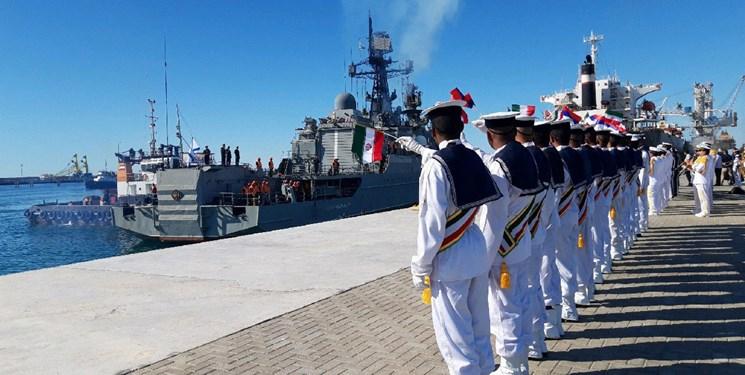
Strategic Council Online – Interview: The commander of the strategic naval forces of the army said that the 2023 marine security belt joint exercise would help to develop cooperation between the naval forces of Iran, China, and Russia, as well as increase the readiness to provide maritime security and safety jointly in line with creating peace and regional stability, announced the efforts being made to have the countries of the region participate in a marine belt exercise as well as the cooperation of the commanders of the Indian Ocean Naval Forces Symposium (IONS) for the following year.

An analysis of the ineffectiveness of the international law system

An analysis of the ineffectiveness of the international law system

Strategic Council Online—Opinion: On March 17, 2023, the International Criminal Court issued an arrest warrant for Vladimir Putin, the President of Russia, and for the first time in the history of the United Nations after the Second World War, the president of a country that has a permanent membership in the Security Council and the right to veto it, is facing a sentence and criminal detention in the international criminal system; This indicates a structural change in the international law system.
Seyyed Nasrollah Ebrahimi—Associate Professor, College of Law and Political Sciences, University of Tehran

Analysis of China’s Peace Proposal Regarding the Ukraine War

Analysis of China’s Peace Proposal Regarding the Ukraine War

Strategic Council Online – Opinion: The Ukraine war put China in a complicated situation. This means it was difficult for Beijing to adopt a position that would not alienate Russia and, at the same time, lead to the management of relations with the West. Accordingly, over the past year, Beijing has not criticized Russia seriously. Still, at the same time, it has refused to provide support to Russia that would be a game-changer, including the transfer of weapons. In return, it has criticized the West, including on the issue of NATO expansion.
Mohammad Javad Ghahremani – Researcher of China affairs

Ukraine War, European Military-Security Scenarios

Ukraine War, European Military-Security Scenarios

Strategic Council Online – Opinion: The European Union, at a time it is witnessing the return of war in Europe, has officially approved a plan titled “A Strategic Compass for Security and Defense,” which presents an ambitious initiative for strengthening the security and defense policy of the European Union up to 2030.
Pouria Nabipour – Ph.D. in political science and international relations

Analysis of China’s Statement Regarding War in Ukraine, Beijing’s Motivations

Analysis of China’s Statement Regarding War in Ukraine, Beijing’s Motivations

Strategic Council Online – Interview: An expert on Russian affairs says the Chinese statement lacked a specific proposal to exchange concessions between the two parties involved in the Ukraine war and open a passage for peace and only demanded to start negotiations. He added: During the Ukraine war, China, by buying cheap energy from Russia and increasing its energy reserves, has not only become an energy exporter for the first time but also gained more bargaining power against other energy exporters to China.

China’s Capacities, Challenges to Play a Role in Making Intl. Peace, Stability

China’s Capacities, Challenges to Play a Role in Making Intl. Peace, Stability

Strategic Council Online – Interview: An expert on East Asia affairs considers China as having traditional and modern components of power in the world, which enables Beijing, to enjoy the possibility of balancing. He says: The Chinese have limitations in role-playing as an actor to make international peace and stability and generally they enter the challenges from the more trivial topics. This approach is considered a challenge to boost China’s mediating role and influence.

A Glimpse at Developments of Intl. Order; a Year after Ukrainian War

A Glimpse at Developments of Intl. Order; a Year after Ukrainian War

Strategic Council Online – Interview: An analyst of international affairs, saying that there is no sign of an end to the war in Ukraine in the current conditions, emphasized: Now the equations of the past are messed up and the new system is based on multilateralism and neutrality and relies on regionalism in which regional powers will cooperate and compete with each other at the international level.

Analysis of US Strategies on Current World Order, Russia’s Strategic Mistake

Analysis of US Strategies on Current World Order, Russia’s Strategic Mistake

Strategic Council Online – Interview: A university faculty member saying that the world today is far more complicated than the Cold War era, and based on the developments of the contemporary world and its trends, the possibility of Cold War lineup is not high, noted: Ukraine is the ground for Russia’s strategic mistakes; because even in case of victory, in the long run the economy and then the security of Russia will be worn out.

The statement of the European Union ambassadors in Tehran shows Europe’s double standard approach towards aggression and terrorism

The statement of the European Union ambassadors in Tehran shows Europe’s double standard approach towards aggression and terrorism

Strategic Council Online—Interview: A former Iranian diplomat says there are numerous problems in the relations between Iran and Europe that have roots in the differences and disputes between them, adding that “of course, it should also be noted that Europe’s policy of double standards is one of the basic problems that this group is involved with in some international issues, and has no acceptable argument to justify it, because only when the violation of international laws regarding Europe and its interests happen, the union claims confrontation, and if this happened to another country that has problems with Europe, the form of dealing is different or it may be associated with the violator.”

Analysis of The Hague Decision to Reopen Lachin Corridor, Its Effects

Analysis of The Hague Decision to Reopen Lachin Corridor, Its Effects

Strategic Council Online – Interview: A professor of international law, recalling that one of the motivations for closing the Lachin Corridor by the Republic of Azerbaijan was the pressure on Armenia to agree with the “Zangezur Corridor”, said: With the strong verdict of The Hague in favor of Armenia, international pressure and pressure of public opinion has been created against Baku to open the Lachin Corridor, but in any case, Baku is backed by its trans-regional allies who also have the veto power in the UN Security Council, and there are doubts about stopping the pressure on Armenia in this direction.

أحدث الوظائف

Iran’s Success in the Narrative Battle in Cyberspace

SCFR Online – Opinion: In the war between Iran and the United States, the main battlefield was not defined solely in the military domain; rather, the battle of narratives in cyberspace—particularly through memes—reached a decisive level.

The Global Energy Shock Situation and Future Scenarios

SCFR Online – Opinion: Only one month after the beginning of the Ramadan War, maritime traffic in the Strait of Hormuz decreased dramatically, with Bloomberg announcing a reduction of 103 vessels; Brent oil prices rose by more than 50 percent, and gasoline prices in the United States increased by 31.4 percent. Additionally, benchmark gas prices in Europe showed a 73.4 percent increase.

Al-Zaydi’s Selection as Prime Minister, The Beginning of a New Chapter in Iraq

SCFR Online – Note: After approximately five months of political deadlock and institutional confusion, Ali al-Zaydi has finally been selected as Iraq’s Prime Minister. Al-Zaydi’s selection as Prime Minister represents a positive sign of the completion of the government formation process and the beginning of a new phase in Iraqi politics and governance. The emergence of a young, technocratic figure from the third generation of politicians—in a context where the country has been administered by traditional figures for decades—revives hope that Iraq may perhaps distance itself from the repetitive cycle of crises and experience a new path of stability, efficiency, and regional convergence.

Intensifying Intra-Party Divisions in the United States Regarding the Zionist Regime

SCFR Online – Note: Over recent decades, support for the Zionist regime has been one of the few issues commanding bipartisan consensus in US foreign policy. Since the Cold War era, Republicans and Democrats have generally agreed on the necessity of preserving the security and survival of the Zionist regime as Washington’s most strategic ally in West Asia—and indeed, globally. However, developments in recent years—particularly the Gaza war, escalating regional conflicts, the expansion of tensions into Lebanon, and this regime’s recent warmongering against Iran—have caused this traditional consensus, especially within the Democratic Party, to face significant fractures.

Public Opinion Disappointment of the Zionist Regime Regarding Success in War with Iran

SCFR Online – Opinion: The internal situation of the Israeli regime during the 40-day war can be analyzed from several perspectives. The popularity levels of Benjamin Netanyahu, the Likud Party, and the ruling coalition led by Netanyahu until February 28, 2026, remained approximately the same as during the preceding year. The most recent factor that had somewhat increased Netanyahu’s popularity was the advancement of the 2024 war with Hezbollah Lebanon. Subsequently, his popularity temporarily increased during the 12-day war with Iran, but after the war, it returned to its previous state.

Loading

Russia

Iran’s Defense Diplomacy, Marine Security Belt Exercise 2023

Iran’s Defense Diplomacy, Marine Security Belt Exercise 2023

Strategic Council Online – Interview: The commander of the strategic naval forces of the army said that the 2023 marine security belt joint exercise would help to develop cooperation between the naval forces of Iran, China, and Russia, as well as increase the readiness to provide maritime security and safety jointly in line with creating peace and regional stability, announced the efforts being made to have the countries of the region participate in a marine belt exercise as well as the cooperation of the commanders of the Indian Ocean Naval Forces Symposium (IONS) for the following year.

An analysis of the ineffectiveness of the international law system

An analysis of the ineffectiveness of the international law system

Strategic Council Online—Opinion: On March 17, 2023, the International Criminal Court issued an arrest warrant for Vladimir Putin, the President of Russia, and for the first time in the history of the United Nations after the Second World War, the president of a country that has a permanent membership in the Security Council and the right to veto it, is facing a sentence and criminal detention in the international criminal system; This indicates a structural change in the international law system.
Seyyed Nasrollah Ebrahimi—Associate Professor, College of Law and Political Sciences, University of Tehran

Analysis of China’s Peace Proposal Regarding the Ukraine War

Analysis of China’s Peace Proposal Regarding the Ukraine War

Strategic Council Online – Opinion: The Ukraine war put China in a complicated situation. This means it was difficult for Beijing to adopt a position that would not alienate Russia and, at the same time, lead to the management of relations with the West. Accordingly, over the past year, Beijing has not criticized Russia seriously. Still, at the same time, it has refused to provide support to Russia that would be a game-changer, including the transfer of weapons. In return, it has criticized the West, including on the issue of NATO expansion.
Mohammad Javad Ghahremani – Researcher of China affairs

Ukraine War, European Military-Security Scenarios

Ukraine War, European Military-Security Scenarios

Strategic Council Online – Opinion: The European Union, at a time it is witnessing the return of war in Europe, has officially approved a plan titled “A Strategic Compass for Security and Defense,” which presents an ambitious initiative for strengthening the security and defense policy of the European Union up to 2030.
Pouria Nabipour – Ph.D. in political science and international relations

Analysis of China’s Statement Regarding War in Ukraine, Beijing’s Motivations

Analysis of China’s Statement Regarding War in Ukraine, Beijing’s Motivations

Strategic Council Online – Interview: An expert on Russian affairs says the Chinese statement lacked a specific proposal to exchange concessions between the two parties involved in the Ukraine war and open a passage for peace and only demanded to start negotiations. He added: During the Ukraine war, China, by buying cheap energy from Russia and increasing its energy reserves, has not only become an energy exporter for the first time but also gained more bargaining power against other energy exporters to China.

China’s Capacities, Challenges to Play a Role in Making Intl. Peace, Stability

China’s Capacities, Challenges to Play a Role in Making Intl. Peace, Stability

Strategic Council Online – Interview: An expert on East Asia affairs considers China as having traditional and modern components of power in the world, which enables Beijing, to enjoy the possibility of balancing. He says: The Chinese have limitations in role-playing as an actor to make international peace and stability and generally they enter the challenges from the more trivial topics. This approach is considered a challenge to boost China’s mediating role and influence.

A Glimpse at Developments of Intl. Order; a Year after Ukrainian War

A Glimpse at Developments of Intl. Order; a Year after Ukrainian War

Strategic Council Online – Interview: An analyst of international affairs, saying that there is no sign of an end to the war in Ukraine in the current conditions, emphasized: Now the equations of the past are messed up and the new system is based on multilateralism and neutrality and relies on regionalism in which regional powers will cooperate and compete with each other at the international level.

Analysis of US Strategies on Current World Order, Russia’s Strategic Mistake

Analysis of US Strategies on Current World Order, Russia’s Strategic Mistake

Strategic Council Online – Interview: A university faculty member saying that the world today is far more complicated than the Cold War era, and based on the developments of the contemporary world and its trends, the possibility of Cold War lineup is not high, noted: Ukraine is the ground for Russia’s strategic mistakes; because even in case of victory, in the long run the economy and then the security of Russia will be worn out.

The statement of the European Union ambassadors in Tehran shows Europe’s double standard approach towards aggression and terrorism

The statement of the European Union ambassadors in Tehran shows Europe’s double standard approach towards aggression and terrorism

Strategic Council Online—Interview: A former Iranian diplomat says there are numerous problems in the relations between Iran and Europe that have roots in the differences and disputes between them, adding that “of course, it should also be noted that Europe’s policy of double standards is one of the basic problems that this group is involved with in some international issues, and has no acceptable argument to justify it, because only when the violation of international laws regarding Europe and its interests happen, the union claims confrontation, and if this happened to another country that has problems with Europe, the form of dealing is different or it may be associated with the violator.”

Analysis of The Hague Decision to Reopen Lachin Corridor, Its Effects

Analysis of The Hague Decision to Reopen Lachin Corridor, Its Effects

Strategic Council Online – Interview: A professor of international law, recalling that one of the motivations for closing the Lachin Corridor by the Republic of Azerbaijan was the pressure on Armenia to agree with the “Zangezur Corridor”, said: With the strong verdict of The Hague in favor of Armenia, international pressure and pressure of public opinion has been created against Baku to open the Lachin Corridor, but in any case, Baku is backed by its trans-regional allies who also have the veto power in the UN Security Council, and there are doubts about stopping the pressure on Armenia in this direction.

Russia

Iran’s Defense Diplomacy, Marine Security Belt Exercise 2023

Iran’s Defense Diplomacy, Marine Security Belt Exercise 2023

Strategic Council Online – Interview: The commander of the strategic naval forces of the army said that the 2023 marine security belt joint exercise would help to develop cooperation between the naval forces of Iran, China, and Russia, as well as increase the readiness to provide maritime security and safety jointly in line with creating peace and regional stability, announced the efforts being made to have the countries of the region participate in a marine belt exercise as well as the cooperation of the commanders of the Indian Ocean Naval Forces Symposium (IONS) for the following year.

An analysis of the ineffectiveness of the international law system

An analysis of the ineffectiveness of the international law system

Strategic Council Online—Opinion: On March 17, 2023, the International Criminal Court issued an arrest warrant for Vladimir Putin, the President of Russia, and for the first time in the history of the United Nations after the Second World War, the president of a country that has a permanent membership in the Security Council and the right to veto it, is facing a sentence and criminal detention in the international criminal system; This indicates a structural change in the international law system.
Seyyed Nasrollah Ebrahimi—Associate Professor, College of Law and Political Sciences, University of Tehran

Analysis of China’s Peace Proposal Regarding the Ukraine War

Analysis of China’s Peace Proposal Regarding the Ukraine War

Strategic Council Online – Opinion: The Ukraine war put China in a complicated situation. This means it was difficult for Beijing to adopt a position that would not alienate Russia and, at the same time, lead to the management of relations with the West. Accordingly, over the past year, Beijing has not criticized Russia seriously. Still, at the same time, it has refused to provide support to Russia that would be a game-changer, including the transfer of weapons. In return, it has criticized the West, including on the issue of NATO expansion.
Mohammad Javad Ghahremani – Researcher of China affairs

Ukraine War, European Military-Security Scenarios

Ukraine War, European Military-Security Scenarios

Strategic Council Online – Opinion: The European Union, at a time it is witnessing the return of war in Europe, has officially approved a plan titled “A Strategic Compass for Security and Defense,” which presents an ambitious initiative for strengthening the security and defense policy of the European Union up to 2030.
Pouria Nabipour – Ph.D. in political science and international relations

Analysis of China’s Statement Regarding War in Ukraine, Beijing’s Motivations

Analysis of China’s Statement Regarding War in Ukraine, Beijing’s Motivations

Strategic Council Online – Interview: An expert on Russian affairs says the Chinese statement lacked a specific proposal to exchange concessions between the two parties involved in the Ukraine war and open a passage for peace and only demanded to start negotiations. He added: During the Ukraine war, China, by buying cheap energy from Russia and increasing its energy reserves, has not only become an energy exporter for the first time but also gained more bargaining power against other energy exporters to China.

China’s Capacities, Challenges to Play a Role in Making Intl. Peace, Stability

China’s Capacities, Challenges to Play a Role in Making Intl. Peace, Stability

Strategic Council Online – Interview: An expert on East Asia affairs considers China as having traditional and modern components of power in the world, which enables Beijing, to enjoy the possibility of balancing. He says: The Chinese have limitations in role-playing as an actor to make international peace and stability and generally they enter the challenges from the more trivial topics. This approach is considered a challenge to boost China’s mediating role and influence.

A Glimpse at Developments of Intl. Order; a Year after Ukrainian War

A Glimpse at Developments of Intl. Order; a Year after Ukrainian War

Strategic Council Online – Interview: An analyst of international affairs, saying that there is no sign of an end to the war in Ukraine in the current conditions, emphasized: Now the equations of the past are messed up and the new system is based on multilateralism and neutrality and relies on regionalism in which regional powers will cooperate and compete with each other at the international level.

Analysis of US Strategies on Current World Order, Russia’s Strategic Mistake

Analysis of US Strategies on Current World Order, Russia’s Strategic Mistake

Strategic Council Online – Interview: A university faculty member saying that the world today is far more complicated than the Cold War era, and based on the developments of the contemporary world and its trends, the possibility of Cold War lineup is not high, noted: Ukraine is the ground for Russia’s strategic mistakes; because even in case of victory, in the long run the economy and then the security of Russia will be worn out.

The statement of the European Union ambassadors in Tehran shows Europe’s double standard approach towards aggression and terrorism

The statement of the European Union ambassadors in Tehran shows Europe’s double standard approach towards aggression and terrorism

Strategic Council Online—Interview: A former Iranian diplomat says there are numerous problems in the relations between Iran and Europe that have roots in the differences and disputes between them, adding that “of course, it should also be noted that Europe’s policy of double standards is one of the basic problems that this group is involved with in some international issues, and has no acceptable argument to justify it, because only when the violation of international laws regarding Europe and its interests happen, the union claims confrontation, and if this happened to another country that has problems with Europe, the form of dealing is different or it may be associated with the violator.”

Analysis of The Hague Decision to Reopen Lachin Corridor, Its Effects

Analysis of The Hague Decision to Reopen Lachin Corridor, Its Effects

Strategic Council Online – Interview: A professor of international law, recalling that one of the motivations for closing the Lachin Corridor by the Republic of Azerbaijan was the pressure on Armenia to agree with the “Zangezur Corridor”, said: With the strong verdict of The Hague in favor of Armenia, international pressure and pressure of public opinion has been created against Baku to open the Lachin Corridor, but in any case, Baku is backed by its trans-regional allies who also have the veto power in the UN Security Council, and there are doubts about stopping the pressure on Armenia in this direction.

LATEST CONTENT

Iran’s Success in the Narrative Battle in Cyberspace

SCFR Online – Opinion: In the war between Iran and the United States, the main battlefield was not defined solely in the military domain; rather, the battle of narratives in cyberspace—particularly through memes—reached a decisive level.

The Global Energy Shock Situation and Future Scenarios

SCFR Online – Opinion: Only one month after the beginning of the Ramadan War, maritime traffic in the Strait of Hormuz decreased dramatically, with Bloomberg announcing a reduction of 103 vessels; Brent oil prices rose by more than 50 percent, and gasoline prices in the United States increased by 31.4 percent. Additionally, benchmark gas prices in Europe showed a 73.4 percent increase.

Al-Zaydi’s Selection as Prime Minister, The Beginning of a New Chapter in Iraq

SCFR Online – Note: After approximately five months of political deadlock and institutional confusion, Ali al-Zaydi has finally been selected as Iraq’s Prime Minister. Al-Zaydi’s selection as Prime Minister represents a positive sign of the completion of the government formation process and the beginning of a new phase in Iraqi politics and governance. The emergence of a young, technocratic figure from the third generation of politicians—in a context where the country has been administered by traditional figures for decades—revives hope that Iraq may perhaps distance itself from the repetitive cycle of crises and experience a new path of stability, efficiency, and regional convergence.

Intensifying Intra-Party Divisions in the United States Regarding the Zionist Regime

SCFR Online – Note: Over recent decades, support for the Zionist regime has been one of the few issues commanding bipartisan consensus in US foreign policy. Since the Cold War era, Republicans and Democrats have generally agreed on the necessity of preserving the security and survival of the Zionist regime as Washington’s most strategic ally in West Asia—and indeed, globally. However, developments in recent years—particularly the Gaza war, escalating regional conflicts, the expansion of tensions into Lebanon, and this regime’s recent warmongering against Iran—have caused this traditional consensus, especially within the Democratic Party, to face significant fractures.

Public Opinion Disappointment of the Zionist Regime Regarding Success in War with Iran

SCFR Online – Opinion: The internal situation of the Israeli regime during the 40-day war can be analyzed from several perspectives. The popularity levels of Benjamin Netanyahu, the Likud Party, and the ruling coalition led by Netanyahu until February 28, 2026, remained approximately the same as during the preceding year. The most recent factor that had somewhat increased Netanyahu’s popularity was the advancement of the 2024 war with Hezbollah Lebanon. Subsequently, his popularity temporarily increased during the 12-day war with Iran, but after the war, it returned to its previous state.

Loading

Russia

Iran’s Defense Diplomacy, Marine Security Belt Exercise 2023

Iran’s Defense Diplomacy, Marine Security Belt Exercise 2023

Strategic Council Online – Interview: The commander of the strategic naval forces of the army said that the 2023 marine security belt joint exercise would help to develop cooperation between the naval forces of Iran, China, and Russia, as well as increase the readiness to provide maritime security and safety jointly in line with creating peace and regional stability, announced the efforts being made to have the countries of the region participate in a marine belt exercise as well as the cooperation of the commanders of the Indian Ocean Naval Forces Symposium (IONS) for the following year.

An analysis of the ineffectiveness of the international law system

An analysis of the ineffectiveness of the international law system

Strategic Council Online—Opinion: On March 17, 2023, the International Criminal Court issued an arrest warrant for Vladimir Putin, the President of Russia, and for the first time in the history of the United Nations after the Second World War, the president of a country that has a permanent membership in the Security Council and the right to veto it, is facing a sentence and criminal detention in the international criminal system; This indicates a structural change in the international law system.
Seyyed Nasrollah Ebrahimi—Associate Professor, College of Law and Political Sciences, University of Tehran

Analysis of China’s Peace Proposal Regarding the Ukraine War

Analysis of China’s Peace Proposal Regarding the Ukraine War

Strategic Council Online – Opinion: The Ukraine war put China in a complicated situation. This means it was difficult for Beijing to adopt a position that would not alienate Russia and, at the same time, lead to the management of relations with the West. Accordingly, over the past year, Beijing has not criticized Russia seriously. Still, at the same time, it has refused to provide support to Russia that would be a game-changer, including the transfer of weapons. In return, it has criticized the West, including on the issue of NATO expansion.
Mohammad Javad Ghahremani – Researcher of China affairs

Ukraine War, European Military-Security Scenarios

Ukraine War, European Military-Security Scenarios

Strategic Council Online – Opinion: The European Union, at a time it is witnessing the return of war in Europe, has officially approved a plan titled “A Strategic Compass for Security and Defense,” which presents an ambitious initiative for strengthening the security and defense policy of the European Union up to 2030.
Pouria Nabipour – Ph.D. in political science and international relations

Analysis of China’s Statement Regarding War in Ukraine, Beijing’s Motivations

Analysis of China’s Statement Regarding War in Ukraine, Beijing’s Motivations

Strategic Council Online – Interview: An expert on Russian affairs says the Chinese statement lacked a specific proposal to exchange concessions between the two parties involved in the Ukraine war and open a passage for peace and only demanded to start negotiations. He added: During the Ukraine war, China, by buying cheap energy from Russia and increasing its energy reserves, has not only become an energy exporter for the first time but also gained more bargaining power against other energy exporters to China.

China’s Capacities, Challenges to Play a Role in Making Intl. Peace, Stability

China’s Capacities, Challenges to Play a Role in Making Intl. Peace, Stability

Strategic Council Online – Interview: An expert on East Asia affairs considers China as having traditional and modern components of power in the world, which enables Beijing, to enjoy the possibility of balancing. He says: The Chinese have limitations in role-playing as an actor to make international peace and stability and generally they enter the challenges from the more trivial topics. This approach is considered a challenge to boost China’s mediating role and influence.

A Glimpse at Developments of Intl. Order; a Year after Ukrainian War

A Glimpse at Developments of Intl. Order; a Year after Ukrainian War

Strategic Council Online – Interview: An analyst of international affairs, saying that there is no sign of an end to the war in Ukraine in the current conditions, emphasized: Now the equations of the past are messed up and the new system is based on multilateralism and neutrality and relies on regionalism in which regional powers will cooperate and compete with each other at the international level.

Analysis of US Strategies on Current World Order, Russia’s Strategic Mistake

Analysis of US Strategies on Current World Order, Russia’s Strategic Mistake

Strategic Council Online – Interview: A university faculty member saying that the world today is far more complicated than the Cold War era, and based on the developments of the contemporary world and its trends, the possibility of Cold War lineup is not high, noted: Ukraine is the ground for Russia’s strategic mistakes; because even in case of victory, in the long run the economy and then the security of Russia will be worn out.

The statement of the European Union ambassadors in Tehran shows Europe’s double standard approach towards aggression and terrorism

The statement of the European Union ambassadors in Tehran shows Europe’s double standard approach towards aggression and terrorism

Strategic Council Online—Interview: A former Iranian diplomat says there are numerous problems in the relations between Iran and Europe that have roots in the differences and disputes between them, adding that “of course, it should also be noted that Europe’s policy of double standards is one of the basic problems that this group is involved with in some international issues, and has no acceptable argument to justify it, because only when the violation of international laws regarding Europe and its interests happen, the union claims confrontation, and if this happened to another country that has problems with Europe, the form of dealing is different or it may be associated with the violator.”

Analysis of The Hague Decision to Reopen Lachin Corridor, Its Effects

Analysis of The Hague Decision to Reopen Lachin Corridor, Its Effects

Strategic Council Online – Interview: A professor of international law, recalling that one of the motivations for closing the Lachin Corridor by the Republic of Azerbaijan was the pressure on Armenia to agree with the “Zangezur Corridor”, said: With the strong verdict of The Hague in favor of Armenia, international pressure and pressure of public opinion has been created against Baku to open the Lachin Corridor, but in any case, Baku is backed by its trans-regional allies who also have the veto power in the UN Security Council, and there are doubts about stopping the pressure on Armenia in this direction.

ÚLTIMAS PUBLICACIONES

Iran’s Success in the Narrative Battle in Cyberspace

SCFR Online – Opinion: In the war between Iran and the United States, the main battlefield was not defined solely in the military domain; rather, the battle of narratives in cyberspace—particularly through memes—reached a decisive level.

The Global Energy Shock Situation and Future Scenarios

SCFR Online – Opinion: Only one month after the beginning of the Ramadan War, maritime traffic in the Strait of Hormuz decreased dramatically, with Bloomberg announcing a reduction of 103 vessels; Brent oil prices rose by more than 50 percent, and gasoline prices in the United States increased by 31.4 percent. Additionally, benchmark gas prices in Europe showed a 73.4 percent increase.

Al-Zaydi’s Selection as Prime Minister, The Beginning of a New Chapter in Iraq

SCFR Online – Note: After approximately five months of political deadlock and institutional confusion, Ali al-Zaydi has finally been selected as Iraq’s Prime Minister. Al-Zaydi’s selection as Prime Minister represents a positive sign of the completion of the government formation process and the beginning of a new phase in Iraqi politics and governance. The emergence of a young, technocratic figure from the third generation of politicians—in a context where the country has been administered by traditional figures for decades—revives hope that Iraq may perhaps distance itself from the repetitive cycle of crises and experience a new path of stability, efficiency, and regional convergence.

Intensifying Intra-Party Divisions in the United States Regarding the Zionist Regime

SCFR Online – Note: Over recent decades, support for the Zionist regime has been one of the few issues commanding bipartisan consensus in US foreign policy. Since the Cold War era, Republicans and Democrats have generally agreed on the necessity of preserving the security and survival of the Zionist regime as Washington’s most strategic ally in West Asia—and indeed, globally. However, developments in recent years—particularly the Gaza war, escalating regional conflicts, the expansion of tensions into Lebanon, and this regime’s recent warmongering against Iran—have caused this traditional consensus, especially within the Democratic Party, to face significant fractures.

Public Opinion Disappointment of the Zionist Regime Regarding Success in War with Iran

SCFR Online – Opinion: The internal situation of the Israeli regime during the 40-day war can be analyzed from several perspectives. The popularity levels of Benjamin Netanyahu, the Likud Party, and the ruling coalition led by Netanyahu until February 28, 2026, remained approximately the same as during the preceding year. The most recent factor that had somewhat increased Netanyahu’s popularity was the advancement of the 2024 war with Hezbollah Lebanon. Subsequently, his popularity temporarily increased during the 12-day war with Iran, but after the war, it returned to its previous state.

Loading

Russia

Iran’s Defense Diplomacy, Marine Security Belt Exercise 2023

Iran’s Defense Diplomacy, Marine Security Belt Exercise 2023

Strategic Council Online – Interview: The commander of the strategic naval forces of the army said that the 2023 marine security belt joint exercise would help to develop cooperation between the naval forces of Iran, China, and Russia, as well as increase the readiness to provide maritime security and safety jointly in line with creating peace and regional stability, announced the efforts being made to have the countries of the region participate in a marine belt exercise as well as the cooperation of the commanders of the Indian Ocean Naval Forces Symposium (IONS) for the following year.

An analysis of the ineffectiveness of the international law system

An analysis of the ineffectiveness of the international law system

Strategic Council Online—Opinion: On March 17, 2023, the International Criminal Court issued an arrest warrant for Vladimir Putin, the President of Russia, and for the first time in the history of the United Nations after the Second World War, the president of a country that has a permanent membership in the Security Council and the right to veto it, is facing a sentence and criminal detention in the international criminal system; This indicates a structural change in the international law system.
Seyyed Nasrollah Ebrahimi—Associate Professor, College of Law and Political Sciences, University of Tehran

Analysis of China’s Peace Proposal Regarding the Ukraine War

Analysis of China’s Peace Proposal Regarding the Ukraine War

Strategic Council Online – Opinion: The Ukraine war put China in a complicated situation. This means it was difficult for Beijing to adopt a position that would not alienate Russia and, at the same time, lead to the management of relations with the West. Accordingly, over the past year, Beijing has not criticized Russia seriously. Still, at the same time, it has refused to provide support to Russia that would be a game-changer, including the transfer of weapons. In return, it has criticized the West, including on the issue of NATO expansion.
Mohammad Javad Ghahremani – Researcher of China affairs

Ukraine War, European Military-Security Scenarios

Ukraine War, European Military-Security Scenarios

Strategic Council Online – Opinion: The European Union, at a time it is witnessing the return of war in Europe, has officially approved a plan titled “A Strategic Compass for Security and Defense,” which presents an ambitious initiative for strengthening the security and defense policy of the European Union up to 2030.
Pouria Nabipour – Ph.D. in political science and international relations

Analysis of China’s Statement Regarding War in Ukraine, Beijing’s Motivations

Analysis of China’s Statement Regarding War in Ukraine, Beijing’s Motivations

Strategic Council Online – Interview: An expert on Russian affairs says the Chinese statement lacked a specific proposal to exchange concessions between the two parties involved in the Ukraine war and open a passage for peace and only demanded to start negotiations. He added: During the Ukraine war, China, by buying cheap energy from Russia and increasing its energy reserves, has not only become an energy exporter for the first time but also gained more bargaining power against other energy exporters to China.

China’s Capacities, Challenges to Play a Role in Making Intl. Peace, Stability

China’s Capacities, Challenges to Play a Role in Making Intl. Peace, Stability

Strategic Council Online – Interview: An expert on East Asia affairs considers China as having traditional and modern components of power in the world, which enables Beijing, to enjoy the possibility of balancing. He says: The Chinese have limitations in role-playing as an actor to make international peace and stability and generally they enter the challenges from the more trivial topics. This approach is considered a challenge to boost China’s mediating role and influence.

A Glimpse at Developments of Intl. Order; a Year after Ukrainian War

A Glimpse at Developments of Intl. Order; a Year after Ukrainian War

Strategic Council Online – Interview: An analyst of international affairs, saying that there is no sign of an end to the war in Ukraine in the current conditions, emphasized: Now the equations of the past are messed up and the new system is based on multilateralism and neutrality and relies on regionalism in which regional powers will cooperate and compete with each other at the international level.

Analysis of US Strategies on Current World Order, Russia’s Strategic Mistake

Analysis of US Strategies on Current World Order, Russia’s Strategic Mistake

Strategic Council Online – Interview: A university faculty member saying that the world today is far more complicated than the Cold War era, and based on the developments of the contemporary world and its trends, the possibility of Cold War lineup is not high, noted: Ukraine is the ground for Russia’s strategic mistakes; because even in case of victory, in the long run the economy and then the security of Russia will be worn out.

The statement of the European Union ambassadors in Tehran shows Europe’s double standard approach towards aggression and terrorism

The statement of the European Union ambassadors in Tehran shows Europe’s double standard approach towards aggression and terrorism

Strategic Council Online—Interview: A former Iranian diplomat says there are numerous problems in the relations between Iran and Europe that have roots in the differences and disputes between them, adding that “of course, it should also be noted that Europe’s policy of double standards is one of the basic problems that this group is involved with in some international issues, and has no acceptable argument to justify it, because only when the violation of international laws regarding Europe and its interests happen, the union claims confrontation, and if this happened to another country that has problems with Europe, the form of dealing is different or it may be associated with the violator.”

Analysis of The Hague Decision to Reopen Lachin Corridor, Its Effects

Analysis of The Hague Decision to Reopen Lachin Corridor, Its Effects

Strategic Council Online – Interview: A professor of international law, recalling that one of the motivations for closing the Lachin Corridor by the Republic of Azerbaijan was the pressure on Armenia to agree with the “Zangezur Corridor”, said: With the strong verdict of The Hague in favor of Armenia, international pressure and pressure of public opinion has been created against Baku to open the Lachin Corridor, but in any case, Baku is backed by its trans-regional allies who also have the veto power in the UN Security Council, and there are doubts about stopping the pressure on Armenia in this direction.

ÚLTIMAS PUBLICACIONES

Iran’s Success in the Narrative Battle in Cyberspace

SCFR Online – Opinion: In the war between Iran and the United States, the main battlefield was not defined solely in the military domain; rather, the battle of narratives in cyberspace—particularly through memes—reached a decisive level.

The Global Energy Shock Situation and Future Scenarios

SCFR Online – Opinion: Only one month after the beginning of the Ramadan War, maritime traffic in the Strait of Hormuz decreased dramatically, with Bloomberg announcing a reduction of 103 vessels; Brent oil prices rose by more than 50 percent, and gasoline prices in the United States increased by 31.4 percent. Additionally, benchmark gas prices in Europe showed a 73.4 percent increase.

Al-Zaydi’s Selection as Prime Minister, The Beginning of a New Chapter in Iraq

SCFR Online – Note: After approximately five months of political deadlock and institutional confusion, Ali al-Zaydi has finally been selected as Iraq’s Prime Minister. Al-Zaydi’s selection as Prime Minister represents a positive sign of the completion of the government formation process and the beginning of a new phase in Iraqi politics and governance. The emergence of a young, technocratic figure from the third generation of politicians—in a context where the country has been administered by traditional figures for decades—revives hope that Iraq may perhaps distance itself from the repetitive cycle of crises and experience a new path of stability, efficiency, and regional convergence.

Intensifying Intra-Party Divisions in the United States Regarding the Zionist Regime

SCFR Online – Note: Over recent decades, support for the Zionist regime has been one of the few issues commanding bipartisan consensus in US foreign policy. Since the Cold War era, Republicans and Democrats have generally agreed on the necessity of preserving the security and survival of the Zionist regime as Washington’s most strategic ally in West Asia—and indeed, globally. However, developments in recent years—particularly the Gaza war, escalating regional conflicts, the expansion of tensions into Lebanon, and this regime’s recent warmongering against Iran—have caused this traditional consensus, especially within the Democratic Party, to face significant fractures.

Public Opinion Disappointment of the Zionist Regime Regarding Success in War with Iran

SCFR Online – Opinion: The internal situation of the Israeli regime during the 40-day war can be analyzed from several perspectives. The popularity levels of Benjamin Netanyahu, the Likud Party, and the ruling coalition led by Netanyahu until February 28, 2026, remained approximately the same as during the preceding year. The most recent factor that had somewhat increased Netanyahu’s popularity was the advancement of the 2024 war with Hezbollah Lebanon. Subsequently, his popularity temporarily increased during the 12-day war with Iran, but after the war, it returned to its previous state.

Loading

Russia

Iran’s Defense Diplomacy, Marine Security Belt Exercise 2023

Iran’s Defense Diplomacy, Marine Security Belt Exercise 2023

Strategic Council Online – Interview: The commander of the strategic naval forces of the army said that the 2023 marine security belt joint exercise would help to develop cooperation between the naval forces of Iran, China, and Russia, as well as increase the readiness to provide maritime security and safety jointly in line with creating peace and regional stability, announced the efforts being made to have the countries of the region participate in a marine belt exercise as well as the cooperation of the commanders of the Indian Ocean Naval Forces Symposium (IONS) for the following year.

An analysis of the ineffectiveness of the international law system

An analysis of the ineffectiveness of the international law system

Strategic Council Online—Opinion: On March 17, 2023, the International Criminal Court issued an arrest warrant for Vladimir Putin, the President of Russia, and for the first time in the history of the United Nations after the Second World War, the president of a country that has a permanent membership in the Security Council and the right to veto it, is facing a sentence and criminal detention in the international criminal system; This indicates a structural change in the international law system.
Seyyed Nasrollah Ebrahimi—Associate Professor, College of Law and Political Sciences, University of Tehran

Analysis of China’s Peace Proposal Regarding the Ukraine War

Analysis of China’s Peace Proposal Regarding the Ukraine War

Strategic Council Online – Opinion: The Ukraine war put China in a complicated situation. This means it was difficult for Beijing to adopt a position that would not alienate Russia and, at the same time, lead to the management of relations with the West. Accordingly, over the past year, Beijing has not criticized Russia seriously. Still, at the same time, it has refused to provide support to Russia that would be a game-changer, including the transfer of weapons. In return, it has criticized the West, including on the issue of NATO expansion.
Mohammad Javad Ghahremani – Researcher of China affairs

Ukraine War, European Military-Security Scenarios

Ukraine War, European Military-Security Scenarios

Strategic Council Online – Opinion: The European Union, at a time it is witnessing the return of war in Europe, has officially approved a plan titled “A Strategic Compass for Security and Defense,” which presents an ambitious initiative for strengthening the security and defense policy of the European Union up to 2030.
Pouria Nabipour – Ph.D. in political science and international relations

Analysis of China’s Statement Regarding War in Ukraine, Beijing’s Motivations

Analysis of China’s Statement Regarding War in Ukraine, Beijing’s Motivations

Strategic Council Online – Interview: An expert on Russian affairs says the Chinese statement lacked a specific proposal to exchange concessions between the two parties involved in the Ukraine war and open a passage for peace and only demanded to start negotiations. He added: During the Ukraine war, China, by buying cheap energy from Russia and increasing its energy reserves, has not only become an energy exporter for the first time but also gained more bargaining power against other energy exporters to China.

China’s Capacities, Challenges to Play a Role in Making Intl. Peace, Stability

China’s Capacities, Challenges to Play a Role in Making Intl. Peace, Stability

Strategic Council Online – Interview: An expert on East Asia affairs considers China as having traditional and modern components of power in the world, which enables Beijing, to enjoy the possibility of balancing. He says: The Chinese have limitations in role-playing as an actor to make international peace and stability and generally they enter the challenges from the more trivial topics. This approach is considered a challenge to boost China’s mediating role and influence.

A Glimpse at Developments of Intl. Order; a Year after Ukrainian War

A Glimpse at Developments of Intl. Order; a Year after Ukrainian War

Strategic Council Online – Interview: An analyst of international affairs, saying that there is no sign of an end to the war in Ukraine in the current conditions, emphasized: Now the equations of the past are messed up and the new system is based on multilateralism and neutrality and relies on regionalism in which regional powers will cooperate and compete with each other at the international level.

Analysis of US Strategies on Current World Order, Russia’s Strategic Mistake

Analysis of US Strategies on Current World Order, Russia’s Strategic Mistake

Strategic Council Online – Interview: A university faculty member saying that the world today is far more complicated than the Cold War era, and based on the developments of the contemporary world and its trends, the possibility of Cold War lineup is not high, noted: Ukraine is the ground for Russia’s strategic mistakes; because even in case of victory, in the long run the economy and then the security of Russia will be worn out.

The statement of the European Union ambassadors in Tehran shows Europe’s double standard approach towards aggression and terrorism

The statement of the European Union ambassadors in Tehran shows Europe’s double standard approach towards aggression and terrorism

Strategic Council Online—Interview: A former Iranian diplomat says there are numerous problems in the relations between Iran and Europe that have roots in the differences and disputes between them, adding that “of course, it should also be noted that Europe’s policy of double standards is one of the basic problems that this group is involved with in some international issues, and has no acceptable argument to justify it, because only when the violation of international laws regarding Europe and its interests happen, the union claims confrontation, and if this happened to another country that has problems with Europe, the form of dealing is different or it may be associated with the violator.”

Analysis of The Hague Decision to Reopen Lachin Corridor, Its Effects

Analysis of The Hague Decision to Reopen Lachin Corridor, Its Effects

Strategic Council Online – Interview: A professor of international law, recalling that one of the motivations for closing the Lachin Corridor by the Republic of Azerbaijan was the pressure on Armenia to agree with the “Zangezur Corridor”, said: With the strong verdict of The Hague in favor of Armenia, international pressure and pressure of public opinion has been created against Baku to open the Lachin Corridor, but in any case, Baku is backed by its trans-regional allies who also have the veto power in the UN Security Council, and there are doubts about stopping the pressure on Armenia in this direction.

ÚLTIMAS PUBLICACIONES

Iran’s Success in the Narrative Battle in Cyberspace

SCFR Online – Opinion: In the war between Iran and the United States, the main battlefield was not defined solely in the military domain; rather, the battle of narratives in cyberspace—particularly through memes—reached a decisive level.

The Global Energy Shock Situation and Future Scenarios

SCFR Online – Opinion: Only one month after the beginning of the Ramadan War, maritime traffic in the Strait of Hormuz decreased dramatically, with Bloomberg announcing a reduction of 103 vessels; Brent oil prices rose by more than 50 percent, and gasoline prices in the United States increased by 31.4 percent. Additionally, benchmark gas prices in Europe showed a 73.4 percent increase.

Al-Zaydi’s Selection as Prime Minister, The Beginning of a New Chapter in Iraq

SCFR Online – Note: After approximately five months of political deadlock and institutional confusion, Ali al-Zaydi has finally been selected as Iraq’s Prime Minister. Al-Zaydi’s selection as Prime Minister represents a positive sign of the completion of the government formation process and the beginning of a new phase in Iraqi politics and governance. The emergence of a young, technocratic figure from the third generation of politicians—in a context where the country has been administered by traditional figures for decades—revives hope that Iraq may perhaps distance itself from the repetitive cycle of crises and experience a new path of stability, efficiency, and regional convergence.

Intensifying Intra-Party Divisions in the United States Regarding the Zionist Regime

SCFR Online – Note: Over recent decades, support for the Zionist regime has been one of the few issues commanding bipartisan consensus in US foreign policy. Since the Cold War era, Republicans and Democrats have generally agreed on the necessity of preserving the security and survival of the Zionist regime as Washington’s most strategic ally in West Asia—and indeed, globally. However, developments in recent years—particularly the Gaza war, escalating regional conflicts, the expansion of tensions into Lebanon, and this regime’s recent warmongering against Iran—have caused this traditional consensus, especially within the Democratic Party, to face significant fractures.

Public Opinion Disappointment of the Zionist Regime Regarding Success in War with Iran

SCFR Online – Opinion: The internal situation of the Israeli regime during the 40-day war can be analyzed from several perspectives. The popularity levels of Benjamin Netanyahu, the Likud Party, and the ruling coalition led by Netanyahu until February 28, 2026, remained approximately the same as during the preceding year. The most recent factor that had somewhat increased Netanyahu’s popularity was the advancement of the 2024 war with Hezbollah Lebanon. Subsequently, his popularity temporarily increased during the 12-day war with Iran, but after the war, it returned to its previous state.

Loading

Russia

Iran’s Defense Diplomacy, Marine Security Belt Exercise 2023

Iran’s Defense Diplomacy, Marine Security Belt Exercise 2023

Strategic Council Online – Interview: The commander of the strategic naval forces of the army said that the 2023 marine security belt joint exercise would help to develop cooperation between the naval forces of Iran, China, and Russia, as well as increase the readiness to provide maritime security and safety jointly in line with creating peace and regional stability, announced the efforts being made to have the countries of the region participate in a marine belt exercise as well as the cooperation of the commanders of the Indian Ocean Naval Forces Symposium (IONS) for the following year.

An analysis of the ineffectiveness of the international law system

An analysis of the ineffectiveness of the international law system

Strategic Council Online—Opinion: On March 17, 2023, the International Criminal Court issued an arrest warrant for Vladimir Putin, the President of Russia, and for the first time in the history of the United Nations after the Second World War, the president of a country that has a permanent membership in the Security Council and the right to veto it, is facing a sentence and criminal detention in the international criminal system; This indicates a structural change in the international law system.
Seyyed Nasrollah Ebrahimi—Associate Professor, College of Law and Political Sciences, University of Tehran

Analysis of China’s Peace Proposal Regarding the Ukraine War

Analysis of China’s Peace Proposal Regarding the Ukraine War

Strategic Council Online – Opinion: The Ukraine war put China in a complicated situation. This means it was difficult for Beijing to adopt a position that would not alienate Russia and, at the same time, lead to the management of relations with the West. Accordingly, over the past year, Beijing has not criticized Russia seriously. Still, at the same time, it has refused to provide support to Russia that would be a game-changer, including the transfer of weapons. In return, it has criticized the West, including on the issue of NATO expansion.
Mohammad Javad Ghahremani – Researcher of China affairs

Ukraine War, European Military-Security Scenarios

Ukraine War, European Military-Security Scenarios

Strategic Council Online – Opinion: The European Union, at a time it is witnessing the return of war in Europe, has officially approved a plan titled “A Strategic Compass for Security and Defense,” which presents an ambitious initiative for strengthening the security and defense policy of the European Union up to 2030.
Pouria Nabipour – Ph.D. in political science and international relations

Analysis of China’s Statement Regarding War in Ukraine, Beijing’s Motivations

Analysis of China’s Statement Regarding War in Ukraine, Beijing’s Motivations

Strategic Council Online – Interview: An expert on Russian affairs says the Chinese statement lacked a specific proposal to exchange concessions between the two parties involved in the Ukraine war and open a passage for peace and only demanded to start negotiations. He added: During the Ukraine war, China, by buying cheap energy from Russia and increasing its energy reserves, has not only become an energy exporter for the first time but also gained more bargaining power against other energy exporters to China.

China’s Capacities, Challenges to Play a Role in Making Intl. Peace, Stability

China’s Capacities, Challenges to Play a Role in Making Intl. Peace, Stability

Strategic Council Online – Interview: An expert on East Asia affairs considers China as having traditional and modern components of power in the world, which enables Beijing, to enjoy the possibility of balancing. He says: The Chinese have limitations in role-playing as an actor to make international peace and stability and generally they enter the challenges from the more trivial topics. This approach is considered a challenge to boost China’s mediating role and influence.

A Glimpse at Developments of Intl. Order; a Year after Ukrainian War

A Glimpse at Developments of Intl. Order; a Year after Ukrainian War

Strategic Council Online – Interview: An analyst of international affairs, saying that there is no sign of an end to the war in Ukraine in the current conditions, emphasized: Now the equations of the past are messed up and the new system is based on multilateralism and neutrality and relies on regionalism in which regional powers will cooperate and compete with each other at the international level.

Analysis of US Strategies on Current World Order, Russia’s Strategic Mistake

Analysis of US Strategies on Current World Order, Russia’s Strategic Mistake

Strategic Council Online – Interview: A university faculty member saying that the world today is far more complicated than the Cold War era, and based on the developments of the contemporary world and its trends, the possibility of Cold War lineup is not high, noted: Ukraine is the ground for Russia’s strategic mistakes; because even in case of victory, in the long run the economy and then the security of Russia will be worn out.

The statement of the European Union ambassadors in Tehran shows Europe’s double standard approach towards aggression and terrorism

The statement of the European Union ambassadors in Tehran shows Europe’s double standard approach towards aggression and terrorism

Strategic Council Online—Interview: A former Iranian diplomat says there are numerous problems in the relations between Iran and Europe that have roots in the differences and disputes between them, adding that “of course, it should also be noted that Europe’s policy of double standards is one of the basic problems that this group is involved with in some international issues, and has no acceptable argument to justify it, because only when the violation of international laws regarding Europe and its interests happen, the union claims confrontation, and if this happened to another country that has problems with Europe, the form of dealing is different or it may be associated with the violator.”

Analysis of The Hague Decision to Reopen Lachin Corridor, Its Effects

Analysis of The Hague Decision to Reopen Lachin Corridor, Its Effects

Strategic Council Online – Interview: A professor of international law, recalling that one of the motivations for closing the Lachin Corridor by the Republic of Azerbaijan was the pressure on Armenia to agree with the “Zangezur Corridor”, said: With the strong verdict of The Hague in favor of Armenia, international pressure and pressure of public opinion has been created against Baku to open the Lachin Corridor, but in any case, Baku is backed by its trans-regional allies who also have the veto power in the UN Security Council, and there are doubts about stopping the pressure on Armenia in this direction.

ÚLTIMAS PUBLICACIONES

Iran’s Success in the Narrative Battle in Cyberspace

SCFR Online – Opinion: In the war between Iran and the United States, the main battlefield was not defined solely in the military domain; rather, the battle of narratives in cyberspace—particularly through memes—reached a decisive level.

The Global Energy Shock Situation and Future Scenarios

SCFR Online – Opinion: Only one month after the beginning of the Ramadan War, maritime traffic in the Strait of Hormuz decreased dramatically, with Bloomberg announcing a reduction of 103 vessels; Brent oil prices rose by more than 50 percent, and gasoline prices in the United States increased by 31.4 percent. Additionally, benchmark gas prices in Europe showed a 73.4 percent increase.

Al-Zaydi’s Selection as Prime Minister, The Beginning of a New Chapter in Iraq

SCFR Online – Note: After approximately five months of political deadlock and institutional confusion, Ali al-Zaydi has finally been selected as Iraq’s Prime Minister. Al-Zaydi’s selection as Prime Minister represents a positive sign of the completion of the government formation process and the beginning of a new phase in Iraqi politics and governance. The emergence of a young, technocratic figure from the third generation of politicians—in a context where the country has been administered by traditional figures for decades—revives hope that Iraq may perhaps distance itself from the repetitive cycle of crises and experience a new path of stability, efficiency, and regional convergence.

Intensifying Intra-Party Divisions in the United States Regarding the Zionist Regime

SCFR Online – Note: Over recent decades, support for the Zionist regime has been one of the few issues commanding bipartisan consensus in US foreign policy. Since the Cold War era, Republicans and Democrats have generally agreed on the necessity of preserving the security and survival of the Zionist regime as Washington’s most strategic ally in West Asia—and indeed, globally. However, developments in recent years—particularly the Gaza war, escalating regional conflicts, the expansion of tensions into Lebanon, and this regime’s recent warmongering against Iran—have caused this traditional consensus, especially within the Democratic Party, to face significant fractures.

Public Opinion Disappointment of the Zionist Regime Regarding Success in War with Iran

SCFR Online – Opinion: The internal situation of the Israeli regime during the 40-day war can be analyzed from several perspectives. The popularity levels of Benjamin Netanyahu, the Likud Party, and the ruling coalition led by Netanyahu until February 28, 2026, remained approximately the same as during the preceding year. The most recent factor that had somewhat increased Netanyahu’s popularity was the advancement of the 2024 war with Hezbollah Lebanon. Subsequently, his popularity temporarily increased during the 12-day war with Iran, but after the war, it returned to its previous state.

Loading