
Dr. Mohammad Mehdi Mozafari – University Professor
On the eve of this visit, a narrative emerged in some Western media outlets, such as Reuters, claiming that China had agreed to cooperate with the United States in pressuring Iran in exchange for concessions on the Taiwan issue. However, an assessment of the tangible outcome of this meeting shows that the achievement of the two sides was limited to extending the two-month “trade truce” until January 10, 2027, and that in numerous areas, such as artificial intelligence technology and regional security arrangements—with the exception of an initial agreement on establishing a preliminary working dialogue channel in the field of artificial intelligence—no comprehensive and breakthrough agreement was reached.
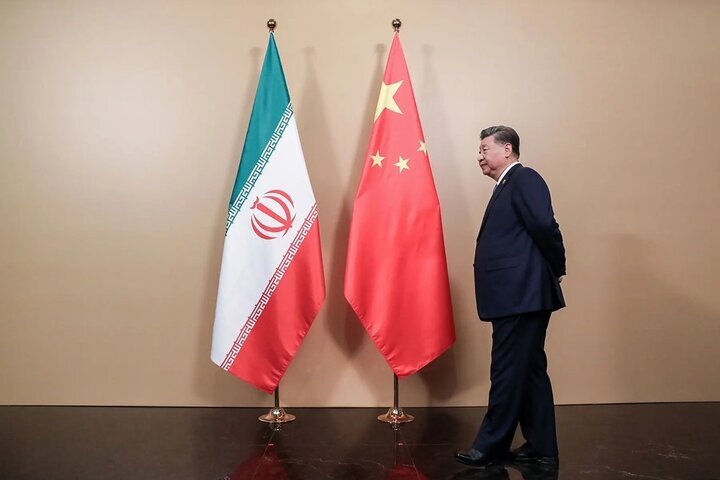
Statements by U.S. officials about setting a red line for Beijing regarding Iran, and, in contrast, Xi Jinping’s official emphasis solely on the “need to de-escalate the crisis and the necessity of returning to diplomacy and dialogue,” indicate that Beijing is not prepared to accept Washington’s agenda toward West Asia, and that any claim regarding a “Beijing–Washington deal over Iran” lacks an evidentiary basis.
China’s Objectives toward the United States and Iran’s Place in Beijing’s Calculations
To understand Beijing’s conduct, its objectives must be carefully distinguished along the two interconnected dimensions of the United States and Iran:
China’s objectives toward the United States: China’s first and fundamental objective is to contain Washington’s unilateralism, buy time to complete strategic value chains, and avoid direct economic or military confrontation. Beijing prefers to manage trade tensions in order to consolidate the position of the “Belt and Road Initiative” and its dominance in the technology market. Therefore, China will never sacrifice its vital interests to Washington’s unilateral demands, because it knows that retreating in the face of U.S. pressure will increase Washington’s appetite for excessive demands.
China’s relations with Iran; a strategic but asymmetric and functional partnership: Although Tehran and Beijing have signed the “25-Year Comprehensive Cooperation Plan” (strategic partnership agreement), Beijing’s operational approach shows that this document is still far from full realization and implementation, and China’s approach to relations with Iran is based on an “asymmetric and functional partnership.” The volume of China’s official trade with the countries bordering the Persian Gulf, such as Saudi Arabia and the United Arab Emirates, is far greater than with Iran, and China has always sought to maintain a balance between its relations with Tehran and the Arab capitals. Nevertheless, Iran is considered one of China’s important suppliers of crude oil outside the dominance of the dollar, and as an actor opposed to U.S. unilateralism, it makes it more difficult for the Trump administration to advance its hegemonic and expansionist policies in West Asia and throughout the world. Therefore, under current circumstances, China does not turn Iran into a direct instrument for bargaining with the United States and seeks to prevent the weakening and complete defeat of Iran vis-à-vis the United States. At the same time, however, it will not sacrifice its security or economic relations with the United States to Iran’s expectations and demands, and it is pursuing a cautious, interest-driven and equivocal policy.
Roadmap and Recommendations
At a time when the United States has responded negatively to Iran’s peace plan for reopening the Strait of Hormuz, and given the continuation of the maritime and economic blockade, banking sanctions, and instability of conventional trade routes, Iran can place the following measures on its agenda:
Strengthening and formalizing non-governmental financial and settlement mechanisms (stabilizing barter channels and CIPS):
Given Iran’s complete loss of banking access to the dollar system and SWIFT, one proposed approach is to use non-Western systems in which the United States has no role. In this regard, China’s Cross-Border Interbank Payment System, known as CIPS, is a relatively low-risk solution for increasing Iran’s financial and commercial interactions with other countries. The Central Bank, with the support of the diplomatic apparatus, should consolidate the stability of special financial mechanisms (dedicated financial channels) and small financial institutions with no dealings with the United States, such as intermediary platforms and non-governmental settlement systems like CIPS based on the yuan, within the framework of direct institutional agreements with China.
Converting oil revenues into barter credits to procure essential goods, medicines, parts, and intermediate goods should be transformed from a temporary measure into a sustainable and institutionalized directive equipped with a diplomatic support umbrella.
Focusing on land and rail transit instead of high-risk maritime and air routes:
Under conditions in which air transport and conventional maritime trade are subject to close monitoring and pressure, Iran should prioritize the immediate completion and utilization of land corridors (through the China–Central Asia–Iran route). Activating Central Asian rail lines and road transit would make it possible to exchange goods away from the reach of Western interventionist fleets in open waters.
Proactive diplomacy ahead of the Shenzhen (APEC) and Miami (G20) summits:
In the final months of the current year (November 2026), China will host the Asia-Pacific Economic Cooperation (APEC) summit for the third time. Given China’s hosting of this summit, as well as China’s participation in the G20 summit in Miami (December 2026), the diplomatic apparatus should, before these meetings, conduct the necessary consultations with the Chinese side through intensive diplomatic consultations at an appropriate level, so that Iran’s security, political, and economic conditions are clearly communicated and Beijing does not enter into a deal over Iran in its de-escalatory engagement with Trump.
Countering the Western psychological war and realistically managing domestic public expectations:
The public diplomacy apparatus should, through precise positions, explain to public opinion the reality that, despite the strategic partnership agreement, under the country’s current circumstances, expectations of China as an interest-driven actor in the international arena should remain realistic.
Accurately explaining this issue will simultaneously neutralize rumors and the psychological warfare of Western media regarding an “East–West deal over Iran” and prevent the emergence of “protracted political disputes” or “unwarranted turmoil and false excitement in the domestic market.”









0 Comments