جدیدترین مطالب

The Makkah Pact Under scrutiny; From the “Deterrence Dilemma” to the “Risk of Disrupting Security”

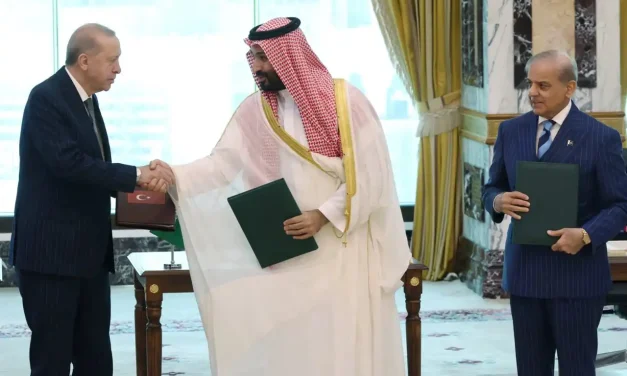
SCFR Online – Opinion: The Makkah Pact, signed on August 7, 2026, between Saudi Arabia, Turkey, and Pakistan, is more than an answer to geopolitical vacuums; in practice, it faces a “deterrence dilemma” and “differing threat perception.” While this pact symbolizes a transition toward regional self-reliance, its first field tests and the complexities of relations with regional actors will determine its real meaning.

Loading

Turki Faisal

Impediments to the official normalization of the relations between the Zionist regime and Saudi Arabia

Impediments to the official normalization of the relations between the Zionist regime and Saudi Arabia

Strategic Council Online—Editorial: Official normalization of relations between some Arab governments and the Zionist regime is an act of treason in the Muslim world; the United Arab Emirates, Bahrain, Sudan and Morocco are the pioneers of this hated policy and should shoulder the responsibilities of such normalization. The process of normalization and publicization of relations with the Zionist regime was not a stab from the back but a blade from the front on the body of Palestine—something that will not definitely remain unanswered by the public opinion of the Arab countries and Muslim world as well as the Palestinian resistance groups. According to a public opinion poll conducted by the Arabic Center of Political Research and Studies, based in Doha, 92 percent of the surveyed public opinion in the Arab world consider the Zionist regime as a threat to the security and peace of the region.
Hamid Khoshayand—International issues analyst

أحدث الوظائف

The Makkah Pact Under scrutiny; From the “Deterrence Dilemma” to the “Risk of Disrupting Security”

SCFR Online – Opinion: The Makkah Pact, signed on August 7, 2026, between Saudi Arabia, Turkey, and Pakistan, is more than an answer to geopolitical vacuums; in practice, it faces a “deterrence dilemma” and “differing threat perception.” While this pact symbolizes a transition toward regional self-reliance, its first field tests and the complexities of relations with regional actors will determine its real meaning.

Loading

Turki Faisal

Impediments to the official normalization of the relations between the Zionist regime and Saudi Arabia

Impediments to the official normalization of the relations between the Zionist regime and Saudi Arabia

Strategic Council Online—Editorial: Official normalization of relations between some Arab governments and the Zionist regime is an act of treason in the Muslim world; the United Arab Emirates, Bahrain, Sudan and Morocco are the pioneers of this hated policy and should shoulder the responsibilities of such normalization. The process of normalization and publicization of relations with the Zionist regime was not a stab from the back but a blade from the front on the body of Palestine—something that will not definitely remain unanswered by the public opinion of the Arab countries and Muslim world as well as the Palestinian resistance groups. According to a public opinion poll conducted by the Arabic Center of Political Research and Studies, based in Doha, 92 percent of the surveyed public opinion in the Arab world consider the Zionist regime as a threat to the security and peace of the region.
Hamid Khoshayand—International issues analyst

Turki Faisal

Impediments to the official normalization of the relations between the Zionist regime and Saudi Arabia

Impediments to the official normalization of the relations between the Zionist regime and Saudi Arabia

Strategic Council Online—Editorial: Official normalization of relations between some Arab governments and the Zionist regime is an act of treason in the Muslim world; the United Arab Emirates, Bahrain, Sudan and Morocco are the pioneers of this hated policy and should shoulder the responsibilities of such normalization. The process of normalization and publicization of relations with the Zionist regime was not a stab from the back but a blade from the front on the body of Palestine—something that will not definitely remain unanswered by the public opinion of the Arab countries and Muslim world as well as the Palestinian resistance groups. According to a public opinion poll conducted by the Arabic Center of Political Research and Studies, based in Doha, 92 percent of the surveyed public opinion in the Arab world consider the Zionist regime as a threat to the security and peace of the region.
Hamid Khoshayand—International issues analyst

LATEST CONTENT

The Makkah Pact Under scrutiny; From the “Deterrence Dilemma” to the “Risk of Disrupting Security”

SCFR Online – Opinion: The Makkah Pact, signed on August 7, 2026, between Saudi Arabia, Turkey, and Pakistan, is more than an answer to geopolitical vacuums; in practice, it faces a “deterrence dilemma” and “differing threat perception.” While this pact symbolizes a transition toward regional self-reliance, its first field tests and the complexities of relations with regional actors will determine its real meaning.

Loading

Turki Faisal

Impediments to the official normalization of the relations between the Zionist regime and Saudi Arabia

Impediments to the official normalization of the relations between the Zionist regime and Saudi Arabia

Strategic Council Online—Editorial: Official normalization of relations between some Arab governments and the Zionist regime is an act of treason in the Muslim world; the United Arab Emirates, Bahrain, Sudan and Morocco are the pioneers of this hated policy and should shoulder the responsibilities of such normalization. The process of normalization and publicization of relations with the Zionist regime was not a stab from the back but a blade from the front on the body of Palestine—something that will not definitely remain unanswered by the public opinion of the Arab countries and Muslim world as well as the Palestinian resistance groups. According to a public opinion poll conducted by the Arabic Center of Political Research and Studies, based in Doha, 92 percent of the surveyed public opinion in the Arab world consider the Zionist regime as a threat to the security and peace of the region.
Hamid Khoshayand—International issues analyst

ÚLTIMAS PUBLICACIONES

The Makkah Pact Under scrutiny; From the “Deterrence Dilemma” to the “Risk of Disrupting Security”

SCFR Online – Opinion: The Makkah Pact, signed on August 7, 2026, between Saudi Arabia, Turkey, and Pakistan, is more than an answer to geopolitical vacuums; in practice, it faces a “deterrence dilemma” and “differing threat perception.” While this pact symbolizes a transition toward regional self-reliance, its first field tests and the complexities of relations with regional actors will determine its real meaning.

Loading

Turki Faisal

Impediments to the official normalization of the relations between the Zionist regime and Saudi Arabia

Impediments to the official normalization of the relations between the Zionist regime and Saudi Arabia

Strategic Council Online—Editorial: Official normalization of relations between some Arab governments and the Zionist regime is an act of treason in the Muslim world; the United Arab Emirates, Bahrain, Sudan and Morocco are the pioneers of this hated policy and should shoulder the responsibilities of such normalization. The process of normalization and publicization of relations with the Zionist regime was not a stab from the back but a blade from the front on the body of Palestine—something that will not definitely remain unanswered by the public opinion of the Arab countries and Muslim world as well as the Palestinian resistance groups. According to a public opinion poll conducted by the Arabic Center of Political Research and Studies, based in Doha, 92 percent of the surveyed public opinion in the Arab world consider the Zionist regime as a threat to the security and peace of the region.
Hamid Khoshayand—International issues analyst

ÚLTIMAS PUBLICACIONES

The Makkah Pact Under scrutiny; From the “Deterrence Dilemma” to the “Risk of Disrupting Security”

SCFR Online – Opinion: The Makkah Pact, signed on August 7, 2026, between Saudi Arabia, Turkey, and Pakistan, is more than an answer to geopolitical vacuums; in practice, it faces a “deterrence dilemma” and “differing threat perception.” While this pact symbolizes a transition toward regional self-reliance, its first field tests and the complexities of relations with regional actors will determine its real meaning.

Loading

Turki Faisal

Impediments to the official normalization of the relations between the Zionist regime and Saudi Arabia

Impediments to the official normalization of the relations between the Zionist regime and Saudi Arabia

Strategic Council Online—Editorial: Official normalization of relations between some Arab governments and the Zionist regime is an act of treason in the Muslim world; the United Arab Emirates, Bahrain, Sudan and Morocco are the pioneers of this hated policy and should shoulder the responsibilities of such normalization. The process of normalization and publicization of relations with the Zionist regime was not a stab from the back but a blade from the front on the body of Palestine—something that will not definitely remain unanswered by the public opinion of the Arab countries and Muslim world as well as the Palestinian resistance groups. According to a public opinion poll conducted by the Arabic Center of Political Research and Studies, based in Doha, 92 percent of the surveyed public opinion in the Arab world consider the Zionist regime as a threat to the security and peace of the region.
Hamid Khoshayand—International issues analyst

ÚLTIMAS PUBLICACIONES

The Makkah Pact Under scrutiny; From the “Deterrence Dilemma” to the “Risk of Disrupting Security”

SCFR Online – Opinion: The Makkah Pact, signed on August 7, 2026, between Saudi Arabia, Turkey, and Pakistan, is more than an answer to geopolitical vacuums; in practice, it faces a “deterrence dilemma” and “differing threat perception.” While this pact symbolizes a transition toward regional self-reliance, its first field tests and the complexities of relations with regional actors will determine its real meaning.

Loading

Turki Faisal

Impediments to the official normalization of the relations between the Zionist regime and Saudi Arabia

Impediments to the official normalization of the relations between the Zionist regime and Saudi Arabia

Strategic Council Online—Editorial: Official normalization of relations between some Arab governments and the Zionist regime is an act of treason in the Muslim world; the United Arab Emirates, Bahrain, Sudan and Morocco are the pioneers of this hated policy and should shoulder the responsibilities of such normalization. The process of normalization and publicization of relations with the Zionist regime was not a stab from the back but a blade from the front on the body of Palestine—something that will not definitely remain unanswered by the public opinion of the Arab countries and Muslim world as well as the Palestinian resistance groups. According to a public opinion poll conducted by the Arabic Center of Political Research and Studies, based in Doha, 92 percent of the surveyed public opinion in the Arab world consider the Zionist regime as a threat to the security and peace of the region.
Hamid Khoshayand—International issues analyst

ÚLTIMAS PUBLICACIONES

The Makkah Pact Under scrutiny; From the “Deterrence Dilemma” to the “Risk of Disrupting Security”

SCFR Online – Opinion: The Makkah Pact, signed on August 7, 2026, between Saudi Arabia, Turkey, and Pakistan, is more than an answer to geopolitical vacuums; in practice, it faces a “deterrence dilemma” and “differing threat perception.” While this pact symbolizes a transition toward regional self-reliance, its first field tests and the complexities of relations with regional actors will determine its real meaning.

Loading