An Analysis of the Makkah Defense Pact
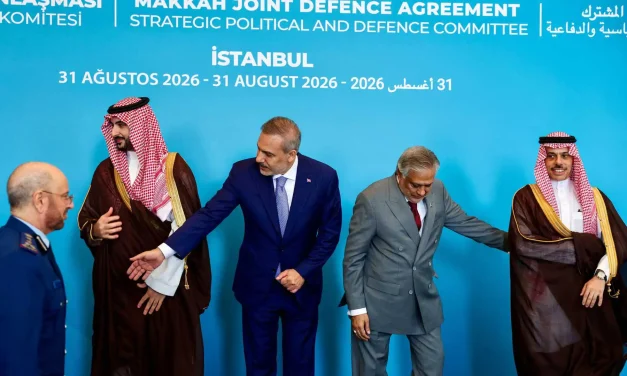
SCFR Online – Opinion: On Friday, August 7, the heads of state of three countries – Saudi Arabia, Turkey, and Pakistan – signed a text under the title “Makkah Joint Defense Agreement.”
Strategic Council Online – Note: The initiative to revive the Hejaz Railway, beyond being a transportation project, constitutes an attempt to redefine geopolitics, the economy, and Turkey’s regional position; however, its realization appears to face significant financial, security, and institutional challenges.
SCFR Online – Opinion: The Strait of Hormuz crisis is no longer merely the consequence of a military confrontation, but rather a sign of the transition from the US-centered maritime order to a new energy security structure involving the participation of emerging and influential powers.
SCFR Online – Opinion: Iran’s active deterrence strategy, while increasing the costs of US intervention, has increasingly exposed the hidden rifts between Washington’s interests and those of the Israeli regime.
SCFR Online – Opinion: The escalation of verbal and strategic tensions between Turkey and the Israeli regime, although not increasing the likelihood of direct war, indicates the formation of a new order in West Asian geopolitical rivalries.
Strategic Council Online – Note: Recent developments in the political geography of West Asia, from rising tensions in the Persian Gulf to missile and drone activities in the Red Sea and the recent warning by Kaja Kallas, the European Union’s foreign policy chief, regarding the threat to freedom of navigation, indicate a key pattern shift; the US-Iran war has moved beyond the scope of a regional and local confrontation and has linked two vital passageways for the global economy: the Strait of Hormuz and the Bab el-Mandeb Strait.
SCFR Online – Opinion: The Ukraine war was not merely a European crisis, but rather the starting point for the rearrangement of the global balance of power and a shift in the strategic behavior of great powers.
SCFR Online – Opinion: Great power competition is now pursued more in trade, currency, technology, and global supply chains than on the battlefields of military confrontation.
Strategic Council Online – Opinion: The United States has taken advantage of NATO expansion eastward as a low-cost tool to destabilize calmness of the Russians. In this regard, NATO’s tense actions on Russia’s western borders should be considered one of the main factors in exacerbating the crisis in Ukraine.
Hamid Khoshayand – Expert on international affairs
Strategic Council Online – Interview: An expert on Russia Affairs stated that imposition of new economic sanctions, transfer of crisis into Russia, and increasing costs of Moscow in Ukraine are among the issues in the U.S. and NATO agenda. She said:” Kiev expectation of the European Union and NATO was unrealistic because it was merely based on their political and their verbal positions, and Ukraine was entrapped in the present crisis based on these unrealistic expectations”.
Strategic Council Online – Interview: Having stated in the course of crises over Ukraine, Russia managed to act so powerfully to make the French President visit Moscow, a Tehran University professor said:” it seems that Russian President in his meeting did not find Europe capable and serious enough to play an effective role concerning de-escalation in connection with Ukraine. That’s why he employed the leverage to recognize the independence of the two republics of Ukraine”.
Strategic Council Online – Interview: An expert on Turkey affairs, commenting on the recent efforts by Turkish President Recep Tayyip Erdogan to resolve the Ukraine crisis, said: As tensions between Russia and Ukraine increase, consultations were made in the form of mediation by some countries, including the Europeans, to reduce tensions between the two countries, and in the midst of such consultations, Turkey’s involvement in that issue was significant.
Strategic Council Online – Interview: An expert on Europe affairs, commenting on the recent visit of French President Emmanuel Macron to Russia and his meeting with Vladimir Putin on the Ukraine crisis, said: Consultations of European governments, especially France and Germany, have intensified with the possibility of Russian military intervention in Ukraine.
Strategic Council Online – Interview: A researcher of Turkey affairs, commenting on the recent moves of Turkish President Recep Tayyip Erdogan to prevent outbreak of a war between Ukraine and Russia said: Erdogan traveled to Kiev on February 3 to prevent outbreak of a military confrontation between the two sides by assuming the role of a mediator.
Strategic Council Online –Guest Post: The U.S. and its Western allies have put their forces into alert status and are deploying more warships ad fighters to the Eastern Europe that indicates rising concerns about the occurrence of a probable clash in the East Europe.
Mohsen Sharif Khodaei, Analyst of European Affairs
Strategic council Online – Opinion: Tension between Ukraine and Russia can be interpreted and evaluated in line with mega scale analyses of international transition period. Russia under Putin, and in line with Neo-Euro Asianism Strategy which was theorized for the country by Aleksandr Dugin, tried to consider Post-Soviet Independent Countries as “Near Abroad” and to take action with a suspicious look towards the West, to make effort to confront and to reduce the influence of the West in security structures of the region.
Mehid Khoorsand, Expert on China and Euro-Asia
Strategic Council Online – Interview: An expert on Europe affairs, commenting on the escalation of tensions between Russia and NATO and the United States over Ukraine said: Ukraine crisis has reached a dangerous point and both sides, by raising their maximum demands, are trying to make the most of the existing space with an aim of making the other side to retreat from its positions.
Strategic Council Online – The nature of tensions, the persistence and lack of a clear vision for resolving them, have complicated Russian-European relations.
Mohammad Javad Ghahremani – PhD in international relations, University of Tehran
SCFR Online – Opinion: On Friday, August 7, the heads of state of three countries – Saudi Arabia, Turkey, and Pakistan – signed a text under the title “Makkah Joint Defense Agreement.”
Strategic Council Online – Note: The initiative to revive the Hejaz Railway, beyond being a transportation project, constitutes an attempt to redefine geopolitics, the economy, and Turkey’s regional position; however, its realization appears to face significant financial, security, and institutional challenges.
SCFR Online – Opinion: The Strait of Hormuz crisis is no longer merely the consequence of a military confrontation, but rather a sign of the transition from the US-centered maritime order to a new energy security structure involving the participation of emerging and influential powers.
SCFR Online – Opinion: Iran’s active deterrence strategy, while increasing the costs of US intervention, has increasingly exposed the hidden rifts between Washington’s interests and those of the Israeli regime.
SCFR Online – Opinion: The escalation of verbal and strategic tensions between Turkey and the Israeli regime, although not increasing the likelihood of direct war, indicates the formation of a new order in West Asian geopolitical rivalries.
Strategic Council Online – Note: Recent developments in the political geography of West Asia, from rising tensions in the Persian Gulf to missile and drone activities in the Red Sea and the recent warning by Kaja Kallas, the European Union’s foreign policy chief, regarding the threat to freedom of navigation, indicate a key pattern shift; the US-Iran war has moved beyond the scope of a regional and local confrontation and has linked two vital passageways for the global economy: the Strait of Hormuz and the Bab el-Mandeb Strait.
SCFR Online – Opinion: The Ukraine war was not merely a European crisis, but rather the starting point for the rearrangement of the global balance of power and a shift in the strategic behavior of great powers.
SCFR Online – Opinion: Great power competition is now pursued more in trade, currency, technology, and global supply chains than on the battlefields of military confrontation.
Strategic Council Online – Opinion: The United States has taken advantage of NATO expansion eastward as a low-cost tool to destabilize calmness of the Russians. In this regard, NATO’s tense actions on Russia’s western borders should be considered one of the main factors in exacerbating the crisis in Ukraine.
Hamid Khoshayand – Expert on international affairs
Strategic Council Online – Interview: An expert on Russia Affairs stated that imposition of new economic sanctions, transfer of crisis into Russia, and increasing costs of Moscow in Ukraine are among the issues in the U.S. and NATO agenda. She said:” Kiev expectation of the European Union and NATO was unrealistic because it was merely based on their political and their verbal positions, and Ukraine was entrapped in the present crisis based on these unrealistic expectations”.
Strategic Council Online – Interview: Having stated in the course of crises over Ukraine, Russia managed to act so powerfully to make the French President visit Moscow, a Tehran University professor said:” it seems that Russian President in his meeting did not find Europe capable and serious enough to play an effective role concerning de-escalation in connection with Ukraine. That’s why he employed the leverage to recognize the independence of the two republics of Ukraine”.
Strategic Council Online – Interview: An expert on Turkey affairs, commenting on the recent efforts by Turkish President Recep Tayyip Erdogan to resolve the Ukraine crisis, said: As tensions between Russia and Ukraine increase, consultations were made in the form of mediation by some countries, including the Europeans, to reduce tensions between the two countries, and in the midst of such consultations, Turkey’s involvement in that issue was significant.
Strategic Council Online – Interview: An expert on Europe affairs, commenting on the recent visit of French President Emmanuel Macron to Russia and his meeting with Vladimir Putin on the Ukraine crisis, said: Consultations of European governments, especially France and Germany, have intensified with the possibility of Russian military intervention in Ukraine.
Strategic Council Online – Interview: A researcher of Turkey affairs, commenting on the recent moves of Turkish President Recep Tayyip Erdogan to prevent outbreak of a war between Ukraine and Russia said: Erdogan traveled to Kiev on February 3 to prevent outbreak of a military confrontation between the two sides by assuming the role of a mediator.
Strategic Council Online –Guest Post: The U.S. and its Western allies have put their forces into alert status and are deploying more warships ad fighters to the Eastern Europe that indicates rising concerns about the occurrence of a probable clash in the East Europe.
Mohsen Sharif Khodaei, Analyst of European Affairs
Strategic council Online – Opinion: Tension between Ukraine and Russia can be interpreted and evaluated in line with mega scale analyses of international transition period. Russia under Putin, and in line with Neo-Euro Asianism Strategy which was theorized for the country by Aleksandr Dugin, tried to consider Post-Soviet Independent Countries as “Near Abroad” and to take action with a suspicious look towards the West, to make effort to confront and to reduce the influence of the West in security structures of the region.
Mehid Khoorsand, Expert on China and Euro-Asia
Strategic Council Online – Interview: An expert on Europe affairs, commenting on the escalation of tensions between Russia and NATO and the United States over Ukraine said: Ukraine crisis has reached a dangerous point and both sides, by raising their maximum demands, are trying to make the most of the existing space with an aim of making the other side to retreat from its positions.
Strategic Council Online – The nature of tensions, the persistence and lack of a clear vision for resolving them, have complicated Russian-European relations.
Mohammad Javad Ghahremani – PhD in international relations, University of Tehran
Strategic Council Online – Opinion: The United States has taken advantage of NATO expansion eastward as a low-cost tool to destabilize calmness of the Russians. In this regard, NATO’s tense actions on Russia’s western borders should be considered one of the main factors in exacerbating the crisis in Ukraine.
Hamid Khoshayand – Expert on international affairs
Strategic Council Online – Interview: An expert on Russia Affairs stated that imposition of new economic sanctions, transfer of crisis into Russia, and increasing costs of Moscow in Ukraine are among the issues in the U.S. and NATO agenda. She said:” Kiev expectation of the European Union and NATO was unrealistic because it was merely based on their political and their verbal positions, and Ukraine was entrapped in the present crisis based on these unrealistic expectations”.
Strategic Council Online – Interview: Having stated in the course of crises over Ukraine, Russia managed to act so powerfully to make the French President visit Moscow, a Tehran University professor said:” it seems that Russian President in his meeting did not find Europe capable and serious enough to play an effective role concerning de-escalation in connection with Ukraine. That’s why he employed the leverage to recognize the independence of the two republics of Ukraine”.
Strategic Council Online – Interview: An expert on Turkey affairs, commenting on the recent efforts by Turkish President Recep Tayyip Erdogan to resolve the Ukraine crisis, said: As tensions between Russia and Ukraine increase, consultations were made in the form of mediation by some countries, including the Europeans, to reduce tensions between the two countries, and in the midst of such consultations, Turkey’s involvement in that issue was significant.
Strategic Council Online – Interview: An expert on Europe affairs, commenting on the recent visit of French President Emmanuel Macron to Russia and his meeting with Vladimir Putin on the Ukraine crisis, said: Consultations of European governments, especially France and Germany, have intensified with the possibility of Russian military intervention in Ukraine.
Strategic Council Online – Interview: A researcher of Turkey affairs, commenting on the recent moves of Turkish President Recep Tayyip Erdogan to prevent outbreak of a war between Ukraine and Russia said: Erdogan traveled to Kiev on February 3 to prevent outbreak of a military confrontation between the two sides by assuming the role of a mediator.
Strategic Council Online –Guest Post: The U.S. and its Western allies have put their forces into alert status and are deploying more warships ad fighters to the Eastern Europe that indicates rising concerns about the occurrence of a probable clash in the East Europe.
Mohsen Sharif Khodaei, Analyst of European Affairs
Strategic council Online – Opinion: Tension between Ukraine and Russia can be interpreted and evaluated in line with mega scale analyses of international transition period. Russia under Putin, and in line with Neo-Euro Asianism Strategy which was theorized for the country by Aleksandr Dugin, tried to consider Post-Soviet Independent Countries as “Near Abroad” and to take action with a suspicious look towards the West, to make effort to confront and to reduce the influence of the West in security structures of the region.
Mehid Khoorsand, Expert on China and Euro-Asia
Strategic Council Online – Interview: An expert on Europe affairs, commenting on the escalation of tensions between Russia and NATO and the United States over Ukraine said: Ukraine crisis has reached a dangerous point and both sides, by raising their maximum demands, are trying to make the most of the existing space with an aim of making the other side to retreat from its positions.
Strategic Council Online – The nature of tensions, the persistence and lack of a clear vision for resolving them, have complicated Russian-European relations.
Mohammad Javad Ghahremani – PhD in international relations, University of Tehran
SCFR Online – Opinion: On Friday, August 7, the heads of state of three countries – Saudi Arabia, Turkey, and Pakistan – signed a text under the title “Makkah Joint Defense Agreement.”
Strategic Council Online – Note: The initiative to revive the Hejaz Railway, beyond being a transportation project, constitutes an attempt to redefine geopolitics, the economy, and Turkey’s regional position; however, its realization appears to face significant financial, security, and institutional challenges.
SCFR Online – Opinion: The Strait of Hormuz crisis is no longer merely the consequence of a military confrontation, but rather a sign of the transition from the US-centered maritime order to a new energy security structure involving the participation of emerging and influential powers.
SCFR Online – Opinion: Iran’s active deterrence strategy, while increasing the costs of US intervention, has increasingly exposed the hidden rifts between Washington’s interests and those of the Israeli regime.
SCFR Online – Opinion: The escalation of verbal and strategic tensions between Turkey and the Israeli regime, although not increasing the likelihood of direct war, indicates the formation of a new order in West Asian geopolitical rivalries.
Strategic Council Online – Note: Recent developments in the political geography of West Asia, from rising tensions in the Persian Gulf to missile and drone activities in the Red Sea and the recent warning by Kaja Kallas, the European Union’s foreign policy chief, regarding the threat to freedom of navigation, indicate a key pattern shift; the US-Iran war has moved beyond the scope of a regional and local confrontation and has linked two vital passageways for the global economy: the Strait of Hormuz and the Bab el-Mandeb Strait.
SCFR Online – Opinion: The Ukraine war was not merely a European crisis, but rather the starting point for the rearrangement of the global balance of power and a shift in the strategic behavior of great powers.
SCFR Online – Opinion: Great power competition is now pursued more in trade, currency, technology, and global supply chains than on the battlefields of military confrontation.
Strategic Council Online – Opinion: The United States has taken advantage of NATO expansion eastward as a low-cost tool to destabilize calmness of the Russians. In this regard, NATO’s tense actions on Russia’s western borders should be considered one of the main factors in exacerbating the crisis in Ukraine.
Hamid Khoshayand – Expert on international affairs
Strategic Council Online – Interview: An expert on Russia Affairs stated that imposition of new economic sanctions, transfer of crisis into Russia, and increasing costs of Moscow in Ukraine are among the issues in the U.S. and NATO agenda. She said:” Kiev expectation of the European Union and NATO was unrealistic because it was merely based on their political and their verbal positions, and Ukraine was entrapped in the present crisis based on these unrealistic expectations”.
Strategic Council Online – Interview: Having stated in the course of crises over Ukraine, Russia managed to act so powerfully to make the French President visit Moscow, a Tehran University professor said:” it seems that Russian President in his meeting did not find Europe capable and serious enough to play an effective role concerning de-escalation in connection with Ukraine. That’s why he employed the leverage to recognize the independence of the two republics of Ukraine”.
Strategic Council Online – Interview: An expert on Turkey affairs, commenting on the recent efforts by Turkish President Recep Tayyip Erdogan to resolve the Ukraine crisis, said: As tensions between Russia and Ukraine increase, consultations were made in the form of mediation by some countries, including the Europeans, to reduce tensions between the two countries, and in the midst of such consultations, Turkey’s involvement in that issue was significant.
Strategic Council Online – Interview: An expert on Europe affairs, commenting on the recent visit of French President Emmanuel Macron to Russia and his meeting with Vladimir Putin on the Ukraine crisis, said: Consultations of European governments, especially France and Germany, have intensified with the possibility of Russian military intervention in Ukraine.
Strategic Council Online – Interview: A researcher of Turkey affairs, commenting on the recent moves of Turkish President Recep Tayyip Erdogan to prevent outbreak of a war between Ukraine and Russia said: Erdogan traveled to Kiev on February 3 to prevent outbreak of a military confrontation between the two sides by assuming the role of a mediator.
Strategic Council Online –Guest Post: The U.S. and its Western allies have put their forces into alert status and are deploying more warships ad fighters to the Eastern Europe that indicates rising concerns about the occurrence of a probable clash in the East Europe.
Mohsen Sharif Khodaei, Analyst of European Affairs
Strategic council Online – Opinion: Tension between Ukraine and Russia can be interpreted and evaluated in line with mega scale analyses of international transition period. Russia under Putin, and in line with Neo-Euro Asianism Strategy which was theorized for the country by Aleksandr Dugin, tried to consider Post-Soviet Independent Countries as “Near Abroad” and to take action with a suspicious look towards the West, to make effort to confront and to reduce the influence of the West in security structures of the region.
Mehid Khoorsand, Expert on China and Euro-Asia
Strategic Council Online – Interview: An expert on Europe affairs, commenting on the escalation of tensions between Russia and NATO and the United States over Ukraine said: Ukraine crisis has reached a dangerous point and both sides, by raising their maximum demands, are trying to make the most of the existing space with an aim of making the other side to retreat from its positions.
Strategic Council Online – The nature of tensions, the persistence and lack of a clear vision for resolving them, have complicated Russian-European relations.
Mohammad Javad Ghahremani – PhD in international relations, University of Tehran
SCFR Online – Opinion: On Friday, August 7, the heads of state of three countries – Saudi Arabia, Turkey, and Pakistan – signed a text under the title “Makkah Joint Defense Agreement.”
Strategic Council Online – Note: The initiative to revive the Hejaz Railway, beyond being a transportation project, constitutes an attempt to redefine geopolitics, the economy, and Turkey’s regional position; however, its realization appears to face significant financial, security, and institutional challenges.
SCFR Online – Opinion: The Strait of Hormuz crisis is no longer merely the consequence of a military confrontation, but rather a sign of the transition from the US-centered maritime order to a new energy security structure involving the participation of emerging and influential powers.
SCFR Online – Opinion: Iran’s active deterrence strategy, while increasing the costs of US intervention, has increasingly exposed the hidden rifts between Washington’s interests and those of the Israeli regime.
SCFR Online – Opinion: The escalation of verbal and strategic tensions between Turkey and the Israeli regime, although not increasing the likelihood of direct war, indicates the formation of a new order in West Asian geopolitical rivalries.
Strategic Council Online – Note: Recent developments in the political geography of West Asia, from rising tensions in the Persian Gulf to missile and drone activities in the Red Sea and the recent warning by Kaja Kallas, the European Union’s foreign policy chief, regarding the threat to freedom of navigation, indicate a key pattern shift; the US-Iran war has moved beyond the scope of a regional and local confrontation and has linked two vital passageways for the global economy: the Strait of Hormuz and the Bab el-Mandeb Strait.
SCFR Online – Opinion: The Ukraine war was not merely a European crisis, but rather the starting point for the rearrangement of the global balance of power and a shift in the strategic behavior of great powers.
SCFR Online – Opinion: Great power competition is now pursued more in trade, currency, technology, and global supply chains than on the battlefields of military confrontation.
Strategic Council Online – Opinion: The United States has taken advantage of NATO expansion eastward as a low-cost tool to destabilize calmness of the Russians. In this regard, NATO’s tense actions on Russia’s western borders should be considered one of the main factors in exacerbating the crisis in Ukraine.
Hamid Khoshayand – Expert on international affairs
Strategic Council Online – Interview: An expert on Russia Affairs stated that imposition of new economic sanctions, transfer of crisis into Russia, and increasing costs of Moscow in Ukraine are among the issues in the U.S. and NATO agenda. She said:” Kiev expectation of the European Union and NATO was unrealistic because it was merely based on their political and their verbal positions, and Ukraine was entrapped in the present crisis based on these unrealistic expectations”.
Strategic Council Online – Interview: Having stated in the course of crises over Ukraine, Russia managed to act so powerfully to make the French President visit Moscow, a Tehran University professor said:” it seems that Russian President in his meeting did not find Europe capable and serious enough to play an effective role concerning de-escalation in connection with Ukraine. That’s why he employed the leverage to recognize the independence of the two republics of Ukraine”.
Strategic Council Online – Interview: An expert on Turkey affairs, commenting on the recent efforts by Turkish President Recep Tayyip Erdogan to resolve the Ukraine crisis, said: As tensions between Russia and Ukraine increase, consultations were made in the form of mediation by some countries, including the Europeans, to reduce tensions between the two countries, and in the midst of such consultations, Turkey’s involvement in that issue was significant.
Strategic Council Online – Interview: An expert on Europe affairs, commenting on the recent visit of French President Emmanuel Macron to Russia and his meeting with Vladimir Putin on the Ukraine crisis, said: Consultations of European governments, especially France and Germany, have intensified with the possibility of Russian military intervention in Ukraine.
Strategic Council Online – Interview: A researcher of Turkey affairs, commenting on the recent moves of Turkish President Recep Tayyip Erdogan to prevent outbreak of a war between Ukraine and Russia said: Erdogan traveled to Kiev on February 3 to prevent outbreak of a military confrontation between the two sides by assuming the role of a mediator.
Strategic Council Online –Guest Post: The U.S. and its Western allies have put their forces into alert status and are deploying more warships ad fighters to the Eastern Europe that indicates rising concerns about the occurrence of a probable clash in the East Europe.
Mohsen Sharif Khodaei, Analyst of European Affairs
Strategic council Online – Opinion: Tension between Ukraine and Russia can be interpreted and evaluated in line with mega scale analyses of international transition period. Russia under Putin, and in line with Neo-Euro Asianism Strategy which was theorized for the country by Aleksandr Dugin, tried to consider Post-Soviet Independent Countries as “Near Abroad” and to take action with a suspicious look towards the West, to make effort to confront and to reduce the influence of the West in security structures of the region.
Mehid Khoorsand, Expert on China and Euro-Asia
Strategic Council Online – Interview: An expert on Europe affairs, commenting on the escalation of tensions between Russia and NATO and the United States over Ukraine said: Ukraine crisis has reached a dangerous point and both sides, by raising their maximum demands, are trying to make the most of the existing space with an aim of making the other side to retreat from its positions.
Strategic Council Online – The nature of tensions, the persistence and lack of a clear vision for resolving them, have complicated Russian-European relations.
Mohammad Javad Ghahremani – PhD in international relations, University of Tehran
SCFR Online – Opinion: On Friday, August 7, the heads of state of three countries – Saudi Arabia, Turkey, and Pakistan – signed a text under the title “Makkah Joint Defense Agreement.”
Strategic Council Online – Note: The initiative to revive the Hejaz Railway, beyond being a transportation project, constitutes an attempt to redefine geopolitics, the economy, and Turkey’s regional position; however, its realization appears to face significant financial, security, and institutional challenges.
SCFR Online – Opinion: The Strait of Hormuz crisis is no longer merely the consequence of a military confrontation, but rather a sign of the transition from the US-centered maritime order to a new energy security structure involving the participation of emerging and influential powers.
SCFR Online – Opinion: Iran’s active deterrence strategy, while increasing the costs of US intervention, has increasingly exposed the hidden rifts between Washington’s interests and those of the Israeli regime.
SCFR Online – Opinion: The escalation of verbal and strategic tensions between Turkey and the Israeli regime, although not increasing the likelihood of direct war, indicates the formation of a new order in West Asian geopolitical rivalries.
Strategic Council Online – Note: Recent developments in the political geography of West Asia, from rising tensions in the Persian Gulf to missile and drone activities in the Red Sea and the recent warning by Kaja Kallas, the European Union’s foreign policy chief, regarding the threat to freedom of navigation, indicate a key pattern shift; the US-Iran war has moved beyond the scope of a regional and local confrontation and has linked two vital passageways for the global economy: the Strait of Hormuz and the Bab el-Mandeb Strait.
SCFR Online – Opinion: The Ukraine war was not merely a European crisis, but rather the starting point for the rearrangement of the global balance of power and a shift in the strategic behavior of great powers.
SCFR Online – Opinion: Great power competition is now pursued more in trade, currency, technology, and global supply chains than on the battlefields of military confrontation.
Strategic Council Online – Opinion: The United States has taken advantage of NATO expansion eastward as a low-cost tool to destabilize calmness of the Russians. In this regard, NATO’s tense actions on Russia’s western borders should be considered one of the main factors in exacerbating the crisis in Ukraine.
Hamid Khoshayand – Expert on international affairs
Strategic Council Online – Interview: An expert on Russia Affairs stated that imposition of new economic sanctions, transfer of crisis into Russia, and increasing costs of Moscow in Ukraine are among the issues in the U.S. and NATO agenda. She said:” Kiev expectation of the European Union and NATO was unrealistic because it was merely based on their political and their verbal positions, and Ukraine was entrapped in the present crisis based on these unrealistic expectations”.
Strategic Council Online – Interview: Having stated in the course of crises over Ukraine, Russia managed to act so powerfully to make the French President visit Moscow, a Tehran University professor said:” it seems that Russian President in his meeting did not find Europe capable and serious enough to play an effective role concerning de-escalation in connection with Ukraine. That’s why he employed the leverage to recognize the independence of the two republics of Ukraine”.
Strategic Council Online – Interview: An expert on Turkey affairs, commenting on the recent efforts by Turkish President Recep Tayyip Erdogan to resolve the Ukraine crisis, said: As tensions between Russia and Ukraine increase, consultations were made in the form of mediation by some countries, including the Europeans, to reduce tensions between the two countries, and in the midst of such consultations, Turkey’s involvement in that issue was significant.
Strategic Council Online – Interview: An expert on Europe affairs, commenting on the recent visit of French President Emmanuel Macron to Russia and his meeting with Vladimir Putin on the Ukraine crisis, said: Consultations of European governments, especially France and Germany, have intensified with the possibility of Russian military intervention in Ukraine.
Strategic Council Online – Interview: A researcher of Turkey affairs, commenting on the recent moves of Turkish President Recep Tayyip Erdogan to prevent outbreak of a war between Ukraine and Russia said: Erdogan traveled to Kiev on February 3 to prevent outbreak of a military confrontation between the two sides by assuming the role of a mediator.
Strategic Council Online –Guest Post: The U.S. and its Western allies have put their forces into alert status and are deploying more warships ad fighters to the Eastern Europe that indicates rising concerns about the occurrence of a probable clash in the East Europe.
Mohsen Sharif Khodaei, Analyst of European Affairs
Strategic council Online – Opinion: Tension between Ukraine and Russia can be interpreted and evaluated in line with mega scale analyses of international transition period. Russia under Putin, and in line with Neo-Euro Asianism Strategy which was theorized for the country by Aleksandr Dugin, tried to consider Post-Soviet Independent Countries as “Near Abroad” and to take action with a suspicious look towards the West, to make effort to confront and to reduce the influence of the West in security structures of the region.
Mehid Khoorsand, Expert on China and Euro-Asia
Strategic Council Online – Interview: An expert on Europe affairs, commenting on the escalation of tensions between Russia and NATO and the United States over Ukraine said: Ukraine crisis has reached a dangerous point and both sides, by raising their maximum demands, are trying to make the most of the existing space with an aim of making the other side to retreat from its positions.
Strategic Council Online – The nature of tensions, the persistence and lack of a clear vision for resolving them, have complicated Russian-European relations.
Mohammad Javad Ghahremani – PhD in international relations, University of Tehran
SCFR Online – Opinion: On Friday, August 7, the heads of state of three countries – Saudi Arabia, Turkey, and Pakistan – signed a text under the title “Makkah Joint Defense Agreement.”
Strategic Council Online – Note: The initiative to revive the Hejaz Railway, beyond being a transportation project, constitutes an attempt to redefine geopolitics, the economy, and Turkey’s regional position; however, its realization appears to face significant financial, security, and institutional challenges.
SCFR Online – Opinion: The Strait of Hormuz crisis is no longer merely the consequence of a military confrontation, but rather a sign of the transition from the US-centered maritime order to a new energy security structure involving the participation of emerging and influential powers.
SCFR Online – Opinion: Iran’s active deterrence strategy, while increasing the costs of US intervention, has increasingly exposed the hidden rifts between Washington’s interests and those of the Israeli regime.
SCFR Online – Opinion: The escalation of verbal and strategic tensions between Turkey and the Israeli regime, although not increasing the likelihood of direct war, indicates the formation of a new order in West Asian geopolitical rivalries.
Strategic Council Online – Note: Recent developments in the political geography of West Asia, from rising tensions in the Persian Gulf to missile and drone activities in the Red Sea and the recent warning by Kaja Kallas, the European Union’s foreign policy chief, regarding the threat to freedom of navigation, indicate a key pattern shift; the US-Iran war has moved beyond the scope of a regional and local confrontation and has linked two vital passageways for the global economy: the Strait of Hormuz and the Bab el-Mandeb Strait.
SCFR Online – Opinion: The Ukraine war was not merely a European crisis, but rather the starting point for the rearrangement of the global balance of power and a shift in the strategic behavior of great powers.
SCFR Online – Opinion: Great power competition is now pursued more in trade, currency, technology, and global supply chains than on the battlefields of military confrontation.
Strategic Council Online – Opinion: The United States has taken advantage of NATO expansion eastward as a low-cost tool to destabilize calmness of the Russians. In this regard, NATO’s tense actions on Russia’s western borders should be considered one of the main factors in exacerbating the crisis in Ukraine.
Hamid Khoshayand – Expert on international affairs
Strategic Council Online – Interview: An expert on Russia Affairs stated that imposition of new economic sanctions, transfer of crisis into Russia, and increasing costs of Moscow in Ukraine are among the issues in the U.S. and NATO agenda. She said:” Kiev expectation of the European Union and NATO was unrealistic because it was merely based on their political and their verbal positions, and Ukraine was entrapped in the present crisis based on these unrealistic expectations”.
Strategic Council Online – Interview: Having stated in the course of crises over Ukraine, Russia managed to act so powerfully to make the French President visit Moscow, a Tehran University professor said:” it seems that Russian President in his meeting did not find Europe capable and serious enough to play an effective role concerning de-escalation in connection with Ukraine. That’s why he employed the leverage to recognize the independence of the two republics of Ukraine”.
Strategic Council Online – Interview: An expert on Turkey affairs, commenting on the recent efforts by Turkish President Recep Tayyip Erdogan to resolve the Ukraine crisis, said: As tensions between Russia and Ukraine increase, consultations were made in the form of mediation by some countries, including the Europeans, to reduce tensions between the two countries, and in the midst of such consultations, Turkey’s involvement in that issue was significant.
Strategic Council Online – Interview: An expert on Europe affairs, commenting on the recent visit of French President Emmanuel Macron to Russia and his meeting with Vladimir Putin on the Ukraine crisis, said: Consultations of European governments, especially France and Germany, have intensified with the possibility of Russian military intervention in Ukraine.
Strategic Council Online – Interview: A researcher of Turkey affairs, commenting on the recent moves of Turkish President Recep Tayyip Erdogan to prevent outbreak of a war between Ukraine and Russia said: Erdogan traveled to Kiev on February 3 to prevent outbreak of a military confrontation between the two sides by assuming the role of a mediator.
Strategic Council Online –Guest Post: The U.S. and its Western allies have put their forces into alert status and are deploying more warships ad fighters to the Eastern Europe that indicates rising concerns about the occurrence of a probable clash in the East Europe.
Mohsen Sharif Khodaei, Analyst of European Affairs
Strategic council Online – Opinion: Tension between Ukraine and Russia can be interpreted and evaluated in line with mega scale analyses of international transition period. Russia under Putin, and in line with Neo-Euro Asianism Strategy which was theorized for the country by Aleksandr Dugin, tried to consider Post-Soviet Independent Countries as “Near Abroad” and to take action with a suspicious look towards the West, to make effort to confront and to reduce the influence of the West in security structures of the region.
Mehid Khoorsand, Expert on China and Euro-Asia
Strategic Council Online – Interview: An expert on Europe affairs, commenting on the escalation of tensions between Russia and NATO and the United States over Ukraine said: Ukraine crisis has reached a dangerous point and both sides, by raising their maximum demands, are trying to make the most of the existing space with an aim of making the other side to retreat from its positions.
Strategic Council Online – The nature of tensions, the persistence and lack of a clear vision for resolving them, have complicated Russian-European relations.
Mohammad Javad Ghahremani – PhD in international relations, University of Tehran
SCFR Online – Opinion: On Friday, August 7, the heads of state of three countries – Saudi Arabia, Turkey, and Pakistan – signed a text under the title “Makkah Joint Defense Agreement.”
Strategic Council Online – Note: The initiative to revive the Hejaz Railway, beyond being a transportation project, constitutes an attempt to redefine geopolitics, the economy, and Turkey’s regional position; however, its realization appears to face significant financial, security, and institutional challenges.
SCFR Online – Opinion: The Strait of Hormuz crisis is no longer merely the consequence of a military confrontation, but rather a sign of the transition from the US-centered maritime order to a new energy security structure involving the participation of emerging and influential powers.
SCFR Online – Opinion: Iran’s active deterrence strategy, while increasing the costs of US intervention, has increasingly exposed the hidden rifts between Washington’s interests and those of the Israeli regime.
SCFR Online – Opinion: The escalation of verbal and strategic tensions between Turkey and the Israeli regime, although not increasing the likelihood of direct war, indicates the formation of a new order in West Asian geopolitical rivalries.
Strategic Council Online – Note: Recent developments in the political geography of West Asia, from rising tensions in the Persian Gulf to missile and drone activities in the Red Sea and the recent warning by Kaja Kallas, the European Union’s foreign policy chief, regarding the threat to freedom of navigation, indicate a key pattern shift; the US-Iran war has moved beyond the scope of a regional and local confrontation and has linked two vital passageways for the global economy: the Strait of Hormuz and the Bab el-Mandeb Strait.
SCFR Online – Opinion: The Ukraine war was not merely a European crisis, but rather the starting point for the rearrangement of the global balance of power and a shift in the strategic behavior of great powers.
SCFR Online – Opinion: Great power competition is now pursued more in trade, currency, technology, and global supply chains than on the battlefields of military confrontation.