Geoeconomics as the Most Important Arena of Great Power Competition
SCFR Online – Opinion: Great power competition is now pursued more in trade, currency, technology, and global supply chains than on the battlefields of military confrontation.
Strategic Council Online – Note: By disregarding Iran’s deterrence capabilities and political economy leverage in the Strait of Hormuz, Washington has reached a strategic deadlock from which military means are unable to extricate it.
SCFR Online – Opinion: Foreign policy analysis is valid when it evaluates decisions based on the information and circumstances prevailing at the time they were made, not on the basis of outcomes that only become apparent after the crisis has ended.
SCFR Online-Opinion: Sanctions are gradually transforming from classical financial instruments into complex mechanisms for the containment of technology, data, and global supply chains.
SCFR Online – Opinion: Emmanuel Macron’s visit to Damascus is an attempt to redefine France’s role in Syria following the recent political developments in that country; an effort pursued within the context of great power competition and the country’s security challenges.
Strategic Council Online – Note: Middle powers such as India, Turkey, Australia, and some Persian Gulf countries are no longer marginal actors, but are redefining global power equations through balancing diplomacy.
Strategic Council Online – Note: In today’s global politics, the creation of narratives has become as important as territorial control and economic management, and has turned into the main tool of great power competition.
Strategic Council Online – Note: Hamas’s handing over the civilian management in Gaza is assessed as an attempt to reduce political pressures, facilitate reconstruction, and preserve the status of resistance in the future equations of Palestine.
Online Strategic Council – Interview: A senior Egyptian affairs analyst stated that Egypt, the first Arab country to sign a peace agreement with the Zionist regime in 1979, has now adopted a new strategy due to concerns about the regime’s expansionist policies. The developments following the 2023 Gaza war revealed that Tel Aviv, with the unconditional support of the United States, seeks to alter the balance of power in West Asia —a matter that has compelled Cairo to expand its relations with Iran and Turkey, two significant regional powers. By holding joint military exercises with Turkey, mediating in Iran’s nuclear dossier, and seeking military and technological cooperation, Egypt is trying to prevent the Zionists’ hegemony in the region. Although the formation of a trilateral military alliance seems unlikely for now, Cairo’s rapprochement with Tehran and Ankara is considered a potential threat to the Israeli regime. In fact, in the face of regional pressures and border crises, Egypt is seeking to create a strategic balance to curb Tel Aviv’s influence and enhance its own position in the West Asian equations.
Strategic Council Online – Interview: A senior energy expert said that Turkey’s determination to realize the regional strategy of transforming this country into an energy hub is very serious, especially after the fall of the Bashar al-Assad government.
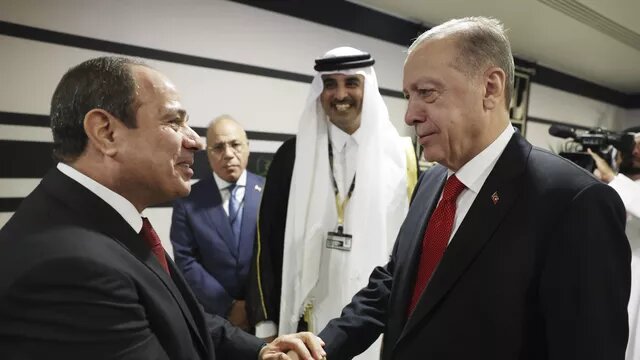
Strategic Council Online – Opinion: Egypt and Türkiye are going through a developing relationship. In the past seven months, we have witnessed two “important developments” in the relations between Türkiye and Egypt. First, Erdoğan’s visit to Egypt in February was done for the first time after the 2013 events in Egypt and Morsi’s removal from power. Second, the recent visit of Egyptian President Sisi to Turkey in September 1403), which took place after 12 years, can be considered very important and the beginning of a new phase in Egypt-Turkey relations.
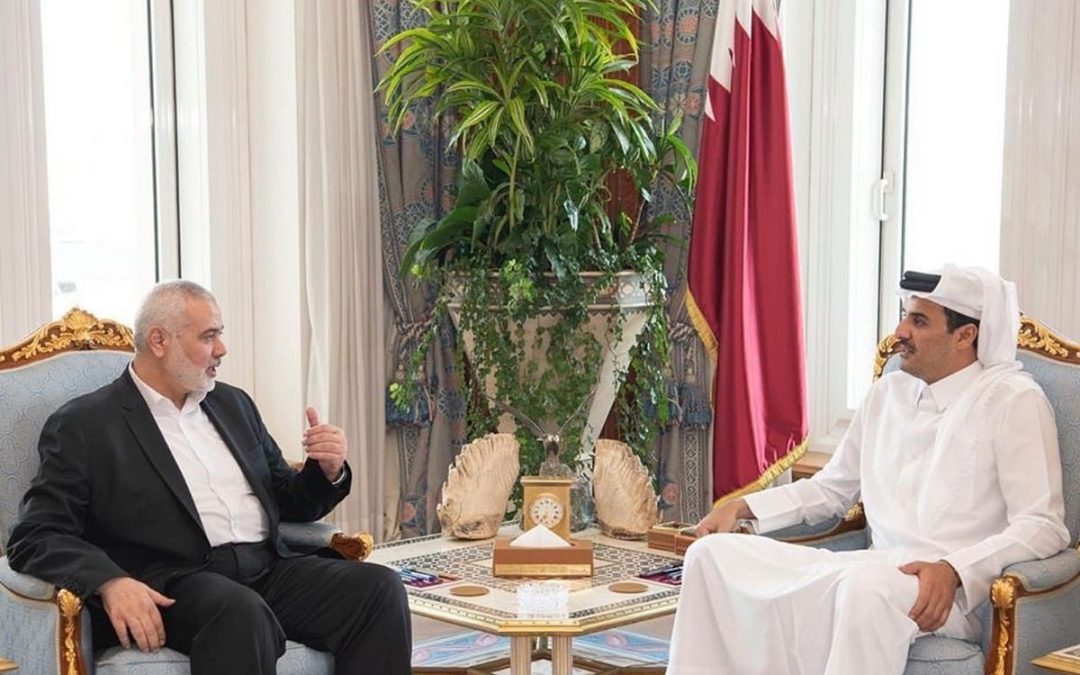
Strategic Council Online – Interview: An expert on regional issues said Qatari authorities will definitely resist Western pressure to expel Hamas leaders from their territory, and probably the United States will not move towards a zero-hundred equation in this regard because if the Hamas leaders remain in Qatar, which is an ally of the United States, is better than moving to a country outside the power of the United States to exert pressure.
Strategic Council Online- Interview: An international affairs expert said: The recent visit of Turkish President Recep Tayyip Erdogan to Egypt after 12 years will probably mark a new phase of relations between Ankara and Cairo.
Strategic Council Online – Opinion: After a decade of severance of diplomatic relations, Turkey and Egypt announced in a joint statement promotion of their political ties and nominated their ambassadors in Ankara and Cairo. The two sides announced that their goal behind “normalization and expansion of relations” is in line with the interests of the people of the two countries. From the point of view of the two countries, the re-normalization of relations will show the mutual will to develop bilateral relations in line with providing the interests of the people of Turkey and Egypt. The normalization was welcomed by the Secretary General of the Arab League, who considered it a positive development to create peace in the region and strengthen diplomatic relations to solve problems effectively.
Mahmoud Fazeli – Analyst of international affairs
SCFR Online – Opinion: Great power competition is now pursued more in trade, currency, technology, and global supply chains than on the battlefields of military confrontation.
Strategic Council Online – Note: By disregarding Iran’s deterrence capabilities and political economy leverage in the Strait of Hormuz, Washington has reached a strategic deadlock from which military means are unable to extricate it.
SCFR Online – Opinion: Foreign policy analysis is valid when it evaluates decisions based on the information and circumstances prevailing at the time they were made, not on the basis of outcomes that only become apparent after the crisis has ended.
SCFR Online-Opinion: Sanctions are gradually transforming from classical financial instruments into complex mechanisms for the containment of technology, data, and global supply chains.
SCFR Online – Opinion: Emmanuel Macron’s visit to Damascus is an attempt to redefine France’s role in Syria following the recent political developments in that country; an effort pursued within the context of great power competition and the country’s security challenges.
Strategic Council Online – Note: Middle powers such as India, Turkey, Australia, and some Persian Gulf countries are no longer marginal actors, but are redefining global power equations through balancing diplomacy.
Strategic Council Online – Note: In today’s global politics, the creation of narratives has become as important as territorial control and economic management, and has turned into the main tool of great power competition.
Strategic Council Online – Note: Hamas’s handing over the civilian management in Gaza is assessed as an attempt to reduce political pressures, facilitate reconstruction, and preserve the status of resistance in the future equations of Palestine.
Online Strategic Council – Interview: A senior Egyptian affairs analyst stated that Egypt, the first Arab country to sign a peace agreement with the Zionist regime in 1979, has now adopted a new strategy due to concerns about the regime’s expansionist policies. The developments following the 2023 Gaza war revealed that Tel Aviv, with the unconditional support of the United States, seeks to alter the balance of power in West Asia —a matter that has compelled Cairo to expand its relations with Iran and Turkey, two significant regional powers. By holding joint military exercises with Turkey, mediating in Iran’s nuclear dossier, and seeking military and technological cooperation, Egypt is trying to prevent the Zionists’ hegemony in the region. Although the formation of a trilateral military alliance seems unlikely for now, Cairo’s rapprochement with Tehran and Ankara is considered a potential threat to the Israeli regime. In fact, in the face of regional pressures and border crises, Egypt is seeking to create a strategic balance to curb Tel Aviv’s influence and enhance its own position in the West Asian equations.
Strategic Council Online – Interview: A senior energy expert said that Turkey’s determination to realize the regional strategy of transforming this country into an energy hub is very serious, especially after the fall of the Bashar al-Assad government.
Strategic Council Online – Opinion: Egypt and Türkiye are going through a developing relationship. In the past seven months, we have witnessed two “important developments” in the relations between Türkiye and Egypt. First, Erdoğan’s visit to Egypt in February was done for the first time after the 2013 events in Egypt and Morsi’s removal from power. Second, the recent visit of Egyptian President Sisi to Turkey in September 1403), which took place after 12 years, can be considered very important and the beginning of a new phase in Egypt-Turkey relations.
Strategic Council Online – Interview: An expert on regional issues said Qatari authorities will definitely resist Western pressure to expel Hamas leaders from their territory, and probably the United States will not move towards a zero-hundred equation in this regard because if the Hamas leaders remain in Qatar, which is an ally of the United States, is better than moving to a country outside the power of the United States to exert pressure.
Strategic Council Online- Interview: An international affairs expert said: The recent visit of Turkish President Recep Tayyip Erdogan to Egypt after 12 years will probably mark a new phase of relations between Ankara and Cairo.
Strategic Council Online – Opinion: After a decade of severance of diplomatic relations, Turkey and Egypt announced in a joint statement promotion of their political ties and nominated their ambassadors in Ankara and Cairo. The two sides announced that their goal behind “normalization and expansion of relations” is in line with the interests of the people of the two countries. From the point of view of the two countries, the re-normalization of relations will show the mutual will to develop bilateral relations in line with providing the interests of the people of Turkey and Egypt. The normalization was welcomed by the Secretary General of the Arab League, who considered it a positive development to create peace in the region and strengthen diplomatic relations to solve problems effectively.
Mahmoud Fazeli – Analyst of international affairs
Online Strategic Council – Interview: A senior Egyptian affairs analyst stated that Egypt, the first Arab country to sign a peace agreement with the Zionist regime in 1979, has now adopted a new strategy due to concerns about the regime’s expansionist policies. The developments following the 2023 Gaza war revealed that Tel Aviv, with the unconditional support of the United States, seeks to alter the balance of power in West Asia —a matter that has compelled Cairo to expand its relations with Iran and Turkey, two significant regional powers. By holding joint military exercises with Turkey, mediating in Iran’s nuclear dossier, and seeking military and technological cooperation, Egypt is trying to prevent the Zionists’ hegemony in the region. Although the formation of a trilateral military alliance seems unlikely for now, Cairo’s rapprochement with Tehran and Ankara is considered a potential threat to the Israeli regime. In fact, in the face of regional pressures and border crises, Egypt is seeking to create a strategic balance to curb Tel Aviv’s influence and enhance its own position in the West Asian equations.
Strategic Council Online – Interview: A senior energy expert said that Turkey’s determination to realize the regional strategy of transforming this country into an energy hub is very serious, especially after the fall of the Bashar al-Assad government.
Strategic Council Online – Opinion: Egypt and Türkiye are going through a developing relationship. In the past seven months, we have witnessed two “important developments” in the relations between Türkiye and Egypt. First, Erdoğan’s visit to Egypt in February was done for the first time after the 2013 events in Egypt and Morsi’s removal from power. Second, the recent visit of Egyptian President Sisi to Turkey in September 1403), which took place after 12 years, can be considered very important and the beginning of a new phase in Egypt-Turkey relations.
Strategic Council Online – Interview: An expert on regional issues said Qatari authorities will definitely resist Western pressure to expel Hamas leaders from their territory, and probably the United States will not move towards a zero-hundred equation in this regard because if the Hamas leaders remain in Qatar, which is an ally of the United States, is better than moving to a country outside the power of the United States to exert pressure.
Strategic Council Online- Interview: An international affairs expert said: The recent visit of Turkish President Recep Tayyip Erdogan to Egypt after 12 years will probably mark a new phase of relations between Ankara and Cairo.
Strategic Council Online – Opinion: After a decade of severance of diplomatic relations, Turkey and Egypt announced in a joint statement promotion of their political ties and nominated their ambassadors in Ankara and Cairo. The two sides announced that their goal behind “normalization and expansion of relations” is in line with the interests of the people of the two countries. From the point of view of the two countries, the re-normalization of relations will show the mutual will to develop bilateral relations in line with providing the interests of the people of Turkey and Egypt. The normalization was welcomed by the Secretary General of the Arab League, who considered it a positive development to create peace in the region and strengthen diplomatic relations to solve problems effectively.
Mahmoud Fazeli – Analyst of international affairs
SCFR Online – Opinion: Great power competition is now pursued more in trade, currency, technology, and global supply chains than on the battlefields of military confrontation.
Strategic Council Online – Note: By disregarding Iran’s deterrence capabilities and political economy leverage in the Strait of Hormuz, Washington has reached a strategic deadlock from which military means are unable to extricate it.
SCFR Online – Opinion: Foreign policy analysis is valid when it evaluates decisions based on the information and circumstances prevailing at the time they were made, not on the basis of outcomes that only become apparent after the crisis has ended.
SCFR Online-Opinion: Sanctions are gradually transforming from classical financial instruments into complex mechanisms for the containment of technology, data, and global supply chains.
SCFR Online – Opinion: Emmanuel Macron’s visit to Damascus is an attempt to redefine France’s role in Syria following the recent political developments in that country; an effort pursued within the context of great power competition and the country’s security challenges.
Strategic Council Online – Note: Middle powers such as India, Turkey, Australia, and some Persian Gulf countries are no longer marginal actors, but are redefining global power equations through balancing diplomacy.
Strategic Council Online – Note: In today’s global politics, the creation of narratives has become as important as territorial control and economic management, and has turned into the main tool of great power competition.
Strategic Council Online – Note: Hamas’s handing over the civilian management in Gaza is assessed as an attempt to reduce political pressures, facilitate reconstruction, and preserve the status of resistance in the future equations of Palestine.
Online Strategic Council – Interview: A senior Egyptian affairs analyst stated that Egypt, the first Arab country to sign a peace agreement with the Zionist regime in 1979, has now adopted a new strategy due to concerns about the regime’s expansionist policies. The developments following the 2023 Gaza war revealed that Tel Aviv, with the unconditional support of the United States, seeks to alter the balance of power in West Asia —a matter that has compelled Cairo to expand its relations with Iran and Turkey, two significant regional powers. By holding joint military exercises with Turkey, mediating in Iran’s nuclear dossier, and seeking military and technological cooperation, Egypt is trying to prevent the Zionists’ hegemony in the region. Although the formation of a trilateral military alliance seems unlikely for now, Cairo’s rapprochement with Tehran and Ankara is considered a potential threat to the Israeli regime. In fact, in the face of regional pressures and border crises, Egypt is seeking to create a strategic balance to curb Tel Aviv’s influence and enhance its own position in the West Asian equations.
Strategic Council Online – Interview: A senior energy expert said that Turkey’s determination to realize the regional strategy of transforming this country into an energy hub is very serious, especially after the fall of the Bashar al-Assad government.
Strategic Council Online – Opinion: Egypt and Türkiye are going through a developing relationship. In the past seven months, we have witnessed two “important developments” in the relations between Türkiye and Egypt. First, Erdoğan’s visit to Egypt in February was done for the first time after the 2013 events in Egypt and Morsi’s removal from power. Second, the recent visit of Egyptian President Sisi to Turkey in September 1403), which took place after 12 years, can be considered very important and the beginning of a new phase in Egypt-Turkey relations.
Strategic Council Online – Interview: An expert on regional issues said Qatari authorities will definitely resist Western pressure to expel Hamas leaders from their territory, and probably the United States will not move towards a zero-hundred equation in this regard because if the Hamas leaders remain in Qatar, which is an ally of the United States, is better than moving to a country outside the power of the United States to exert pressure.
Strategic Council Online- Interview: An international affairs expert said: The recent visit of Turkish President Recep Tayyip Erdogan to Egypt after 12 years will probably mark a new phase of relations between Ankara and Cairo.
Strategic Council Online – Opinion: After a decade of severance of diplomatic relations, Turkey and Egypt announced in a joint statement promotion of their political ties and nominated their ambassadors in Ankara and Cairo. The two sides announced that their goal behind “normalization and expansion of relations” is in line with the interests of the people of the two countries. From the point of view of the two countries, the re-normalization of relations will show the mutual will to develop bilateral relations in line with providing the interests of the people of Turkey and Egypt. The normalization was welcomed by the Secretary General of the Arab League, who considered it a positive development to create peace in the region and strengthen diplomatic relations to solve problems effectively.
Mahmoud Fazeli – Analyst of international affairs
SCFR Online – Opinion: Great power competition is now pursued more in trade, currency, technology, and global supply chains than on the battlefields of military confrontation.
Strategic Council Online – Note: By disregarding Iran’s deterrence capabilities and political economy leverage in the Strait of Hormuz, Washington has reached a strategic deadlock from which military means are unable to extricate it.
SCFR Online – Opinion: Foreign policy analysis is valid when it evaluates decisions based on the information and circumstances prevailing at the time they were made, not on the basis of outcomes that only become apparent after the crisis has ended.
SCFR Online-Opinion: Sanctions are gradually transforming from classical financial instruments into complex mechanisms for the containment of technology, data, and global supply chains.
SCFR Online – Opinion: Emmanuel Macron’s visit to Damascus is an attempt to redefine France’s role in Syria following the recent political developments in that country; an effort pursued within the context of great power competition and the country’s security challenges.
Strategic Council Online – Note: Middle powers such as India, Turkey, Australia, and some Persian Gulf countries are no longer marginal actors, but are redefining global power equations through balancing diplomacy.
Strategic Council Online – Note: In today’s global politics, the creation of narratives has become as important as territorial control and economic management, and has turned into the main tool of great power competition.
Strategic Council Online – Note: Hamas’s handing over the civilian management in Gaza is assessed as an attempt to reduce political pressures, facilitate reconstruction, and preserve the status of resistance in the future equations of Palestine.
Online Strategic Council – Interview: A senior Egyptian affairs analyst stated that Egypt, the first Arab country to sign a peace agreement with the Zionist regime in 1979, has now adopted a new strategy due to concerns about the regime’s expansionist policies. The developments following the 2023 Gaza war revealed that Tel Aviv, with the unconditional support of the United States, seeks to alter the balance of power in West Asia —a matter that has compelled Cairo to expand its relations with Iran and Turkey, two significant regional powers. By holding joint military exercises with Turkey, mediating in Iran’s nuclear dossier, and seeking military and technological cooperation, Egypt is trying to prevent the Zionists’ hegemony in the region. Although the formation of a trilateral military alliance seems unlikely for now, Cairo’s rapprochement with Tehran and Ankara is considered a potential threat to the Israeli regime. In fact, in the face of regional pressures and border crises, Egypt is seeking to create a strategic balance to curb Tel Aviv’s influence and enhance its own position in the West Asian equations.
Strategic Council Online – Interview: A senior energy expert said that Turkey’s determination to realize the regional strategy of transforming this country into an energy hub is very serious, especially after the fall of the Bashar al-Assad government.
Strategic Council Online – Opinion: Egypt and Türkiye are going through a developing relationship. In the past seven months, we have witnessed two “important developments” in the relations between Türkiye and Egypt. First, Erdoğan’s visit to Egypt in February was done for the first time after the 2013 events in Egypt and Morsi’s removal from power. Second, the recent visit of Egyptian President Sisi to Turkey in September 1403), which took place after 12 years, can be considered very important and the beginning of a new phase in Egypt-Turkey relations.
Strategic Council Online – Interview: An expert on regional issues said Qatari authorities will definitely resist Western pressure to expel Hamas leaders from their territory, and probably the United States will not move towards a zero-hundred equation in this regard because if the Hamas leaders remain in Qatar, which is an ally of the United States, is better than moving to a country outside the power of the United States to exert pressure.
Strategic Council Online- Interview: An international affairs expert said: The recent visit of Turkish President Recep Tayyip Erdogan to Egypt after 12 years will probably mark a new phase of relations between Ankara and Cairo.
Strategic Council Online – Opinion: After a decade of severance of diplomatic relations, Turkey and Egypt announced in a joint statement promotion of their political ties and nominated their ambassadors in Ankara and Cairo. The two sides announced that their goal behind “normalization and expansion of relations” is in line with the interests of the people of the two countries. From the point of view of the two countries, the re-normalization of relations will show the mutual will to develop bilateral relations in line with providing the interests of the people of Turkey and Egypt. The normalization was welcomed by the Secretary General of the Arab League, who considered it a positive development to create peace in the region and strengthen diplomatic relations to solve problems effectively.
Mahmoud Fazeli – Analyst of international affairs
SCFR Online – Opinion: Great power competition is now pursued more in trade, currency, technology, and global supply chains than on the battlefields of military confrontation.
Strategic Council Online – Note: By disregarding Iran’s deterrence capabilities and political economy leverage in the Strait of Hormuz, Washington has reached a strategic deadlock from which military means are unable to extricate it.
SCFR Online – Opinion: Foreign policy analysis is valid when it evaluates decisions based on the information and circumstances prevailing at the time they were made, not on the basis of outcomes that only become apparent after the crisis has ended.
SCFR Online-Opinion: Sanctions are gradually transforming from classical financial instruments into complex mechanisms for the containment of technology, data, and global supply chains.
SCFR Online – Opinion: Emmanuel Macron’s visit to Damascus is an attempt to redefine France’s role in Syria following the recent political developments in that country; an effort pursued within the context of great power competition and the country’s security challenges.
Strategic Council Online – Note: Middle powers such as India, Turkey, Australia, and some Persian Gulf countries are no longer marginal actors, but are redefining global power equations through balancing diplomacy.
Strategic Council Online – Note: In today’s global politics, the creation of narratives has become as important as territorial control and economic management, and has turned into the main tool of great power competition.
Strategic Council Online – Note: Hamas’s handing over the civilian management in Gaza is assessed as an attempt to reduce political pressures, facilitate reconstruction, and preserve the status of resistance in the future equations of Palestine.
Online Strategic Council – Interview: A senior Egyptian affairs analyst stated that Egypt, the first Arab country to sign a peace agreement with the Zionist regime in 1979, has now adopted a new strategy due to concerns about the regime’s expansionist policies. The developments following the 2023 Gaza war revealed that Tel Aviv, with the unconditional support of the United States, seeks to alter the balance of power in West Asia —a matter that has compelled Cairo to expand its relations with Iran and Turkey, two significant regional powers. By holding joint military exercises with Turkey, mediating in Iran’s nuclear dossier, and seeking military and technological cooperation, Egypt is trying to prevent the Zionists’ hegemony in the region. Although the formation of a trilateral military alliance seems unlikely for now, Cairo’s rapprochement with Tehran and Ankara is considered a potential threat to the Israeli regime. In fact, in the face of regional pressures and border crises, Egypt is seeking to create a strategic balance to curb Tel Aviv’s influence and enhance its own position in the West Asian equations.
Strategic Council Online – Interview: A senior energy expert said that Turkey’s determination to realize the regional strategy of transforming this country into an energy hub is very serious, especially after the fall of the Bashar al-Assad government.
Strategic Council Online – Opinion: Egypt and Türkiye are going through a developing relationship. In the past seven months, we have witnessed two “important developments” in the relations between Türkiye and Egypt. First, Erdoğan’s visit to Egypt in February was done for the first time after the 2013 events in Egypt and Morsi’s removal from power. Second, the recent visit of Egyptian President Sisi to Turkey in September 1403), which took place after 12 years, can be considered very important and the beginning of a new phase in Egypt-Turkey relations.
Strategic Council Online – Interview: An expert on regional issues said Qatari authorities will definitely resist Western pressure to expel Hamas leaders from their territory, and probably the United States will not move towards a zero-hundred equation in this regard because if the Hamas leaders remain in Qatar, which is an ally of the United States, is better than moving to a country outside the power of the United States to exert pressure.
Strategic Council Online- Interview: An international affairs expert said: The recent visit of Turkish President Recep Tayyip Erdogan to Egypt after 12 years will probably mark a new phase of relations between Ankara and Cairo.
Strategic Council Online – Opinion: After a decade of severance of diplomatic relations, Turkey and Egypt announced in a joint statement promotion of their political ties and nominated their ambassadors in Ankara and Cairo. The two sides announced that their goal behind “normalization and expansion of relations” is in line with the interests of the people of the two countries. From the point of view of the two countries, the re-normalization of relations will show the mutual will to develop bilateral relations in line with providing the interests of the people of Turkey and Egypt. The normalization was welcomed by the Secretary General of the Arab League, who considered it a positive development to create peace in the region and strengthen diplomatic relations to solve problems effectively.
Mahmoud Fazeli – Analyst of international affairs
SCFR Online – Opinion: Great power competition is now pursued more in trade, currency, technology, and global supply chains than on the battlefields of military confrontation.
Strategic Council Online – Note: By disregarding Iran’s deterrence capabilities and political economy leverage in the Strait of Hormuz, Washington has reached a strategic deadlock from which military means are unable to extricate it.
SCFR Online – Opinion: Foreign policy analysis is valid when it evaluates decisions based on the information and circumstances prevailing at the time they were made, not on the basis of outcomes that only become apparent after the crisis has ended.
SCFR Online-Opinion: Sanctions are gradually transforming from classical financial instruments into complex mechanisms for the containment of technology, data, and global supply chains.
SCFR Online – Opinion: Emmanuel Macron’s visit to Damascus is an attempt to redefine France’s role in Syria following the recent political developments in that country; an effort pursued within the context of great power competition and the country’s security challenges.
Strategic Council Online – Note: Middle powers such as India, Turkey, Australia, and some Persian Gulf countries are no longer marginal actors, but are redefining global power equations through balancing diplomacy.
Strategic Council Online – Note: In today’s global politics, the creation of narratives has become as important as territorial control and economic management, and has turned into the main tool of great power competition.
Strategic Council Online – Note: Hamas’s handing over the civilian management in Gaza is assessed as an attempt to reduce political pressures, facilitate reconstruction, and preserve the status of resistance in the future equations of Palestine.
Online Strategic Council – Interview: A senior Egyptian affairs analyst stated that Egypt, the first Arab country to sign a peace agreement with the Zionist regime in 1979, has now adopted a new strategy due to concerns about the regime’s expansionist policies. The developments following the 2023 Gaza war revealed that Tel Aviv, with the unconditional support of the United States, seeks to alter the balance of power in West Asia —a matter that has compelled Cairo to expand its relations with Iran and Turkey, two significant regional powers. By holding joint military exercises with Turkey, mediating in Iran’s nuclear dossier, and seeking military and technological cooperation, Egypt is trying to prevent the Zionists’ hegemony in the region. Although the formation of a trilateral military alliance seems unlikely for now, Cairo’s rapprochement with Tehran and Ankara is considered a potential threat to the Israeli regime. In fact, in the face of regional pressures and border crises, Egypt is seeking to create a strategic balance to curb Tel Aviv’s influence and enhance its own position in the West Asian equations.
Strategic Council Online – Interview: A senior energy expert said that Turkey’s determination to realize the regional strategy of transforming this country into an energy hub is very serious, especially after the fall of the Bashar al-Assad government.
Strategic Council Online – Opinion: Egypt and Türkiye are going through a developing relationship. In the past seven months, we have witnessed two “important developments” in the relations between Türkiye and Egypt. First, Erdoğan’s visit to Egypt in February was done for the first time after the 2013 events in Egypt and Morsi’s removal from power. Second, the recent visit of Egyptian President Sisi to Turkey in September 1403), which took place after 12 years, can be considered very important and the beginning of a new phase in Egypt-Turkey relations.
Strategic Council Online – Interview: An expert on regional issues said Qatari authorities will definitely resist Western pressure to expel Hamas leaders from their territory, and probably the United States will not move towards a zero-hundred equation in this regard because if the Hamas leaders remain in Qatar, which is an ally of the United States, is better than moving to a country outside the power of the United States to exert pressure.
Strategic Council Online- Interview: An international affairs expert said: The recent visit of Turkish President Recep Tayyip Erdogan to Egypt after 12 years will probably mark a new phase of relations between Ankara and Cairo.
Strategic Council Online – Opinion: After a decade of severance of diplomatic relations, Turkey and Egypt announced in a joint statement promotion of their political ties and nominated their ambassadors in Ankara and Cairo. The two sides announced that their goal behind “normalization and expansion of relations” is in line with the interests of the people of the two countries. From the point of view of the two countries, the re-normalization of relations will show the mutual will to develop bilateral relations in line with providing the interests of the people of Turkey and Egypt. The normalization was welcomed by the Secretary General of the Arab League, who considered it a positive development to create peace in the region and strengthen diplomatic relations to solve problems effectively.
Mahmoud Fazeli – Analyst of international affairs
SCFR Online – Opinion: Great power competition is now pursued more in trade, currency, technology, and global supply chains than on the battlefields of military confrontation.
Strategic Council Online – Note: By disregarding Iran’s deterrence capabilities and political economy leverage in the Strait of Hormuz, Washington has reached a strategic deadlock from which military means are unable to extricate it.
SCFR Online – Opinion: Foreign policy analysis is valid when it evaluates decisions based on the information and circumstances prevailing at the time they were made, not on the basis of outcomes that only become apparent after the crisis has ended.
SCFR Online-Opinion: Sanctions are gradually transforming from classical financial instruments into complex mechanisms for the containment of technology, data, and global supply chains.
SCFR Online – Opinion: Emmanuel Macron’s visit to Damascus is an attempt to redefine France’s role in Syria following the recent political developments in that country; an effort pursued within the context of great power competition and the country’s security challenges.
Strategic Council Online – Note: Middle powers such as India, Turkey, Australia, and some Persian Gulf countries are no longer marginal actors, but are redefining global power equations through balancing diplomacy.
Strategic Council Online – Note: In today’s global politics, the creation of narratives has become as important as territorial control and economic management, and has turned into the main tool of great power competition.
Strategic Council Online – Note: Hamas’s handing over the civilian management in Gaza is assessed as an attempt to reduce political pressures, facilitate reconstruction, and preserve the status of resistance in the future equations of Palestine.