Orientation of Iran & Arab Countries Relations

Strategic Council Online – Interview: The expert on Middle East affairs commented on the objectives of Biden’s tour to the region including his efforts to build a coalition against Iran and said:” the prime goal of Joe Biden’s tour to the region was to guarantee the security of the Zionist regime and to stabilize its military power in the region”.

Davood Ahmadzadeh in an interview with the site of Strategic Council on Foreign Relations added:” the second objective pursued by the U.S. President was the realization of security arrangements in the Middle East region which was followed earlier under Abraham Accords”.
He added:” the Accords had already been concluded during Trump with Arab countries and Biden made effort to operationalize the new security arrangements with bringing the Zionist regime to the region”.
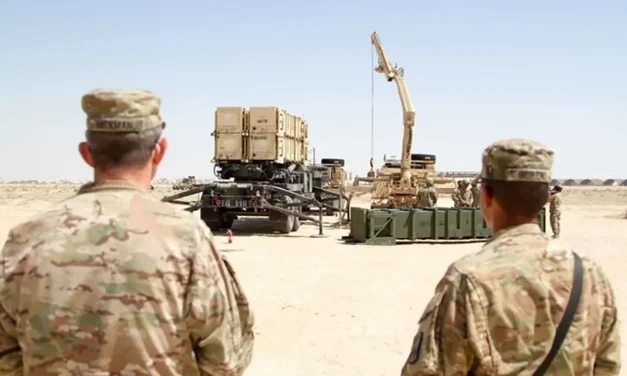
Having referred to Biden’s visit to Saudi Arabia, Ahmadzadeh said:” in this country, there was a coordinated effort between the Zionist regime and Arab countries to confront with what is called as Iran’s regional clout, under the title Iran-phobia”. Following negotiations led by Saudi Arabia and other Arab countries including UAE, Jordan, Egypt, Iraq and Qatar, effort was made to lay the groundwork for connection of an air defense system to combat so-called Iranian drone and missile threats in the region”.
According to the expert, another objective of Biden’s visit to the region related to Russian invasion of Ukraine and disorder in exporting oil and gas to Europe and other parts of the world, as if Joe Biden tried to convince Saudi Arabia’s authorities to increase their oil production against guaranteeing Saudi Arabia’s security and turning a blind eye on human rights issues in the country such as Jamal Khashoggi’s butchering that he already announced it among his red lines, in order to encounter Russia and to exert double pressure on the country”.
The expert of the Middle East issues explained:” Despite efforts made by Joe Biden to integrate the Zionist regime into the security arrangements of the Middle East region and expansion of Arab-Hebrew cooperation in the region, it seems that the efforts have faced with serious failures”.
He emphasized:” Saudi authorities in their interview with news agencies of the region have referred to Arabic NATO coalition or the Middle East NATO as confusing terms whose creation seems to be unlikely, even they expressed their readiness to extend their friendship hand towards Tehran in order to reduce the disputes”.
Ahmadzadeh continued to mention that as one of the avant-garde of relations with the Zionist regime, UAE announced at the end of Jeddah (summit) meeting that it is ready to send its ambassador to Tehran as a gesture (of good will) for détente and sorting out the regional disputes. He said:” the UAE reaction in not in tune with regional game of Washington – Tel Aviv”.
Having stated that some (observers) have branded the new U.S. and the Zionist regime game in the region as the new political game whose success is unexpected in view of objective realities of the region, he said:” the region has is not ready to be engaged in a new clash”.
Ahmadzadeh touched upon some threats of Tel Aviv and Washington, and said:” the threats are objective realities which should not be neglected. In fact, to leave behind the present situation and to confront with the U.S. as well as the Zionist regime policies, it is necessary that headless to hues and cries of media and publicity ambiance of the U.S. and Zionist regime, Iran adopts the policy of dialog and compromise with the regional countries through official channels. The first step in such negotiations can be the continuation of talks with Riyadh, which means Baghdad talks to be continued”.
Ahmadzadeh believes that with endeavors, coordinated and integrated policies, the problems between Iran and Saudi Arabia can be sorted out, and to transfer those problems from security dossiers to political fields.
He explained:” it seems that with Iran’s support to continuity of ceasefire in Yemen and also some collaborations and contributions in other hot spots of the West Asia like Syria and Iraq, the present situation can be left behind on a step by step basis, and prepare the situation for stabilization of endogenous security without the intervention of Western countries and the Zionist regime”.
Having replied to the question of why Riyadh and some other Arab capitals find their interests in alignment with the West and the Zionist regime? he explained:” it must be brought to attention that origin of disputes between Iran and some Arab states date back to over the past 40 years ago, that means their disputes with Iran are not new ones; from one hand we witness ideological disputes between Iran and Saudi Arabia, both countries consider themselves as claimants of the world of Islam, from the other hand ethnical and identity issues continue to be visible in the disputes between Iran and some Arab countries of the Persian Gulf region. These are among diverging and conflicting issues between Iran and some Arab countries of the region”.
The expert of the Middle East issues ultimately called the modality how relations with some Western countries are tuned as one of the reasons for sustainable disputes between Iran and some Arab countries. He said:” due to its security agreements and oil export, Saudi Arabia has defined its security in convergence and close relations with the West including the U.S. while Iran believes in endogenous security and distrust to the West including the U.S. However, it is evident that organizing negotiations, explicit and sincere talks between Iran and Arab countries based on trust and common will of parties involved, will be very fruitful and influential”.

0 Comments

Submit a Comment

Your email address will not be published. Required fields are marked *

LATEST CONTENT

China’s Rejection of US Sanctions; Strengthening Iran’s Geopolitical Leverage

SCFR Online – Opinion: Concurrent with the official commencement of the United States’ economic war against our country, focusing on sanctions instruments, isolation, and economic pressure, what has now become increasingly important is the lack of alignment of other major global powers, especially China, with this policy.

The Makkah Pact; Reasons for its Formation and Challenges Ahead

SCFR Online – Opinion: The Makkah Pact, signed between Saudi Arabia, Pakistan, and Turkey under the motto “an attack on one is an attack on all,” is viewed by some analysts less as a full-fledged military coalition and more as an attempt to reduce security dependence on an external power and to establish a regional security mechanism.

Implications of the US-Saudi Nuclear Agreement

SCFR Online – Opinion: The new US-Saudi nuclear agreement, despite legal and political ambiguities, could alter previous non-proliferation standards in West Asia and intensify nuclear competition, ushering it into a new phase.

An Analysis of Recent Turkey-Israeli Regime Tensions

SCFR Online – Opinion: Recent developments in Syria indicate an intensification of strategic rivalry between Turkey and the Israeli regime, but mutual considerations and the role of the United States have limited the likelihood of direct war.

Loading

Últimas publicaciones

China’s Rejection of US Sanctions; Strengthening Iran’s Geopolitical Leverage

SCFR Online – Opinion: Concurrent with the official commencement of the United States’ economic war against our country, focusing on sanctions instruments, isolation, and economic pressure, what has now become increasingly important is the lack of alignment of other major global powers, especially China, with this policy.

The Makkah Pact; Reasons for its Formation and Challenges Ahead

SCFR Online – Opinion: The Makkah Pact, signed between Saudi Arabia, Pakistan, and Turkey under the motto “an attack on one is an attack on all,” is viewed by some analysts less as a full-fledged military coalition and more as an attempt to reduce security dependence on an external power and to establish a regional security mechanism.

Implications of the US-Saudi Nuclear Agreement

SCFR Online – Opinion: The new US-Saudi nuclear agreement, despite legal and political ambiguities, could alter previous non-proliferation standards in West Asia and intensify nuclear competition, ushering it into a new phase.

An Analysis of Recent Turkey-Israeli Regime Tensions

SCFR Online – Opinion: Recent developments in Syria indicate an intensification of strategic rivalry between Turkey and the Israeli regime, but mutual considerations and the role of the United States have limited the likelihood of direct war.

Loading

DERNIER CONTENU

China’s Rejection of US Sanctions; Strengthening Iran’s Geopolitical Leverage

SCFR Online – Opinion: Concurrent with the official commencement of the United States’ economic war against our country, focusing on sanctions instruments, isolation, and economic pressure, what has now become increasingly important is the lack of alignment of other major global powers, especially China, with this policy.

The Makkah Pact; Reasons for its Formation and Challenges Ahead

SCFR Online – Opinion: The Makkah Pact, signed between Saudi Arabia, Pakistan, and Turkey under the motto “an attack on one is an attack on all,” is viewed by some analysts less as a full-fledged military coalition and more as an attempt to reduce security dependence on an external power and to establish a regional security mechanism.

Implications of the US-Saudi Nuclear Agreement

SCFR Online – Opinion: The new US-Saudi nuclear agreement, despite legal and political ambiguities, could alter previous non-proliferation standards in West Asia and intensify nuclear competition, ushering it into a new phase.

An Analysis of Recent Turkey-Israeli Regime Tensions

SCFR Online – Opinion: Recent developments in Syria indicate an intensification of strategic rivalry between Turkey and the Israeli regime, but mutual considerations and the role of the United States have limited the likelihood of direct war.

Loading

DERNIER CONTENU

China’s Rejection of US Sanctions; Strengthening Iran’s Geopolitical Leverage

SCFR Online – Opinion: Concurrent with the official commencement of the United States’ economic war against our country, focusing on sanctions instruments, isolation, and economic pressure, what has now become increasingly important is the lack of alignment of other major global powers, especially China, with this policy.

The Makkah Pact; Reasons for its Formation and Challenges Ahead

SCFR Online – Opinion: The Makkah Pact, signed between Saudi Arabia, Pakistan, and Turkey under the motto “an attack on one is an attack on all,” is viewed by some analysts less as a full-fledged military coalition and more as an attempt to reduce security dependence on an external power and to establish a regional security mechanism.

Implications of the US-Saudi Nuclear Agreement

SCFR Online – Opinion: The new US-Saudi nuclear agreement, despite legal and political ambiguities, could alter previous non-proliferation standards in West Asia and intensify nuclear competition, ushering it into a new phase.

An Analysis of Recent Turkey-Israeli Regime Tensions

SCFR Online – Opinion: Recent developments in Syria indicate an intensification of strategic rivalry between Turkey and the Israeli regime, but mutual considerations and the role of the United States have limited the likelihood of direct war.

Loading

DERNIER CONTENU

China’s Rejection of US Sanctions; Strengthening Iran’s Geopolitical Leverage

SCFR Online – Opinion: Concurrent with the official commencement of the United States’ economic war against our country, focusing on sanctions instruments, isolation, and economic pressure, what has now become increasingly important is the lack of alignment of other major global powers, especially China, with this policy.

The Makkah Pact; Reasons for its Formation and Challenges Ahead

SCFR Online – Opinion: The Makkah Pact, signed between Saudi Arabia, Pakistan, and Turkey under the motto “an attack on one is an attack on all,” is viewed by some analysts less as a full-fledged military coalition and more as an attempt to reduce security dependence on an external power and to establish a regional security mechanism.

Implications of the US-Saudi Nuclear Agreement

SCFR Online – Opinion: The new US-Saudi nuclear agreement, despite legal and political ambiguities, could alter previous non-proliferation standards in West Asia and intensify nuclear competition, ushering it into a new phase.

An Analysis of Recent Turkey-Israeli Regime Tensions

SCFR Online – Opinion: Recent developments in Syria indicate an intensification of strategic rivalry between Turkey and the Israeli regime, but mutual considerations and the role of the United States have limited the likelihood of direct war.

Loading



