U.S. New Defense Strategy; Increasing Danger of Nuclear War

Strategic Council Online – Interview: Having stated that the U.S. has identified China as its geopolitical enemy and Russia as a serious and all-encompassing threat against itself, an expert on international issues said:” Washington is looking for tactical nuclear arms to probably use them in pre-emptive attacks as well.

Seyed Reza Mirtaher in an interview with the site of Strategic Council on Foreign Relations referred to the report called new U.S. National Defense Strategy (NDS) released by the Department of Defense, and called one of the most important issues therein as “getting to know enemy”. He added:” Although the U.S. has called Russia and China as its principal enemies and important threats, but from Pentagon’s strategists’ view, China is the main enemy and important threat of the U.S. that intends to expand its clout in Asia – Pacific, and continues to expand its military power and to develop its influence as well as its presence in the sensitive region in 21st century”.

Having stated that the U.S. keeps claiming that China intends to take specific measures against Taiwan in not a far future, he said:” Moreover, one of the former U.S. officials had claimed that China intends to sort out Taiwan issue before 2027. Anyway, the U.S. believes in view of the recent developments, particularly after the Russian invasion (of Ukraine) and annexation of four provinces of the country, from China’s perspective the international system and how the West reacts to it, let China to probably take a military measure to annex Taiwan to China’s main territory”.

Having stated that the new National Defense Strategy has placed its concentration on all – out deterrence of enemies and coordination among different military, diplomatic and economic leverages, the expert of international affairs continued:” according to the new National Defense Strategy, Russia is introduced as an important threat that has engaged Washington with itself. A number of threatening cases of the country ranging from attacking neighboring countries to spatial and cyber threats as well as regional ones have been brought to attention”.

Having reminded that the U.S. has identified China as its main geopolitical enemy and Russia as its serious and far – reaching threat, Mirtaher said:” NDS has dealt with North Korea and Iran once again and their nuclear activities have been defined as increasing. Moreover, transboundary threats of terrorist groups including Al-Qaeda, ISIS have also been addressed. In fact, in comparison with threats assessed by the U.S. from China and Russia, these threats are considered to be second grade ones”.

Having pointed out the concerns expressed by Russian Ministry of Foreign Affairs about the U.S. positions and increasing number of scenarios to use nuclear arms in the country defense strategy, he added:” after the release of the U.S. new nuclear doctrine during Trump tenure of office called as “Nuclear Posture Review”, the U.S. Administration has principally defined its target in this field as general renovation of its nuclear capabilities the approach of which specifically includes renovation of nuclear arsenals and at later stage renovation of nuclear facilities the cost of which is estimated to be over $ 1 trillion”.

The expert of international issues continued:” IAEA Director General has also announced that the U.S. is no more pioneer country as far as civil nuclear energy industry is concerned and has transferred its position to Russia and China. The situation has been coupled with the U.S. concern. Moreover, it was emphasized in Nuclear Posture Review during Trump tenure of office that the U.S. should deal with lesser capable and lesser output nuclear arms, because the capability of their operational is far more than huge nuclear and hydrogen missiles and bombs that due to their large scale destruction potentials, can not be used tactically”.

He stressed: “therefore, they are looking for tactical nuclear arms to probably use them in preemptive attacks. The very issue has also been underscored in the U.S. new National Defense Strategy and it was claimed that in order to win the war, Russia may use its tactical arms”.
Having stated that Russia is specifically the U.S. addressee in this field, and in its new NDS, the U.S. has reminded that there is no treaty to limit 2000 Russian nuclear arms, Mirtaher emphasized:” at global level, Russia and the U.S. are the two nuclear superpowers that have more than 90% of nuclear arms existing in the world at their disposal. Therefore, measures taken by the U.S. to promote and renovate its nuclear capability are considered by Russia as direct threat against its capability on nuclear deterrence”.
While referring to the expression of concern by Russian authorities who had said that the U.S. intended to make Moscow use its military nuclear arms in Ukraine against NATO, he spelled out:” Using nuclear arms has been a taboo for the past 75 years. The more important issue is the U.S. reaction when Russia uses such arms which will lead to the Third World War and annihilation of the Earth if the U.S. reciprocally uses its nuclear arms. If no action is taken, then nuclear deterrence seems to be fruitless. Therefore, it does not seem that the U.S. is about to instigate Russia to use its nuclear arms”.
Having reminded that in the U.S. NDS of 2018, Russia and China had been called as “revisionist powers”, and NDS 2022 has called them as serious threats, the expert of international issues said:” Pentagon believes that in view of China’s effort to increase its nuclear arsenal to about 1000 nuclear arms, increasing importance of nuclear arms in strategies of its competitors has escalated the risk for them”.
Having said that the U.S. in its NDS, has called the clash with China “neither unavoidable nor desirable”, Mirtaher continued:” on this basis, making effort to prevent Beijing’s dominance over key regions determines the U.S. military strategy. This by itself, refers to military concentration of China in South China waters and recent issues concerning Taiwan. Although, the U.S. uses all leverages to apply pressure and to restrict China, yet, the U.S. Secretary of State keeps saying that his country is not in the state of cold war with China!”.
Having stressed that tension level between the U.S. and China has been skyrocketed particularly after the visit of Nancy Pelosi to Taiwan, he added:” regarding the prediction of economic analysts that China will become the first economic power of the world by 2030, it seems that within the coming years and decades, competition and confrontation course between the two countries will become more serious, further expanded and further deepen”.
0 Comments

Submit a Comment

Your email address will not be published. Required fields are marked *

LATEST CONTENT

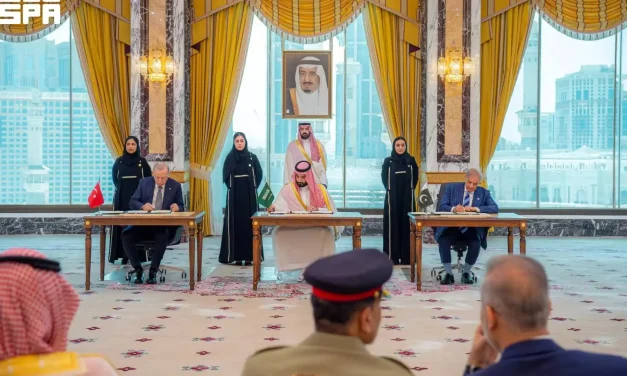
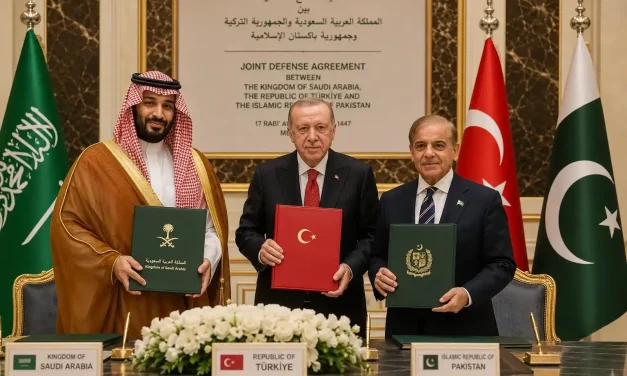
The Makkah Pact; Reasons for its Formation and Challenges Ahead

SCFR Online – Opinion: The Makkah Pact, signed between Saudi Arabia, Pakistan, and Turkey under the motto “an attack on one is an attack on all,” is viewed by some analysts less as a full-fledged military coalition and more as an attempt to reduce security dependence on an external power and to establish a regional security mechanism.

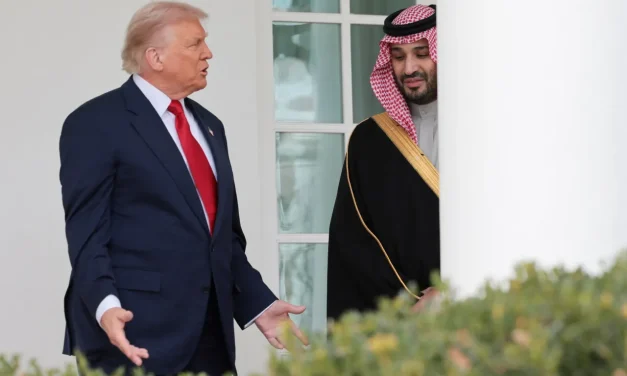
Implications of the US-Saudi Nuclear Agreement

SCFR Online – Opinion: The new US-Saudi nuclear agreement, despite legal and political ambiguities, could alter previous non-proliferation standards in West Asia and intensify nuclear competition, ushering it into a new phase.

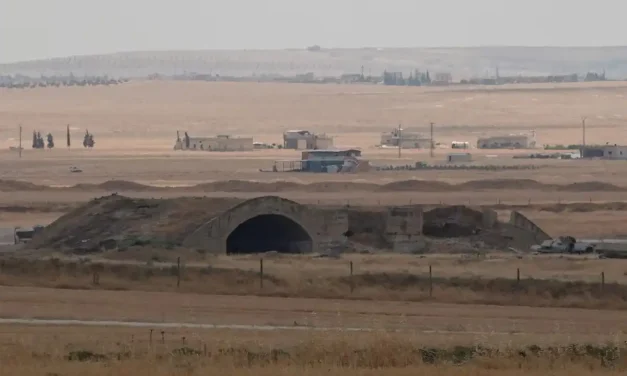
An Analysis of Recent Turkey-Israeli Regime Tensions

SCFR Online – Opinion: Recent developments in Syria indicate an intensification of strategic rivalry between Turkey and the Israeli regime, but mutual considerations and the role of the United States have limited the likelihood of direct war.

Increasing criticism of the extensive Zionist lobby network

SCFR Online – Opinion: An examination of the mechanisms of the Israeli regime’s influence in the United States depicts a complex picture of shared interests, strategic dependencies, and the limitations of this relationship.

Realities of the Tripartite Makkah Pact

SCFR Online – Interview: The signing of the Makkah agreement between Saudi Arabia, Pakistan, and Turkey has raised questions about the future of the region’s security structure and the position of these countries in West Asian equations. Can this agreement become a genuine collective defense mechanism, or does it have more of a political and deterrent function than creating new military capacity?

Loading

Últimas publicaciones

The Makkah Pact; Reasons for its Formation and Challenges Ahead

SCFR Online – Opinion: The Makkah Pact, signed between Saudi Arabia, Pakistan, and Turkey under the motto “an attack on one is an attack on all,” is viewed by some analysts less as a full-fledged military coalition and more as an attempt to reduce security dependence on an external power and to establish a regional security mechanism.

Implications of the US-Saudi Nuclear Agreement

SCFR Online – Opinion: The new US-Saudi nuclear agreement, despite legal and political ambiguities, could alter previous non-proliferation standards in West Asia and intensify nuclear competition, ushering it into a new phase.

An Analysis of Recent Turkey-Israeli Regime Tensions

SCFR Online – Opinion: Recent developments in Syria indicate an intensification of strategic rivalry between Turkey and the Israeli regime, but mutual considerations and the role of the United States have limited the likelihood of direct war.

Increasing criticism of the extensive Zionist lobby network

SCFR Online – Opinion: An examination of the mechanisms of the Israeli regime’s influence in the United States depicts a complex picture of shared interests, strategic dependencies, and the limitations of this relationship.

Realities of the Tripartite Makkah Pact

SCFR Online – Interview: The signing of the Makkah agreement between Saudi Arabia, Pakistan, and Turkey has raised questions about the future of the region’s security structure and the position of these countries in West Asian equations. Can this agreement become a genuine collective defense mechanism, or does it have more of a political and deterrent function than creating new military capacity?

Loading

DERNIER CONTENU

The Makkah Pact; Reasons for its Formation and Challenges Ahead

SCFR Online – Opinion: The Makkah Pact, signed between Saudi Arabia, Pakistan, and Turkey under the motto “an attack on one is an attack on all,” is viewed by some analysts less as a full-fledged military coalition and more as an attempt to reduce security dependence on an external power and to establish a regional security mechanism.

Implications of the US-Saudi Nuclear Agreement

SCFR Online – Opinion: The new US-Saudi nuclear agreement, despite legal and political ambiguities, could alter previous non-proliferation standards in West Asia and intensify nuclear competition, ushering it into a new phase.

An Analysis of Recent Turkey-Israeli Regime Tensions

SCFR Online – Opinion: Recent developments in Syria indicate an intensification of strategic rivalry between Turkey and the Israeli regime, but mutual considerations and the role of the United States have limited the likelihood of direct war.

Increasing criticism of the extensive Zionist lobby network

SCFR Online – Opinion: An examination of the mechanisms of the Israeli regime’s influence in the United States depicts a complex picture of shared interests, strategic dependencies, and the limitations of this relationship.

Realities of the Tripartite Makkah Pact

SCFR Online – Interview: The signing of the Makkah agreement between Saudi Arabia, Pakistan, and Turkey has raised questions about the future of the region’s security structure and the position of these countries in West Asian equations. Can this agreement become a genuine collective defense mechanism, or does it have more of a political and deterrent function than creating new military capacity?

Loading

DERNIER CONTENU

The Makkah Pact; Reasons for its Formation and Challenges Ahead

SCFR Online – Opinion: The Makkah Pact, signed between Saudi Arabia, Pakistan, and Turkey under the motto “an attack on one is an attack on all,” is viewed by some analysts less as a full-fledged military coalition and more as an attempt to reduce security dependence on an external power and to establish a regional security mechanism.

Implications of the US-Saudi Nuclear Agreement

SCFR Online – Opinion: The new US-Saudi nuclear agreement, despite legal and political ambiguities, could alter previous non-proliferation standards in West Asia and intensify nuclear competition, ushering it into a new phase.

An Analysis of Recent Turkey-Israeli Regime Tensions

SCFR Online – Opinion: Recent developments in Syria indicate an intensification of strategic rivalry between Turkey and the Israeli regime, but mutual considerations and the role of the United States have limited the likelihood of direct war.

Increasing criticism of the extensive Zionist lobby network

SCFR Online – Opinion: An examination of the mechanisms of the Israeli regime’s influence in the United States depicts a complex picture of shared interests, strategic dependencies, and the limitations of this relationship.

Realities of the Tripartite Makkah Pact

SCFR Online – Interview: The signing of the Makkah agreement between Saudi Arabia, Pakistan, and Turkey has raised questions about the future of the region’s security structure and the position of these countries in West Asian equations. Can this agreement become a genuine collective defense mechanism, or does it have more of a political and deterrent function than creating new military capacity?

Loading

DERNIER CONTENU

The Makkah Pact; Reasons for its Formation and Challenges Ahead

SCFR Online – Opinion: The Makkah Pact, signed between Saudi Arabia, Pakistan, and Turkey under the motto “an attack on one is an attack on all,” is viewed by some analysts less as a full-fledged military coalition and more as an attempt to reduce security dependence on an external power and to establish a regional security mechanism.

Implications of the US-Saudi Nuclear Agreement

SCFR Online – Opinion: The new US-Saudi nuclear agreement, despite legal and political ambiguities, could alter previous non-proliferation standards in West Asia and intensify nuclear competition, ushering it into a new phase.

An Analysis of Recent Turkey-Israeli Regime Tensions

SCFR Online – Opinion: Recent developments in Syria indicate an intensification of strategic rivalry between Turkey and the Israeli regime, but mutual considerations and the role of the United States have limited the likelihood of direct war.

Increasing criticism of the extensive Zionist lobby network

SCFR Online – Opinion: An examination of the mechanisms of the Israeli regime’s influence in the United States depicts a complex picture of shared interests, strategic dependencies, and the limitations of this relationship.

Realities of the Tripartite Makkah Pact

SCFR Online – Interview: The signing of the Makkah agreement between Saudi Arabia, Pakistan, and Turkey has raised questions about the future of the region’s security structure and the position of these countries in West Asian equations. Can this agreement become a genuine collective defense mechanism, or does it have more of a political and deterrent function than creating new military capacity?

Loading