France’s Dangerous and Doomed Ambition in Persian Gulf

Strategic Council Online: By announcing a plan to launch a "European Naval Mission” for Security in the Strait of Hormuz and the Persian Gulf, France wants to test what it has been dreaming of as a "European NATO" for years, an institution that has neither been consolidated in thinking nor it is applicable in practice. Hamideh Safamanesh - International Relations Researcher

The US decision to pull out of the Middle East made France think of filling the US gap in the region, an idea to justify which France has strived in recent weeks to resort to crisis making or crisis imagination.

French Defense Minister Florence Parly on a tour of the southern Persian Gulf states addressing a security forum in Bahrain hinted at unease over what she described as “a deliberate, gradual U.S. disengagement” in the Middle East.

“When the former US President Obama did not respond militarily to the Syrian chemical attacks in 2013, the strategy of American withdrawal from West Asia emerged.”

Parly pointed to tensions since President Donald Trump pulled the United States out of a 2015 nuclear deal between Tehran and world powers and redoubled sanctions and other pressure on Iran.

“But the trend is, I think, quite clear and thus probably irrespective of who wins the next elections,” she said.

Parly questioned whether some recent incidents that many blame on Iran have been met with sufficient pushback. “When the mining of ships went unanswered, a drone got shot [down],” Parly said. “When that in turn got unanswered, major oil facilities were bombed. This is dangerous even for those who think achievements have been made.”

With such approaches, France, which views NATO an alliance with “brain death”, is trying to test the strength of certain European NATO member states in operationalizing the idea of a European NATO and aggrandize its role with the new naval mission in the Persian Gulf region.

The French defense secretary has said the Central Command of the marine coalition is on the UAE territory and has claimed that about ten allies are participating in the project.

France; Lacking Leadership Potential

These measures by France are taken in the Persian Gulf under conditions that criticism of NATO’s performance and the idea that the military-security alliance is “brain dead” sparked sideline impacts all of which indicated that other European leaders were not happy with such statements and viewed them as divergent and aimed at escalation of differences.

Germany’s absence as Europe’s major economic power in the alliance is a major blow to the French plan. The decision shows that Germany is skeptical of these statements and atmosphere because France as the initiator of such a scheme over the past years in the Middle East and Africa has been heavily dependent on American logistics and in case of any tension in the Persian Gulf would still resort to the Americans.

Moreover, US-European relations show that neither Europe has the strength to display the least practical independence against the United States, nor the United States would let Europe to exercise such power through its own unilateralism.

Although European heads of state have come to the conclusion that NATO and EU interests are not fully compatible, and despite some of America’s tense policies against Europe, most North Atlantic Treaty Organization states prefer US military arms to weapons from France as one of the largest arms manufacturers, however, Macron does not even consider the possibility to forge an independent and effective coalition.

France is seeking to portray a critical image of the Persian Gulf and calling Iran a threat under conditions that in August, when the United States sought to forge a maritime alliance in the Persian Gulf, urged its European allies to join the European alliance and advised them not to take any action in line with US efforts to lead the coalition and instead wait for action by the European allies because France does not want to be part of the mission of maximizing pressure on Iran, and considers such a strategy in line with undermining the Joint Comprehensive Plan of Action and the possible death of the Iran Nuclear Agreement.


At the same time, European media reported that some officials at the British Foreign Office doubted the role and capacity of the French leadership for such a mission without US support. At that point, Trump also strongly criticized Macron’s efforts on the Persian Gulf issue.

Now that developments in the Middle East seem to have lost its primacy in the eyes of the United States, France is seeking to play a role similar to that of America in the Middle East through raising the idea of Iranophobia. France’s tough stance against Iran, including its missile defense program, being at the forefront of threats against Tehran following Iran’s decision to reduce its compliance with JCPOA obligations, the claims of the French Secretary of Defense against Iran in Manama can be analyzed in the context of this policy.


Europe’s Unrealistic Understanding of Developments in Middle East

Meantime, the Netherlands has announced that its Naval fleet will join the French-led European fleet for a six-month period starting next January. The European countries’ unrealistic perception of Middle Eastern developments seems to have led them to pursue their old colonial policies.

It should be noted that not all European countries have the same interest in being present in the Middle East, and France is looking to play a greater role because it is concerned about some developments in the Middle East, including its influence in Syria and Lebanon.

Amid concerns over US support for the UAE and a decision to host the European Maritime Alliance, France signed a new $552m deal with Abu Dhabi to modernize its Mirage fleet. It also signed a deal to sell advanced warning equipment, including low altitude radars to Saudi Arabia: Measures that show the country is following the same scenario as the US in the region for its own benefit and milking the Arab states, and implementing the European NATO plan and bringing European countries together is a short-term step beyond the French capacity.
0 Comments

Submit a Comment

Your email address will not be published. Required fields are marked *

LATEST CONTENT

Realities of the Tripartite Makkah Pact

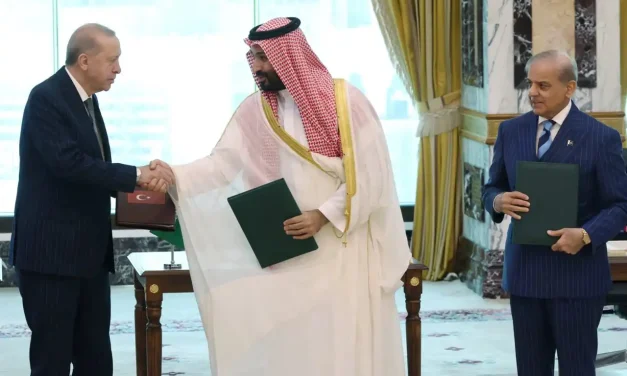
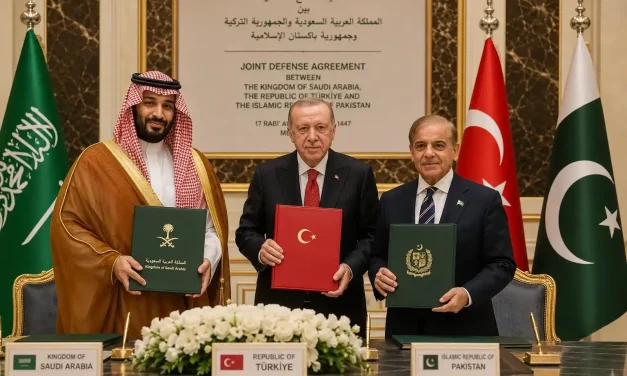
SCFR Online – Interview: The signing of the Makkah agreement between Saudi Arabia, Pakistan, and Turkey has raised questions about the future of the region’s security structure and the position of these countries in West Asian equations. Can this agreement become a genuine collective defense mechanism, or does it have more of a political and deterrent function than creating new military capacity?

Strategic Implications of the Reduction of US Weapons Stockpiles

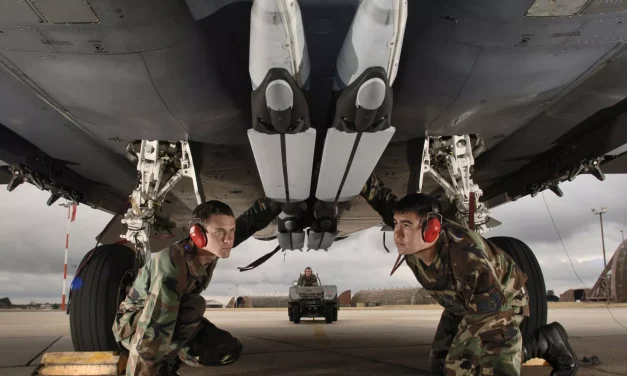
SCFR Online – Opinion: The continuation of the US war against Iran, in addition to increasing operational costs, has called into question the actual capacity of the American arsenal to simultaneously fulfill security commitments on multiple fronts; an issue that affects deterrence, defense production capacity, and Washington’s resource prioritization.

The Formation of a New Order in Relations Between Powers

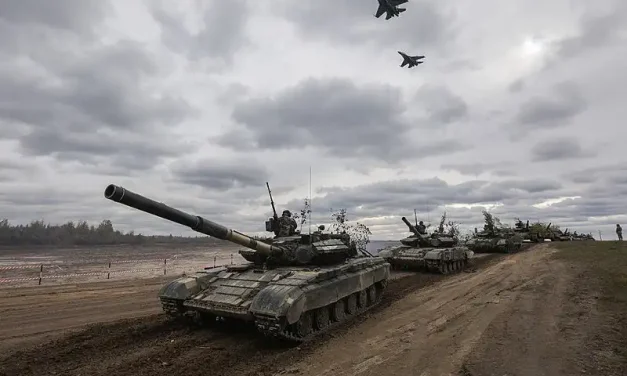
SCFR Online – Opinion: The Russia-Ukraine war and the war of the United States and the Israeli regime against Iran have been formed with different objectives and actors, but field and political developments indicate that they are not entirely separate from one another.

An Analysis of the Makkah Defense Pact

SCFR Online – Opinion: On Friday, August 7, the heads of state of three countries – Saudi Arabia, Turkey, and Pakistan – signed a text under the title “Makkah Joint Defense Agreement.”

Dimensions and challenges of the initiative to revive the Hejaz Railway

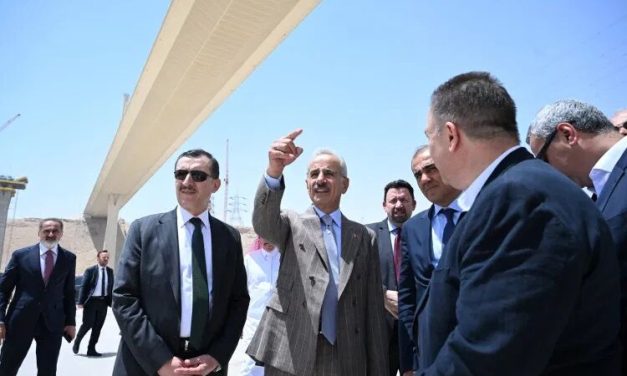
Strategic Council Online – Note: The initiative to revive the Hejaz Railway, beyond being a transportation project, constitutes an attempt to redefine geopolitics, the economy, and Turkey’s regional position; however, its realization appears to face significant financial, security, and institutional challenges.

Loading

Últimas publicaciones

Realities of the Tripartite Makkah Pact

SCFR Online – Interview: The signing of the Makkah agreement between Saudi Arabia, Pakistan, and Turkey has raised questions about the future of the region’s security structure and the position of these countries in West Asian equations. Can this agreement become a genuine collective defense mechanism, or does it have more of a political and deterrent function than creating new military capacity?

Strategic Implications of the Reduction of US Weapons Stockpiles

SCFR Online – Opinion: The continuation of the US war against Iran, in addition to increasing operational costs, has called into question the actual capacity of the American arsenal to simultaneously fulfill security commitments on multiple fronts; an issue that affects deterrence, defense production capacity, and Washington’s resource prioritization.

The Formation of a New Order in Relations Between Powers

SCFR Online – Opinion: The Russia-Ukraine war and the war of the United States and the Israeli regime against Iran have been formed with different objectives and actors, but field and political developments indicate that they are not entirely separate from one another.

An Analysis of the Makkah Defense Pact

SCFR Online – Opinion: On Friday, August 7, the heads of state of three countries – Saudi Arabia, Turkey, and Pakistan – signed a text under the title “Makkah Joint Defense Agreement.”

Dimensions and challenges of the initiative to revive the Hejaz Railway

Strategic Council Online – Note: The initiative to revive the Hejaz Railway, beyond being a transportation project, constitutes an attempt to redefine geopolitics, the economy, and Turkey’s regional position; however, its realization appears to face significant financial, security, and institutional challenges.

Loading

DERNIER CONTENU

Realities of the Tripartite Makkah Pact

SCFR Online – Interview: The signing of the Makkah agreement between Saudi Arabia, Pakistan, and Turkey has raised questions about the future of the region’s security structure and the position of these countries in West Asian equations. Can this agreement become a genuine collective defense mechanism, or does it have more of a political and deterrent function than creating new military capacity?

Strategic Implications of the Reduction of US Weapons Stockpiles

SCFR Online – Opinion: The continuation of the US war against Iran, in addition to increasing operational costs, has called into question the actual capacity of the American arsenal to simultaneously fulfill security commitments on multiple fronts; an issue that affects deterrence, defense production capacity, and Washington’s resource prioritization.

The Formation of a New Order in Relations Between Powers

SCFR Online – Opinion: The Russia-Ukraine war and the war of the United States and the Israeli regime against Iran have been formed with different objectives and actors, but field and political developments indicate that they are not entirely separate from one another.

An Analysis of the Makkah Defense Pact

SCFR Online – Opinion: On Friday, August 7, the heads of state of three countries – Saudi Arabia, Turkey, and Pakistan – signed a text under the title “Makkah Joint Defense Agreement.”

Dimensions and challenges of the initiative to revive the Hejaz Railway

Strategic Council Online – Note: The initiative to revive the Hejaz Railway, beyond being a transportation project, constitutes an attempt to redefine geopolitics, the economy, and Turkey’s regional position; however, its realization appears to face significant financial, security, and institutional challenges.

Loading

DERNIER CONTENU

Realities of the Tripartite Makkah Pact

SCFR Online – Interview: The signing of the Makkah agreement between Saudi Arabia, Pakistan, and Turkey has raised questions about the future of the region’s security structure and the position of these countries in West Asian equations. Can this agreement become a genuine collective defense mechanism, or does it have more of a political and deterrent function than creating new military capacity?

Strategic Implications of the Reduction of US Weapons Stockpiles

SCFR Online – Opinion: The continuation of the US war against Iran, in addition to increasing operational costs, has called into question the actual capacity of the American arsenal to simultaneously fulfill security commitments on multiple fronts; an issue that affects deterrence, defense production capacity, and Washington’s resource prioritization.

The Formation of a New Order in Relations Between Powers

SCFR Online – Opinion: The Russia-Ukraine war and the war of the United States and the Israeli regime against Iran have been formed with different objectives and actors, but field and political developments indicate that they are not entirely separate from one another.

An Analysis of the Makkah Defense Pact

SCFR Online – Opinion: On Friday, August 7, the heads of state of three countries – Saudi Arabia, Turkey, and Pakistan – signed a text under the title “Makkah Joint Defense Agreement.”

Dimensions and challenges of the initiative to revive the Hejaz Railway

Strategic Council Online – Note: The initiative to revive the Hejaz Railway, beyond being a transportation project, constitutes an attempt to redefine geopolitics, the economy, and Turkey’s regional position; however, its realization appears to face significant financial, security, and institutional challenges.

Loading

DERNIER CONTENU

Realities of the Tripartite Makkah Pact

SCFR Online – Interview: The signing of the Makkah agreement between Saudi Arabia, Pakistan, and Turkey has raised questions about the future of the region’s security structure and the position of these countries in West Asian equations. Can this agreement become a genuine collective defense mechanism, or does it have more of a political and deterrent function than creating new military capacity?

Strategic Implications of the Reduction of US Weapons Stockpiles

SCFR Online – Opinion: The continuation of the US war against Iran, in addition to increasing operational costs, has called into question the actual capacity of the American arsenal to simultaneously fulfill security commitments on multiple fronts; an issue that affects deterrence, defense production capacity, and Washington’s resource prioritization.

The Formation of a New Order in Relations Between Powers

SCFR Online – Opinion: The Russia-Ukraine war and the war of the United States and the Israeli regime against Iran have been formed with different objectives and actors, but field and political developments indicate that they are not entirely separate from one another.

An Analysis of the Makkah Defense Pact

SCFR Online – Opinion: On Friday, August 7, the heads of state of three countries – Saudi Arabia, Turkey, and Pakistan – signed a text under the title “Makkah Joint Defense Agreement.”

Dimensions and challenges of the initiative to revive the Hejaz Railway

Strategic Council Online – Note: The initiative to revive the Hejaz Railway, beyond being a transportation project, constitutes an attempt to redefine geopolitics, the economy, and Turkey’s regional position; however, its realization appears to face significant financial, security, and institutional challenges.

Loading