Lesson of Iraqi Popular Force to the United States

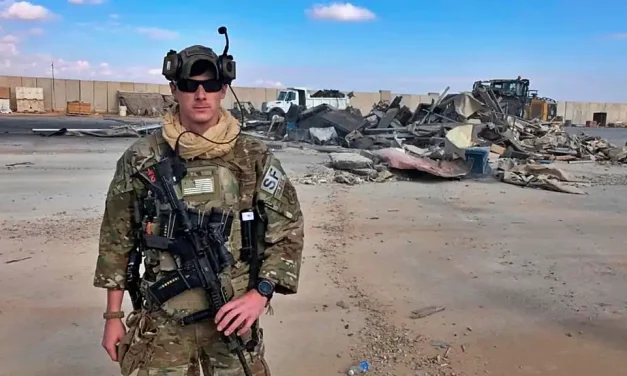
Strategic Council Online – Today Iraq’s Hashd al-Shaabi (Popular Mobilization Force) and the forces under its command in addition to their efforts to counter ISIS's new harassment activities have to monitor and render ineffective the ISIS-based political activities favored by the United States aimed at throwing obstacles in the way of the Hashd al-Shaabi. Jafar Qannadbashi - Expert on Middle East Issues

Talking about or making decisions on the role and position of Hashd al-Shaabi and the subordinate groups of this popular institution on the one hand and the mechanism of implementation of the decision of the Iraqi parliament on the withdrawal of all American troops from the country on the other hand are among the issues raised during Prime Minister Haidar al-Abadi’s government. This has been one of the most sensitive and important issues in Iraq so far. It has also affected all developments in Iraq in recent weeks and has even led to challenges between the government of Mustafa al-Kazemi and the political coalitions that voted for him. In this respect, in addition to arresting 13 members of the Kataeb group (under Hashd al-Shaabi) and their quick release, the strategic online talks between the Kazemi government and the United States, as well as Washington’s concerns about missile strikes on US bases and embassies, are noteworthy.

It is clear that what is very important for Iraq and its people in this scene, and based on past experiences, can protect Iraq’s security against all kinds of foreign interference and the greed of Western governments, is to maintain the position of the Popular Mobilization Forces and prevent the weakening of this popular force.

We are talking about a force that according to the law and in line with the resolutions of the Iraqi parliament is considered one of the pillars of the Iraqi armed forces. In this regard, any accusation of arbitrary actions or attempts to disarm this force is considered an illegal move. The United States, meanwhile, is pursuing two long-term and short-term goals in Iraq, seeking to take full control of oil and gas reserves and pipelines in West Asia, according to Washington’s regional strategy. In other words, by turning Iraq into a second milk cow (after Saudi Arabia) the United States is working to create the necessary platform for decade-long military presence in Iraq. It is in compliance with this long term policy that Washington has employed overt and covert efforts to weaken the Hashd al-Shaabi forces and eliminate them from short-term role-playing. American officials have made every effort to accomplish this goal.

To this end, on the one hand, we should note the US efforts to strengthen and arm the ISIS, and on the other hand, its political efforts to force the Baghdad government to impose restrictions on the activities of the Popular Mobilization Force. In other words, Iraq’s Hashd al-Shaabi (Popular Mobilization Force) and the forces under its command in addition to their efforts to counter ISIS’s new harassment activities have to monitor and render ineffective the ISIS-based political activities favored by the United States aimed at throwing obstacles in the way of the Hashd al-Shaabi.

Unfortunately, political parties and coalitions in Iraq are facing political challenges due to the necessity of holding the upcoming crucial elections, and the Baghdad government is unable to think and decide on this issue due to the growing demands of the people and the movements of some infiltrating elements.  Thus, it can be said that the Iraqi political scene has now become a battle or a covert confrontation and battle between the forces of Hashd al-Shaabi forces on the one hand and the infiltrating elements affiliated with the United States on the other.


In any case, the US record in Iraq, both in terms of its relentless support for ISIS and in its crackdown on popular mobilization forces and the martyrdom of large numbers of them, is so black that would not allow infiltrators in Iraq to take their intended actions.

At the same time, the record of Hashd al-Shaabi forces in eliminating and suppressing ISIS and helping the Iraqi people at various times is so glorious and admirable that no one in Iraq can weaken or remove them from the country’s political scene.
0 Comments

Submit a Comment

Your email address will not be published. Required fields are marked *

LATEST CONTENT

Realities of the Tripartite Makkah Pact

SCFR Online – Interview: The signing of the Makkah agreement between Saudi Arabia, Pakistan, and Turkey has raised questions about the future of the region’s security structure and the position of these countries in West Asian equations. Can this agreement become a genuine collective defense mechanism, or does it have more of a political and deterrent function than creating new military capacity?

Strategic Implications of the Reduction of US Weapons Stockpiles

SCFR Online – Opinion: The continuation of the US war against Iran, in addition to increasing operational costs, has called into question the actual capacity of the American arsenal to simultaneously fulfill security commitments on multiple fronts; an issue that affects deterrence, defense production capacity, and Washington’s resource prioritization.

The Formation of a New Order in Relations Between Powers

SCFR Online – Opinion: The Russia-Ukraine war and the war of the United States and the Israeli regime against Iran have been formed with different objectives and actors, but field and political developments indicate that they are not entirely separate from one another.

An Analysis of the Makkah Defense Pact

SCFR Online – Opinion: On Friday, August 7, the heads of state of three countries – Saudi Arabia, Turkey, and Pakistan – signed a text under the title “Makkah Joint Defense Agreement.”

Dimensions and challenges of the initiative to revive the Hejaz Railway

Strategic Council Online – Note: The initiative to revive the Hejaz Railway, beyond being a transportation project, constitutes an attempt to redefine geopolitics, the economy, and Turkey’s regional position; however, its realization appears to face significant financial, security, and institutional challenges.

Loading

Últimas publicaciones

Realities of the Tripartite Makkah Pact

SCFR Online – Interview: The signing of the Makkah agreement between Saudi Arabia, Pakistan, and Turkey has raised questions about the future of the region’s security structure and the position of these countries in West Asian equations. Can this agreement become a genuine collective defense mechanism, or does it have more of a political and deterrent function than creating new military capacity?

Strategic Implications of the Reduction of US Weapons Stockpiles

SCFR Online – Opinion: The continuation of the US war against Iran, in addition to increasing operational costs, has called into question the actual capacity of the American arsenal to simultaneously fulfill security commitments on multiple fronts; an issue that affects deterrence, defense production capacity, and Washington’s resource prioritization.

The Formation of a New Order in Relations Between Powers

SCFR Online – Opinion: The Russia-Ukraine war and the war of the United States and the Israeli regime against Iran have been formed with different objectives and actors, but field and political developments indicate that they are not entirely separate from one another.

An Analysis of the Makkah Defense Pact

SCFR Online – Opinion: On Friday, August 7, the heads of state of three countries – Saudi Arabia, Turkey, and Pakistan – signed a text under the title “Makkah Joint Defense Agreement.”

Dimensions and challenges of the initiative to revive the Hejaz Railway

Strategic Council Online – Note: The initiative to revive the Hejaz Railway, beyond being a transportation project, constitutes an attempt to redefine geopolitics, the economy, and Turkey’s regional position; however, its realization appears to face significant financial, security, and institutional challenges.

Loading

DERNIER CONTENU

Realities of the Tripartite Makkah Pact

SCFR Online – Interview: The signing of the Makkah agreement between Saudi Arabia, Pakistan, and Turkey has raised questions about the future of the region’s security structure and the position of these countries in West Asian equations. Can this agreement become a genuine collective defense mechanism, or does it have more of a political and deterrent function than creating new military capacity?

Strategic Implications of the Reduction of US Weapons Stockpiles

SCFR Online – Opinion: The continuation of the US war against Iran, in addition to increasing operational costs, has called into question the actual capacity of the American arsenal to simultaneously fulfill security commitments on multiple fronts; an issue that affects deterrence, defense production capacity, and Washington’s resource prioritization.

The Formation of a New Order in Relations Between Powers

SCFR Online – Opinion: The Russia-Ukraine war and the war of the United States and the Israeli regime against Iran have been formed with different objectives and actors, but field and political developments indicate that they are not entirely separate from one another.

An Analysis of the Makkah Defense Pact

SCFR Online – Opinion: On Friday, August 7, the heads of state of three countries – Saudi Arabia, Turkey, and Pakistan – signed a text under the title “Makkah Joint Defense Agreement.”

Dimensions and challenges of the initiative to revive the Hejaz Railway

Strategic Council Online – Note: The initiative to revive the Hejaz Railway, beyond being a transportation project, constitutes an attempt to redefine geopolitics, the economy, and Turkey’s regional position; however, its realization appears to face significant financial, security, and institutional challenges.

Loading

DERNIER CONTENU

Realities of the Tripartite Makkah Pact

SCFR Online – Interview: The signing of the Makkah agreement between Saudi Arabia, Pakistan, and Turkey has raised questions about the future of the region’s security structure and the position of these countries in West Asian equations. Can this agreement become a genuine collective defense mechanism, or does it have more of a political and deterrent function than creating new military capacity?

Strategic Implications of the Reduction of US Weapons Stockpiles

SCFR Online – Opinion: The continuation of the US war against Iran, in addition to increasing operational costs, has called into question the actual capacity of the American arsenal to simultaneously fulfill security commitments on multiple fronts; an issue that affects deterrence, defense production capacity, and Washington’s resource prioritization.

The Formation of a New Order in Relations Between Powers

SCFR Online – Opinion: The Russia-Ukraine war and the war of the United States and the Israeli regime against Iran have been formed with different objectives and actors, but field and political developments indicate that they are not entirely separate from one another.

An Analysis of the Makkah Defense Pact

SCFR Online – Opinion: On Friday, August 7, the heads of state of three countries – Saudi Arabia, Turkey, and Pakistan – signed a text under the title “Makkah Joint Defense Agreement.”

Dimensions and challenges of the initiative to revive the Hejaz Railway

Strategic Council Online – Note: The initiative to revive the Hejaz Railway, beyond being a transportation project, constitutes an attempt to redefine geopolitics, the economy, and Turkey’s regional position; however, its realization appears to face significant financial, security, and institutional challenges.

Loading

DERNIER CONTENU

Realities of the Tripartite Makkah Pact

SCFR Online – Interview: The signing of the Makkah agreement between Saudi Arabia, Pakistan, and Turkey has raised questions about the future of the region’s security structure and the position of these countries in West Asian equations. Can this agreement become a genuine collective defense mechanism, or does it have more of a political and deterrent function than creating new military capacity?

Strategic Implications of the Reduction of US Weapons Stockpiles

SCFR Online – Opinion: The continuation of the US war against Iran, in addition to increasing operational costs, has called into question the actual capacity of the American arsenal to simultaneously fulfill security commitments on multiple fronts; an issue that affects deterrence, defense production capacity, and Washington’s resource prioritization.

The Formation of a New Order in Relations Between Powers

SCFR Online – Opinion: The Russia-Ukraine war and the war of the United States and the Israeli regime against Iran have been formed with different objectives and actors, but field and political developments indicate that they are not entirely separate from one another.

An Analysis of the Makkah Defense Pact

SCFR Online – Opinion: On Friday, August 7, the heads of state of three countries – Saudi Arabia, Turkey, and Pakistan – signed a text under the title “Makkah Joint Defense Agreement.”

Dimensions and challenges of the initiative to revive the Hejaz Railway

Strategic Council Online – Note: The initiative to revive the Hejaz Railway, beyond being a transportation project, constitutes an attempt to redefine geopolitics, the economy, and Turkey’s regional position; however, its realization appears to face significant financial, security, and institutional challenges.

Loading