Consequences of Evacuation of Three US Military Bases in Syria

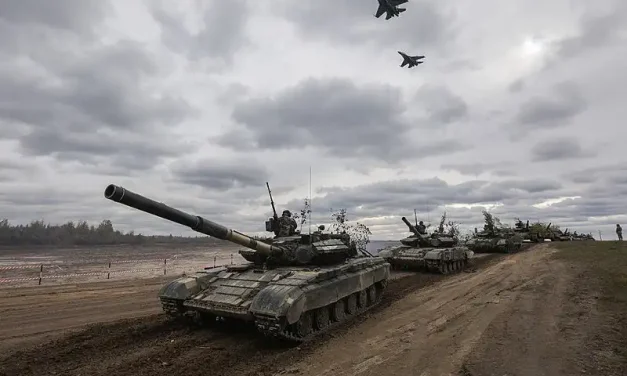
Strategic Council Online - Interview: An expert on West Asia affairs commenting on the reasons for the evacuation of three US military bases in Syria said: The United States is a traditional ally of the Syrian Kurds and through supporting Kurdish autonomy has made efforts and is still making in order to have a place to infiltrate Syria, especially in the oil rich areas; but nevertheless, the Syrian army’s domination on most areas has forced them to end their occupation of three military bases in Deir ez-Zor and al-Hasakah provinces.

In an interview with the website of the Strategic Council on Foreign Relations, Davood Ahmadzadeh said: In the current situation, evacuation of US air bases on Syrian soil is also taking place due to financial costs and failure in the grand military strategy. Because Russia, as one of the main players in Syria, has taken advantage of the historic opportunity to weaken the United States and its allies in returning to their traditional sphere of influence, and Iran has further consolidated its position of cooperation in Syria.

Saying that over the past decade, importance of the US interests in Syria has not changed significantly and its strategic targets have not changed due to an element called the Zionist regime, stressing: With the change in situation of Syria, that is, stability of Bashar Assad’s regime, failure of the Hebrew-Arab and Western belligerent plans, including three main methods of military deterrence, helping allies and peace talks to achieve strategic targets in Syria, has failed.

Referring to the reasons for the American presence on Syrian soil and continuation of such presence despite the difficulties and heavy military costs, he said: If we consider the military intervention in Syria as a puzzle of the US grand strategy in West Asia, it should be said that after the Arab Spring and spread of widespread civil unrest in Syria, the US sought to overthrow Bashar Assad’s government, the close ally of Iran and Russia, and the circle linking Iran to Hezbollah in Lebanon tried to change the internal situation in Syria in favor of the opponents of Assad regime by standing by his traditional allies such as the Zionist regime and Saudi Arabia and even Turkey.

Ahmadzadeh continued: In the meantime, the United States agreed to play a significant role in continuing the tensions by equipping the Takfiri extremist Salafi forces, such as the Sham Front; while the rift on the Arab-Western-Turkish axis against Syria has forced the United States to use the Kurds as an important card to gain concessions as well as maintain a continued military presence in Syria.

According to the expert, given the sensitivity of the Kurdish issue and Turkey’s efforts to suppress any Kurdish separatism near its borders, the United States reacted passively several times during the Trump era regarding the Turkish army’s clashes with Kurdish groups. Turkey, meanwhile, has taken steps to mobilize diplomacy and restore calm to Syria by entering into multilateral talks with Russia and Iran.

Explaining the US reasons for establishing a base on Syrian soil, especially in predominantly Kurdish al-Hasakah and Deir ez-Zor, he said: In this way, the United States sought to maintain its influence in the region, contain Iran, and compete with Russia.

Commenting on those bases and their effectiveness for the United States, Ahmadzadeh said: The heavy military presence and establishment of a base not only did not help the United States and its allies, but on the contrary, doubled the existing tensions.

Stressing that another issue that has been repeatedly raised by the Americans to justify the US military presence on Syrian soil as being maintaining security in the region, the expert noted: Smuggling of Syrian oil and its handover to the extremist opposition groups has worsened the situation.

Ahmadzadeh cited the main consequence of the weakness of the US strategy and withdrawal from Syria, on the one hand, has been the greater distrust of the country’s traditional allies and, on the other hand, strengthening of the positions of allies of the Damascus government.

According to the expert on West Asia affairs, although some U.S. analysts cite the decline in West Asia importance and lack of Washington’s need to regional oil as reasons for the change in its strategy, however, completion of the US withdrawal cycle from Afghanistan to Syria could somehow alleviate US allies’ security concerns.

He continued: This policy on Syria has been interpreted by the Kurds as a betrayal and striking a dagger blow from behind.

He stressed: Undoubtedly, failure of the US strategy to withdraw from the region, while imposing political and military turmoil, has paved the way for increasing presence of regional rivals, and the political geography of the region, especially in Syria, may undergo fundamental changes over time.

Referring to the reluctance of some Arab countries, such as Qatar and the UAE, to negotiate and reconcile with the Syrian central government and participate in its reconstruction, he said: Such issues are among the tangible results of this historic retreat.

The expert on the Middle East affairs, regarding withdrawal of US troops from the region, said: Although the United States has withdrawn its forces from Afghanistan and has made timetables for its withdrawal from Iraq, due to Syria’s strategic position and rivalry with Russia and Iran over US influence in the region, leaving Syria has always faced obstacles.

Ahmadzadeh noted that in the last decade after the US invasion of West Asia, we have seen changes in military strategy and tactics in this geographical area, adding:  Basically, with the arrival of Donald Trump at the White House and the emphasis on the strategy of leaving the Middle East as one of the main pillars of foreign policy, at least in the area of declaration, we have witnessed many ups and downs and contradictions. After him Joe Biden, following a similar strategy to focus on East Asia and a military confrontation with the so-called Chinese-Russian influence, he hastily withdrew from Afghanistan, ending a 20-year US military presence in the country.

According to the expert, on the other hand, with the escalation of military and political challenges in Iraq after the martyrdom of Sardar Soleimani and the targeted attacks of the resistance forces on US military bases, especially Ayn-al-Assad military base, Washington, being in an unprecedented strategic dilemma, announced a specific timeframe for leaving Iraq.
0 Comments

Submit a Comment

Your email address will not be published. Required fields are marked *

LATEST CONTENT

Consequences of Declining Trust in the Judiciary in Europe

SCFRonline – Opinion: The increase in public distrust of the French judicial system, which in recent surveys has reached approximately two-thirds of citizens, should be analyzed within a framework broader than temporary dissatisfaction or an emotional reaction to a particular criminal case.

Iran’s Potential Levers of Power

SCFRonline– Opinion: Iran’s geopolitical power is not limited solely to oil and the Strait of Hormuz; the unintended emergence of disruptions in the future global food and energy security chains can also demonstrate Iran’s strategic importance.

The Inseparability of the Lebanese Front from the Axis of Resistance

SCFR Online–Opinion: By providing an extensive network of social, healthcare, educational, and post-war reconstruction services, Hezbollah has established a strong social base for itself among Lebanon’s Shiites and Sunnis, and even beyond that, among other segments of Lebanese society, including Christians. Hezbollah has never been an external actor imposed upon Lebanon; rather, it is a phenomenon fundamentally born out of the occupation and crimes of the Zionist regime and itself influenced by popular resistance.

The Increasing Efforts of the Zionist Regime to Redefine Borders and the Regional Order and Its Consequences

SCFR Online– Opinion: Security and military developments in the region over recent months indicate that the ongoing crises and wars in Gaza, southern Lebanon, and parts of Syrian territory encompass broader dimensions of geopolitical and geostrategic transformations. In this context, the increased military presence and control of the Zionist regime over parts of the territories of these areas, along with proposals regarding the creation of buffer zones or even the expansion of security borders, have raised serious questions about the future of the regional order and its consequences for the countries of West Asia.

Loading

Últimas publicaciones

Consequences of Declining Trust in the Judiciary in Europe

SCFRonline – Opinion: The increase in public distrust of the French judicial system, which in recent surveys has reached approximately two-thirds of citizens, should be analyzed within a framework broader than temporary dissatisfaction or an emotional reaction to a particular criminal case.

Iran’s Potential Levers of Power

SCFRonline– Opinion: Iran’s geopolitical power is not limited solely to oil and the Strait of Hormuz; the unintended emergence of disruptions in the future global food and energy security chains can also demonstrate Iran’s strategic importance.

The Inseparability of the Lebanese Front from the Axis of Resistance

SCFR Online–Opinion: By providing an extensive network of social, healthcare, educational, and post-war reconstruction services, Hezbollah has established a strong social base for itself among Lebanon’s Shiites and Sunnis, and even beyond that, among other segments of Lebanese society, including Christians. Hezbollah has never been an external actor imposed upon Lebanon; rather, it is a phenomenon fundamentally born out of the occupation and crimes of the Zionist regime and itself influenced by popular resistance.

The Increasing Efforts of the Zionist Regime to Redefine Borders and the Regional Order and Its Consequences

SCFR Online– Opinion: Security and military developments in the region over recent months indicate that the ongoing crises and wars in Gaza, southern Lebanon, and parts of Syrian territory encompass broader dimensions of geopolitical and geostrategic transformations. In this context, the increased military presence and control of the Zionist regime over parts of the territories of these areas, along with proposals regarding the creation of buffer zones or even the expansion of security borders, have raised serious questions about the future of the regional order and its consequences for the countries of West Asia.

Loading

DERNIER CONTENU

Consequences of Declining Trust in the Judiciary in Europe

SCFRonline – Opinion: The increase in public distrust of the French judicial system, which in recent surveys has reached approximately two-thirds of citizens, should be analyzed within a framework broader than temporary dissatisfaction or an emotional reaction to a particular criminal case.

Iran’s Potential Levers of Power

SCFRonline– Opinion: Iran’s geopolitical power is not limited solely to oil and the Strait of Hormuz; the unintended emergence of disruptions in the future global food and energy security chains can also demonstrate Iran’s strategic importance.

The Inseparability of the Lebanese Front from the Axis of Resistance

SCFR Online–Opinion: By providing an extensive network of social, healthcare, educational, and post-war reconstruction services, Hezbollah has established a strong social base for itself among Lebanon’s Shiites and Sunnis, and even beyond that, among other segments of Lebanese society, including Christians. Hezbollah has never been an external actor imposed upon Lebanon; rather, it is a phenomenon fundamentally born out of the occupation and crimes of the Zionist regime and itself influenced by popular resistance.

The Increasing Efforts of the Zionist Regime to Redefine Borders and the Regional Order and Its Consequences

SCFR Online– Opinion: Security and military developments in the region over recent months indicate that the ongoing crises and wars in Gaza, southern Lebanon, and parts of Syrian territory encompass broader dimensions of geopolitical and geostrategic transformations. In this context, the increased military presence and control of the Zionist regime over parts of the territories of these areas, along with proposals regarding the creation of buffer zones or even the expansion of security borders, have raised serious questions about the future of the regional order and its consequences for the countries of West Asia.

Loading

DERNIER CONTENU

Consequences of Declining Trust in the Judiciary in Europe

SCFRonline – Opinion: The increase in public distrust of the French judicial system, which in recent surveys has reached approximately two-thirds of citizens, should be analyzed within a framework broader than temporary dissatisfaction or an emotional reaction to a particular criminal case.

Iran’s Potential Levers of Power

SCFRonline– Opinion: Iran’s geopolitical power is not limited solely to oil and the Strait of Hormuz; the unintended emergence of disruptions in the future global food and energy security chains can also demonstrate Iran’s strategic importance.

The Inseparability of the Lebanese Front from the Axis of Resistance

SCFR Online–Opinion: By providing an extensive network of social, healthcare, educational, and post-war reconstruction services, Hezbollah has established a strong social base for itself among Lebanon’s Shiites and Sunnis, and even beyond that, among other segments of Lebanese society, including Christians. Hezbollah has never been an external actor imposed upon Lebanon; rather, it is a phenomenon fundamentally born out of the occupation and crimes of the Zionist regime and itself influenced by popular resistance.

The Increasing Efforts of the Zionist Regime to Redefine Borders and the Regional Order and Its Consequences

SCFR Online– Opinion: Security and military developments in the region over recent months indicate that the ongoing crises and wars in Gaza, southern Lebanon, and parts of Syrian territory encompass broader dimensions of geopolitical and geostrategic transformations. In this context, the increased military presence and control of the Zionist regime over parts of the territories of these areas, along with proposals regarding the creation of buffer zones or even the expansion of security borders, have raised serious questions about the future of the regional order and its consequences for the countries of West Asia.

Loading

DERNIER CONTENU

Consequences of Declining Trust in the Judiciary in Europe

SCFRonline – Opinion: The increase in public distrust of the French judicial system, which in recent surveys has reached approximately two-thirds of citizens, should be analyzed within a framework broader than temporary dissatisfaction or an emotional reaction to a particular criminal case.

Iran’s Potential Levers of Power

SCFRonline– Opinion: Iran’s geopolitical power is not limited solely to oil and the Strait of Hormuz; the unintended emergence of disruptions in the future global food and energy security chains can also demonstrate Iran’s strategic importance.

The Inseparability of the Lebanese Front from the Axis of Resistance

SCFR Online–Opinion: By providing an extensive network of social, healthcare, educational, and post-war reconstruction services, Hezbollah has established a strong social base for itself among Lebanon’s Shiites and Sunnis, and even beyond that, among other segments of Lebanese society, including Christians. Hezbollah has never been an external actor imposed upon Lebanon; rather, it is a phenomenon fundamentally born out of the occupation and crimes of the Zionist regime and itself influenced by popular resistance.

The Increasing Efforts of the Zionist Regime to Redefine Borders and the Regional Order and Its Consequences

SCFR Online– Opinion: Security and military developments in the region over recent months indicate that the ongoing crises and wars in Gaza, southern Lebanon, and parts of Syrian territory encompass broader dimensions of geopolitical and geostrategic transformations. In this context, the increased military presence and control of the Zionist regime over parts of the territories of these areas, along with proposals regarding the creation of buffer zones or even the expansion of security borders, have raised serious questions about the future of the regional order and its consequences for the countries of West Asia.

Loading