Europe’s Defense Independence in Coma

Strategic Council Online - Interview: An expert on Europe affairs said that the Ukraine war was entirely in NATO’s favor and in favor of reviving the US hegemony at the expense of Europe, adding: Given that Europe has numerous immediate economic and security challenges and is faced with the dreadful prospect of a significant drop in Russian gas exports and high energy prices, the possibility of moving towards mechanisms for defense independence has been brought severely under questioned.

Sohrab Saadeddin, in an interview with the website of the Strategic Council on Foreign Relations, referred to the statements made by the EU foreign policy chief, who said that the EU should take responsibility for its security and form a European military force, noting: Under the current situation, due to the immediate threat that Europe feels from Russia, the idea of independent European defense mechanisms has been somewhat diminished, and all the activities that European countries are now focusing on are in line with being more useful and effective partners in NATO.

Referring to previous remarks by the French president criticizing the cohesion of NATO members and the use of the term “NATO brain death”, he said: This interpretation was also highly criticized by the Europeans in the same period, because if at the same time Europe was trying to converge in building the defense-military field, it would take time; therefore the reality is that in the short and medium term, Europe is still dependent on NATO for security.

The analyst of Europe affairs continued: In recent years, there has been a lot of debate among security experts in Europe and the United States that NATO’s philosophy of existence has been called into question because it has no common enemy. The discussion focused on the attention to “non-traditional security threats” similar to that of cyber threats, and they were considered as fronts to strengthen convergence among NATO members.

Referring to Trump’s political and economic pressures on Europe to force them to increase military spending to strengthen NATO, Saadeddin added: The United States welcomes the increase in European defense spending, but France interprets this increase as secession from NATO and in this regard, it proposed special defense mechanisms. France stressed that now that the United States was taking less responsibility for military defense and Europe had to pay for it, strategic independence would be created at the expense of Europe’s defense mechanisms.

He noted the growing concern in Europe over Ukraine’s situation and vulnerabilities in Europe since 2014 and added: European countries tried to establish an independent European military defense strategy with the aim of British participation and preserving in the European security system, but at that time they did not face the classic military urgent threat; but now the situation has changed and Russia is seeking territorial development by attacking an independent European country, and the Europeans are also witnessing Russia’s electronic war against themselves; therefore, immediate threats prevent Europe from pursuing long-term plans.

Ukraine war in favor of reviving US hegemony at Europe expense

Referring to the efforts of European countries to strengthen their military-defense budgets in order to be more useful partners in NATO, the expert on Europe affairs said: The Ukraine war in this situation ended entirely in NATO’s favor and in the interest of reviving US hegemony at the expense of Europe and even because of differences of interest among European countries, much of the cooperation between European countries in the defense and military industries has diminished.

Saadeddin, saying that in the medium term, NATO will continue to be Europe’s axis and pillar of security, and it is unlikely that they will be able to achieve a proper convergence in the direction of an independent military and defense and still rely on the United States, added: In the current context, even European public opinion is more inclined to common defense with the United States and does not think about European defense independence.

Doubts about European defense independence

He described the consequences of the Coronavirus outbreak on the European economy and the problems that European countries are experiencing due to economic issues, and stressed: The European economy in the current situation needs to inject money to repair those injuries. Alongside those issues, Europe faces the dreadful prospect of a significant drop in Russian gas exports and high energy prices; therefore, the possibility of Europe moving towards defense independence has been brought severely under question.

The analyst of Europe affairs continued: The only option available to Europeans is ‘temporary top-level interim coalitions’, such as the French-led naval mission in the Mediterranean. A coalition in which several European countries that have common interests in a field, by combining their military capabilities and defining a common mission, act in the interests of Europe; but there is no such thing as a “European army” or a “European Defense Union”.

Recalling that the European Union was essentially the “European Defense Union” and that its founders did not seek the “Coal and Steel Union”, about the consequences of Europe’s inability to create an independent European defense mechanism Saadeddin said: We do not seem to see much difference in Europe. In all these years, Europe’s security dependence on the United States has, in many cases, been defined under the interests of the United States and the existence of those differences over Afghanistan and Syria was obvious.

Referring to the remarks of the EU foreign policy chief that we should learn from the war in Ukraine and European armies cannot last more than two weeks in a war like Ukraine, because their ammunition will run out, he added: The Europeans are now arguing that if they cannot have a military convergence and a powerful army like the United States, at least they should not be passive so that what happened with regard to Afghanistan will happen again. Europe is now seeking to play a greater role in the US military missions and to assist in areas such as intelligence and cyber warfare.

0 Comments

Submit a Comment

Your email address will not be published. Required fields are marked *

LATEST CONTENT

Increasing criticism of the extensive Zionist lobby network

SCFR Online – Opinion: An examination of the mechanisms of the Israeli regime’s influence in the United States depicts a complex picture of shared interests, strategic dependencies, and the limitations of this relationship.

Realities of the Tripartite Makkah Pact

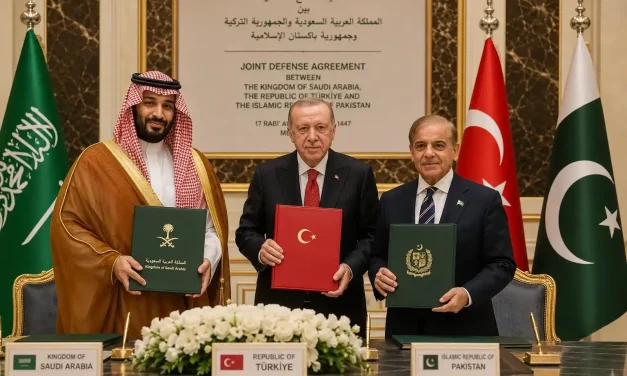
SCFR Online – Interview: The signing of the Makkah agreement between Saudi Arabia, Pakistan, and Turkey has raised questions about the future of the region’s security structure and the position of these countries in West Asian equations. Can this agreement become a genuine collective defense mechanism, or does it have more of a political and deterrent function than creating new military capacity?

Strategic Implications of the Reduction of US Weapons Stockpiles

SCFR Online – Opinion: The continuation of the US war against Iran, in addition to increasing operational costs, has called into question the actual capacity of the American arsenal to simultaneously fulfill security commitments on multiple fronts; an issue that affects deterrence, defense production capacity, and Washington’s resource prioritization.

The Formation of a New Order in Relations Between Powers

SCFR Online – Opinion: The Russia-Ukraine war and the war of the United States and the Israeli regime against Iran have been formed with different objectives and actors, but field and political developments indicate that they are not entirely separate from one another.

An Analysis of the Makkah Defense Pact

SCFR Online – Opinion: On Friday, August 7, the heads of state of three countries – Saudi Arabia, Turkey, and Pakistan – signed a text under the title “Makkah Joint Defense Agreement.”

Dimensions and challenges of the initiative to revive the Hejaz Railway

Strategic Council Online – Note: The initiative to revive the Hejaz Railway, beyond being a transportation project, constitutes an attempt to redefine geopolitics, the economy, and Turkey’s regional position; however, its realization appears to face significant financial, security, and institutional challenges.

Loading

Últimas publicaciones

Increasing criticism of the extensive Zionist lobby network

SCFR Online – Opinion: An examination of the mechanisms of the Israeli regime’s influence in the United States depicts a complex picture of shared interests, strategic dependencies, and the limitations of this relationship.

Realities of the Tripartite Makkah Pact

SCFR Online – Interview: The signing of the Makkah agreement between Saudi Arabia, Pakistan, and Turkey has raised questions about the future of the region’s security structure and the position of these countries in West Asian equations. Can this agreement become a genuine collective defense mechanism, or does it have more of a political and deterrent function than creating new military capacity?

Strategic Implications of the Reduction of US Weapons Stockpiles

SCFR Online – Opinion: The continuation of the US war against Iran, in addition to increasing operational costs, has called into question the actual capacity of the American arsenal to simultaneously fulfill security commitments on multiple fronts; an issue that affects deterrence, defense production capacity, and Washington’s resource prioritization.

The Formation of a New Order in Relations Between Powers

SCFR Online – Opinion: The Russia-Ukraine war and the war of the United States and the Israeli regime against Iran have been formed with different objectives and actors, but field and political developments indicate that they are not entirely separate from one another.

An Analysis of the Makkah Defense Pact

SCFR Online – Opinion: On Friday, August 7, the heads of state of three countries – Saudi Arabia, Turkey, and Pakistan – signed a text under the title “Makkah Joint Defense Agreement.”

Dimensions and challenges of the initiative to revive the Hejaz Railway

Strategic Council Online – Note: The initiative to revive the Hejaz Railway, beyond being a transportation project, constitutes an attempt to redefine geopolitics, the economy, and Turkey’s regional position; however, its realization appears to face significant financial, security, and institutional challenges.

Loading

DERNIER CONTENU

Increasing criticism of the extensive Zionist lobby network

SCFR Online – Opinion: An examination of the mechanisms of the Israeli regime’s influence in the United States depicts a complex picture of shared interests, strategic dependencies, and the limitations of this relationship.

Realities of the Tripartite Makkah Pact

SCFR Online – Interview: The signing of the Makkah agreement between Saudi Arabia, Pakistan, and Turkey has raised questions about the future of the region’s security structure and the position of these countries in West Asian equations. Can this agreement become a genuine collective defense mechanism, or does it have more of a political and deterrent function than creating new military capacity?

Strategic Implications of the Reduction of US Weapons Stockpiles

SCFR Online – Opinion: The continuation of the US war against Iran, in addition to increasing operational costs, has called into question the actual capacity of the American arsenal to simultaneously fulfill security commitments on multiple fronts; an issue that affects deterrence, defense production capacity, and Washington’s resource prioritization.

The Formation of a New Order in Relations Between Powers

SCFR Online – Opinion: The Russia-Ukraine war and the war of the United States and the Israeli regime against Iran have been formed with different objectives and actors, but field and political developments indicate that they are not entirely separate from one another.

An Analysis of the Makkah Defense Pact

SCFR Online – Opinion: On Friday, August 7, the heads of state of three countries – Saudi Arabia, Turkey, and Pakistan – signed a text under the title “Makkah Joint Defense Agreement.”

Dimensions and challenges of the initiative to revive the Hejaz Railway

Strategic Council Online – Note: The initiative to revive the Hejaz Railway, beyond being a transportation project, constitutes an attempt to redefine geopolitics, the economy, and Turkey’s regional position; however, its realization appears to face significant financial, security, and institutional challenges.

Loading

DERNIER CONTENU

Increasing criticism of the extensive Zionist lobby network

SCFR Online – Opinion: An examination of the mechanisms of the Israeli regime’s influence in the United States depicts a complex picture of shared interests, strategic dependencies, and the limitations of this relationship.

Realities of the Tripartite Makkah Pact

SCFR Online – Interview: The signing of the Makkah agreement between Saudi Arabia, Pakistan, and Turkey has raised questions about the future of the region’s security structure and the position of these countries in West Asian equations. Can this agreement become a genuine collective defense mechanism, or does it have more of a political and deterrent function than creating new military capacity?

Strategic Implications of the Reduction of US Weapons Stockpiles

SCFR Online – Opinion: The continuation of the US war against Iran, in addition to increasing operational costs, has called into question the actual capacity of the American arsenal to simultaneously fulfill security commitments on multiple fronts; an issue that affects deterrence, defense production capacity, and Washington’s resource prioritization.

The Formation of a New Order in Relations Between Powers

SCFR Online – Opinion: The Russia-Ukraine war and the war of the United States and the Israeli regime against Iran have been formed with different objectives and actors, but field and political developments indicate that they are not entirely separate from one another.

An Analysis of the Makkah Defense Pact

SCFR Online – Opinion: On Friday, August 7, the heads of state of three countries – Saudi Arabia, Turkey, and Pakistan – signed a text under the title “Makkah Joint Defense Agreement.”

Dimensions and challenges of the initiative to revive the Hejaz Railway

Strategic Council Online – Note: The initiative to revive the Hejaz Railway, beyond being a transportation project, constitutes an attempt to redefine geopolitics, the economy, and Turkey’s regional position; however, its realization appears to face significant financial, security, and institutional challenges.

Loading

DERNIER CONTENU

Increasing criticism of the extensive Zionist lobby network

SCFR Online – Opinion: An examination of the mechanisms of the Israeli regime’s influence in the United States depicts a complex picture of shared interests, strategic dependencies, and the limitations of this relationship.

Realities of the Tripartite Makkah Pact

SCFR Online – Interview: The signing of the Makkah agreement between Saudi Arabia, Pakistan, and Turkey has raised questions about the future of the region’s security structure and the position of these countries in West Asian equations. Can this agreement become a genuine collective defense mechanism, or does it have more of a political and deterrent function than creating new military capacity?

Strategic Implications of the Reduction of US Weapons Stockpiles

SCFR Online – Opinion: The continuation of the US war against Iran, in addition to increasing operational costs, has called into question the actual capacity of the American arsenal to simultaneously fulfill security commitments on multiple fronts; an issue that affects deterrence, defense production capacity, and Washington’s resource prioritization.

The Formation of a New Order in Relations Between Powers

SCFR Online – Opinion: The Russia-Ukraine war and the war of the United States and the Israeli regime against Iran have been formed with different objectives and actors, but field and political developments indicate that they are not entirely separate from one another.

An Analysis of the Makkah Defense Pact

SCFR Online – Opinion: On Friday, August 7, the heads of state of three countries – Saudi Arabia, Turkey, and Pakistan – signed a text under the title “Makkah Joint Defense Agreement.”

Dimensions and challenges of the initiative to revive the Hejaz Railway

Strategic Council Online – Note: The initiative to revive the Hejaz Railway, beyond being a transportation project, constitutes an attempt to redefine geopolitics, the economy, and Turkey’s regional position; however, its realization appears to face significant financial, security, and institutional challenges.

Loading