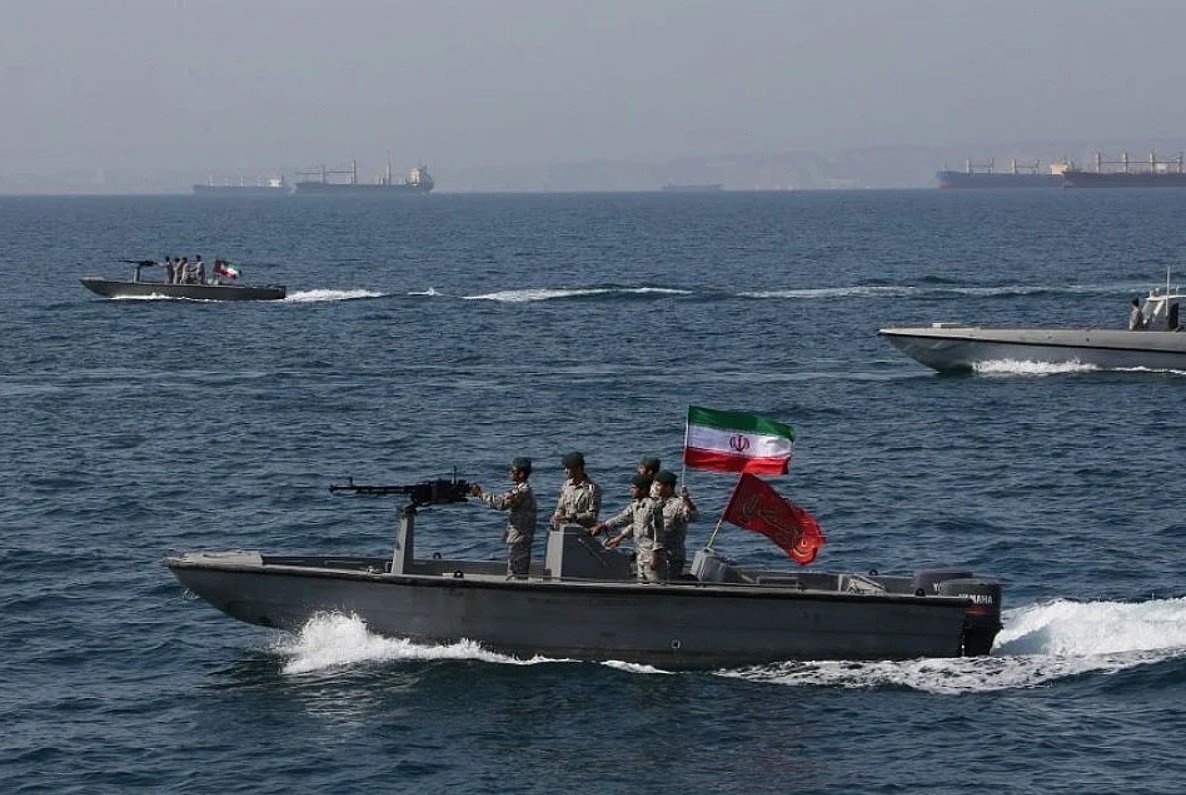
Providing an Opportunity for Creating a New Order in the Persian Gulf Region

SCFR Online – Opinion: The countries of the Persian Gulf have reached the conclusion that sustainable security will be achieved not through confrontation, but through regional engagement with Iran.

Mohammad Besharati – Regional Affairs Expert

The End of an Era: The Erosion of America’s Security Umbrella

For decades, the security structure of the Persian Gulf was based on a simple principle: that regional security must be ensured from outside. Extensive US military presence, permanent bases, the Fifth Fleet, and bilateral security agreements were all part of a structure consolidated after the Cold War. During that era, many Persian Gulf Arab states defined their stability through complete alignment with Washington’s military power. However, developments in recent years have demonstrated that this model no longer possesses its former efficacy. America’s hasty withdrawal from Afghanistan, its inability to manage regional crises, and Washington’s hesitation to enter costly new wars have gradually called into question the traditional confidence of Arab allies in the US security umbrella.

Recent wars and direct tensions between Iran and the United States have also revealed the reality that, in the event of a major crisis, regional governments will be the first victims of instability. Attacks on energy infrastructure, concerns about the insecurity of shipping lanes, and the potential closure of the Strait of Hormuz have reminded Persian Gulf Arab countries that security cannot simply be imported.

Consequently, a form of strategic rethinking has emerged in the region’s capitals. This rethinking has gradually reinforced the idea that sustainable stability will only be possible when the region’s main actors, including Iran, are part of the security equation.

From Confrontation to Strengthening Neighborhood Engagement

Relations between Iran and some Persian Gulf Arab countries were, for years, influenced by geopolitical rivalries, proxy wars, and security distrust. However, the reality of geography has always imposed an undeniable truth: Iran is neither removable nor ignorable.

This very reality has gradually altered the trajectory of regional policy. The Tehran-Riyadh dialogues, the restoration of diplomatic relations, and increased political and security contacts between Iran and Arab countries are clear indicators of this transformation. Even countries that, until a few years ago, pursued a policy of completely containing Iran, now speak of the necessity of managing differences and preventing widespread tensions.

In this context, Persian Gulf countries have realized that the cost of permanent confrontation with Iran is far greater than the cost of controlled engagement with Tehran. Energy security, foreign investment, major economic projects, and development prospects all require a stable environment—an environment that will not be achievable without a form of regional understanding. In reality, the region is gradually moving from the logic of “coalition against Iran” toward the logic of “coexistence with Iran.” This transformation has emerged not from complete trust, but from a form of geopolitical realism.

The Entry of New Actors and the Decline of Exclusive Western Hegemony

Concurrently with the diminishing role of the United States in the region’s security equations, other actors have also expanded their presence in the Persian Gulf. China is now not only an economic partner but has gradually become an influential political and security actor in the region. Beijing’s mediation in bringing Tehran and Riyadh closer was a clear indication of this transformation. Asian powers, unlike the West’s traditional approach, strive not to limit their relations to a single actor. They cooperate simultaneously with Iran, Saudi Arabia, the UAE, and other regional countries—a matter that has created greater appeal for Persian Gulf governments.

Alongside China, certain regional actors are also assuming new roles. Recent developments have shown that even countries such as Pakistan are seeking to play a more active role in the Persian Gulf’s security equations. This trend indicates that the region’s security order is no longer defined solely around Washington.

In such an environment, Persian Gulf Arab governments are seeking to diversify their security and economic partners. They do not wish to tie their future solely to the variable decisions of the White House and prefer to establish a balanced network of regional and international relations.

Iran’s Role in Shaping the New Regional Order

Current developments have created an important opportunity for Iran. Tehran can now leverage its geopolitical position, energy capacities, and regional influence to play a more active role in shaping the new security order. Of course, this path is not simple or without challenges. Historical distrusts still exist, and geopolitical competitions have not been entirely eliminated. However, the fundamental difference between today and the past is that all regional actors have clearly understood the cost of widespread instability.

Even certain Western circles have now accepted that any sustainable agreement between the United States and Iran will not endure without considering the concerns and interests of Persian Gulf countries. This reality indicates that regional security can no longer be designed and imposed solely from outside. If Iran can strike a balance between deterrence and diplomacy, it will possess the capacity to transform from a merely security-focused actor into one of the principal architects of the new regional order.

The Persian Gulf is passing through a historical transition. The security order that for decades was based on America’s absolute presence and confrontation with Iran is gradually giving way to a more complex and region-centered model. Regional countries have realized that sustainable security is achieved not through absolute dependence on foreign powers, but through engagement, managing differences, and accepting geopolitical realities. At the center of these realities, Iran stands as an irremovable actor.

The new security structure of the Persian Gulf has not yet fully taken shape, but its overall direction appears clear. The region is moving toward an order in which strengthening neighborhood diplomacy with Iran will gain greater importance than unilateral dependence on the United States.

0 Comments

LATEST CONTENT

Temporary China–U.S. Trade Truce in the Shadow of Fundamental Distrust

SCFR Online – Opinion: The recent visit of the President of the United States to China is significant from various aspects; because China is recognized as the world’s second-largest economic power and a growing economy. The Chinese are also advancing in various fields, including the space sector, artificial intelligence, and military industries; to the extent that in the military sector, whereas they previously lacked an aircraft carrier, they now possess their third aircraft carrier. On the other hand, the United States, as a superpower, has always regarded China as its rival and continues to view it as such today.

Iran’s Success in the Narrative Battle in Cyberspace

SCFR Online – Opinion: In the war between Iran and the United States, the main battlefield was not defined solely in the military domain; rather, the battle of narratives in cyberspace—particularly through memes—reached a decisive level.

The Global Energy Shock Situation and Future Scenarios

SCFR Online – Opinion: Only one month after the beginning of the Ramadan War, maritime traffic in the Strait of Hormuz decreased dramatically, with Bloomberg announcing a reduction of 103 vessels; Brent oil prices rose by more than 50 percent, and gasoline prices in the United States increased by 31.4 percent. Additionally, benchmark gas prices in Europe showed a 73.4 percent increase.

Al-Zaydi’s Selection as Prime Minister, The Beginning of a New Chapter in Iraq

SCFR Online – Note: After approximately five months of political deadlock and institutional confusion, Ali al-Zaydi has finally been selected as Iraq’s Prime Minister. Al-Zaydi’s selection as Prime Minister represents a positive sign of the completion of the government formation process and the beginning of a new phase in Iraqi politics and governance. The emergence of a young, technocratic figure from the third generation of politicians—in a context where the country has been administered by traditional figures for decades—revives hope that Iraq may perhaps distance itself from the repetitive cycle of crises and experience a new path of stability, efficiency, and regional convergence.

Loading

Últimas publicaciones

Temporary China–U.S. Trade Truce in the Shadow of Fundamental Distrust

SCFR Online – Opinion: The recent visit of the President of the United States to China is significant from various aspects; because China is recognized as the world’s second-largest economic power and a growing economy. The Chinese are also advancing in various fields, including the space sector, artificial intelligence, and military industries; to the extent that in the military sector, whereas they previously lacked an aircraft carrier, they now possess their third aircraft carrier. On the other hand, the United States, as a superpower, has always regarded China as its rival and continues to view it as such today.

Iran’s Success in the Narrative Battle in Cyberspace

SCFR Online – Opinion: In the war between Iran and the United States, the main battlefield was not defined solely in the military domain; rather, the battle of narratives in cyberspace—particularly through memes—reached a decisive level.

The Global Energy Shock Situation and Future Scenarios

SCFR Online – Opinion: Only one month after the beginning of the Ramadan War, maritime traffic in the Strait of Hormuz decreased dramatically, with Bloomberg announcing a reduction of 103 vessels; Brent oil prices rose by more than 50 percent, and gasoline prices in the United States increased by 31.4 percent. Additionally, benchmark gas prices in Europe showed a 73.4 percent increase.

Al-Zaydi’s Selection as Prime Minister, The Beginning of a New Chapter in Iraq

SCFR Online – Note: After approximately five months of political deadlock and institutional confusion, Ali al-Zaydi has finally been selected as Iraq’s Prime Minister. Al-Zaydi’s selection as Prime Minister represents a positive sign of the completion of the government formation process and the beginning of a new phase in Iraqi politics and governance. The emergence of a young, technocratic figure from the third generation of politicians—in a context where the country has been administered by traditional figures for decades—revives hope that Iraq may perhaps distance itself from the repetitive cycle of crises and experience a new path of stability, efficiency, and regional convergence.

Loading

DERNIER CONTENU

Temporary China–U.S. Trade Truce in the Shadow of Fundamental Distrust

SCFR Online – Opinion: The recent visit of the President of the United States to China is significant from various aspects; because China is recognized as the world’s second-largest economic power and a growing economy. The Chinese are also advancing in various fields, including the space sector, artificial intelligence, and military industries; to the extent that in the military sector, whereas they previously lacked an aircraft carrier, they now possess their third aircraft carrier. On the other hand, the United States, as a superpower, has always regarded China as its rival and continues to view it as such today.

Iran’s Success in the Narrative Battle in Cyberspace

SCFR Online – Opinion: In the war between Iran and the United States, the main battlefield was not defined solely in the military domain; rather, the battle of narratives in cyberspace—particularly through memes—reached a decisive level.

The Global Energy Shock Situation and Future Scenarios

SCFR Online – Opinion: Only one month after the beginning of the Ramadan War, maritime traffic in the Strait of Hormuz decreased dramatically, with Bloomberg announcing a reduction of 103 vessels; Brent oil prices rose by more than 50 percent, and gasoline prices in the United States increased by 31.4 percent. Additionally, benchmark gas prices in Europe showed a 73.4 percent increase.

Al-Zaydi’s Selection as Prime Minister, The Beginning of a New Chapter in Iraq

SCFR Online – Note: After approximately five months of political deadlock and institutional confusion, Ali al-Zaydi has finally been selected as Iraq’s Prime Minister. Al-Zaydi’s selection as Prime Minister represents a positive sign of the completion of the government formation process and the beginning of a new phase in Iraqi politics and governance. The emergence of a young, technocratic figure from the third generation of politicians—in a context where the country has been administered by traditional figures for decades—revives hope that Iraq may perhaps distance itself from the repetitive cycle of crises and experience a new path of stability, efficiency, and regional convergence.

Loading

DERNIER CONTENU

Temporary China–U.S. Trade Truce in the Shadow of Fundamental Distrust

SCFR Online – Opinion: The recent visit of the President of the United States to China is significant from various aspects; because China is recognized as the world’s second-largest economic power and a growing economy. The Chinese are also advancing in various fields, including the space sector, artificial intelligence, and military industries; to the extent that in the military sector, whereas they previously lacked an aircraft carrier, they now possess their third aircraft carrier. On the other hand, the United States, as a superpower, has always regarded China as its rival and continues to view it as such today.

Iran’s Success in the Narrative Battle in Cyberspace

SCFR Online – Opinion: In the war between Iran and the United States, the main battlefield was not defined solely in the military domain; rather, the battle of narratives in cyberspace—particularly through memes—reached a decisive level.

The Global Energy Shock Situation and Future Scenarios

SCFR Online – Opinion: Only one month after the beginning of the Ramadan War, maritime traffic in the Strait of Hormuz decreased dramatically, with Bloomberg announcing a reduction of 103 vessels; Brent oil prices rose by more than 50 percent, and gasoline prices in the United States increased by 31.4 percent. Additionally, benchmark gas prices in Europe showed a 73.4 percent increase.

Al-Zaydi’s Selection as Prime Minister, The Beginning of a New Chapter in Iraq

SCFR Online – Note: After approximately five months of political deadlock and institutional confusion, Ali al-Zaydi has finally been selected as Iraq’s Prime Minister. Al-Zaydi’s selection as Prime Minister represents a positive sign of the completion of the government formation process and the beginning of a new phase in Iraqi politics and governance. The emergence of a young, technocratic figure from the third generation of politicians—in a context where the country has been administered by traditional figures for decades—revives hope that Iraq may perhaps distance itself from the repetitive cycle of crises and experience a new path of stability, efficiency, and regional convergence.

Loading

DERNIER CONTENU

Temporary China–U.S. Trade Truce in the Shadow of Fundamental Distrust

SCFR Online – Opinion: The recent visit of the President of the United States to China is significant from various aspects; because China is recognized as the world’s second-largest economic power and a growing economy. The Chinese are also advancing in various fields, including the space sector, artificial intelligence, and military industries; to the extent that in the military sector, whereas they previously lacked an aircraft carrier, they now possess their third aircraft carrier. On the other hand, the United States, as a superpower, has always regarded China as its rival and continues to view it as such today.

Iran’s Success in the Narrative Battle in Cyberspace

SCFR Online – Opinion: In the war between Iran and the United States, the main battlefield was not defined solely in the military domain; rather, the battle of narratives in cyberspace—particularly through memes—reached a decisive level.

The Global Energy Shock Situation and Future Scenarios

SCFR Online – Opinion: Only one month after the beginning of the Ramadan War, maritime traffic in the Strait of Hormuz decreased dramatically, with Bloomberg announcing a reduction of 103 vessels; Brent oil prices rose by more than 50 percent, and gasoline prices in the United States increased by 31.4 percent. Additionally, benchmark gas prices in Europe showed a 73.4 percent increase.

Al-Zaydi’s Selection as Prime Minister, The Beginning of a New Chapter in Iraq

SCFR Online – Note: After approximately five months of political deadlock and institutional confusion, Ali al-Zaydi has finally been selected as Iraq’s Prime Minister. Al-Zaydi’s selection as Prime Minister represents a positive sign of the completion of the government formation process and the beginning of a new phase in Iraqi politics and governance. The emergence of a young, technocratic figure from the third generation of politicians—in a context where the country has been administered by traditional figures for decades—revives hope that Iraq may perhaps distance itself from the repetitive cycle of crises and experience a new path of stability, efficiency, and regional convergence.

Loading





