
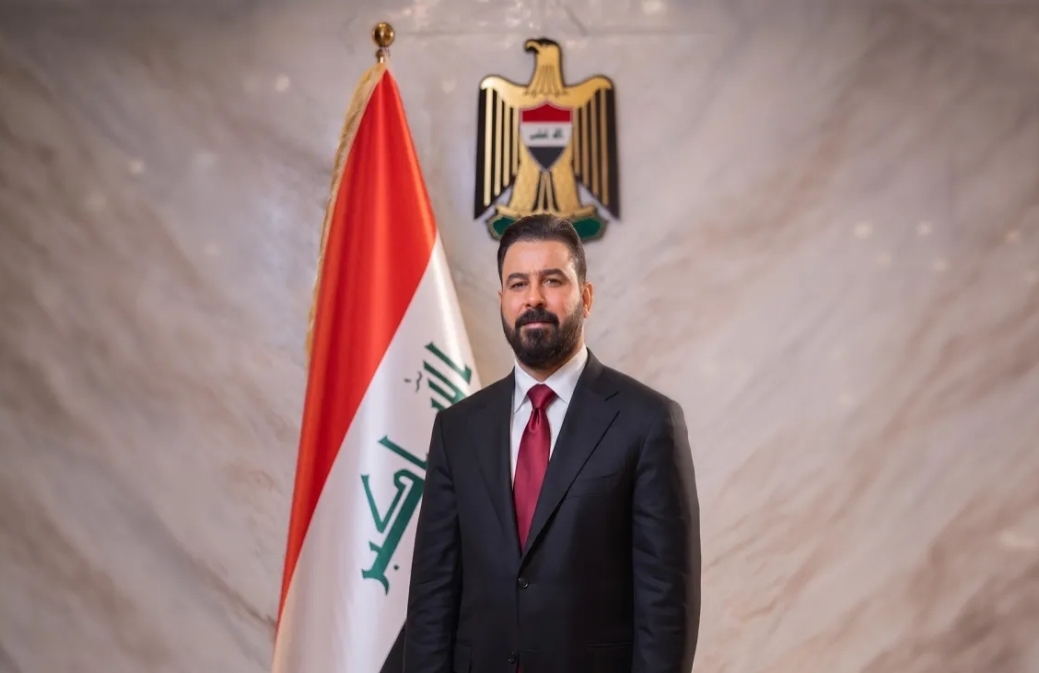
Barsam Mohammadi – Regional Affairs Expert
Ali al-Zaydi, born in 1986, is the youngest individual to be selected as Prime Minister in Iraq. The absence of an extensive executive or political background may initially be perceived as a weakness; however, under Iraq’s current circumstances, this very characteristic—if unity, cohesion, and political stability are strengthened around the young Prime Minister—will certainly transform into a strength.
Reviewing the process of al-Zaydi’s selection, it is evident that he is neither the product of complex power brokerage nor the outcome of the heavy legacy of partisan and factional conflicts. Consequently, his selection by 11 out of 12 officials of the Coordination Framework indicates that a segment of the ruling political class has come to believe in the necessity of rethinking the governance model and utilizing a new, young generation of managers at senior levels—a generation that, rather than being entangled in erosive competitions, serves as a source of pragmatic, development-oriented, and efficiency-based thinking.
The meaningful message from the United States to the new Prime Minister has opened a new space for diplomatic maneuvering before him. Instead of hastening political positioning, the United States is awaiting an assessment of his trajectory and approach. This initial distancing could place al-Zaydi in a position to calibrate Iraq’s foreign policy based on national interests rather than merely external pressures from the United States. Of course, should he succeed in maintaining a balance between strategic relations with Iran and considerations of cooperation with the United States, he will be capable of steering Iraq from a polarized, analytically draining environment toward a balanced, calm, and predictable foreign policy—a policy that many regional and global partners would welcome.
In the domestic arena, al-Zaydi has pledged to move the power structure away from excessive concentration in the Prime Minister’s office and, by distributing authorities and defining deputy positions without direct executive influence, enhance opportunities for participation and coordination among various factions. This approach, while reducing political tensions, could prevent the premiership from becoming a focal point of power struggles and enable more stable governance. Experience from recent years has demonstrated that intense concentration of power in a single node has rendered Iraq vulnerable to external pressures, economic crises, and internal disputes.
The central axis of al-Zaydi’s programs is economic reform and infrastructure improvement. With a background in financial, banking, and legal sectors, he is well aware of the complexities of Iraq’s inefficient economic structure—which is heavily dependent on oil revenues and vulnerable to international fluctuations. His focus on empowering human resources, combating administrative corruption, attracting investment, and developing regional economic corridors, if implemented, could open a new path toward economic diversification and job creation.
Although realizing these programs requires political stability and inter-institutional coordination, the selection of a cross-factional figure like al-Zaydi provides the opportunity for reforms to advance with less resistance and greater consensus.
At a deeper level, however, al-Zaydi’s selection reflects the triumph of a form of national will that seeks to exit historical dependencies on foreign countries and enter a phase of independent decision-making. The political forces that supported him essentially believed that the country requires a figure capable of withstanding external pressures without being driven toward isolation or adventurism.
From the perspective of his supporters, al-Zaydi is a politician who understands the significance of Iraq’s strategic depth, regional linkages, and the necessity of cooperation with neighboring countries, and who can view regional security not as an arena of competition but as a network of shared interests.
The new government’s regional policy focuses on strengthening relations with neighbors, reducing dependence on extra-regional powers, and expanding economic and energy cooperation. This approach could contribute both to Iraq’s internal stability and to its gradual return to its natural position in regional equations. Strengthening security and popular institutions—which have played important roles in combating terrorism and preserving Iraq’s stability and can serve as the main pillars of a national power structure—is among al-Zaydi’s other priorities.
Despite this positive outlook, challenges should not be overlooked. Iraq remains an arena for the activities of groups and factions whose interests are not aligned with tranquility, unity, and stability. Some of these forces, due to connections with destructive external agendas or dependence on past rentier structures, may attempt to disrupt the reform process by creating episodic crises or exerting economic pressures. Nevertheless, the support of a significant segment of political forces, social backing, and relative alignment of regional actors with al-Zaydi could provide a foundation for the new government to pursue its programs with greater stability.
In summary, Ali al-Zaydi’s selection can be regarded as a turning point in Iraq’s transition trajectory. If the new government can strike a balance among public demands, domestic political exigencies, external pressures, and the requirements of economic development, Iraq will enter a phase in which opportunities outweigh threats—a phase in which the country can reclaim its regional position and distance itself from the heavy shadow of past crises. Iraq now stands on the threshold of experiencing a new period; a period that, while not easy, could inaugurate a new chapter of stability, efficiency, and growth.









0 Comments