
Hamid Khoshayand – Regional Affairs Expert
Polling data and media reports indicate an approximately 80-percent gap between Republicans and Democrats in their perspectives on the Zionist regime. While Republicans continue to defend an approach of unconditional support for Tel Aviv, an expanding spectrum of politicians and political activists within the Democratic Party has expressed concern regarding the consequences of such support. This shift has progressed to the extent that, in certain electoral districts, full defense of the Zionist regime’s policies no longer constitutes political capital but has instead become a political liability for Democratic candidates.
A clear example of this transformation was observed in recent Senate votes concerning military aid to the Zionist regime. In these votes, 36 Democratic senators supported a proposal to halt the sale of heavy bombs to Tel Aviv, while 40 additional senators backed a measure to prevent the delivery of armored bulldozers to this regime’s military—equipment that has been used to demolish residential areas in Gaza and Lebanon.
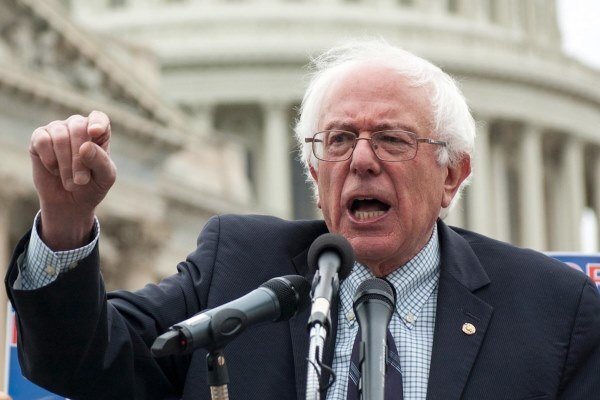
Although these proposals ultimately failed to pass due to unified Republican opposition, the significant increase in the number of Democratic senators critical of the Israeli regime compared to previous years indicates that the US political landscape is undergoing change. According to Bernie Sanders, when initial efforts to restrict military aid to the Zionist regime began, only 11 senators supported them; today, that figure has risen to approximately 40. In other words, the number of US senators currently supporting arms embargoes against Benjamin Netanyahu’s hardline cabinet has doubled over the past two years.
It appears that the Democratic Party is compelled to reconstruct its historical anti-war identity and undertake a fundamental reassessment of US foreign policy. Many figures within this party believe that continuing unconditional support for the Zionist regime and entering elective wars—such as confrontation with Iran—has incurred heavy political costs and has profoundly influenced the party’s prevailing electoral calculus.
Nevertheless, the rise in criticism of the Zionist regime in the United States—and even in certain European countries—does not necessarily signify a fundamental transformation in the nature of Washington-Tel Aviv relations. A considerable portion of this criticism pertains less to the very existence of the Zionist regime or the strategic alliance with it, and more to this regime’s policies over the past three years and their regional repercussions. Put differently, these objections relate to the policies of the Israeli regime rather than to the regime itself as a strategic US ally.
The extensive war in Gaza, repeated attacks on Lebanon, and recent warmongering against Iran are among the factors that have ignited public outrage in the United States and Europe. These developments have not only resulted in widespread human casualties and humanitarian crises but have also heightened the risk of a regional war escalating. Moreover, they have entailed significant economic and security consequences for the world, including for the United States itself.
Indeed, one of the central axes of criticism within the United States concerns the costs that the Zionist regime’s tension-generating policies in the region impose on the US economy and this country’s global standing. Several Democratic senators have similarly warned that US entanglement in regional wars without a clear strategy—including confrontation with Iran—not only fails to enhance this country’s security but also creates conditions for costly and protracted economic, political, and other crises.
From this perspective, the intra-party divide within the Democratic Party can be viewed as reflecting a broader reassessment of America’s global role and the limits of military power deployment. Certain political currents within this party believe that US foreign policy should rely less on military intervention and unlimited support for regional allies, and should instead focus more on diplomacy, crisis management, and de-escalation.
Despite these developments, the reality remains that the United States continues to be the most important international supporter of the Israeli regime. Annual military aid, extensive security cooperation, and Washington’s political backing in international institutions still constitute the primary pillars of the Zionist regime’s security. Even many critics of Tel Aviv’s policies within the Democratic Party emphasize the necessity of preserving the Zionist regime’s security, although they contend that such support should be accompanied by limitations and conditions.
Consequently, what is observed today in US domestic politics reflects, more than a complete rupture in Washington-Tel Aviv relations, a heightened sensitivity to the costs and consequences of the Zionist regime’s regional policies. Public outrage over wars and humanitarian crises, concerns about regional instability, and associated economic pressures have all contributed to shaping this critical atmosphere.
Should this trend continue, it is probable that the Zionist regime will become an increasingly contentious issue in US electoral competitions. In this regard, the 2028 elections could represent a turning point at which Democratic candidates, seeking to attract youth and liberal voters, will be compelled to adopt more explicit positions regarding the Zionist regime’s policies. This evolution could render the US decision-making structure concerning West Asia more unstable and unpredictable, potentially influencing Washington’s long-term approach to regional developments. Nevertheless, within the foreseeable horizon, the strategic alliance between the United States and the Zionist regime will remain intact—an alliance that, although now facing new challenges and questions, still constitutes one of the fixed pillars of US foreign policy.









0 Comments