The Reasons for the Failure of America’s Maximum Pressure Strategy Against Iran

SCFR Online – Note: While the objective of the US maximum pressure strategy was to compel Iran's submission, the failure of this strategy—beyond economic and geopolitical challenges—has led Washington to seek a pathway for exiting this situation.

Mehdi Damirchi – Expert on International Affairs

The Ambiguous Outlook of Maximum Pressure

The maximum pressure strategy, designed by the United States against Iran, was predicated on the assumption that a combination of paralyzing economic sanctions, diplomatic isolation, and military threats would ultimately force Iran’s decision-making structure to retreat. This strategy was not merely a sanctions policy but rather an attempt to redefine the balance of power in West Asia. However, experiences in recent years have demonstrated that this assumption was based on an incomplete understanding of the nature of Iran’s state and society. Contrary to Washington’s expectations, severe economic pressures not only failed to produce political collapse but instead led to the formation of a form of “resistance economy” and new mechanisms for circumventing sanctions.

Analyses from the “Responsible Statecraft” institute indicate that even within the United States, serious concerns have emerged regarding the economic and strategic costs of continuing confrontation with Iran. Estimates concerning the tens of billions of dollars in war costs and their impact on energy markets have gradually led a segment of American elites to conclude that maximum pressure has, more than exhausting Iran, drawn the United States and its allies into a cycle of escalating costs.

War Economy and the Failure of Washington’s Calculations

One of the most significant reasons for the failure of maximum pressure is the transformation in the nature of war economies in the contemporary world. In the past, economic sanctions could place a country in a vulnerable position by completely cutting off its access to global markets. However, in today’s multipolar world, such isolation has become considerably more difficult.

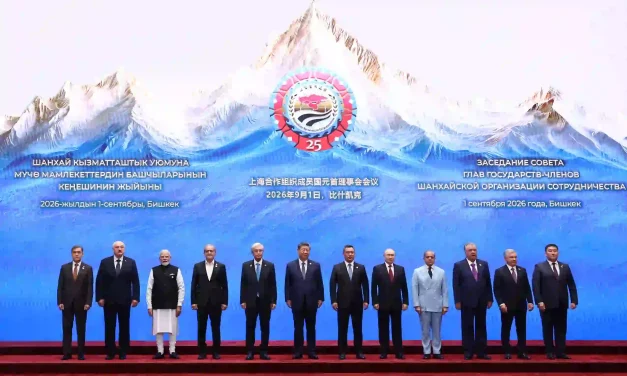
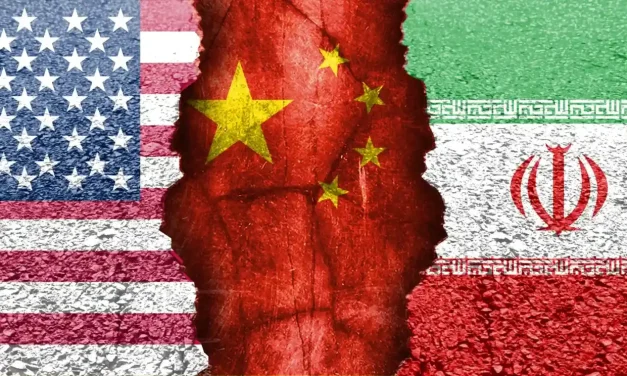
Reports published regarding the reactivation of China’s counter-sanctions regulations against US sanctions on Iranian oil indicate that Beijing is unwilling to sacrifice its energy and geopolitical interests for Washington’s unilateral policies. This development signifies an important shift in the structure of the global economy, wherein America’s capacity to impose complete isolation faces serious limitations.

Alongside China, many other actors have also reached the conclusion that America’s extensive use of sanctions could transform into a threat against their own economic security. This very issue has contributed to the formation of parallel financial and commercial mechanisms. Moreover, the global economy cannot withstand an extensive war against Iran. Analyses presented in analytical programs and media regarding the Strait of Hormuz indicate that any disruption in this strategic chokepoint could lead to an unprecedented shock in energy markets. Such a situation would place not only European and Asian economies but also the US economy under pressure.

Iran’s Deterrence and the Questioning of US Resolve

Maximum pressure could have succeeded only if accompanied by absolute US military and psychological superiority. However, recent developments have demonstrated that Iran has managed to establish a form of multi-layered deterrence that has significantly increased the costs of any direct confrontation. This deterrence is not merely military but encompasses economic, geopolitical, and psychological dimensions as well. The capacity to influence regional energy security, the capability for asymmetric responses, and a network of regional relations have transformed the military option for Washington into a costly and unpredictable choice.

The White House’s efforts to find an exit from the crisis indicate that even within America’s political structure, there exists profound concern regarding entry into a war of attrition. The experiences of Iraq and Afghanistan remain alive in America’s strategic memory, and this very factor has reduced the inclination to enter a new, extensive conflict.

In this context, Iran has also demonstrated its capacity to transform economic pressure into a component of its resistance strategy. Although sanctions have imposed heavy costs on Iran’s economy, they have failed to shatter the country’s political and security resolve. This issue constitutes one of the most important reasons for the gradual erosion of the maximum pressure strategy.

The Limitations of Sanctions Power in the New Era

The failure of maximum pressure must also be analyzed within the broader context of transformations in the international system. Today’s world is no longer the unipolar world of the 1990s, in which America could impose its will upon others without cost. The emergence of powers such as China and the increasing inclination of regional actors toward strategic autonomy have created new limitations for Washington. Even in Europe, tendencies have emerged for distancing from certain confrontational US policies. This trend has gained particular significance in the domains of economics and energy.

Under such circumstances, sanctions are no longer an absolute and determinative instrument but have transformed into a tool whose excessive use could lead to the erosion of America’s credibility and influence. Many countries are now attempting to reduce their dependence on the Washington-dominated financial system, and this very issue limits the long-term effectiveness of sanctions.

The maximum pressure strategy against Iran was formulated on the assumption that a combination of economic sanctions and military threats could shatter Tehran’s political will. However, developments in recent years have demonstrated that this strategy not only failed to achieve its primary objectives but also generated escalating costs for the United States and its allies.

The war economy, transformations in the international system, and the formation of Iran’s multi-layered deterrence have caused Washington to gradually distance itself from the logic of absolute pressure and seek a pathway for managing and exiting the crisis. This transformation is not merely a tactical defeat but rather an indicator of America’s increasingly limited power in a world moving toward multipolarity.

0 Comments

LATEST CONTENT

The Impact of West Asian Developments on the Ukraine War

SCFR Online – Note: Vladimir Putin, President of Russia, recently announced—more than four years after the commencement of military aggression against Ukraine—that he believes the conflict between Russia and Ukraine is drawing to a close.

Temporary China–U.S. Trade Truce in the Shadow of Fundamental Distrust

SCFR Online – Opinion: The recent visit of the President of the United States to China is significant from various aspects; because China is recognized as the world’s second-largest economic power and a growing economy. The Chinese are also advancing in various fields, including the space sector, artificial intelligence, and military industries; to the extent that in the military sector, whereas they previously lacked an aircraft carrier, they now possess their third aircraft carrier. On the other hand, the United States, as a superpower, has always regarded China as its rival and continues to view it as such today.

Iran’s Success in the Narrative Battle in Cyberspace

SCFR Online – Opinion: In the war between Iran and the United States, the main battlefield was not defined solely in the military domain; rather, the battle of narratives in cyberspace—particularly through memes—reached a decisive level.

The Global Energy Shock Situation and Future Scenarios

SCFR Online – Opinion: Only one month after the beginning of the Ramadan War, maritime traffic in the Strait of Hormuz decreased dramatically, with Bloomberg announcing a reduction of 103 vessels; Brent oil prices rose by more than 50 percent, and gasoline prices in the United States increased by 31.4 percent. Additionally, benchmark gas prices in Europe showed a 73.4 percent increase.

Loading

Últimas publicaciones

The Impact of West Asian Developments on the Ukraine War

SCFR Online – Note: Vladimir Putin, President of Russia, recently announced—more than four years after the commencement of military aggression against Ukraine—that he believes the conflict between Russia and Ukraine is drawing to a close.

Temporary China–U.S. Trade Truce in the Shadow of Fundamental Distrust

SCFR Online – Opinion: The recent visit of the President of the United States to China is significant from various aspects; because China is recognized as the world’s second-largest economic power and a growing economy. The Chinese are also advancing in various fields, including the space sector, artificial intelligence, and military industries; to the extent that in the military sector, whereas they previously lacked an aircraft carrier, they now possess their third aircraft carrier. On the other hand, the United States, as a superpower, has always regarded China as its rival and continues to view it as such today.

Iran’s Success in the Narrative Battle in Cyberspace

SCFR Online – Opinion: In the war between Iran and the United States, the main battlefield was not defined solely in the military domain; rather, the battle of narratives in cyberspace—particularly through memes—reached a decisive level.

The Global Energy Shock Situation and Future Scenarios

SCFR Online – Opinion: Only one month after the beginning of the Ramadan War, maritime traffic in the Strait of Hormuz decreased dramatically, with Bloomberg announcing a reduction of 103 vessels; Brent oil prices rose by more than 50 percent, and gasoline prices in the United States increased by 31.4 percent. Additionally, benchmark gas prices in Europe showed a 73.4 percent increase.

Loading

DERNIER CONTENU

The Impact of West Asian Developments on the Ukraine War

SCFR Online – Note: Vladimir Putin, President of Russia, recently announced—more than four years after the commencement of military aggression against Ukraine—that he believes the conflict between Russia and Ukraine is drawing to a close.

Temporary China–U.S. Trade Truce in the Shadow of Fundamental Distrust

SCFR Online – Opinion: The recent visit of the President of the United States to China is significant from various aspects; because China is recognized as the world’s second-largest economic power and a growing economy. The Chinese are also advancing in various fields, including the space sector, artificial intelligence, and military industries; to the extent that in the military sector, whereas they previously lacked an aircraft carrier, they now possess their third aircraft carrier. On the other hand, the United States, as a superpower, has always regarded China as its rival and continues to view it as such today.

Iran’s Success in the Narrative Battle in Cyberspace

SCFR Online – Opinion: In the war between Iran and the United States, the main battlefield was not defined solely in the military domain; rather, the battle of narratives in cyberspace—particularly through memes—reached a decisive level.

The Global Energy Shock Situation and Future Scenarios

SCFR Online – Opinion: Only one month after the beginning of the Ramadan War, maritime traffic in the Strait of Hormuz decreased dramatically, with Bloomberg announcing a reduction of 103 vessels; Brent oil prices rose by more than 50 percent, and gasoline prices in the United States increased by 31.4 percent. Additionally, benchmark gas prices in Europe showed a 73.4 percent increase.

Loading

DERNIER CONTENU

The Impact of West Asian Developments on the Ukraine War

SCFR Online – Note: Vladimir Putin, President of Russia, recently announced—more than four years after the commencement of military aggression against Ukraine—that he believes the conflict between Russia and Ukraine is drawing to a close.

Temporary China–U.S. Trade Truce in the Shadow of Fundamental Distrust

SCFR Online – Opinion: The recent visit of the President of the United States to China is significant from various aspects; because China is recognized as the world’s second-largest economic power and a growing economy. The Chinese are also advancing in various fields, including the space sector, artificial intelligence, and military industries; to the extent that in the military sector, whereas they previously lacked an aircraft carrier, they now possess their third aircraft carrier. On the other hand, the United States, as a superpower, has always regarded China as its rival and continues to view it as such today.

Iran’s Success in the Narrative Battle in Cyberspace

SCFR Online – Opinion: In the war between Iran and the United States, the main battlefield was not defined solely in the military domain; rather, the battle of narratives in cyberspace—particularly through memes—reached a decisive level.

The Global Energy Shock Situation and Future Scenarios

SCFR Online – Opinion: Only one month after the beginning of the Ramadan War, maritime traffic in the Strait of Hormuz decreased dramatically, with Bloomberg announcing a reduction of 103 vessels; Brent oil prices rose by more than 50 percent, and gasoline prices in the United States increased by 31.4 percent. Additionally, benchmark gas prices in Europe showed a 73.4 percent increase.

Loading

DERNIER CONTENU

The Impact of West Asian Developments on the Ukraine War

SCFR Online – Note: Vladimir Putin, President of Russia, recently announced—more than four years after the commencement of military aggression against Ukraine—that he believes the conflict between Russia and Ukraine is drawing to a close.

Temporary China–U.S. Trade Truce in the Shadow of Fundamental Distrust

SCFR Online – Opinion: The recent visit of the President of the United States to China is significant from various aspects; because China is recognized as the world’s second-largest economic power and a growing economy. The Chinese are also advancing in various fields, including the space sector, artificial intelligence, and military industries; to the extent that in the military sector, whereas they previously lacked an aircraft carrier, they now possess their third aircraft carrier. On the other hand, the United States, as a superpower, has always regarded China as its rival and continues to view it as such today.

Iran’s Success in the Narrative Battle in Cyberspace

SCFR Online – Opinion: In the war between Iran and the United States, the main battlefield was not defined solely in the military domain; rather, the battle of narratives in cyberspace—particularly through memes—reached a decisive level.

The Global Energy Shock Situation and Future Scenarios

SCFR Online – Opinion: Only one month after the beginning of the Ramadan War, maritime traffic in the Strait of Hormuz decreased dramatically, with Bloomberg announcing a reduction of 103 vessels; Brent oil prices rose by more than 50 percent, and gasoline prices in the United States increased by 31.4 percent. Additionally, benchmark gas prices in Europe showed a 73.4 percent increase.

Loading