
Saman Saedi – Expert on regional affairs
The Trump Peace Plan; Ceasefire or Colonial Trusteeship?
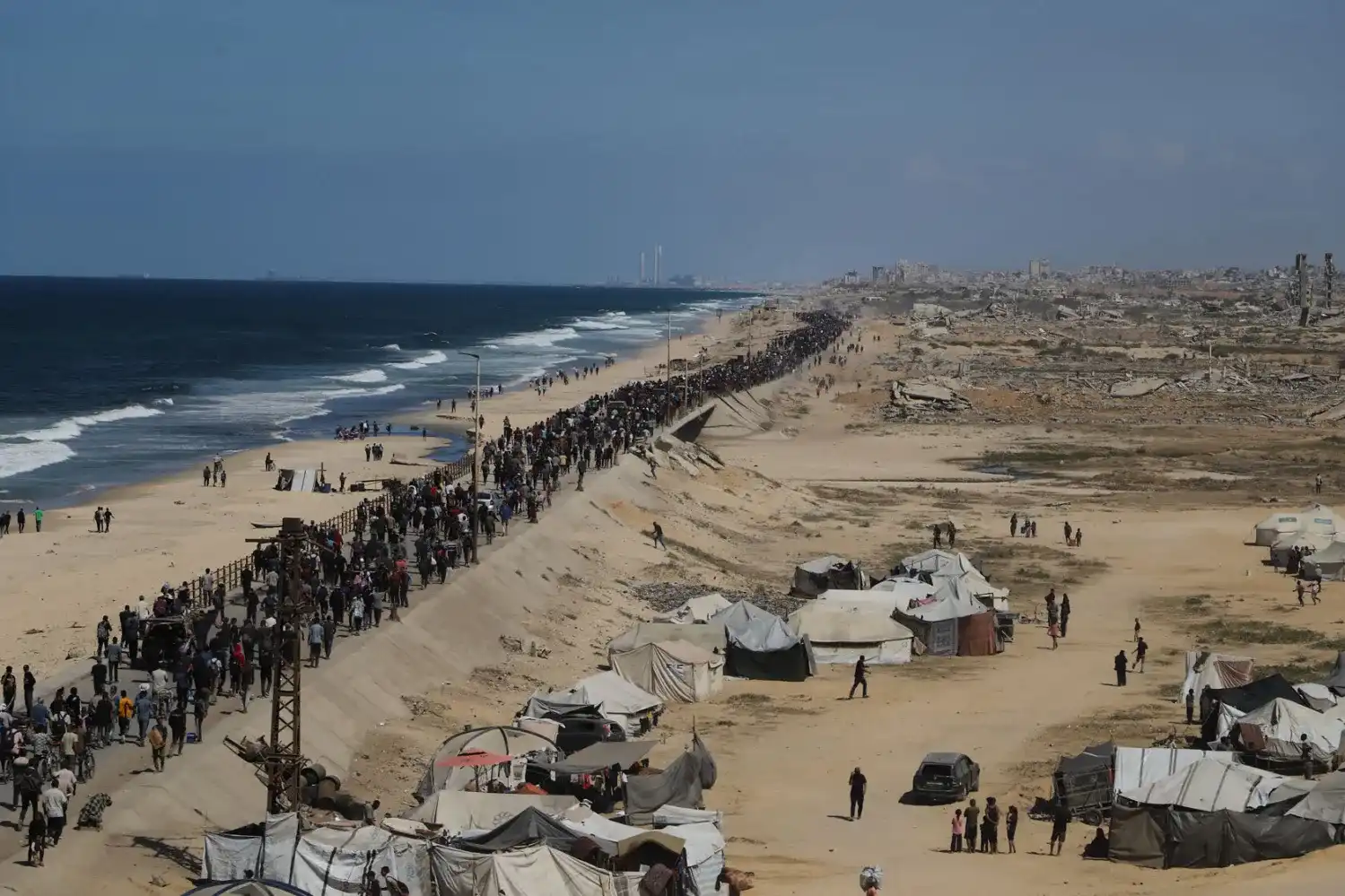
In late July 2026, Donald Trump announced what he called a “historic agreement” for the “complete disarmament” of Hamas and all armed groups in Gaza. According to published details of the plan, Hamas is to hand over its weapons to a Palestinian National Committee under international supervision. Subsequently, an international stabilization force of five thousand soldiers, commanded by an American general, will serve as a buffer between Palestinians and withdrawing Zionist units. The civilian administration of Gaza will also be entrusted to the National Committee for the Administration of Gaza; a technocratic body designed without Hamas’s presence or any electoral origin.
However, two fundamental realities were overlooked in this announcement. First, the Zionist regime did not accept this roadmap. Second, Palestinian groups emphasize that they will not lay down their arms until an unconditional military withdrawal by the Zionist regime is guaranteed.
Analysts at Foreign Policy In Focus, a subsidiary of the American think tank Institute for Policy Studies, consider this plan not a “peace roadmap” but a “colonial trusteeship plan” in which Palestinians lose their right to self-determination. Unlike the declaratory frameworks of the Oslo and Camp David accords, which, although flawed, at least ostensibly depicted state-building as the ultimate goal, the 2026 plan is completely silent on Palestinian sovereignty.
According to a report by the Zionist Begin-Sadat Center for Strategic Studies, the October 2025 ceasefire based on Trump’s 20-article plan and UN Security Council Resolution 2803, although it created a relatively stable situation in areas under the Zionist regime’s control, has faced a deep diplomatic stalemate in implementing subsequent stages. Hamas refuses to disarm due to the Zionists’ breach of faith, and the Zionist regime is unwilling to withdraw to the new security line.
From Hamas’s Cognitive Victory to the Increasing Erosion of the Zionist Regime’s International Image
Hamas’s stance on peace presents a dual picture. On one hand, the movement, through the publication of two booklets in January 2024 and December 2025, has emphasized its “cognitive victory.” Hamas highlights achievements such as the increasing erosion of the Zionist regime’s international image, intensified sanctions, shifts in American public opinion, and the escalation or expansion of international legal actions against Zionist officials.
On the other hand, the 2026 Palestinian elections are being held within a framework that deliberately excludes Hamas and Islamic Jihad from the democratic process. These elections are designed as a mechanism to create a new source of political legitimacy no longer based on Hamas’s victory in the 2006 elections.
A report by the British think tank Chatham House in August 2026 presents a different argument. According to this think tank, Hamas’s agreement to disarm is, in fact, an attempt to expose the Zionist regime’s “bluff.” By accepting disarmament, Hamas places the Zionist regime in a difficult position where it must either agree to the formation of a Palestinian state or reveal its actual unwillingness to pursue peace. This report indicates that the dynamics of the negotiations are far more complex than simplistic narratives about Hamas’s “surrender” or “steadfastness.”
Structural Obstacles; from Qatari Influence to Regional Crises
The obstacles to achieving peace in Gaza are not limited to direct disagreements between Hamas and the Zionist regime. Rather, an extensive network of regional actors with differing interests complicates any sustainable solution. Yaakov Amidror, a retired Zionist general considered close to the Zionist regime’s security establishment, has described Qatar as a “negative” country “striving for the destruction of the Zionist regime.” He emphasizes the role of Al Jazeera and Qatar’s substantial investments worldwide to influence supporters against the Zionist regime. These statements indicate that some elements within the Zionist regime’s security establishment view Qatar’s presence in the so-called peace process not as a solution, but as part of the problem.
Developments in Lebanon have also cast a shadow over the Gaza equations. According to a report by the American Stimson think tank, the continuation of the Zionist regime’s interventions in southern Lebanon strengthens Hezbollah’s position in that country. Syria, despite its efforts to stay out of the battlefield, has also been affected by the economic and security consequences of the regional crisis.
Implications of the Continuation of War
The continuation of the current situation in Gaza will have different implications for regional actors. For the Zionist regime, the persistence of the stalemate means increased military costs and continued international pressure. The Zionist regime’s relations with Egypt and Jordan have also become increasingly strained due to the use of water and energy resources as leverage.
Therefore, the outlook for peace in Gaza continues to face serious obstacles. Trump’s plan, despite claims of agreement, has in practice become a one-sided document due to its disregard for Palestinian demands and its rejection by the Zionist regime. The fundamental disagreement over disarmament, Hamas’s political position, and the involvement of regional actors with conflicting interests delay the achievement of any sustainable solution.




0 Comments