

Sareh Bayati – International Affairs Expert
On August 24, 2026, U.S. Treasury Secretary Scott Bessent announced that he would launch “Economic D-Day” operations with the aim of “cutting off every vital economic artery” of the Islamic Republic of Iran. Bessent compared this action to the “D-Day” operation during World War II.
However, an examination of the content of this sanctions package presents a different picture. The announced package includes sanctions against approximately 60 entities in Hong Kong, China, Malaysia, the United Arab Emirates, and Singapore, most of which are shell companies and intermediaries operating in known sectors.
Bessent himself has described the measure as “a warning shot” rather than a deadly economic blow. He also stated that a major financial institution would soon be sanctioned, but immediately explained that he did not want to “blow up the global financial system.” These remarks indicate that Washington is unable to impose genuine maximum pressure on key Chinese entities and major banks, because it is well aware that such action could lead to a full-scale trade war.
The timing of these measures is also noteworthy. As the November 2026 midterm elections approach, the Trump administration needs to demonstrate achievements against Iran. The six-month war, which began with promises of a swift victory, has now turned into a costly deadlock for the United States, while public dissatisfaction in the United States and elsewhere in the world has added to its costs.
Under such circumstances, announcing a high-profile economic operation with an ambitious name can be seen as an attempt to shift the narrative from military failure to “calibrated economic pressure.” Analysts at the Atlantic Council have also confirmed that some in the Washington administration have concluded that “a quick victory through military force is not possible” and are seeking a return to a “sustainable and long-term” approach. However, maintaining this tactical retreat will not be easy for an administration known for impatience and explosive behavior.
The Resilience of Iran’s Economy
Iran’s economy, despite grappling with more than four decades of sanctions and the recent war, has continued to function. Field data indicate that Iran’s financial and commercial networks have responded to changing circumstances with considerable flexibility.
One of Iran’s most important financing channels has been banks in the United Arab Emirates, which, under pressure from Washington, have announced in recent weeks that they will suspend their financial relations with Iran. However, experience has demonstrated that such measures do not result in a complete halt to activities, and when one channel is closed, activities are immediately shifted to another.
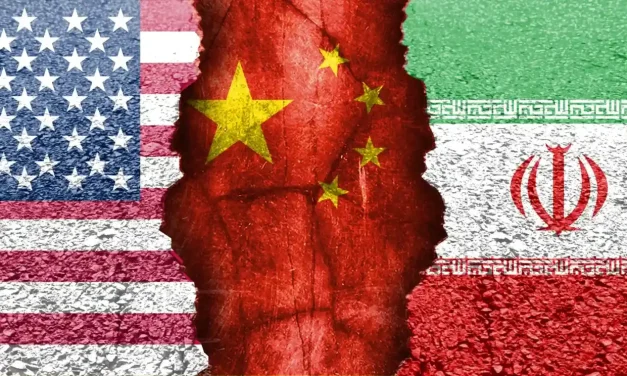
China remains Iran’s largest trading partner and purchases approximately 90 percent of Iran’s oil exports. The United States knows that sanctioning Chinese entities entails accepting the risk of a trade war with Beijing; a risk that Washington, particularly with Xi Jinping’s imminent visit to the United States and the approaching elections, is unwilling to accept.
Iran also has extensive experience in adapting to sanctions and can use various routes to circumvent restrictions. Bessent has also acknowledged that the cooperation of third countries, particularly China, is vital to the success of U.S. operations against Iran. However, evidence indicates that this cooperation is not at a level capable of leading to Iran’s “economic defeat.”
The Costs of Economic War for the United States and Its Allies
Economic war against Iran does not impose costs only on Iran; it has also confronted the U.S. economy and those of its allies with serious challenges. The continued blockade of the Strait of Hormuz and the reduction in Iran’s oil exports have kept global oil prices elevated and contributed to global inflation. The weekly average of oil exports through the Strait of Hormuz during the temporary ceasefire agreement in June and July was approximately 9.8 million barrels per day, demonstrating the market’s sensitivity to any temporary improvement.
Nevertheless, the intensification of sanctions and threats of action against international financial institutions have increased uncertainty and could disrupt global investment and trade. Analysts at the Quincy Institute have warned that a full-scale pressure campaign, although it would harm Iran, would simultaneously damage the U.S. economy and, particularly, the economies of the Persian Gulf states.
The direct costs of the war have also been staggering for the United States. Reports indicate that the U.S. Navy has been forced to draw from its payroll budget to finance wartime operations and postpone nonessential repairs.
This situation has raised serious doubts about Washington’s ability to respond to other crises. Meanwhile, U.S. regional allies such as the United Arab Emirates have found themselves in a difficult predicament: on the one hand, facing the threat of U.S. sanctions and, on the other, confronting Iran’s retaliatory measures. This predicament demonstrates that the “maximum pressure” approach has not only failed to isolate Iran, but has also imposed heavy diplomatic and economic costs on the United States and its network of allies and, in practice, instead of weakening Tehran, has seriously challenged the expected cooperation from the opposing camp.




0 Comments