Escalating Instability in U.S. Foreign Policy After the Midterm Elections?

SCFR Online – Opinion: The results of the U.S. congressional midterm elections have narrowed the Trump administration’s room for political maneuver. However, the consequences for foreign policy appear to depend on the balance among domestic institutions and the degree of confidence placed in the United States by its allies.

Falah Goodarzi – Expert on U.S. Affairs

The Democrats’ victory in both the House of Representatives and the Senate will increase the political and oversight costs facing the Trump administration. However, it should not be interpreted as meaning that authority over foreign policy will immediately shift from the White House to Congress. The U.S. president will continue to exercise control over the executive branch, serve as commander-in-chief of the armed forces, and retain command of a significant portion of the country’s diplomatic and sanctions instruments.

By contrast, Congress’s control over the budget, oversight hearings, investigations, and legislative agenda can increase the costs of implementing certain policies and further narrow the administration’s room for maneuver. Therefore, a change in the composition of Congress does not, in itself, mean that government policies will be halted; rather, it increases the scope for institutional oversight and opposition to those policies. This distinction is also important in the context of Washington’s policy toward Iran, since the elections may alter the political environment but do not automatically diminish the U.S. president’s ability to maintain pressure or pursue the country’s foreign policy.

Accordingly, the impact of the elections should be examined at two levels: first, the administration’s ability to make executive and security-related decisions in the short term; and second, the possibility of consolidating those decisions through budgets, legislation, and long-term agreements. The administration may continue to enjoy considerable freedom of action at the first level, but at the second, it is likely to face greater oversight, institutional resistance, and constraints.

Instability in Commitments?

The results of the midterm elections have given rise to two simultaneous interpretations of the U.S. political situation among the country’s allies. On the one hand, in the view of an Emirati official in Dubai, the elections have been regarded as evidence of the ability of American democracy to correct its course in response to voters’ concerns. On the other hand, this same perspective reflects concerns about fluctuations in Washington’s foreign policy and the durability of its security and trade commitments. In Europe, too, the election results are being followed in terms of their impact on assistance to Ukraine, defense policy, and the future of transatlantic relations.

These two interpretations are not contradictory. The electoral mechanism can create opportunities to correct the course of domestic and foreign policies. However, these same political shifts may generate instability for foreign partners, particularly when security and trade commitments appear to depend more on the preferences of individual leaders than on institutionalized mechanisms. Therefore, the main question for U.S. allies is not merely which party has won the elections, but which aspects of Washington’s policy will endure through changes in government and the composition of Congress.

Congressional Constraints and the Continuation of Trump’s Executive Capacity

Efforts to advance impeachment proceedings against Pete Hegseth, the Secretary of War, have not yet reached a final outcome despite political pressure, and Republicans have ultimately remained behind Trump. This experience demonstrates that the Democrats’ electoral victory alone is insufficient to remove key officials or halt the administration’s war policy. Nevertheless, a change in the composition of Congress could intensify oversight of the administration’s performance and place greater pressure on the White House on issues such as financing foreign operations, arms sales, and the allocation of defense resources.

The election results point to the political erosion of Trumpism and the weakening of the administration’s position. Nevertheless, two years of Trump’s presidential term remain. This matters because even an administration whose electoral support and parliamentary position have been weakened still possesses considerable executive instruments. Consequently, any analysis of U.S. foreign policy must avoid two opposing errors: neither should the electoral defeat be regarded as automatically bringing Trump’s policies to an end, nor should the impact of congressional oversight and other domestic institutions be overlooked.

Different Interpretations of Developments in Washington

The results of the midterm elections have also been assessed in Russian political and analytical circles as a possible indication of a shift in Washington’s approach to the war in Ukraine. Some Russian commentators believe that Moscow should consider the opportunity for negotiations. However, this interpretation should not be regarded as the Kremlin’s official position; rather, it should be understood as reflecting the assessments of a segment of Russian circles. On the other hand, some analysts warn that Beijing may not benefit from a possible meeting between Trump, Xi, and Putin, since an image of major powers deciding the fate of smaller countries could impose reputational costs on China in Europe.

In Asia, too, Trump’s actual conduct, rather than his statements and promises, has become the principal benchmark for assessing U.S. policy. Political changes in Washington may affect the timing, level of engagement, and tone of the foreign policies pursued by U.S. allies in Asia, including New Zealand. In Turkey and Lebanon, reactions to the U.S. elections are also shaped by domestic calculations and each country’s specific interests. These examples demonstrate that U.S. allies and partners do not necessarily respond uniformly to developments in Washington; rather, each adjusts its relations with the incumbent administration in accordance with its own security and political considerations.

Iran and Political Developments in the United States

For Tehran, the election results may create opportunities to increase the political costs of confrontational U.S. policies. However, relying on the assumption that the new Congress will, by itself, prevent the administration from continuing its pressure would constitute a miscalculation. The experience of countries’ foreign relations also demonstrates that relations are more resilient to changes in leadership and political developments when they are based on institutional mechanisms rather than relying solely on personal ties between officials.

From this perspective, Iran’s strategy should neither be overly optimistic about political changes in the United States nor overlook the opportunities arising from them. Rather, it should turn Washington’s domestic fluctuations into an opportunity to advance a durable strategic foreign relations agenda.

The midterm elections have altered the domestic political balance in the United States, but they do not, by themselves, rewrite Washington’s foreign policy strategy. The ultimate impact of this development will depend on Congress’s ability to exercise oversight, the cohesion of the governing party, the reactions of allies, and the administration’s executive decisions. The principal message for other powers is that they are dealing with a United States that continues to possess extensive institutional and military capabilities, but whose policies have become more difficult for partners, rivals, and adversaries to predict. Under such circumstances, a successful strategy should be based not on gambling on electoral changes, but on clear interests, measurable commitments, and durable institutional mechanisms.
0 Comments

LATEST CONTENT

Escalating Instability in U.S. Foreign Policy After the Midterm Elections?

SCFR Online – Opinion: The results of the U.S. congressional midterm elections have narrowed the Trump administration’s room for political maneuver. However, the consequences for foreign policy appear to depend on the balance among domestic institutions and the degree of confidence placed in the United States by its allies.

De-escalation in New Delhi-Baku Relations

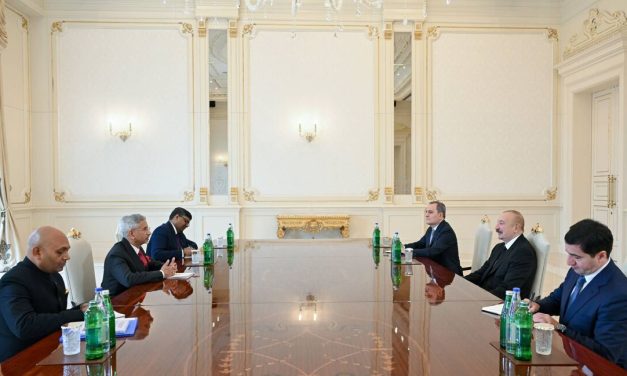
SCFR Online – Opinion: The Indian Foreign Minister’s trip to Baku, following tensions arising from the Republic of Azerbaijan’s support for Pakistan, is considered an effort to manage differences and preserve the two countries’ common interests.

An Analysis of the Establishment of a Joint Arab Command in Kuwait

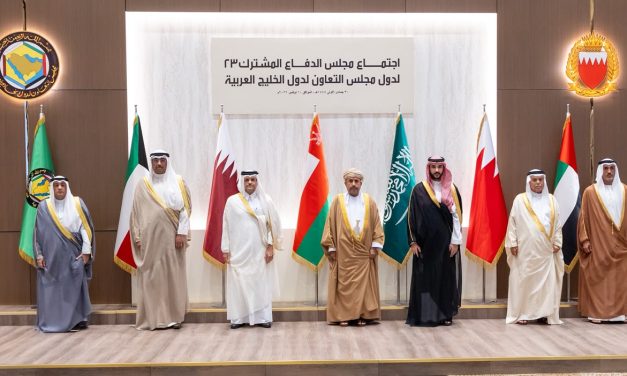
SCFR Online – Opinion: The establishment of a joint Arab command in Kuwait will contribute to sustainable Persian Gulf security only when it distances itself from dependence on America and is based on pursuing the participation and cooperation of all regional countries.

The Impact of the Political Deadlock in the Israeli Regime on the Future of the War Against Iran

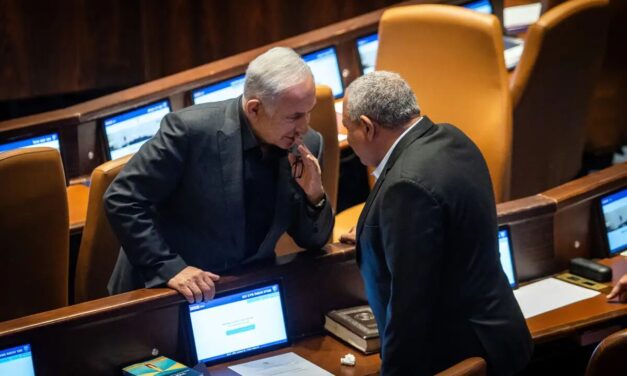
SCFR Online – Opinion: The deadlock in forming a new cabinet in the Israeli regime, simultaneous with the continuation of the atmosphere of military confrontation between Iran and the United States and the relevant diplomatic process, is considered an important variable in West Asian security calculations. Although the political developments of the Israeli regime alone do not determine the fate of the war, they can affect the timing, level, and manner of the continuation of military confrontation.

Loading

Últimas publicaciones

Escalating Instability in U.S. Foreign Policy After the Midterm Elections?

SCFR Online – Opinion: The results of the U.S. congressional midterm elections have narrowed the Trump administration’s room for political maneuver. However, the consequences for foreign policy appear to depend on the balance among domestic institutions and the degree of confidence placed in the United States by its allies.

De-escalation in New Delhi-Baku Relations

SCFR Online – Opinion: The Indian Foreign Minister’s trip to Baku, following tensions arising from the Republic of Azerbaijan’s support for Pakistan, is considered an effort to manage differences and preserve the two countries’ common interests.

An Analysis of the Establishment of a Joint Arab Command in Kuwait

SCFR Online – Opinion: The establishment of a joint Arab command in Kuwait will contribute to sustainable Persian Gulf security only when it distances itself from dependence on America and is based on pursuing the participation and cooperation of all regional countries.

The Impact of the Political Deadlock in the Israeli Regime on the Future of the War Against Iran

SCFR Online – Opinion: The deadlock in forming a new cabinet in the Israeli regime, simultaneous with the continuation of the atmosphere of military confrontation between Iran and the United States and the relevant diplomatic process, is considered an important variable in West Asian security calculations. Although the political developments of the Israeli regime alone do not determine the fate of the war, they can affect the timing, level, and manner of the continuation of military confrontation.

Loading

DERNIER CONTENU

Escalating Instability in U.S. Foreign Policy After the Midterm Elections?

SCFR Online – Opinion: The results of the U.S. congressional midterm elections have narrowed the Trump administration’s room for political maneuver. However, the consequences for foreign policy appear to depend on the balance among domestic institutions and the degree of confidence placed in the United States by its allies.

De-escalation in New Delhi-Baku Relations

SCFR Online – Opinion: The Indian Foreign Minister’s trip to Baku, following tensions arising from the Republic of Azerbaijan’s support for Pakistan, is considered an effort to manage differences and preserve the two countries’ common interests.

An Analysis of the Establishment of a Joint Arab Command in Kuwait

SCFR Online – Opinion: The establishment of a joint Arab command in Kuwait will contribute to sustainable Persian Gulf security only when it distances itself from dependence on America and is based on pursuing the participation and cooperation of all regional countries.

The Impact of the Political Deadlock in the Israeli Regime on the Future of the War Against Iran

SCFR Online – Opinion: The deadlock in forming a new cabinet in the Israeli regime, simultaneous with the continuation of the atmosphere of military confrontation between Iran and the United States and the relevant diplomatic process, is considered an important variable in West Asian security calculations. Although the political developments of the Israeli regime alone do not determine the fate of the war, they can affect the timing, level, and manner of the continuation of military confrontation.

Loading