جدیدترین مطالب

Implications of the US-Saudi Nuclear Agreement

SCFR Online – Opinion: The new US-Saudi nuclear agreement, despite legal and political ambiguities, could alter previous non-proliferation standards in West Asia and intensify nuclear competition, ushering it into a new phase.

An Analysis of Recent Turkey-Israeli Regime Tensions

SCFR Online – Opinion: Recent developments in Syria indicate an intensification of strategic rivalry between Turkey and the Israeli regime, but mutual considerations and the role of the United States have limited the likelihood of direct war.

Increasing criticism of the extensive Zionist lobby network

SCFR Online – Opinion: An examination of the mechanisms of the Israeli regime’s influence in the United States depicts a complex picture of shared interests, strategic dependencies, and the limitations of this relationship.

Realities of the Tripartite Makkah Pact

SCFR Online – Interview: The signing of the Makkah agreement between Saudi Arabia, Pakistan, and Turkey has raised questions about the future of the region’s security structure and the position of these countries in West Asian equations. Can this agreement become a genuine collective defense mechanism, or does it have more of a political and deterrent function than creating new military capacity?

Strategic Implications of the Reduction of US Weapons Stockpiles

SCFR Online – Opinion: The continuation of the US war against Iran, in addition to increasing operational costs, has called into question the actual capacity of the American arsenal to simultaneously fulfill security commitments on multiple fronts; an issue that affects deterrence, defense production capacity, and Washington’s resource prioritization.

The Formation of a New Order in Relations Between Powers

SCFR Online – Opinion: The Russia-Ukraine war and the war of the United States and the Israeli regime against Iran have been formed with different objectives and actors, but field and political developments indicate that they are not entirely separate from one another.

An Analysis of the Makkah Defense Pact

SCFR Online – Opinion: On Friday, August 7, the heads of state of three countries – Saudi Arabia, Turkey, and Pakistan – signed a text under the title “Makkah Joint Defense Agreement.”

Loading

Top News

The Main Objective of Trump’s Proposal for Ukraine-Russia Peace Negotiations

The Main Objective of Trump’s Proposal for Ukraine-Russia Peace Negotiations

Strategic Council Online– Interview: An international affairs expert stated that the agreement between Ukraine and the U.S. on sharing profits from the sale of Ukrainian minerals, along with the shift in the U.S. stance on peace negotiations and the fading of its mediation between Moscow and Kyiv, demonstrates that Trump was never genuinely concerned with peace, termination of the war, or respecting the territorial integrity of nations. Instead, his sole focus has been securing his interests and objectives in Ukraine.

Analysis of the Show Trial of Israeli Military Officials

Analysis of the Show Trial of Israeli Military Officials

Strategic Council Online – Interview: An expert on regional issues referring to the Israeli regime’s move to try two military officials for violating human rights and humanitarian law, said: the Israeli regime officials believe that domestically they should expel Palestinians, and internationally they should make it seem like a standard action, so they are trying to justify the accusations against them by holding show trials.

The necessity of Banning the Zionist Regime from Using  New Technologies in the Gaza War

The necessity of Banning the Zionist Regime from Using New Technologies in the Gaza War

Strategic Council Online – Opinion: Emerging technologies, especially “artificial intelligence,” are dual-purpose enabling phenomena with many potential applications and act like a “double-edged sword.” If they are used sensibly and appropriately, they can serve humanity’s greater comfort and tranquility in all dimensions. Otherwise, they become destructive tools that can add to the problems of life in human societies in a profound and far-reaching way and have “devastating consequences,” especially in wars and armed conflicts;
such as what the Zionist regime is using in the Gaza War.

Reducing US Military Presence in Syria: Motivations and Strategic Consequences

Reducing US Military Presence in Syria: Motivations and Strategic Consequences

Strategic Council Online – Opinion: On April 18, 2025, the US Department of Defense (Pentagon) announced a review of the deployment of its military forces in Syria codenamed “Operation Inherent Resolve”. This plan, designed in line with Donald Trump’s policies to reduce US military presence in the Middle East, will reduce the number of US troops from 10,000 to 1,000 within two months. Although this measure was announced under the pretext of success in weakening ISIS, it is part of a broader US strategy to redefine its mission in the region. However, numerous political and security complexities accompany this decision, the consequences of which will be significant for Syria, the entire region, and even the international system.

EU3 and Iran-US Nuclear Talks

EU3 and Iran-US Nuclear Talks

Strategic Council Online – Guest Opinion: The recent nuclear talks between Iran and the United States, which are being conducted through the mediation of Oman, have once again attracted the attention of the international community. Although in the past, Iran, due to its differences and problems with the United States, mostly entered into negotiations on nuclear issues with European countries, especially the United Kingdom, France and Germany (EU3), in this period, due to specific regional and international conditions, and mainly due to the US President Donald Trump’s approach these negotiations have been limited to Iran and the United States, and other world powers are not present in the talks at the moment.

SCFR’s President: Time Has Come to Leverage Iran’s Soft Power in light of Its Hard Power

SCFR’s President: Time Has Come to Leverage Iran’s Soft Power in light of Its Hard Power

Strategic Council Online – Dr. Seyed Kamal Kharrazi, President of Iran’s Strategic Council on Foreign Relations (SCFR), addressed the Persian Gulf National Day conference hosted by the Persian Gulf Studies Institute, highlighting Iran’s defense achievements. He stated, “Today, our nation stands as a powerful country, and no one dares to violate its sovereignty, and even others acknowledge this strength.”

Perspectives on India-Pakistan Water Crisis

Perspectives on India-Pakistan Water Crisis

Strategic Council Online – Opinion: On April 25, 2025, a terrorist incident occurred in the Pahalgam region of the disputed region of Jammu and Kashmir. The Indian government immediately blamed Pakistan-backed Kashmiri groups for the incident.

Analysis of Latest Developments in the West Bank

Analysis of Latest Developments in the West Bank

Strategic Council Online – Interview: A senior analyst on Palestinian issues said: The occupied West Bank is once again witnessing increasing tensions. According to Anadolu News Agency, Israeli authorities prevented Palestinian Prime Minister Muhammad Mustafa from visiting the villages of Burqa, Deir Dabwan, Duma, and Qusra, areas that are the target of attacks by illegal settlers. At the same time, in Nablus, settlers kidnapped two Palestinian children and tied them to a tree; an incident that has sounded the alarm for the Palestinians that their lives are in danger. Since the beginning of the Gaza war, 952 Palestinians have been killed in the West Bank, and more than 7,000 have been injured.

أحدث الوظائف

Implications of the US-Saudi Nuclear Agreement

SCFR Online – Opinion: The new US-Saudi nuclear agreement, despite legal and political ambiguities, could alter previous non-proliferation standards in West Asia and intensify nuclear competition, ushering it into a new phase.

An Analysis of Recent Turkey-Israeli Regime Tensions

SCFR Online – Opinion: Recent developments in Syria indicate an intensification of strategic rivalry between Turkey and the Israeli regime, but mutual considerations and the role of the United States have limited the likelihood of direct war.

Increasing criticism of the extensive Zionist lobby network

SCFR Online – Opinion: An examination of the mechanisms of the Israeli regime’s influence in the United States depicts a complex picture of shared interests, strategic dependencies, and the limitations of this relationship.

Realities of the Tripartite Makkah Pact

SCFR Online – Interview: The signing of the Makkah agreement between Saudi Arabia, Pakistan, and Turkey has raised questions about the future of the region’s security structure and the position of these countries in West Asian equations. Can this agreement become a genuine collective defense mechanism, or does it have more of a political and deterrent function than creating new military capacity?

Strategic Implications of the Reduction of US Weapons Stockpiles

SCFR Online – Opinion: The continuation of the US war against Iran, in addition to increasing operational costs, has called into question the actual capacity of the American arsenal to simultaneously fulfill security commitments on multiple fronts; an issue that affects deterrence, defense production capacity, and Washington’s resource prioritization.

The Formation of a New Order in Relations Between Powers

SCFR Online – Opinion: The Russia-Ukraine war and the war of the United States and the Israeli regime against Iran have been formed with different objectives and actors, but field and political developments indicate that they are not entirely separate from one another.

An Analysis of the Makkah Defense Pact

SCFR Online – Opinion: On Friday, August 7, the heads of state of three countries – Saudi Arabia, Turkey, and Pakistan – signed a text under the title “Makkah Joint Defense Agreement.”

Loading

Top News

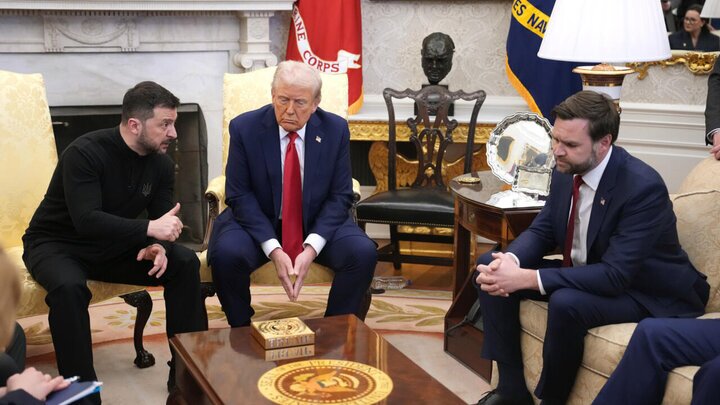
The Main Objective of Trump’s Proposal for Ukraine-Russia Peace Negotiations

The Main Objective of Trump’s Proposal for Ukraine-Russia Peace Negotiations

Strategic Council Online– Interview: An international affairs expert stated that the agreement between Ukraine and the U.S. on sharing profits from the sale of Ukrainian minerals, along with the shift in the U.S. stance on peace negotiations and the fading of its mediation between Moscow and Kyiv, demonstrates that Trump was never genuinely concerned with peace, termination of the war, or respecting the territorial integrity of nations. Instead, his sole focus has been securing his interests and objectives in Ukraine.

Analysis of the Show Trial of Israeli Military Officials

Analysis of the Show Trial of Israeli Military Officials

Strategic Council Online – Interview: An expert on regional issues referring to the Israeli regime’s move to try two military officials for violating human rights and humanitarian law, said: the Israeli regime officials believe that domestically they should expel Palestinians, and internationally they should make it seem like a standard action, so they are trying to justify the accusations against them by holding show trials.

The necessity of Banning the Zionist Regime from Using  New Technologies in the Gaza War

The necessity of Banning the Zionist Regime from Using New Technologies in the Gaza War

Strategic Council Online – Opinion: Emerging technologies, especially “artificial intelligence,” are dual-purpose enabling phenomena with many potential applications and act like a “double-edged sword.” If they are used sensibly and appropriately, they can serve humanity’s greater comfort and tranquility in all dimensions. Otherwise, they become destructive tools that can add to the problems of life in human societies in a profound and far-reaching way and have “devastating consequences,” especially in wars and armed conflicts;
such as what the Zionist regime is using in the Gaza War.

Reducing US Military Presence in Syria: Motivations and Strategic Consequences

Reducing US Military Presence in Syria: Motivations and Strategic Consequences

Strategic Council Online – Opinion: On April 18, 2025, the US Department of Defense (Pentagon) announced a review of the deployment of its military forces in Syria codenamed “Operation Inherent Resolve”. This plan, designed in line with Donald Trump’s policies to reduce US military presence in the Middle East, will reduce the number of US troops from 10,000 to 1,000 within two months. Although this measure was announced under the pretext of success in weakening ISIS, it is part of a broader US strategy to redefine its mission in the region. However, numerous political and security complexities accompany this decision, the consequences of which will be significant for Syria, the entire region, and even the international system.

EU3 and Iran-US Nuclear Talks

EU3 and Iran-US Nuclear Talks

Strategic Council Online – Guest Opinion: The recent nuclear talks between Iran and the United States, which are being conducted through the mediation of Oman, have once again attracted the attention of the international community. Although in the past, Iran, due to its differences and problems with the United States, mostly entered into negotiations on nuclear issues with European countries, especially the United Kingdom, France and Germany (EU3), in this period, due to specific regional and international conditions, and mainly due to the US President Donald Trump’s approach these negotiations have been limited to Iran and the United States, and other world powers are not present in the talks at the moment.

SCFR’s President: Time Has Come to Leverage Iran’s Soft Power in light of Its Hard Power

SCFR’s President: Time Has Come to Leverage Iran’s Soft Power in light of Its Hard Power

Strategic Council Online – Dr. Seyed Kamal Kharrazi, President of Iran’s Strategic Council on Foreign Relations (SCFR), addressed the Persian Gulf National Day conference hosted by the Persian Gulf Studies Institute, highlighting Iran’s defense achievements. He stated, “Today, our nation stands as a powerful country, and no one dares to violate its sovereignty, and even others acknowledge this strength.”

Perspectives on India-Pakistan Water Crisis

Perspectives on India-Pakistan Water Crisis

Strategic Council Online – Opinion: On April 25, 2025, a terrorist incident occurred in the Pahalgam region of the disputed region of Jammu and Kashmir. The Indian government immediately blamed Pakistan-backed Kashmiri groups for the incident.

Analysis of Latest Developments in the West Bank

Analysis of Latest Developments in the West Bank

Strategic Council Online – Interview: A senior analyst on Palestinian issues said: The occupied West Bank is once again witnessing increasing tensions. According to Anadolu News Agency, Israeli authorities prevented Palestinian Prime Minister Muhammad Mustafa from visiting the villages of Burqa, Deir Dabwan, Duma, and Qusra, areas that are the target of attacks by illegal settlers. At the same time, in Nablus, settlers kidnapped two Palestinian children and tied them to a tree; an incident that has sounded the alarm for the Palestinians that their lives are in danger. Since the beginning of the Gaza war, 952 Palestinians have been killed in the West Bank, and more than 7,000 have been injured.

Top News

The Main Objective of Trump’s Proposal for Ukraine-Russia Peace Negotiations

The Main Objective of Trump’s Proposal for Ukraine-Russia Peace Negotiations

Strategic Council Online– Interview: An international affairs expert stated that the agreement between Ukraine and the U.S. on sharing profits from the sale of Ukrainian minerals, along with the shift in the U.S. stance on peace negotiations and the fading of its mediation between Moscow and Kyiv, demonstrates that Trump was never genuinely concerned with peace, termination of the war, or respecting the territorial integrity of nations. Instead, his sole focus has been securing his interests and objectives in Ukraine.

Analysis of the Show Trial of Israeli Military Officials

Analysis of the Show Trial of Israeli Military Officials

Strategic Council Online – Interview: An expert on regional issues referring to the Israeli regime’s move to try two military officials for violating human rights and humanitarian law, said: the Israeli regime officials believe that domestically they should expel Palestinians, and internationally they should make it seem like a standard action, so they are trying to justify the accusations against them by holding show trials.

The necessity of Banning the Zionist Regime from Using  New Technologies in the Gaza War

The necessity of Banning the Zionist Regime from Using New Technologies in the Gaza War

Strategic Council Online – Opinion: Emerging technologies, especially “artificial intelligence,” are dual-purpose enabling phenomena with many potential applications and act like a “double-edged sword.” If they are used sensibly and appropriately, they can serve humanity’s greater comfort and tranquility in all dimensions. Otherwise, they become destructive tools that can add to the problems of life in human societies in a profound and far-reaching way and have “devastating consequences,” especially in wars and armed conflicts;
such as what the Zionist regime is using in the Gaza War.

Reducing US Military Presence in Syria: Motivations and Strategic Consequences

Reducing US Military Presence in Syria: Motivations and Strategic Consequences

Strategic Council Online – Opinion: On April 18, 2025, the US Department of Defense (Pentagon) announced a review of the deployment of its military forces in Syria codenamed “Operation Inherent Resolve”. This plan, designed in line with Donald Trump’s policies to reduce US military presence in the Middle East, will reduce the number of US troops from 10,000 to 1,000 within two months. Although this measure was announced under the pretext of success in weakening ISIS, it is part of a broader US strategy to redefine its mission in the region. However, numerous political and security complexities accompany this decision, the consequences of which will be significant for Syria, the entire region, and even the international system.

EU3 and Iran-US Nuclear Talks

EU3 and Iran-US Nuclear Talks

Strategic Council Online – Guest Opinion: The recent nuclear talks between Iran and the United States, which are being conducted through the mediation of Oman, have once again attracted the attention of the international community. Although in the past, Iran, due to its differences and problems with the United States, mostly entered into negotiations on nuclear issues with European countries, especially the United Kingdom, France and Germany (EU3), in this period, due to specific regional and international conditions, and mainly due to the US President Donald Trump’s approach these negotiations have been limited to Iran and the United States, and other world powers are not present in the talks at the moment.

SCFR’s President: Time Has Come to Leverage Iran’s Soft Power in light of Its Hard Power

SCFR’s President: Time Has Come to Leverage Iran’s Soft Power in light of Its Hard Power

Strategic Council Online – Dr. Seyed Kamal Kharrazi, President of Iran’s Strategic Council on Foreign Relations (SCFR), addressed the Persian Gulf National Day conference hosted by the Persian Gulf Studies Institute, highlighting Iran’s defense achievements. He stated, “Today, our nation stands as a powerful country, and no one dares to violate its sovereignty, and even others acknowledge this strength.”

Perspectives on India-Pakistan Water Crisis

Perspectives on India-Pakistan Water Crisis

Strategic Council Online – Opinion: On April 25, 2025, a terrorist incident occurred in the Pahalgam region of the disputed region of Jammu and Kashmir. The Indian government immediately blamed Pakistan-backed Kashmiri groups for the incident.

Analysis of Latest Developments in the West Bank

Analysis of Latest Developments in the West Bank

Strategic Council Online – Interview: A senior analyst on Palestinian issues said: The occupied West Bank is once again witnessing increasing tensions. According to Anadolu News Agency, Israeli authorities prevented Palestinian Prime Minister Muhammad Mustafa from visiting the villages of Burqa, Deir Dabwan, Duma, and Qusra, areas that are the target of attacks by illegal settlers. At the same time, in Nablus, settlers kidnapped two Palestinian children and tied them to a tree; an incident that has sounded the alarm for the Palestinians that their lives are in danger. Since the beginning of the Gaza war, 952 Palestinians have been killed in the West Bank, and more than 7,000 have been injured.

LATEST CONTENT

Implications of the US-Saudi Nuclear Agreement

SCFR Online – Opinion: The new US-Saudi nuclear agreement, despite legal and political ambiguities, could alter previous non-proliferation standards in West Asia and intensify nuclear competition, ushering it into a new phase.

An Analysis of Recent Turkey-Israeli Regime Tensions

SCFR Online – Opinion: Recent developments in Syria indicate an intensification of strategic rivalry between Turkey and the Israeli regime, but mutual considerations and the role of the United States have limited the likelihood of direct war.

Increasing criticism of the extensive Zionist lobby network

SCFR Online – Opinion: An examination of the mechanisms of the Israeli regime’s influence in the United States depicts a complex picture of shared interests, strategic dependencies, and the limitations of this relationship.

Realities of the Tripartite Makkah Pact

SCFR Online – Interview: The signing of the Makkah agreement between Saudi Arabia, Pakistan, and Turkey has raised questions about the future of the region’s security structure and the position of these countries in West Asian equations. Can this agreement become a genuine collective defense mechanism, or does it have more of a political and deterrent function than creating new military capacity?

Strategic Implications of the Reduction of US Weapons Stockpiles

SCFR Online – Opinion: The continuation of the US war against Iran, in addition to increasing operational costs, has called into question the actual capacity of the American arsenal to simultaneously fulfill security commitments on multiple fronts; an issue that affects deterrence, defense production capacity, and Washington’s resource prioritization.

The Formation of a New Order in Relations Between Powers

SCFR Online – Opinion: The Russia-Ukraine war and the war of the United States and the Israeli regime against Iran have been formed with different objectives and actors, but field and political developments indicate that they are not entirely separate from one another.

An Analysis of the Makkah Defense Pact

SCFR Online – Opinion: On Friday, August 7, the heads of state of three countries – Saudi Arabia, Turkey, and Pakistan – signed a text under the title “Makkah Joint Defense Agreement.”

Loading

Top News

The Main Objective of Trump’s Proposal for Ukraine-Russia Peace Negotiations

The Main Objective of Trump’s Proposal for Ukraine-Russia Peace Negotiations

Strategic Council Online– Interview: An international affairs expert stated that the agreement between Ukraine and the U.S. on sharing profits from the sale of Ukrainian minerals, along with the shift in the U.S. stance on peace negotiations and the fading of its mediation between Moscow and Kyiv, demonstrates that Trump was never genuinely concerned with peace, termination of the war, or respecting the territorial integrity of nations. Instead, his sole focus has been securing his interests and objectives in Ukraine.

Analysis of the Show Trial of Israeli Military Officials

Analysis of the Show Trial of Israeli Military Officials

Strategic Council Online – Interview: An expert on regional issues referring to the Israeli regime’s move to try two military officials for violating human rights and humanitarian law, said: the Israeli regime officials believe that domestically they should expel Palestinians, and internationally they should make it seem like a standard action, so they are trying to justify the accusations against them by holding show trials.

The necessity of Banning the Zionist Regime from Using  New Technologies in the Gaza War

The necessity of Banning the Zionist Regime from Using New Technologies in the Gaza War

Strategic Council Online – Opinion: Emerging technologies, especially “artificial intelligence,” are dual-purpose enabling phenomena with many potential applications and act like a “double-edged sword.” If they are used sensibly and appropriately, they can serve humanity’s greater comfort and tranquility in all dimensions. Otherwise, they become destructive tools that can add to the problems of life in human societies in a profound and far-reaching way and have “devastating consequences,” especially in wars and armed conflicts;
such as what the Zionist regime is using in the Gaza War.

Reducing US Military Presence in Syria: Motivations and Strategic Consequences

Reducing US Military Presence in Syria: Motivations and Strategic Consequences

Strategic Council Online – Opinion: On April 18, 2025, the US Department of Defense (Pentagon) announced a review of the deployment of its military forces in Syria codenamed “Operation Inherent Resolve”. This plan, designed in line with Donald Trump’s policies to reduce US military presence in the Middle East, will reduce the number of US troops from 10,000 to 1,000 within two months. Although this measure was announced under the pretext of success in weakening ISIS, it is part of a broader US strategy to redefine its mission in the region. However, numerous political and security complexities accompany this decision, the consequences of which will be significant for Syria, the entire region, and even the international system.

EU3 and Iran-US Nuclear Talks

EU3 and Iran-US Nuclear Talks

Strategic Council Online – Guest Opinion: The recent nuclear talks between Iran and the United States, which are being conducted through the mediation of Oman, have once again attracted the attention of the international community. Although in the past, Iran, due to its differences and problems with the United States, mostly entered into negotiations on nuclear issues with European countries, especially the United Kingdom, France and Germany (EU3), in this period, due to specific regional and international conditions, and mainly due to the US President Donald Trump’s approach these negotiations have been limited to Iran and the United States, and other world powers are not present in the talks at the moment.

SCFR’s President: Time Has Come to Leverage Iran’s Soft Power in light of Its Hard Power

SCFR’s President: Time Has Come to Leverage Iran’s Soft Power in light of Its Hard Power

Strategic Council Online – Dr. Seyed Kamal Kharrazi, President of Iran’s Strategic Council on Foreign Relations (SCFR), addressed the Persian Gulf National Day conference hosted by the Persian Gulf Studies Institute, highlighting Iran’s defense achievements. He stated, “Today, our nation stands as a powerful country, and no one dares to violate its sovereignty, and even others acknowledge this strength.”

Perspectives on India-Pakistan Water Crisis

Perspectives on India-Pakistan Water Crisis

Strategic Council Online – Opinion: On April 25, 2025, a terrorist incident occurred in the Pahalgam region of the disputed region of Jammu and Kashmir. The Indian government immediately blamed Pakistan-backed Kashmiri groups for the incident.

Analysis of Latest Developments in the West Bank

Analysis of Latest Developments in the West Bank

Strategic Council Online – Interview: A senior analyst on Palestinian issues said: The occupied West Bank is once again witnessing increasing tensions. According to Anadolu News Agency, Israeli authorities prevented Palestinian Prime Minister Muhammad Mustafa from visiting the villages of Burqa, Deir Dabwan, Duma, and Qusra, areas that are the target of attacks by illegal settlers. At the same time, in Nablus, settlers kidnapped two Palestinian children and tied them to a tree; an incident that has sounded the alarm for the Palestinians that their lives are in danger. Since the beginning of the Gaza war, 952 Palestinians have been killed in the West Bank, and more than 7,000 have been injured.

ÚLTIMAS PUBLICACIONES

Implications of the US-Saudi Nuclear Agreement

SCFR Online – Opinion: The new US-Saudi nuclear agreement, despite legal and political ambiguities, could alter previous non-proliferation standards in West Asia and intensify nuclear competition, ushering it into a new phase.

An Analysis of Recent Turkey-Israeli Regime Tensions

SCFR Online – Opinion: Recent developments in Syria indicate an intensification of strategic rivalry between Turkey and the Israeli regime, but mutual considerations and the role of the United States have limited the likelihood of direct war.

Increasing criticism of the extensive Zionist lobby network

SCFR Online – Opinion: An examination of the mechanisms of the Israeli regime’s influence in the United States depicts a complex picture of shared interests, strategic dependencies, and the limitations of this relationship.

Realities of the Tripartite Makkah Pact

SCFR Online – Interview: The signing of the Makkah agreement between Saudi Arabia, Pakistan, and Turkey has raised questions about the future of the region’s security structure and the position of these countries in West Asian equations. Can this agreement become a genuine collective defense mechanism, or does it have more of a political and deterrent function than creating new military capacity?

Strategic Implications of the Reduction of US Weapons Stockpiles

SCFR Online – Opinion: The continuation of the US war against Iran, in addition to increasing operational costs, has called into question the actual capacity of the American arsenal to simultaneously fulfill security commitments on multiple fronts; an issue that affects deterrence, defense production capacity, and Washington’s resource prioritization.

The Formation of a New Order in Relations Between Powers

SCFR Online – Opinion: The Russia-Ukraine war and the war of the United States and the Israeli regime against Iran have been formed with different objectives and actors, but field and political developments indicate that they are not entirely separate from one another.

An Analysis of the Makkah Defense Pact

SCFR Online – Opinion: On Friday, August 7, the heads of state of three countries – Saudi Arabia, Turkey, and Pakistan – signed a text under the title “Makkah Joint Defense Agreement.”

Loading

Top News

The Main Objective of Trump’s Proposal for Ukraine-Russia Peace Negotiations

The Main Objective of Trump’s Proposal for Ukraine-Russia Peace Negotiations

Strategic Council Online– Interview: An international affairs expert stated that the agreement between Ukraine and the U.S. on sharing profits from the sale of Ukrainian minerals, along with the shift in the U.S. stance on peace negotiations and the fading of its mediation between Moscow and Kyiv, demonstrates that Trump was never genuinely concerned with peace, termination of the war, or respecting the territorial integrity of nations. Instead, his sole focus has been securing his interests and objectives in Ukraine.

Analysis of the Show Trial of Israeli Military Officials

Analysis of the Show Trial of Israeli Military Officials

Strategic Council Online – Interview: An expert on regional issues referring to the Israeli regime’s move to try two military officials for violating human rights and humanitarian law, said: the Israeli regime officials believe that domestically they should expel Palestinians, and internationally they should make it seem like a standard action, so they are trying to justify the accusations against them by holding show trials.

The necessity of Banning the Zionist Regime from Using  New Technologies in the Gaza War

The necessity of Banning the Zionist Regime from Using New Technologies in the Gaza War

Strategic Council Online – Opinion: Emerging technologies, especially “artificial intelligence,” are dual-purpose enabling phenomena with many potential applications and act like a “double-edged sword.” If they are used sensibly and appropriately, they can serve humanity’s greater comfort and tranquility in all dimensions. Otherwise, they become destructive tools that can add to the problems of life in human societies in a profound and far-reaching way and have “devastating consequences,” especially in wars and armed conflicts;
such as what the Zionist regime is using in the Gaza War.

Reducing US Military Presence in Syria: Motivations and Strategic Consequences

Reducing US Military Presence in Syria: Motivations and Strategic Consequences

Strategic Council Online – Opinion: On April 18, 2025, the US Department of Defense (Pentagon) announced a review of the deployment of its military forces in Syria codenamed “Operation Inherent Resolve”. This plan, designed in line with Donald Trump’s policies to reduce US military presence in the Middle East, will reduce the number of US troops from 10,000 to 1,000 within two months. Although this measure was announced under the pretext of success in weakening ISIS, it is part of a broader US strategy to redefine its mission in the region. However, numerous political and security complexities accompany this decision, the consequences of which will be significant for Syria, the entire region, and even the international system.

EU3 and Iran-US Nuclear Talks

EU3 and Iran-US Nuclear Talks

Strategic Council Online – Guest Opinion: The recent nuclear talks between Iran and the United States, which are being conducted through the mediation of Oman, have once again attracted the attention of the international community. Although in the past, Iran, due to its differences and problems with the United States, mostly entered into negotiations on nuclear issues with European countries, especially the United Kingdom, France and Germany (EU3), in this period, due to specific regional and international conditions, and mainly due to the US President Donald Trump’s approach these negotiations have been limited to Iran and the United States, and other world powers are not present in the talks at the moment.

SCFR’s President: Time Has Come to Leverage Iran’s Soft Power in light of Its Hard Power

SCFR’s President: Time Has Come to Leverage Iran’s Soft Power in light of Its Hard Power

Strategic Council Online – Dr. Seyed Kamal Kharrazi, President of Iran’s Strategic Council on Foreign Relations (SCFR), addressed the Persian Gulf National Day conference hosted by the Persian Gulf Studies Institute, highlighting Iran’s defense achievements. He stated, “Today, our nation stands as a powerful country, and no one dares to violate its sovereignty, and even others acknowledge this strength.”

Perspectives on India-Pakistan Water Crisis

Perspectives on India-Pakistan Water Crisis

Strategic Council Online – Opinion: On April 25, 2025, a terrorist incident occurred in the Pahalgam region of the disputed region of Jammu and Kashmir. The Indian government immediately blamed Pakistan-backed Kashmiri groups for the incident.

Analysis of Latest Developments in the West Bank

Analysis of Latest Developments in the West Bank

Strategic Council Online – Interview: A senior analyst on Palestinian issues said: The occupied West Bank is once again witnessing increasing tensions. According to Anadolu News Agency, Israeli authorities prevented Palestinian Prime Minister Muhammad Mustafa from visiting the villages of Burqa, Deir Dabwan, Duma, and Qusra, areas that are the target of attacks by illegal settlers. At the same time, in Nablus, settlers kidnapped two Palestinian children and tied them to a tree; an incident that has sounded the alarm for the Palestinians that their lives are in danger. Since the beginning of the Gaza war, 952 Palestinians have been killed in the West Bank, and more than 7,000 have been injured.

ÚLTIMAS PUBLICACIONES

Implications of the US-Saudi Nuclear Agreement

SCFR Online – Opinion: The new US-Saudi nuclear agreement, despite legal and political ambiguities, could alter previous non-proliferation standards in West Asia and intensify nuclear competition, ushering it into a new phase.

An Analysis of Recent Turkey-Israeli Regime Tensions

SCFR Online – Opinion: Recent developments in Syria indicate an intensification of strategic rivalry between Turkey and the Israeli regime, but mutual considerations and the role of the United States have limited the likelihood of direct war.

Increasing criticism of the extensive Zionist lobby network

SCFR Online – Opinion: An examination of the mechanisms of the Israeli regime’s influence in the United States depicts a complex picture of shared interests, strategic dependencies, and the limitations of this relationship.

Realities of the Tripartite Makkah Pact

SCFR Online – Interview: The signing of the Makkah agreement between Saudi Arabia, Pakistan, and Turkey has raised questions about the future of the region’s security structure and the position of these countries in West Asian equations. Can this agreement become a genuine collective defense mechanism, or does it have more of a political and deterrent function than creating new military capacity?

Strategic Implications of the Reduction of US Weapons Stockpiles

SCFR Online – Opinion: The continuation of the US war against Iran, in addition to increasing operational costs, has called into question the actual capacity of the American arsenal to simultaneously fulfill security commitments on multiple fronts; an issue that affects deterrence, defense production capacity, and Washington’s resource prioritization.

The Formation of a New Order in Relations Between Powers

SCFR Online – Opinion: The Russia-Ukraine war and the war of the United States and the Israeli regime against Iran have been formed with different objectives and actors, but field and political developments indicate that they are not entirely separate from one another.

An Analysis of the Makkah Defense Pact

SCFR Online – Opinion: On Friday, August 7, the heads of state of three countries – Saudi Arabia, Turkey, and Pakistan – signed a text under the title “Makkah Joint Defense Agreement.”

Loading

Top News

The Main Objective of Trump’s Proposal for Ukraine-Russia Peace Negotiations

The Main Objective of Trump’s Proposal for Ukraine-Russia Peace Negotiations

Strategic Council Online– Interview: An international affairs expert stated that the agreement between Ukraine and the U.S. on sharing profits from the sale of Ukrainian minerals, along with the shift in the U.S. stance on peace negotiations and the fading of its mediation between Moscow and Kyiv, demonstrates that Trump was never genuinely concerned with peace, termination of the war, or respecting the territorial integrity of nations. Instead, his sole focus has been securing his interests and objectives in Ukraine.

Analysis of the Show Trial of Israeli Military Officials

Analysis of the Show Trial of Israeli Military Officials

Strategic Council Online – Interview: An expert on regional issues referring to the Israeli regime’s move to try two military officials for violating human rights and humanitarian law, said: the Israeli regime officials believe that domestically they should expel Palestinians, and internationally they should make it seem like a standard action, so they are trying to justify the accusations against them by holding show trials.

The necessity of Banning the Zionist Regime from Using  New Technologies in the Gaza War

The necessity of Banning the Zionist Regime from Using New Technologies in the Gaza War

Strategic Council Online – Opinion: Emerging technologies, especially “artificial intelligence,” are dual-purpose enabling phenomena with many potential applications and act like a “double-edged sword.” If they are used sensibly and appropriately, they can serve humanity’s greater comfort and tranquility in all dimensions. Otherwise, they become destructive tools that can add to the problems of life in human societies in a profound and far-reaching way and have “devastating consequences,” especially in wars and armed conflicts;
such as what the Zionist regime is using in the Gaza War.

Reducing US Military Presence in Syria: Motivations and Strategic Consequences

Reducing US Military Presence in Syria: Motivations and Strategic Consequences

Strategic Council Online – Opinion: On April 18, 2025, the US Department of Defense (Pentagon) announced a review of the deployment of its military forces in Syria codenamed “Operation Inherent Resolve”. This plan, designed in line with Donald Trump’s policies to reduce US military presence in the Middle East, will reduce the number of US troops from 10,000 to 1,000 within two months. Although this measure was announced under the pretext of success in weakening ISIS, it is part of a broader US strategy to redefine its mission in the region. However, numerous political and security complexities accompany this decision, the consequences of which will be significant for Syria, the entire region, and even the international system.

EU3 and Iran-US Nuclear Talks

EU3 and Iran-US Nuclear Talks

Strategic Council Online – Guest Opinion: The recent nuclear talks between Iran and the United States, which are being conducted through the mediation of Oman, have once again attracted the attention of the international community. Although in the past, Iran, due to its differences and problems with the United States, mostly entered into negotiations on nuclear issues with European countries, especially the United Kingdom, France and Germany (EU3), in this period, due to specific regional and international conditions, and mainly due to the US President Donald Trump’s approach these negotiations have been limited to Iran and the United States, and other world powers are not present in the talks at the moment.

SCFR’s President: Time Has Come to Leverage Iran’s Soft Power in light of Its Hard Power

SCFR’s President: Time Has Come to Leverage Iran’s Soft Power in light of Its Hard Power

Strategic Council Online – Dr. Seyed Kamal Kharrazi, President of Iran’s Strategic Council on Foreign Relations (SCFR), addressed the Persian Gulf National Day conference hosted by the Persian Gulf Studies Institute, highlighting Iran’s defense achievements. He stated, “Today, our nation stands as a powerful country, and no one dares to violate its sovereignty, and even others acknowledge this strength.”

Perspectives on India-Pakistan Water Crisis

Perspectives on India-Pakistan Water Crisis

Strategic Council Online – Opinion: On April 25, 2025, a terrorist incident occurred in the Pahalgam region of the disputed region of Jammu and Kashmir. The Indian government immediately blamed Pakistan-backed Kashmiri groups for the incident.

Analysis of Latest Developments in the West Bank

Analysis of Latest Developments in the West Bank

Strategic Council Online – Interview: A senior analyst on Palestinian issues said: The occupied West Bank is once again witnessing increasing tensions. According to Anadolu News Agency, Israeli authorities prevented Palestinian Prime Minister Muhammad Mustafa from visiting the villages of Burqa, Deir Dabwan, Duma, and Qusra, areas that are the target of attacks by illegal settlers. At the same time, in Nablus, settlers kidnapped two Palestinian children and tied them to a tree; an incident that has sounded the alarm for the Palestinians that their lives are in danger. Since the beginning of the Gaza war, 952 Palestinians have been killed in the West Bank, and more than 7,000 have been injured.

ÚLTIMAS PUBLICACIONES

Implications of the US-Saudi Nuclear Agreement

SCFR Online – Opinion: The new US-Saudi nuclear agreement, despite legal and political ambiguities, could alter previous non-proliferation standards in West Asia and intensify nuclear competition, ushering it into a new phase.

An Analysis of Recent Turkey-Israeli Regime Tensions

SCFR Online – Opinion: Recent developments in Syria indicate an intensification of strategic rivalry between Turkey and the Israeli regime, but mutual considerations and the role of the United States have limited the likelihood of direct war.

Increasing criticism of the extensive Zionist lobby network

SCFR Online – Opinion: An examination of the mechanisms of the Israeli regime’s influence in the United States depicts a complex picture of shared interests, strategic dependencies, and the limitations of this relationship.

Realities of the Tripartite Makkah Pact

SCFR Online – Interview: The signing of the Makkah agreement between Saudi Arabia, Pakistan, and Turkey has raised questions about the future of the region’s security structure and the position of these countries in West Asian equations. Can this agreement become a genuine collective defense mechanism, or does it have more of a political and deterrent function than creating new military capacity?

Strategic Implications of the Reduction of US Weapons Stockpiles

SCFR Online – Opinion: The continuation of the US war against Iran, in addition to increasing operational costs, has called into question the actual capacity of the American arsenal to simultaneously fulfill security commitments on multiple fronts; an issue that affects deterrence, defense production capacity, and Washington’s resource prioritization.

The Formation of a New Order in Relations Between Powers

SCFR Online – Opinion: The Russia-Ukraine war and the war of the United States and the Israeli regime against Iran have been formed with different objectives and actors, but field and political developments indicate that they are not entirely separate from one another.

An Analysis of the Makkah Defense Pact

SCFR Online – Opinion: On Friday, August 7, the heads of state of three countries – Saudi Arabia, Turkey, and Pakistan – signed a text under the title “Makkah Joint Defense Agreement.”

Loading

Top News

The Main Objective of Trump’s Proposal for Ukraine-Russia Peace Negotiations

The Main Objective of Trump’s Proposal for Ukraine-Russia Peace Negotiations

Strategic Council Online– Interview: An international affairs expert stated that the agreement between Ukraine and the U.S. on sharing profits from the sale of Ukrainian minerals, along with the shift in the U.S. stance on peace negotiations and the fading of its mediation between Moscow and Kyiv, demonstrates that Trump was never genuinely concerned with peace, termination of the war, or respecting the territorial integrity of nations. Instead, his sole focus has been securing his interests and objectives in Ukraine.

Analysis of the Show Trial of Israeli Military Officials

Analysis of the Show Trial of Israeli Military Officials

Strategic Council Online – Interview: An expert on regional issues referring to the Israeli regime’s move to try two military officials for violating human rights and humanitarian law, said: the Israeli regime officials believe that domestically they should expel Palestinians, and internationally they should make it seem like a standard action, so they are trying to justify the accusations against them by holding show trials.

The necessity of Banning the Zionist Regime from Using  New Technologies in the Gaza War

The necessity of Banning the Zionist Regime from Using New Technologies in the Gaza War

Strategic Council Online – Opinion: Emerging technologies, especially “artificial intelligence,” are dual-purpose enabling phenomena with many potential applications and act like a “double-edged sword.” If they are used sensibly and appropriately, they can serve humanity’s greater comfort and tranquility in all dimensions. Otherwise, they become destructive tools that can add to the problems of life in human societies in a profound and far-reaching way and have “devastating consequences,” especially in wars and armed conflicts;
such as what the Zionist regime is using in the Gaza War.

Reducing US Military Presence in Syria: Motivations and Strategic Consequences

Reducing US Military Presence in Syria: Motivations and Strategic Consequences

Strategic Council Online – Opinion: On April 18, 2025, the US Department of Defense (Pentagon) announced a review of the deployment of its military forces in Syria codenamed “Operation Inherent Resolve”. This plan, designed in line with Donald Trump’s policies to reduce US military presence in the Middle East, will reduce the number of US troops from 10,000 to 1,000 within two months. Although this measure was announced under the pretext of success in weakening ISIS, it is part of a broader US strategy to redefine its mission in the region. However, numerous political and security complexities accompany this decision, the consequences of which will be significant for Syria, the entire region, and even the international system.

EU3 and Iran-US Nuclear Talks

EU3 and Iran-US Nuclear Talks

Strategic Council Online – Guest Opinion: The recent nuclear talks between Iran and the United States, which are being conducted through the mediation of Oman, have once again attracted the attention of the international community. Although in the past, Iran, due to its differences and problems with the United States, mostly entered into negotiations on nuclear issues with European countries, especially the United Kingdom, France and Germany (EU3), in this period, due to specific regional and international conditions, and mainly due to the US President Donald Trump’s approach these negotiations have been limited to Iran and the United States, and other world powers are not present in the talks at the moment.

SCFR’s President: Time Has Come to Leverage Iran’s Soft Power in light of Its Hard Power

SCFR’s President: Time Has Come to Leverage Iran’s Soft Power in light of Its Hard Power

Strategic Council Online – Dr. Seyed Kamal Kharrazi, President of Iran’s Strategic Council on Foreign Relations (SCFR), addressed the Persian Gulf National Day conference hosted by the Persian Gulf Studies Institute, highlighting Iran’s defense achievements. He stated, “Today, our nation stands as a powerful country, and no one dares to violate its sovereignty, and even others acknowledge this strength.”

Perspectives on India-Pakistan Water Crisis

Perspectives on India-Pakistan Water Crisis

Strategic Council Online – Opinion: On April 25, 2025, a terrorist incident occurred in the Pahalgam region of the disputed region of Jammu and Kashmir. The Indian government immediately blamed Pakistan-backed Kashmiri groups for the incident.

Analysis of Latest Developments in the West Bank

Analysis of Latest Developments in the West Bank

Strategic Council Online – Interview: A senior analyst on Palestinian issues said: The occupied West Bank is once again witnessing increasing tensions. According to Anadolu News Agency, Israeli authorities prevented Palestinian Prime Minister Muhammad Mustafa from visiting the villages of Burqa, Deir Dabwan, Duma, and Qusra, areas that are the target of attacks by illegal settlers. At the same time, in Nablus, settlers kidnapped two Palestinian children and tied them to a tree; an incident that has sounded the alarm for the Palestinians that their lives are in danger. Since the beginning of the Gaza war, 952 Palestinians have been killed in the West Bank, and more than 7,000 have been injured.

ÚLTIMAS PUBLICACIONES

Implications of the US-Saudi Nuclear Agreement

SCFR Online – Opinion: The new US-Saudi nuclear agreement, despite legal and political ambiguities, could alter previous non-proliferation standards in West Asia and intensify nuclear competition, ushering it into a new phase.

An Analysis of Recent Turkey-Israeli Regime Tensions

SCFR Online – Opinion: Recent developments in Syria indicate an intensification of strategic rivalry between Turkey and the Israeli regime, but mutual considerations and the role of the United States have limited the likelihood of direct war.

Increasing criticism of the extensive Zionist lobby network

SCFR Online – Opinion: An examination of the mechanisms of the Israeli regime’s influence in the United States depicts a complex picture of shared interests, strategic dependencies, and the limitations of this relationship.

Realities of the Tripartite Makkah Pact

SCFR Online – Interview: The signing of the Makkah agreement between Saudi Arabia, Pakistan, and Turkey has raised questions about the future of the region’s security structure and the position of these countries in West Asian equations. Can this agreement become a genuine collective defense mechanism, or does it have more of a political and deterrent function than creating new military capacity?

Strategic Implications of the Reduction of US Weapons Stockpiles

SCFR Online – Opinion: The continuation of the US war against Iran, in addition to increasing operational costs, has called into question the actual capacity of the American arsenal to simultaneously fulfill security commitments on multiple fronts; an issue that affects deterrence, defense production capacity, and Washington’s resource prioritization.

The Formation of a New Order in Relations Between Powers

SCFR Online – Opinion: The Russia-Ukraine war and the war of the United States and the Israeli regime against Iran have been formed with different objectives and actors, but field and political developments indicate that they are not entirely separate from one another.

An Analysis of the Makkah Defense Pact

SCFR Online – Opinion: On Friday, August 7, the heads of state of three countries – Saudi Arabia, Turkey, and Pakistan – signed a text under the title “Makkah Joint Defense Agreement.”

Loading