An Analysis of the Makkah Defense Pact
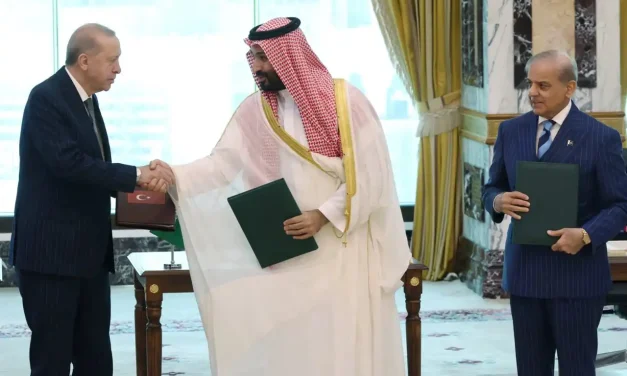
SCFR Online – Opinion: On Friday, August 7, the heads of state of three countries – Saudi Arabia, Turkey, and Pakistan – signed a text under the title “Makkah Joint Defense Agreement.”
Strategic Council Online – Note: The initiative to revive the Hejaz Railway, beyond being a transportation project, constitutes an attempt to redefine geopolitics, the economy, and Turkey’s regional position; however, its realization appears to face significant financial, security, and institutional challenges.
SCFR Online – Opinion: The Strait of Hormuz crisis is no longer merely the consequence of a military confrontation, but rather a sign of the transition from the US-centered maritime order to a new energy security structure involving the participation of emerging and influential powers.
SCFR Online – Opinion: Iran’s active deterrence strategy, while increasing the costs of US intervention, has increasingly exposed the hidden rifts between Washington’s interests and those of the Israeli regime.
SCFR Online – Opinion: The escalation of verbal and strategic tensions between Turkey and the Israeli regime, although not increasing the likelihood of direct war, indicates the formation of a new order in West Asian geopolitical rivalries.
Strategic Council Online – Note: Recent developments in the political geography of West Asia, from rising tensions in the Persian Gulf to missile and drone activities in the Red Sea and the recent warning by Kaja Kallas, the European Union’s foreign policy chief, regarding the threat to freedom of navigation, indicate a key pattern shift; the US-Iran war has moved beyond the scope of a regional and local confrontation and has linked two vital passageways for the global economy: the Strait of Hormuz and the Bab el-Mandeb Strait.
SCFR Online – Opinion: The Ukraine war was not merely a European crisis, but rather the starting point for the rearrangement of the global balance of power and a shift in the strategic behavior of great powers.
SCFR Online – Opinion: Great power competition is now pursued more in trade, currency, technology, and global supply chains than on the battlefields of military confrontation.
Strategic Council Online: Dr. Seyed Kamal Kharazi, President of the Strategic Council on Foreign Relations, paid tribute to the late Secretary General of Hezbollah, Seyed Hassan Nasrallah, by visiting the Lebanese Hezbollah office in Tehran this morning.
Strategic Council Online: The Strategic Council on Foreign Relations expresses its condolences and tribute following the martyrdom of Seyyed Hassan Nasrallah.
Strategic Council Online: This morning, during the farewell ceremony for Dr. Seyed Abbas Araghchi, the former Secretary of the Strategic Council on Foreign Relations (SCFR), Dr. Ali Bagheri Kani was introduced as a new member and the Secretary of SCFR.
Strategic Council Online: The President of the Strategic Council on Foreign Relations (SCFR) stated that Israel’s claim about the incident in the occupied Golan is a repeat of its assertion after bombing the Al-Ma’madani Hospital in Gaza, resulting in the martyrdom of 500 civilians, including innocent women and children, which was falsely attributed to Palestinian resistance.
Strategic Council Online: In response to the Financial Times reporter’s questions, Dr. Kharazi stated: In implementing foreign policy, there would be some differences in their [Pezeshkian/Jalili] approach. Still, in terms of strategy, they would follow the same because the strategy is set by the leader of the Islamic Republic of Iran.
Strategic Council Online: The President of the Strategic Council on Foreign Relations stated: “The US State Department spokesperson, after my interview with Al Jazeera, reiterated their past remarks, stating that they won’t allow Iran to build nuclear weapons, but ultimately said diplomacy is the best approach. Yes, we too prefer diplomacy since based on the Fatwa of our Supreme Leader are not for nuclear weapons; rather, we are advocates of diplomacy to make the Middle East a nuclear-free region. But, in case the Israeli regime threatens us with nuclear weapons, we surely cannot sit idle and wait for permission from others.”
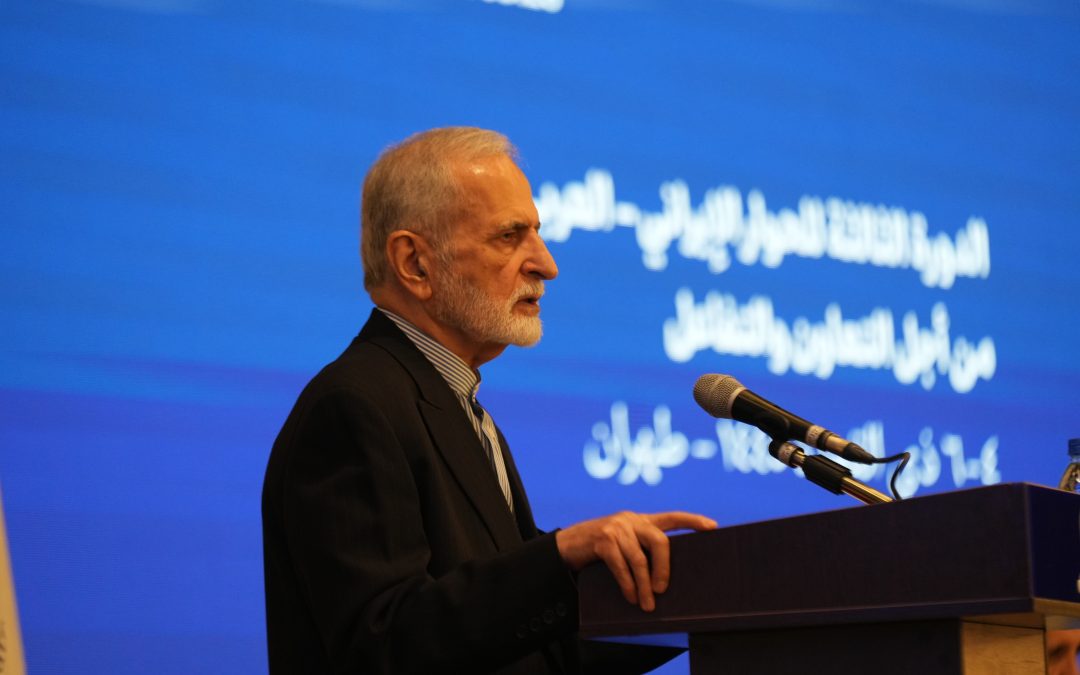
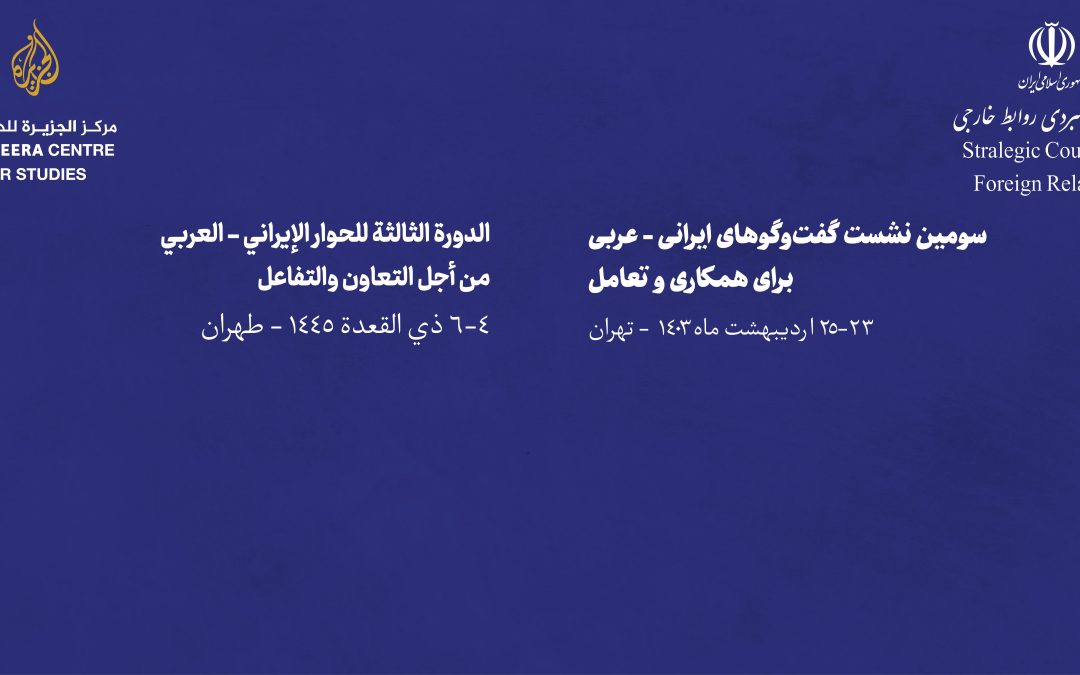
Strategic Council Online: The 3rd Iranian-Arab Dialogue Conference, titled “For Cooperation and Interaction,” will be inaugurated on April 23rd in Tehran, hosted by the Strategic Council on Foreign Relations.
SCFR Online – Opinion: On Friday, August 7, the heads of state of three countries – Saudi Arabia, Turkey, and Pakistan – signed a text under the title “Makkah Joint Defense Agreement.”
Strategic Council Online – Note: The initiative to revive the Hejaz Railway, beyond being a transportation project, constitutes an attempt to redefine geopolitics, the economy, and Turkey’s regional position; however, its realization appears to face significant financial, security, and institutional challenges.
SCFR Online – Opinion: The Strait of Hormuz crisis is no longer merely the consequence of a military confrontation, but rather a sign of the transition from the US-centered maritime order to a new energy security structure involving the participation of emerging and influential powers.
SCFR Online – Opinion: Iran’s active deterrence strategy, while increasing the costs of US intervention, has increasingly exposed the hidden rifts between Washington’s interests and those of the Israeli regime.
SCFR Online – Opinion: The escalation of verbal and strategic tensions between Turkey and the Israeli regime, although not increasing the likelihood of direct war, indicates the formation of a new order in West Asian geopolitical rivalries.
Strategic Council Online – Note: Recent developments in the political geography of West Asia, from rising tensions in the Persian Gulf to missile and drone activities in the Red Sea and the recent warning by Kaja Kallas, the European Union’s foreign policy chief, regarding the threat to freedom of navigation, indicate a key pattern shift; the US-Iran war has moved beyond the scope of a regional and local confrontation and has linked two vital passageways for the global economy: the Strait of Hormuz and the Bab el-Mandeb Strait.
SCFR Online – Opinion: The Ukraine war was not merely a European crisis, but rather the starting point for the rearrangement of the global balance of power and a shift in the strategic behavior of great powers.
SCFR Online – Opinion: Great power competition is now pursued more in trade, currency, technology, and global supply chains than on the battlefields of military confrontation.
Strategic Council Online: Dr. Seyed Kamal Kharazi, President of the Strategic Council on Foreign Relations, paid tribute to the late Secretary General of Hezbollah, Seyed Hassan Nasrallah, by visiting the Lebanese Hezbollah office in Tehran this morning.
Strategic Council Online: The Strategic Council on Foreign Relations expresses its condolences and tribute following the martyrdom of Seyyed Hassan Nasrallah.
Strategic Council Online: This morning, during the farewell ceremony for Dr. Seyed Abbas Araghchi, the former Secretary of the Strategic Council on Foreign Relations (SCFR), Dr. Ali Bagheri Kani was introduced as a new member and the Secretary of SCFR.
Strategic Council Online: The President of the Strategic Council on Foreign Relations (SCFR) stated that Israel’s claim about the incident in the occupied Golan is a repeat of its assertion after bombing the Al-Ma’madani Hospital in Gaza, resulting in the martyrdom of 500 civilians, including innocent women and children, which was falsely attributed to Palestinian resistance.
Strategic Council Online: In response to the Financial Times reporter’s questions, Dr. Kharazi stated: In implementing foreign policy, there would be some differences in their [Pezeshkian/Jalili] approach. Still, in terms of strategy, they would follow the same because the strategy is set by the leader of the Islamic Republic of Iran.
Strategic Council Online: The President of the Strategic Council on Foreign Relations stated: “The US State Department spokesperson, after my interview with Al Jazeera, reiterated their past remarks, stating that they won’t allow Iran to build nuclear weapons, but ultimately said diplomacy is the best approach. Yes, we too prefer diplomacy since based on the Fatwa of our Supreme Leader are not for nuclear weapons; rather, we are advocates of diplomacy to make the Middle East a nuclear-free region. But, in case the Israeli regime threatens us with nuclear weapons, we surely cannot sit idle and wait for permission from others.”
Strategic Council Online: The 3rd Iranian-Arab Dialogue Conference, titled “For Cooperation and Interaction,” will be inaugurated on April 23rd in Tehran, hosted by the Strategic Council on Foreign Relations.
Strategic Council Online: Dr. Seyed Kamal Kharazi, President of the Strategic Council on Foreign Relations, paid tribute to the late Secretary General of Hezbollah, Seyed Hassan Nasrallah, by visiting the Lebanese Hezbollah office in Tehran this morning.
Strategic Council Online: The Strategic Council on Foreign Relations expresses its condolences and tribute following the martyrdom of Seyyed Hassan Nasrallah.
Strategic Council Online: This morning, during the farewell ceremony for Dr. Seyed Abbas Araghchi, the former Secretary of the Strategic Council on Foreign Relations (SCFR), Dr. Ali Bagheri Kani was introduced as a new member and the Secretary of SCFR.
Strategic Council Online: The President of the Strategic Council on Foreign Relations (SCFR) stated that Israel’s claim about the incident in the occupied Golan is a repeat of its assertion after bombing the Al-Ma’madani Hospital in Gaza, resulting in the martyrdom of 500 civilians, including innocent women and children, which was falsely attributed to Palestinian resistance.
Strategic Council Online: In response to the Financial Times reporter’s questions, Dr. Kharazi stated: In implementing foreign policy, there would be some differences in their [Pezeshkian/Jalili] approach. Still, in terms of strategy, they would follow the same because the strategy is set by the leader of the Islamic Republic of Iran.
Strategic Council Online: The President of the Strategic Council on Foreign Relations stated: “The US State Department spokesperson, after my interview with Al Jazeera, reiterated their past remarks, stating that they won’t allow Iran to build nuclear weapons, but ultimately said diplomacy is the best approach. Yes, we too prefer diplomacy since based on the Fatwa of our Supreme Leader are not for nuclear weapons; rather, we are advocates of diplomacy to make the Middle East a nuclear-free region. But, in case the Israeli regime threatens us with nuclear weapons, we surely cannot sit idle and wait for permission from others.”
Strategic Council Online: The 3rd Iranian-Arab Dialogue Conference, titled “For Cooperation and Interaction,” will be inaugurated on April 23rd in Tehran, hosted by the Strategic Council on Foreign Relations.
SCFR Online – Opinion: On Friday, August 7, the heads of state of three countries – Saudi Arabia, Turkey, and Pakistan – signed a text under the title “Makkah Joint Defense Agreement.”
Strategic Council Online – Note: The initiative to revive the Hejaz Railway, beyond being a transportation project, constitutes an attempt to redefine geopolitics, the economy, and Turkey’s regional position; however, its realization appears to face significant financial, security, and institutional challenges.
SCFR Online – Opinion: The Strait of Hormuz crisis is no longer merely the consequence of a military confrontation, but rather a sign of the transition from the US-centered maritime order to a new energy security structure involving the participation of emerging and influential powers.
SCFR Online – Opinion: Iran’s active deterrence strategy, while increasing the costs of US intervention, has increasingly exposed the hidden rifts between Washington’s interests and those of the Israeli regime.
SCFR Online – Opinion: The escalation of verbal and strategic tensions between Turkey and the Israeli regime, although not increasing the likelihood of direct war, indicates the formation of a new order in West Asian geopolitical rivalries.
Strategic Council Online – Note: Recent developments in the political geography of West Asia, from rising tensions in the Persian Gulf to missile and drone activities in the Red Sea and the recent warning by Kaja Kallas, the European Union’s foreign policy chief, regarding the threat to freedom of navigation, indicate a key pattern shift; the US-Iran war has moved beyond the scope of a regional and local confrontation and has linked two vital passageways for the global economy: the Strait of Hormuz and the Bab el-Mandeb Strait.
SCFR Online – Opinion: The Ukraine war was not merely a European crisis, but rather the starting point for the rearrangement of the global balance of power and a shift in the strategic behavior of great powers.
SCFR Online – Opinion: Great power competition is now pursued more in trade, currency, technology, and global supply chains than on the battlefields of military confrontation.
Strategic Council Online: Dr. Seyed Kamal Kharazi, President of the Strategic Council on Foreign Relations, paid tribute to the late Secretary General of Hezbollah, Seyed Hassan Nasrallah, by visiting the Lebanese Hezbollah office in Tehran this morning.
Strategic Council Online: The Strategic Council on Foreign Relations expresses its condolences and tribute following the martyrdom of Seyyed Hassan Nasrallah.
Strategic Council Online: This morning, during the farewell ceremony for Dr. Seyed Abbas Araghchi, the former Secretary of the Strategic Council on Foreign Relations (SCFR), Dr. Ali Bagheri Kani was introduced as a new member and the Secretary of SCFR.
Strategic Council Online: The President of the Strategic Council on Foreign Relations (SCFR) stated that Israel’s claim about the incident in the occupied Golan is a repeat of its assertion after bombing the Al-Ma’madani Hospital in Gaza, resulting in the martyrdom of 500 civilians, including innocent women and children, which was falsely attributed to Palestinian resistance.
Strategic Council Online: In response to the Financial Times reporter’s questions, Dr. Kharazi stated: In implementing foreign policy, there would be some differences in their [Pezeshkian/Jalili] approach. Still, in terms of strategy, they would follow the same because the strategy is set by the leader of the Islamic Republic of Iran.
Strategic Council Online: The President of the Strategic Council on Foreign Relations stated: “The US State Department spokesperson, after my interview with Al Jazeera, reiterated their past remarks, stating that they won’t allow Iran to build nuclear weapons, but ultimately said diplomacy is the best approach. Yes, we too prefer diplomacy since based on the Fatwa of our Supreme Leader are not for nuclear weapons; rather, we are advocates of diplomacy to make the Middle East a nuclear-free region. But, in case the Israeli regime threatens us with nuclear weapons, we surely cannot sit idle and wait for permission from others.”
Strategic Council Online: The 3rd Iranian-Arab Dialogue Conference, titled “For Cooperation and Interaction,” will be inaugurated on April 23rd in Tehran, hosted by the Strategic Council on Foreign Relations.
SCFR Online – Opinion: On Friday, August 7, the heads of state of three countries – Saudi Arabia, Turkey, and Pakistan – signed a text under the title “Makkah Joint Defense Agreement.”
Strategic Council Online – Note: The initiative to revive the Hejaz Railway, beyond being a transportation project, constitutes an attempt to redefine geopolitics, the economy, and Turkey’s regional position; however, its realization appears to face significant financial, security, and institutional challenges.
SCFR Online – Opinion: The Strait of Hormuz crisis is no longer merely the consequence of a military confrontation, but rather a sign of the transition from the US-centered maritime order to a new energy security structure involving the participation of emerging and influential powers.
SCFR Online – Opinion: Iran’s active deterrence strategy, while increasing the costs of US intervention, has increasingly exposed the hidden rifts between Washington’s interests and those of the Israeli regime.
SCFR Online – Opinion: The escalation of verbal and strategic tensions between Turkey and the Israeli regime, although not increasing the likelihood of direct war, indicates the formation of a new order in West Asian geopolitical rivalries.
Strategic Council Online – Note: Recent developments in the political geography of West Asia, from rising tensions in the Persian Gulf to missile and drone activities in the Red Sea and the recent warning by Kaja Kallas, the European Union’s foreign policy chief, regarding the threat to freedom of navigation, indicate a key pattern shift; the US-Iran war has moved beyond the scope of a regional and local confrontation and has linked two vital passageways for the global economy: the Strait of Hormuz and the Bab el-Mandeb Strait.
SCFR Online – Opinion: The Ukraine war was not merely a European crisis, but rather the starting point for the rearrangement of the global balance of power and a shift in the strategic behavior of great powers.
SCFR Online – Opinion: Great power competition is now pursued more in trade, currency, technology, and global supply chains than on the battlefields of military confrontation.
Strategic Council Online: Dr. Seyed Kamal Kharazi, President of the Strategic Council on Foreign Relations, paid tribute to the late Secretary General of Hezbollah, Seyed Hassan Nasrallah, by visiting the Lebanese Hezbollah office in Tehran this morning.
Strategic Council Online: The Strategic Council on Foreign Relations expresses its condolences and tribute following the martyrdom of Seyyed Hassan Nasrallah.
Strategic Council Online: This morning, during the farewell ceremony for Dr. Seyed Abbas Araghchi, the former Secretary of the Strategic Council on Foreign Relations (SCFR), Dr. Ali Bagheri Kani was introduced as a new member and the Secretary of SCFR.
Strategic Council Online: The President of the Strategic Council on Foreign Relations (SCFR) stated that Israel’s claim about the incident in the occupied Golan is a repeat of its assertion after bombing the Al-Ma’madani Hospital in Gaza, resulting in the martyrdom of 500 civilians, including innocent women and children, which was falsely attributed to Palestinian resistance.
Strategic Council Online: In response to the Financial Times reporter’s questions, Dr. Kharazi stated: In implementing foreign policy, there would be some differences in their [Pezeshkian/Jalili] approach. Still, in terms of strategy, they would follow the same because the strategy is set by the leader of the Islamic Republic of Iran.
Strategic Council Online: The President of the Strategic Council on Foreign Relations stated: “The US State Department spokesperson, after my interview with Al Jazeera, reiterated their past remarks, stating that they won’t allow Iran to build nuclear weapons, but ultimately said diplomacy is the best approach. Yes, we too prefer diplomacy since based on the Fatwa of our Supreme Leader are not for nuclear weapons; rather, we are advocates of diplomacy to make the Middle East a nuclear-free region. But, in case the Israeli regime threatens us with nuclear weapons, we surely cannot sit idle and wait for permission from others.”
Strategic Council Online: The 3rd Iranian-Arab Dialogue Conference, titled “For Cooperation and Interaction,” will be inaugurated on April 23rd in Tehran, hosted by the Strategic Council on Foreign Relations.
SCFR Online – Opinion: On Friday, August 7, the heads of state of three countries – Saudi Arabia, Turkey, and Pakistan – signed a text under the title “Makkah Joint Defense Agreement.”
Strategic Council Online – Note: The initiative to revive the Hejaz Railway, beyond being a transportation project, constitutes an attempt to redefine geopolitics, the economy, and Turkey’s regional position; however, its realization appears to face significant financial, security, and institutional challenges.
SCFR Online – Opinion: The Strait of Hormuz crisis is no longer merely the consequence of a military confrontation, but rather a sign of the transition from the US-centered maritime order to a new energy security structure involving the participation of emerging and influential powers.
SCFR Online – Opinion: Iran’s active deterrence strategy, while increasing the costs of US intervention, has increasingly exposed the hidden rifts between Washington’s interests and those of the Israeli regime.
SCFR Online – Opinion: The escalation of verbal and strategic tensions between Turkey and the Israeli regime, although not increasing the likelihood of direct war, indicates the formation of a new order in West Asian geopolitical rivalries.
Strategic Council Online – Note: Recent developments in the political geography of West Asia, from rising tensions in the Persian Gulf to missile and drone activities in the Red Sea and the recent warning by Kaja Kallas, the European Union’s foreign policy chief, regarding the threat to freedom of navigation, indicate a key pattern shift; the US-Iran war has moved beyond the scope of a regional and local confrontation and has linked two vital passageways for the global economy: the Strait of Hormuz and the Bab el-Mandeb Strait.
SCFR Online – Opinion: The Ukraine war was not merely a European crisis, but rather the starting point for the rearrangement of the global balance of power and a shift in the strategic behavior of great powers.
SCFR Online – Opinion: Great power competition is now pursued more in trade, currency, technology, and global supply chains than on the battlefields of military confrontation.
Strategic Council Online: Dr. Seyed Kamal Kharazi, President of the Strategic Council on Foreign Relations, paid tribute to the late Secretary General of Hezbollah, Seyed Hassan Nasrallah, by visiting the Lebanese Hezbollah office in Tehran this morning.
Strategic Council Online: The Strategic Council on Foreign Relations expresses its condolences and tribute following the martyrdom of Seyyed Hassan Nasrallah.
Strategic Council Online: This morning, during the farewell ceremony for Dr. Seyed Abbas Araghchi, the former Secretary of the Strategic Council on Foreign Relations (SCFR), Dr. Ali Bagheri Kani was introduced as a new member and the Secretary of SCFR.
Strategic Council Online: The President of the Strategic Council on Foreign Relations (SCFR) stated that Israel’s claim about the incident in the occupied Golan is a repeat of its assertion after bombing the Al-Ma’madani Hospital in Gaza, resulting in the martyrdom of 500 civilians, including innocent women and children, which was falsely attributed to Palestinian resistance.
Strategic Council Online: In response to the Financial Times reporter’s questions, Dr. Kharazi stated: In implementing foreign policy, there would be some differences in their [Pezeshkian/Jalili] approach. Still, in terms of strategy, they would follow the same because the strategy is set by the leader of the Islamic Republic of Iran.
Strategic Council Online: The President of the Strategic Council on Foreign Relations stated: “The US State Department spokesperson, after my interview with Al Jazeera, reiterated their past remarks, stating that they won’t allow Iran to build nuclear weapons, but ultimately said diplomacy is the best approach. Yes, we too prefer diplomacy since based on the Fatwa of our Supreme Leader are not for nuclear weapons; rather, we are advocates of diplomacy to make the Middle East a nuclear-free region. But, in case the Israeli regime threatens us with nuclear weapons, we surely cannot sit idle and wait for permission from others.”
Strategic Council Online: The 3rd Iranian-Arab Dialogue Conference, titled “For Cooperation and Interaction,” will be inaugurated on April 23rd in Tehran, hosted by the Strategic Council on Foreign Relations.
SCFR Online – Opinion: On Friday, August 7, the heads of state of three countries – Saudi Arabia, Turkey, and Pakistan – signed a text under the title “Makkah Joint Defense Agreement.”
Strategic Council Online – Note: The initiative to revive the Hejaz Railway, beyond being a transportation project, constitutes an attempt to redefine geopolitics, the economy, and Turkey’s regional position; however, its realization appears to face significant financial, security, and institutional challenges.
SCFR Online – Opinion: The Strait of Hormuz crisis is no longer merely the consequence of a military confrontation, but rather a sign of the transition from the US-centered maritime order to a new energy security structure involving the participation of emerging and influential powers.
SCFR Online – Opinion: Iran’s active deterrence strategy, while increasing the costs of US intervention, has increasingly exposed the hidden rifts between Washington’s interests and those of the Israeli regime.
SCFR Online – Opinion: The escalation of verbal and strategic tensions between Turkey and the Israeli regime, although not increasing the likelihood of direct war, indicates the formation of a new order in West Asian geopolitical rivalries.
Strategic Council Online – Note: Recent developments in the political geography of West Asia, from rising tensions in the Persian Gulf to missile and drone activities in the Red Sea and the recent warning by Kaja Kallas, the European Union’s foreign policy chief, regarding the threat to freedom of navigation, indicate a key pattern shift; the US-Iran war has moved beyond the scope of a regional and local confrontation and has linked two vital passageways for the global economy: the Strait of Hormuz and the Bab el-Mandeb Strait.
SCFR Online – Opinion: The Ukraine war was not merely a European crisis, but rather the starting point for the rearrangement of the global balance of power and a shift in the strategic behavior of great powers.
SCFR Online – Opinion: Great power competition is now pursued more in trade, currency, technology, and global supply chains than on the battlefields of military confrontation.
Strategic Council Online: Dr. Seyed Kamal Kharazi, President of the Strategic Council on Foreign Relations, paid tribute to the late Secretary General of Hezbollah, Seyed Hassan Nasrallah, by visiting the Lebanese Hezbollah office in Tehran this morning.
Strategic Council Online: The Strategic Council on Foreign Relations expresses its condolences and tribute following the martyrdom of Seyyed Hassan Nasrallah.
Strategic Council Online: This morning, during the farewell ceremony for Dr. Seyed Abbas Araghchi, the former Secretary of the Strategic Council on Foreign Relations (SCFR), Dr. Ali Bagheri Kani was introduced as a new member and the Secretary of SCFR.
Strategic Council Online: The President of the Strategic Council on Foreign Relations (SCFR) stated that Israel’s claim about the incident in the occupied Golan is a repeat of its assertion after bombing the Al-Ma’madani Hospital in Gaza, resulting in the martyrdom of 500 civilians, including innocent women and children, which was falsely attributed to Palestinian resistance.
Strategic Council Online: In response to the Financial Times reporter’s questions, Dr. Kharazi stated: In implementing foreign policy, there would be some differences in their [Pezeshkian/Jalili] approach. Still, in terms of strategy, they would follow the same because the strategy is set by the leader of the Islamic Republic of Iran.
Strategic Council Online: The President of the Strategic Council on Foreign Relations stated: “The US State Department spokesperson, after my interview with Al Jazeera, reiterated their past remarks, stating that they won’t allow Iran to build nuclear weapons, but ultimately said diplomacy is the best approach. Yes, we too prefer diplomacy since based on the Fatwa of our Supreme Leader are not for nuclear weapons; rather, we are advocates of diplomacy to make the Middle East a nuclear-free region. But, in case the Israeli regime threatens us with nuclear weapons, we surely cannot sit idle and wait for permission from others.”
Strategic Council Online: The 3rd Iranian-Arab Dialogue Conference, titled “For Cooperation and Interaction,” will be inaugurated on April 23rd in Tehran, hosted by the Strategic Council on Foreign Relations.
SCFR Online – Opinion: On Friday, August 7, the heads of state of three countries – Saudi Arabia, Turkey, and Pakistan – signed a text under the title “Makkah Joint Defense Agreement.”
Strategic Council Online – Note: The initiative to revive the Hejaz Railway, beyond being a transportation project, constitutes an attempt to redefine geopolitics, the economy, and Turkey’s regional position; however, its realization appears to face significant financial, security, and institutional challenges.
SCFR Online – Opinion: The Strait of Hormuz crisis is no longer merely the consequence of a military confrontation, but rather a sign of the transition from the US-centered maritime order to a new energy security structure involving the participation of emerging and influential powers.
SCFR Online – Opinion: Iran’s active deterrence strategy, while increasing the costs of US intervention, has increasingly exposed the hidden rifts between Washington’s interests and those of the Israeli regime.
SCFR Online – Opinion: The escalation of verbal and strategic tensions between Turkey and the Israeli regime, although not increasing the likelihood of direct war, indicates the formation of a new order in West Asian geopolitical rivalries.
Strategic Council Online – Note: Recent developments in the political geography of West Asia, from rising tensions in the Persian Gulf to missile and drone activities in the Red Sea and the recent warning by Kaja Kallas, the European Union’s foreign policy chief, regarding the threat to freedom of navigation, indicate a key pattern shift; the US-Iran war has moved beyond the scope of a regional and local confrontation and has linked two vital passageways for the global economy: the Strait of Hormuz and the Bab el-Mandeb Strait.
SCFR Online – Opinion: The Ukraine war was not merely a European crisis, but rather the starting point for the rearrangement of the global balance of power and a shift in the strategic behavior of great powers.
SCFR Online – Opinion: Great power competition is now pursued more in trade, currency, technology, and global supply chains than on the battlefields of military confrontation.