An Analysis of the Makkah Defense Pact
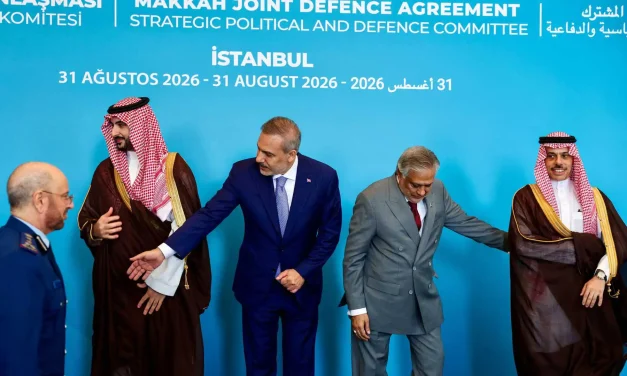
SCFR Online – Opinion: On Friday, August 7, the heads of state of three countries – Saudi Arabia, Turkey, and Pakistan – signed a text under the title “Makkah Joint Defense Agreement.”
Strategic Council Online – Note: The initiative to revive the Hejaz Railway, beyond being a transportation project, constitutes an attempt to redefine geopolitics, the economy, and Turkey’s regional position; however, its realization appears to face significant financial, security, and institutional challenges.
SCFR Online – Opinion: The Strait of Hormuz crisis is no longer merely the consequence of a military confrontation, but rather a sign of the transition from the US-centered maritime order to a new energy security structure involving the participation of emerging and influential powers.
SCFR Online – Opinion: Iran’s active deterrence strategy, while increasing the costs of US intervention, has increasingly exposed the hidden rifts between Washington’s interests and those of the Israeli regime.
SCFR Online – Opinion: The escalation of verbal and strategic tensions between Turkey and the Israeli regime, although not increasing the likelihood of direct war, indicates the formation of a new order in West Asian geopolitical rivalries.
Strategic Council Online – Note: Recent developments in the political geography of West Asia, from rising tensions in the Persian Gulf to missile and drone activities in the Red Sea and the recent warning by Kaja Kallas, the European Union’s foreign policy chief, regarding the threat to freedom of navigation, indicate a key pattern shift; the US-Iran war has moved beyond the scope of a regional and local confrontation and has linked two vital passageways for the global economy: the Strait of Hormuz and the Bab el-Mandeb Strait.
SCFR Online – Opinion: The Ukraine war was not merely a European crisis, but rather the starting point for the rearrangement of the global balance of power and a shift in the strategic behavior of great powers.
SCFR Online – Opinion: Great power competition is now pursued more in trade, currency, technology, and global supply chains than on the battlefields of military confrontation.
Strategic Council Online: President of the Strategic Council on Foreign Relations Dr. Kamal Kharrazi says Iranians stand united against US pressures and “we are trying to overcome these problems with due regard to our resources and facilities, the assistance of the friendly countries as well as mechanisms being formulated by the European Union.”
Strategic Council Online: President of the Strategic Council on Foreign Relations Dr. Kamal Kharrazi says one of the reasons that Iran is not prepared to enter into dialogue with the current US government is because the US administration does not adhere to its obligations.
Strategic Council Online: Dr Kamal Kharrazi says the United States is using Afghanistan as a political tool and its claims on restoring peace in the country are not trustworthy.
Strategic Council Online: The President of the Strategic Council on Foreign Relations said: ‘Europe is pursuing its independence, development of the euro, and its security independence from the United States, all developments that are welcomed by Iran.’
Strategic Council Online: President of the Strategic Council on Foreign Relations, Dr Kamal Kharrazi, speaking on the aftermath of the US withdrawal from Iran nuclear deal said that several rounds of negotiations with Europeans have taken place and are still underway. “We hope that the package that the European Union is going to offer to Tehran would guarantee Iran’s rights,” he underlined.
Strategic Council online – The president of Strategic Council on Foreign Relations believes that there is a huge potential for expanding Iran-China regional cooperation.
Strategic Council Online: The president of the Strategic Council for Foreign Relations offered seven proposals for the development of cooperation between Iran and China based on the Strategic Partnership Declaration between the two countries.
Strategic Council Online: President of the Strategic Council for Foreign Relations cautioned against the serious consequences if Iran does not benefit from the JCPOA.
Strategic Council Online: “The reason for the prolongation of the Yemen crisis is that the US has unleashed Saudi Arabia and the United Arab Emirates to continue bombings. Also, they lack the political will to resolve the crisis”, the president of Iran’s Strategic Council on Foreign Relations (SCFR) said.
Dr Seyed Kamal Kharrazi, president of the Strategic Council on Foreign Relations, issued a commemorative message on the occasion of the death of the late Kofi Annan.
SCFR Online – Opinion: On Friday, August 7, the heads of state of three countries – Saudi Arabia, Turkey, and Pakistan – signed a text under the title “Makkah Joint Defense Agreement.”
Strategic Council Online – Note: The initiative to revive the Hejaz Railway, beyond being a transportation project, constitutes an attempt to redefine geopolitics, the economy, and Turkey’s regional position; however, its realization appears to face significant financial, security, and institutional challenges.
SCFR Online – Opinion: The Strait of Hormuz crisis is no longer merely the consequence of a military confrontation, but rather a sign of the transition from the US-centered maritime order to a new energy security structure involving the participation of emerging and influential powers.
SCFR Online – Opinion: Iran’s active deterrence strategy, while increasing the costs of US intervention, has increasingly exposed the hidden rifts between Washington’s interests and those of the Israeli regime.
SCFR Online – Opinion: The escalation of verbal and strategic tensions between Turkey and the Israeli regime, although not increasing the likelihood of direct war, indicates the formation of a new order in West Asian geopolitical rivalries.
Strategic Council Online – Note: Recent developments in the political geography of West Asia, from rising tensions in the Persian Gulf to missile and drone activities in the Red Sea and the recent warning by Kaja Kallas, the European Union’s foreign policy chief, regarding the threat to freedom of navigation, indicate a key pattern shift; the US-Iran war has moved beyond the scope of a regional and local confrontation and has linked two vital passageways for the global economy: the Strait of Hormuz and the Bab el-Mandeb Strait.
SCFR Online – Opinion: The Ukraine war was not merely a European crisis, but rather the starting point for the rearrangement of the global balance of power and a shift in the strategic behavior of great powers.
SCFR Online – Opinion: Great power competition is now pursued more in trade, currency, technology, and global supply chains than on the battlefields of military confrontation.
Strategic Council Online: President of the Strategic Council on Foreign Relations Dr. Kamal Kharrazi says Iranians stand united against US pressures and “we are trying to overcome these problems with due regard to our resources and facilities, the assistance of the friendly countries as well as mechanisms being formulated by the European Union.”
Strategic Council Online: President of the Strategic Council on Foreign Relations Dr. Kamal Kharrazi says one of the reasons that Iran is not prepared to enter into dialogue with the current US government is because the US administration does not adhere to its obligations.
Strategic Council Online: Dr Kamal Kharrazi says the United States is using Afghanistan as a political tool and its claims on restoring peace in the country are not trustworthy.
Strategic Council Online: The President of the Strategic Council on Foreign Relations said: ‘Europe is pursuing its independence, development of the euro, and its security independence from the United States, all developments that are welcomed by Iran.’
Strategic Council Online: President of the Strategic Council on Foreign Relations, Dr Kamal Kharrazi, speaking on the aftermath of the US withdrawal from Iran nuclear deal said that several rounds of negotiations with Europeans have taken place and are still underway. “We hope that the package that the European Union is going to offer to Tehran would guarantee Iran’s rights,” he underlined.
Strategic Council online – The president of Strategic Council on Foreign Relations believes that there is a huge potential for expanding Iran-China regional cooperation.
Strategic Council Online: The president of the Strategic Council for Foreign Relations offered seven proposals for the development of cooperation between Iran and China based on the Strategic Partnership Declaration between the two countries.
Strategic Council Online: President of the Strategic Council for Foreign Relations cautioned against the serious consequences if Iran does not benefit from the JCPOA.
Strategic Council Online: “The reason for the prolongation of the Yemen crisis is that the US has unleashed Saudi Arabia and the United Arab Emirates to continue bombings. Also, they lack the political will to resolve the crisis”, the president of Iran’s Strategic Council on Foreign Relations (SCFR) said.
Dr Seyed Kamal Kharrazi, president of the Strategic Council on Foreign Relations, issued a commemorative message on the occasion of the death of the late Kofi Annan.
Strategic Council Online: President of the Strategic Council on Foreign Relations Dr. Kamal Kharrazi says Iranians stand united against US pressures and “we are trying to overcome these problems with due regard to our resources and facilities, the assistance of the friendly countries as well as mechanisms being formulated by the European Union.”
Strategic Council Online: President of the Strategic Council on Foreign Relations Dr. Kamal Kharrazi says one of the reasons that Iran is not prepared to enter into dialogue with the current US government is because the US administration does not adhere to its obligations.
Strategic Council Online: Dr Kamal Kharrazi says the United States is using Afghanistan as a political tool and its claims on restoring peace in the country are not trustworthy.
Strategic Council Online: The President of the Strategic Council on Foreign Relations said: ‘Europe is pursuing its independence, development of the euro, and its security independence from the United States, all developments that are welcomed by Iran.’
Strategic Council Online: President of the Strategic Council on Foreign Relations, Dr Kamal Kharrazi, speaking on the aftermath of the US withdrawal from Iran nuclear deal said that several rounds of negotiations with Europeans have taken place and are still underway. “We hope that the package that the European Union is going to offer to Tehran would guarantee Iran’s rights,” he underlined.
Strategic Council online – The president of Strategic Council on Foreign Relations believes that there is a huge potential for expanding Iran-China regional cooperation.
Strategic Council Online: The president of the Strategic Council for Foreign Relations offered seven proposals for the development of cooperation between Iran and China based on the Strategic Partnership Declaration between the two countries.
Strategic Council Online: President of the Strategic Council for Foreign Relations cautioned against the serious consequences if Iran does not benefit from the JCPOA.
Strategic Council Online: “The reason for the prolongation of the Yemen crisis is that the US has unleashed Saudi Arabia and the United Arab Emirates to continue bombings. Also, they lack the political will to resolve the crisis”, the president of Iran’s Strategic Council on Foreign Relations (SCFR) said.
Dr Seyed Kamal Kharrazi, president of the Strategic Council on Foreign Relations, issued a commemorative message on the occasion of the death of the late Kofi Annan.
SCFR Online – Opinion: On Friday, August 7, the heads of state of three countries – Saudi Arabia, Turkey, and Pakistan – signed a text under the title “Makkah Joint Defense Agreement.”
Strategic Council Online – Note: The initiative to revive the Hejaz Railway, beyond being a transportation project, constitutes an attempt to redefine geopolitics, the economy, and Turkey’s regional position; however, its realization appears to face significant financial, security, and institutional challenges.
SCFR Online – Opinion: The Strait of Hormuz crisis is no longer merely the consequence of a military confrontation, but rather a sign of the transition from the US-centered maritime order to a new energy security structure involving the participation of emerging and influential powers.
SCFR Online – Opinion: Iran’s active deterrence strategy, while increasing the costs of US intervention, has increasingly exposed the hidden rifts between Washington’s interests and those of the Israeli regime.
SCFR Online – Opinion: The escalation of verbal and strategic tensions between Turkey and the Israeli regime, although not increasing the likelihood of direct war, indicates the formation of a new order in West Asian geopolitical rivalries.
Strategic Council Online – Note: Recent developments in the political geography of West Asia, from rising tensions in the Persian Gulf to missile and drone activities in the Red Sea and the recent warning by Kaja Kallas, the European Union’s foreign policy chief, regarding the threat to freedom of navigation, indicate a key pattern shift; the US-Iran war has moved beyond the scope of a regional and local confrontation and has linked two vital passageways for the global economy: the Strait of Hormuz and the Bab el-Mandeb Strait.
SCFR Online – Opinion: The Ukraine war was not merely a European crisis, but rather the starting point for the rearrangement of the global balance of power and a shift in the strategic behavior of great powers.
SCFR Online – Opinion: Great power competition is now pursued more in trade, currency, technology, and global supply chains than on the battlefields of military confrontation.
Strategic Council Online: President of the Strategic Council on Foreign Relations Dr. Kamal Kharrazi says Iranians stand united against US pressures and “we are trying to overcome these problems with due regard to our resources and facilities, the assistance of the friendly countries as well as mechanisms being formulated by the European Union.”
Strategic Council Online: President of the Strategic Council on Foreign Relations Dr. Kamal Kharrazi says one of the reasons that Iran is not prepared to enter into dialogue with the current US government is because the US administration does not adhere to its obligations.
Strategic Council Online: Dr Kamal Kharrazi says the United States is using Afghanistan as a political tool and its claims on restoring peace in the country are not trustworthy.
Strategic Council Online: The President of the Strategic Council on Foreign Relations said: ‘Europe is pursuing its independence, development of the euro, and its security independence from the United States, all developments that are welcomed by Iran.’
Strategic Council Online: President of the Strategic Council on Foreign Relations, Dr Kamal Kharrazi, speaking on the aftermath of the US withdrawal from Iran nuclear deal said that several rounds of negotiations with Europeans have taken place and are still underway. “We hope that the package that the European Union is going to offer to Tehran would guarantee Iran’s rights,” he underlined.
Strategic Council online – The president of Strategic Council on Foreign Relations believes that there is a huge potential for expanding Iran-China regional cooperation.
Strategic Council Online: The president of the Strategic Council for Foreign Relations offered seven proposals for the development of cooperation between Iran and China based on the Strategic Partnership Declaration between the two countries.
Strategic Council Online: President of the Strategic Council for Foreign Relations cautioned against the serious consequences if Iran does not benefit from the JCPOA.
Strategic Council Online: “The reason for the prolongation of the Yemen crisis is that the US has unleashed Saudi Arabia and the United Arab Emirates to continue bombings. Also, they lack the political will to resolve the crisis”, the president of Iran’s Strategic Council on Foreign Relations (SCFR) said.
Dr Seyed Kamal Kharrazi, president of the Strategic Council on Foreign Relations, issued a commemorative message on the occasion of the death of the late Kofi Annan.
SCFR Online – Opinion: On Friday, August 7, the heads of state of three countries – Saudi Arabia, Turkey, and Pakistan – signed a text under the title “Makkah Joint Defense Agreement.”
Strategic Council Online – Note: The initiative to revive the Hejaz Railway, beyond being a transportation project, constitutes an attempt to redefine geopolitics, the economy, and Turkey’s regional position; however, its realization appears to face significant financial, security, and institutional challenges.
SCFR Online – Opinion: The Strait of Hormuz crisis is no longer merely the consequence of a military confrontation, but rather a sign of the transition from the US-centered maritime order to a new energy security structure involving the participation of emerging and influential powers.
SCFR Online – Opinion: Iran’s active deterrence strategy, while increasing the costs of US intervention, has increasingly exposed the hidden rifts between Washington’s interests and those of the Israeli regime.
SCFR Online – Opinion: The escalation of verbal and strategic tensions between Turkey and the Israeli regime, although not increasing the likelihood of direct war, indicates the formation of a new order in West Asian geopolitical rivalries.
Strategic Council Online – Note: Recent developments in the political geography of West Asia, from rising tensions in the Persian Gulf to missile and drone activities in the Red Sea and the recent warning by Kaja Kallas, the European Union’s foreign policy chief, regarding the threat to freedom of navigation, indicate a key pattern shift; the US-Iran war has moved beyond the scope of a regional and local confrontation and has linked two vital passageways for the global economy: the Strait of Hormuz and the Bab el-Mandeb Strait.
SCFR Online – Opinion: The Ukraine war was not merely a European crisis, but rather the starting point for the rearrangement of the global balance of power and a shift in the strategic behavior of great powers.
SCFR Online – Opinion: Great power competition is now pursued more in trade, currency, technology, and global supply chains than on the battlefields of military confrontation.
Strategic Council Online: President of the Strategic Council on Foreign Relations Dr. Kamal Kharrazi says Iranians stand united against US pressures and “we are trying to overcome these problems with due regard to our resources and facilities, the assistance of the friendly countries as well as mechanisms being formulated by the European Union.”
Strategic Council Online: President of the Strategic Council on Foreign Relations Dr. Kamal Kharrazi says one of the reasons that Iran is not prepared to enter into dialogue with the current US government is because the US administration does not adhere to its obligations.
Strategic Council Online: Dr Kamal Kharrazi says the United States is using Afghanistan as a political tool and its claims on restoring peace in the country are not trustworthy.
Strategic Council Online: The President of the Strategic Council on Foreign Relations said: ‘Europe is pursuing its independence, development of the euro, and its security independence from the United States, all developments that are welcomed by Iran.’
Strategic Council Online: President of the Strategic Council on Foreign Relations, Dr Kamal Kharrazi, speaking on the aftermath of the US withdrawal from Iran nuclear deal said that several rounds of negotiations with Europeans have taken place and are still underway. “We hope that the package that the European Union is going to offer to Tehran would guarantee Iran’s rights,” he underlined.
Strategic Council online – The president of Strategic Council on Foreign Relations believes that there is a huge potential for expanding Iran-China regional cooperation.
Strategic Council Online: The president of the Strategic Council for Foreign Relations offered seven proposals for the development of cooperation between Iran and China based on the Strategic Partnership Declaration between the two countries.
Strategic Council Online: President of the Strategic Council for Foreign Relations cautioned against the serious consequences if Iran does not benefit from the JCPOA.
Strategic Council Online: “The reason for the prolongation of the Yemen crisis is that the US has unleashed Saudi Arabia and the United Arab Emirates to continue bombings. Also, they lack the political will to resolve the crisis”, the president of Iran’s Strategic Council on Foreign Relations (SCFR) said.
Dr Seyed Kamal Kharrazi, president of the Strategic Council on Foreign Relations, issued a commemorative message on the occasion of the death of the late Kofi Annan.
SCFR Online – Opinion: On Friday, August 7, the heads of state of three countries – Saudi Arabia, Turkey, and Pakistan – signed a text under the title “Makkah Joint Defense Agreement.”
Strategic Council Online – Note: The initiative to revive the Hejaz Railway, beyond being a transportation project, constitutes an attempt to redefine geopolitics, the economy, and Turkey’s regional position; however, its realization appears to face significant financial, security, and institutional challenges.
SCFR Online – Opinion: The Strait of Hormuz crisis is no longer merely the consequence of a military confrontation, but rather a sign of the transition from the US-centered maritime order to a new energy security structure involving the participation of emerging and influential powers.
SCFR Online – Opinion: Iran’s active deterrence strategy, while increasing the costs of US intervention, has increasingly exposed the hidden rifts between Washington’s interests and those of the Israeli regime.
SCFR Online – Opinion: The escalation of verbal and strategic tensions between Turkey and the Israeli regime, although not increasing the likelihood of direct war, indicates the formation of a new order in West Asian geopolitical rivalries.
Strategic Council Online – Note: Recent developments in the political geography of West Asia, from rising tensions in the Persian Gulf to missile and drone activities in the Red Sea and the recent warning by Kaja Kallas, the European Union’s foreign policy chief, regarding the threat to freedom of navigation, indicate a key pattern shift; the US-Iran war has moved beyond the scope of a regional and local confrontation and has linked two vital passageways for the global economy: the Strait of Hormuz and the Bab el-Mandeb Strait.
SCFR Online – Opinion: The Ukraine war was not merely a European crisis, but rather the starting point for the rearrangement of the global balance of power and a shift in the strategic behavior of great powers.
SCFR Online – Opinion: Great power competition is now pursued more in trade, currency, technology, and global supply chains than on the battlefields of military confrontation.
Strategic Council Online: President of the Strategic Council on Foreign Relations Dr. Kamal Kharrazi says Iranians stand united against US pressures and “we are trying to overcome these problems with due regard to our resources and facilities, the assistance of the friendly countries as well as mechanisms being formulated by the European Union.”
Strategic Council Online: President of the Strategic Council on Foreign Relations Dr. Kamal Kharrazi says one of the reasons that Iran is not prepared to enter into dialogue with the current US government is because the US administration does not adhere to its obligations.
Strategic Council Online: Dr Kamal Kharrazi says the United States is using Afghanistan as a political tool and its claims on restoring peace in the country are not trustworthy.
Strategic Council Online: The President of the Strategic Council on Foreign Relations said: ‘Europe is pursuing its independence, development of the euro, and its security independence from the United States, all developments that are welcomed by Iran.’
Strategic Council Online: President of the Strategic Council on Foreign Relations, Dr Kamal Kharrazi, speaking on the aftermath of the US withdrawal from Iran nuclear deal said that several rounds of negotiations with Europeans have taken place and are still underway. “We hope that the package that the European Union is going to offer to Tehran would guarantee Iran’s rights,” he underlined.
Strategic Council online – The president of Strategic Council on Foreign Relations believes that there is a huge potential for expanding Iran-China regional cooperation.
Strategic Council Online: The president of the Strategic Council for Foreign Relations offered seven proposals for the development of cooperation between Iran and China based on the Strategic Partnership Declaration between the two countries.
Strategic Council Online: President of the Strategic Council for Foreign Relations cautioned against the serious consequences if Iran does not benefit from the JCPOA.
Strategic Council Online: “The reason for the prolongation of the Yemen crisis is that the US has unleashed Saudi Arabia and the United Arab Emirates to continue bombings. Also, they lack the political will to resolve the crisis”, the president of Iran’s Strategic Council on Foreign Relations (SCFR) said.
Dr Seyed Kamal Kharrazi, president of the Strategic Council on Foreign Relations, issued a commemorative message on the occasion of the death of the late Kofi Annan.
SCFR Online – Opinion: On Friday, August 7, the heads of state of three countries – Saudi Arabia, Turkey, and Pakistan – signed a text under the title “Makkah Joint Defense Agreement.”
Strategic Council Online – Note: The initiative to revive the Hejaz Railway, beyond being a transportation project, constitutes an attempt to redefine geopolitics, the economy, and Turkey’s regional position; however, its realization appears to face significant financial, security, and institutional challenges.
SCFR Online – Opinion: The Strait of Hormuz crisis is no longer merely the consequence of a military confrontation, but rather a sign of the transition from the US-centered maritime order to a new energy security structure involving the participation of emerging and influential powers.
SCFR Online – Opinion: Iran’s active deterrence strategy, while increasing the costs of US intervention, has increasingly exposed the hidden rifts between Washington’s interests and those of the Israeli regime.
SCFR Online – Opinion: The escalation of verbal and strategic tensions between Turkey and the Israeli regime, although not increasing the likelihood of direct war, indicates the formation of a new order in West Asian geopolitical rivalries.
Strategic Council Online – Note: Recent developments in the political geography of West Asia, from rising tensions in the Persian Gulf to missile and drone activities in the Red Sea and the recent warning by Kaja Kallas, the European Union’s foreign policy chief, regarding the threat to freedom of navigation, indicate a key pattern shift; the US-Iran war has moved beyond the scope of a regional and local confrontation and has linked two vital passageways for the global economy: the Strait of Hormuz and the Bab el-Mandeb Strait.
SCFR Online – Opinion: The Ukraine war was not merely a European crisis, but rather the starting point for the rearrangement of the global balance of power and a shift in the strategic behavior of great powers.
SCFR Online – Opinion: Great power competition is now pursued more in trade, currency, technology, and global supply chains than on the battlefields of military confrontation.
Strategic Council Online: President of the Strategic Council on Foreign Relations Dr. Kamal Kharrazi says Iranians stand united against US pressures and “we are trying to overcome these problems with due regard to our resources and facilities, the assistance of the friendly countries as well as mechanisms being formulated by the European Union.”
Strategic Council Online: President of the Strategic Council on Foreign Relations Dr. Kamal Kharrazi says one of the reasons that Iran is not prepared to enter into dialogue with the current US government is because the US administration does not adhere to its obligations.
Strategic Council Online: Dr Kamal Kharrazi says the United States is using Afghanistan as a political tool and its claims on restoring peace in the country are not trustworthy.
Strategic Council Online: The President of the Strategic Council on Foreign Relations said: ‘Europe is pursuing its independence, development of the euro, and its security independence from the United States, all developments that are welcomed by Iran.’
Strategic Council Online: President of the Strategic Council on Foreign Relations, Dr Kamal Kharrazi, speaking on the aftermath of the US withdrawal from Iran nuclear deal said that several rounds of negotiations with Europeans have taken place and are still underway. “We hope that the package that the European Union is going to offer to Tehran would guarantee Iran’s rights,” he underlined.
Strategic Council online – The president of Strategic Council on Foreign Relations believes that there is a huge potential for expanding Iran-China regional cooperation.
Strategic Council Online: The president of the Strategic Council for Foreign Relations offered seven proposals for the development of cooperation between Iran and China based on the Strategic Partnership Declaration between the two countries.
Strategic Council Online: President of the Strategic Council for Foreign Relations cautioned against the serious consequences if Iran does not benefit from the JCPOA.
Strategic Council Online: “The reason for the prolongation of the Yemen crisis is that the US has unleashed Saudi Arabia and the United Arab Emirates to continue bombings. Also, they lack the political will to resolve the crisis”, the president of Iran’s Strategic Council on Foreign Relations (SCFR) said.
Dr Seyed Kamal Kharrazi, president of the Strategic Council on Foreign Relations, issued a commemorative message on the occasion of the death of the late Kofi Annan.
SCFR Online – Opinion: On Friday, August 7, the heads of state of three countries – Saudi Arabia, Turkey, and Pakistan – signed a text under the title “Makkah Joint Defense Agreement.”
Strategic Council Online – Note: The initiative to revive the Hejaz Railway, beyond being a transportation project, constitutes an attempt to redefine geopolitics, the economy, and Turkey’s regional position; however, its realization appears to face significant financial, security, and institutional challenges.
SCFR Online – Opinion: The Strait of Hormuz crisis is no longer merely the consequence of a military confrontation, but rather a sign of the transition from the US-centered maritime order to a new energy security structure involving the participation of emerging and influential powers.
SCFR Online – Opinion: Iran’s active deterrence strategy, while increasing the costs of US intervention, has increasingly exposed the hidden rifts between Washington’s interests and those of the Israeli regime.
SCFR Online – Opinion: The escalation of verbal and strategic tensions between Turkey and the Israeli regime, although not increasing the likelihood of direct war, indicates the formation of a new order in West Asian geopolitical rivalries.
Strategic Council Online – Note: Recent developments in the political geography of West Asia, from rising tensions in the Persian Gulf to missile and drone activities in the Red Sea and the recent warning by Kaja Kallas, the European Union’s foreign policy chief, regarding the threat to freedom of navigation, indicate a key pattern shift; the US-Iran war has moved beyond the scope of a regional and local confrontation and has linked two vital passageways for the global economy: the Strait of Hormuz and the Bab el-Mandeb Strait.
SCFR Online – Opinion: The Ukraine war was not merely a European crisis, but rather the starting point for the rearrangement of the global balance of power and a shift in the strategic behavior of great powers.
SCFR Online – Opinion: Great power competition is now pursued more in trade, currency, technology, and global supply chains than on the battlefields of military confrontation.