جدیدترین مطالب

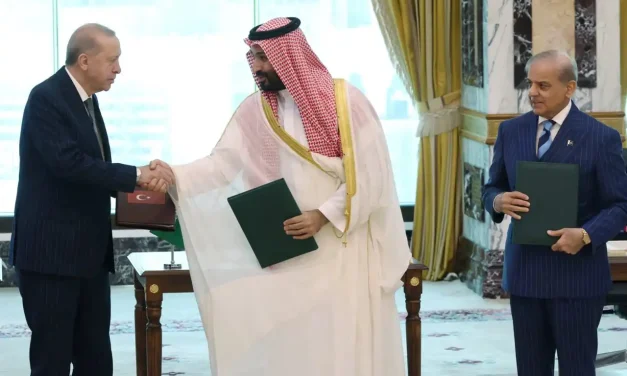
The Makkah Pact Under scrutiny; From the “Deterrence Dilemma” to the “Risk of Disrupting Security”

SCFR Online – Opinion: The Makkah Pact, signed on August 7, 2026, between Saudi Arabia, Turkey, and Pakistan, is more than an answer to geopolitical vacuums; in practice, it faces a “deterrence dilemma” and “differing threat perception.” While this pact symbolizes a transition toward regional self-reliance, its first field tests and the complexities of relations with regional actors will determine its real meaning.

Loading

Politics

Reasons for Not Forming a Government in Lebanon

Reasons for Not Forming a Government in Lebanon

Strategic Council Online – Interview: An expert on the Middle East affairs commenting on the reasons for Saad Hariri’s delay in forming the Lebanese government said: The Lebanese government has suffered from an internal crisis in recent years, especially after the 2018 elections; in this way, the governments that came to power could not form a cabinet or continue to work due to some issues such as internal protests or lack of internal political understanding.

Variables Affecting Revival of JCPOA

Variables Affecting Revival of JCPOA

Strategic Council Online – An expert on international affairs commenting on the results of holding the two rounds of the Joint Comprehensive Plan of Action (JCPOA) Joint Commission meeting in Vienna said: Considering the desire of all parties to continue the negotiations, it can be said that the scenario of reviving the JCPOA is not far-fetched.

Netanyahu presidency scenario to save the Zionist regime from political deadlock

Netanyahu presidency scenario to save the Zionist regime from political deadlock

Strategic Council Online—Interview: An expert of Zionist regime affairs says the public opinion in Israel believes Benjamin Netanyahu’s thirst for power is the sole reason behind the prolongation of the political deadlock, adding that political groups inside the Zionist regime have reached the conclusion that Israel needs to continue its path without Netanyahu.

Will unification of power in Kosovo result in normalization of relations with Serbia?

Will unification of power in Kosovo result in normalization of relations with Serbia?

Online Strategic Council—Opinion: Madam Vjosa Osmani-Sadriu, 38 years old, educated in the United States and candidate of the ruling party for the position of President of Kosovo, was elected as the new President of Kosovo in the third round of voting in the 112-seat parliament with the positive vote of 71 MPs. In this voting, 11 votes were disqualified and two opposition parties and one Serb-minority party boycotted voting in the parliament. Osmani-Sadriu, former speaker of the parliament, is the second women to be elected president in Kosovo after the Balkans conflict. She is holding a ceremonial position now however she plays the leading role in determining Kosovo’s foreign policy while she is the commander in chief of the armed forces. She became the interim chief of cabinet in November 2020 after Hashim Thaci resigned as the president of Kosovo. Thaci submitted his resignation before a court in the Netherlands began investigating war crimes. Hashim Thaci is awaiting the court.
Mahmood Fazeli—International affairs analyst

Proportional, Reciprocal Response to Nuclear Terrorism

Proportional, Reciprocal Response to Nuclear Terrorism

Strategic Council Online – The sabotage at Natanz nuclear facility is, in view of the head of Iran Atomic Energy Organization, tantamount to “nuclear terrorism” and according to the available signs and evidences, the finger of blame has been pointed at the Zionist regime; now the question is what is the proportional and reciprocal response to this terrorist movement and what dimensions can it have?
Dr. Ali Karbalaei Hosseini – International Law Expert

Prospects of the peace process in Afghanistan and the Istanbul talks

Prospects of the peace process in Afghanistan and the Istanbul talks

Online Strategic Council—Interview: An analyst of Afghanistan issues says the Istanbul meeting is in fact complementary to the Moscow conference and it seems there is an agreement between the Americans and the Russians behind the curtains on the future of Afghanistan and the structure of power, adding that such efforts are far from success without soliciting the prior agreement of the neighbors and the incorporation of their viewpoints.

The role of Iran in terminating the political life of Netanyahu

The role of Iran in terminating the political life of Netanyahu

Online Strategic Council—Interview: An expert of Middle East issues referred to the approach by Benjamin Netanyahu the prime minister of the Zionist regime concerning the issue of revival of the nuclear deal and his efforts to obstruct the return of the US to the JCPOA, saying Netanyahu has always made efforts to exploit the intensification of conflict between Tehran and Washington to advance his own goals.

Importance, Implications of Signing 25-Year Iran-China Comprehensive Strategic Partnership Document

Importance, Implications of Signing 25-Year Iran-China Comprehensive Strategic Partnership Document

Strategic Council Online – Since the plan for the 25-year comprehensive cooperation was sketched between Iran and China in Dey 1394 (December 2015), following the visit of President Xi Jinping and Foreign Minister Wang Yi of China to the Middle East and signing of the cooperation plan document in Farvardin1400 (March/April) 2021), the issue of promoting Iran-China relations has been the focus of national and international scientific-political circles. The existence of differences, conflicting views, and various political and economic analyses from the very beginning of this document indicates that a clear understanding of the nature of this cooperation, the scope of activities, and its positive or negative consequences have not yet been achieved. In order to understand the consequences of signing a 25-year comprehensive cooperation document for domestic and international observers, it is necessary to take a brief look at the structural changes in the international system, regional developments, and Iran’s domestic policies.
Fatemeh Mahrough – Assistant Professor of International Relations, Ferdowsi University of Mashhad

أحدث الوظائف

The Makkah Pact Under scrutiny; From the “Deterrence Dilemma” to the “Risk of Disrupting Security”

SCFR Online – Opinion: The Makkah Pact, signed on August 7, 2026, between Saudi Arabia, Turkey, and Pakistan, is more than an answer to geopolitical vacuums; in practice, it faces a “deterrence dilemma” and “differing threat perception.” While this pact symbolizes a transition toward regional self-reliance, its first field tests and the complexities of relations with regional actors will determine its real meaning.

Loading

Politics

Reasons for Not Forming a Government in Lebanon

Reasons for Not Forming a Government in Lebanon

Strategic Council Online – Interview: An expert on the Middle East affairs commenting on the reasons for Saad Hariri’s delay in forming the Lebanese government said: The Lebanese government has suffered from an internal crisis in recent years, especially after the 2018 elections; in this way, the governments that came to power could not form a cabinet or continue to work due to some issues such as internal protests or lack of internal political understanding.

Variables Affecting Revival of JCPOA

Variables Affecting Revival of JCPOA

Strategic Council Online – An expert on international affairs commenting on the results of holding the two rounds of the Joint Comprehensive Plan of Action (JCPOA) Joint Commission meeting in Vienna said: Considering the desire of all parties to continue the negotiations, it can be said that the scenario of reviving the JCPOA is not far-fetched.

Netanyahu presidency scenario to save the Zionist regime from political deadlock

Netanyahu presidency scenario to save the Zionist regime from political deadlock

Strategic Council Online—Interview: An expert of Zionist regime affairs says the public opinion in Israel believes Benjamin Netanyahu’s thirst for power is the sole reason behind the prolongation of the political deadlock, adding that political groups inside the Zionist regime have reached the conclusion that Israel needs to continue its path without Netanyahu.

Will unification of power in Kosovo result in normalization of relations with Serbia?

Will unification of power in Kosovo result in normalization of relations with Serbia?

Online Strategic Council—Opinion: Madam Vjosa Osmani-Sadriu, 38 years old, educated in the United States and candidate of the ruling party for the position of President of Kosovo, was elected as the new President of Kosovo in the third round of voting in the 112-seat parliament with the positive vote of 71 MPs. In this voting, 11 votes were disqualified and two opposition parties and one Serb-minority party boycotted voting in the parliament. Osmani-Sadriu, former speaker of the parliament, is the second women to be elected president in Kosovo after the Balkans conflict. She is holding a ceremonial position now however she plays the leading role in determining Kosovo’s foreign policy while she is the commander in chief of the armed forces. She became the interim chief of cabinet in November 2020 after Hashim Thaci resigned as the president of Kosovo. Thaci submitted his resignation before a court in the Netherlands began investigating war crimes. Hashim Thaci is awaiting the court.
Mahmood Fazeli—International affairs analyst

Proportional, Reciprocal Response to Nuclear Terrorism

Proportional, Reciprocal Response to Nuclear Terrorism

Strategic Council Online – The sabotage at Natanz nuclear facility is, in view of the head of Iran Atomic Energy Organization, tantamount to “nuclear terrorism” and according to the available signs and evidences, the finger of blame has been pointed at the Zionist regime; now the question is what is the proportional and reciprocal response to this terrorist movement and what dimensions can it have?
Dr. Ali Karbalaei Hosseini – International Law Expert

Prospects of the peace process in Afghanistan and the Istanbul talks

Prospects of the peace process in Afghanistan and the Istanbul talks

Online Strategic Council—Interview: An analyst of Afghanistan issues says the Istanbul meeting is in fact complementary to the Moscow conference and it seems there is an agreement between the Americans and the Russians behind the curtains on the future of Afghanistan and the structure of power, adding that such efforts are far from success without soliciting the prior agreement of the neighbors and the incorporation of their viewpoints.

The role of Iran in terminating the political life of Netanyahu

The role of Iran in terminating the political life of Netanyahu

Online Strategic Council—Interview: An expert of Middle East issues referred to the approach by Benjamin Netanyahu the prime minister of the Zionist regime concerning the issue of revival of the nuclear deal and his efforts to obstruct the return of the US to the JCPOA, saying Netanyahu has always made efforts to exploit the intensification of conflict between Tehran and Washington to advance his own goals.

Importance, Implications of Signing 25-Year Iran-China Comprehensive Strategic Partnership Document

Importance, Implications of Signing 25-Year Iran-China Comprehensive Strategic Partnership Document

Strategic Council Online – Since the plan for the 25-year comprehensive cooperation was sketched between Iran and China in Dey 1394 (December 2015), following the visit of President Xi Jinping and Foreign Minister Wang Yi of China to the Middle East and signing of the cooperation plan document in Farvardin1400 (March/April) 2021), the issue of promoting Iran-China relations has been the focus of national and international scientific-political circles. The existence of differences, conflicting views, and various political and economic analyses from the very beginning of this document indicates that a clear understanding of the nature of this cooperation, the scope of activities, and its positive or negative consequences have not yet been achieved. In order to understand the consequences of signing a 25-year comprehensive cooperation document for domestic and international observers, it is necessary to take a brief look at the structural changes in the international system, regional developments, and Iran’s domestic policies.
Fatemeh Mahrough – Assistant Professor of International Relations, Ferdowsi University of Mashhad

Politics

Reasons for Not Forming a Government in Lebanon

Reasons for Not Forming a Government in Lebanon

Strategic Council Online – Interview: An expert on the Middle East affairs commenting on the reasons for Saad Hariri’s delay in forming the Lebanese government said: The Lebanese government has suffered from an internal crisis in recent years, especially after the 2018 elections; in this way, the governments that came to power could not form a cabinet or continue to work due to some issues such as internal protests or lack of internal political understanding.

Variables Affecting Revival of JCPOA

Variables Affecting Revival of JCPOA

Strategic Council Online – An expert on international affairs commenting on the results of holding the two rounds of the Joint Comprehensive Plan of Action (JCPOA) Joint Commission meeting in Vienna said: Considering the desire of all parties to continue the negotiations, it can be said that the scenario of reviving the JCPOA is not far-fetched.

Netanyahu presidency scenario to save the Zionist regime from political deadlock

Netanyahu presidency scenario to save the Zionist regime from political deadlock

Strategic Council Online—Interview: An expert of Zionist regime affairs says the public opinion in Israel believes Benjamin Netanyahu’s thirst for power is the sole reason behind the prolongation of the political deadlock, adding that political groups inside the Zionist regime have reached the conclusion that Israel needs to continue its path without Netanyahu.

Will unification of power in Kosovo result in normalization of relations with Serbia?

Will unification of power in Kosovo result in normalization of relations with Serbia?

Online Strategic Council—Opinion: Madam Vjosa Osmani-Sadriu, 38 years old, educated in the United States and candidate of the ruling party for the position of President of Kosovo, was elected as the new President of Kosovo in the third round of voting in the 112-seat parliament with the positive vote of 71 MPs. In this voting, 11 votes were disqualified and two opposition parties and one Serb-minority party boycotted voting in the parliament. Osmani-Sadriu, former speaker of the parliament, is the second women to be elected president in Kosovo after the Balkans conflict. She is holding a ceremonial position now however she plays the leading role in determining Kosovo’s foreign policy while she is the commander in chief of the armed forces. She became the interim chief of cabinet in November 2020 after Hashim Thaci resigned as the president of Kosovo. Thaci submitted his resignation before a court in the Netherlands began investigating war crimes. Hashim Thaci is awaiting the court.
Mahmood Fazeli—International affairs analyst

Proportional, Reciprocal Response to Nuclear Terrorism

Proportional, Reciprocal Response to Nuclear Terrorism

Strategic Council Online – The sabotage at Natanz nuclear facility is, in view of the head of Iran Atomic Energy Organization, tantamount to “nuclear terrorism” and according to the available signs and evidences, the finger of blame has been pointed at the Zionist regime; now the question is what is the proportional and reciprocal response to this terrorist movement and what dimensions can it have?
Dr. Ali Karbalaei Hosseini – International Law Expert

Prospects of the peace process in Afghanistan and the Istanbul talks

Prospects of the peace process in Afghanistan and the Istanbul talks

Online Strategic Council—Interview: An analyst of Afghanistan issues says the Istanbul meeting is in fact complementary to the Moscow conference and it seems there is an agreement between the Americans and the Russians behind the curtains on the future of Afghanistan and the structure of power, adding that such efforts are far from success without soliciting the prior agreement of the neighbors and the incorporation of their viewpoints.

The role of Iran in terminating the political life of Netanyahu

The role of Iran in terminating the political life of Netanyahu

Online Strategic Council—Interview: An expert of Middle East issues referred to the approach by Benjamin Netanyahu the prime minister of the Zionist regime concerning the issue of revival of the nuclear deal and his efforts to obstruct the return of the US to the JCPOA, saying Netanyahu has always made efforts to exploit the intensification of conflict between Tehran and Washington to advance his own goals.

Importance, Implications of Signing 25-Year Iran-China Comprehensive Strategic Partnership Document

Importance, Implications of Signing 25-Year Iran-China Comprehensive Strategic Partnership Document

Strategic Council Online – Since the plan for the 25-year comprehensive cooperation was sketched between Iran and China in Dey 1394 (December 2015), following the visit of President Xi Jinping and Foreign Minister Wang Yi of China to the Middle East and signing of the cooperation plan document in Farvardin1400 (March/April) 2021), the issue of promoting Iran-China relations has been the focus of national and international scientific-political circles. The existence of differences, conflicting views, and various political and economic analyses from the very beginning of this document indicates that a clear understanding of the nature of this cooperation, the scope of activities, and its positive or negative consequences have not yet been achieved. In order to understand the consequences of signing a 25-year comprehensive cooperation document for domestic and international observers, it is necessary to take a brief look at the structural changes in the international system, regional developments, and Iran’s domestic policies.
Fatemeh Mahrough – Assistant Professor of International Relations, Ferdowsi University of Mashhad

LATEST CONTENT

The Makkah Pact Under scrutiny; From the “Deterrence Dilemma” to the “Risk of Disrupting Security”

SCFR Online – Opinion: The Makkah Pact, signed on August 7, 2026, between Saudi Arabia, Turkey, and Pakistan, is more than an answer to geopolitical vacuums; in practice, it faces a “deterrence dilemma” and “differing threat perception.” While this pact symbolizes a transition toward regional self-reliance, its first field tests and the complexities of relations with regional actors will determine its real meaning.

Loading

Politics

Reasons for Not Forming a Government in Lebanon

Reasons for Not Forming a Government in Lebanon

Strategic Council Online – Interview: An expert on the Middle East affairs commenting on the reasons for Saad Hariri’s delay in forming the Lebanese government said: The Lebanese government has suffered from an internal crisis in recent years, especially after the 2018 elections; in this way, the governments that came to power could not form a cabinet or continue to work due to some issues such as internal protests or lack of internal political understanding.

Variables Affecting Revival of JCPOA

Variables Affecting Revival of JCPOA

Strategic Council Online – An expert on international affairs commenting on the results of holding the two rounds of the Joint Comprehensive Plan of Action (JCPOA) Joint Commission meeting in Vienna said: Considering the desire of all parties to continue the negotiations, it can be said that the scenario of reviving the JCPOA is not far-fetched.

Netanyahu presidency scenario to save the Zionist regime from political deadlock

Netanyahu presidency scenario to save the Zionist regime from political deadlock

Strategic Council Online—Interview: An expert of Zionist regime affairs says the public opinion in Israel believes Benjamin Netanyahu’s thirst for power is the sole reason behind the prolongation of the political deadlock, adding that political groups inside the Zionist regime have reached the conclusion that Israel needs to continue its path without Netanyahu.

Will unification of power in Kosovo result in normalization of relations with Serbia?

Will unification of power in Kosovo result in normalization of relations with Serbia?

Online Strategic Council—Opinion: Madam Vjosa Osmani-Sadriu, 38 years old, educated in the United States and candidate of the ruling party for the position of President of Kosovo, was elected as the new President of Kosovo in the third round of voting in the 112-seat parliament with the positive vote of 71 MPs. In this voting, 11 votes were disqualified and two opposition parties and one Serb-minority party boycotted voting in the parliament. Osmani-Sadriu, former speaker of the parliament, is the second women to be elected president in Kosovo after the Balkans conflict. She is holding a ceremonial position now however she plays the leading role in determining Kosovo’s foreign policy while she is the commander in chief of the armed forces. She became the interim chief of cabinet in November 2020 after Hashim Thaci resigned as the president of Kosovo. Thaci submitted his resignation before a court in the Netherlands began investigating war crimes. Hashim Thaci is awaiting the court.
Mahmood Fazeli—International affairs analyst

Proportional, Reciprocal Response to Nuclear Terrorism

Proportional, Reciprocal Response to Nuclear Terrorism

Strategic Council Online – The sabotage at Natanz nuclear facility is, in view of the head of Iran Atomic Energy Organization, tantamount to “nuclear terrorism” and according to the available signs and evidences, the finger of blame has been pointed at the Zionist regime; now the question is what is the proportional and reciprocal response to this terrorist movement and what dimensions can it have?
Dr. Ali Karbalaei Hosseini – International Law Expert

Prospects of the peace process in Afghanistan and the Istanbul talks

Prospects of the peace process in Afghanistan and the Istanbul talks

Online Strategic Council—Interview: An analyst of Afghanistan issues says the Istanbul meeting is in fact complementary to the Moscow conference and it seems there is an agreement between the Americans and the Russians behind the curtains on the future of Afghanistan and the structure of power, adding that such efforts are far from success without soliciting the prior agreement of the neighbors and the incorporation of their viewpoints.

The role of Iran in terminating the political life of Netanyahu

The role of Iran in terminating the political life of Netanyahu

Online Strategic Council—Interview: An expert of Middle East issues referred to the approach by Benjamin Netanyahu the prime minister of the Zionist regime concerning the issue of revival of the nuclear deal and his efforts to obstruct the return of the US to the JCPOA, saying Netanyahu has always made efforts to exploit the intensification of conflict between Tehran and Washington to advance his own goals.

Importance, Implications of Signing 25-Year Iran-China Comprehensive Strategic Partnership Document

Importance, Implications of Signing 25-Year Iran-China Comprehensive Strategic Partnership Document

Strategic Council Online – Since the plan for the 25-year comprehensive cooperation was sketched between Iran and China in Dey 1394 (December 2015), following the visit of President Xi Jinping and Foreign Minister Wang Yi of China to the Middle East and signing of the cooperation plan document in Farvardin1400 (March/April) 2021), the issue of promoting Iran-China relations has been the focus of national and international scientific-political circles. The existence of differences, conflicting views, and various political and economic analyses from the very beginning of this document indicates that a clear understanding of the nature of this cooperation, the scope of activities, and its positive or negative consequences have not yet been achieved. In order to understand the consequences of signing a 25-year comprehensive cooperation document for domestic and international observers, it is necessary to take a brief look at the structural changes in the international system, regional developments, and Iran’s domestic policies.
Fatemeh Mahrough – Assistant Professor of International Relations, Ferdowsi University of Mashhad

ÚLTIMAS PUBLICACIONES

The Makkah Pact Under scrutiny; From the “Deterrence Dilemma” to the “Risk of Disrupting Security”

SCFR Online – Opinion: The Makkah Pact, signed on August 7, 2026, between Saudi Arabia, Turkey, and Pakistan, is more than an answer to geopolitical vacuums; in practice, it faces a “deterrence dilemma” and “differing threat perception.” While this pact symbolizes a transition toward regional self-reliance, its first field tests and the complexities of relations with regional actors will determine its real meaning.

Loading

Politics

Reasons for Not Forming a Government in Lebanon

Reasons for Not Forming a Government in Lebanon

Strategic Council Online – Interview: An expert on the Middle East affairs commenting on the reasons for Saad Hariri’s delay in forming the Lebanese government said: The Lebanese government has suffered from an internal crisis in recent years, especially after the 2018 elections; in this way, the governments that came to power could not form a cabinet or continue to work due to some issues such as internal protests or lack of internal political understanding.

Variables Affecting Revival of JCPOA

Variables Affecting Revival of JCPOA

Strategic Council Online – An expert on international affairs commenting on the results of holding the two rounds of the Joint Comprehensive Plan of Action (JCPOA) Joint Commission meeting in Vienna said: Considering the desire of all parties to continue the negotiations, it can be said that the scenario of reviving the JCPOA is not far-fetched.

Netanyahu presidency scenario to save the Zionist regime from political deadlock

Netanyahu presidency scenario to save the Zionist regime from political deadlock

Strategic Council Online—Interview: An expert of Zionist regime affairs says the public opinion in Israel believes Benjamin Netanyahu’s thirst for power is the sole reason behind the prolongation of the political deadlock, adding that political groups inside the Zionist regime have reached the conclusion that Israel needs to continue its path without Netanyahu.

Will unification of power in Kosovo result in normalization of relations with Serbia?

Will unification of power in Kosovo result in normalization of relations with Serbia?

Online Strategic Council—Opinion: Madam Vjosa Osmani-Sadriu, 38 years old, educated in the United States and candidate of the ruling party for the position of President of Kosovo, was elected as the new President of Kosovo in the third round of voting in the 112-seat parliament with the positive vote of 71 MPs. In this voting, 11 votes were disqualified and two opposition parties and one Serb-minority party boycotted voting in the parliament. Osmani-Sadriu, former speaker of the parliament, is the second women to be elected president in Kosovo after the Balkans conflict. She is holding a ceremonial position now however she plays the leading role in determining Kosovo’s foreign policy while she is the commander in chief of the armed forces. She became the interim chief of cabinet in November 2020 after Hashim Thaci resigned as the president of Kosovo. Thaci submitted his resignation before a court in the Netherlands began investigating war crimes. Hashim Thaci is awaiting the court.
Mahmood Fazeli—International affairs analyst

Proportional, Reciprocal Response to Nuclear Terrorism

Proportional, Reciprocal Response to Nuclear Terrorism

Strategic Council Online – The sabotage at Natanz nuclear facility is, in view of the head of Iran Atomic Energy Organization, tantamount to “nuclear terrorism” and according to the available signs and evidences, the finger of blame has been pointed at the Zionist regime; now the question is what is the proportional and reciprocal response to this terrorist movement and what dimensions can it have?
Dr. Ali Karbalaei Hosseini – International Law Expert

Prospects of the peace process in Afghanistan and the Istanbul talks

Prospects of the peace process in Afghanistan and the Istanbul talks

Online Strategic Council—Interview: An analyst of Afghanistan issues says the Istanbul meeting is in fact complementary to the Moscow conference and it seems there is an agreement between the Americans and the Russians behind the curtains on the future of Afghanistan and the structure of power, adding that such efforts are far from success without soliciting the prior agreement of the neighbors and the incorporation of their viewpoints.

The role of Iran in terminating the political life of Netanyahu

The role of Iran in terminating the political life of Netanyahu

Online Strategic Council—Interview: An expert of Middle East issues referred to the approach by Benjamin Netanyahu the prime minister of the Zionist regime concerning the issue of revival of the nuclear deal and his efforts to obstruct the return of the US to the JCPOA, saying Netanyahu has always made efforts to exploit the intensification of conflict between Tehran and Washington to advance his own goals.

Importance, Implications of Signing 25-Year Iran-China Comprehensive Strategic Partnership Document

Importance, Implications of Signing 25-Year Iran-China Comprehensive Strategic Partnership Document

Strategic Council Online – Since the plan for the 25-year comprehensive cooperation was sketched between Iran and China in Dey 1394 (December 2015), following the visit of President Xi Jinping and Foreign Minister Wang Yi of China to the Middle East and signing of the cooperation plan document in Farvardin1400 (March/April) 2021), the issue of promoting Iran-China relations has been the focus of national and international scientific-political circles. The existence of differences, conflicting views, and various political and economic analyses from the very beginning of this document indicates that a clear understanding of the nature of this cooperation, the scope of activities, and its positive or negative consequences have not yet been achieved. In order to understand the consequences of signing a 25-year comprehensive cooperation document for domestic and international observers, it is necessary to take a brief look at the structural changes in the international system, regional developments, and Iran’s domestic policies.
Fatemeh Mahrough – Assistant Professor of International Relations, Ferdowsi University of Mashhad

ÚLTIMAS PUBLICACIONES

The Makkah Pact Under scrutiny; From the “Deterrence Dilemma” to the “Risk of Disrupting Security”

SCFR Online – Opinion: The Makkah Pact, signed on August 7, 2026, between Saudi Arabia, Turkey, and Pakistan, is more than an answer to geopolitical vacuums; in practice, it faces a “deterrence dilemma” and “differing threat perception.” While this pact symbolizes a transition toward regional self-reliance, its first field tests and the complexities of relations with regional actors will determine its real meaning.

Loading

Politics

Reasons for Not Forming a Government in Lebanon

Reasons for Not Forming a Government in Lebanon

Strategic Council Online – Interview: An expert on the Middle East affairs commenting on the reasons for Saad Hariri’s delay in forming the Lebanese government said: The Lebanese government has suffered from an internal crisis in recent years, especially after the 2018 elections; in this way, the governments that came to power could not form a cabinet or continue to work due to some issues such as internal protests or lack of internal political understanding.

Variables Affecting Revival of JCPOA

Variables Affecting Revival of JCPOA

Strategic Council Online – An expert on international affairs commenting on the results of holding the two rounds of the Joint Comprehensive Plan of Action (JCPOA) Joint Commission meeting in Vienna said: Considering the desire of all parties to continue the negotiations, it can be said that the scenario of reviving the JCPOA is not far-fetched.

Netanyahu presidency scenario to save the Zionist regime from political deadlock

Netanyahu presidency scenario to save the Zionist regime from political deadlock

Strategic Council Online—Interview: An expert of Zionist regime affairs says the public opinion in Israel believes Benjamin Netanyahu’s thirst for power is the sole reason behind the prolongation of the political deadlock, adding that political groups inside the Zionist regime have reached the conclusion that Israel needs to continue its path without Netanyahu.

Will unification of power in Kosovo result in normalization of relations with Serbia?

Will unification of power in Kosovo result in normalization of relations with Serbia?

Online Strategic Council—Opinion: Madam Vjosa Osmani-Sadriu, 38 years old, educated in the United States and candidate of the ruling party for the position of President of Kosovo, was elected as the new President of Kosovo in the third round of voting in the 112-seat parliament with the positive vote of 71 MPs. In this voting, 11 votes were disqualified and two opposition parties and one Serb-minority party boycotted voting in the parliament. Osmani-Sadriu, former speaker of the parliament, is the second women to be elected president in Kosovo after the Balkans conflict. She is holding a ceremonial position now however she plays the leading role in determining Kosovo’s foreign policy while she is the commander in chief of the armed forces. She became the interim chief of cabinet in November 2020 after Hashim Thaci resigned as the president of Kosovo. Thaci submitted his resignation before a court in the Netherlands began investigating war crimes. Hashim Thaci is awaiting the court.
Mahmood Fazeli—International affairs analyst

Proportional, Reciprocal Response to Nuclear Terrorism

Proportional, Reciprocal Response to Nuclear Terrorism

Strategic Council Online – The sabotage at Natanz nuclear facility is, in view of the head of Iran Atomic Energy Organization, tantamount to “nuclear terrorism” and according to the available signs and evidences, the finger of blame has been pointed at the Zionist regime; now the question is what is the proportional and reciprocal response to this terrorist movement and what dimensions can it have?
Dr. Ali Karbalaei Hosseini – International Law Expert

Prospects of the peace process in Afghanistan and the Istanbul talks

Prospects of the peace process in Afghanistan and the Istanbul talks

Online Strategic Council—Interview: An analyst of Afghanistan issues says the Istanbul meeting is in fact complementary to the Moscow conference and it seems there is an agreement between the Americans and the Russians behind the curtains on the future of Afghanistan and the structure of power, adding that such efforts are far from success without soliciting the prior agreement of the neighbors and the incorporation of their viewpoints.

The role of Iran in terminating the political life of Netanyahu

The role of Iran in terminating the political life of Netanyahu

Online Strategic Council—Interview: An expert of Middle East issues referred to the approach by Benjamin Netanyahu the prime minister of the Zionist regime concerning the issue of revival of the nuclear deal and his efforts to obstruct the return of the US to the JCPOA, saying Netanyahu has always made efforts to exploit the intensification of conflict between Tehran and Washington to advance his own goals.

Importance, Implications of Signing 25-Year Iran-China Comprehensive Strategic Partnership Document

Importance, Implications of Signing 25-Year Iran-China Comprehensive Strategic Partnership Document

Strategic Council Online – Since the plan for the 25-year comprehensive cooperation was sketched between Iran and China in Dey 1394 (December 2015), following the visit of President Xi Jinping and Foreign Minister Wang Yi of China to the Middle East and signing of the cooperation plan document in Farvardin1400 (March/April) 2021), the issue of promoting Iran-China relations has been the focus of national and international scientific-political circles. The existence of differences, conflicting views, and various political and economic analyses from the very beginning of this document indicates that a clear understanding of the nature of this cooperation, the scope of activities, and its positive or negative consequences have not yet been achieved. In order to understand the consequences of signing a 25-year comprehensive cooperation document for domestic and international observers, it is necessary to take a brief look at the structural changes in the international system, regional developments, and Iran’s domestic policies.
Fatemeh Mahrough – Assistant Professor of International Relations, Ferdowsi University of Mashhad

ÚLTIMAS PUBLICACIONES

The Makkah Pact Under scrutiny; From the “Deterrence Dilemma” to the “Risk of Disrupting Security”

SCFR Online – Opinion: The Makkah Pact, signed on August 7, 2026, between Saudi Arabia, Turkey, and Pakistan, is more than an answer to geopolitical vacuums; in practice, it faces a “deterrence dilemma” and “differing threat perception.” While this pact symbolizes a transition toward regional self-reliance, its first field tests and the complexities of relations with regional actors will determine its real meaning.

Loading

Politics

Reasons for Not Forming a Government in Lebanon

Reasons for Not Forming a Government in Lebanon

Strategic Council Online – Interview: An expert on the Middle East affairs commenting on the reasons for Saad Hariri’s delay in forming the Lebanese government said: The Lebanese government has suffered from an internal crisis in recent years, especially after the 2018 elections; in this way, the governments that came to power could not form a cabinet or continue to work due to some issues such as internal protests or lack of internal political understanding.

Variables Affecting Revival of JCPOA

Variables Affecting Revival of JCPOA

Strategic Council Online – An expert on international affairs commenting on the results of holding the two rounds of the Joint Comprehensive Plan of Action (JCPOA) Joint Commission meeting in Vienna said: Considering the desire of all parties to continue the negotiations, it can be said that the scenario of reviving the JCPOA is not far-fetched.

Netanyahu presidency scenario to save the Zionist regime from political deadlock

Netanyahu presidency scenario to save the Zionist regime from political deadlock

Strategic Council Online—Interview: An expert of Zionist regime affairs says the public opinion in Israel believes Benjamin Netanyahu’s thirst for power is the sole reason behind the prolongation of the political deadlock, adding that political groups inside the Zionist regime have reached the conclusion that Israel needs to continue its path without Netanyahu.

Will unification of power in Kosovo result in normalization of relations with Serbia?

Will unification of power in Kosovo result in normalization of relations with Serbia?

Online Strategic Council—Opinion: Madam Vjosa Osmani-Sadriu, 38 years old, educated in the United States and candidate of the ruling party for the position of President of Kosovo, was elected as the new President of Kosovo in the third round of voting in the 112-seat parliament with the positive vote of 71 MPs. In this voting, 11 votes were disqualified and two opposition parties and one Serb-minority party boycotted voting in the parliament. Osmani-Sadriu, former speaker of the parliament, is the second women to be elected president in Kosovo after the Balkans conflict. She is holding a ceremonial position now however she plays the leading role in determining Kosovo’s foreign policy while she is the commander in chief of the armed forces. She became the interim chief of cabinet in November 2020 after Hashim Thaci resigned as the president of Kosovo. Thaci submitted his resignation before a court in the Netherlands began investigating war crimes. Hashim Thaci is awaiting the court.
Mahmood Fazeli—International affairs analyst

Proportional, Reciprocal Response to Nuclear Terrorism

Proportional, Reciprocal Response to Nuclear Terrorism

Strategic Council Online – The sabotage at Natanz nuclear facility is, in view of the head of Iran Atomic Energy Organization, tantamount to “nuclear terrorism” and according to the available signs and evidences, the finger of blame has been pointed at the Zionist regime; now the question is what is the proportional and reciprocal response to this terrorist movement and what dimensions can it have?
Dr. Ali Karbalaei Hosseini – International Law Expert

Prospects of the peace process in Afghanistan and the Istanbul talks

Prospects of the peace process in Afghanistan and the Istanbul talks

Online Strategic Council—Interview: An analyst of Afghanistan issues says the Istanbul meeting is in fact complementary to the Moscow conference and it seems there is an agreement between the Americans and the Russians behind the curtains on the future of Afghanistan and the structure of power, adding that such efforts are far from success without soliciting the prior agreement of the neighbors and the incorporation of their viewpoints.

The role of Iran in terminating the political life of Netanyahu

The role of Iran in terminating the political life of Netanyahu

Online Strategic Council—Interview: An expert of Middle East issues referred to the approach by Benjamin Netanyahu the prime minister of the Zionist regime concerning the issue of revival of the nuclear deal and his efforts to obstruct the return of the US to the JCPOA, saying Netanyahu has always made efforts to exploit the intensification of conflict between Tehran and Washington to advance his own goals.

Importance, Implications of Signing 25-Year Iran-China Comprehensive Strategic Partnership Document

Importance, Implications of Signing 25-Year Iran-China Comprehensive Strategic Partnership Document

Strategic Council Online – Since the plan for the 25-year comprehensive cooperation was sketched between Iran and China in Dey 1394 (December 2015), following the visit of President Xi Jinping and Foreign Minister Wang Yi of China to the Middle East and signing of the cooperation plan document in Farvardin1400 (March/April) 2021), the issue of promoting Iran-China relations has been the focus of national and international scientific-political circles. The existence of differences, conflicting views, and various political and economic analyses from the very beginning of this document indicates that a clear understanding of the nature of this cooperation, the scope of activities, and its positive or negative consequences have not yet been achieved. In order to understand the consequences of signing a 25-year comprehensive cooperation document for domestic and international observers, it is necessary to take a brief look at the structural changes in the international system, regional developments, and Iran’s domestic policies.
Fatemeh Mahrough – Assistant Professor of International Relations, Ferdowsi University of Mashhad

ÚLTIMAS PUBLICACIONES

The Makkah Pact Under scrutiny; From the “Deterrence Dilemma” to the “Risk of Disrupting Security”

SCFR Online – Opinion: The Makkah Pact, signed on August 7, 2026, between Saudi Arabia, Turkey, and Pakistan, is more than an answer to geopolitical vacuums; in practice, it faces a “deterrence dilemma” and “differing threat perception.” While this pact symbolizes a transition toward regional self-reliance, its first field tests and the complexities of relations with regional actors will determine its real meaning.

Loading