جدیدترین مطالب

Balancing in the chain of chokepoints; from sea-based deterrence to pluralistic diplomacy

Strategic Council Online – Note: Recent developments in the political geography of West Asia, from rising tensions in the Persian Gulf to missile and drone activities in the Red Sea and the recent warning by Kaja Kallas, the European Union’s foreign policy chief, regarding the threat to freedom of navigation, indicate a key pattern shift; the US-Iran war has moved beyond the scope of a regional and local confrontation and has linked two vital passageways for the global economy: the Strait of Hormuz and the Bab el-Mandeb Strait.

Indicators for Choosing Between War and Diplomacy

SCFR Online – Opinion: Foreign policy analysis is valid when it evaluates decisions based on the information and circumstances prevailing at the time they were made, not on the basis of outcomes that only become apparent after the crisis has ended.

Loading

interview

Dimensions and Implications of Parallel Efforts to Disarm the Resistance in West Asia

Dimensions and Implications of Parallel Efforts to Disarm the Resistance in West Asia

Strategic Council Online – Interview: A senior analyst on West Asian affairs stated that under the current circumstances, discussing the disarmament of the Resistance is not only unfeasible but could also lead to an escalation of tensions. Following the 12-day aggression by the United States and the Israeli regime against Iran, efforts in another layer to disarm Resistance groups, including Hezbollah, the Popular Mobilization Forces (PMF or Hashd al-Shaabi), and Hamas, have intensified as part of a coordinated project pursued to weaken the Axis of Resistance and impose American regional dominance. The U.S. proposal for Lebanon, which includes disarming Hezbollah by the end of 2025 and the withdrawal of the Israeli regime from border positions, is an attempt to transform an external conflict into an internal one. Hezbollah has firmly rejected this proposal, deeming it a violation of national sovereignty and a service to the interests of the Israeli regime, while emphasizing its defensive role. In Iraq, pressure on the Popular Mobilization Forces has been accompanied by accusations and economic sanctions, yet this group continues to stand as a popular force against external threats. Hamas, despite heavy attacks by the Israeli regime, has continued its resistance and rejected a recent ceasefire proposal in exchange for disarmament. These plans, supported by U.S. and allied diplomatic and economic backing, seek to alter the balance of power in the region. Still, the resistance of the groups and popular support have prevented the realization of these objectives.

An Analysis of the Gas Tension in the Eastern Mediterranean to Lebanon’s Detriment

An Analysis of the Gas Tension in the Eastern Mediterranean to Lebanon’s Detriment

Strategic Council Online – Interview: A researcher on Lebanese affairs stated: Under intense US pressure, Lebanon’s current government is hastily finalizing the gas dossier in the Eastern Mediterranean; an action that benefits the US, the Israeli regime, and their allies, and may result in Lebanon losing approximately five thousand square kilometers of area containing its gas and oil wealth. In this regard, the Al-Akhbar newspaper wrote: What is happening today is not merely a maritime negotiation, but a battle over sovereignty and survival that is feared will end unilaterally at a bargaining table where there is no room for national interests.

Netanyahu’s Legal Liability After Confession About Assassination of Iranian Nuclear Scientists

Netanyahu’s Legal Liability After Confession About Assassination of Iranian Nuclear Scientists

Strategic Council Online – Interview: A West Asia affairs analyst said: Recently, Benjamin Netanyahu, the Prime Minister of the Zionist regime, explicitly stated in an interview with Channel 14 of this regime that a significant number of Iran’s nuclear scientists have been killed as part of a targeted assassination program. This is the first time that a senior official of the Israeli regime has made such an explicit confession. Although the Israeli regime had previously been accused of playing a role in the assassination of Iranian scientists, this official confession opens a new chapter in legal and political pursuits; a chapter that could, by utilizing international capacities, confront a regime that sees itself as above the law with serious consequences.

An Analysis of Mahmoud Abbas’s Proposal for General Elections in the Occupied Territories

An Analysis of Mahmoud Abbas’s Proposal for General Elections in the Occupied Territories

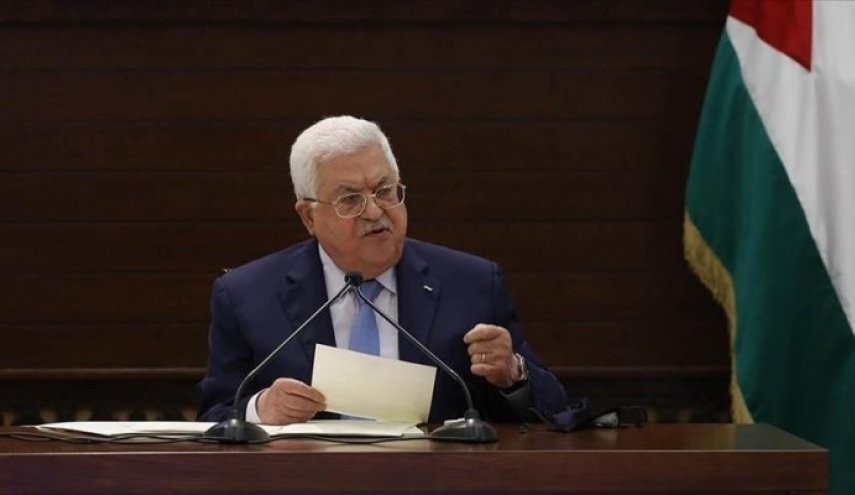
Strategic Council Online – Interview: A regional affairs expert stated that the remarks by Mahmoud Abbas, President of the Palestinian Authority, about holding general elections with the participation of Palestinians, while Gaza and the West Bank are facing the most severe attacks and threats, are a theatrical move aimed at legitimizing Mahmoud Abbas. This comes while Mahmoud Abbas suffers from severe illegitimacy among Palestinians, which is precisely why he raises such proposals.

The Strategic Significance of Syria-Turkey-Azerbaijan Gas Project

The Strategic Significance of Syria-Turkey-Azerbaijan Gas Project

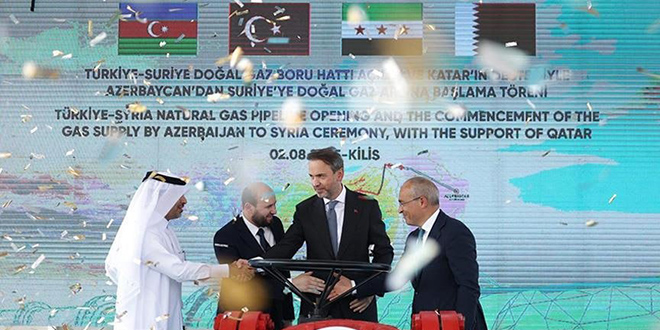
Strategic Council Online – Interview: A West Asia affairs analyst stated: The Syria-Turkey-Azerbaijan gas project goes beyond simple energy cooperation and must be evaluated within the context of regional power competition, efforts to redefine the political order in Syria, and the strengthening of the Turkish-Qatari-Azerbaijani axis in West Asia. An order whose future will largely depend on the stability of the Damascus government and Turkey’s ability to manage security, economic, and geopolitical crises simultaneously.
At a time when Syria is still grappling with extensive infrastructure problems and an energy crisis, the inauguration of the gas pipeline from Azerbaijan to Syria via Turkey, with Qatar’s financial support, has drawn the attention of regional analysts. This project, which in its first phase will transfer 3.4 million cubic meters of gas per day and will eventually reach a capacity of 6 million cubic meters per day, could add approximately 750 megawatts to Syria’s electricity generation capacity.

The Outlook for Political-Security Developments in Syria

The Outlook for Political-Security Developments in Syria

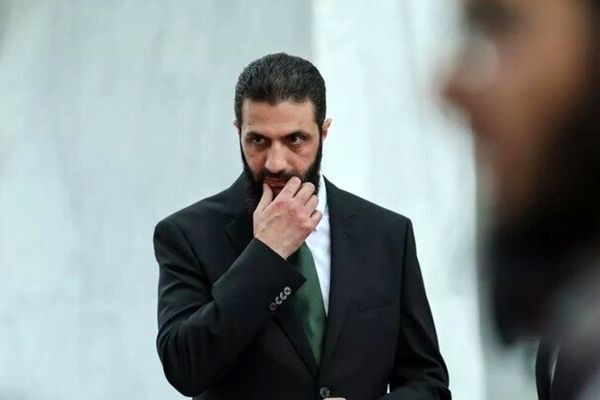
Strategic Council Online – Interview: A regional affairs expert stated that at present, it is impossible to have an accurate prediction whether Syria will move towards stability or another civil war will occur in the country in the next six months to a year.

France’s Parliament Concerned About the EU’s Catastrophic Strategic Dependence on America

France’s Parliament Concerned About the EU’s Catastrophic Strategic Dependence on America

Strategic Council Online – Interview: A senior international affairs analyst stated that the current geopolitical situation has created an unprecedented space for strategic changes in Europe, adding that the recommendation letter from France’s parliament is essentially a strategic response to these conditions. The release of the French parliament’s 153-page report—dubbed by Arnaud Bertrand (French journalist) as “the most prominent geopolitical document of the century”—has sparked a wave of debate and reactions in global political and intellectual circles. This document describes the European Union’s strategic dependence on the United States as a catastrophic failure and, through 50 practical recommendations, proposes a new path to escape Atlanticist hegemony and move towards equal partnership with China. If the contents and recommendations of this document are taken seriously in Europe, the consequences will extend beyond the geography of the Green Continent and directly impact relations among emerging powers, financial markets, and even international security equations. Furthermore, the document goes beyond “defense independence” to address “economic and monetary independence”—an area hitherto under the shadow of the US dollar and Washington’s policies. From this perspective, the present moment may mark the beginning of a new chapter in international politics, where Europe defines itself as an independent actor in the future multipolar order.

Critical Analysis of the Security Council’s Approach Towards the Gaza Crisis

Critical Analysis of the Security Council’s Approach Towards the Gaza Crisis

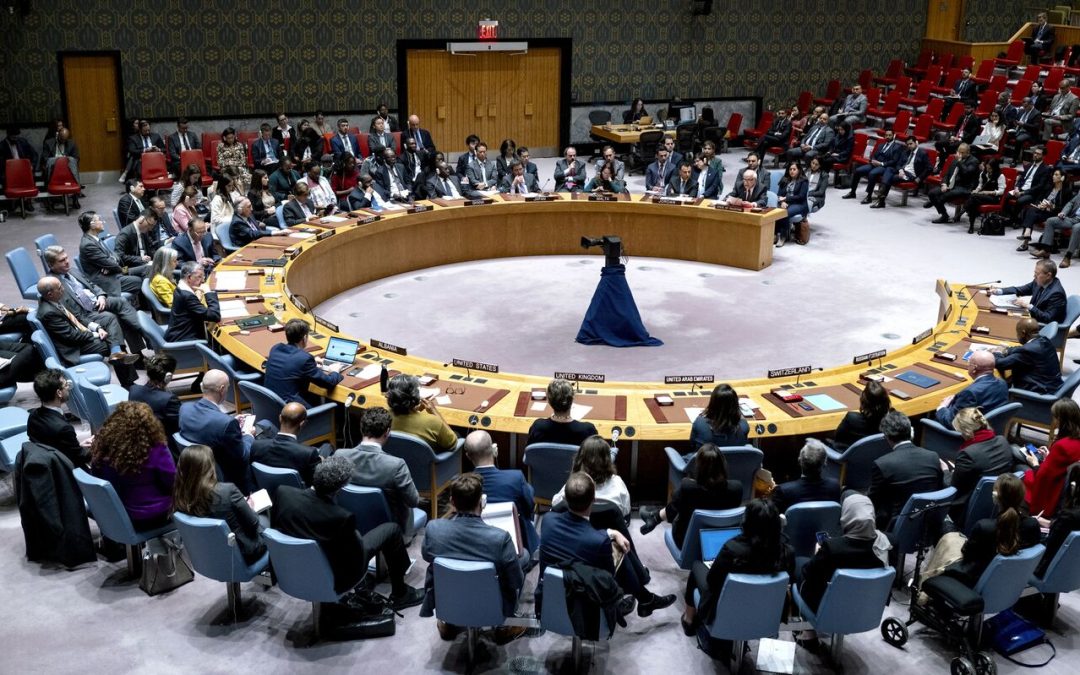
Strategic Council Online in – Interview: A senior Arab world analyst stated: When 61 thousand people are killed in Gaza and the Security Council is not even willing to issue a simple resolution in condemnation of the Zionist regime, it means the international structure is entirely dysfunctional. In such a situation, it is the nations that must cry out and awaken the global conscience.

Alaska: Deal-Making Stage or Geopolitical Minefield?

Alaska: Deal-Making Stage or Geopolitical Minefield?

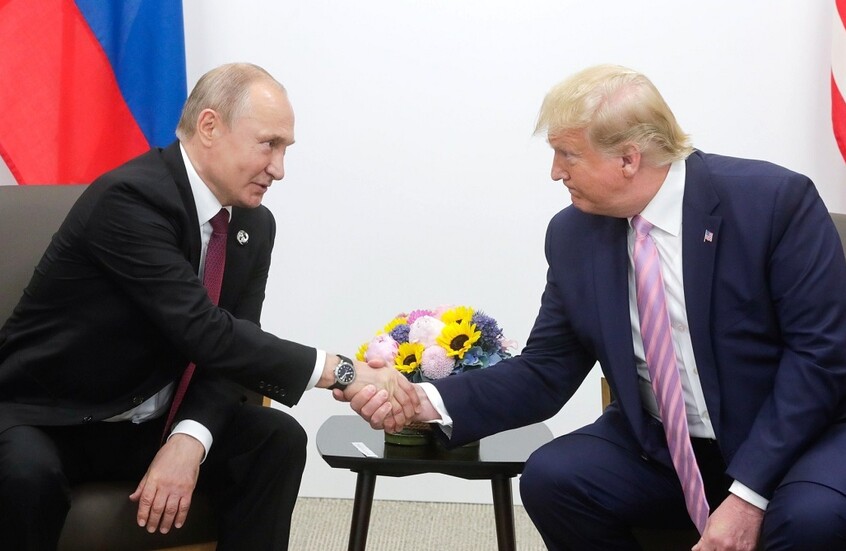
Strategic Council Online – Interview: A senior international affairs analyst stated: “The final week of summer 2025 marks a sensitive test for international relations and the future of the Ukraine war. The meeting between Donald Trump and Vladimir Putin in Alaska was merely seven months after Trump’s return to the White House, as the Ukraine war rages on relentlessly.” Volodymyr Zelenskyy, Ukraine’s president, has preemptively rejected Trump’s proposed peace plan—likely based on territorial concessions to Russia—warning that any agreement without Kyiv’s presence and consent would be a “dead solution.” Observers view the clash of interests among Moscow, Washington, Kyiv, and Europe as the intersection of four conflicting logics: Washington’s deal-driven logic, Moscow’s consolidationist logic, and Kyiv’s and Europe’s survivalist logic. While scenarios range from a minimal agreement to tacit Putin-Trump collusion solidifying current frontlines, each carries profound implications for European security and global power balances. Zelenskyy’s absence from Alaska could heighten risks of a deal that not only weakens Ukraine’s position but also undermines the legitimacy of fundamental international law.

Consequences of the “Lebanon Minus Resistance” Scenario

Consequences of the “Lebanon Minus Resistance” Scenario

Strategic Council Online – Interview: An expert on Arab world affairs said: One of the Zionist regime’s primary motives for insisting on disarming Hezbollah is to create a security vacuum in Lebanon so that, if needed, the possibility of attacking it again is provided. Today, Lebanon is witnessing one of its most sensitive political junctures in recent years; the Lebanese cabinet, in its recent session chaired by Najib Mikati, the country’s Prime Minister, approved the content of the US proposal for disarming Hezbollah and monopolizing weapons in the hands of the army, despite opposition from some ministers. The US proposal, which has faced firm opposition from the Hezbollah, was brought to Beirut by Thomas Barrack, the US Special Envoy, and with a paternalistic approach, considers disarming the Hezbollah a precondition for starting any dialogue and border demarcation, explicitly stating that this plan must either be entirely accepted or Lebanon must accept the consequences of its rejection.

أحدث الوظائف

Balancing in the chain of chokepoints; from sea-based deterrence to pluralistic diplomacy

Strategic Council Online – Note: Recent developments in the political geography of West Asia, from rising tensions in the Persian Gulf to missile and drone activities in the Red Sea and the recent warning by Kaja Kallas, the European Union’s foreign policy chief, regarding the threat to freedom of navigation, indicate a key pattern shift; the US-Iran war has moved beyond the scope of a regional and local confrontation and has linked two vital passageways for the global economy: the Strait of Hormuz and the Bab el-Mandeb Strait.

Indicators for Choosing Between War and Diplomacy

SCFR Online – Opinion: Foreign policy analysis is valid when it evaluates decisions based on the information and circumstances prevailing at the time they were made, not on the basis of outcomes that only become apparent after the crisis has ended.

Loading

interview

Dimensions and Implications of Parallel Efforts to Disarm the Resistance in West Asia

Dimensions and Implications of Parallel Efforts to Disarm the Resistance in West Asia

Strategic Council Online – Interview: A senior analyst on West Asian affairs stated that under the current circumstances, discussing the disarmament of the Resistance is not only unfeasible but could also lead to an escalation of tensions. Following the 12-day aggression by the United States and the Israeli regime against Iran, efforts in another layer to disarm Resistance groups, including Hezbollah, the Popular Mobilization Forces (PMF or Hashd al-Shaabi), and Hamas, have intensified as part of a coordinated project pursued to weaken the Axis of Resistance and impose American regional dominance. The U.S. proposal for Lebanon, which includes disarming Hezbollah by the end of 2025 and the withdrawal of the Israeli regime from border positions, is an attempt to transform an external conflict into an internal one. Hezbollah has firmly rejected this proposal, deeming it a violation of national sovereignty and a service to the interests of the Israeli regime, while emphasizing its defensive role. In Iraq, pressure on the Popular Mobilization Forces has been accompanied by accusations and economic sanctions, yet this group continues to stand as a popular force against external threats. Hamas, despite heavy attacks by the Israeli regime, has continued its resistance and rejected a recent ceasefire proposal in exchange for disarmament. These plans, supported by U.S. and allied diplomatic and economic backing, seek to alter the balance of power in the region. Still, the resistance of the groups and popular support have prevented the realization of these objectives.

An Analysis of the Gas Tension in the Eastern Mediterranean to Lebanon’s Detriment

An Analysis of the Gas Tension in the Eastern Mediterranean to Lebanon’s Detriment

Strategic Council Online – Interview: A researcher on Lebanese affairs stated: Under intense US pressure, Lebanon’s current government is hastily finalizing the gas dossier in the Eastern Mediterranean; an action that benefits the US, the Israeli regime, and their allies, and may result in Lebanon losing approximately five thousand square kilometers of area containing its gas and oil wealth. In this regard, the Al-Akhbar newspaper wrote: What is happening today is not merely a maritime negotiation, but a battle over sovereignty and survival that is feared will end unilaterally at a bargaining table where there is no room for national interests.

Netanyahu’s Legal Liability After Confession About Assassination of Iranian Nuclear Scientists

Netanyahu’s Legal Liability After Confession About Assassination of Iranian Nuclear Scientists

Strategic Council Online – Interview: A West Asia affairs analyst said: Recently, Benjamin Netanyahu, the Prime Minister of the Zionist regime, explicitly stated in an interview with Channel 14 of this regime that a significant number of Iran’s nuclear scientists have been killed as part of a targeted assassination program. This is the first time that a senior official of the Israeli regime has made such an explicit confession. Although the Israeli regime had previously been accused of playing a role in the assassination of Iranian scientists, this official confession opens a new chapter in legal and political pursuits; a chapter that could, by utilizing international capacities, confront a regime that sees itself as above the law with serious consequences.

An Analysis of Mahmoud Abbas’s Proposal for General Elections in the Occupied Territories

An Analysis of Mahmoud Abbas’s Proposal for General Elections in the Occupied Territories

Strategic Council Online – Interview: A regional affairs expert stated that the remarks by Mahmoud Abbas, President of the Palestinian Authority, about holding general elections with the participation of Palestinians, while Gaza and the West Bank are facing the most severe attacks and threats, are a theatrical move aimed at legitimizing Mahmoud Abbas. This comes while Mahmoud Abbas suffers from severe illegitimacy among Palestinians, which is precisely why he raises such proposals.

The Strategic Significance of Syria-Turkey-Azerbaijan Gas Project

The Strategic Significance of Syria-Turkey-Azerbaijan Gas Project

Strategic Council Online – Interview: A West Asia affairs analyst stated: The Syria-Turkey-Azerbaijan gas project goes beyond simple energy cooperation and must be evaluated within the context of regional power competition, efforts to redefine the political order in Syria, and the strengthening of the Turkish-Qatari-Azerbaijani axis in West Asia. An order whose future will largely depend on the stability of the Damascus government and Turkey’s ability to manage security, economic, and geopolitical crises simultaneously.
At a time when Syria is still grappling with extensive infrastructure problems and an energy crisis, the inauguration of the gas pipeline from Azerbaijan to Syria via Turkey, with Qatar’s financial support, has drawn the attention of regional analysts. This project, which in its first phase will transfer 3.4 million cubic meters of gas per day and will eventually reach a capacity of 6 million cubic meters per day, could add approximately 750 megawatts to Syria’s electricity generation capacity.

The Outlook for Political-Security Developments in Syria

The Outlook for Political-Security Developments in Syria

Strategic Council Online – Interview: A regional affairs expert stated that at present, it is impossible to have an accurate prediction whether Syria will move towards stability or another civil war will occur in the country in the next six months to a year.

France’s Parliament Concerned About the EU’s Catastrophic Strategic Dependence on America

France’s Parliament Concerned About the EU’s Catastrophic Strategic Dependence on America

Strategic Council Online – Interview: A senior international affairs analyst stated that the current geopolitical situation has created an unprecedented space for strategic changes in Europe, adding that the recommendation letter from France’s parliament is essentially a strategic response to these conditions. The release of the French parliament’s 153-page report—dubbed by Arnaud Bertrand (French journalist) as “the most prominent geopolitical document of the century”—has sparked a wave of debate and reactions in global political and intellectual circles. This document describes the European Union’s strategic dependence on the United States as a catastrophic failure and, through 50 practical recommendations, proposes a new path to escape Atlanticist hegemony and move towards equal partnership with China. If the contents and recommendations of this document are taken seriously in Europe, the consequences will extend beyond the geography of the Green Continent and directly impact relations among emerging powers, financial markets, and even international security equations. Furthermore, the document goes beyond “defense independence” to address “economic and monetary independence”—an area hitherto under the shadow of the US dollar and Washington’s policies. From this perspective, the present moment may mark the beginning of a new chapter in international politics, where Europe defines itself as an independent actor in the future multipolar order.

Critical Analysis of the Security Council’s Approach Towards the Gaza Crisis

Critical Analysis of the Security Council’s Approach Towards the Gaza Crisis

Strategic Council Online in – Interview: A senior Arab world analyst stated: When 61 thousand people are killed in Gaza and the Security Council is not even willing to issue a simple resolution in condemnation of the Zionist regime, it means the international structure is entirely dysfunctional. In such a situation, it is the nations that must cry out and awaken the global conscience.

Alaska: Deal-Making Stage or Geopolitical Minefield?

Alaska: Deal-Making Stage or Geopolitical Minefield?

Strategic Council Online – Interview: A senior international affairs analyst stated: “The final week of summer 2025 marks a sensitive test for international relations and the future of the Ukraine war. The meeting between Donald Trump and Vladimir Putin in Alaska was merely seven months after Trump’s return to the White House, as the Ukraine war rages on relentlessly.” Volodymyr Zelenskyy, Ukraine’s president, has preemptively rejected Trump’s proposed peace plan—likely based on territorial concessions to Russia—warning that any agreement without Kyiv’s presence and consent would be a “dead solution.” Observers view the clash of interests among Moscow, Washington, Kyiv, and Europe as the intersection of four conflicting logics: Washington’s deal-driven logic, Moscow’s consolidationist logic, and Kyiv’s and Europe’s survivalist logic. While scenarios range from a minimal agreement to tacit Putin-Trump collusion solidifying current frontlines, each carries profound implications for European security and global power balances. Zelenskyy’s absence from Alaska could heighten risks of a deal that not only weakens Ukraine’s position but also undermines the legitimacy of fundamental international law.

Consequences of the “Lebanon Minus Resistance” Scenario

Consequences of the “Lebanon Minus Resistance” Scenario

Strategic Council Online – Interview: An expert on Arab world affairs said: One of the Zionist regime’s primary motives for insisting on disarming Hezbollah is to create a security vacuum in Lebanon so that, if needed, the possibility of attacking it again is provided. Today, Lebanon is witnessing one of its most sensitive political junctures in recent years; the Lebanese cabinet, in its recent session chaired by Najib Mikati, the country’s Prime Minister, approved the content of the US proposal for disarming Hezbollah and monopolizing weapons in the hands of the army, despite opposition from some ministers. The US proposal, which has faced firm opposition from the Hezbollah, was brought to Beirut by Thomas Barrack, the US Special Envoy, and with a paternalistic approach, considers disarming the Hezbollah a precondition for starting any dialogue and border demarcation, explicitly stating that this plan must either be entirely accepted or Lebanon must accept the consequences of its rejection.

interview

Dimensions and Implications of Parallel Efforts to Disarm the Resistance in West Asia

Dimensions and Implications of Parallel Efforts to Disarm the Resistance in West Asia

Strategic Council Online – Interview: A senior analyst on West Asian affairs stated that under the current circumstances, discussing the disarmament of the Resistance is not only unfeasible but could also lead to an escalation of tensions. Following the 12-day aggression by the United States and the Israeli regime against Iran, efforts in another layer to disarm Resistance groups, including Hezbollah, the Popular Mobilization Forces (PMF or Hashd al-Shaabi), and Hamas, have intensified as part of a coordinated project pursued to weaken the Axis of Resistance and impose American regional dominance. The U.S. proposal for Lebanon, which includes disarming Hezbollah by the end of 2025 and the withdrawal of the Israeli regime from border positions, is an attempt to transform an external conflict into an internal one. Hezbollah has firmly rejected this proposal, deeming it a violation of national sovereignty and a service to the interests of the Israeli regime, while emphasizing its defensive role. In Iraq, pressure on the Popular Mobilization Forces has been accompanied by accusations and economic sanctions, yet this group continues to stand as a popular force against external threats. Hamas, despite heavy attacks by the Israeli regime, has continued its resistance and rejected a recent ceasefire proposal in exchange for disarmament. These plans, supported by U.S. and allied diplomatic and economic backing, seek to alter the balance of power in the region. Still, the resistance of the groups and popular support have prevented the realization of these objectives.

An Analysis of the Gas Tension in the Eastern Mediterranean to Lebanon’s Detriment

An Analysis of the Gas Tension in the Eastern Mediterranean to Lebanon’s Detriment

Strategic Council Online – Interview: A researcher on Lebanese affairs stated: Under intense US pressure, Lebanon’s current government is hastily finalizing the gas dossier in the Eastern Mediterranean; an action that benefits the US, the Israeli regime, and their allies, and may result in Lebanon losing approximately five thousand square kilometers of area containing its gas and oil wealth. In this regard, the Al-Akhbar newspaper wrote: What is happening today is not merely a maritime negotiation, but a battle over sovereignty and survival that is feared will end unilaterally at a bargaining table where there is no room for national interests.

Netanyahu’s Legal Liability After Confession About Assassination of Iranian Nuclear Scientists

Netanyahu’s Legal Liability After Confession About Assassination of Iranian Nuclear Scientists

Strategic Council Online – Interview: A West Asia affairs analyst said: Recently, Benjamin Netanyahu, the Prime Minister of the Zionist regime, explicitly stated in an interview with Channel 14 of this regime that a significant number of Iran’s nuclear scientists have been killed as part of a targeted assassination program. This is the first time that a senior official of the Israeli regime has made such an explicit confession. Although the Israeli regime had previously been accused of playing a role in the assassination of Iranian scientists, this official confession opens a new chapter in legal and political pursuits; a chapter that could, by utilizing international capacities, confront a regime that sees itself as above the law with serious consequences.

An Analysis of Mahmoud Abbas’s Proposal for General Elections in the Occupied Territories

An Analysis of Mahmoud Abbas’s Proposal for General Elections in the Occupied Territories

Strategic Council Online – Interview: A regional affairs expert stated that the remarks by Mahmoud Abbas, President of the Palestinian Authority, about holding general elections with the participation of Palestinians, while Gaza and the West Bank are facing the most severe attacks and threats, are a theatrical move aimed at legitimizing Mahmoud Abbas. This comes while Mahmoud Abbas suffers from severe illegitimacy among Palestinians, which is precisely why he raises such proposals.

The Strategic Significance of Syria-Turkey-Azerbaijan Gas Project

The Strategic Significance of Syria-Turkey-Azerbaijan Gas Project

Strategic Council Online – Interview: A West Asia affairs analyst stated: The Syria-Turkey-Azerbaijan gas project goes beyond simple energy cooperation and must be evaluated within the context of regional power competition, efforts to redefine the political order in Syria, and the strengthening of the Turkish-Qatari-Azerbaijani axis in West Asia. An order whose future will largely depend on the stability of the Damascus government and Turkey’s ability to manage security, economic, and geopolitical crises simultaneously.
At a time when Syria is still grappling with extensive infrastructure problems and an energy crisis, the inauguration of the gas pipeline from Azerbaijan to Syria via Turkey, with Qatar’s financial support, has drawn the attention of regional analysts. This project, which in its first phase will transfer 3.4 million cubic meters of gas per day and will eventually reach a capacity of 6 million cubic meters per day, could add approximately 750 megawatts to Syria’s electricity generation capacity.

The Outlook for Political-Security Developments in Syria

The Outlook for Political-Security Developments in Syria

Strategic Council Online – Interview: A regional affairs expert stated that at present, it is impossible to have an accurate prediction whether Syria will move towards stability or another civil war will occur in the country in the next six months to a year.

France’s Parliament Concerned About the EU’s Catastrophic Strategic Dependence on America

France’s Parliament Concerned About the EU’s Catastrophic Strategic Dependence on America

Strategic Council Online – Interview: A senior international affairs analyst stated that the current geopolitical situation has created an unprecedented space for strategic changes in Europe, adding that the recommendation letter from France’s parliament is essentially a strategic response to these conditions. The release of the French parliament’s 153-page report—dubbed by Arnaud Bertrand (French journalist) as “the most prominent geopolitical document of the century”—has sparked a wave of debate and reactions in global political and intellectual circles. This document describes the European Union’s strategic dependence on the United States as a catastrophic failure and, through 50 practical recommendations, proposes a new path to escape Atlanticist hegemony and move towards equal partnership with China. If the contents and recommendations of this document are taken seriously in Europe, the consequences will extend beyond the geography of the Green Continent and directly impact relations among emerging powers, financial markets, and even international security equations. Furthermore, the document goes beyond “defense independence” to address “economic and monetary independence”—an area hitherto under the shadow of the US dollar and Washington’s policies. From this perspective, the present moment may mark the beginning of a new chapter in international politics, where Europe defines itself as an independent actor in the future multipolar order.

Critical Analysis of the Security Council’s Approach Towards the Gaza Crisis

Critical Analysis of the Security Council’s Approach Towards the Gaza Crisis

Strategic Council Online in – Interview: A senior Arab world analyst stated: When 61 thousand people are killed in Gaza and the Security Council is not even willing to issue a simple resolution in condemnation of the Zionist regime, it means the international structure is entirely dysfunctional. In such a situation, it is the nations that must cry out and awaken the global conscience.

Alaska: Deal-Making Stage or Geopolitical Minefield?

Alaska: Deal-Making Stage or Geopolitical Minefield?

Strategic Council Online – Interview: A senior international affairs analyst stated: “The final week of summer 2025 marks a sensitive test for international relations and the future of the Ukraine war. The meeting between Donald Trump and Vladimir Putin in Alaska was merely seven months after Trump’s return to the White House, as the Ukraine war rages on relentlessly.” Volodymyr Zelenskyy, Ukraine’s president, has preemptively rejected Trump’s proposed peace plan—likely based on territorial concessions to Russia—warning that any agreement without Kyiv’s presence and consent would be a “dead solution.” Observers view the clash of interests among Moscow, Washington, Kyiv, and Europe as the intersection of four conflicting logics: Washington’s deal-driven logic, Moscow’s consolidationist logic, and Kyiv’s and Europe’s survivalist logic. While scenarios range from a minimal agreement to tacit Putin-Trump collusion solidifying current frontlines, each carries profound implications for European security and global power balances. Zelenskyy’s absence from Alaska could heighten risks of a deal that not only weakens Ukraine’s position but also undermines the legitimacy of fundamental international law.

Consequences of the “Lebanon Minus Resistance” Scenario

Consequences of the “Lebanon Minus Resistance” Scenario

Strategic Council Online – Interview: An expert on Arab world affairs said: One of the Zionist regime’s primary motives for insisting on disarming Hezbollah is to create a security vacuum in Lebanon so that, if needed, the possibility of attacking it again is provided. Today, Lebanon is witnessing one of its most sensitive political junctures in recent years; the Lebanese cabinet, in its recent session chaired by Najib Mikati, the country’s Prime Minister, approved the content of the US proposal for disarming Hezbollah and monopolizing weapons in the hands of the army, despite opposition from some ministers. The US proposal, which has faced firm opposition from the Hezbollah, was brought to Beirut by Thomas Barrack, the US Special Envoy, and with a paternalistic approach, considers disarming the Hezbollah a precondition for starting any dialogue and border demarcation, explicitly stating that this plan must either be entirely accepted or Lebanon must accept the consequences of its rejection.

LATEST CONTENT

Balancing in the chain of chokepoints; from sea-based deterrence to pluralistic diplomacy

Strategic Council Online – Note: Recent developments in the political geography of West Asia, from rising tensions in the Persian Gulf to missile and drone activities in the Red Sea and the recent warning by Kaja Kallas, the European Union’s foreign policy chief, regarding the threat to freedom of navigation, indicate a key pattern shift; the US-Iran war has moved beyond the scope of a regional and local confrontation and has linked two vital passageways for the global economy: the Strait of Hormuz and the Bab el-Mandeb Strait.

Indicators for Choosing Between War and Diplomacy

SCFR Online – Opinion: Foreign policy analysis is valid when it evaluates decisions based on the information and circumstances prevailing at the time they were made, not on the basis of outcomes that only become apparent after the crisis has ended.

Loading

interview

Dimensions and Implications of Parallel Efforts to Disarm the Resistance in West Asia

Dimensions and Implications of Parallel Efforts to Disarm the Resistance in West Asia

Strategic Council Online – Interview: A senior analyst on West Asian affairs stated that under the current circumstances, discussing the disarmament of the Resistance is not only unfeasible but could also lead to an escalation of tensions. Following the 12-day aggression by the United States and the Israeli regime against Iran, efforts in another layer to disarm Resistance groups, including Hezbollah, the Popular Mobilization Forces (PMF or Hashd al-Shaabi), and Hamas, have intensified as part of a coordinated project pursued to weaken the Axis of Resistance and impose American regional dominance. The U.S. proposal for Lebanon, which includes disarming Hezbollah by the end of 2025 and the withdrawal of the Israeli regime from border positions, is an attempt to transform an external conflict into an internal one. Hezbollah has firmly rejected this proposal, deeming it a violation of national sovereignty and a service to the interests of the Israeli regime, while emphasizing its defensive role. In Iraq, pressure on the Popular Mobilization Forces has been accompanied by accusations and economic sanctions, yet this group continues to stand as a popular force against external threats. Hamas, despite heavy attacks by the Israeli regime, has continued its resistance and rejected a recent ceasefire proposal in exchange for disarmament. These plans, supported by U.S. and allied diplomatic and economic backing, seek to alter the balance of power in the region. Still, the resistance of the groups and popular support have prevented the realization of these objectives.

An Analysis of the Gas Tension in the Eastern Mediterranean to Lebanon’s Detriment

An Analysis of the Gas Tension in the Eastern Mediterranean to Lebanon’s Detriment

Strategic Council Online – Interview: A researcher on Lebanese affairs stated: Under intense US pressure, Lebanon’s current government is hastily finalizing the gas dossier in the Eastern Mediterranean; an action that benefits the US, the Israeli regime, and their allies, and may result in Lebanon losing approximately five thousand square kilometers of area containing its gas and oil wealth. In this regard, the Al-Akhbar newspaper wrote: What is happening today is not merely a maritime negotiation, but a battle over sovereignty and survival that is feared will end unilaterally at a bargaining table where there is no room for national interests.

Netanyahu’s Legal Liability After Confession About Assassination of Iranian Nuclear Scientists

Netanyahu’s Legal Liability After Confession About Assassination of Iranian Nuclear Scientists

Strategic Council Online – Interview: A West Asia affairs analyst said: Recently, Benjamin Netanyahu, the Prime Minister of the Zionist regime, explicitly stated in an interview with Channel 14 of this regime that a significant number of Iran’s nuclear scientists have been killed as part of a targeted assassination program. This is the first time that a senior official of the Israeli regime has made such an explicit confession. Although the Israeli regime had previously been accused of playing a role in the assassination of Iranian scientists, this official confession opens a new chapter in legal and political pursuits; a chapter that could, by utilizing international capacities, confront a regime that sees itself as above the law with serious consequences.

An Analysis of Mahmoud Abbas’s Proposal for General Elections in the Occupied Territories

An Analysis of Mahmoud Abbas’s Proposal for General Elections in the Occupied Territories

Strategic Council Online – Interview: A regional affairs expert stated that the remarks by Mahmoud Abbas, President of the Palestinian Authority, about holding general elections with the participation of Palestinians, while Gaza and the West Bank are facing the most severe attacks and threats, are a theatrical move aimed at legitimizing Mahmoud Abbas. This comes while Mahmoud Abbas suffers from severe illegitimacy among Palestinians, which is precisely why he raises such proposals.

The Strategic Significance of Syria-Turkey-Azerbaijan Gas Project

The Strategic Significance of Syria-Turkey-Azerbaijan Gas Project

Strategic Council Online – Interview: A West Asia affairs analyst stated: The Syria-Turkey-Azerbaijan gas project goes beyond simple energy cooperation and must be evaluated within the context of regional power competition, efforts to redefine the political order in Syria, and the strengthening of the Turkish-Qatari-Azerbaijani axis in West Asia. An order whose future will largely depend on the stability of the Damascus government and Turkey’s ability to manage security, economic, and geopolitical crises simultaneously.
At a time when Syria is still grappling with extensive infrastructure problems and an energy crisis, the inauguration of the gas pipeline from Azerbaijan to Syria via Turkey, with Qatar’s financial support, has drawn the attention of regional analysts. This project, which in its first phase will transfer 3.4 million cubic meters of gas per day and will eventually reach a capacity of 6 million cubic meters per day, could add approximately 750 megawatts to Syria’s electricity generation capacity.

The Outlook for Political-Security Developments in Syria

The Outlook for Political-Security Developments in Syria

Strategic Council Online – Interview: A regional affairs expert stated that at present, it is impossible to have an accurate prediction whether Syria will move towards stability or another civil war will occur in the country in the next six months to a year.

France’s Parliament Concerned About the EU’s Catastrophic Strategic Dependence on America

France’s Parliament Concerned About the EU’s Catastrophic Strategic Dependence on America

Strategic Council Online – Interview: A senior international affairs analyst stated that the current geopolitical situation has created an unprecedented space for strategic changes in Europe, adding that the recommendation letter from France’s parliament is essentially a strategic response to these conditions. The release of the French parliament’s 153-page report—dubbed by Arnaud Bertrand (French journalist) as “the most prominent geopolitical document of the century”—has sparked a wave of debate and reactions in global political and intellectual circles. This document describes the European Union’s strategic dependence on the United States as a catastrophic failure and, through 50 practical recommendations, proposes a new path to escape Atlanticist hegemony and move towards equal partnership with China. If the contents and recommendations of this document are taken seriously in Europe, the consequences will extend beyond the geography of the Green Continent and directly impact relations among emerging powers, financial markets, and even international security equations. Furthermore, the document goes beyond “defense independence” to address “economic and monetary independence”—an area hitherto under the shadow of the US dollar and Washington’s policies. From this perspective, the present moment may mark the beginning of a new chapter in international politics, where Europe defines itself as an independent actor in the future multipolar order.

Critical Analysis of the Security Council’s Approach Towards the Gaza Crisis

Critical Analysis of the Security Council’s Approach Towards the Gaza Crisis

Strategic Council Online in – Interview: A senior Arab world analyst stated: When 61 thousand people are killed in Gaza and the Security Council is not even willing to issue a simple resolution in condemnation of the Zionist regime, it means the international structure is entirely dysfunctional. In such a situation, it is the nations that must cry out and awaken the global conscience.

Alaska: Deal-Making Stage or Geopolitical Minefield?

Alaska: Deal-Making Stage or Geopolitical Minefield?

Strategic Council Online – Interview: A senior international affairs analyst stated: “The final week of summer 2025 marks a sensitive test for international relations and the future of the Ukraine war. The meeting between Donald Trump and Vladimir Putin in Alaska was merely seven months after Trump’s return to the White House, as the Ukraine war rages on relentlessly.” Volodymyr Zelenskyy, Ukraine’s president, has preemptively rejected Trump’s proposed peace plan—likely based on territorial concessions to Russia—warning that any agreement without Kyiv’s presence and consent would be a “dead solution.” Observers view the clash of interests among Moscow, Washington, Kyiv, and Europe as the intersection of four conflicting logics: Washington’s deal-driven logic, Moscow’s consolidationist logic, and Kyiv’s and Europe’s survivalist logic. While scenarios range from a minimal agreement to tacit Putin-Trump collusion solidifying current frontlines, each carries profound implications for European security and global power balances. Zelenskyy’s absence from Alaska could heighten risks of a deal that not only weakens Ukraine’s position but also undermines the legitimacy of fundamental international law.

Consequences of the “Lebanon Minus Resistance” Scenario

Consequences of the “Lebanon Minus Resistance” Scenario

Strategic Council Online – Interview: An expert on Arab world affairs said: One of the Zionist regime’s primary motives for insisting on disarming Hezbollah is to create a security vacuum in Lebanon so that, if needed, the possibility of attacking it again is provided. Today, Lebanon is witnessing one of its most sensitive political junctures in recent years; the Lebanese cabinet, in its recent session chaired by Najib Mikati, the country’s Prime Minister, approved the content of the US proposal for disarming Hezbollah and monopolizing weapons in the hands of the army, despite opposition from some ministers. The US proposal, which has faced firm opposition from the Hezbollah, was brought to Beirut by Thomas Barrack, the US Special Envoy, and with a paternalistic approach, considers disarming the Hezbollah a precondition for starting any dialogue and border demarcation, explicitly stating that this plan must either be entirely accepted or Lebanon must accept the consequences of its rejection.

ÚLTIMAS PUBLICACIONES

Balancing in the chain of chokepoints; from sea-based deterrence to pluralistic diplomacy

Strategic Council Online – Note: Recent developments in the political geography of West Asia, from rising tensions in the Persian Gulf to missile and drone activities in the Red Sea and the recent warning by Kaja Kallas, the European Union’s foreign policy chief, regarding the threat to freedom of navigation, indicate a key pattern shift; the US-Iran war has moved beyond the scope of a regional and local confrontation and has linked two vital passageways for the global economy: the Strait of Hormuz and the Bab el-Mandeb Strait.

Indicators for Choosing Between War and Diplomacy

SCFR Online – Opinion: Foreign policy analysis is valid when it evaluates decisions based on the information and circumstances prevailing at the time they were made, not on the basis of outcomes that only become apparent after the crisis has ended.

Loading

interview

Dimensions and Implications of Parallel Efforts to Disarm the Resistance in West Asia

Dimensions and Implications of Parallel Efforts to Disarm the Resistance in West Asia

Strategic Council Online – Interview: A senior analyst on West Asian affairs stated that under the current circumstances, discussing the disarmament of the Resistance is not only unfeasible but could also lead to an escalation of tensions. Following the 12-day aggression by the United States and the Israeli regime against Iran, efforts in another layer to disarm Resistance groups, including Hezbollah, the Popular Mobilization Forces (PMF or Hashd al-Shaabi), and Hamas, have intensified as part of a coordinated project pursued to weaken the Axis of Resistance and impose American regional dominance. The U.S. proposal for Lebanon, which includes disarming Hezbollah by the end of 2025 and the withdrawal of the Israeli regime from border positions, is an attempt to transform an external conflict into an internal one. Hezbollah has firmly rejected this proposal, deeming it a violation of national sovereignty and a service to the interests of the Israeli regime, while emphasizing its defensive role. In Iraq, pressure on the Popular Mobilization Forces has been accompanied by accusations and economic sanctions, yet this group continues to stand as a popular force against external threats. Hamas, despite heavy attacks by the Israeli regime, has continued its resistance and rejected a recent ceasefire proposal in exchange for disarmament. These plans, supported by U.S. and allied diplomatic and economic backing, seek to alter the balance of power in the region. Still, the resistance of the groups and popular support have prevented the realization of these objectives.

An Analysis of the Gas Tension in the Eastern Mediterranean to Lebanon’s Detriment

An Analysis of the Gas Tension in the Eastern Mediterranean to Lebanon’s Detriment

Strategic Council Online – Interview: A researcher on Lebanese affairs stated: Under intense US pressure, Lebanon’s current government is hastily finalizing the gas dossier in the Eastern Mediterranean; an action that benefits the US, the Israeli regime, and their allies, and may result in Lebanon losing approximately five thousand square kilometers of area containing its gas and oil wealth. In this regard, the Al-Akhbar newspaper wrote: What is happening today is not merely a maritime negotiation, but a battle over sovereignty and survival that is feared will end unilaterally at a bargaining table where there is no room for national interests.

Netanyahu’s Legal Liability After Confession About Assassination of Iranian Nuclear Scientists

Netanyahu’s Legal Liability After Confession About Assassination of Iranian Nuclear Scientists

Strategic Council Online – Interview: A West Asia affairs analyst said: Recently, Benjamin Netanyahu, the Prime Minister of the Zionist regime, explicitly stated in an interview with Channel 14 of this regime that a significant number of Iran’s nuclear scientists have been killed as part of a targeted assassination program. This is the first time that a senior official of the Israeli regime has made such an explicit confession. Although the Israeli regime had previously been accused of playing a role in the assassination of Iranian scientists, this official confession opens a new chapter in legal and political pursuits; a chapter that could, by utilizing international capacities, confront a regime that sees itself as above the law with serious consequences.

An Analysis of Mahmoud Abbas’s Proposal for General Elections in the Occupied Territories

An Analysis of Mahmoud Abbas’s Proposal for General Elections in the Occupied Territories

Strategic Council Online – Interview: A regional affairs expert stated that the remarks by Mahmoud Abbas, President of the Palestinian Authority, about holding general elections with the participation of Palestinians, while Gaza and the West Bank are facing the most severe attacks and threats, are a theatrical move aimed at legitimizing Mahmoud Abbas. This comes while Mahmoud Abbas suffers from severe illegitimacy among Palestinians, which is precisely why he raises such proposals.

The Strategic Significance of Syria-Turkey-Azerbaijan Gas Project

The Strategic Significance of Syria-Turkey-Azerbaijan Gas Project

Strategic Council Online – Interview: A West Asia affairs analyst stated: The Syria-Turkey-Azerbaijan gas project goes beyond simple energy cooperation and must be evaluated within the context of regional power competition, efforts to redefine the political order in Syria, and the strengthening of the Turkish-Qatari-Azerbaijani axis in West Asia. An order whose future will largely depend on the stability of the Damascus government and Turkey’s ability to manage security, economic, and geopolitical crises simultaneously.
At a time when Syria is still grappling with extensive infrastructure problems and an energy crisis, the inauguration of the gas pipeline from Azerbaijan to Syria via Turkey, with Qatar’s financial support, has drawn the attention of regional analysts. This project, which in its first phase will transfer 3.4 million cubic meters of gas per day and will eventually reach a capacity of 6 million cubic meters per day, could add approximately 750 megawatts to Syria’s electricity generation capacity.

The Outlook for Political-Security Developments in Syria

The Outlook for Political-Security Developments in Syria

Strategic Council Online – Interview: A regional affairs expert stated that at present, it is impossible to have an accurate prediction whether Syria will move towards stability or another civil war will occur in the country in the next six months to a year.

France’s Parliament Concerned About the EU’s Catastrophic Strategic Dependence on America

France’s Parliament Concerned About the EU’s Catastrophic Strategic Dependence on America

Strategic Council Online – Interview: A senior international affairs analyst stated that the current geopolitical situation has created an unprecedented space for strategic changes in Europe, adding that the recommendation letter from France’s parliament is essentially a strategic response to these conditions. The release of the French parliament’s 153-page report—dubbed by Arnaud Bertrand (French journalist) as “the most prominent geopolitical document of the century”—has sparked a wave of debate and reactions in global political and intellectual circles. This document describes the European Union’s strategic dependence on the United States as a catastrophic failure and, through 50 practical recommendations, proposes a new path to escape Atlanticist hegemony and move towards equal partnership with China. If the contents and recommendations of this document are taken seriously in Europe, the consequences will extend beyond the geography of the Green Continent and directly impact relations among emerging powers, financial markets, and even international security equations. Furthermore, the document goes beyond “defense independence” to address “economic and monetary independence”—an area hitherto under the shadow of the US dollar and Washington’s policies. From this perspective, the present moment may mark the beginning of a new chapter in international politics, where Europe defines itself as an independent actor in the future multipolar order.

Critical Analysis of the Security Council’s Approach Towards the Gaza Crisis

Critical Analysis of the Security Council’s Approach Towards the Gaza Crisis

Strategic Council Online in – Interview: A senior Arab world analyst stated: When 61 thousand people are killed in Gaza and the Security Council is not even willing to issue a simple resolution in condemnation of the Zionist regime, it means the international structure is entirely dysfunctional. In such a situation, it is the nations that must cry out and awaken the global conscience.

Alaska: Deal-Making Stage or Geopolitical Minefield?

Alaska: Deal-Making Stage or Geopolitical Minefield?

Strategic Council Online – Interview: A senior international affairs analyst stated: “The final week of summer 2025 marks a sensitive test for international relations and the future of the Ukraine war. The meeting between Donald Trump and Vladimir Putin in Alaska was merely seven months after Trump’s return to the White House, as the Ukraine war rages on relentlessly.” Volodymyr Zelenskyy, Ukraine’s president, has preemptively rejected Trump’s proposed peace plan—likely based on territorial concessions to Russia—warning that any agreement without Kyiv’s presence and consent would be a “dead solution.” Observers view the clash of interests among Moscow, Washington, Kyiv, and Europe as the intersection of four conflicting logics: Washington’s deal-driven logic, Moscow’s consolidationist logic, and Kyiv’s and Europe’s survivalist logic. While scenarios range from a minimal agreement to tacit Putin-Trump collusion solidifying current frontlines, each carries profound implications for European security and global power balances. Zelenskyy’s absence from Alaska could heighten risks of a deal that not only weakens Ukraine’s position but also undermines the legitimacy of fundamental international law.

Consequences of the “Lebanon Minus Resistance” Scenario

Consequences of the “Lebanon Minus Resistance” Scenario

Strategic Council Online – Interview: An expert on Arab world affairs said: One of the Zionist regime’s primary motives for insisting on disarming Hezbollah is to create a security vacuum in Lebanon so that, if needed, the possibility of attacking it again is provided. Today, Lebanon is witnessing one of its most sensitive political junctures in recent years; the Lebanese cabinet, in its recent session chaired by Najib Mikati, the country’s Prime Minister, approved the content of the US proposal for disarming Hezbollah and monopolizing weapons in the hands of the army, despite opposition from some ministers. The US proposal, which has faced firm opposition from the Hezbollah, was brought to Beirut by Thomas Barrack, the US Special Envoy, and with a paternalistic approach, considers disarming the Hezbollah a precondition for starting any dialogue and border demarcation, explicitly stating that this plan must either be entirely accepted or Lebanon must accept the consequences of its rejection.

ÚLTIMAS PUBLICACIONES

Balancing in the chain of chokepoints; from sea-based deterrence to pluralistic diplomacy

Strategic Council Online – Note: Recent developments in the political geography of West Asia, from rising tensions in the Persian Gulf to missile and drone activities in the Red Sea and the recent warning by Kaja Kallas, the European Union’s foreign policy chief, regarding the threat to freedom of navigation, indicate a key pattern shift; the US-Iran war has moved beyond the scope of a regional and local confrontation and has linked two vital passageways for the global economy: the Strait of Hormuz and the Bab el-Mandeb Strait.

Indicators for Choosing Between War and Diplomacy

SCFR Online – Opinion: Foreign policy analysis is valid when it evaluates decisions based on the information and circumstances prevailing at the time they were made, not on the basis of outcomes that only become apparent after the crisis has ended.

Loading

interview

Dimensions and Implications of Parallel Efforts to Disarm the Resistance in West Asia

Dimensions and Implications of Parallel Efforts to Disarm the Resistance in West Asia

Strategic Council Online – Interview: A senior analyst on West Asian affairs stated that under the current circumstances, discussing the disarmament of the Resistance is not only unfeasible but could also lead to an escalation of tensions. Following the 12-day aggression by the United States and the Israeli regime against Iran, efforts in another layer to disarm Resistance groups, including Hezbollah, the Popular Mobilization Forces (PMF or Hashd al-Shaabi), and Hamas, have intensified as part of a coordinated project pursued to weaken the Axis of Resistance and impose American regional dominance. The U.S. proposal for Lebanon, which includes disarming Hezbollah by the end of 2025 and the withdrawal of the Israeli regime from border positions, is an attempt to transform an external conflict into an internal one. Hezbollah has firmly rejected this proposal, deeming it a violation of national sovereignty and a service to the interests of the Israeli regime, while emphasizing its defensive role. In Iraq, pressure on the Popular Mobilization Forces has been accompanied by accusations and economic sanctions, yet this group continues to stand as a popular force against external threats. Hamas, despite heavy attacks by the Israeli regime, has continued its resistance and rejected a recent ceasefire proposal in exchange for disarmament. These plans, supported by U.S. and allied diplomatic and economic backing, seek to alter the balance of power in the region. Still, the resistance of the groups and popular support have prevented the realization of these objectives.

An Analysis of the Gas Tension in the Eastern Mediterranean to Lebanon’s Detriment

An Analysis of the Gas Tension in the Eastern Mediterranean to Lebanon’s Detriment

Strategic Council Online – Interview: A researcher on Lebanese affairs stated: Under intense US pressure, Lebanon’s current government is hastily finalizing the gas dossier in the Eastern Mediterranean; an action that benefits the US, the Israeli regime, and their allies, and may result in Lebanon losing approximately five thousand square kilometers of area containing its gas and oil wealth. In this regard, the Al-Akhbar newspaper wrote: What is happening today is not merely a maritime negotiation, but a battle over sovereignty and survival that is feared will end unilaterally at a bargaining table where there is no room for national interests.

Netanyahu’s Legal Liability After Confession About Assassination of Iranian Nuclear Scientists

Netanyahu’s Legal Liability After Confession About Assassination of Iranian Nuclear Scientists

Strategic Council Online – Interview: A West Asia affairs analyst said: Recently, Benjamin Netanyahu, the Prime Minister of the Zionist regime, explicitly stated in an interview with Channel 14 of this regime that a significant number of Iran’s nuclear scientists have been killed as part of a targeted assassination program. This is the first time that a senior official of the Israeli regime has made such an explicit confession. Although the Israeli regime had previously been accused of playing a role in the assassination of Iranian scientists, this official confession opens a new chapter in legal and political pursuits; a chapter that could, by utilizing international capacities, confront a regime that sees itself as above the law with serious consequences.

An Analysis of Mahmoud Abbas’s Proposal for General Elections in the Occupied Territories

An Analysis of Mahmoud Abbas’s Proposal for General Elections in the Occupied Territories

Strategic Council Online – Interview: A regional affairs expert stated that the remarks by Mahmoud Abbas, President of the Palestinian Authority, about holding general elections with the participation of Palestinians, while Gaza and the West Bank are facing the most severe attacks and threats, are a theatrical move aimed at legitimizing Mahmoud Abbas. This comes while Mahmoud Abbas suffers from severe illegitimacy among Palestinians, which is precisely why he raises such proposals.

The Strategic Significance of Syria-Turkey-Azerbaijan Gas Project

The Strategic Significance of Syria-Turkey-Azerbaijan Gas Project

Strategic Council Online – Interview: A West Asia affairs analyst stated: The Syria-Turkey-Azerbaijan gas project goes beyond simple energy cooperation and must be evaluated within the context of regional power competition, efforts to redefine the political order in Syria, and the strengthening of the Turkish-Qatari-Azerbaijani axis in West Asia. An order whose future will largely depend on the stability of the Damascus government and Turkey’s ability to manage security, economic, and geopolitical crises simultaneously.
At a time when Syria is still grappling with extensive infrastructure problems and an energy crisis, the inauguration of the gas pipeline from Azerbaijan to Syria via Turkey, with Qatar’s financial support, has drawn the attention of regional analysts. This project, which in its first phase will transfer 3.4 million cubic meters of gas per day and will eventually reach a capacity of 6 million cubic meters per day, could add approximately 750 megawatts to Syria’s electricity generation capacity.

The Outlook for Political-Security Developments in Syria

The Outlook for Political-Security Developments in Syria

Strategic Council Online – Interview: A regional affairs expert stated that at present, it is impossible to have an accurate prediction whether Syria will move towards stability or another civil war will occur in the country in the next six months to a year.

France’s Parliament Concerned About the EU’s Catastrophic Strategic Dependence on America

France’s Parliament Concerned About the EU’s Catastrophic Strategic Dependence on America

Strategic Council Online – Interview: A senior international affairs analyst stated that the current geopolitical situation has created an unprecedented space for strategic changes in Europe, adding that the recommendation letter from France’s parliament is essentially a strategic response to these conditions. The release of the French parliament’s 153-page report—dubbed by Arnaud Bertrand (French journalist) as “the most prominent geopolitical document of the century”—has sparked a wave of debate and reactions in global political and intellectual circles. This document describes the European Union’s strategic dependence on the United States as a catastrophic failure and, through 50 practical recommendations, proposes a new path to escape Atlanticist hegemony and move towards equal partnership with China. If the contents and recommendations of this document are taken seriously in Europe, the consequences will extend beyond the geography of the Green Continent and directly impact relations among emerging powers, financial markets, and even international security equations. Furthermore, the document goes beyond “defense independence” to address “economic and monetary independence”—an area hitherto under the shadow of the US dollar and Washington’s policies. From this perspective, the present moment may mark the beginning of a new chapter in international politics, where Europe defines itself as an independent actor in the future multipolar order.

Critical Analysis of the Security Council’s Approach Towards the Gaza Crisis

Critical Analysis of the Security Council’s Approach Towards the Gaza Crisis

Strategic Council Online in – Interview: A senior Arab world analyst stated: When 61 thousand people are killed in Gaza and the Security Council is not even willing to issue a simple resolution in condemnation of the Zionist regime, it means the international structure is entirely dysfunctional. In such a situation, it is the nations that must cry out and awaken the global conscience.

Alaska: Deal-Making Stage or Geopolitical Minefield?

Alaska: Deal-Making Stage or Geopolitical Minefield?

Strategic Council Online – Interview: A senior international affairs analyst stated: “The final week of summer 2025 marks a sensitive test for international relations and the future of the Ukraine war. The meeting between Donald Trump and Vladimir Putin in Alaska was merely seven months after Trump’s return to the White House, as the Ukraine war rages on relentlessly.” Volodymyr Zelenskyy, Ukraine’s president, has preemptively rejected Trump’s proposed peace plan—likely based on territorial concessions to Russia—warning that any agreement without Kyiv’s presence and consent would be a “dead solution.” Observers view the clash of interests among Moscow, Washington, Kyiv, and Europe as the intersection of four conflicting logics: Washington’s deal-driven logic, Moscow’s consolidationist logic, and Kyiv’s and Europe’s survivalist logic. While scenarios range from a minimal agreement to tacit Putin-Trump collusion solidifying current frontlines, each carries profound implications for European security and global power balances. Zelenskyy’s absence from Alaska could heighten risks of a deal that not only weakens Ukraine’s position but also undermines the legitimacy of fundamental international law.

Consequences of the “Lebanon Minus Resistance” Scenario

Consequences of the “Lebanon Minus Resistance” Scenario

Strategic Council Online – Interview: An expert on Arab world affairs said: One of the Zionist regime’s primary motives for insisting on disarming Hezbollah is to create a security vacuum in Lebanon so that, if needed, the possibility of attacking it again is provided. Today, Lebanon is witnessing one of its most sensitive political junctures in recent years; the Lebanese cabinet, in its recent session chaired by Najib Mikati, the country’s Prime Minister, approved the content of the US proposal for disarming Hezbollah and monopolizing weapons in the hands of the army, despite opposition from some ministers. The US proposal, which has faced firm opposition from the Hezbollah, was brought to Beirut by Thomas Barrack, the US Special Envoy, and with a paternalistic approach, considers disarming the Hezbollah a precondition for starting any dialogue and border demarcation, explicitly stating that this plan must either be entirely accepted or Lebanon must accept the consequences of its rejection.

ÚLTIMAS PUBLICACIONES

Balancing in the chain of chokepoints; from sea-based deterrence to pluralistic diplomacy

Strategic Council Online – Note: Recent developments in the political geography of West Asia, from rising tensions in the Persian Gulf to missile and drone activities in the Red Sea and the recent warning by Kaja Kallas, the European Union’s foreign policy chief, regarding the threat to freedom of navigation, indicate a key pattern shift; the US-Iran war has moved beyond the scope of a regional and local confrontation and has linked two vital passageways for the global economy: the Strait of Hormuz and the Bab el-Mandeb Strait.

Indicators for Choosing Between War and Diplomacy

SCFR Online – Opinion: Foreign policy analysis is valid when it evaluates decisions based on the information and circumstances prevailing at the time they were made, not on the basis of outcomes that only become apparent after the crisis has ended.

Loading

interview

Dimensions and Implications of Parallel Efforts to Disarm the Resistance in West Asia

Dimensions and Implications of Parallel Efforts to Disarm the Resistance in West Asia

Strategic Council Online – Interview: A senior analyst on West Asian affairs stated that under the current circumstances, discussing the disarmament of the Resistance is not only unfeasible but could also lead to an escalation of tensions. Following the 12-day aggression by the United States and the Israeli regime against Iran, efforts in another layer to disarm Resistance groups, including Hezbollah, the Popular Mobilization Forces (PMF or Hashd al-Shaabi), and Hamas, have intensified as part of a coordinated project pursued to weaken the Axis of Resistance and impose American regional dominance. The U.S. proposal for Lebanon, which includes disarming Hezbollah by the end of 2025 and the withdrawal of the Israeli regime from border positions, is an attempt to transform an external conflict into an internal one. Hezbollah has firmly rejected this proposal, deeming it a violation of national sovereignty and a service to the interests of the Israeli regime, while emphasizing its defensive role. In Iraq, pressure on the Popular Mobilization Forces has been accompanied by accusations and economic sanctions, yet this group continues to stand as a popular force against external threats. Hamas, despite heavy attacks by the Israeli regime, has continued its resistance and rejected a recent ceasefire proposal in exchange for disarmament. These plans, supported by U.S. and allied diplomatic and economic backing, seek to alter the balance of power in the region. Still, the resistance of the groups and popular support have prevented the realization of these objectives.

An Analysis of the Gas Tension in the Eastern Mediterranean to Lebanon’s Detriment

An Analysis of the Gas Tension in the Eastern Mediterranean to Lebanon’s Detriment

Strategic Council Online – Interview: A researcher on Lebanese affairs stated: Under intense US pressure, Lebanon’s current government is hastily finalizing the gas dossier in the Eastern Mediterranean; an action that benefits the US, the Israeli regime, and their allies, and may result in Lebanon losing approximately five thousand square kilometers of area containing its gas and oil wealth. In this regard, the Al-Akhbar newspaper wrote: What is happening today is not merely a maritime negotiation, but a battle over sovereignty and survival that is feared will end unilaterally at a bargaining table where there is no room for national interests.

Netanyahu’s Legal Liability After Confession About Assassination of Iranian Nuclear Scientists

Netanyahu’s Legal Liability After Confession About Assassination of Iranian Nuclear Scientists

Strategic Council Online – Interview: A West Asia affairs analyst said: Recently, Benjamin Netanyahu, the Prime Minister of the Zionist regime, explicitly stated in an interview with Channel 14 of this regime that a significant number of Iran’s nuclear scientists have been killed as part of a targeted assassination program. This is the first time that a senior official of the Israeli regime has made such an explicit confession. Although the Israeli regime had previously been accused of playing a role in the assassination of Iranian scientists, this official confession opens a new chapter in legal and political pursuits; a chapter that could, by utilizing international capacities, confront a regime that sees itself as above the law with serious consequences.

An Analysis of Mahmoud Abbas’s Proposal for General Elections in the Occupied Territories

An Analysis of Mahmoud Abbas’s Proposal for General Elections in the Occupied Territories

Strategic Council Online – Interview: A regional affairs expert stated that the remarks by Mahmoud Abbas, President of the Palestinian Authority, about holding general elections with the participation of Palestinians, while Gaza and the West Bank are facing the most severe attacks and threats, are a theatrical move aimed at legitimizing Mahmoud Abbas. This comes while Mahmoud Abbas suffers from severe illegitimacy among Palestinians, which is precisely why he raises such proposals.

The Strategic Significance of Syria-Turkey-Azerbaijan Gas Project

The Strategic Significance of Syria-Turkey-Azerbaijan Gas Project

Strategic Council Online – Interview: A West Asia affairs analyst stated: The Syria-Turkey-Azerbaijan gas project goes beyond simple energy cooperation and must be evaluated within the context of regional power competition, efforts to redefine the political order in Syria, and the strengthening of the Turkish-Qatari-Azerbaijani axis in West Asia. An order whose future will largely depend on the stability of the Damascus government and Turkey’s ability to manage security, economic, and geopolitical crises simultaneously.
At a time when Syria is still grappling with extensive infrastructure problems and an energy crisis, the inauguration of the gas pipeline from Azerbaijan to Syria via Turkey, with Qatar’s financial support, has drawn the attention of regional analysts. This project, which in its first phase will transfer 3.4 million cubic meters of gas per day and will eventually reach a capacity of 6 million cubic meters per day, could add approximately 750 megawatts to Syria’s electricity generation capacity.

The Outlook for Political-Security Developments in Syria

The Outlook for Political-Security Developments in Syria

Strategic Council Online – Interview: A regional affairs expert stated that at present, it is impossible to have an accurate prediction whether Syria will move towards stability or another civil war will occur in the country in the next six months to a year.

France’s Parliament Concerned About the EU’s Catastrophic Strategic Dependence on America

France’s Parliament Concerned About the EU’s Catastrophic Strategic Dependence on America

Strategic Council Online – Interview: A senior international affairs analyst stated that the current geopolitical situation has created an unprecedented space for strategic changes in Europe, adding that the recommendation letter from France’s parliament is essentially a strategic response to these conditions. The release of the French parliament’s 153-page report—dubbed by Arnaud Bertrand (French journalist) as “the most prominent geopolitical document of the century”—has sparked a wave of debate and reactions in global political and intellectual circles. This document describes the European Union’s strategic dependence on the United States as a catastrophic failure and, through 50 practical recommendations, proposes a new path to escape Atlanticist hegemony and move towards equal partnership with China. If the contents and recommendations of this document are taken seriously in Europe, the consequences will extend beyond the geography of the Green Continent and directly impact relations among emerging powers, financial markets, and even international security equations. Furthermore, the document goes beyond “defense independence” to address “economic and monetary independence”—an area hitherto under the shadow of the US dollar and Washington’s policies. From this perspective, the present moment may mark the beginning of a new chapter in international politics, where Europe defines itself as an independent actor in the future multipolar order.

Critical Analysis of the Security Council’s Approach Towards the Gaza Crisis

Critical Analysis of the Security Council’s Approach Towards the Gaza Crisis

Strategic Council Online in – Interview: A senior Arab world analyst stated: When 61 thousand people are killed in Gaza and the Security Council is not even willing to issue a simple resolution in condemnation of the Zionist regime, it means the international structure is entirely dysfunctional. In such a situation, it is the nations that must cry out and awaken the global conscience.

Alaska: Deal-Making Stage or Geopolitical Minefield?

Alaska: Deal-Making Stage or Geopolitical Minefield?

Strategic Council Online – Interview: A senior international affairs analyst stated: “The final week of summer 2025 marks a sensitive test for international relations and the future of the Ukraine war. The meeting between Donald Trump and Vladimir Putin in Alaska was merely seven months after Trump’s return to the White House, as the Ukraine war rages on relentlessly.” Volodymyr Zelenskyy, Ukraine’s president, has preemptively rejected Trump’s proposed peace plan—likely based on territorial concessions to Russia—warning that any agreement without Kyiv’s presence and consent would be a “dead solution.” Observers view the clash of interests among Moscow, Washington, Kyiv, and Europe as the intersection of four conflicting logics: Washington’s deal-driven logic, Moscow’s consolidationist logic, and Kyiv’s and Europe’s survivalist logic. While scenarios range from a minimal agreement to tacit Putin-Trump collusion solidifying current frontlines, each carries profound implications for European security and global power balances. Zelenskyy’s absence from Alaska could heighten risks of a deal that not only weakens Ukraine’s position but also undermines the legitimacy of fundamental international law.

Consequences of the “Lebanon Minus Resistance” Scenario

Consequences of the “Lebanon Minus Resistance” Scenario

Strategic Council Online – Interview: An expert on Arab world affairs said: One of the Zionist regime’s primary motives for insisting on disarming Hezbollah is to create a security vacuum in Lebanon so that, if needed, the possibility of attacking it again is provided. Today, Lebanon is witnessing one of its most sensitive political junctures in recent years; the Lebanese cabinet, in its recent session chaired by Najib Mikati, the country’s Prime Minister, approved the content of the US proposal for disarming Hezbollah and monopolizing weapons in the hands of the army, despite opposition from some ministers. The US proposal, which has faced firm opposition from the Hezbollah, was brought to Beirut by Thomas Barrack, the US Special Envoy, and with a paternalistic approach, considers disarming the Hezbollah a precondition for starting any dialogue and border demarcation, explicitly stating that this plan must either be entirely accepted or Lebanon must accept the consequences of its rejection.

ÚLTIMAS PUBLICACIONES

Balancing in the chain of chokepoints; from sea-based deterrence to pluralistic diplomacy

Strategic Council Online – Note: Recent developments in the political geography of West Asia, from rising tensions in the Persian Gulf to missile and drone activities in the Red Sea and the recent warning by Kaja Kallas, the European Union’s foreign policy chief, regarding the threat to freedom of navigation, indicate a key pattern shift; the US-Iran war has moved beyond the scope of a regional and local confrontation and has linked two vital passageways for the global economy: the Strait of Hormuz and the Bab el-Mandeb Strait.

Indicators for Choosing Between War and Diplomacy

SCFR Online – Opinion: Foreign policy analysis is valid when it evaluates decisions based on the information and circumstances prevailing at the time they were made, not on the basis of outcomes that only become apparent after the crisis has ended.

Loading