Critical Analysis of the Security Council’s Approach Towards the Gaza Crisis

2025/08/17 | interview, Politics, Top News

Strategic Council Online in - Interview: A senior Arab world analyst stated: When 61 thousand people are killed in Gaza and the Security Council is not even willing to issue a simple resolution in condemnation of the Zionist regime, it means the international structure is entirely dysfunctional. In such a situation, it is the nations that must cry out and awaken the global conscience.

Security Council in Complete Passivity
Mohammad Saleh Sedghian stated in an interview with the website of the Strategic Council on Foreign Relations: “What is happening today in the UN Security Council no longer has any connection to the real function of this institution.” Referring to the Security Council’s evident passivity towards the Gaza crisis, he said: “The Security Council no longer has its former status. While this council has held numerous sessions on the Gaza issue, from the start of the Gaza war on October 7, 2023, until now, no binding and effective statement has been issued by it.”
In this expert’s view, “These meetings have largely turned into an arena for verbal warfare among major powers and regionally involved countries; a scene where each country merely repeats its own viewpoint, and there is no collective will to adopt a practical decision.” He emphasized: “The Security Council has not condemned the Zionist regime even once for crimes against the Palestinian people. This means the Palestinian issue has practically been removed from the Security Council’s table.”

Gaza Crisis and Power Rift in the Security Council
Sedghian also provides a more fundamental analysis of the Security Council’s current situation, linking it to developments that have arisen after the Ukraine war. He believes that the rift between Russia and America has practically stripped the Security Council of its decision-making ability, and this institution has reached a deadlock. Because, from this analyst’s perspective, “Before the Ukraine war, there was a kind of balance of power between Russia and America in the Security Council. But with the start of the war, any resolution proposed by one of these two countries is vetoed by the other.”
According to him, “Currently, neither Russia nor America can advance a resolution. This balance has been broken, and the Security Council has become a paralyzed institution in terms of functionality.” According to Sedghian, “This power deadlock has resulted in no consensus or practical action being formed by the Security Council even on an issue as clear as the Gaza crisis, which has a catastrophic human rights and humanitarian situation.”
In the past month, several European countries, including France, Britain, Germany, the Netherlands, Ireland, Spain, and Norway, have announced their recognition of the State of Palestine. However, Sedghian sees this wave as a performative move to manage public opinion pressure.
He says: “Countries like Britain and France, which today speak of recognizing Palestine, are themselves among the same powers that presented a major portion of Palestinian land to the Zionists. Now it’s unclear which government they want to recognize. Which territory? Gaza and the West Bank are either under occupation or being bombed every day. This decision is more like a political game to repair their image among global public opinion.”
From the perspective of the senior Arab world analyst, “None of these European countries have provided a clear definition of the Palestinian state.” Therefore, Sedghian raises this question: “Do they mean a state that is supposed to be formed in Gaza and the West Bank? Or perhaps they seek to establish a state outside Palestine’s borders? In reality, everything is ambiguous and symbolic.”

Role of Public Opinion in Changing Global Equations
The West Asia affairs expert believes that “Today the world has entered a stage where it must act to resolve humanitarian crises, especially in Gaza, without relying on the Security Council.” He believes that “global public opinion and popular pressures are the only remaining way to change the equations.” Sedghian says: “The continuation of massive demonstrations in Europe, America, Australia, etc., in support of Gaza, can force governments to change their approach. This very public opinion pressure has caused some governments to consider actions, albeit performative, like recognizing the Palestinian state.”
He emphasizes that “The United Nations, especially the Security Council, has lost its former credibility today.” In this analyst’s view, “The world must accept that serious action can no longer be expected from these institutions, because the interests of major powers prevent the formation of any consensus.” In conclusion, Sedghian stated: “When 61 thousand people are killed in Gaza and the Security Council is not even willing to issue a simple resolution condemning the Zionist regime, it means the international structure is completely dysfunctional. In such a situation, it is the nations that must cry out and awaken the global conscience.”


0 Comments

LATEST CONTENT

China’s Rejection of US Sanctions; Strengthening Iran’s Geopolitical Leverage

SCFR Online – Opinion: Concurrent with the official commencement of the United States’ economic war against our country, focusing on sanctions instruments, isolation, and economic pressure, what has now become increasingly important is the lack of alignment of other major global powers, especially China, with this policy.

The Makkah Pact; Reasons for its Formation and Challenges Ahead

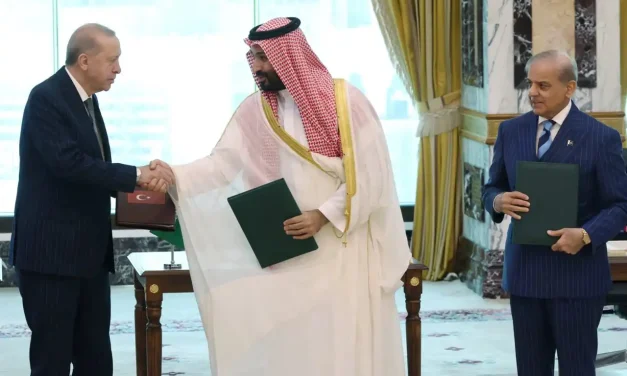
SCFR Online – Opinion: The Makkah Pact, signed between Saudi Arabia, Pakistan, and Turkey under the motto “an attack on one is an attack on all,” is viewed by some analysts less as a full-fledged military coalition and more as an attempt to reduce security dependence on an external power and to establish a regional security mechanism.

Loading

Últimas publicaciones

China’s Rejection of US Sanctions; Strengthening Iran’s Geopolitical Leverage

SCFR Online – Opinion: Concurrent with the official commencement of the United States’ economic war against our country, focusing on sanctions instruments, isolation, and economic pressure, what has now become increasingly important is the lack of alignment of other major global powers, especially China, with this policy.

The Makkah Pact; Reasons for its Formation and Challenges Ahead

SCFR Online – Opinion: The Makkah Pact, signed between Saudi Arabia, Pakistan, and Turkey under the motto “an attack on one is an attack on all,” is viewed by some analysts less as a full-fledged military coalition and more as an attempt to reduce security dependence on an external power and to establish a regional security mechanism.

Loading

DERNIER CONTENU

China’s Rejection of US Sanctions; Strengthening Iran’s Geopolitical Leverage

SCFR Online – Opinion: Concurrent with the official commencement of the United States’ economic war against our country, focusing on sanctions instruments, isolation, and economic pressure, what has now become increasingly important is the lack of alignment of other major global powers, especially China, with this policy.

The Makkah Pact; Reasons for its Formation and Challenges Ahead

SCFR Online – Opinion: The Makkah Pact, signed between Saudi Arabia, Pakistan, and Turkey under the motto “an attack on one is an attack on all,” is viewed by some analysts less as a full-fledged military coalition and more as an attempt to reduce security dependence on an external power and to establish a regional security mechanism.

Loading

DERNIER CONTENU

China’s Rejection of US Sanctions; Strengthening Iran’s Geopolitical Leverage

SCFR Online – Opinion: Concurrent with the official commencement of the United States’ economic war against our country, focusing on sanctions instruments, isolation, and economic pressure, what has now become increasingly important is the lack of alignment of other major global powers, especially China, with this policy.

The Makkah Pact; Reasons for its Formation and Challenges Ahead

SCFR Online – Opinion: The Makkah Pact, signed between Saudi Arabia, Pakistan, and Turkey under the motto “an attack on one is an attack on all,” is viewed by some analysts less as a full-fledged military coalition and more as an attempt to reduce security dependence on an external power and to establish a regional security mechanism.

Loading

DERNIER CONTENU

China’s Rejection of US Sanctions; Strengthening Iran’s Geopolitical Leverage

SCFR Online – Opinion: Concurrent with the official commencement of the United States’ economic war against our country, focusing on sanctions instruments, isolation, and economic pressure, what has now become increasingly important is the lack of alignment of other major global powers, especially China, with this policy.

The Makkah Pact; Reasons for its Formation and Challenges Ahead

SCFR Online – Opinion: The Makkah Pact, signed between Saudi Arabia, Pakistan, and Turkey under the motto “an attack on one is an attack on all,” is viewed by some analysts less as a full-fledged military coalition and more as an attempt to reduce security dependence on an external power and to establish a regional security mechanism.

Loading