
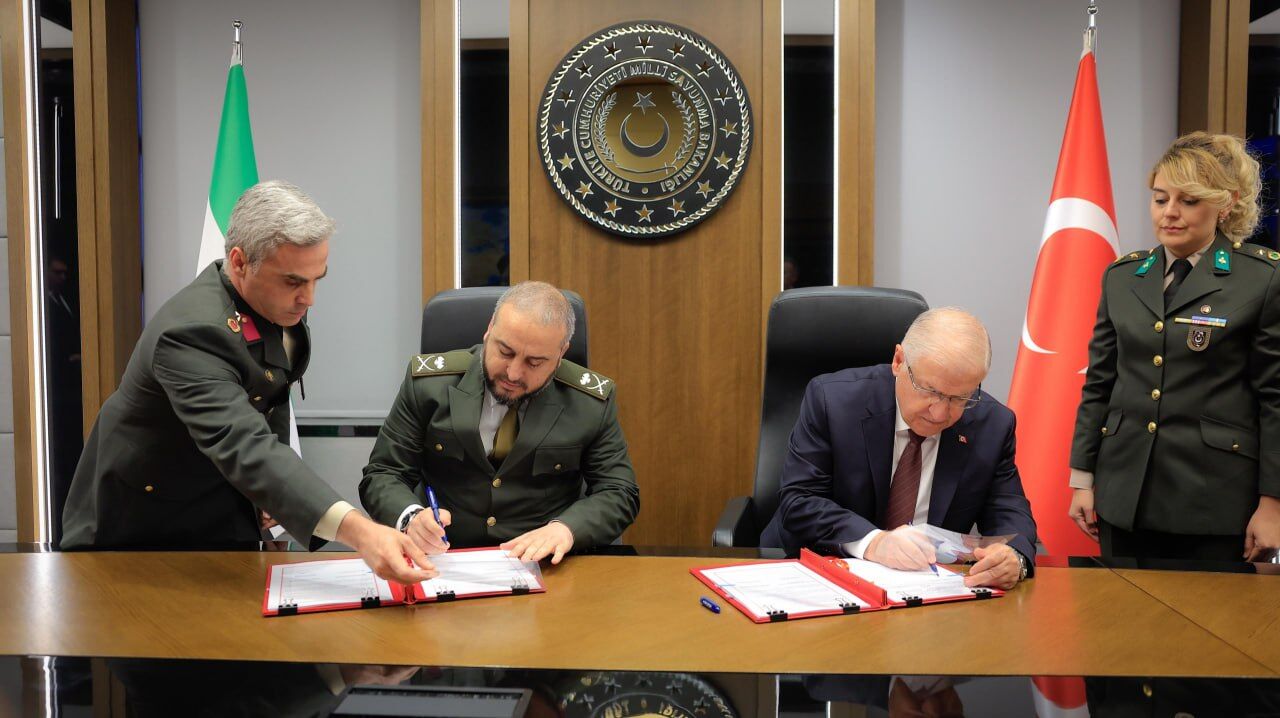
Rebuilding the Syrian Army and Strengthening Defense Cooperation
Ebrahim Farahani, in an interview with the website of the Strategic Council on Foreign Relations, stated: The military memorandum of understanding between Turkey and Syria is part of Ankara’s broader strategy to influence regional developments following the fall of Bashar al-Assad. This agreement, focusing on training military personnel, exchanging experiences, and providing technical advice, seeks to rebuild the Syrian army in a professional manner and in line with global standards. According to this analyst, “Turkey’s foreign policy since the Justice and Development Party came to power in 2002, especially after the Arab Spring in 2011 and 2012, has moved towards a geopolitical and neo-Ottoman approach. This approach has sought to establish influence in countries like Syria, Iraq, and other regions affected by the Arab Spring.”
The Turkey affairs analyst emphasizes that “Since 2015, particularly through the role of Hakan Fidan (former head of intelligence and current Foreign Minister), Turkey sought to overthrow the Assad government. This goal was ultimately achieved with Turkey’s support for armed groups, including Hayat Tahrir al-Sham, led by Abu Mohammad al-Julani. Therefore, the current military memorandum is a step towards consolidating this achievement. Because this agreement not only helps strengthen the capabilities of the Syrian army but also allows Turkey, through training and advisory roles, to expand its influence within the military structures of Syria’s new government. This could lead to reduced border tensions and greater coordination in countering common threats, including the activities of Kurdish groups.”
Criticism of the Israeli Regime’s Interventions and Emphasis on Regional Stability
Ebrahim Farahani believes that “The interventions of the Zionist regime in the Suwayda conflicts are part of this regime’s broader strategy to destabilize Syria and prevent the formation of a strong, unified government in the country.” According to this analyst, “After the fall of Bashar al-Assad, the Israeli regime, by carrying out numerous attacks on Syria’s military infrastructure, including airports and military equipment, has tried to weaken the country’s defense capabilities. The frequent attacks by the Israeli regime, which have been conducted without a serious response from Turkey, have also not faced a serious reaction from Arab countries.”
The Middle East affairs analyst believes that “This approach by Turkey, besides defensive objectives, is part of Ankara’s geopolitical strategy to solidify its position as a regional power.”
Challenges of Kurdish Groups and Threats to Stability
Ebrahim Farahani also refers to the Turkish Foreign Minister’s request for the “People’s Defense Units” to cease threats against Turkey and the region. The role of these groups in destabilizing Syria, acknowledging that “Turkey has for years considered Syrian Kurdish groups as a threat to its national security and believes that these groups, with external support, particularly from the United States, seek to create instability in the region. Fidan, in his statements, has also accused these groups of obstructing the implementation of the March 2025 agreement for integration with the Syrian army and demanded an immediate halt to their armed activities.”
The Turkey affairs analyst emphasizes that “By signing the military memorandum with Syria, Turkey seeks to control Kurdish groups, especially in northern Syrian regions like Kobani. This agreement could lead to greater coordination between the armies of the two countries to counter these threats.” This analyst adds: “Turkey believes that the continuation of armed activities by Syrian Kurds will not only fuel instability in this country but could also lead to an escalation of border tensions with Turkey.” Therefore, Farahani warns that “If these groups continue their delaying tactics and armed activities, the result will be nothing but increased conflicts and failure to achieve separatist goals. This view aligns with Fidan’s statements, who emphasized that the chaos expected by Syrian Kurds will never lead to their desired outcome.”









0 Comments